
In the vast and ever-evolving landscape of assistive technology, few innovations capture the imagination quite like the semi-truck mobility scooter. At first glance, the phrase itself seems paradoxical—a fusion of the colossal, diesel-powered behemoths that dominate interstate highways with the compact, battery-operated devices designed to restore independence to individuals with mobility challenges. Yet, this apparent contradiction is precisely what makes semi-truck mobility scooters such a compelling subject of exploration. These are not literal hybrids of 18-wheelers and medical scooters; rather, they represent a niche but fascinating design philosophy that borrows the visual language, structural ethos, and cultural symbolism of semi-trucks to reimagine what personal mobility can look and feel like.

The emergence of semi-truck mobility scooters speaks to a deeper human desire: the need not only for functional assistance but also for identity expression, empowerment, and even whimsy in the tools we rely on daily. While traditional mobility scooters prioritize clinical efficiency, minimalism, and medical neutrality, semi-truck-inspired models embrace boldness, ruggedness, and narrative. They transform a utilitarian device into a statement—a rolling embodiment of resilience, adventure, and individuality. This article delves into the unique design elements that define semi-truck mobility scooters, examining how form follows both function and fantasy. Through an exploration of their aesthetic choices, structural adaptations, and cultural resonance, we uncover how these machines redefine the boundaries of assistive technology—not by improving speed or range in a technical sense, but by expanding the emotional and symbolic dimensions of mobility itself.
Part I: Aesthetic Borrowing—The Visual Language of the Open Road
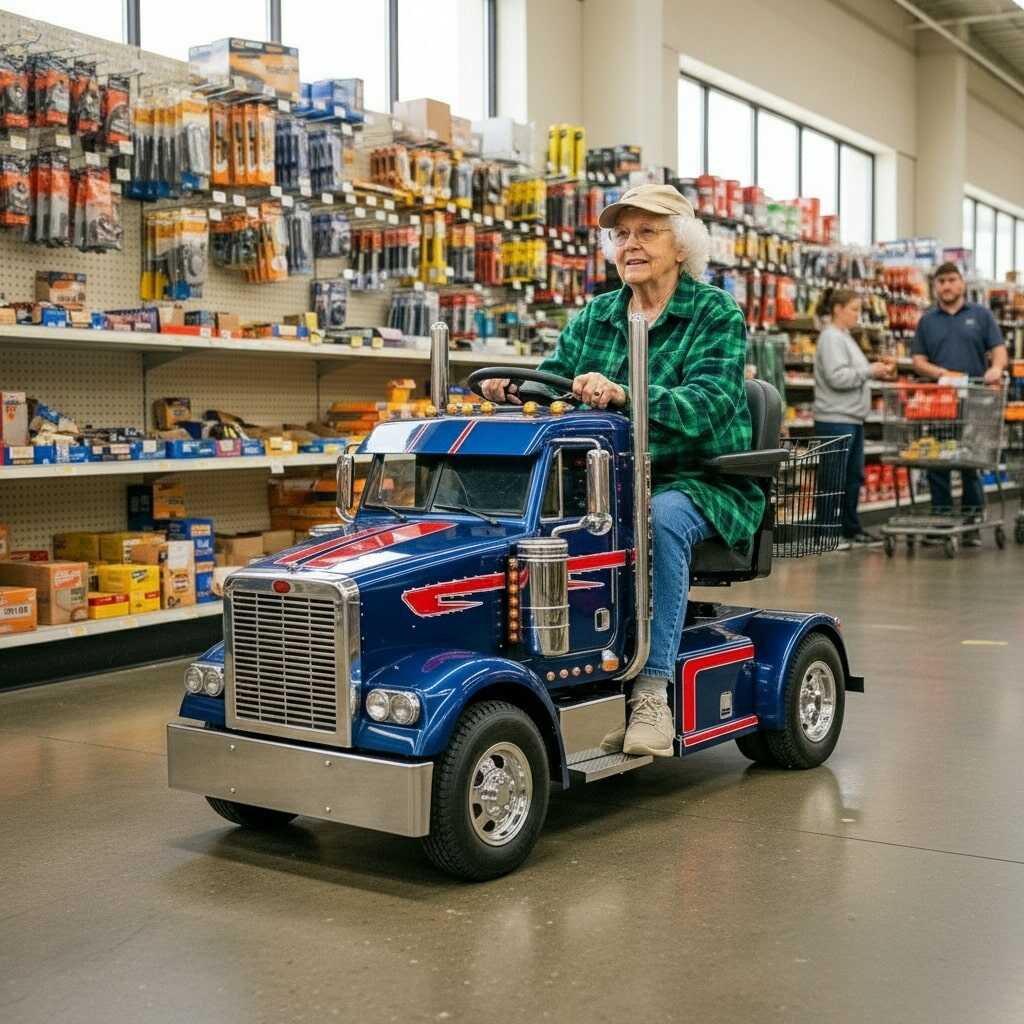
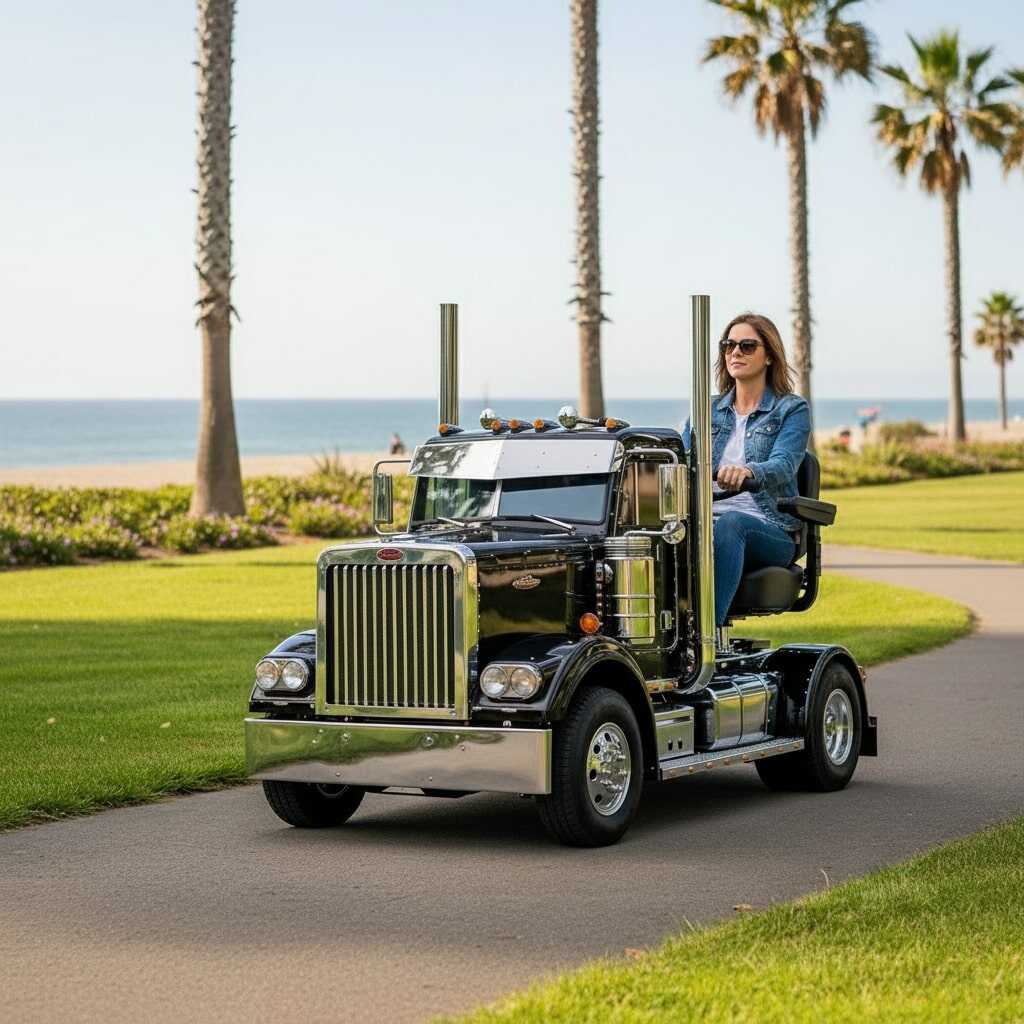
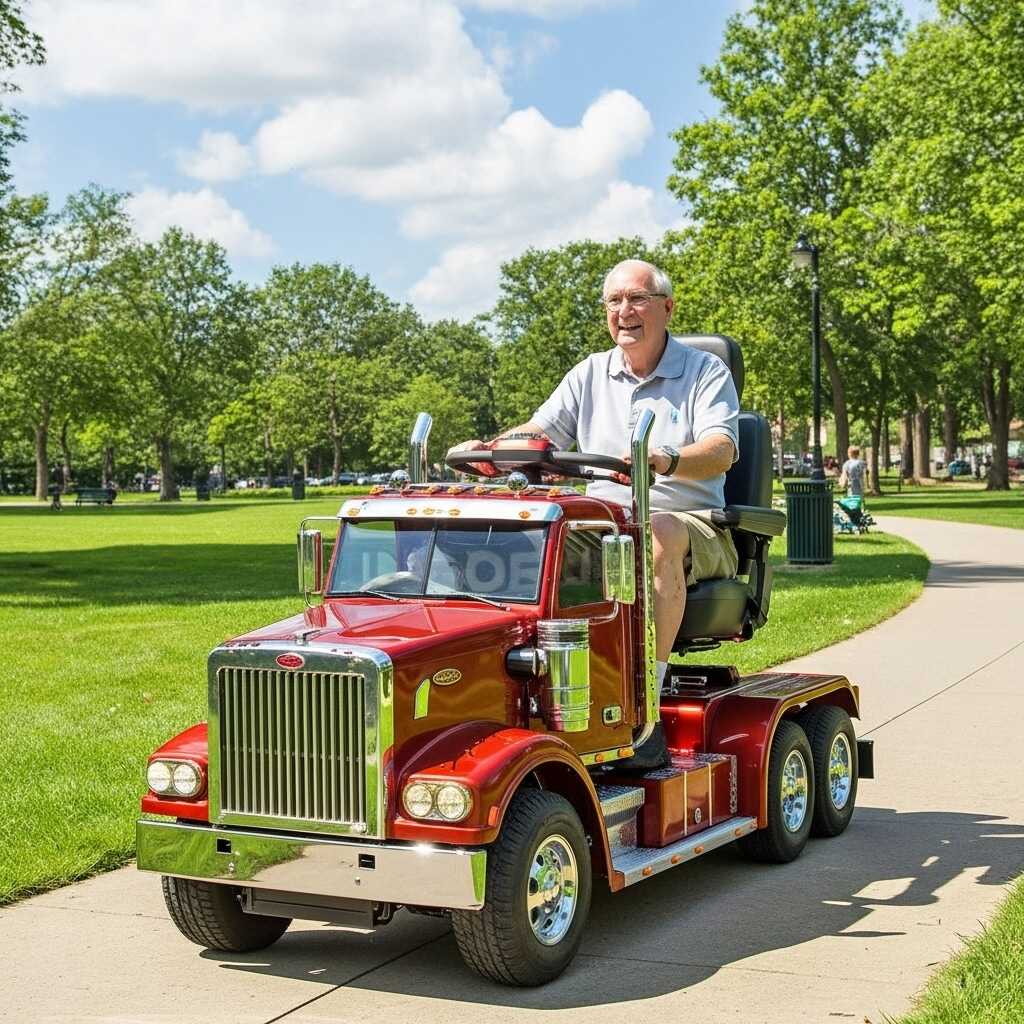
The most immediate and striking feature of semi-truck mobility scooters is their unmistakable visual homage to long-haul freight trucks. Designers of these scooters do not merely add a decal or two; they meticulously reinterpret the iconic silhouette of the semi-truck—its elongated hood, stacked headlights, chrome grilles, and aerodynamic fairings—into a scaled-down, human-centric form. This aesthetic borrowing is more than superficial styling; it is a deliberate act of visual storytelling that imbues the scooter with a sense of purpose, strength, and journey.
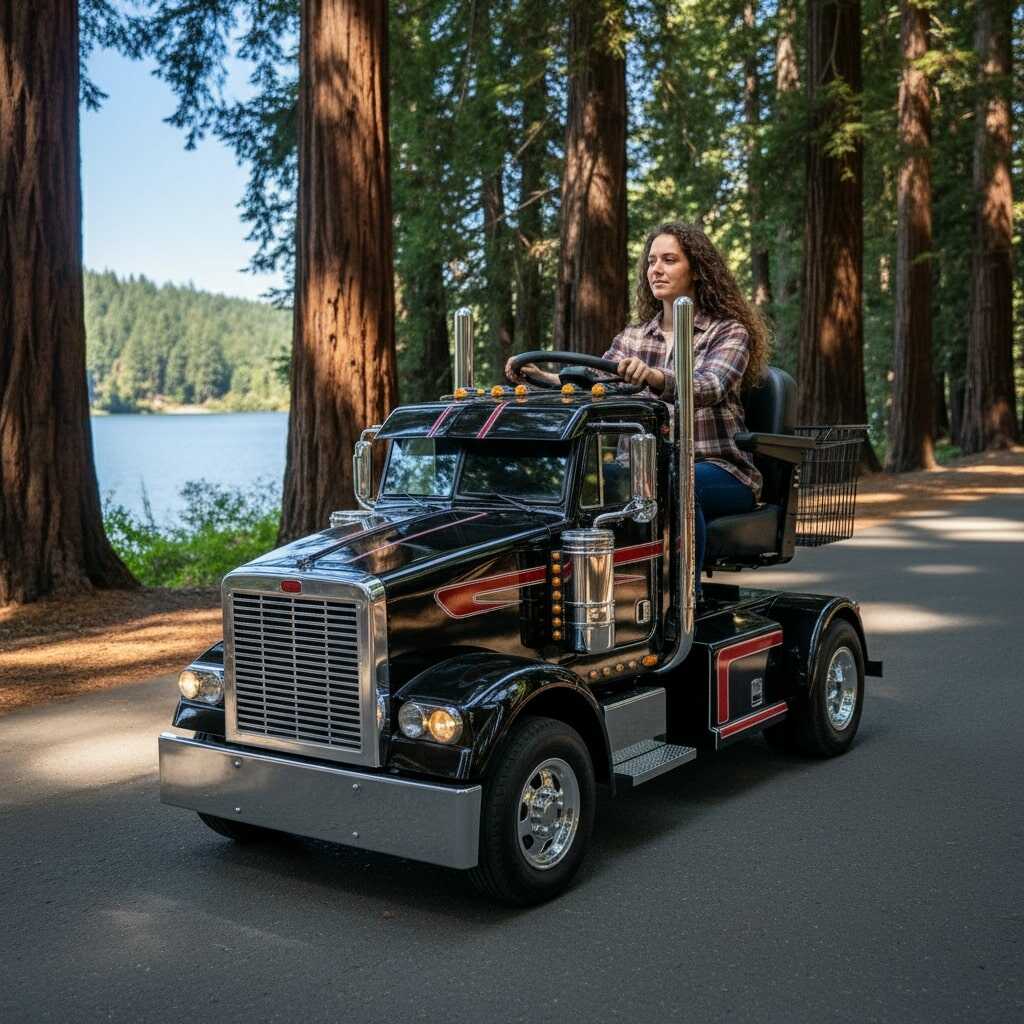
Consider the front-end design. Traditional mobility scooters often feature a flat or gently curved fascia, sometimes with a simple headlight or basket. In contrast, semi-truck mobility scooters frequently incorporate a pronounced, sloping nose reminiscent of a Peterbilt or Kenworth cab. This “hood” may house dual or triple LED headlights arranged vertically or horizontally, mimicking the stacked lamps of a real semi. Chrome accents—on handlebars, footrests, or side panels—echo the polished bumpers and trim of highway rigs, adding a layer of visual weight and prestige. Even the color palettes are chosen with intention: deep reds, matte blacks, cobalt blues, and gleaming silvers that mirror the livery of professional trucking fleets.
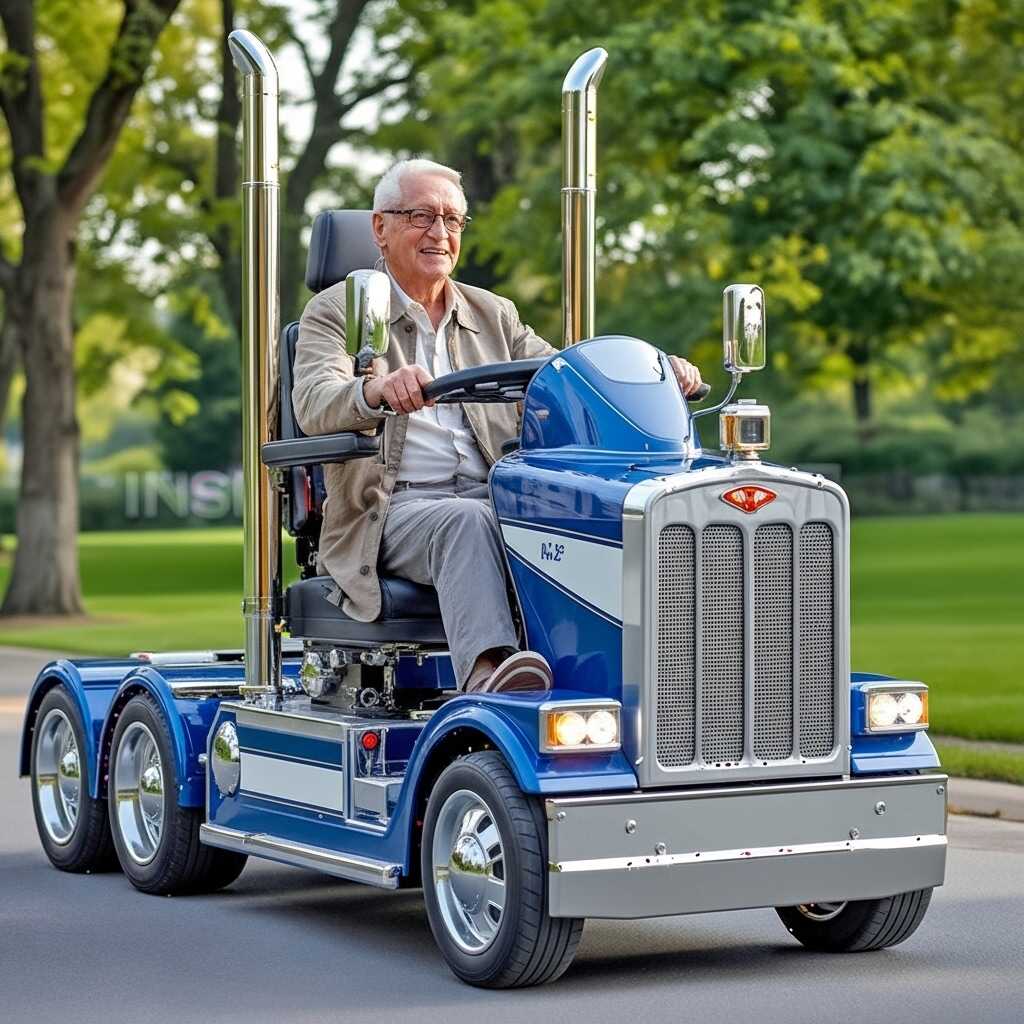
Beyond mere appearance, this design language serves a psychological function. For many users, especially those who have spent careers in transportation or harbor a lifelong fascination with trucks, the semi-truck aesthetic transforms the scooter from a medical necessity into a cherished extension of self. It reframes mobility not as a limitation to be hidden but as a mode of personal expression. The scooter becomes less a symbol of frailty and more a badge of endurance—akin to the lone trucker navigating endless miles, self-reliant and undeterred. In public spaces, this visual identity can shift social perceptions, inviting curiosity and admiration rather than pity or avoidance.
Moreover, the semi-truck motif often extends to functional details. Steering columns may be styled like gear shifters, with tactile grips and metallic finishes. Storage compartments can resemble sleeper cabs or cargo bays, complete with miniature roll-up doors or latches. Even the seat upholstery might echo the vinyl or leather interiors of truck cabs, prioritizing durability and a sense of rugged comfort. Every element is curated to sustain the illusion—not as a toy, but as a serious, cohesive design statement that honors the spirit of the open road.
Part II: Structural Philosophy—Engineering Resilience into Personal Scale
While aesthetics capture attention, the true ingenuity of semi-truck mobility scooters lies in how their design philosophy translates into structural and ergonomic choices. The semi-truck, as an engineering marvel, is built for endurance, load-bearing capacity, and stability over long distances and varied terrain. Semi-truck mobility scooters adopt this ethos, not by replicating heavy-duty mechanics, but by reinterpreting principles of robustness and reliability within the constraints of personal mobility.
One key aspect is chassis design. Unlike conventional scooters that often use lightweight aluminum frames optimized for indoor maneuverability, semi-truck-inspired models frequently employ reinforced steel or high-grade composite materials. This enhances durability and provides a more substantial feel underfoot—a psychological reassurance for users who may associate flimsiness with instability. The frame geometry may also mimic the low-slung, wide-track stance of a semi-truck, lowering the center of gravity to improve balance and reduce tipping risks, especially on inclines or uneven surfaces.
Suspension systems, though modest in scale, are another area where the semi-truck influence manifests. Real semi-trucks utilize air-ride or multi-leaf spring suspensions to absorb the shocks of potholes, gravel, and highway expansion joints. Semi-truck mobility scooters may incorporate dual rear shock absorbers or front-wheel suspension forks, offering a smoother ride over sidewalks, curbs, or park paths. This attention to ride quality reflects a commitment to comfort that goes beyond basic functionality—it acknowledges that mobility is not just about getting from point A to point B, but about how the journey feels.
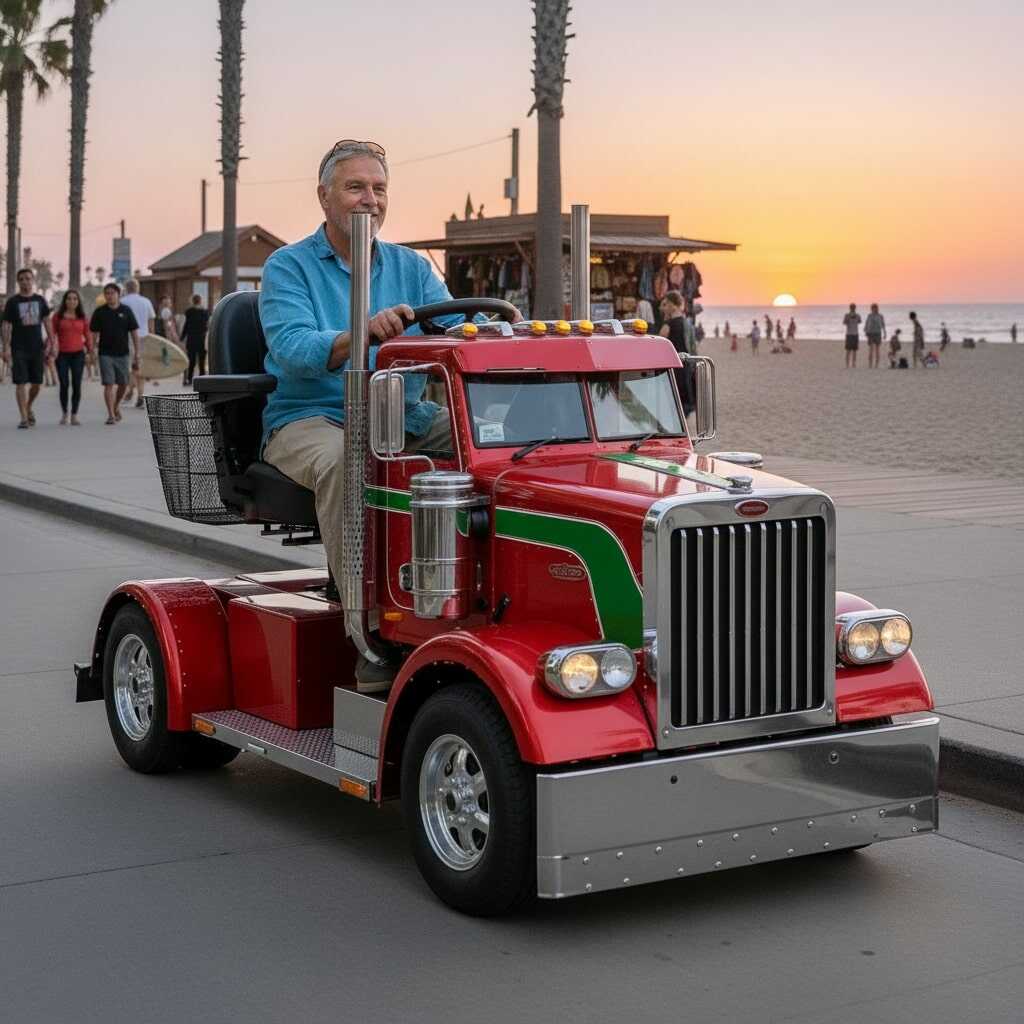
Wheels and tires also receive special consideration. Instead of the small, hard plastic wheels common on indoor scooters, semi-truck models often feature larger pneumatic or semi-pneumatic tires with aggressive tread patterns. These not only improve traction on wet or loose surfaces but also visually echo the massive drive tires of an 18-wheeler. The wheel hubs may be styled with simulated lug nuts or hubcaps, reinforcing the trucking aesthetic while maintaining practical performance.
Even the control interface reflects this design philosophy. Handlebars are typically wider and more substantial, offering greater leverage and control—much like the steering wheel of a big rig. Throttle and brake levers may be positioned to mimic the ergonomics of a truck’s controls, providing intuitive operation for users familiar with heavy machinery. Some models include auxiliary switches or toggles styled as dashboard controls, allowing users to manage lights, turn signals, or horn functions with a sense of command and authority.
Critically, these structural adaptations do not compromise accessibility. Designers carefully balance the rugged aesthetic with ergonomic necessities: adjustable seat height, ample legroom, intuitive controls, and easy disassembly for transport. The goal is not to create a novelty item, but a thoughtfully engineered device that marries the symbolic strength of the semi-truck with the practical needs of daily mobility.
Part III: Cultural Resonance—Symbolism, Identity, and the Mythos of the Road
Beyond form and function, semi-truck mobility scooters occupy a unique space in the cultural imagination. The semi-truck itself is a potent symbol in American and global folklore—a representation of freedom, self-reliance, and the romance of the open highway. From the folk heroics of truckers in country music to the existential wanderings depicted in films like Vanishing Point or Thelma & Louise, the big rig embodies a spirit of independence that resonates deeply with many.
For individuals facing mobility challenges, this symbolism can be profoundly empowering. Using a semi-truck mobility scooter is not merely a practical choice; it is an act of reclaiming agency. Where traditional assistive devices may inadvertently emphasize vulnerability, the semi-truck scooter projects strength, autonomy, and adventure. It suggests that the user is not confined by their condition but is instead embarking on their own journey—perhaps not across state lines, but through neighborhoods, parks, and community spaces with the same determination as a long-haul driver.

This cultural resonance extends to community and identity. Enthusiasts of semi-truck mobility scooters often form informal networks, sharing customizations, maintenance tips, and stories of their “road trips.” Online forums and social media groups celebrate the creativity involved in personalizing these scooters—adding custom paint jobs, miniature trailer attachments, or sound systems that play diesel engine rumbles. These communities foster a sense of belonging that transcends the medical context of mobility aids, transforming them into shared cultural artifacts.
Furthermore, the semi-truck motif challenges societal norms around disability and design. Mainstream assistive technology has historically prioritized invisibility—devices that blend into the background, minimizing the “otherness” of their users. Semi-truck mobility scooters reject this paradigm. They are unapologetically visible, even flamboyant. In doing so, they assert that disability does not require concealment and that assistive devices can be sources of pride, joy, and personal narrative.
This design approach also invites broader conversations about inclusivity in industrial design. Why must mobility aids adhere to sterile, clinical aesthetics? Why can’t they reflect the passions, professions, and personalities of their users? Semi-truck mobility scooters exemplify a human-centered design philosophy that places emotional and cultural needs on equal footing with physical functionality. They remind us that technology, even when serving a medical purpose, can—and perhaps should—inspire, delight, and tell a story.
Conclusion: Redefining Mobility Through Design Imagination
Semi-truck mobility scooters stand as a testament to the power of design to transcend utility and touch the human spirit. They are not merely vehicles for physical movement; they are mobile canvases that express identity, resilience, and a love for the mythos of the American road. By borrowing the visual and structural language of semi-trucks, these scooters transform a common assistive device into something extraordinary—a fusion of industrial iconography and personal empowerment.
In exploring their unique design, we uncover layers of meaning that go far beyond mechanics. The chrome grilles, the rugged frames, the wide tires—they are all part of a deliberate narrative that repositions mobility as an act of courage and self-definition. These scooters challenge us to rethink what assistive technology can be: not just a tool for overcoming limitation, but a medium for storytelling, community, and joy.
As society continues to evolve its understanding of disability and inclusion, innovations like semi-truck mobility scooters offer a compelling vision—one where functionality and fantasy coexist, where practicality is infused with personality, and where every journey, no matter how short, is undertaken with the spirit of a long-hauler. In the end, the true uniqueness of semi-truck mobility scooters lies not in their resemblance to 18-wheelers, but in their ability to carry not just bodies, but dreams, down the open road of everyday life.