
The Call of the Earth Beneath Our Feet
In an era defined by digital saturation, synthetic surfaces, and ever-accelerating rhythms of urban life, the human spirit remains tethered—however faintly—to the rhythms of the earth. We crave authenticity, texture, and the subtle, shifting poetry of natural variation. Nowhere is this yearning more profoundly answered than underfoot. Floors, often overlooked as merely functional planes, hold immense latent potential: they are the literal foundations of our daily experience, the surfaces over which light spills, furniture settles, and footsteps echo. When these planes are reimagined—not as engineered veneers or mass-produced laminates, but as compositions of leaves and birch branches—they cease to be static elements. Instead, they become dynamic thresholds between interior and exterior, memory and presence, craft and ecology.
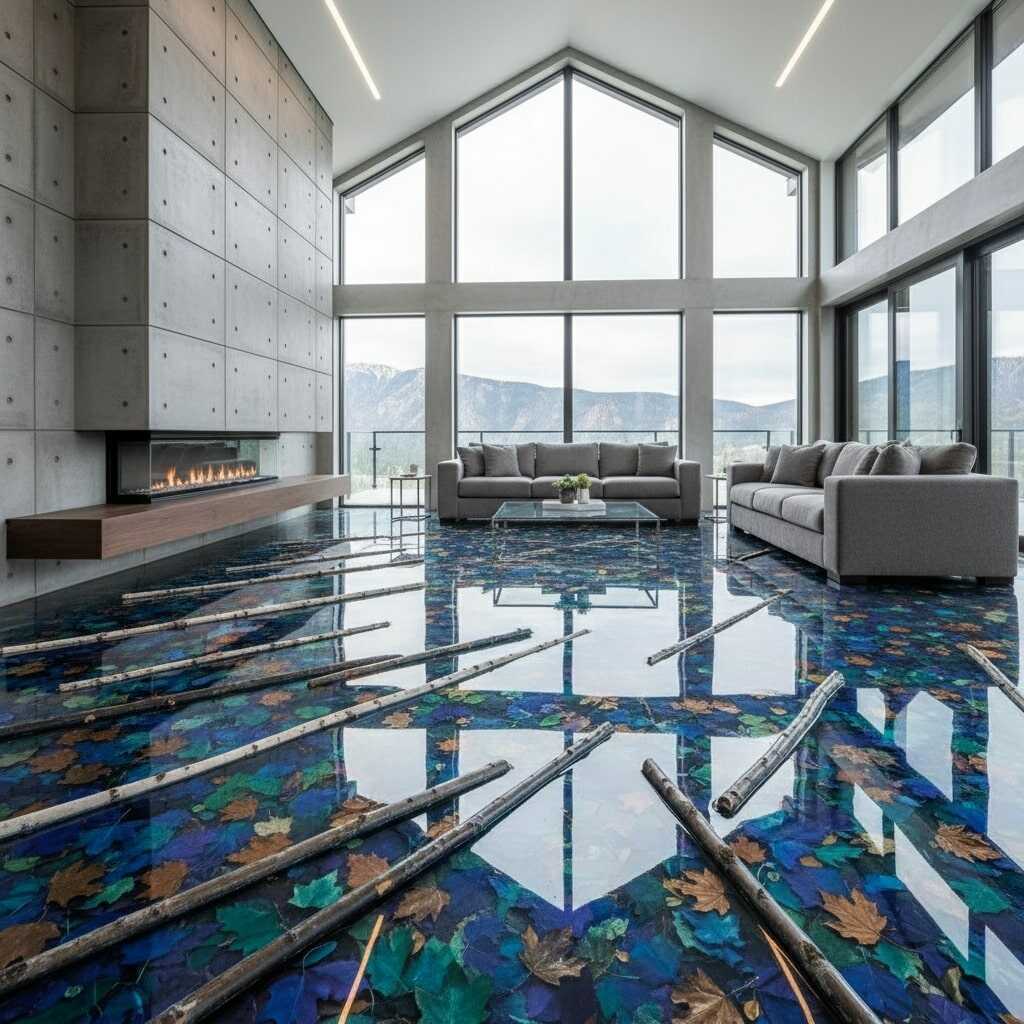
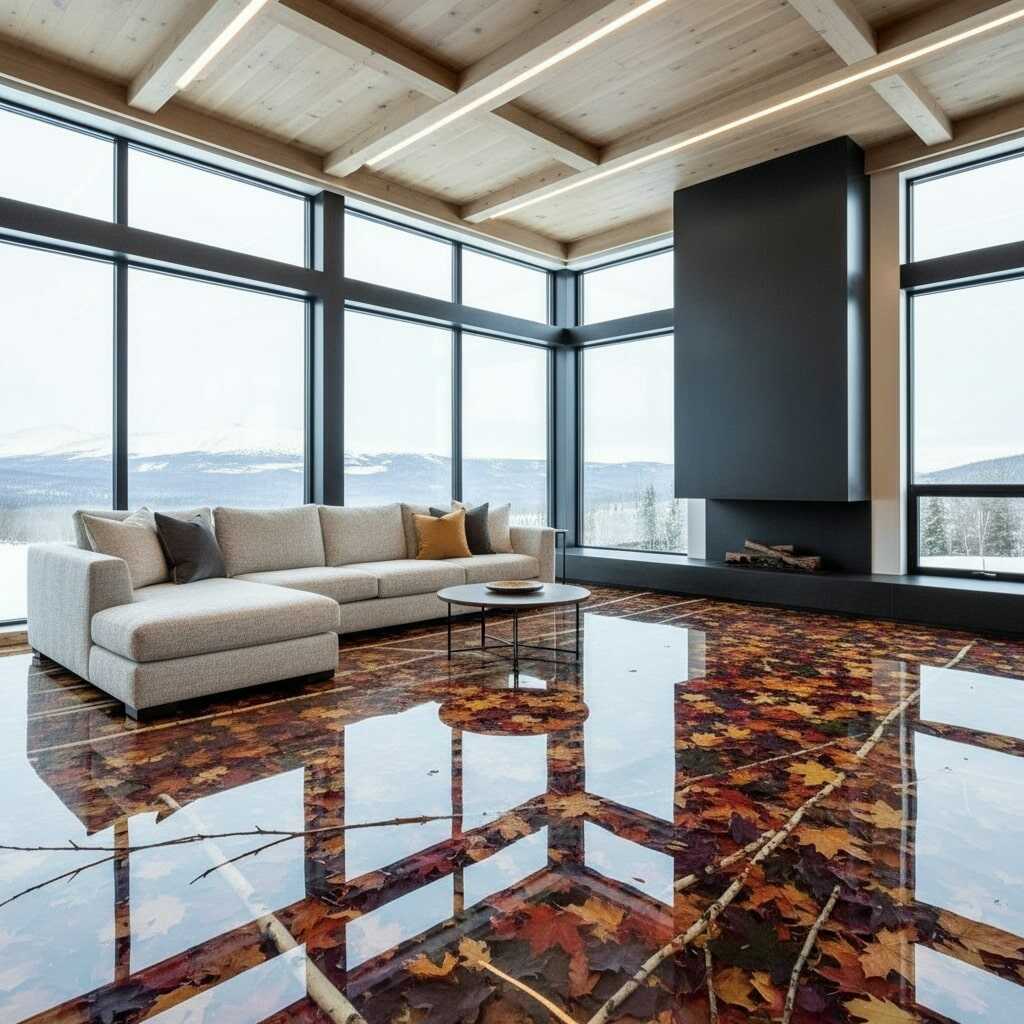
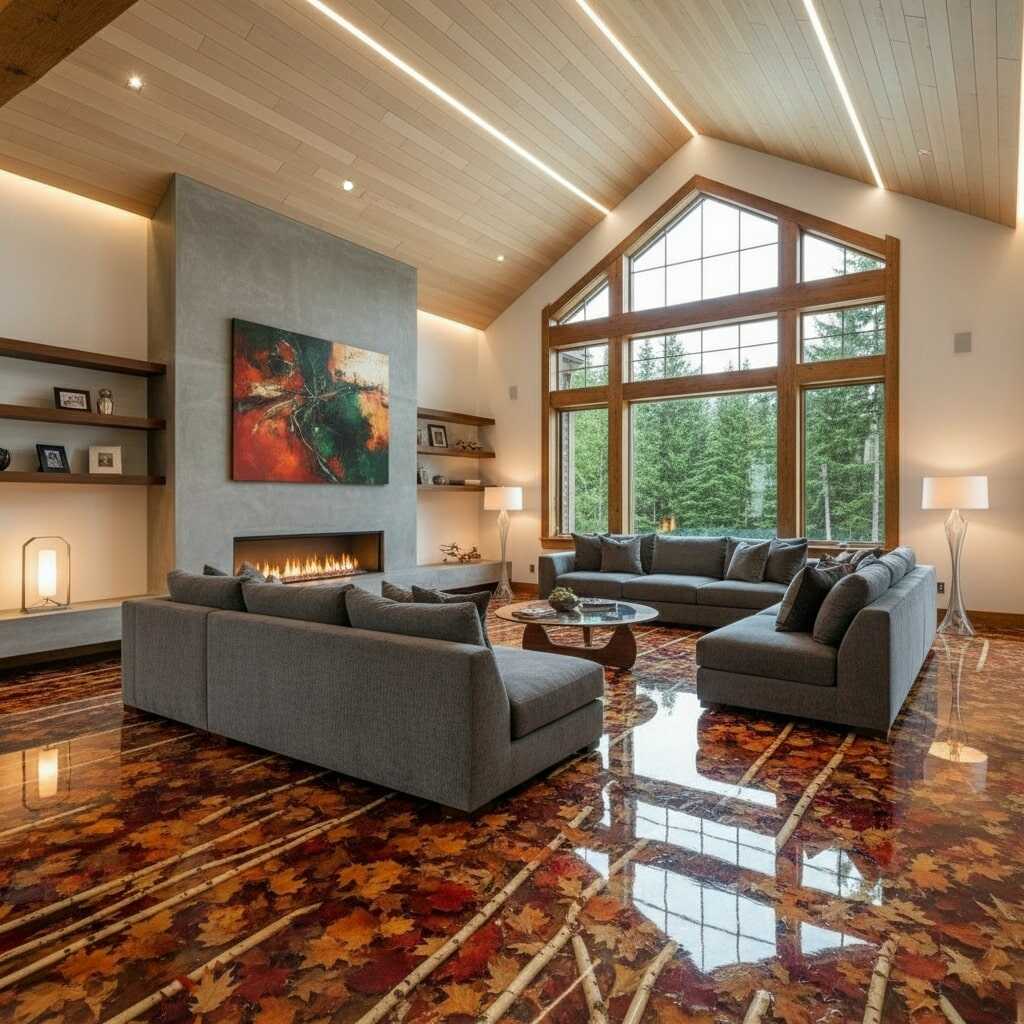
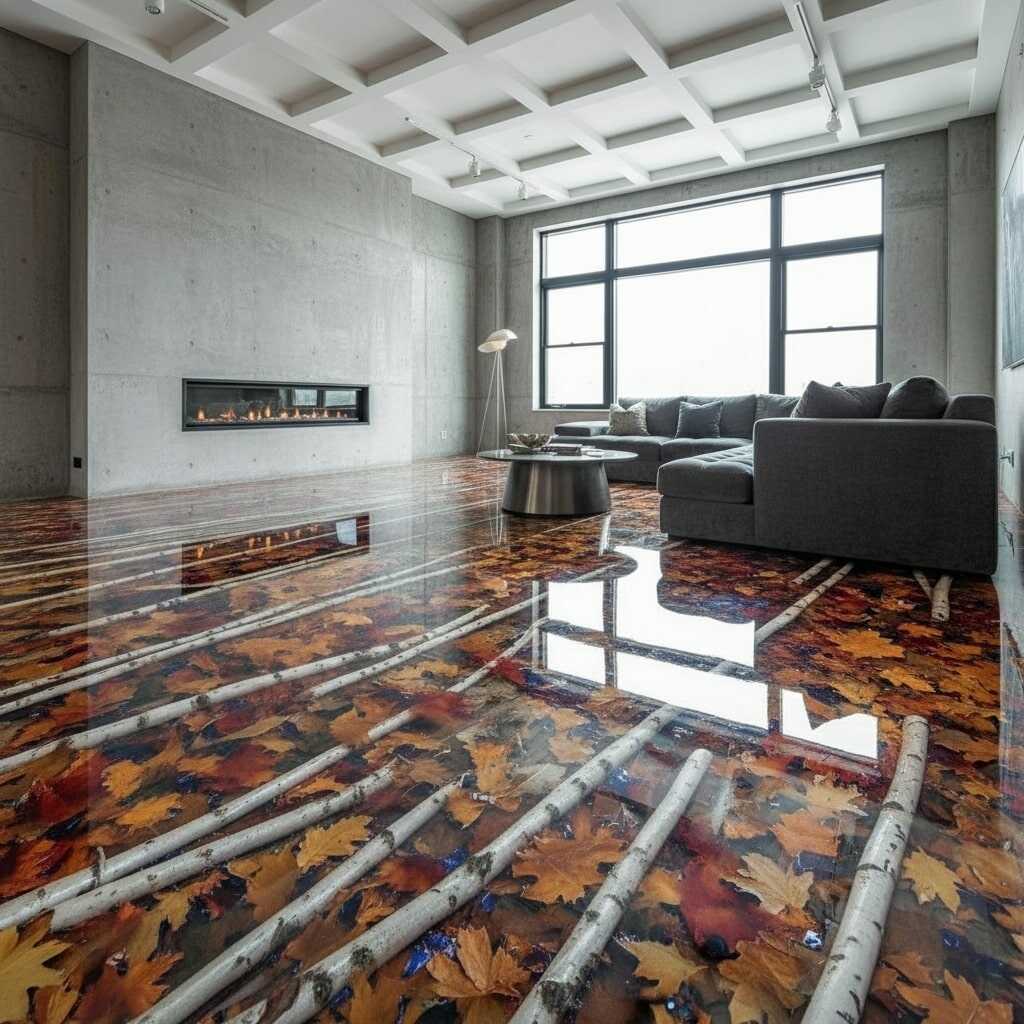
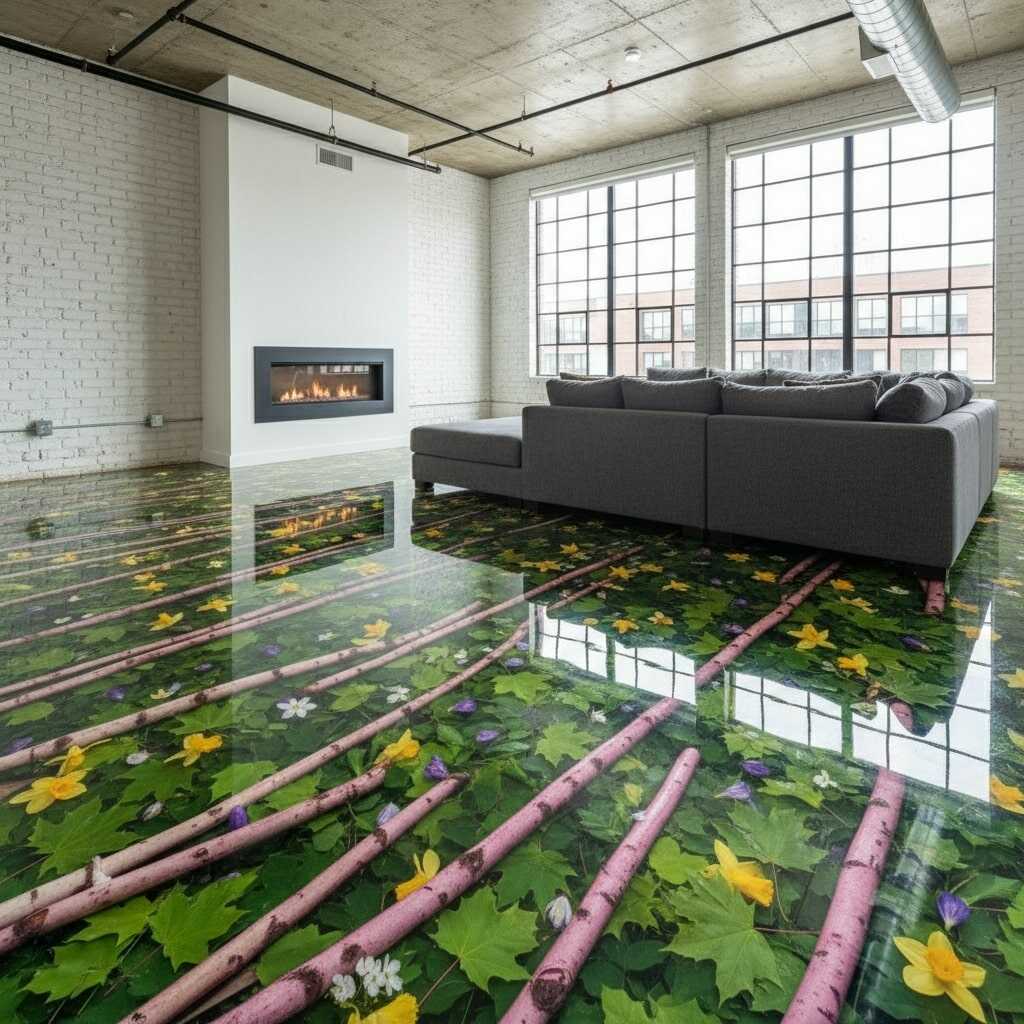
Leaves and Birch Branch Flooring is not a product category in the conventional sense; it is a philosophy rendered tangible. It speaks to a deeper design ethos—one that privileges process over perfection, temporality over permanence, and symbiosis over domination. This approach does not seek to mimic nature through printed patterns or embossed textures; rather, it invites nature in—its irregularities, its seasonal imprints, its quiet resilience. To walk across such a floor is to tread upon layers of time: the slow growth rings of birch, the delicate veining of fallen maple or oak leaves preserved in resin or embedded within hand-laid substrates. It is to feel, quite literally, the forest floor relocated—not replicated, but respectfully recontextualized.
This article explores how Leaves and Birch Branch Flooring operates as a transformative agent in interior spaces—not through spectacle, but through subtlety; not through novelty, but through resonance. We will examine its aesthetic and sensory dimensions, its ecological and philosophical implications, and the profound psychological recalibration it invites in those who dwell within its presence.
Part I: Aesthetic Alchemy — Where Texture, Light, and Memory Converge
The Poetics of Imperfection
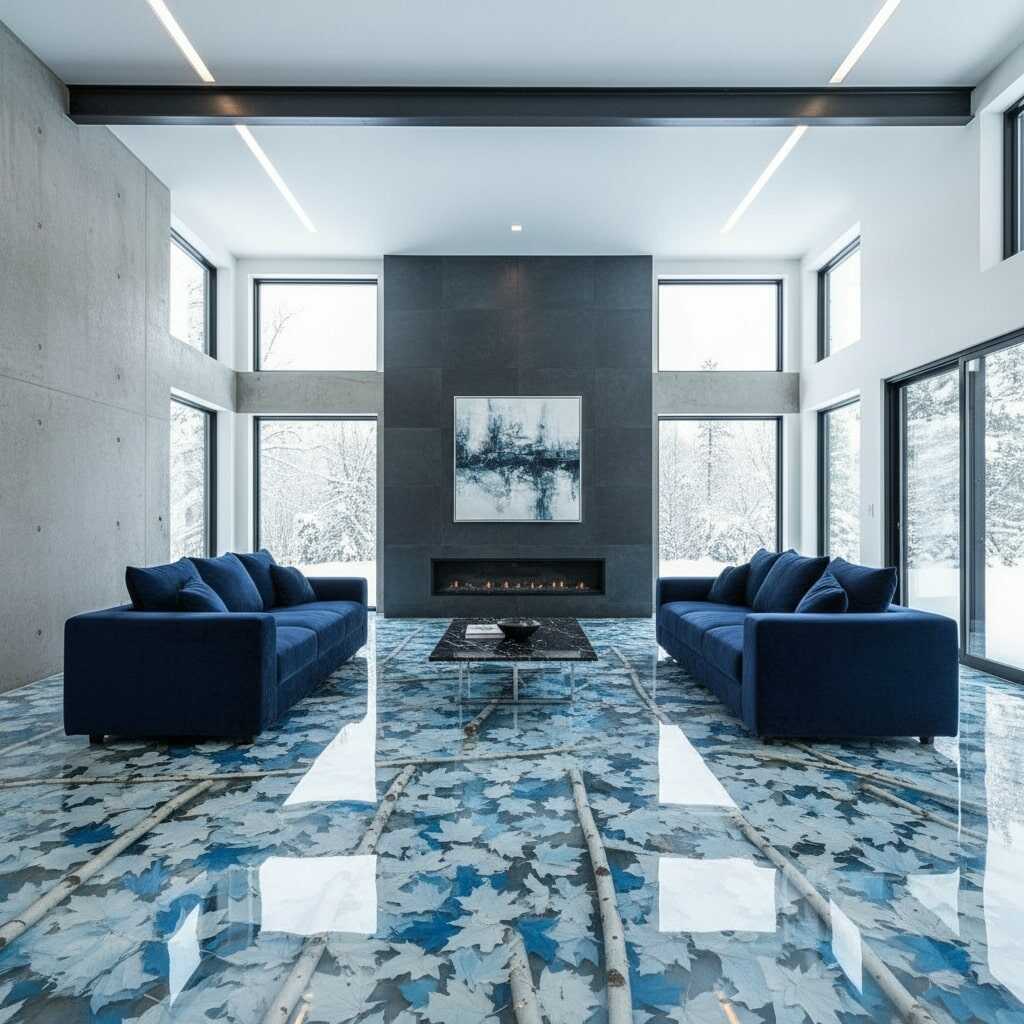
Industrial flooring strives for uniformity: identical planks, seamless joints, unvarying grain. Leaves and Birch Branch Flooring, by contrast, embraces differential beauty. Each birch branch—sanded to reveal its pale, silvery grain or left partially bark-clad for textural contrast—carries the signature of its individual growth: knots, fissures, subtle curves shaped by wind and light. Leaves, selected not for flawless symmetry but for their expressive decay—curling edges, translucent patches, rust-hued margins—are arranged not in rigid repetition, but in compositions that echo forest floor accumulations: clustered, scattered, layered like sediment.
This is not randomness, however. It is curated irregularity. A skilled artisan understands the visual weight of a sycamore leaf’s broad silhouette against the slender elegance of a birch twig; knows how the ochre of a beech leaf deepens in the shadow of a branch’s curve; senses when density must yield to openness to prevent visual saturation. The result is a floor that changes with the hour: in the slanting light of morning, leaf veins cast delicate traceries; at dusk, the pale birch reflects ambient warmth in soft halos. The surface breathes with diurnal cycles, resisting the sterility of static interiors.
Material as Narrative
Every material tells a story. Concrete speaks of industry and compression; steel, of tension and refinement. Leaves and Birch Branch Flooring narrates a different tale—one of cyclical time, of growth and release, of quiet resilience.
Birch—the pioneer species of northern forests—is a symbol of renewal. Its rapid growth after fire or clear-cut, its luminous bark that peels in papery layers like shed skin, its delicate catkins trembling in spring breezes—all speak to adaptability and gentle persistence. To integrate birch branches into a floor is to embed this symbolism into the domestic sphere: a reminder that strength need not be rigid, that clarity can be luminous rather than stark.
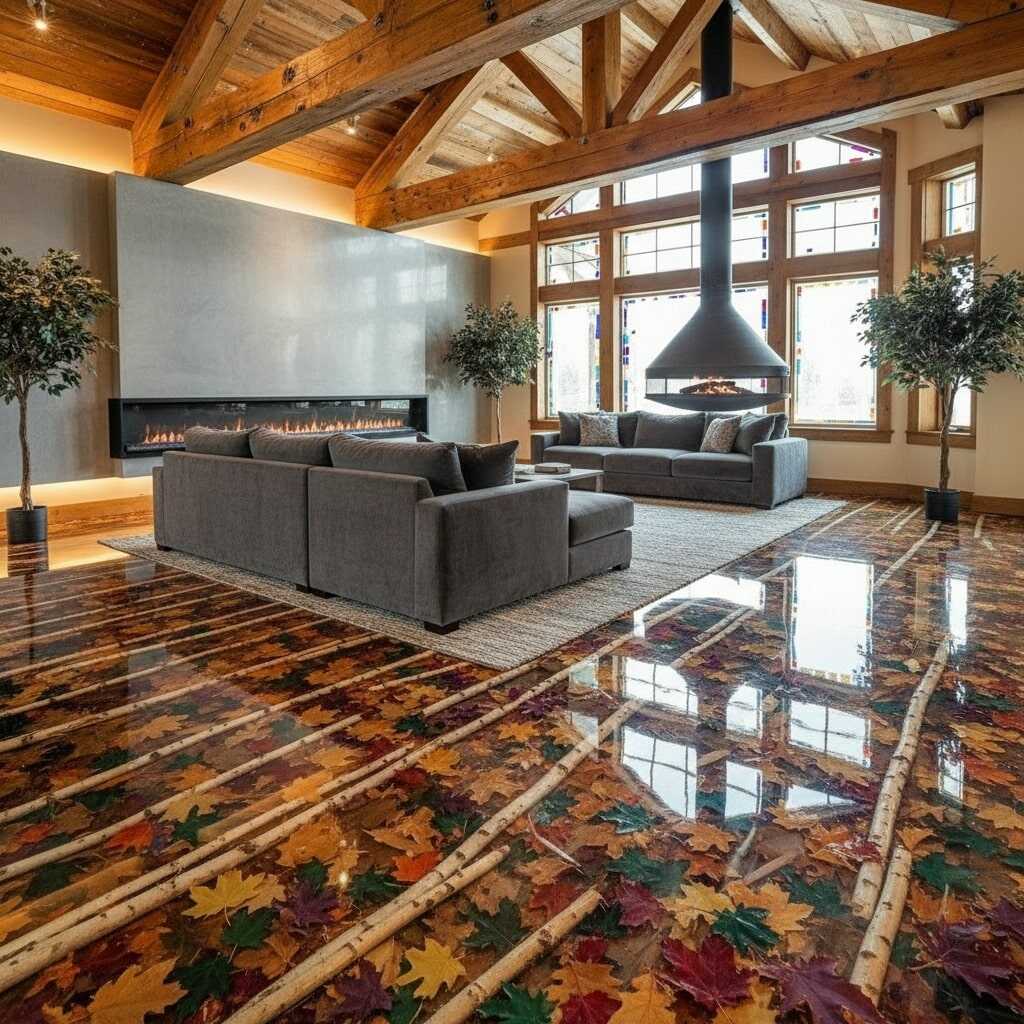
Leaves, meanwhile, are the archives of seasons. A maple leaf embedded mid-fall carries the memory of chlorophyll’s retreat and anthocyanin’s final flourish; a dried beech leaf, clinging stubbornly through winter, embodies tenacity. Their inclusion is not decorative whimsy; it is temporal layering. The floor becomes a palimpsest—part geological, part botanical—where the present moment is gently overlaid with the echoes of autumn light and summer rain.
Critically, this narrative is not imposed; it is invited. The viewer is not told what to feel but is given the raw material—literally—to construct their own meaning. A child may trace the path of an imagined caterpillar across leaf surfaces; an elder may recall raking piles in a childhood yard. The floor does not dictate—it elicits.
The Sensory Dialogue: Sound, Temperature, and Tactility
Beyond the visual, Leaves and Birch Branch Flooring engages a full sensory spectrum.
Acoustically, it softens. Unlike hard tile or polished hardwood, the composite nature of such flooring—often incorporating substrates of compressed cork, natural rubber, or stabilized earth—absorbs impact. Footsteps land with a muted thud, not a sharp clack; furniture shifts with a whisper, not a scrape. In open-plan living, this fosters a hushed intimacy, a reduction in auditory clutter that allows conversation, music, or silence to occupy space more generously.
Thermally, birch—low in thermal conductivity—remains cool in summer but never aggressively so. When paired with radiant underfloor heating (ideally hydronic, using renewable sources), it warms gently and evenly, avoiding the hotspots and dryness associated with forced-air systems. The floor becomes a thermal mediator, not an obstacle.
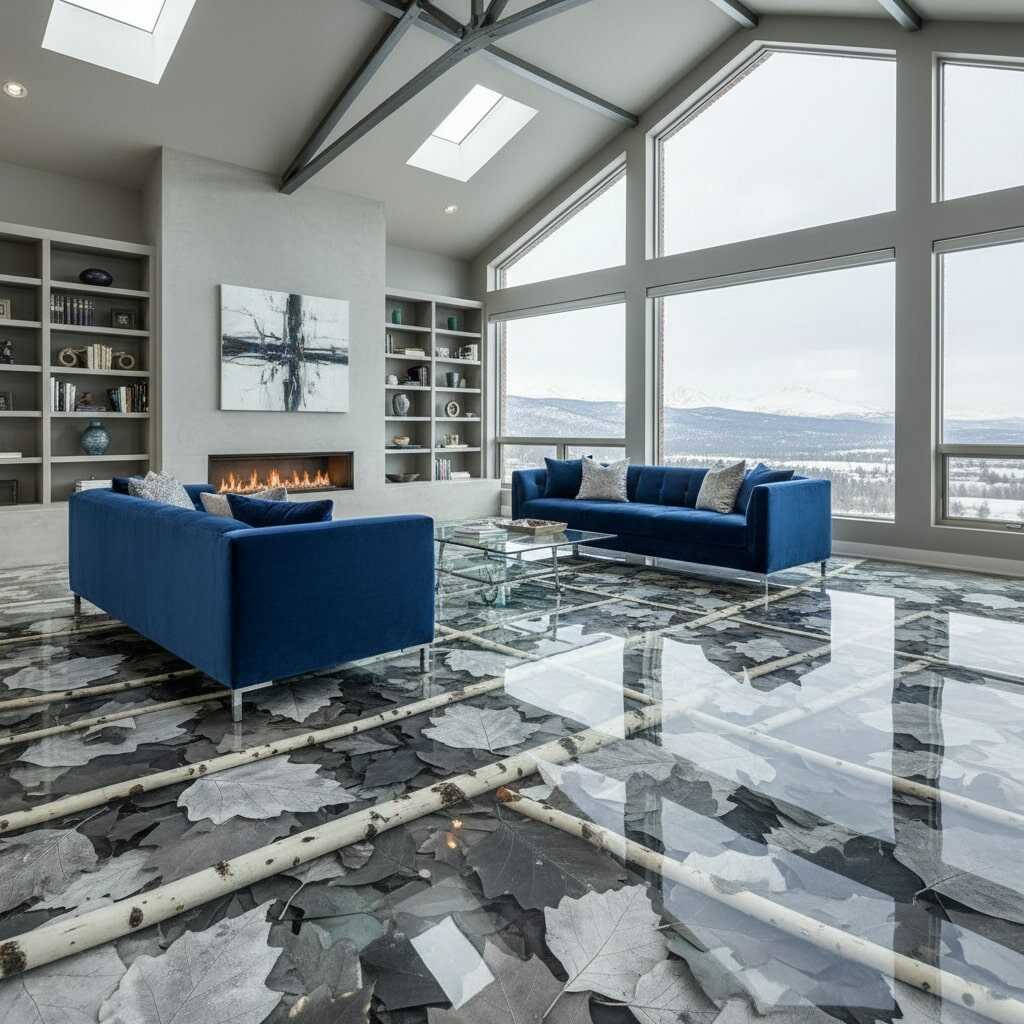
Tactilely, variation invites engagement. One might feel the smooth glide of a resin-sealed leaf surface, then the slight ridges of a branch’s bark, then the feather-soft depression where leaves overlap. Barefoot walking becomes a meditative act, a reconnection with the nuanced topography of the natural world—so often flattened in modern life.
Part II: Ecological Reckoning — Flooring as an Ethical Gesture
Beyond Sustainability: Toward Regenerative Integration
The term “sustainable” has been stretched thin—often denoting mere harm reduction. Leaves and Birch Branch Flooring aspires to something more radical: regenerative integration. This means sourcing materials not just responsibly, but in ways that actively support ecosystem health.
Birch branches used in such applications are typically harvested through thinning—a forestry practice essential for healthy woodland management. Selective removal of weaker or overcrowded trees allows stronger specimens to flourish, increases biodiversity, and reduces wildfire risk. These branches—often considered waste in conventional timber operations—are reclaimed, transforming a byproduct into a focal point.
Leaves, of course, are the ultimate renewable: fallen, abundant, and biodegradable. Their collection occurs post-senescence, after nutrients have cycled back into the soil, posing no disruption to tree health. Some practitioners even partner with municipal composting programs, rescuing leaves destined for landfills (where they emit methane) and giving them a second life as aesthetic and emotional anchors.
Crucially, the processing avoids toxic binders or volatile finishes. Natural resins—plant-derived or minimally modified—are used to stabilize leaves without sealing them into plastic-like oblivion. Pigments, if used, are mineral-based: iron oxides for earthy reds, charcoal for depth, chalk for luminosity. The floor, at end-of-life, can return to the earth—composted, buried, or repurposed—not as hazardous waste, but as humus.
Challenging the Myth of Permanence
Modern architecture prizes longevity—floors expected to endure 50 years without change. Yet in nature, permanence is an illusion. Forests regenerate; rivers shift course; mountains erode. Leaves and Birch Branch Flooring gently resists this cultural obsession with fixity.
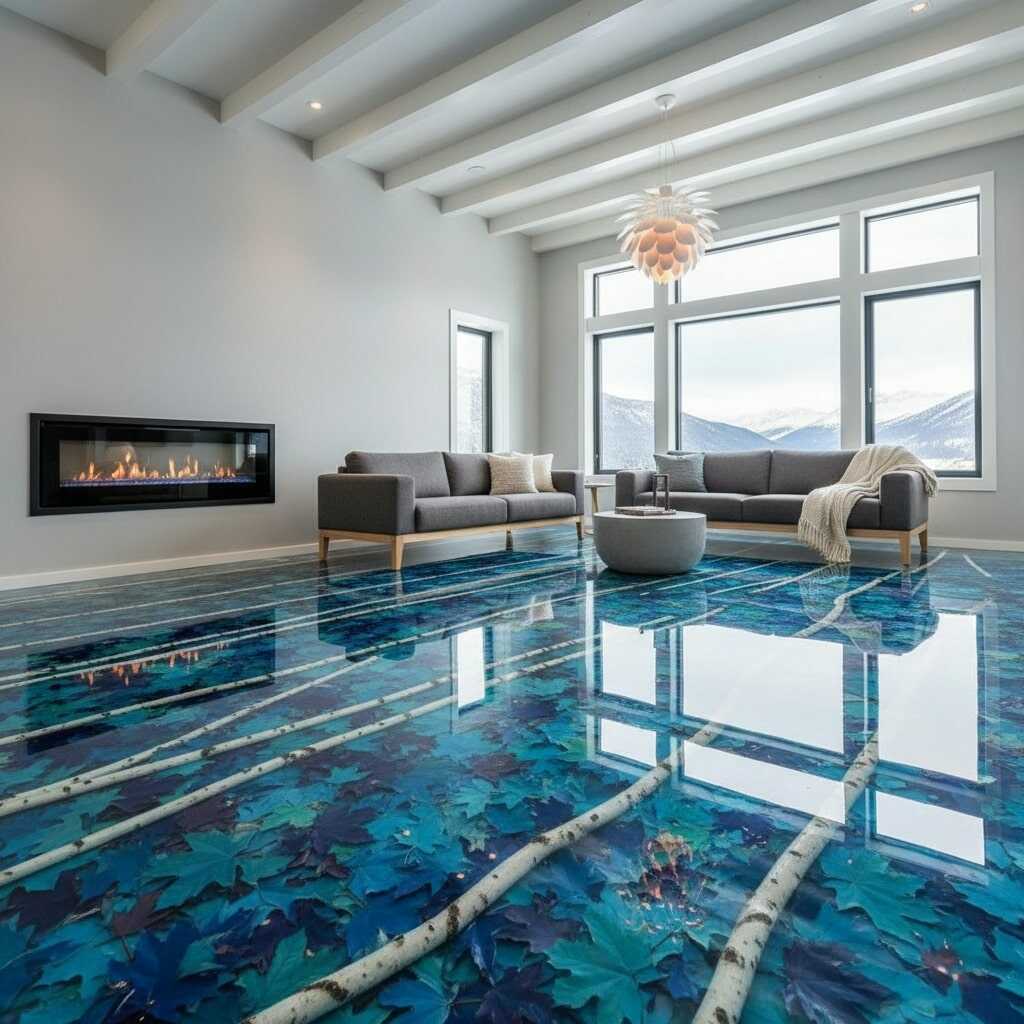
These floors are designed with graceful aging in mind. Leaves may subtly fade—not to dullness, but to softer, parchment-like tones. Birch branches may deepen from pale gold to amber. Small shifts in humidity may cause minute expansion—visible as gentle undulations, not cracks. This is not failure; it is participation. The floor responds to its environment, just as living things do. It asks occupants to relinquish control, to accept that beauty can reside in evolution—not despite change, but through it.
In doing so, it models a different relationship to the built environment: not one of dominance (“I will make this space unchanging”), but of coexistence (“I will dwell with this space as it breathes”).
The Ethics of Localism and Craft
Such flooring resists globalized supply chains. Birch is abundant across boreal and temperate zones—Scandinavia, Canada, northern US, Russia—making regional sourcing feasible. Leaves are hyperlocal: the oak from your municipal park, the birch from the woods behind the workshop. Transport emissions plummet; carbon sequestration remains local.
Moreover, the labor is inherently artisanal. Machines cannot replicate the judgment required to select branches of compatible curvature, to arrange leaves in compositions that balance density and void, to sand birch without erasing its character. This elevates craft from nostalgia to necessity—a reassertion of human hands as mediators between forest and home. It sustains micro-economies: the forester, the forager, the finisher, the installer—all working within a closed-loop ethos.
The floor, then, becomes a document of place and practice—not an anonymous slab, but a testament to specific hands, specific trees, specific seasons.
Part III: Psychological Reorientation — From Dwelling to Belonging
Biophilia Reconsidered
The biophilia hypothesis—that humans possess an innate affinity for nature—is often reduced to adding potted plants or nature murals. Leaves and Birch Branch Flooring enacts biophilia at a foundational level. It does not reference nature; it incorporates it—literally grounding occupants in organic material.
Neuroaesthetics research shows that exposure to natural patterns (fractals in leaf veins, branching in twigs) reduces cortisol levels and enhances parasympathetic activity. But beyond measurable metrics, such flooring fosters a deeper shift: a re-enchantment of the mundane.
Consider the act of sweeping. On a conventional floor, it is chore. On a Leaves and Birch Branch Flooring surface, it becomes a ritual of attention: noticing how dust gathers in the hollow of a leaf cup, how debris catches against a twig’s curve. The floor demands—and rewards—mindfulness. It disrupts autopilot, inviting presence.
Temporal Anchoring in an Age of Displacement
Digital life fractures time into fragments—notifications, scrolls, refreshes. Natural materials reintroduce duration. A birch branch took 15 years to grow; a leaf performed photosynthesis for 120 days. To live with these materials is to be gently reminded of slower, deeper timescales.
This is especially potent in homes designed for transience—rental apartments, urban lofts, minimalist boxes. Leaves and Birch Branch Flooring roots such spaces in something older and more enduring than lease agreements or trends. It whispers: This place has continuity. You are part of a longer story.
For children, this is formative. Growing up with floors that change subtly with seasons teaches that environments are alive, responsive, interconnected. It cultivates stewardship not as duty, but as intuition.
Sacred Ordinariness
Finally, Leaves and Birch Branch Flooring reclaims the sacred in the ordinary. In many traditions, thresholds are liminal spaces—points of transition imbued with meaning. The floor is the most fundamental threshold: between body and building, self and shelter.
When that threshold is composed of elements that once breathed, photosynthesized, and decayed—when it carries the scent of rain-soaked forest in humid weather, the faint rustle of dried leaf underfoot—it ceases to be neutral ground. It becomes a site of quiet reverence. Not religious, necessarily—but reverent. A daily acknowledgment that we do not own the world; we borrow its materials, and owe it gratitude.
This is transformation not through grand gesture, but through accumulated moments: the glance downward that becomes a pause; the barefoot step that becomes a breath; the sweep of light that becomes a meditation.
Conclusion: The Floor as Threshold, Not Boundary
Leaves and Birch Branch Flooring does not shout. It does not dazzle with gloss or impress with scale. Its power lies in its quiet insistence on integration—of nature into architecture, of time into material, of the human into the more-than-human world.
It refuses the dichotomy of inside versus outside. Instead, it proposes continuity: the forest does not end at the doorstep; it flows inward, reconfigured but unbroken. The floor becomes a threshold not in the sense of a barrier, but as a transition zone—a place where boundaries soften, and belonging deepens.
In a world increasingly mediated by screens and surfaces designed for frictionless efficiency, such flooring offers resistance—not aggressive, but resilient. It asks us to slow, to notice, to remember that we are creatures of earth and leaf and branch. That our homes need not be fortresses against nature, but sanctuaries within it.
To choose Leaves and Birch Branch Flooring is not an aesthetic decision alone. It is an ethical stance, a psychological commitment, a poetic act. It is the decision to let the outside in—not as ornament, but as essence. And in doing so, to transform not just a room, but the very way we inhabit the world: gently, gratefully, and with our feet firmly—beautifully—on the ground.