
When Legend Takes Form in Timber
There exists a rare and transcendent moment in the history of human creation—when myth, material, and mastery converge in a single object. In such an instance, wood ceases to be mere timber; it becomes narrative, vessel, and spirit. The Dragon Shaped Wooden Chair is one such object—not a piece of furniture in the utilitarian sense, but a sculptural manifesto of cultural memory, disciplined artistry, and symbolic resonance. Unlike mass-produced seating designed for ergonomic efficiency, this chair embodies an ancient dialogue between the celestial and the earthly, the imagined and the hewn.
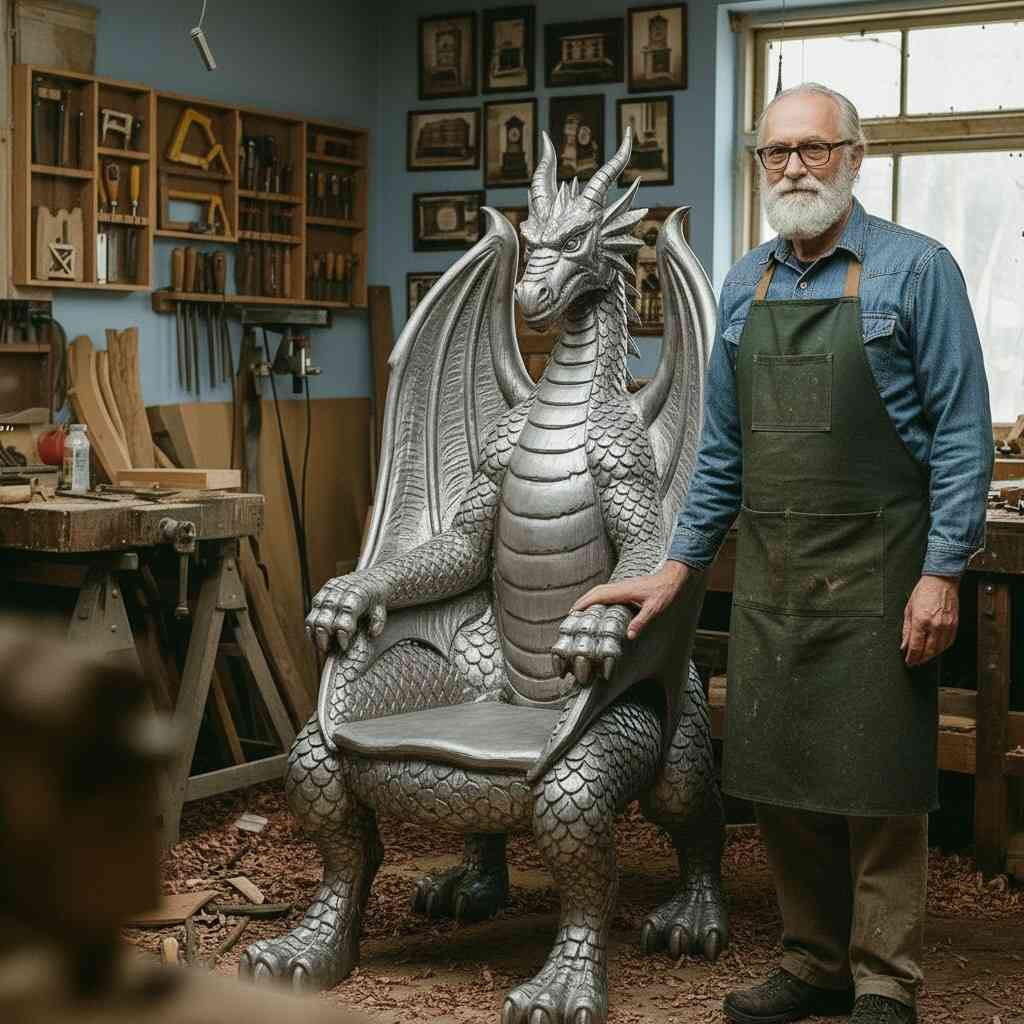
At first glance, the Dragon Shaped Wooden Chair commands presence. Its silhouette echoes the sinuous curves of the Eastern dragon—long, undulating, imbued with vitality—not the scaled, fire-breathing beast of Western folklore, but the auspicious, cloud-riding sovereign of rain, rivers, and cosmic balance. Every contour, every carved scale, every twist of its armrests and backrest speaks of reverence—for tradition, for nature, and for the unseen forces that guide human destiny.
This article explores the profound artistry behind the Dragon Shaped Wooden Chair, tracing its conceptual origins, unpacking the layered symbolism it carries, and honoring the meticulous craftsmanship required to bring such a vision into three-dimensional life. It is not a study of function, but of form-as-meaning; not of commerce, but of continuity. In three parts, we descend into the world where myth becomes wood, and wood, in turn, becomes myth reborn.
Part I: The Mythic Blueprint—Dragons as Archetypal Embodiments
To understand the Dragon Shaped Wooden Chair is to first understand the dragon—not as monster, but as mythos. Across East Asia, particularly in China, Korea, and Japan, the dragon is a benevolent, celestial being: a symbol of imperial authority, cosmic harmony, and the life-giving forces of water and sky. Unlike the destructive wyverns of European tales, the Eastern dragon is serpentine, bearded, antlered, and clawed—not with malice, but with majesty. It does not hoard gold; it guards wisdom. It does not ravage villages; it summons rain for harvests.
Thus, when a craftsman elects to sculpt a chair in the form of such a creature, they are not merely imitating a figure—they are invoking an entire cosmology. The dragon’s form is not arbitrary; it is a sacred geometry of meaning.
The Anatomy of Symbolism
Every anatomical feature of the traditional dragon carries symbolic weight. Its antlers, reminiscent of a stag’s, represent longevity and the cyclical renewal of life. Its mane, flowing like water or flame, signifies dynamic energy—qi, the vital life force coursing through all things. Its scales, overlapping and precise, evoke protection, resilience, and the armor of virtue. Its claws, typically five in imperial representations, allude to the five elements (wood, fire, earth, metal, water) or the five blessings: longevity, wealth, health, virtue, and a peaceful death.
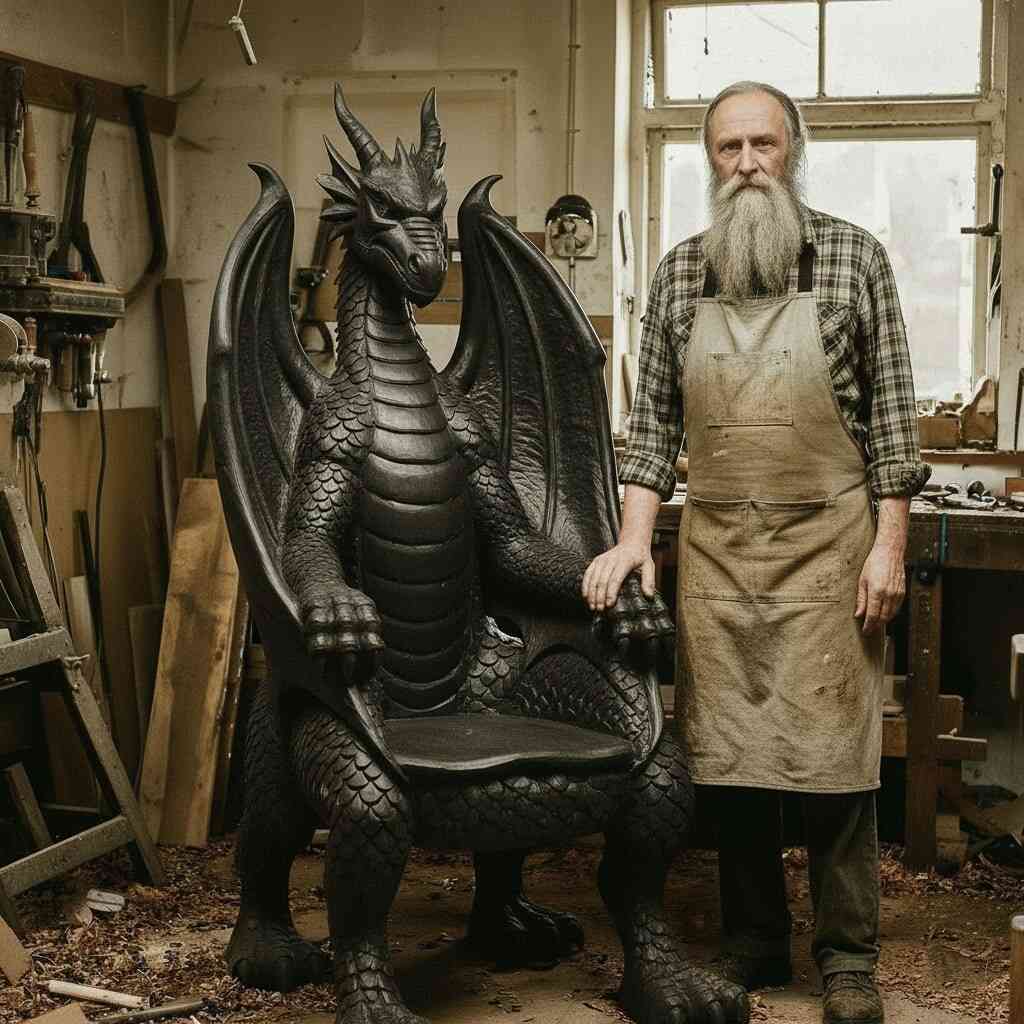
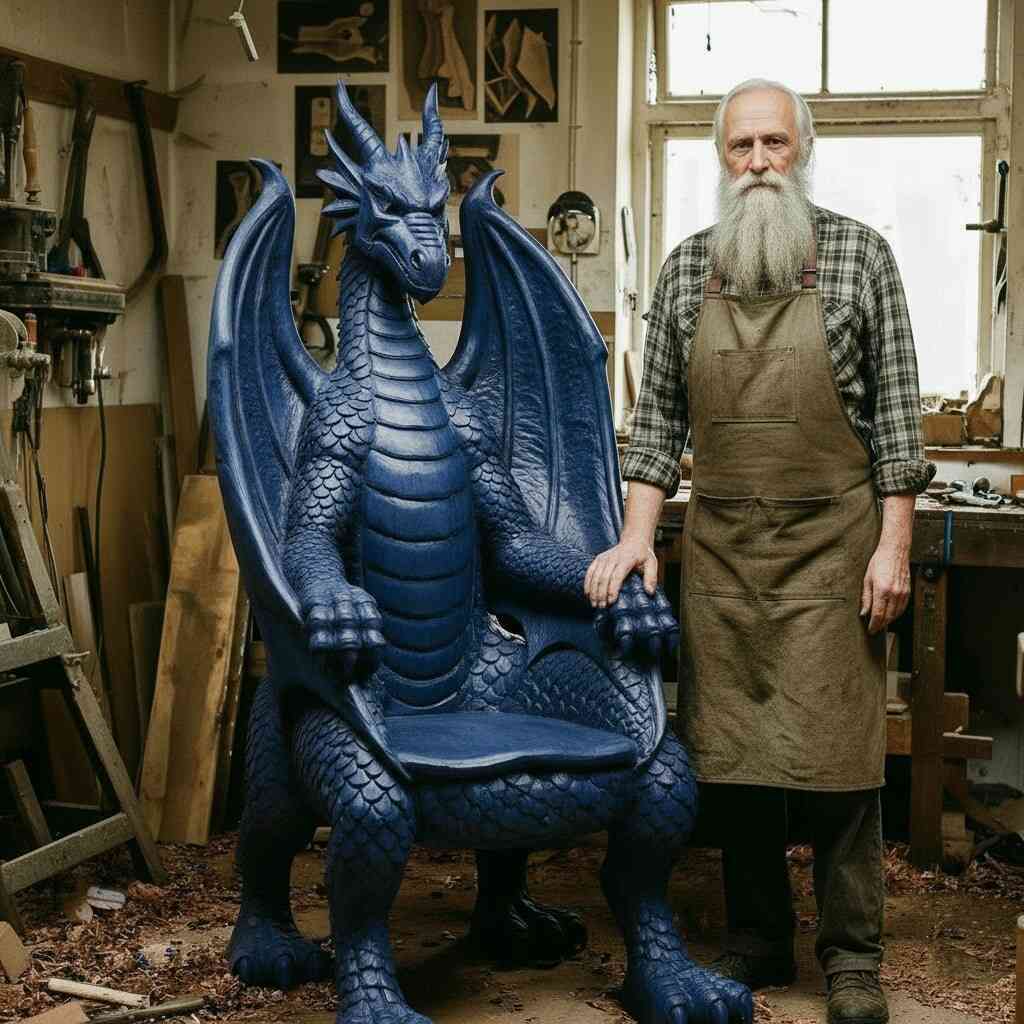
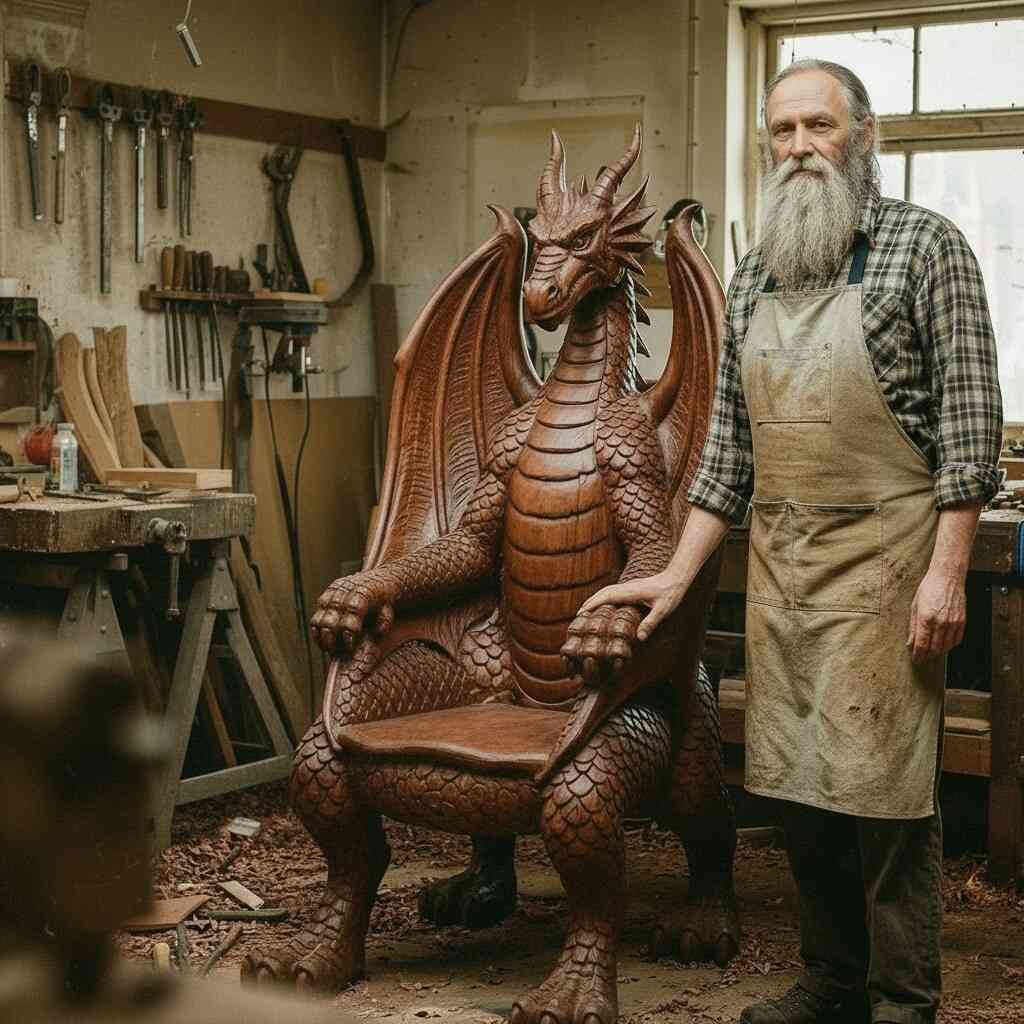
In the Dragon Shaped Wooden Chair, these elements are not decorative flourishes—they are structural necessities of the design language. The chair’s backrest may rise in a cascading arch, mimicking the dragon’s ascending spine as it coils toward the heavens. The armrests might culminate in stylized claws, not menacing, but cradling—as if the sitter is held within the dragon’s benevolent guardianship. Even the legs of the chair, splayed or columnar, can suggest the dragon’s powerful limbs poised mid-leap, frozen in a moment of poised potential.
Sitting Within the Myth
Crucially, the Dragon Shaped Wooden Chair invites participation—not just observation. To sit upon it is to enter the myth. The act of seating oneself becomes ritualistic. One does not dominate the dragon; one harmonizes with it. In ancient Chinese court ritual, the emperor alone could sit upon dragon-throned chairs, for he was the Son of Heaven—the earthly conduit of the dragon’s celestial mandate. While modern interpretations shed political hierarchy, they retain the spiritual gravity: to occupy the seat is to acknowledge one’s place within a larger order—between heaven and earth, past and future, self and cosmos.
This participatory dimension elevates the chair beyond sculpture. It is relational art—a silent covenant between maker, object, and user. The myth is not merely represented; it is activated.

Part II: The Hands That Shape the Myth—Craftsmanship as Devotion
If the dragon supplies the soul, then the woodworker supplies the body—and the process by which this union occurs is nothing short of devotional. Creating a Dragon Shaped Wooden Chair demands more than technical skill; it requires a philosophical alignment with the material and the motif. This is not furniture-making. It is wood-sculpting as spiritual discipline.
Material Selection: The Voice of the Tree
The journey begins long before the first chisel strikes. The choice of wood is foundational—not only for durability, but for resonance. Traditional artisans often favor huanghuali (Dalbergia odorifera), zitan (rosewood), or nanmu (golden nanmu)—woods prized not just for their density and grain, but for their cultural and energetic qualities. Nanmu, for instance, emits a faint camphor-like aroma when worked, believed to repel insects and negative energies. Its shimmering “golden silk” grain seems to shift with the light, evoking the dragon’s iridescence.
Each log is studied for its knots, fissures, and grain direction—not as flaws to discard, but as narratives to incorporate. A gnarl may become the dragon’s eye; a ripple in the grain, the ripple of water beneath its form. In this worldview, the tree is not raw material to be conquered, but a co-creator. The artisan listens—literally—to the wood: its weight, its scent, its resistance. As one master carver in Suzhou once said, “The dragon is already inside the log. My hand only helps it emerge.”
The Carving Process: From Block to Breath
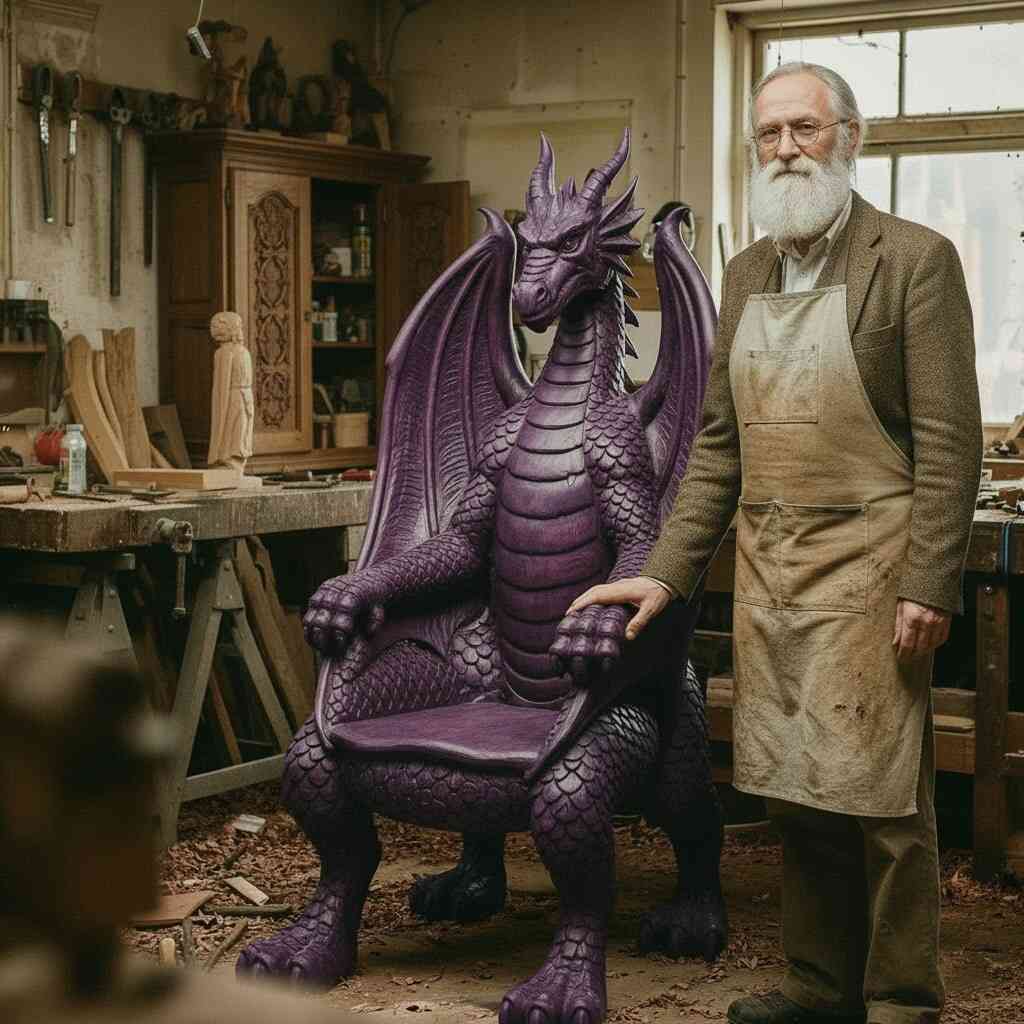
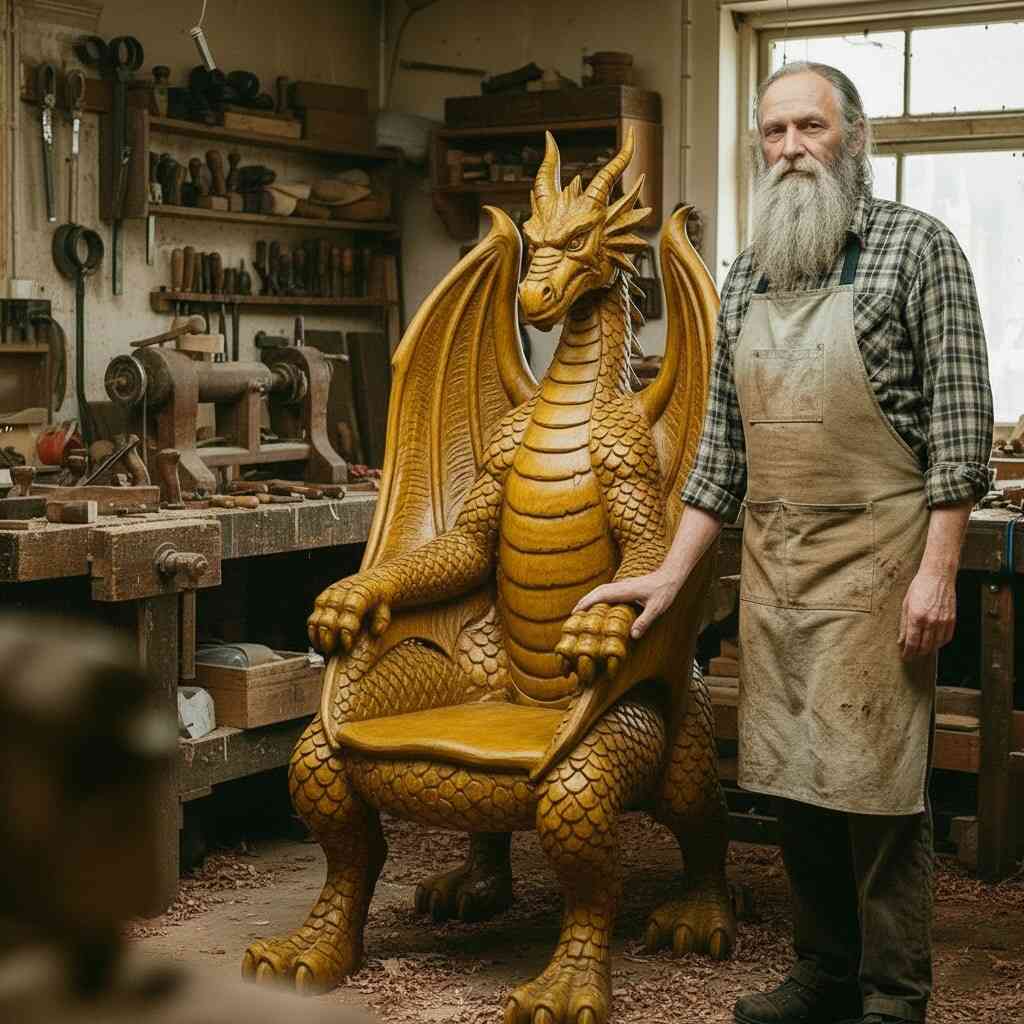
The transformation of timber into dragon unfolds over weeks, sometimes months. It begins with rough shaping—chainsaws or adzes reducing the log to a volumetric approximation. But soon, the tools shift: gouges, chisels of varying sweeps, and mallets wrapped in leather take over. The work becomes meditative, rhythmed by breath and heartbeat.
Carving scales alone may consume days. Each scale must be individually undercut, curved, and polished to catch light like overlapping armor—yet remain supple to the touch. Too rigid, and the dragon appears fossilized; too soft, and it loses its sovereign dignity. The curve of the spine is equally critical. A true dragon does not slump; it ascends. The backrest must rise in a gentle, S-shaped “cloud-dragon” curve—a motif seen in Han dynasty bronzes and Song dynasty paintings—suggesting motion arrested mid-flight.
The head, when present (some designs imply the dragon emerging from or dissolving into the wood), is the apex of expressive challenge. The eyes must convey shen—spiritual luminosity—without anthropomorphism. No pupils too large, no snarls too aggressive. Often, the eyes are inlaid with darker wood or polished stone, creating a gaze that seems to follow the viewer—not with threat, but with ancient recognition.
Joinery and Structure: Invisible Integrity
Beneath the spectacle lies engineering of profound subtlety. Traditional Chinese furniture eschews nails and screws, relying instead on mortise-and-tenon joinery—a system of interlocking wooden components that expand and contract with humidity, preserving integrity across centuries. In a Dragon Shaped Wooden Chair, these joints must withstand not only weight, but the torsional stresses of sinuous forms.
Consider the tail: if it curls beneath the seat to form a leg or footrest, the grain must run continuously through the curve to prevent splitting. Steam-bending may be employed, but sparingly—excessive heat can deaden the wood’s vibrancy. More often, the artisan laminates thin strips, gluing them over a form, allowing the piece to retain flexibility and life.
Finishing is equally deliberate. Rather than thick lacquers that bury the grain, many masters use raw tung oil or beeswax, rubbed in by hand over successive days. The result is a surface that feels alive—warm, slightly yielding, deepening in patina with time. With each touch, the chair evolves, absorbing the oils of human skin, the dust of seasons, the quiet weight of contemplation.
Part III: Continuity in Carving—The Chair as Cultural Palimpsest
A Dragon Shaped Wooden Chair is never only of its maker’s time. It is a palimpsest—a layered inscription of centuries. Its form echoes Ming dynasty thrones, yet its abstraction may nod to Song literati aesthetics or even contemporary sculptural sensibilities. In this, the chair becomes a vessel of cultural continuity: not frozen in nostalgia, but dynamically reinterpreted.
Echoes of Dynastic Design
The Ming era (1368–1644) is often hailed as the golden age of Chinese hardwood furniture. Chairs from this period—such as the famed Quanyi (circle-back chair) or Sijutung (four-protruding-leg chair)—emphasized purity of line, structural honesty, and symbolic restraint. Dragons appeared, but often subtly: a single head emerging from a cloud-scroll on a back splat; claws gripping the ends of armrests.
The Dragon Shaped Wooden Chair, by contrast, is unapologetically zoomorphic—yet it inherits Ming principles. Its proportions adhere to golden-section ratios; its negative space (the voids between limbs, between back and seat) is as carefully composed as the solid forms. There is no excess. Every curve serves balance; every plane invites the hand.
The Role of the Contemporary Artisan
Today’s makers stand at a crossroads: honoring lineage while resisting pastiche. Some integrate modern tools—CNC routers for initial roughing—but insist that final carving be done by hand, arguing that machine precision lacks qi, the breath of intention. Others experiment with reclaimed wood from demolished temples or ancestral homes, embedding layers of historical resonance into the grain itself.
Notably, many contemporary artisans collaborate with calligraphers or ink painters, inscribing fragments of classical poetry—such as Du Fu’s lines on dragons riding autumn clouds—into hidden surfaces: the underside of the seat, the inner curve of a leg. These are not signatures, but invocations—quiet offerings to the tradition they steward.
Beyond East Asia: A Universal Archetype
While rooted in East Asian cosmology, the Dragon Shaped Wooden Chair resonates globally because the dragon, in all its cultural permutations, speaks to a shared human impulse: the desire to give form to the ineffable. In Mesoamerica, Quetzalcoatl; in Mesopotamia, Tiamat; in Wales, Y Ddraig Goch—each is a threshold guardian, a shape-shifter between realms.
A skilled artisan in Kyoto may carve with the same reverence as one in Kyoto, Kyoto—but also in Barcelona or Portland. The difference lies not in geography, but in depth of inquiry. A superficial dragon chair is pastiche. A profound one is participatory myth-making.
Conclusion: The Chair That Breathes
The Dragon Shaped Wooden Chair does not sit in a room. It inhabits it.
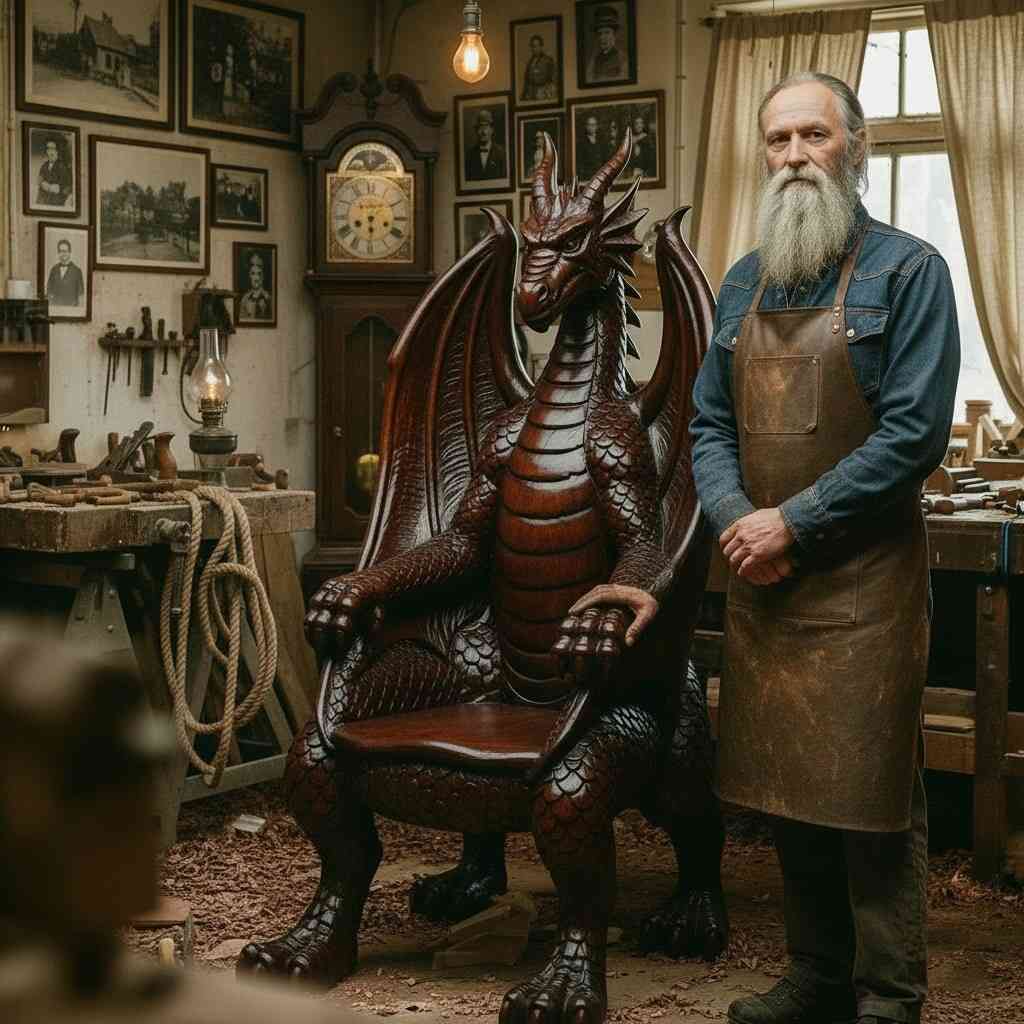
It is not furniture. It is frozen poetry in walnut or rosewood. It is the dream of the ancients, shaped by hands that understand silence, grain, and gravity. It asks nothing of us—no purchase, no praise—only presence. To stand before it is to confront the sublime intersection of imagination and discipline. To sit upon it is to feel, however briefly, what it might be to ride the clouds.
In an age of disposability, of flat-pack anonymity, the Dragon Shaped Wooden Chair is an act of resistance—not loud, but unwavering. It declares that some things must be slow. Some symbols must be deep. Some forms must carry the weight of centuries—not as burden, but as blessing.
The dragon, in myth, is eternal—not because it never dies, but because it renews. It sheds its scales. It ascends in storms. It returns with rain.
So too does the Dragon Shaped Wooden Chair endure—not as relic, but as living tradition. Each curve, each claw, each whisper of grain is a testament: that when human hands meet sacred story and honest wood, something immortal stirs.
And if you listen closely—past the creak of the floorboard, past the hum of the world outside—you might just hear it breathe.