
Where Maritime Heritage Meets Underwater Artistry
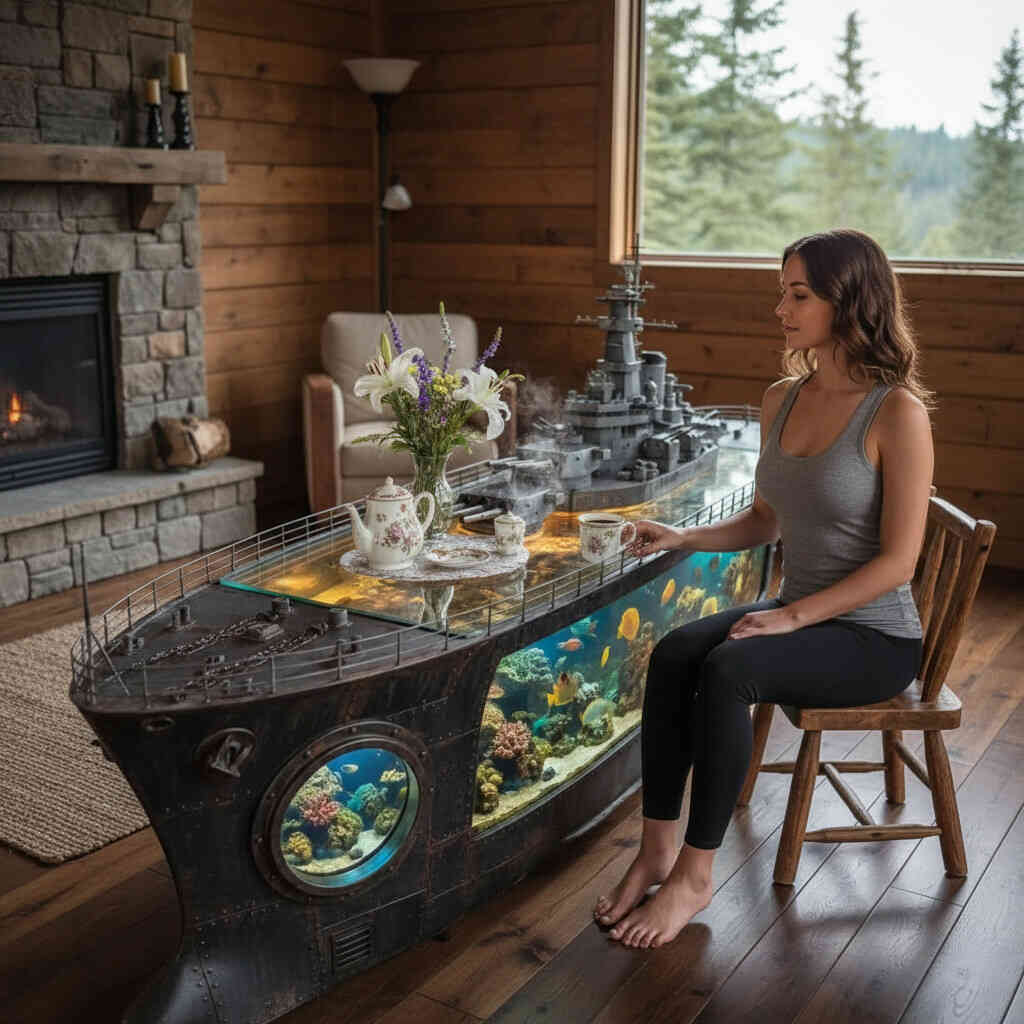
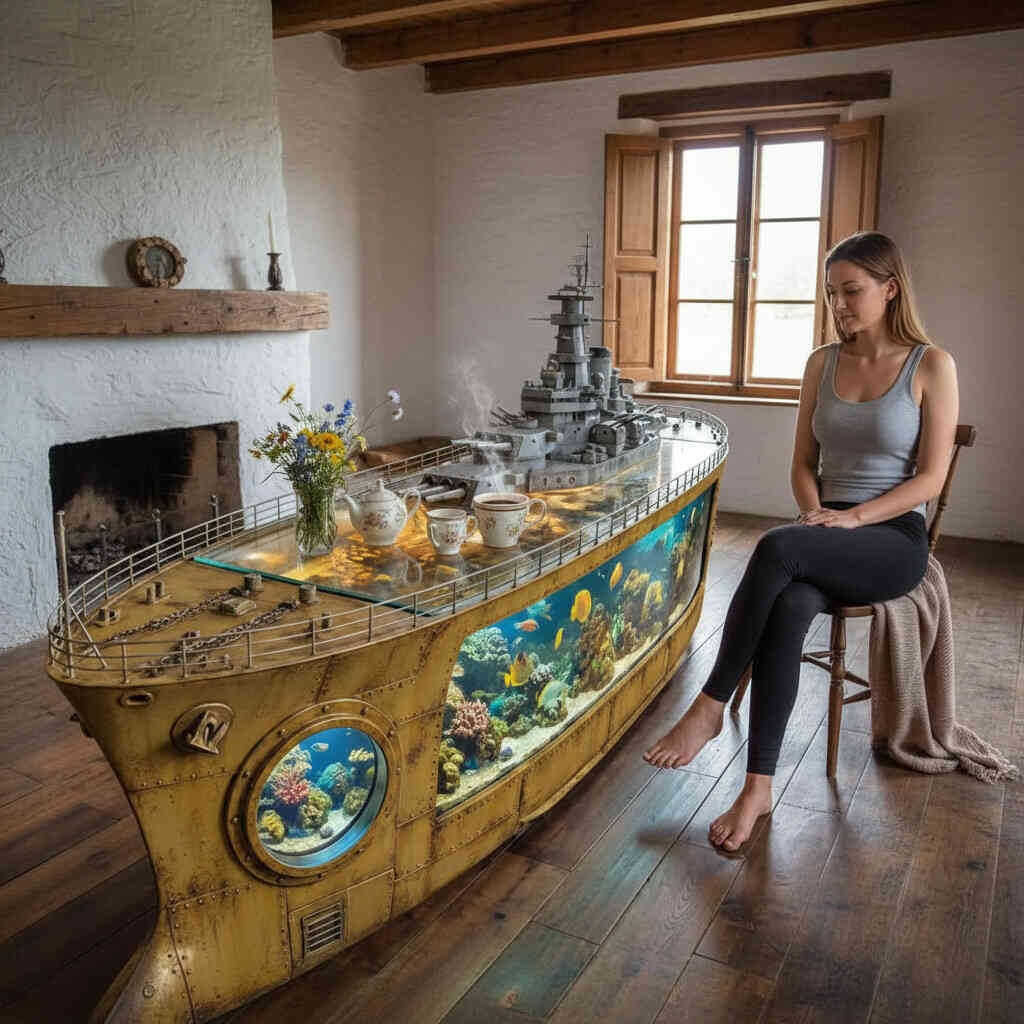
The aquascape exists as a living canvas—a three-dimensional ecosystem where water, stone, wood, and flora converge to tell a silent, evolving story. Within this artistic discipline, inspiration flows from countless sources: misty mountain ranges, tropical riverbanks, serene forests, and desert canyons. Yet one of the most evocative and underexplored frontiers lies not on land, but upon the sea itself—the majestic realm of naval architecture. The concept of the naval ship shaped aquarium transcends mere novelty; it represents a profound dialogue between human engineering and natural ecosystems, inviting aquascapers to reimagine underwater landscapes through the lens of maritime history. This design philosophy draws upon centuries of naval craftsmanship—the sweeping curves of galleon hulls, the geometric precision of ironclads, the elegant lines of clipper ships—to create immersive environments that honor both the vessel’s journey and the life it cradles beneath the surface. A naval ship shaped aquarium becomes more than a container for aquatic life; it transforms into a narrative space where the romance of seafaring adventure merges with the tranquil pulse of an underwater world. For the contemporary aquascaper seeking to move beyond conventional rectangular boundaries, this approach offers a rich vocabulary of form, symbolism, and spatial complexity. It challenges creators to think sculpturally, to consider negative space as deliberately as positive form, and to weave historical resonance into living art. In embracing the naval ship shaped aquarium, we do not merely replicate a ship’s silhouette—we reinterpret its soul, translating the courage of oceanic voyages into the quiet poetry of submerged gardens.
The Architectural Language of Naval Vessels: Translating Form into Aquatic Space
To design a compelling naval ship shaped aquarium, one must first understand the architectural lexicon of historic and modern naval vessels. Each era of shipbuilding contributes distinct visual signatures that can inform aquascaping decisions. The age of sail gifted us vessels with pronounced curvature—the deep, wine-glass hulls of Spanish galleons that cut through Atlantic swells, the elegant tumblehome profiles where decks narrowed toward the waterline, creating a distinctive inward slope. These organic, flowing lines translate beautifully into aquascaping through the strategic placement of driftwood arranged in gentle arcs or stone formations that mimic a hull’s protective embrace. Consider how the pronounced forecastle and quarterdeck of a 17th-century warship created tiered levels—this vertical stratification inspires multi-level aquascapes where foreground carpeting plants give way to midground rockwork, culminating in a dramatic background “deck” of taller stem plants or carefully positioned hardscape elements.
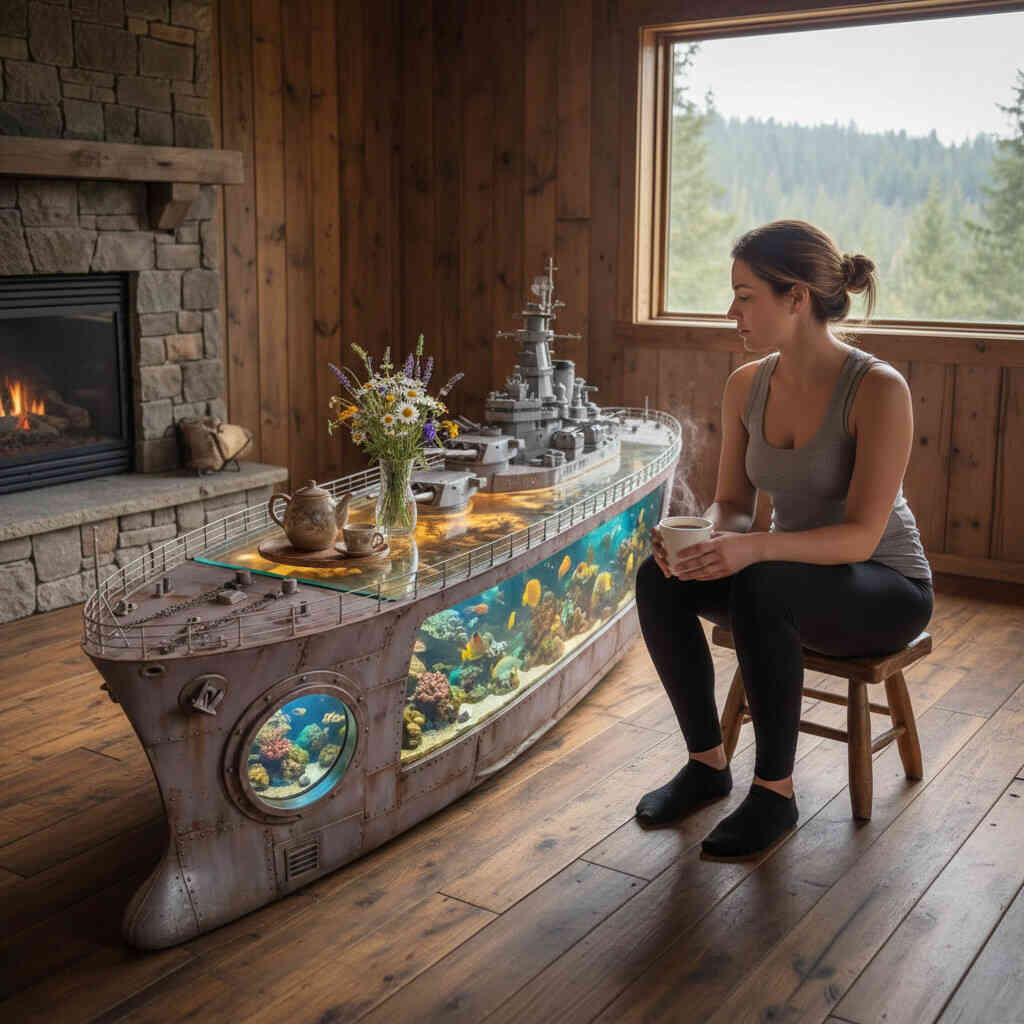
The industrial revolution introduced a new aesthetic vocabulary: the ironclad’s geometric severity, the riveted plates of early steel hulls, the precise angles of conning towers and gun emplacements. These elements invite a more architectural approach to aquascaping—using slate or shale to create sharp, angular formations that suggest armored plating, or arranging stones in regimented patterns that echo naval discipline. Even the functional elements of ships offer inspiration: the graceful sweep of a bowsprit extending beyond the hull suggests negative space utilization in aquascaping, where emptiness becomes as meaningful as occupied territory. Portholes translate into circular openings within rockwork, creating visual portals that draw the eye deeper into the scape. The complex rigging of sailing vessels—those intricate webs of rope and spar—finds its aquatic counterpart in delicate branching wood arrangements or the feathery fronds of certain aquatic ferns and mosses that suggest suspended complexity above the “deck” of the aquascape.
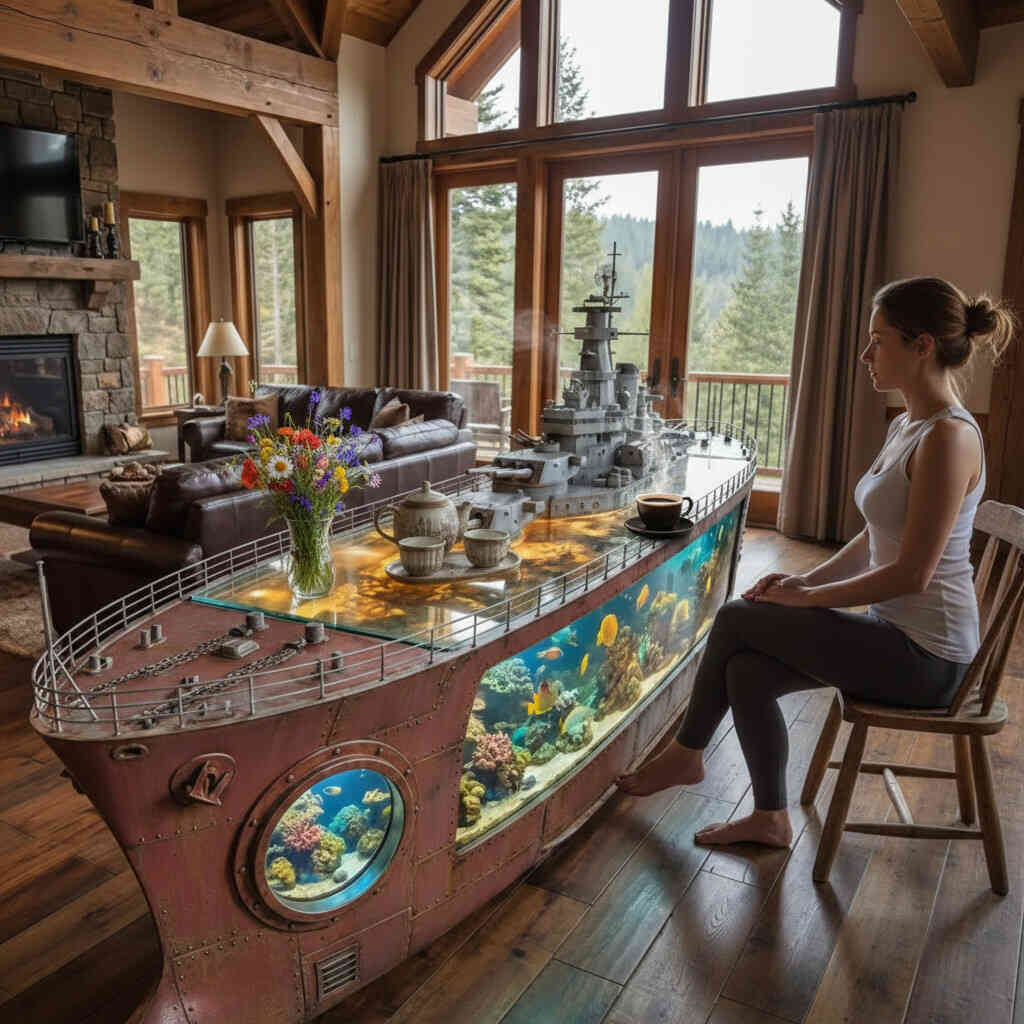
Critically, the naval ship shaped aquarium does not demand literal replication. Rather, it calls for abstraction—the essence of a vessel’s form distilled into hardscape and planting choices. A subtle inward curve of the background wall might suggest a hull’s contour without explicit mimicry. The strategic placement of a single piece of driftwood, angled like a mast against a backdrop of fine-leaved plants suggesting ocean spray, can evoke an entire maritime narrative. This interpretive approach honors both the ship’s legacy and the aquascape’s primary purpose: to support thriving aquatic life. The vessel becomes metaphor rather than model—a conceptual framework guiding spatial relationships, flow dynamics, and visual rhythm within the underwater garden.
Historical Narratives and Symbolic Depth in Aquatic Storytelling
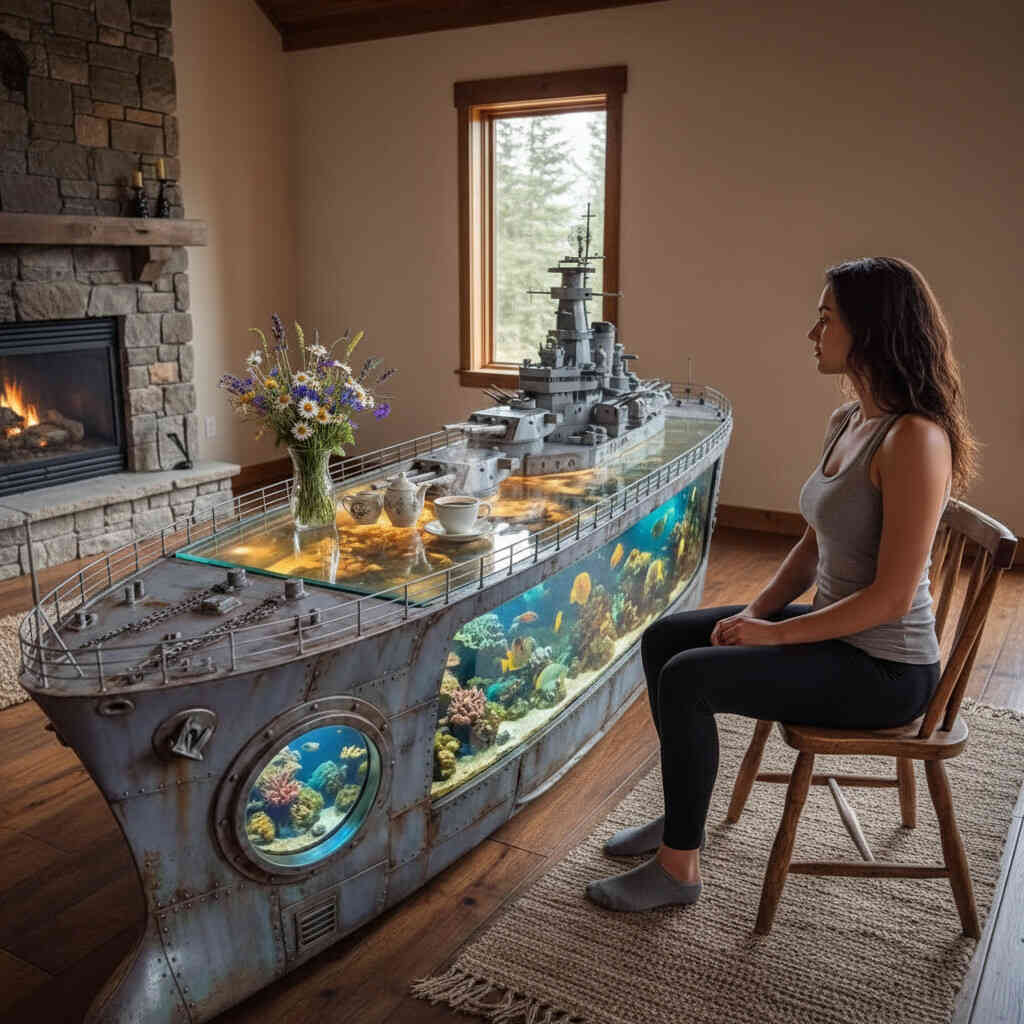
Beyond form lies meaning—the rich historical tapestry that naval vessels carry within their timbers and steel. A naval ship shaped aquarium gains profound depth when its design acknowledges the stories embedded in maritime history. The Portuguese caravel that carried explorers across uncharted oceans speaks to themes of discovery and courage—qualities that might inspire an aquascape featuring unexpected plant combinations or unusual hardscape materials arranged to suggest venturing into the unknown. The hospital ships of wartime, marked with red crosses and dedicated to healing, could inform a serene aquascape emphasizing restorative qualities: soft water parameters, gentle flow, and plant species known for their calming visual effect.
Even the tragic narratives hold creative potential. The ghost ships of maritime lore—the Mary Celeste found adrift with no crew, vessels lost to sudden squalls—invite contemplative designs that embrace mystery and absence. An aquascape inspired by such tales might feature a single, weathered piece of driftwood standing sentinel over an expanse of fine sand, with minimal planting suggesting abandonment, yet with resilient species like java fern clinging to the wood as symbols of persistence. The naval ship shaped aquarium thus becomes a vessel for memory itself—a floating archive where historical consciousness merges with biological vitality.
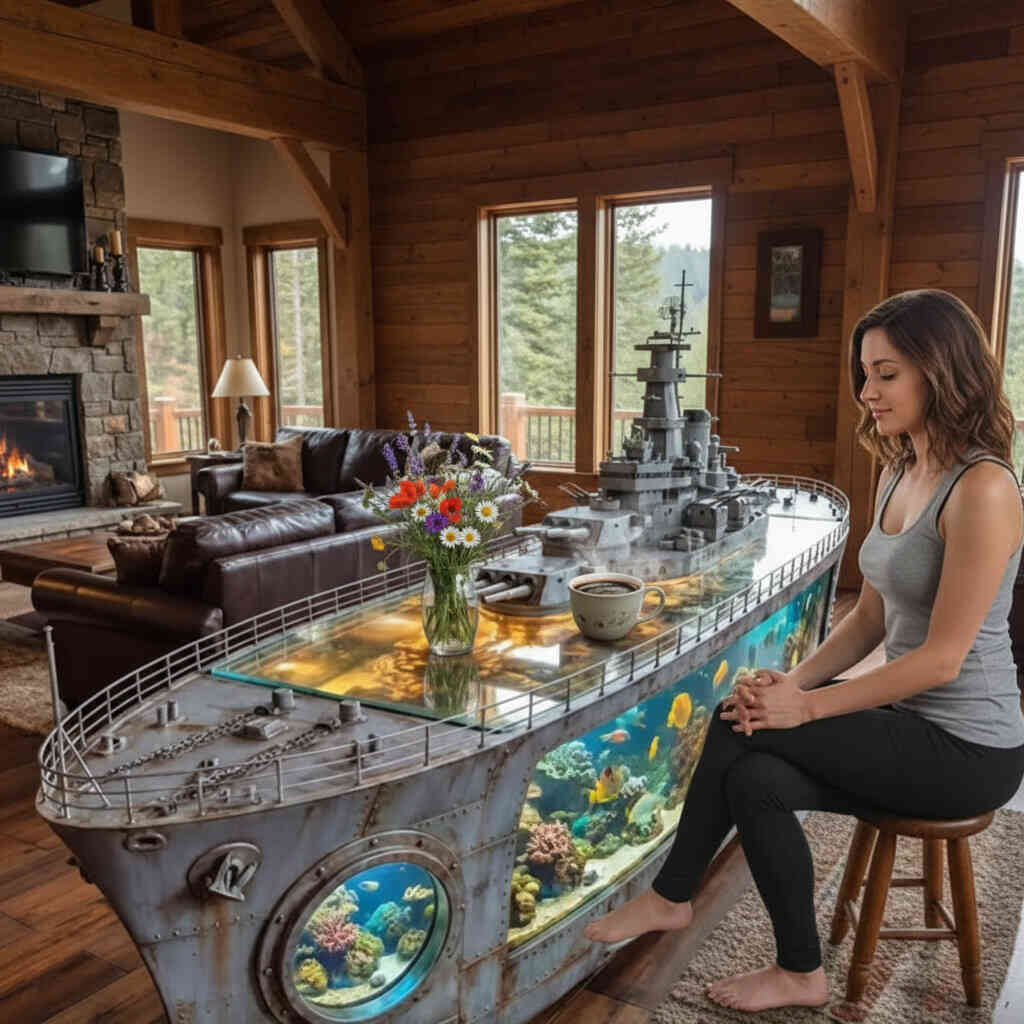
This symbolic dimension extends to ecological awareness. Many historic naval vessels sailed waters now threatened by climate change and pollution. An aquascape inspired by 19th-century whaling ships might incorporate bleached coral fragments (ethically sourced) alongside thriving live plants—a visual meditation on loss and renewal. A design evoking Polynesian voyaging canoes, those magnificent vessels that carried Pacific Islanders across vast ocean distances using celestial navigation, could celebrate indigenous maritime knowledge through plant selections native to Oceania and hardscape arrangements reflecting traditional wayfinding patterns. In these interpretations, the naval ship shaped aquarium transcends decoration to become a site of reflection—where viewers contemplate humanity’s complex relationship with the oceans that have both sustained and challenged us throughout history.
Practical Aquascaping Techniques for Nautical-Themed Environments
Translating naval inspiration into a functional, thriving aquascape requires thoughtful technique. Water flow dynamics become particularly significant in a naval ship shaped aquarium, where curved walls or unconventional geometries may create unexpected current patterns. Rather than fighting these characteristics, the skilled aquascaper works with them—positioning flow-resistant plants like anubias or bucephalandra in areas of stronger current (suggesting a ship’s bow cutting through waves), while placing delicate species like riccia or dwarf hairgrass in calmer zones (evoking sheltered decks or protected harbors). Filtration outlets can be strategically positioned to create gentle circulation that mimics oceanic movement without stressing inhabitants—a subtle nod to the perpetual motion of sea voyages.
Substrate selection offers another layer of narrative possibility. Dark aqua soils might represent the deep ocean surrounding a vessel, while patches of fine white sand could suggest sunlit shallows near tropical ports of call. Layering techniques—placing nutrient-rich substrates beneath inert sands—can create visual topography reminiscent of ocean floors meeting shipwrecks. When arranging hardscape materials, consider the vessel’s imagined journey: wood pieces weathered to silver-gray might represent timbers salvaged from long voyages, while stones with greenish patinas could suggest growth accumulated during extended anchorage in sheltered bays.
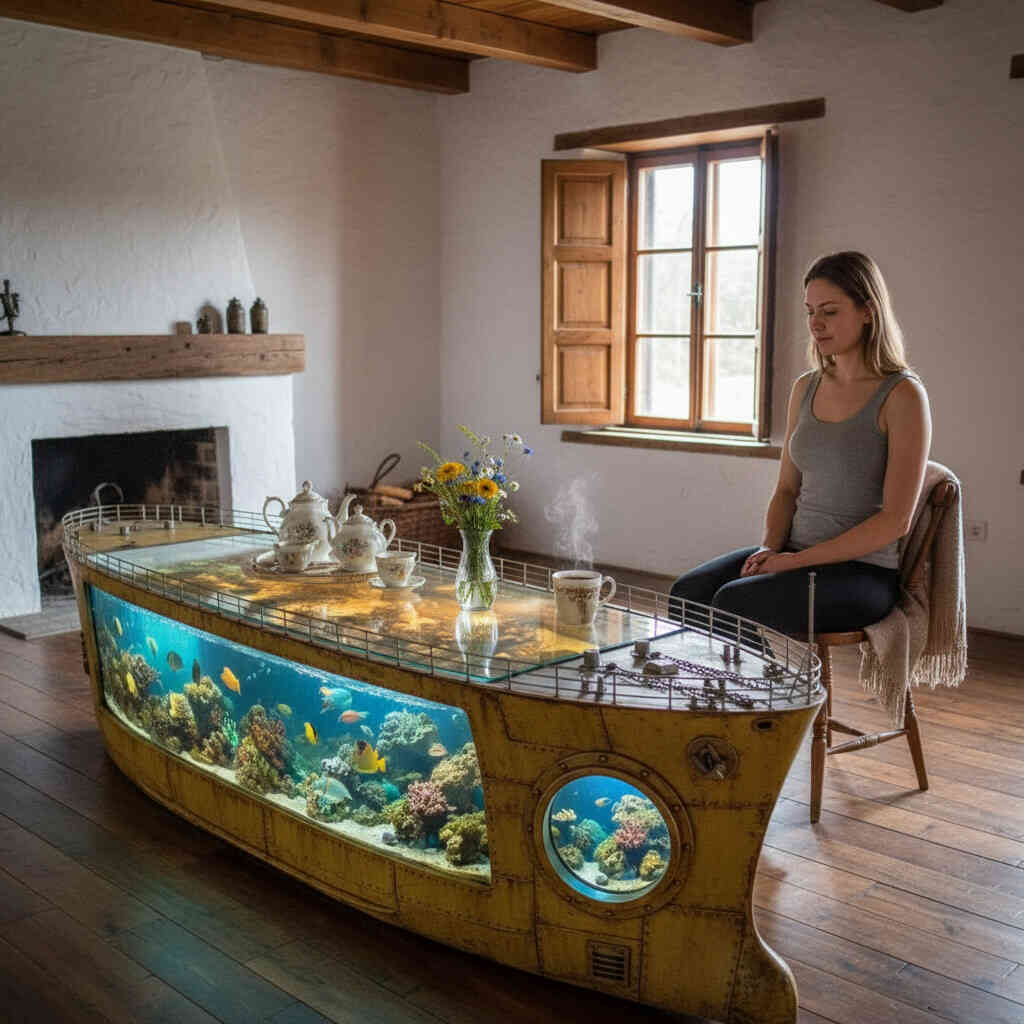
Plant selection becomes a form of botanical storytelling. Species with fine, flowing leaves—like cabomba or hornwort—evoke seaweed drifting alongside a hull. Upright plants such as ludwigia or rotala create vertical elements suggesting masts or rigging against the water’s surface. Mosses attached to driftwood or stones recall the tenacious life that colonizes shipwrecks over centuries—nature’s quiet reclamation of human artifacts. Even algae management takes on poetic significance: a carefully cultivated patch of green spot algae on a stone might be embraced as “barnacle growth,” while excessive diatom blooms could be viewed as the temporary haziness of a vessel emerging from drydock—challenges to be navigated with patience rather than eradicated with chemical haste.
Lighting design completes the atmospheric transformation. Graduated intensity—brighter at the “bow” fading toward the “stern”—can suggest a ship moving through changing light conditions at sea. Gentle surface agitation created by filter output interacts with lighting to produce caustic patterns on the aquarium floor, mimicking sunlight dancing through ocean waves onto a vessel’s hull. These subtle effects require no special equipment, only intentionality in setup and adjustment.
Conclusion: The Enduring Voyage of Creative Aquascaping
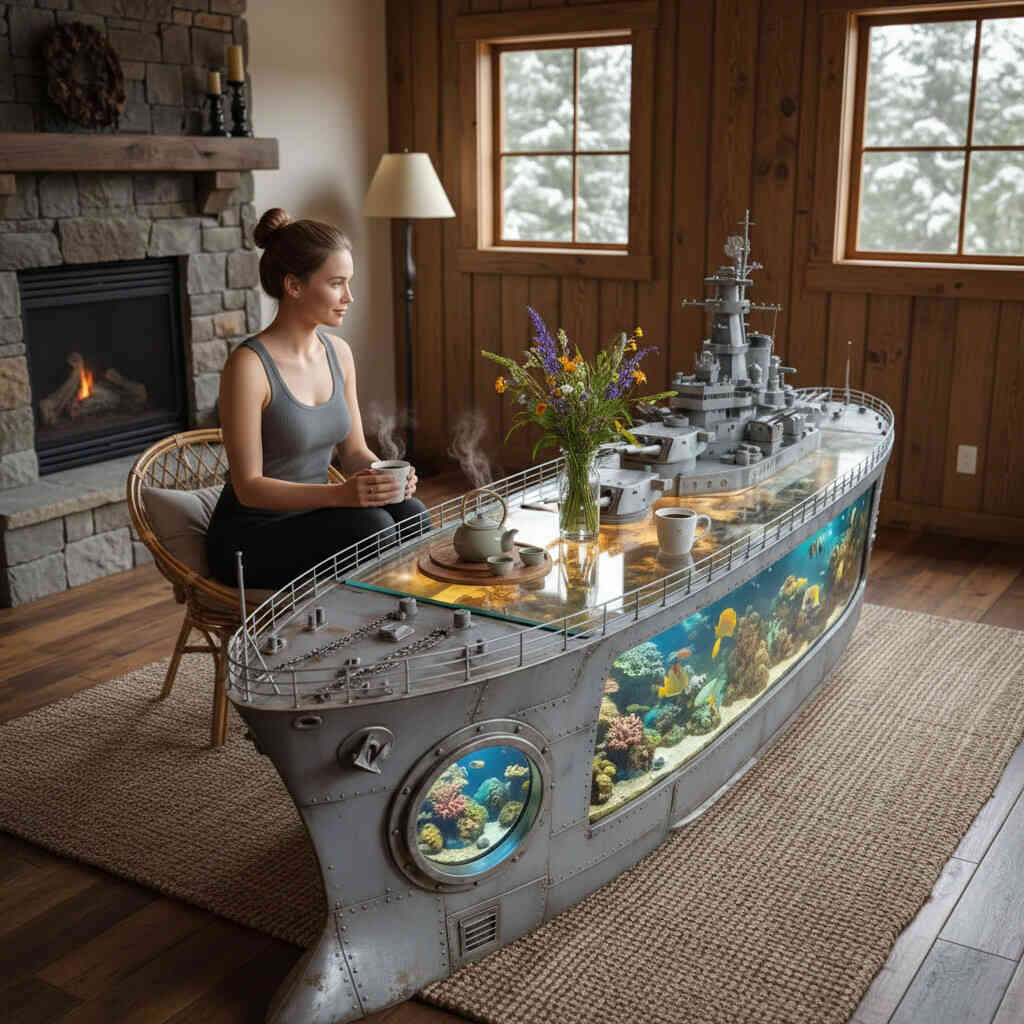
The naval ship shaped aquarium represents far more than an aesthetic curiosity—it embodies a philosophical approach to aquascaping that honors interconnectedness. Just as ships have always served as meeting points between land and sea, cultures and continents, this design philosophy bridges disciplines: architecture and ecology, history and horticulture, engineering and artistry. In crafting such an aquascape, we participate in an ancient human tradition—the impulse to shape containers that reflect our relationship with the natural world. From Neolithic pottery adorned with wave patterns to Venetian glassblowers capturing marine hues in their creations, we have long sought to hold fragments of the ocean’s mystery within human-made forms. The naval ship shaped aquarium continues this lineage, offering a contemporary expression of maritime reverence through living ecosystems.
This approach also invites humility. Ships, for all their engineering brilliance, remain subject to the sea’s power—a truth that resonates deeply with aquascapers who understand that no design, however meticulous, can fully command a living system. Algae blooms arrive unbidden; plant growth defies precise prediction; fish behavior introduces beautiful unpredictability. Like sailors reading weather signs and adjusting sails accordingly, aquascapers learn to observe, adapt, and collaborate with their underwater environments rather than dominate them. The vessel-shaped aquarium thus becomes a metaphor for stewardship itself—the recognition that we are temporary custodians of complex systems far older and wiser than our designs.
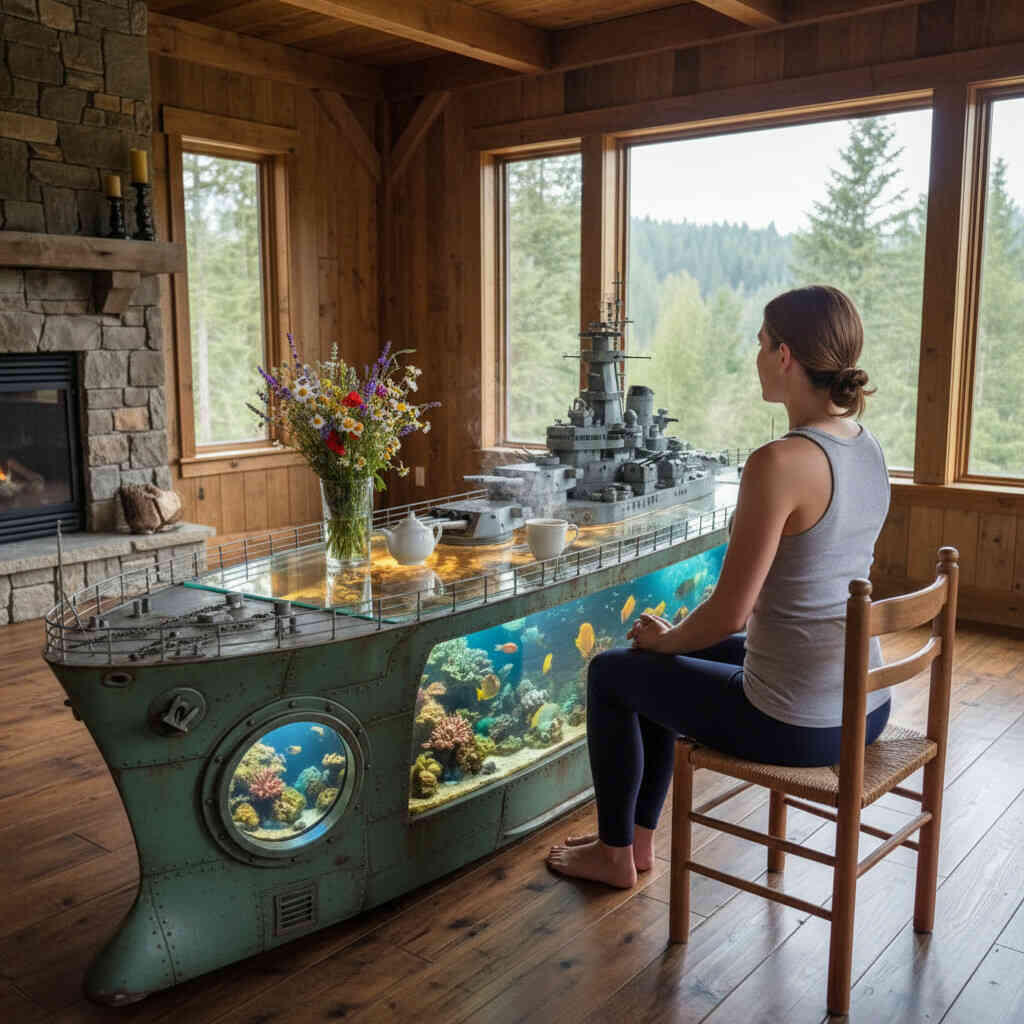
As the aquascaping community continues to evolve, the naval ship shaped aquarium stands as an invitation to expand our creative horizons. It challenges us to look beyond terrestrial landscapes for inspiration and to recognize the ocean not merely as a source of specimens, but as a wellspring of form, story, and symbolic richness. In an age of environmental uncertainty, these underwater vessels carry particular significance—they become arks of awareness, miniature ecosystems that remind us of the fragility and resilience of aquatic life. Each carefully placed stone, each thriving plant, each graceful fish tracing paths through the water becomes part of a larger narrative about coexistence.
Ultimately, the most successful naval ship shaped aquarium does not announce its inspiration through literal representation. Instead, it whispers it—in the curve of a driftwood branch suggesting a hull’s protective arc, in the rhythmic sway of plants mimicking ocean swells, in the quiet dignity of a balanced ecosystem thriving within sculpted boundaries. It honors the vessel not as an object of conquest over nature, but as a symbol of humanity’s enduring fascination with the sea—a fascination that continues to inspire artists, engineers, and dreamers across centuries. For the aquascaper willing to navigate these creative waters, the journey proves as rewarding as any transoceanic voyage: a continuous discovery of beauty at the intersection of human imagination and nature’s quiet wisdom. In the gentle pulse of water within a thoughtfully designed naval ship shaped aquarium, we find not just an aesthetic achievement, but a meditation on journeys taken and those yet to come—both across oceans and within ourselves.