
WHY A CAT SHAPED SLEEPING BED IS THE ULTIMATE COZY RETREAT
There is a quiet, universal comfort in watching a cat sleep. They possess an unmatched ability to transform any surface into a sanctuary of absolute relaxation, curling their bodies into tight, seamless crescents or stretching out in lines of pure liquid bliss. For a cat, sleep is not just a daily necessity; it is an art form. As dedicated caretakers, our desire to provide them with the perfect resting environment goes beyond basic utility. We seek to offer them something that mirrors their instinctual needs while enveloping them in safety.
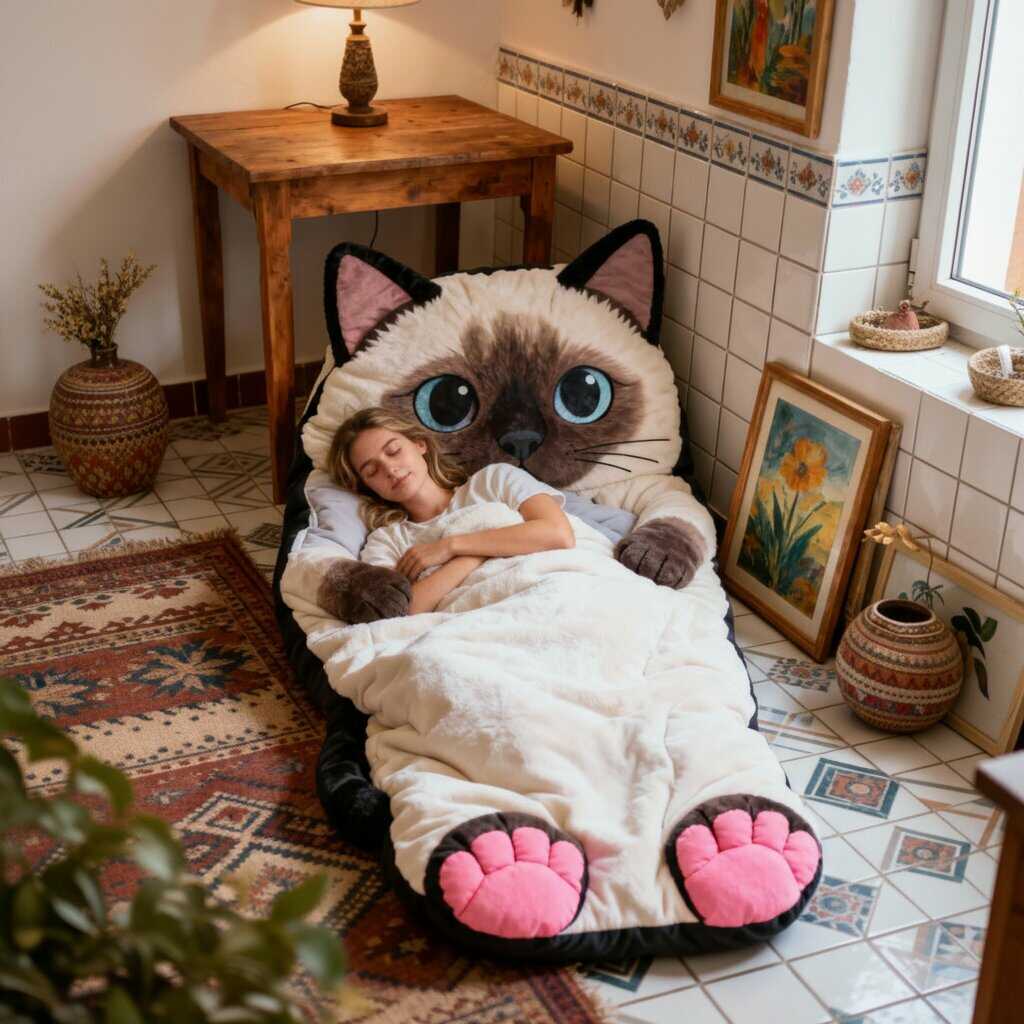
Enter the Cat Shaped Sleeping Bed. Beyond its whimsical aesthetic and undeniable charm, this specific design choice serves as a profound convergence of feline biology, evolutionary psychology, and pure, unadulterated comfort. It is more than just a piece of pet furniture; it is an intentional architecture designed to speak a cat’s native language of security and warmth. To understand why this specific form represents the pinnacle of cozy retreats, we must look deeper into the feline psyche and the subtle ways design impacts their well-being.
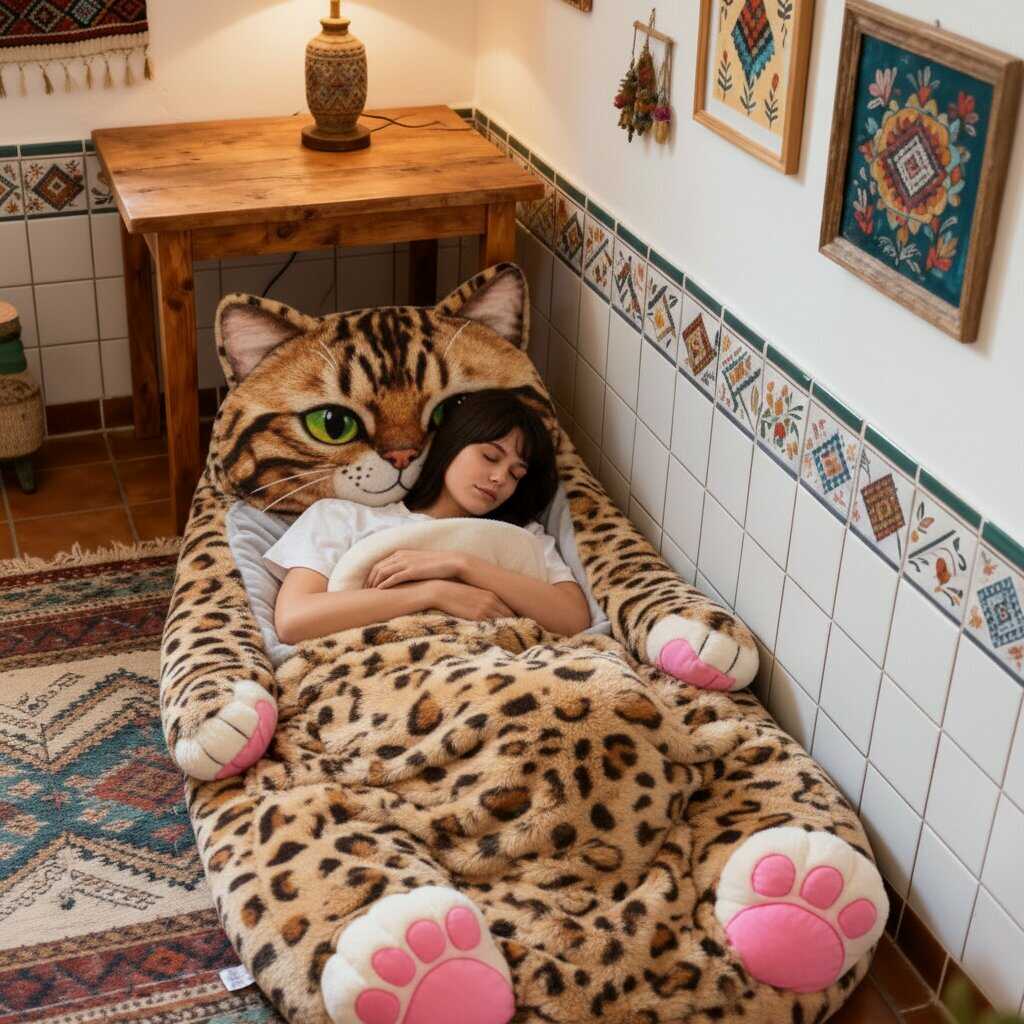
THE BIOLOGICAL COMPULSION FOR ENCLOSURE AND COZY BOUNDARIES
To understand why a Cat Shaped Sleeping Bed acts as the ultimate retreat, one must first understand how a cat views the world. In the wild, felines occupy a unique ecological niche: they are both highly efficient predators and small enough to be preyed upon by larger animals. This dual nature means that even the most pampered house cat carries an ancient, hardwired blueprint for survival. When a cat prepares to sleep, their vulnerability increases, triggering a subconscious search for a space that offers maximum protection.
A cat-shaped design inherently honors this biological need. Whether modeled as a deep, high-walled dish, a covered dome with cat ears, or a semi-enclosed pod that mimics the soft contours of a feline silhouette, these beds provide a defined perimeter.
-
The Power of Tactile Feedback: When a cat steps into a bed that mirrors their own curled shape, the walls press gently against their back and sides. This physical contact simulates the feeling of being hidden away in a hollowed-out tree trunk or a dense thicket, effectively silencing the primal survival alarms in their brain.
-
The Security of the Perimeter: In an open, flat bed, a cat must remain micro-vigilant, scanning the surrounding room for potential threats. A specialized, contour-fitting bed creates a structural shield, allowing them to lower their guard completely and enter the deep, restorative phases of REM sleep that are vital for their immune system and mental health.
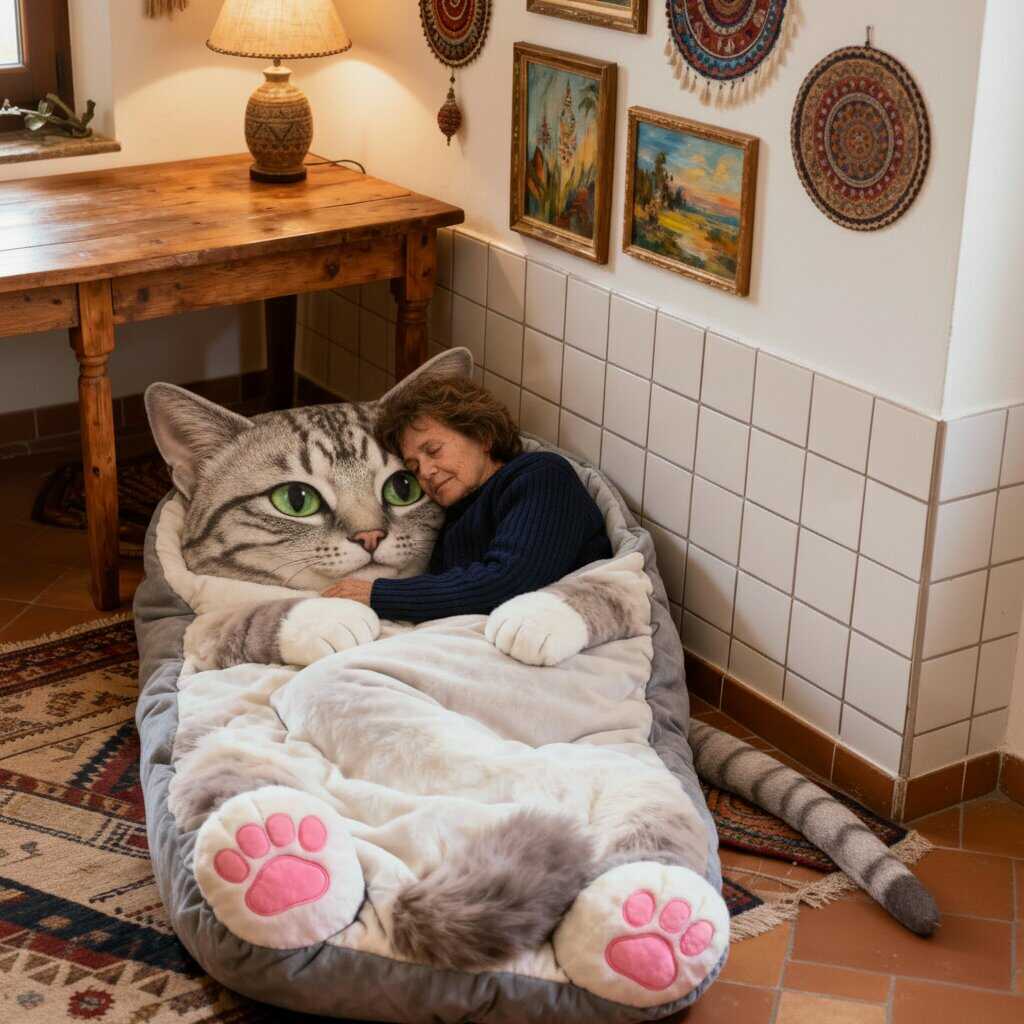
THERMOREGULATION AND THE ANATOMY OF INSULATED WARMTH
Another critical piece of the comfort puzzle lies in a cat’s physiological relationship with heat. A cat’s baseline body temperature averages around 101.5°F (38.6°C), which is significantly higher than that of a human. Consequently, they are constantly seeking external heat sources to maintain their core temperature without burning excess metabolic energy. This is why you find them stretched out in solitary shafts of sunlight or curled precariously over heating vents.
The organic, rounded architecture of a Cat Shaped Sleeping Bed is remarkably efficient at trapping and recycling a cat’s own body heat.
-
Eliminating Dead Air Zones: Square or rectangular beds often have unused corners—dead air zones where heat quickly dissipates into the room.
-
The Natural Heat Loop: A curved, cat-centric design wraps closely around the feline form, creating a tight microclimate. As the cat exhales and radiates warmth, the contoured walls catch the heat and reflect it right back to them.
This creates a self-sustaining loop of natural warmth, transforming the bed into an insulated cocoon that keeps them cozy even when the ambient room temperature drops during the night.
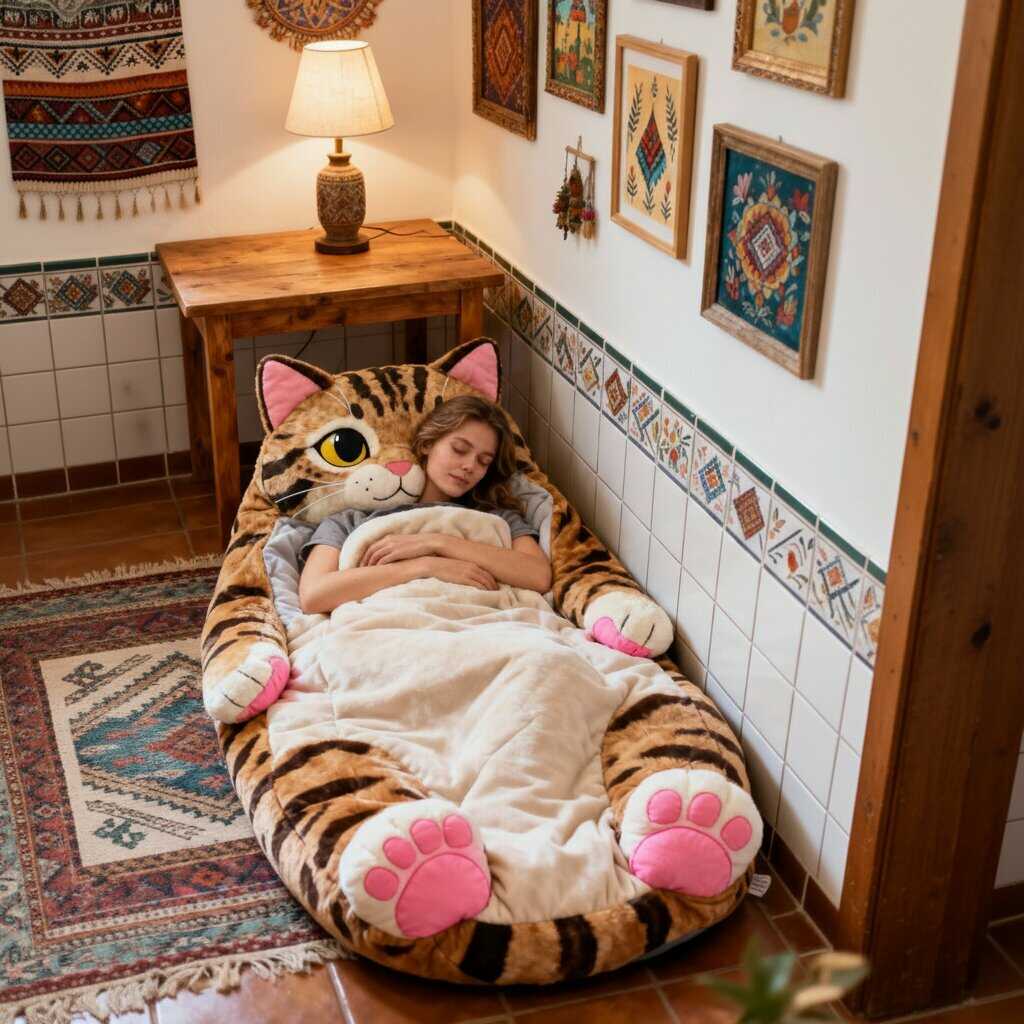
THE PSYCHOLOGICAL ECHO OF KITTENHOOD AND MATERNAL BONDING
Beyond physics and biology, true coziness has an emotional component. Deep inside the memory of every adult cat lies the foundational experience of kittenhood—a time defined by absolute safety, warmth, and the comforting presence of their mother and littermates. The physical sensation of piling together in a soft, shifting mass of fur is a cat’s earliest association with comfort.
A well-designed, nest-like sleeping bed serves as a tangible echo of that maternal bond. The plush, rounded edges mimic the protective curve of a mother cat’s body. When a cat steps into the bed and begins to instinctively knead the fabric—a behavior known as “making biscuits”—they are actively transitioning into a state of regression. Kneading stimulates the release of endorphins, transporting the cat back to the tranquil headspace of nursing. By providing a structural space that matches the physical dimensions of this instinctual behavior, the bed becomes a psychological anchor, grounding them in a sense of peace that counteracts the daily stressors of household noise, changes in routine, or separation anxiety.
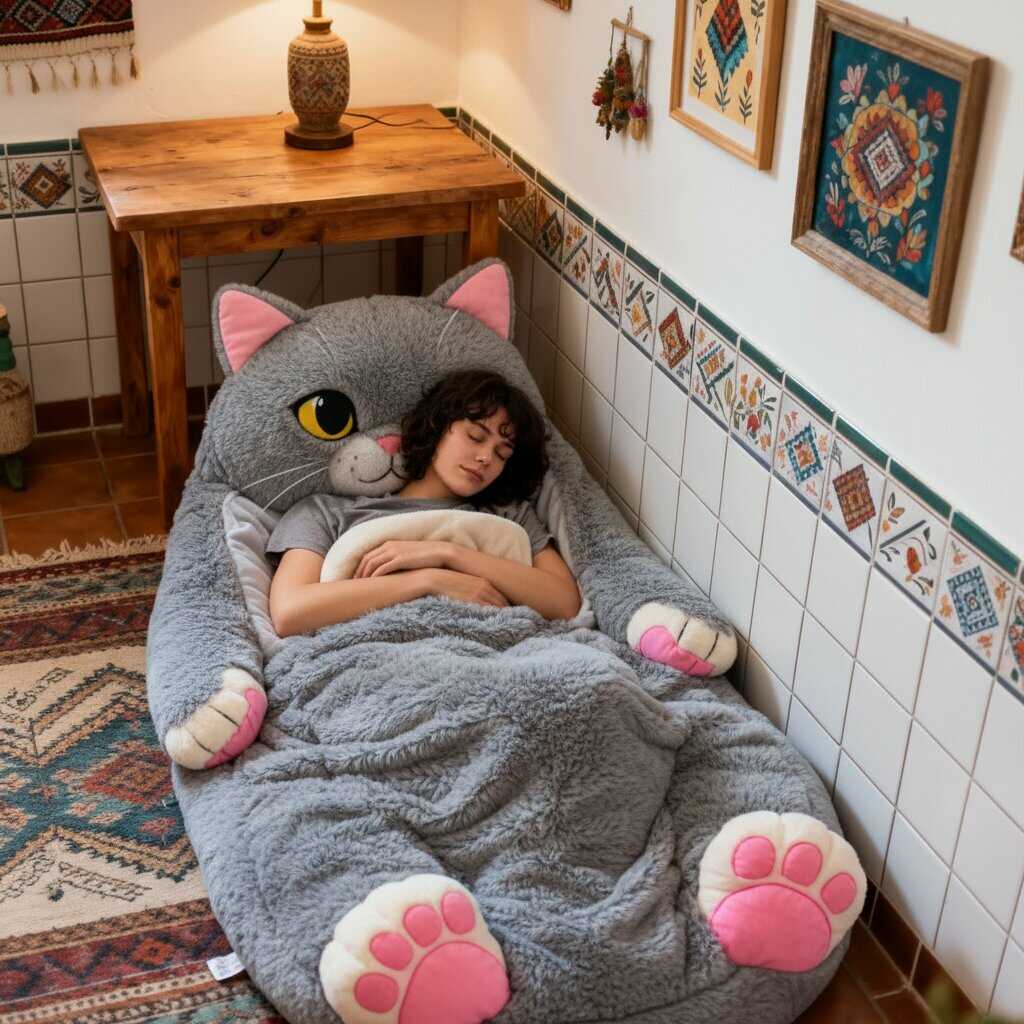
VISUAL HARMONY AND THE EMOTIONAL BENEFIT FOR THE CARETAKER
While the primary beneficiary of a cozy retreat is undoubtedly the cat, the human perspective cannot be ignored. The spaces we share with our pets are a reflection of our relationship with them. Standard pet beds can often feel sterile or strictly functional, looking like utility items tossed into the corner of a room.
A bed shaped intentionally like a cat introduces an element of visual storytelling and warmth into the home. It is a quiet, creative acknowledgement of the animal who rules the household. When we see a cat sleeping soundly inside a structure that mirrors their own form, it creates a powerful moment of emotional resonance. It satisfies our human desire to provide the absolute best for our companions, transforming a simple corner of the living room into a dedicated zone of mutual happiness. The aesthetic joy it brings to the environment enhances the overall feeling of peace and coziness within the home, benefiting both species alike.
CONCLUSION
Ultimately, creating the perfect environment for a cat requires us to look at the world through their eyes, acknowledging the subtle blend of wild instinct and domestic softness that defines their lives. A cat’s sleep is a sacred ritual of recovery, peace, and vulnerability. Providing them with an environment that fails to meet their instinctual needs means they are always slightly on guard, never truly surrendering to the deep relaxation they deserve.
The unique value of a Cat Shaped Sleeping Bed lies in its ability to solve multiple evolutionary puzzles at once. By offering the physical security of a natural enclosure, creating an optimized microclimate for heat retention, and triggering the deeply comforting psychological memories of kittenhood, it elevates a simple nap into a profound experience of rejuvenation. It is a design that respects the cat’s past while nurturing their present, standing as the definitive answer to what makes a resting space the ultimate cozy retreat.