
The Architecture of Togetherness
In the quiet architecture of everyday life, furniture serves as more than mere utility—it becomes the silent witness to our most intimate moments. For generations, the recliner has occupied a singular position in the domestic landscape: a sanctuary of personal repose, a throne of solitude where one could retreat from the day’s demands. Its design philosophy centered on the individual—contoured cushions calibrated to human lumbar curves, mechanisms engineered for solitary relaxation, and spatial footprints that claimed territory for one occupant alone. Yet as the boundaries between human and companion animal lives have softened, a profound evolution in domestic design has emerged. The recliner, once a monument to individual comfort, is being reimagined through a lens of shared existence. Enter the recliner with dog pod—an innovation that transcends mere functionality to articulate a deeper truth about contemporary living: comfort need not be a solitary pursuit. This design category represents not an accessory added to furniture, but a fundamental rethinking of spatial relationships within the home. It acknowledges that for millions of households, the concept of “me time” has organically expanded to include “us time”—where “us” encompasses both human and canine companions. The recliner with dog pod embodies a design philosophy where empathy informs engineering, where spatial intelligence accommodates interspecies needs, and where the very geometry of rest is reshaped to honor bonds that transcend species. This is not about shrinking human comfort to make room for a pet; rather, it is about expanding the definition of comfort itself to embrace coexistence without compromise.
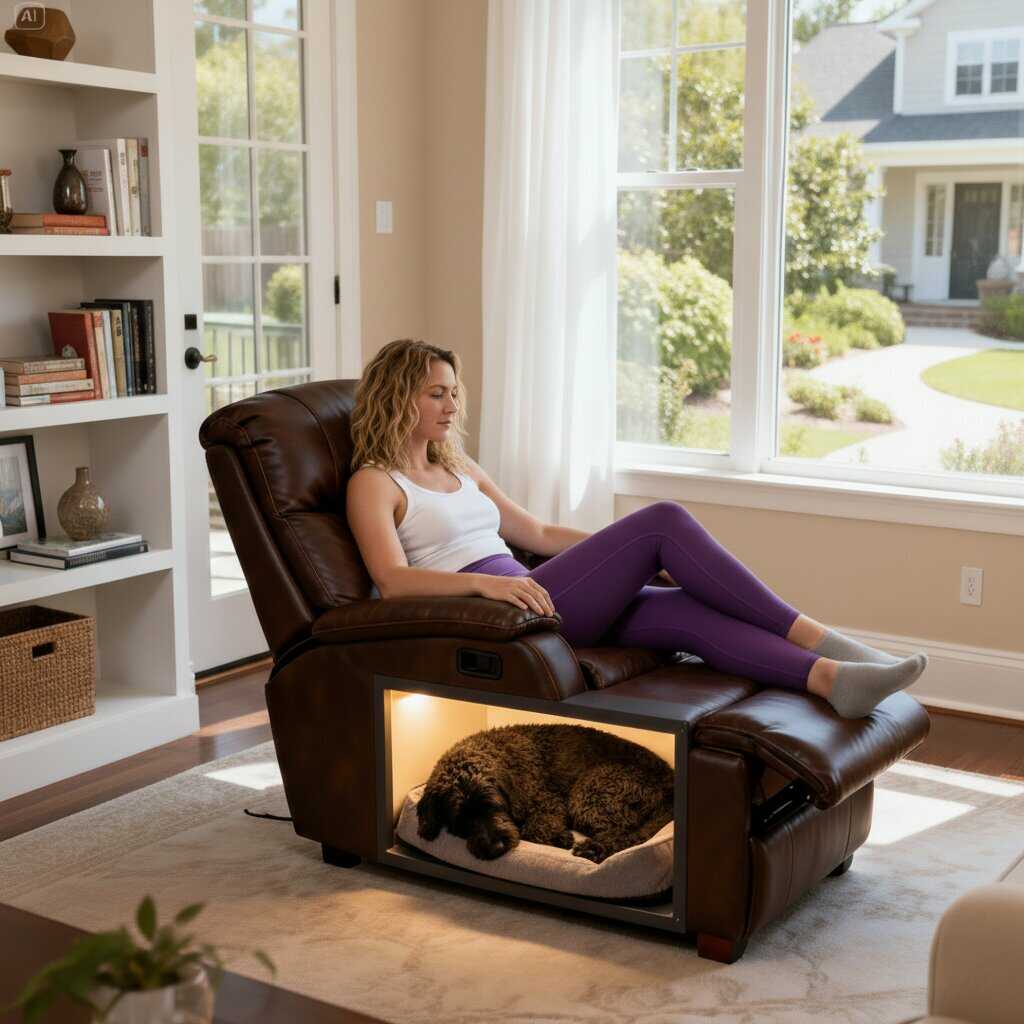
The Ergonomics of Coexistence: Engineering Dual Comfort Zones
At the heart of the recliner with dog pod lies a sophisticated ergonomic dialogue between two distinct biological forms. Human ergonomics have been refined over decades—lumbar support calibrated to the spine’s natural S-curve, seat depth proportioned to femur length, headrest angles aligned with cervical alignment. Dogs, however, operate within an entirely different biomechanical framework. Their comfort derives from different pressure points, varied postural needs, and unique thermoregulatory requirements. The design challenge, therefore, becomes one of parallel ergonomics: creating adjacent yet distinct comfort zones that honor both physiologies without forcing either into unnatural compromise.
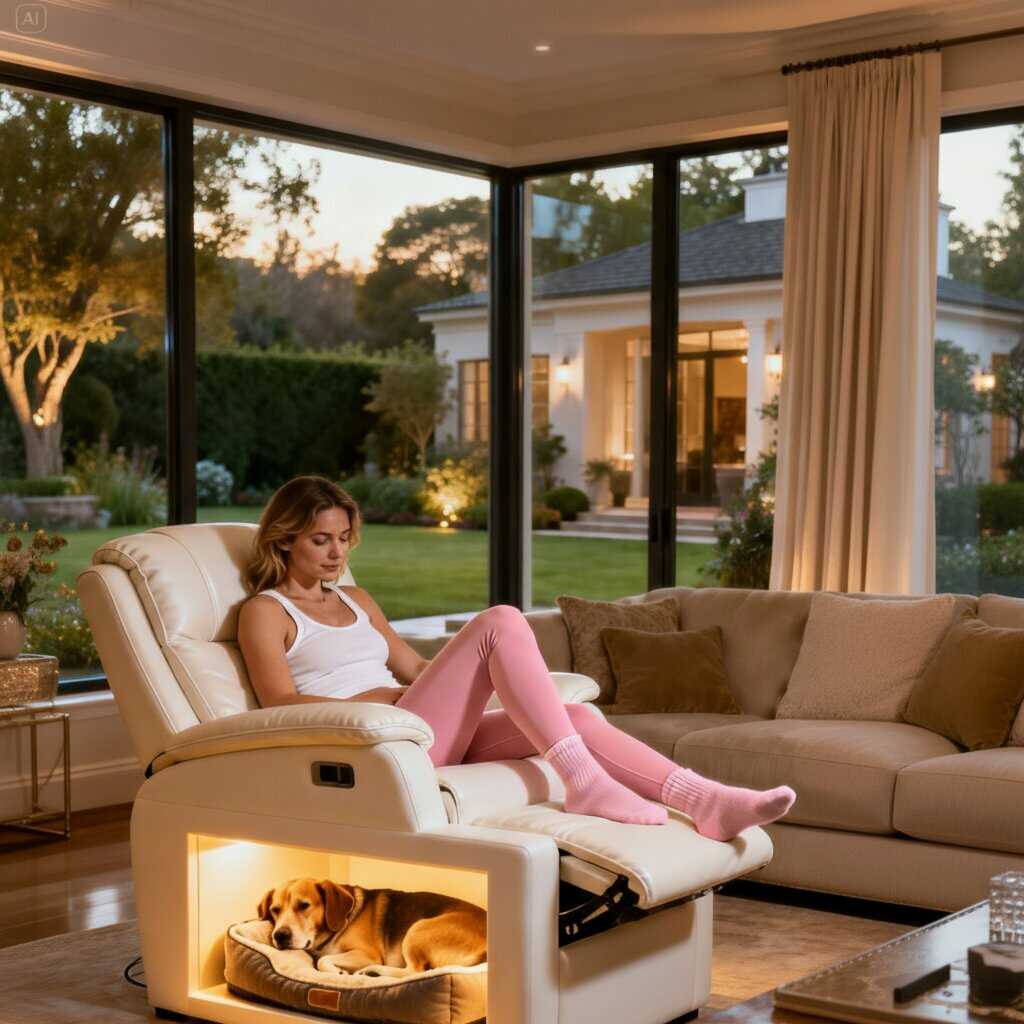
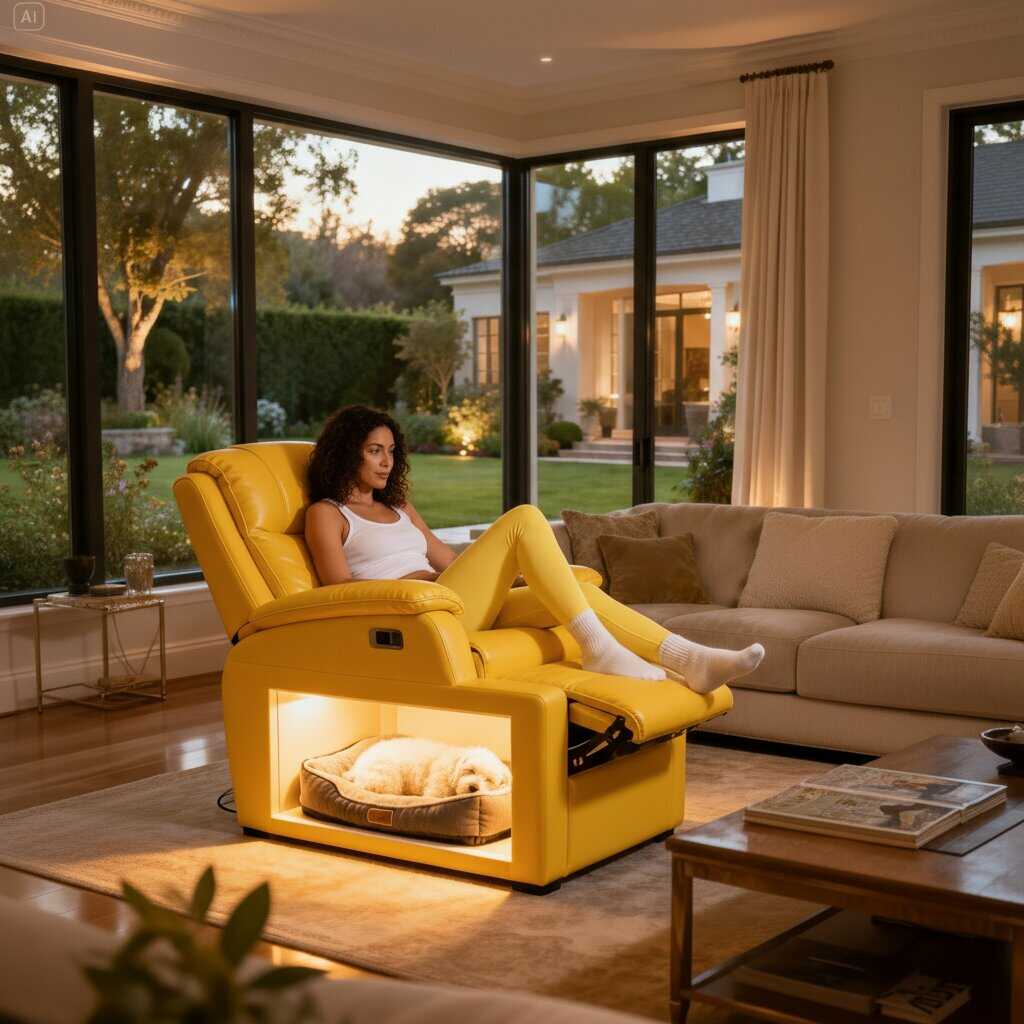
The dog pod itself represents a masterclass in species-specific design thinking. Positioned typically at the base of the recliner—either integrated into the footrest mechanism or nestled within the chair’s side profile—the pod avoids the pitfalls of afterthought design. Its dimensions are calculated not by arbitrary measurements but by observing canine resting behaviors: the curl of a medium-sized dog seeking security, the stretch of a larger breed requiring longitudinal space, the subtle elevation that prevents joint strain in aging companions.
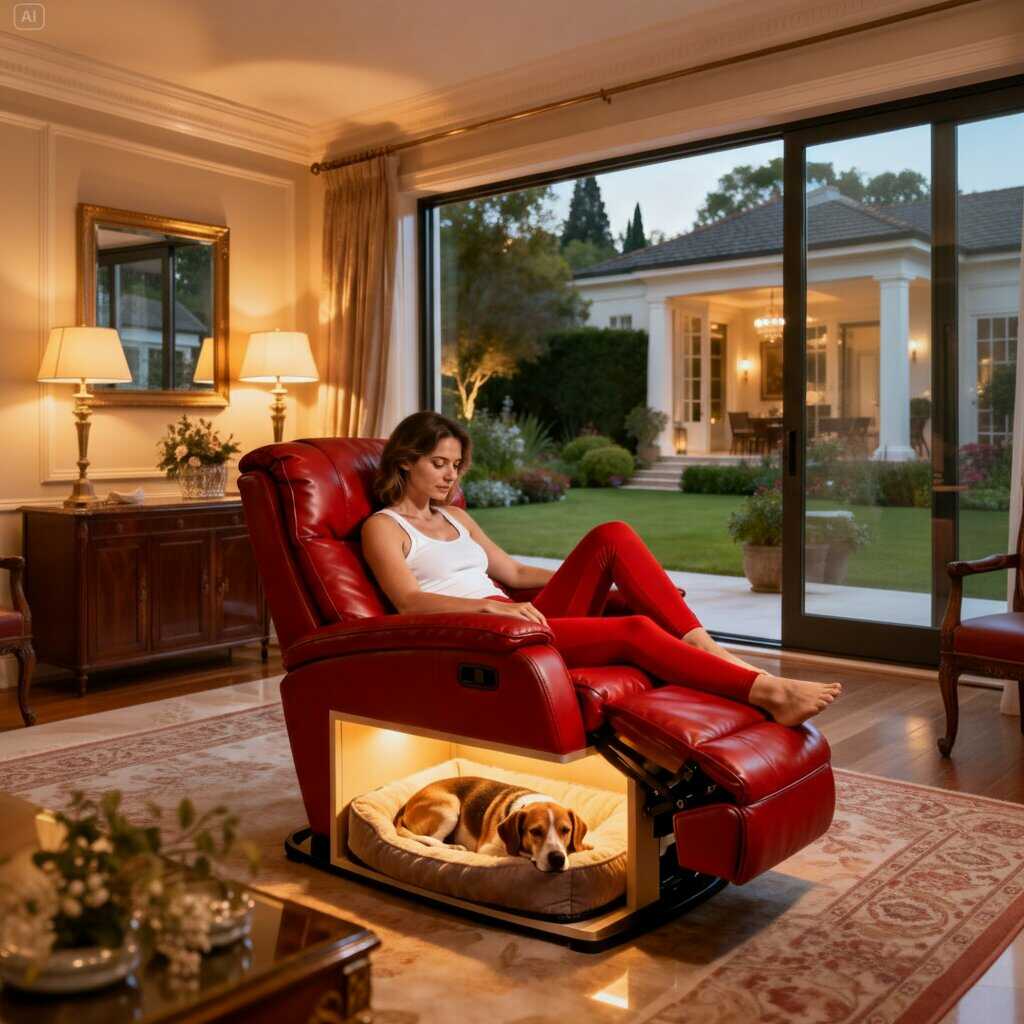
The pod’s floor clearance is deliberately engineered—high enough to prevent drafts from chilling a dog’s underbelly yet low enough to eliminate anxiety-inducing heights for less mobile animals. Cushion density follows a different logic than the human seat: slightly firmer to support canine joints during extended rest periods, yet yielding enough to conform to varied body shapes without creating pressure points around hips and shoulders.
Meanwhile, the human reclining mechanism undergoes subtle but significant recalibration. Traditional recliners often sacrifice lower back support when fully extended, but models incorporating dog pods maintain consistent lumbar engagement throughout the recline arc—recognizing that the human occupant may remain in position longer when sharing comfort with a companion. The center of gravity shifts are meticulously calculated; as the footrest extends to reveal or expand the dog pod, counterbalancing mechanisms ensure smooth motion without jarring the resting animal. This is engineering as empathy: every mechanical decision filtered through awareness of two occupants with different sensitivities to motion, sound, and spatial change. The result is not two separate comfort experiences awkwardly joined, but a unified system where each occupant’s biomechanical needs are anticipated and honored within a single, cohesive form.
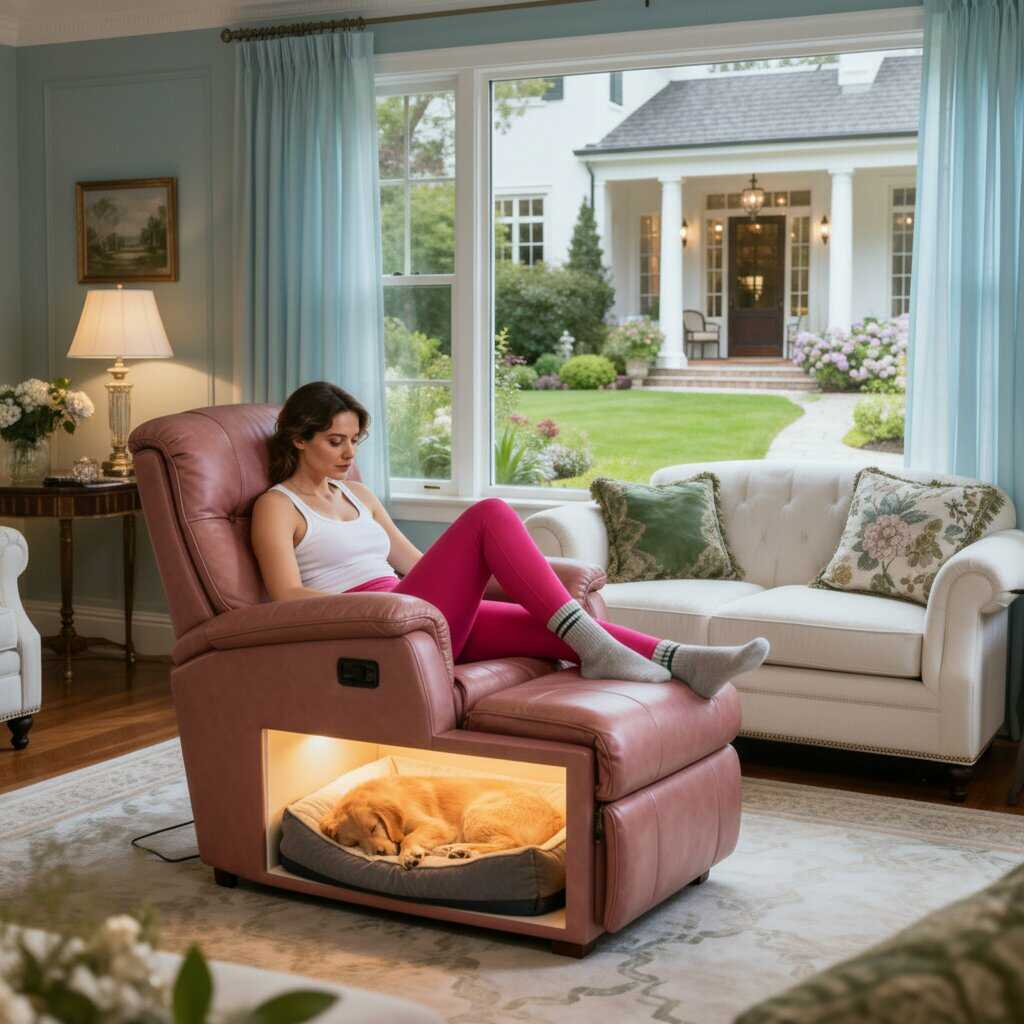
Material Intelligence: Textiles That Understand Dual Occupancy
The material language of recliners with dog pods speaks to a nuanced understanding of interspecies cohabitation. Traditional upholstery choices often prioritize human aesthetics—delicate weaves, light colors, textures vulnerable to claws or shedding. The integrated dog pod necessitates a material philosophy that transcends this limitation without surrendering sophistication. This evolution manifests in three critical dimensions: durability calibrated to canine behavior, thermal properties that serve dual biological needs, and tactile experiences that comfort both species simultaneously.
Performance textiles engineered for these designs undergo rigorous testing against realities of dog ownership: resistance to puncture from accidental claw contact, resilience against repetitive movement as dogs settle into preferred positions, and colorfastness against exposure to pet oils. Yet crucially, these materials avoid the clinical feel of purely utilitarian fabrics. Advanced microfibers mimic the softness of chenille while offering inherent stain resistance; solution-dyed acrylics provide fade resistance without sacrificing the subtle texture that invites human touch. The most thoughtful designs employ strategic material zoning—more resilient textiles in the pod area transitioning seamlessly to plush, temperature-regulating fabrics in the human seating zone. This isn’t compromise; it’s contextual intelligence.
Thermal regulation emerges as another dimension of material sophistication. Dogs thermoregulate differently than humans—they seek warmth through contact with surfaces rather than ambient air temperature alone. The dog pod’s upholstery often incorporates subtle thermal retention properties, while remaining breathable enough to prevent overheating. Meanwhile, the human seating area might feature moisture-wicking properties or phase-change materials that respond to body heat. This dual thermal strategy acknowledges that shared comfort doesn’t mean identical thermal experiences—it means engineering materials that respond intelligently to each occupant’s biological reality. Even the filling materials demonstrate this intelligence: high-resilience foam in the pod maintains its shape despite constant canine occupation, while the human seat might incorporate layered densities that soften with body heat. Every material decision becomes a quiet negotiation between species-specific needs, resolved not through compromise but through layered intelligence.
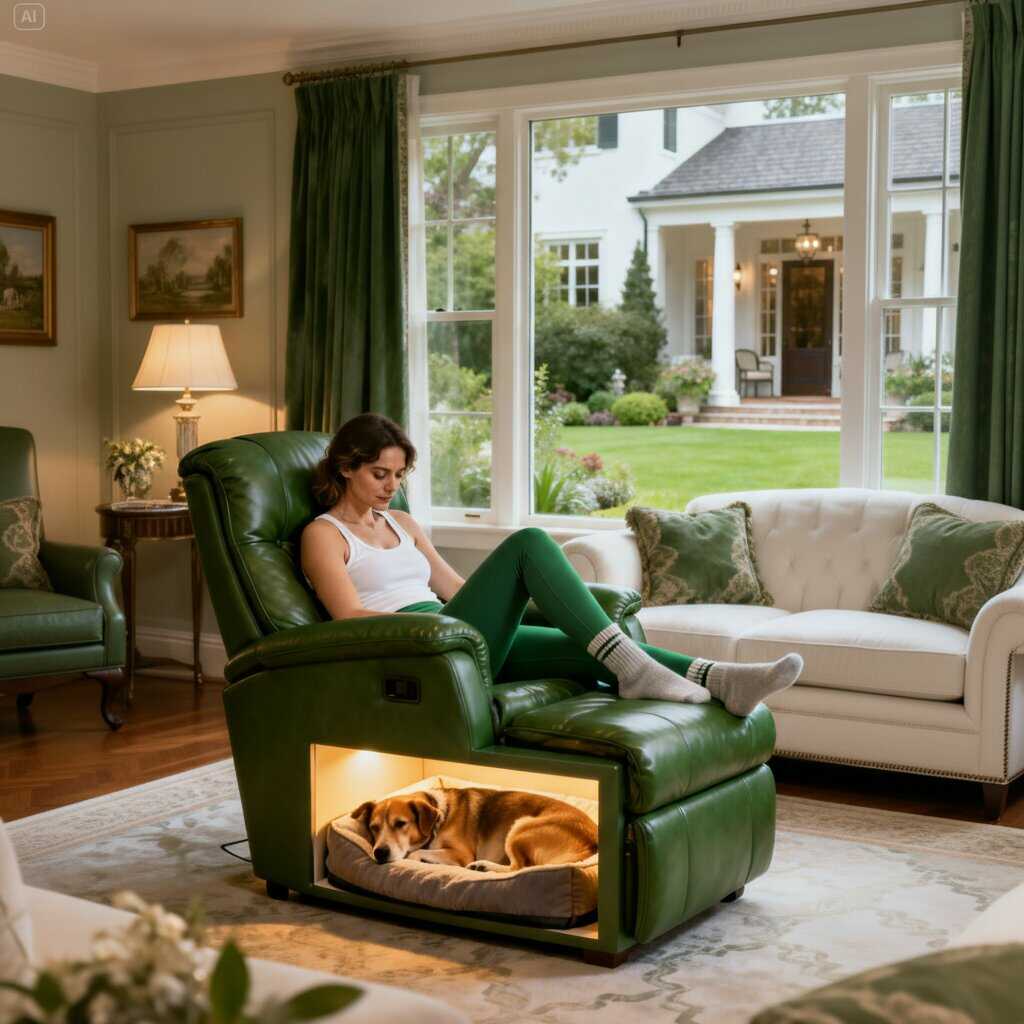
Spatial Poetry: Redefining Personal Territory in Shared Homes
Perhaps the most profound innovation of the recliner with dog pod lies in its reimagining of personal space within the home. Traditional furniture design often reinforces territorial boundaries—the armchair as individual domain, the sofa as negotiated shared space requiring conscious accommodation. The recliner with dog pod dissolves this tension through spatial poetry. Its form language communicates inclusion without invasion: the dog pod exists as an organic extension of the chair’s silhouette rather than an attached appendage. This integration signals a fundamental shift—from furniture that accommodates pets despite its design to furniture conceived with interspecies cohabitation as a foundational principle.
The spatial intelligence extends to room dynamics. A conventional recliner often demands isolation—a corner placement that reinforces its function as a retreat. The recliner with dog pod, by contrast, maintains social connectivity even in repose. Its integrated nature prevents the visual fragmentation that occurs when a separate dog bed is placed nearby—a fragmentation that subtly reinforces separation even in proximity. Here, human and canine rest within a single design gesture, their togetherness articulated through unified form. This has psychological resonance: the dog experiences inclusion without anxiety about proximity boundaries; the human experiences companionship without the cognitive load of managing separate comfort zones. The design eliminates the spatial negotiation that characterizes so much human-animal cohabitation—no more shifting positions to make room, no more conscious decisions about whether the dog “belongs” in the relaxation space.
Furthermore, the recliner with dog pod redefines the very geometry of rest. Traditional recliners create an inward-turning posture—the body angled away from room activity, the gaze directed toward personal screens or closed eyelids. The integrated pod subtly shifts this orientation. The presence of a companion at the recliner’s base creates a gentle gravitational pull toward awareness—the soft weight of a resting dog, the rhythm of shared breathing, the occasional nudge requesting attention. This doesn’t disrupt solitude; it transforms it into a different quality of being alone-together. The spatial design facilitates a state of co-presence where both occupants can rest deeply while maintaining the subtle, wordless connection that defines profound companionship. In doing so, it challenges the assumption that true relaxation requires complete disengagement—it suggests instead that the deepest rest sometimes occurs within the gentle anchor of another’s presence.
The Quiet Language of Form: Aesthetics Beyond Anthropocentrism
The aesthetic evolution represented by recliners with dog pods marks a quiet revolution in domestic design philosophy. For centuries, furniture aesthetics operated from an anthropocentric foundation—forms derived exclusively from human proportions, visual rhythms calibrated to human sightlines, beauty defined by human cultural references. The recliner with dog pod introduces a subtle but significant expansion: aesthetics informed by multispecies awareness. This doesn’t manifest as literal dog-shaped forms or kitschy motifs; rather, it appears in the thoughtful integration of the pod as an organic element within the chair’s silhouette.
Consider the curve where the main seat transitions into the pod area—a line that avoids sharp angles not merely for safety but because flowing contours echo the natural curves of a resting dog’s body. Observe how the pod’s entrance is often subtly flared—not as an architectural feature but as an intuitive invitation that aligns with canine approach behaviors. These are aesthetic decisions rooted in observation of non-human movement and form. The most successful designs achieve a visual harmony where the pod appears not added but grown—a natural extension of the chair’s design language rather than a functional attachment compromising beauty.
This aesthetic intelligence extends to proportion and scale. Rather than shrinking the human seat to accommodate the pod—a compromise that would betray the design’s purpose—thoughtful models expand the overall footprint with intentionality. The chair becomes a more generous presence in the room, its increased dimensions justified not by human ego but by relational generosity. This represents a profound shift: furniture scaled not to individual bodies but to relationships. The visual weight of the chair communicates abundance rather than scarcity—there is enough comfort here for two beings, and that abundance enhances rather than diminishes the experience for either occupant. In a cultural moment saturated with minimalist dogma that equates reduction with virtue, the recliner with dog pod offers a counter-narrative: that generosity of form can be its own aesthetic principle when rooted in genuine human-animal connection.
Conclusion: Comfort Reimagined as Relational Practice
The recliner with dog pod ultimately transcends its physical form to articulate a deeper philosophy about the nature of comfort itself. For too long, comfort has been conceptualized as a private commodity—a resource to be secured for the individual against the demands of others. This recliner category quietly challenges that assumption by demonstrating that comfort can be relational without being diminished—that the presence of another being need not subtract from our ease but can, under thoughtful design conditions, amplify it. The gentle pressure of a dog’s body against the pod’s side, the synchronized rhythm of breathing between human and animal, the shared warmth that accumulates in the space between them—these are not distractions from comfort but dimensions of it previously unacknowledged in furniture design.
This innovation reflects a broader cultural maturation in how we conceptualize our relationships with companion animals. They are no longer peripheral presences accommodated within human-designed spaces; they are co-inhabitants whose needs and natures deserve authentic integration into the architecture of daily life. The recliner with dog pod embodies this shift not through sentimentality but through rigorous design intelligence—every curve, mechanism, and material choice filtered through genuine understanding of interspecies coexistence. It represents furniture as a medium for relationship rather than mere utility.
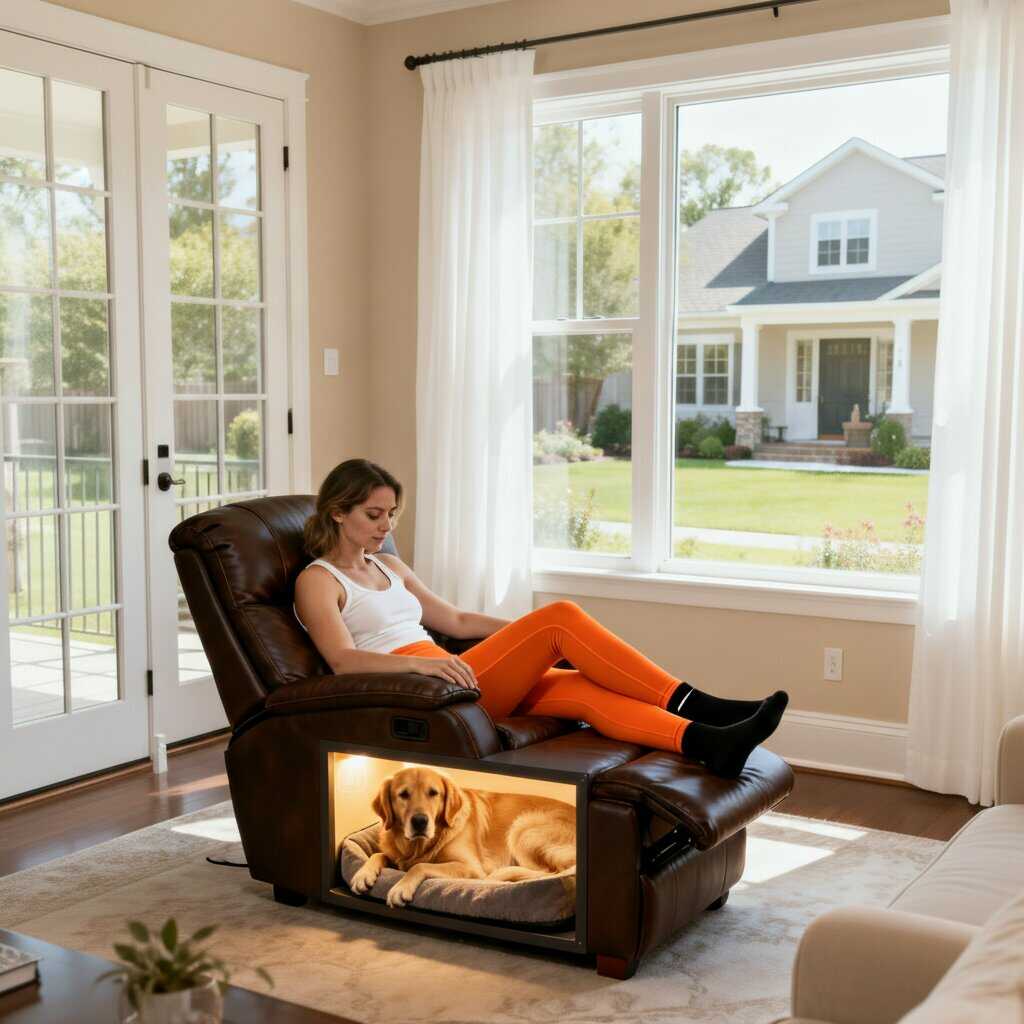
In the end, the most profound feature of these recliners isn’t mechanical or material—it’s philosophical. They suggest that the future of domestic design lies not in creating more efficient solitary experiences, but in crafting spaces that honor the connections defining contemporary life. Comfort reimagined as a shared practice. Rest reconceived as a relational state. The recliner with dog pod stands as quiet evidence that the most advanced design thinking often emerges not from technological spectacle, but from empathetic observation of how we actually live—with all the beautiful, messy, interspecies reality that entails. It invites us to consider that perhaps the deepest comfort isn’t found in perfect isolation, but in the gentle certainty of shared presence—two beings, different in form but united in rest, finding ease together in the architecture of togetherness. This is not merely furniture evolution; it is comfort redefined for a more connected world.