
There exists a particular quality of stillness found only in spaces built of honest materials—where the scent of aged wood mingles with woodsmoke, where sunlight filters through pine boughs to dance across hand-hewn surfaces, and where the boundary between interior sanctuary and the natural world softens into suggestion rather than separation. It is within these environments that certain furniture pieces transcend mere function to become silent narrators of place and purpose. Among them, the log end sofa stands as an enduring emblem of rustic authenticity—a furnishing whose very structure speaks of forest origins, artisanal patience, and a deliberate turning away from the polished artifice of contemporary life. More than simply a place to sit, the log end sofa embodies a philosophy of dwelling: one rooted in material truth, tactile warmth, and a reverence for the imperfect beauty of nature’s forms. Its distinctive silhouette—characterized by exposed log ends forming the arms or frame—creates an immediate visual anchor in cabin and lodge interiors, evoking not nostalgia for a romanticized past, but a present-moment connection to elemental materials. This piece does not disguise its origins; it celebrates them. Each growth ring visible in the log ends tells a story of seasons weathered, of slow growth in mountain air or deep forest shade. In an age of mass production and disposable aesthetics, the log end sofa offers something increasingly rare: a tangible link to craftsmanship, to the land, and to a design ethos that values character over conformity. It is this profound resonance—this ability to transform a room into a refuge imbued with soulful presence—that makes the log end sofa far more than furniture. It becomes the quiet heart of a space designed not for display, but for living deeply.
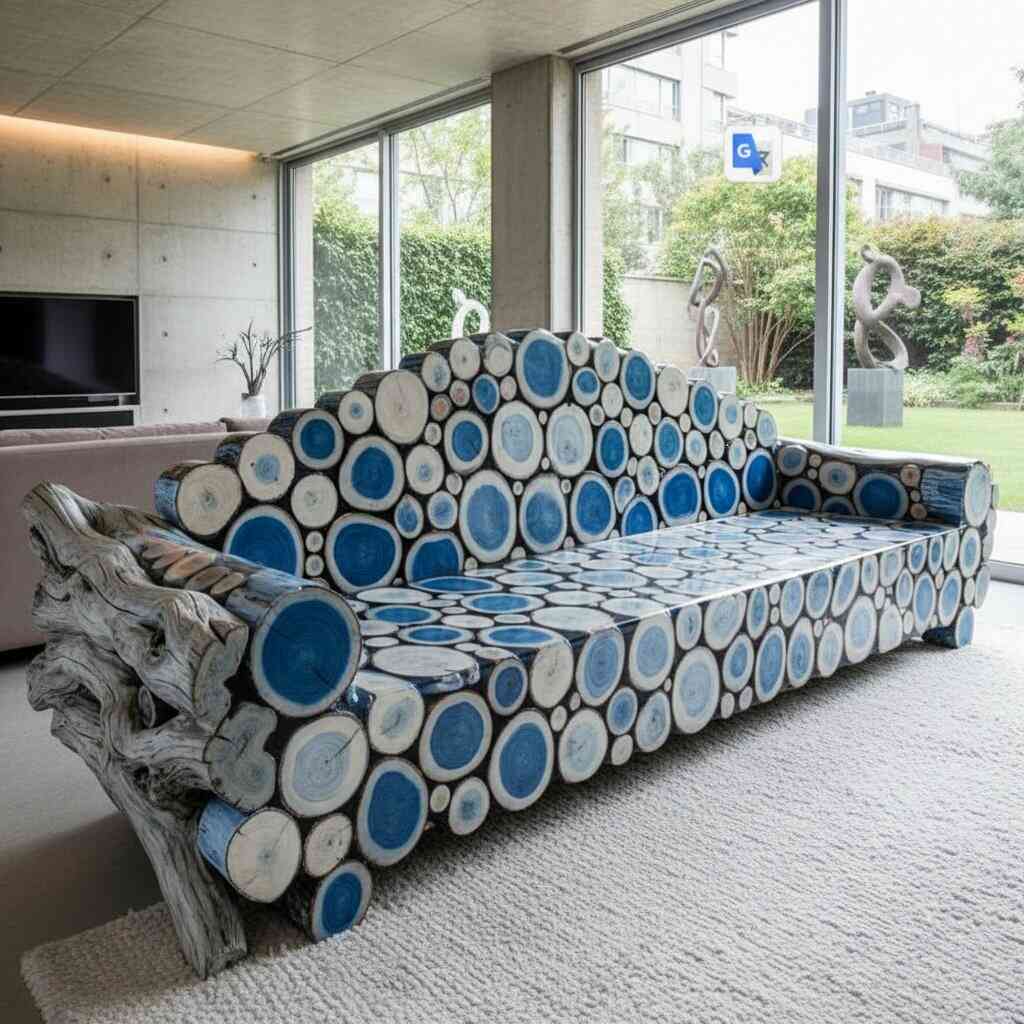
The Origins and Language of Rustic Craftsmanship
To understand the log end sofa is to trace its lineage back to necessity rather than trend. Its form emerged not from design studios but from frontier pragmatism—the need to create comfortable seating using materials immediately at hand. Early log cabin builders, mountain guides, and homesteaders possessed neither access to upholstered parlor furniture nor desire for it in environments where mud, moisture, and rough use were daily realities. Instead, they turned to the surrounding forest. Felled trees, already harvested for structural beams and wall logs, yielded shorter sections perfect for crafting sturdy seating. The technique was elemental: a solid plank formed the seat base, supported by vertical log sections left with their natural ends exposed. These log ends—cross-sections revealing the tree’s concentric growth rings—were not hidden or refined away; they were integral to the structure’s integrity and aesthetic. This approach reflected a broader rustic design principle: truth to materials. Unlike furniture designed to disguise its substance beneath veneers, paints, or elaborate carvings, the log end sofa announces its essence without apology. The cracks inherent in drying wood, the subtle variations in grain, the occasional knot or mineral streak—these were not flaws to be corrected but signatures of authenticity to be honored.
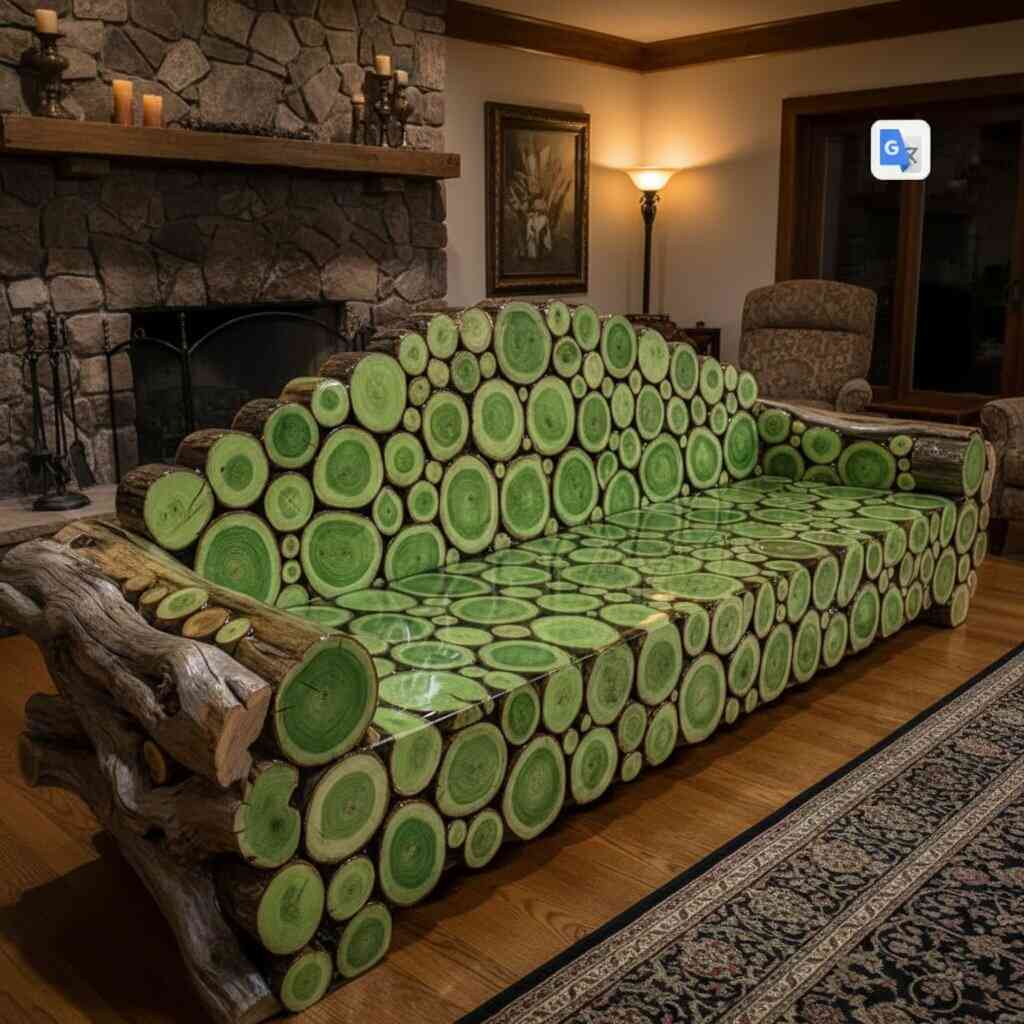
This craftsmanship tradition found refined expression in the Great Camps of the Adirondacks during the late nineteenth century. Wealthy industrialists seeking respite from urban intensity commissioned sprawling wilderness retreats where every architectural and furnishings detail reinforced connection to place. Master builders like those working for the Vanderbilt and Whitney families elevated rustic techniques into an art form. Here, the log end sofa evolved from utilitarian bench to sophisticated seating, often featuring hand-split cedar or tamarack logs, carefully selected for dramatic grain patterns at the exposed ends. Artisans understood that the visual rhythm created by alternating light and dark growth rings could become a decorative element in itself—a natural marquetry born of biology rather than human imposition. This historical context matters because it establishes the log end sofa not as a decorative accessory, but as an artifact of a specific relationship between humans and landscape. Its presence in a modern cabin interior is not mere stylistic mimicry; it is an invocation of that older, more deliberate way of building—where every element served purpose, honored source material, and contributed to an atmosphere of grounded serenity. The log end sofa carries this legacy in its very grain, inviting occupants to slow their pace and appreciate the quiet dignity of objects made to last generations rather than seasons.
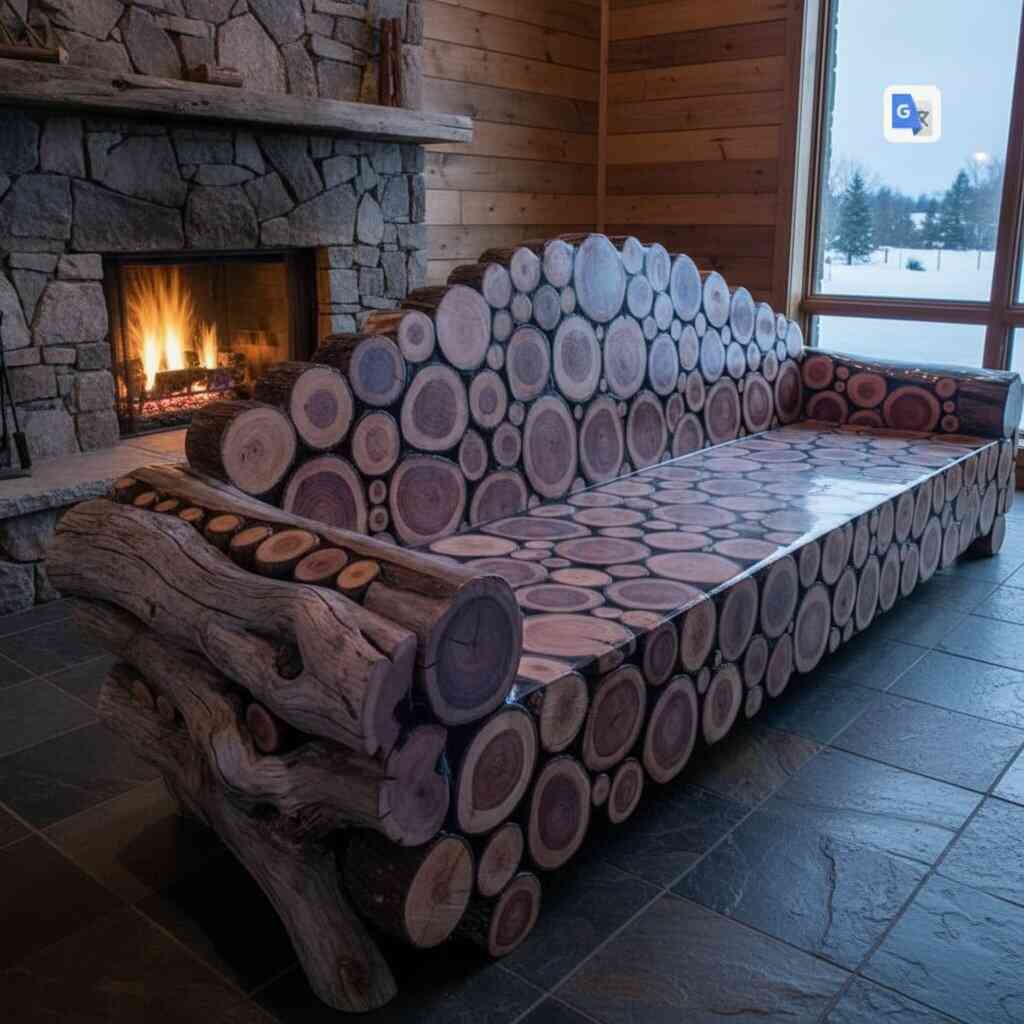
Architectural Dialogue: Weaving Furniture into Place
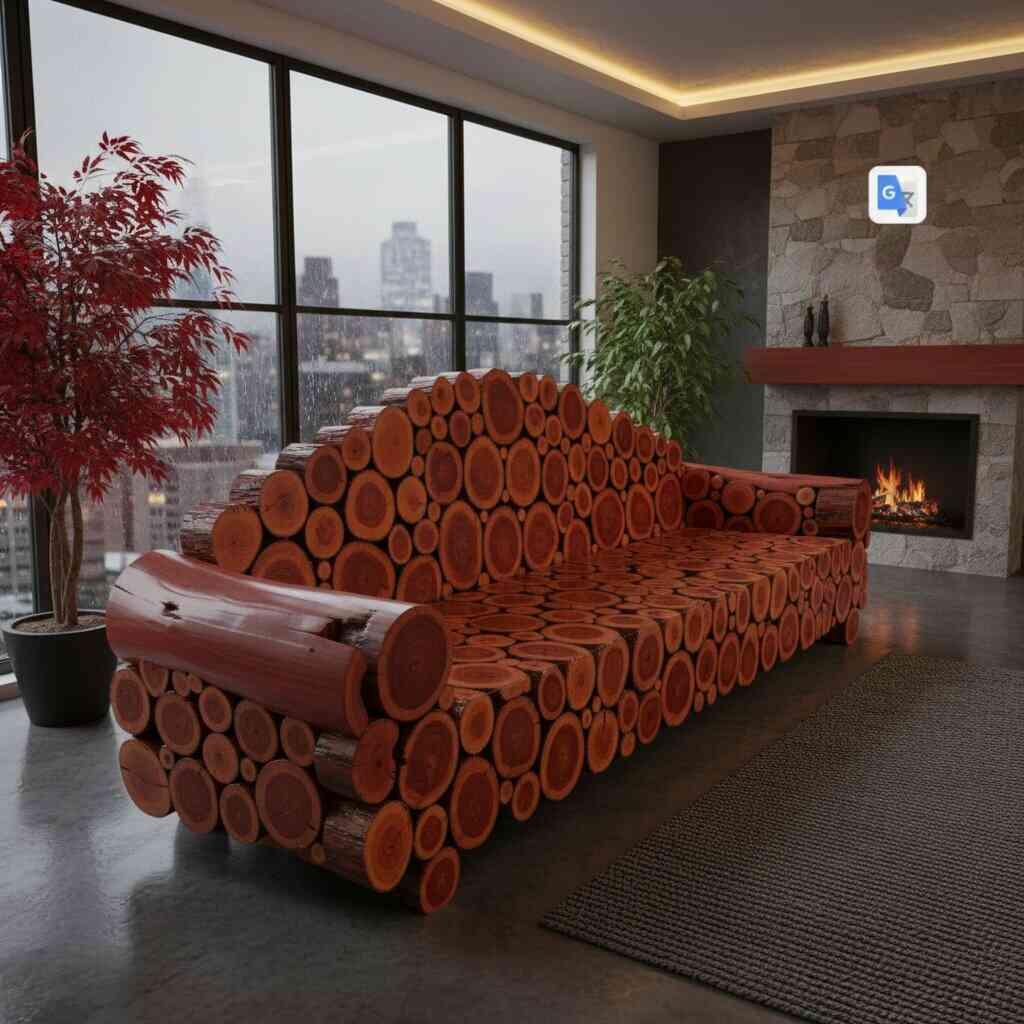
A log end sofa does not simply occupy space within a cabin or lodge—it converses with the architecture itself. This dialogue is fundamental to its power. Consider the typical rustic interior: walls of stacked logs or rough-sawn timber, stone fireplaces rising to cathedral ceilings, floors of wide-plank wood bearing the gentle wear of years. Into this environment, a conventionally manufactured sofa—upholstered in synthetic fabrics, built on hidden metal frames—would feel like an intrusion, a visual disconnect that fractures the room’s cohesive spirit. The log end sofa, by contrast, extends the architectural language into the realm of furnishings. Its exposed log ends echo the horizontal lines of wall logs; its substantial, grounded presence mirrors the weight and permanence of stone foundations. This harmony is not accidental but intentional—a recognition that furniture should feel grown within a space rather than placed into it.
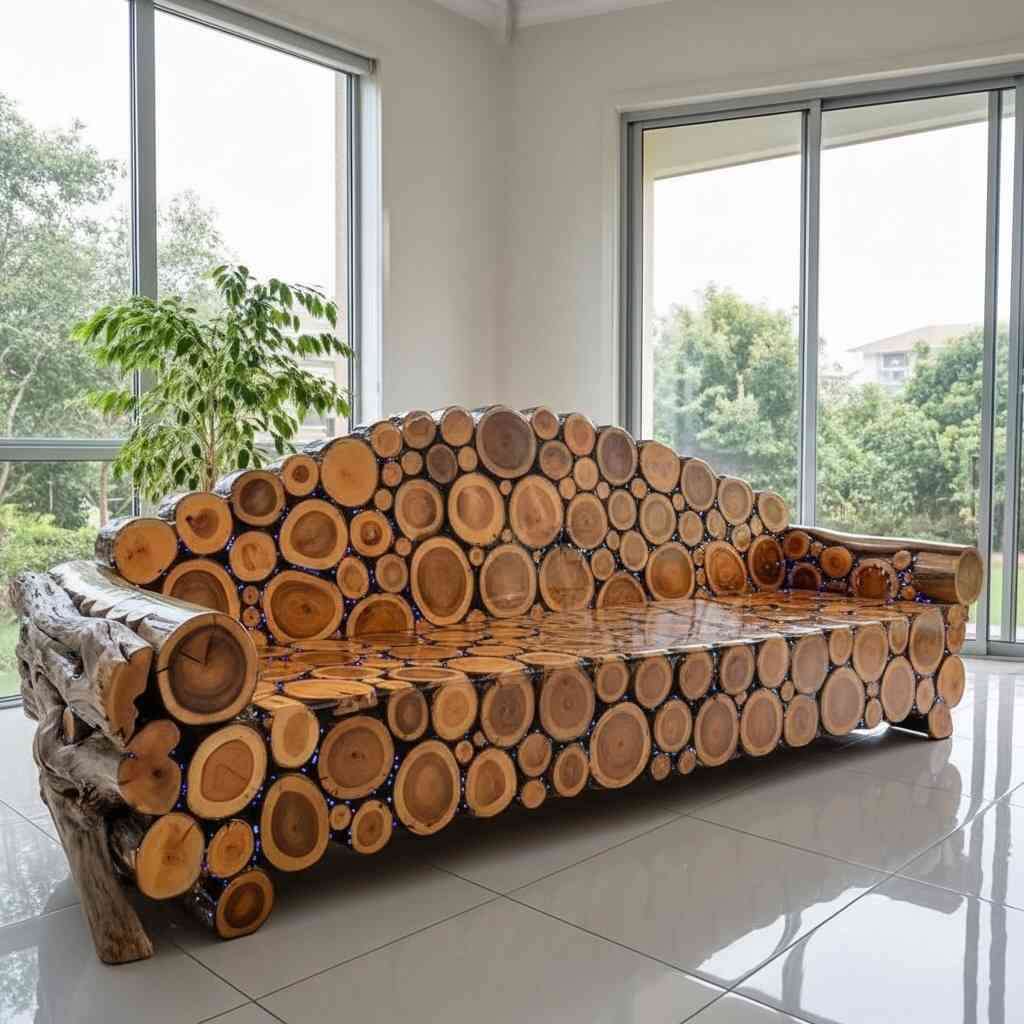
This integration operates on multiple sensory levels. Visually, the log end sofa creates rhythm and repetition. The circular patterns of the log ends—whether arranged vertically as armrests or horizontally as part of a base frame—establish a motif that can be echoed in other elements: a coffee table crafted from a single tree slice, wall sconces mounted on log rounds, even the circular ironwork of a fireplace screen. This repetition without monotony (each log end remains unique in its grain pattern) generates visual cohesion while preserving organic variation. Tactilely, the sofa invites interaction that reinforces connection to materiality. Running a hand along the smooth-worn surface of a log armrest connects the occupant to the tree’s history—the decades of growth captured in its rings, the craftsman’s hand that shaped it, the patina developed through years of human touch. Even acoustically, the log end sofa contributes to the cabin’s sonic character. Unlike upholstered furniture that absorbs sound, wood reflects it softly, contributing to the gentle acoustic warmth of a rustic interior—a space where conversation feels intimate, where silence feels substantial rather than empty.
Most profoundly, the log end sofa mediates the relationship between interior and exterior landscapes. Positioned before a large window framing mountain vistas or a forest clearing, its log ends become a visual bridge—a reminder that the beauty outside continues within. The wood grain visible in those cross-sections mirrors the vertical lines of standing trees beyond the glass; the earthy tones of cedar or pine harmonize with the colors of soil, rock, and foliage. This is not mere decoration but a philosophical stance: the rejection of architecture as a barrier against nature, and its reimagining as a permeable membrane that filters and frames the wild world without sanitizing it. The log end sofa, in its unadorned honesty, becomes an anchor in this philosophy—a piece that insists we remember where we are, and whose presence deepens our appreciation for the particular qualities of place.
The Soul of Imperfection: Embracing Wabi-Sabi in Wood
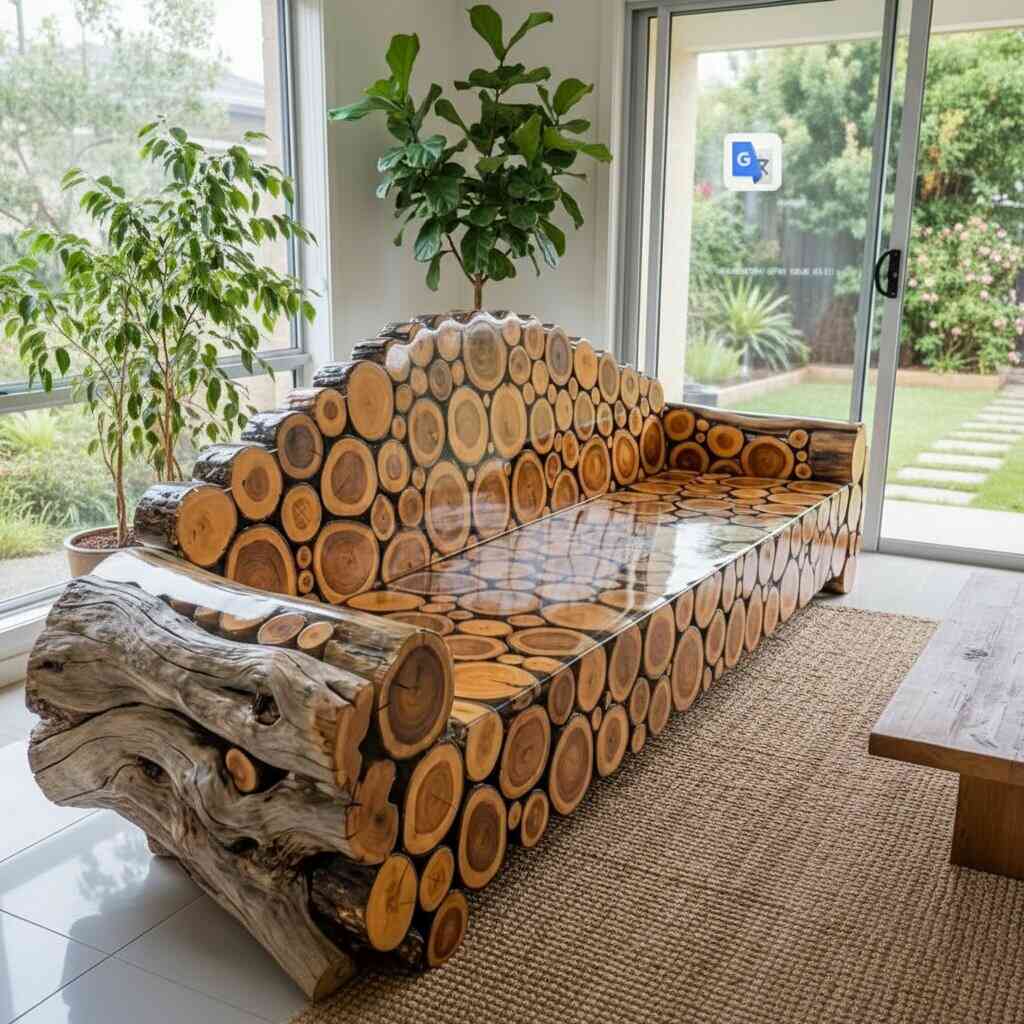
Beneath the aesthetic appeal of the log end sofa lies a deeper design philosophy—one that finds beauty not in flawless symmetry but in the eloquent testimony of natural processes. This sensibility aligns closely with the Japanese concept of wabi-sabi: an appreciation for imperfection, impermanence, and the poignant beauty of objects marked by time and use. A mass-produced sofa strives for uniformity—identical arms, perfectly matched fabrics, seamless construction. The log end sofa embraces the opposite. No two log ends are alike; each reveals a unique cartography of the tree’s life. Wide growth rings speak of seasons of abundance; narrow rings tell of drought or competition for light. Knots become dark constellations; subtle cracks (often stabilized with clear resin) trace the wood’s journey from living tree to seasoned timber. These are not defects but signatures—evidence of a material’s history and character.
This celebration of inherent variation extends to the sofa’s presence within a living space over time. Unlike furniture designed to resist change, a well-crafted log end sofa evolves with its environment and occupants. Sunlight gradually deepens the wood’s hue; repeated contact polishes surfaces to a soft luster; the gentle settling of logs creates minute shifts that add to its sense of having “grown” into the home. This patina of use is not wear to be concealed but a record of lived experience to be honored. A faint indentation on the armrest marks where generations have rested their hands while gazing into the fire; a subtle darkening along the seat edge traces the path of countless comings and goings. In this way, the log end sofa becomes a silent chronicler of domestic life—a repository of memory written not in words but in wood.
This philosophy stands in quiet resistance to contemporary design trends that prioritize novelty and disposability. The log end sofa asks us to slow our gaze, to appreciate subtlety, to find richness in restraint. Its beauty unfolds gradually—the way morning light catches the texture of a growth ring, the way shadows pool differently within each log end as the sun moves across the sky. It does not shout for attention but rewards contemplation. In a cabin interior designed with intention, the log end sofa becomes more than seating; it becomes a meditation on time itself—on the slow growth of forests, the patient work of artisans, and the gradual deepening of human connection to place. It reminds us that the most enduring beauty often resides not in perfection, but in authenticity; not in uniformity, but in the gentle irregularities that make each object, like each moment, irreplaceable.
Material Integrity and the Ethics of Authenticity
The profound resonance of the log end sofa stems ultimately from its uncompromising material honesty. In an era where “rustic” aesthetics are frequently simulated through vinyl prints mimicking wood grain, particleboard shaped to resemble logs, or polyurethane casts of natural textures, the genuine log end sofa represents a commitment to substance over simulation. This distinction matters deeply. A simulated log end might capture the visual approximation of wood but lacks its thermal qualities (the cool touch of real timber on a summer day, its ability to absorb and slowly release the warmth of a nearby fire), its scent (the subtle aroma of cedar or pine that shifts with humidity and season), and its acoustic properties. More importantly, it lacks the ethical dimension of authenticity—the respect for material inherent in using wood not as a decorative veneer but as the actual structural substance of the piece.
This integrity extends to sourcing and sustainability when approached thoughtfully. Many contemporary makers of log end sofas work with reclaimed timber—logs salvaged from forest thinning projects, standing dead timber from beetle-kill areas, or wood recovered from dismantled barns and historic structures. In these cases, the log end sofa becomes not merely furniture but an act of material stewardship—a way of honoring wood’s full lifecycle rather than treating it as a disposable resource. The visible history in reclaimed logs—weathered gray exteriors contrasting with preserved inner grain, traces of old joinery or tool marks—adds layers of narrative depth. Even when using newly harvested timber, responsible makers select species appropriate to region and application, understanding that different woods offer distinct personalities: the rich red tones and aromatic scent of cedar, the pale elegance and straight grain of aspen, the rugged character and durability of hickory.
This commitment to material truth creates an atmosphere of trust within a space. There is a psychological comfort in surroundings where what you see is what is—where surfaces can be touched without fear of chipping veneers, where the weight of furniture speaks to its substance, where beauty arises from inherent qualities rather than applied finishes. The log end sofa, in its unpretentious materiality, fosters this sense of grounded authenticity. It does not ask occupants to admire its design cleverness but to feel its presence—to experience the quiet confidence of an object that makes no claims beyond what it genuinely is: wood, shaped by hand, intended for comfort and companionship across years of use. In this simplicity lies its power—a reminder that the most meaningful interiors are not those filled with the newest trends, but those built of elements that speak truthfully of their origins and invite us to live more deliberately within them.
Conclusion: The Enduring Resonance of Rooted Design
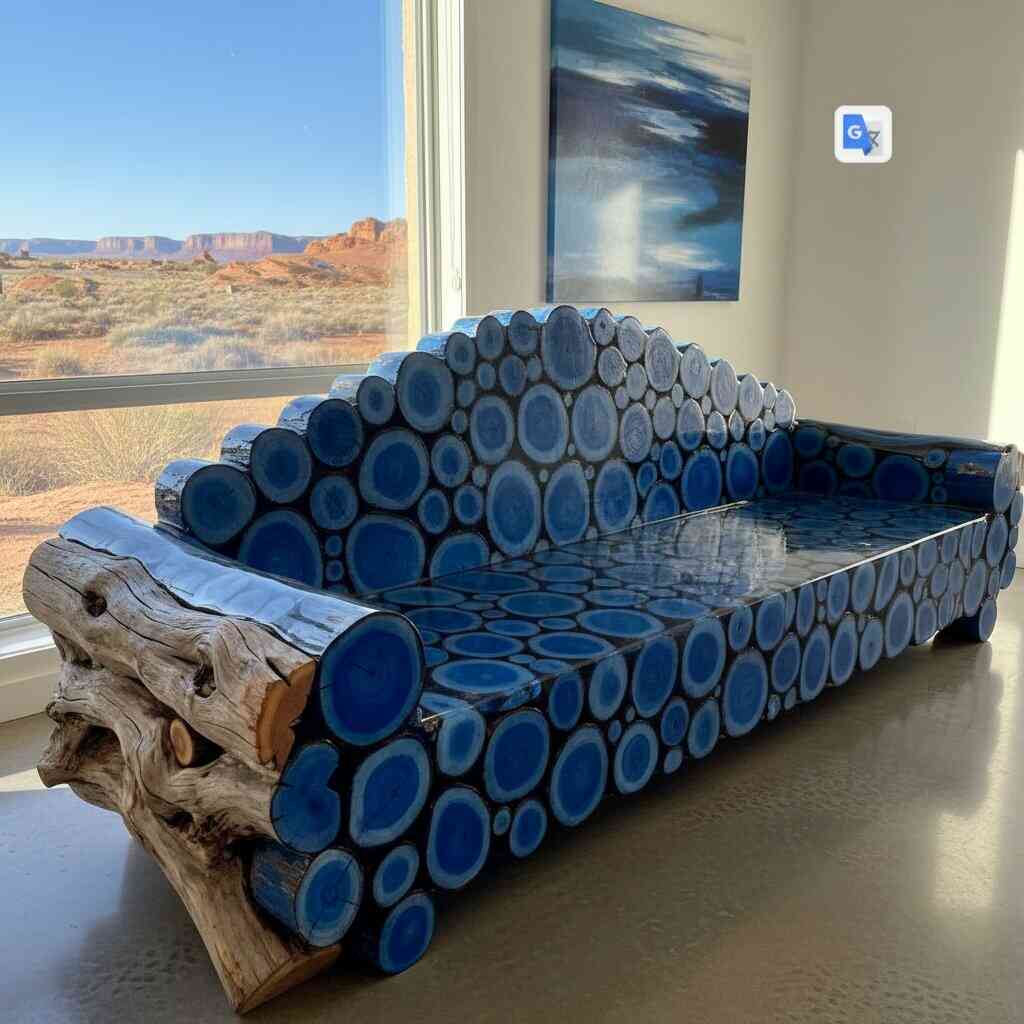
The log end sofa endures not as a stylistic relic but as a quiet manifesto for a particular way of being in the world—a way that values connection over convenience, character over conformity, and continuity over novelty. Its presence in a cabin or lodge interior does more than fulfill a functional need for seating; it establishes an atmosphere of grounded authenticity that permeates the entire space. When we sink into the embrace of a log end sofa, we are not merely resting our bodies—we are engaging in a subtle but profound dialogue with material history, with craft tradition, and with the natural world from which the piece originated. The exposed log ends serve as constant, gentle reminders of forests and seasons, of growth rings laid down year by patient year, of the transformation of raw timber into an object of comfort and beauty through human hands guided by respect rather than domination.
In our increasingly virtual and transient age, such tangible anchors matter more than ever. The log end sofa offers what digital environments cannot: the warmth of sun-baked wood against skin, the subtle scent of timber shifting with humidity, the visual poetry of grain patterns that no algorithm could replicate. It invites slowness—not as an aesthetic choice but as a natural consequence of its presence. One does not rush past a log end sofa; one settles into its embrace, drawn into contemplation by the intricate landscapes visible within each log end. This piece understands that true comfort is not merely physical but existential—a sense of belonging within a space that feels genuinely of a place rather than merely in it.
Ultimately, the log end sofa embodies a design philosophy that transcends trend cycles because it is rooted in something timeless: our deep-seated human need for connection to the material world, to craftsmanship that honors rather than obscures, and to interiors that feel lived-in rather than staged. It asks little of us except presence—to sit, to breathe, to notice the way light travels across wood grain as afternoon deepens into evening. In doing so, it transforms the simple act of sitting into something quietly sacred: a moment of alignment between human inhabitant, crafted object, and the enduring beauty of the natural world. This is the true rustic charm of the log end sofa—not a decorative affectation, but a doorway into a more intentional, sensory-rich way of dwelling. And in that invitation lies its enduring power.