
THE BEGINNER’S GUIDE TO USING AN INFLATABLE FISHING BOAT
Introduction
For many anglers, the dream of fishing often begins with thoughts of large, specialized bass boats or sleek fiberglass vessels cutting through the water. However, the reality of the sport is often far more nuanced and accessible. The barrier to entry for boat ownership has historically been high, governed by constraints of storage space, towing capacity, and significant financial investment. Enter the inflatable fishing boat—a humble, versatile, and highly practical piece of equipment that has democratized access to the water.
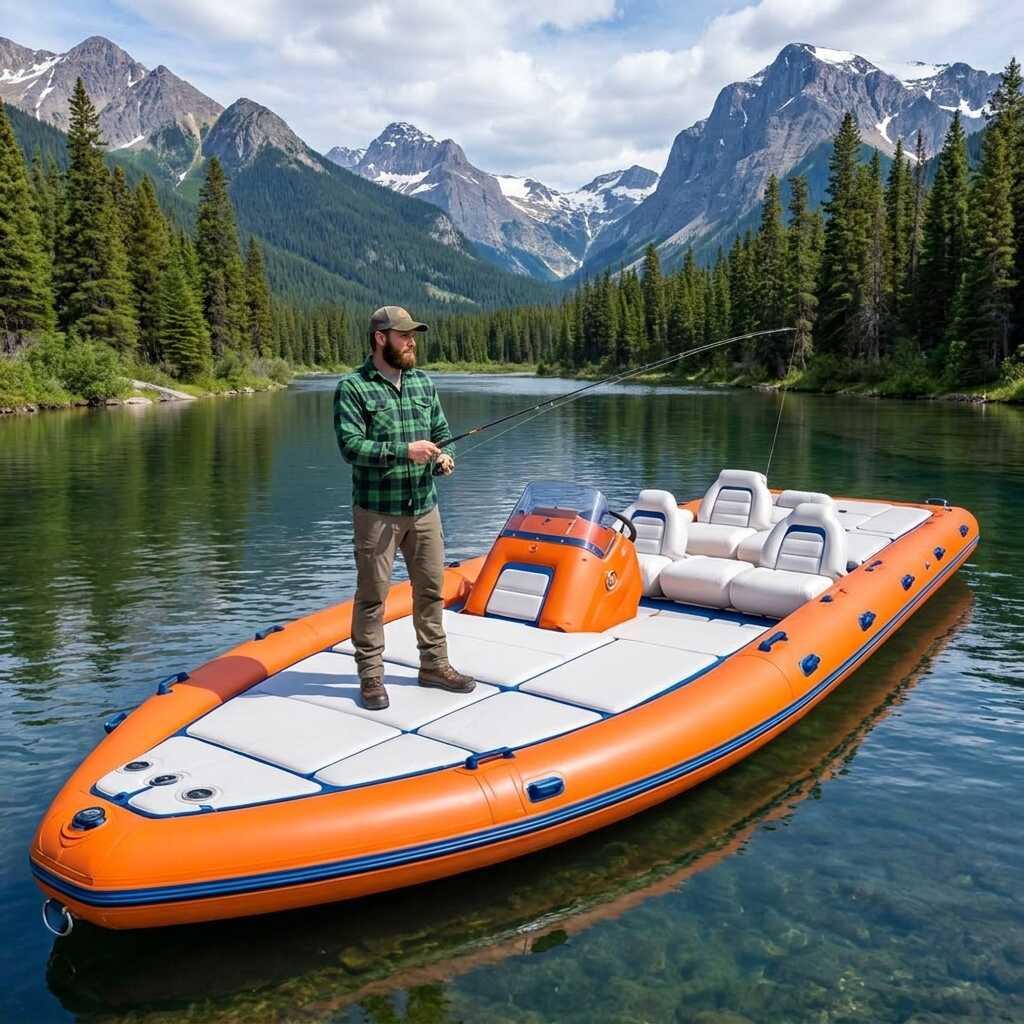
Whether you are looking to explore hidden alpine lakes, quiet river bends, or calm coastal bays, an inflatable fishing boat offers a unique way to experience the serenity and thrill of angling. Unlike their rigid counterparts, these vessels are designed for the modern lifestyle; they can be deflated, packed into a trunk, and transported to the most remote waters where traditional trailers simply cannot go.
This guide is designed to walk you through everything a beginner needs to know about navigating the world of inflatable watercraft. We will move beyond the basics, diving into the mechanics of setup, safety considerations, on-water handling, and the essential maintenance required to ensure your vessel lasts for years. By the time you reach the end of this guide, you will be equipped with the knowledge to turn a compact bundle of high-strength material into your personal gateway to the open water.
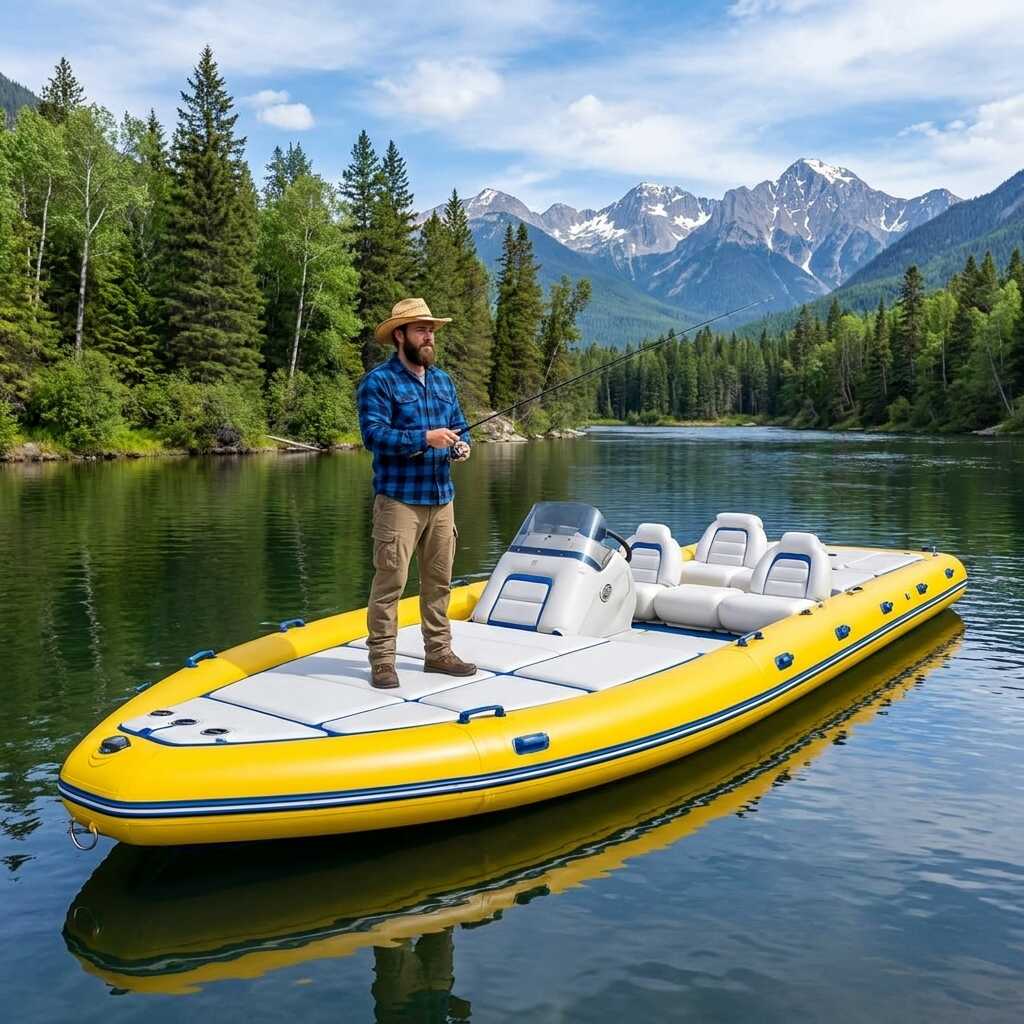
Understanding the Versatility of the Inflatable Fishing Boat
At its core, an inflatable fishing boat is an engineering marvel that balances buoyancy with portability. Unlike a traditional rigid boat, these crafts are constructed from multi-layered, reinforced materials such as PVC or Hypalon, which provide remarkable puncture resistance while maintaining flexibility.
Why Choose an Inflatable?
The primary advantage, and the reason many anglers make the switch, is versatility. Because these boats rely on air pressure for their shape, they adapt to the environment. They are incredibly lightweight, meaning a single person can often carry one to the water’s edge. Furthermore, they are remarkably stable. The large air chambers act as natural shock absorbers, making them feel safer in choppy conditions compared to narrow, rigid canoes.
For the beginner, this means a lower learning curve regarding balance and stability. The low profile of these boats also makes them excellent for stealthy fishing; you can approach a shoreline without the loud hull slap associated with aluminum or fiberglass boats, keeping your target species unaware of your presence until it is too late.
Types of Inflatable Watercraft
It is important to understand that the term “inflatable” covers a range of designs:
-
Inflatable Pontoon Boats: Usually U-shaped or O-shaped, these provide excellent visibility and are often used by fly fishermen. They typically come with a frame that allows for a comfortable seat and storage.
-
Inflatable Dinghies: These look more like traditional boats, often with a transom that allows for the mounting of a small outboard motor or an electric trolling motor.
-
Inflatable Kayaks/Canoes: Sleek, low-profile designs that are ideal for solo fishing in tight, winding rivers where maneuverability is the priority.
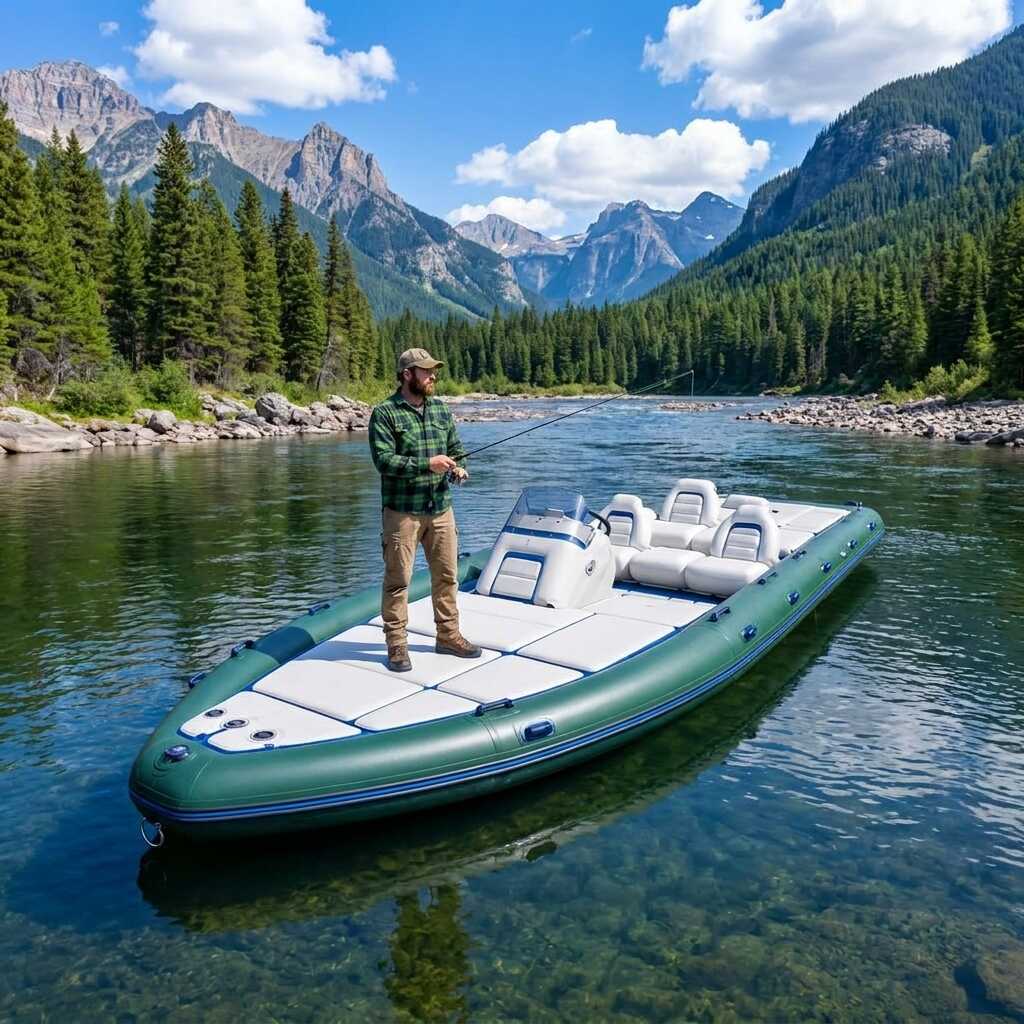
Preparation and Setup: From Trunk to Water
The secret to a successful day on the water with an inflatable fishing boat lies in the preparation phase. While it may seem straightforward, a methodical approach to setup prevents common frustrations and ensures safety.
Choosing Your Launch Point
Before you even inflate your boat, you must scout your launch. While inflatables are durable, they are not immune to sharp rocks or jagged branches. Look for a sandy or grassy bank. Avoid boat ramps if possible, as these can be crowded and often contain hidden debris or sharp concrete edges that can snag the underside of your boat during the inflation process.
The Inflation Process
Most beginners make the mistake of either over-inflating or under-inflating their craft.
-
Uniform Inflation: Start by filling each chamber partially, moving around the boat in a circular pattern. This ensures that the pressure is distributed evenly, allowing the internal bulkheads to settle without undue stress.
-
Pressure Gauges: Use a pressure gauge. Manufacturers provide specific PSI ratings. Over-inflating can cause seams to fail under the heat of the sun, while under-inflating will make the boat sluggish and difficult to maneuver.
-
Temperature Considerations: Remember that air expands as it warms. If you inflate your boat in the cool air of early morning, the pressure will increase significantly once the sun hits it. Always check your pressure after the boat has been on the water for thirty minutes.
Rigging for Success
Once the boat is firm, it is time to rig your gear. Keep your layout organized. An inflatable boat has limited surface area, so everything must have a place. Mount your rod holders securely, ensure your tackle box is accessible but not in the way, and always test your motor (if using one) before leaving the bank.
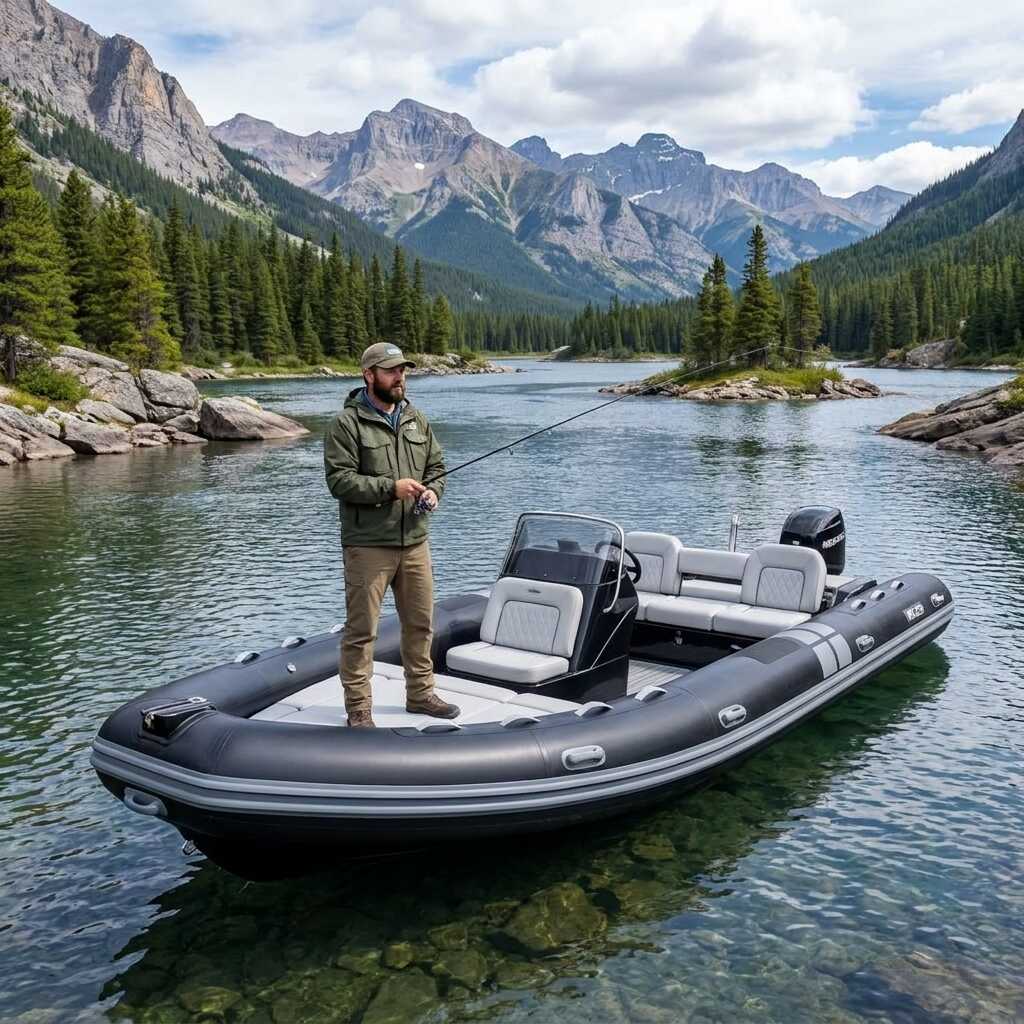
Mastering On-Water Handling and Safety
Fishing from an inflatable craft requires a shift in mindset. You are closer to the water, more sensitive to the wind, and differently affected by currents.
Understanding Wind and Current
Inflatable boats have a higher “windage” than rigid boats, meaning they catch the wind like a sail. A light breeze can push you off your target spot quickly. Mastering your boat means learning to use this to your advantage or learning how to anchor effectively. A small anchor or a drift sock is essential for holding your position in a current or resisting wind drift.
Stability and Weight Distribution
Stability in an inflatable is excellent, but weight distribution is still key. Keep your heavy gear low and toward the center. When casting, avoid leaning too far over the side. If you are standing (which is possible in some reinforced models), do so slowly and keep your center of gravity low. The most common cause of “tipping” or loss of balance is sudden, jerky movements, not the boat design itself.
Safety Protocol
Safety on the water is non-negotiable.
-
PFDs: Always wear a Personal Flotation Device. In an inflatable, this is even more critical as the craft can be more susceptible to obstacles.
-
Repair Kits: Always have a field repair kit on board. This should include patches, glue, and a specialized tool to tighten valves. A leak in an inflatable is usually a slow process, not an instant sink, so having the means to stop a puncture on the water is a vital safety skill.
-
Communication: Never head out without a way to call for help—a waterproof phone case or a handheld VHF radio is recommended.
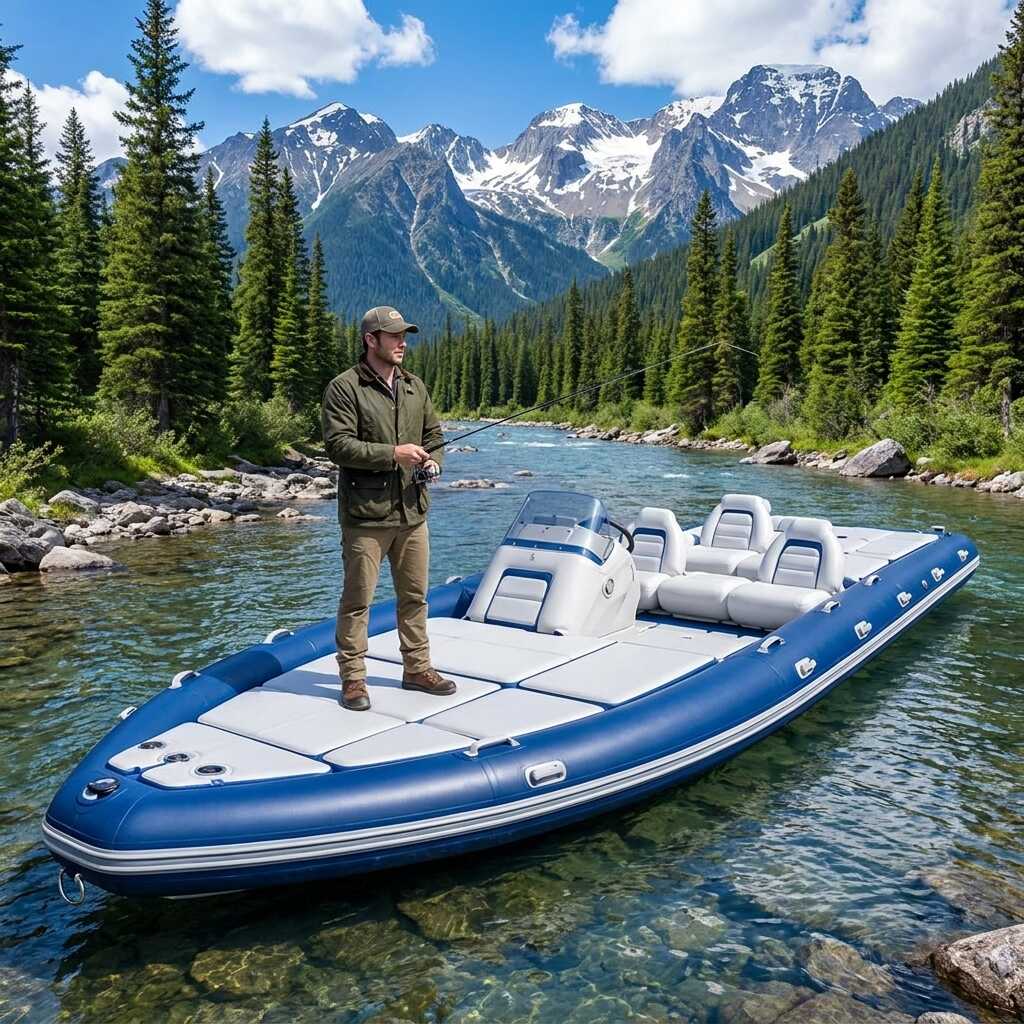
Maintenance and Storage: Extending the Lifespan
The longevity of your boat depends almost entirely on how you treat it when you are not on the water. Proper care is the difference between a vessel that lasts ten seasons and one that fails after two.
Cleaning After Every Use
Saltwater, mud, and organic matter can degrade the material of your boat. After every trip, rinse the boat with fresh water. Use a mild soap to remove any fish slime or oil residue. Most importantly, allow the boat to dry completely before rolling it up. Folding a wet boat is the fastest way to invite mold and mildew, which can degrade the outer layer of your boat over time.
Storage Tactics
-
Avoid Extreme Temperatures: Do not store your boat in an attic that reaches 120 degrees or a shed that freezes solid. Stable, cool, and dry environments are best.
-
To Fold or Not to Fold: If you have the space, storing your boat slightly inflated in a cool, dark room is the gold standard. If you must fold it, try to store it in its carry bag with the folds loose. Repeatedly folding the material along the exact same lines can lead to stress fractures over years of use.
-
Valve Care: Check your valves regularly. Grit and sand are the enemies of valve seals. Keep the dust caps on, and periodically rinse the valves with clean water to ensure they are seating properly.
Conclusion
Embarking on the journey of owning an inflatable fishing boat is an invitation to explore waters that were previously off-limits. It challenges you to be more deliberate in your planning, more attentive to your gear, and more connected to the aquatic environment around you. While the initial setup and maintenance might seem like an extra chore, the reward is a level of freedom that rigid boat owners can only dream of.
You are no longer tethered to a specific launch ramp or a expensive marina. You are mobile, agile, and prepared to drop a line wherever the fish may be. As you gain experience, you will find that the learning curve flattens quickly, and the process of inflation becomes a meditative part of your fishing ritual—a signal to your brain that it is time to leave the stresses of the land behind.
Remember that the best angler on the water is the one who is best prepared. Respect the water, maintain your equipment, and prioritize safety above all else. Whether you are chasing trout in a mountain stream or bass in a local pond, your inflatable craft is more than just a tool; it is a passport to new horizons. Take the time to master these fundamentals, and you will find that the simplest way to fish is often the most rewarding. Happy fishing.