
CAMPING IN A GIANT INFLATABLE HOUSE: WHAT IT’S ACTUALLY LIKE
Imagine looking up at the night sky through a massive, crystal-clear ceiling while lying on a plush king-sized mattress, completely shielded from the wind, bugs, and damp ground. You aren’t peering through a tiny mesh tent window, nor are you staring at the wooden rafters of a cabin. You are suspended inside what feels like a futuristic space station or a giant, pressurized bubble nestled deep in the woods.
Over the last few years, the camping landscape has undergone a radical transformation. We have evolved from basic nylon A-frame tents to elaborate glamping yurts, and now, to something straight out of a science fiction novel: structural pneumatic architecture used for recreation. But stripped of the social media glamour and the perfectly curated viral videos, what is the boots-on-the-ground reality? This deep dive explores the literal and emotional landscape of camping in a giant inflatable house, separating the breathless online hype from the actual, unfiltered human experience of living inside a bubble in the wild.
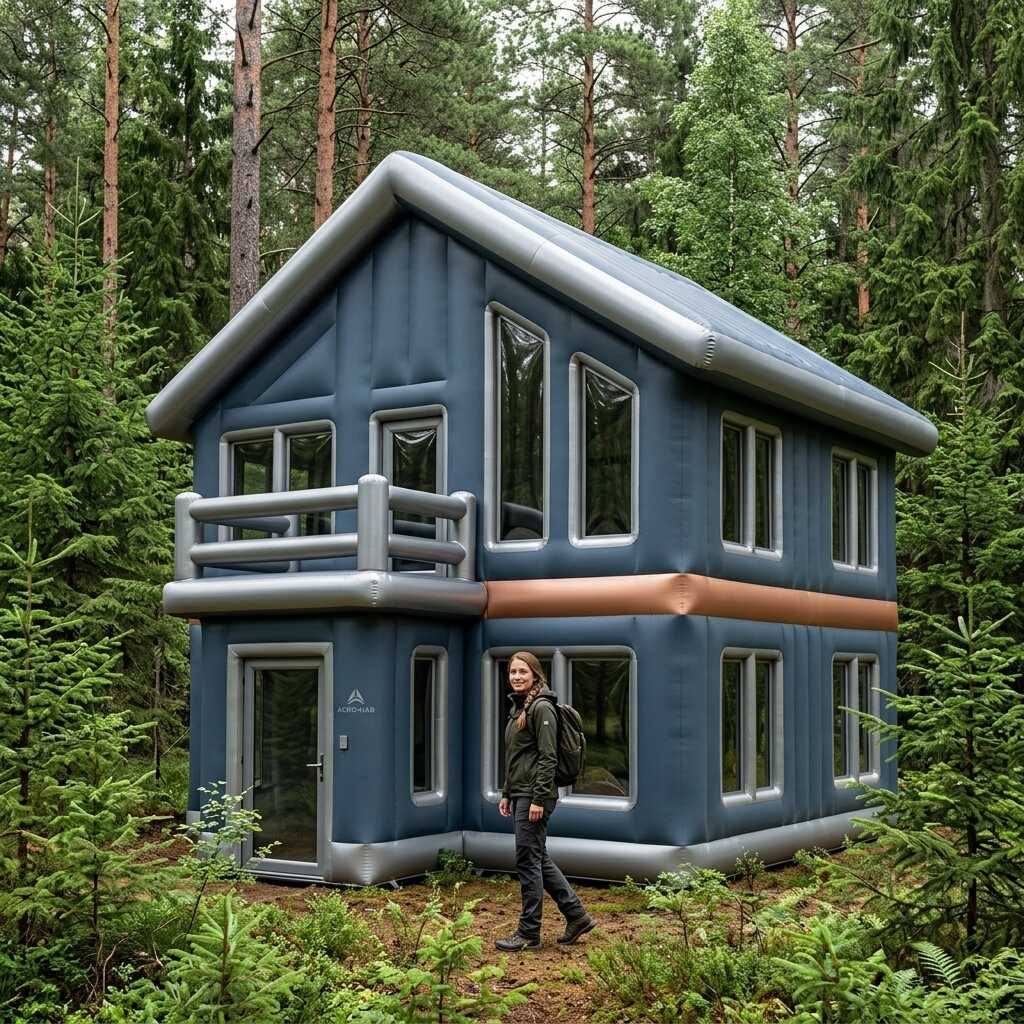
THE INITIAL SHOCK: ARRIVAL AND THE ART OF INFLATION
Arriving at a campsite with a traditional tent usually involves a familiar choreography: unpacking fiberglass poles, hammering metal stakes into stubborn dirt, and wrestling with a rainfly while praying the wind doesn’t pick up. When you step up to the challenge of camping in a giant inflatable house, the entire physical and psychological preparation shifts.
First, there is the sheer scale of the packed gear. This is not a backpacker’s setup. The uninflated house arrives in a massive, heavy-duty canvas duffel bag that requires two people to comfortably lift from the trunk of a vehicle. It feels less like camping gear and more like deploying a military-grade field hospital or an emergency shelter.
Breaking Ground and Flipping the Switch
The magic—and the anxiety—begins during the setup phase. You don’t look for a standard tent pad; you need a wide, meticulously cleared, level expanse of land. Every stray twig, sharp pinecone, and jagged rock must be cleared with obsessive care. Even though the vinyl flooring is heavily reinforced, the psychological weight of knowing your entire house relies on air pressure turns you into a temporary landscaper.
Once the footprint is laid flat, you connect a high-volume electric pump to the main intake valves. The transformation is nothing short of hypnotic:
-
The First 60 Seconds: The deflated vinyl groans and writhes on the ground like a waking creature.
-
Minutes 2 to 5: The structural air beams—thick, rigid columns that replace traditional metal poles—begin to take shape, lifting thousands of cubic feet of heavy PVC into the air.
-
The Final Form: Within ten minutes, a fully realized, multi-room dwelling stands before you, humming with pressure.
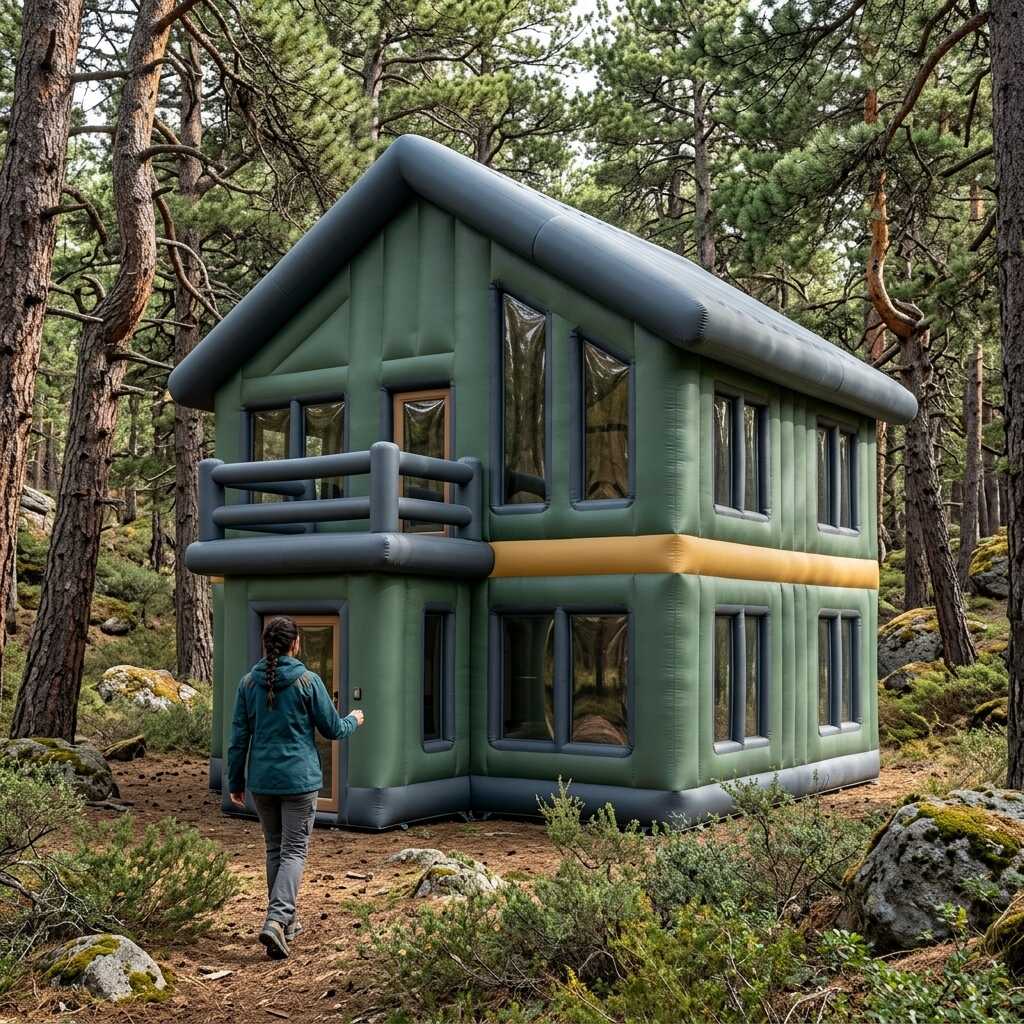
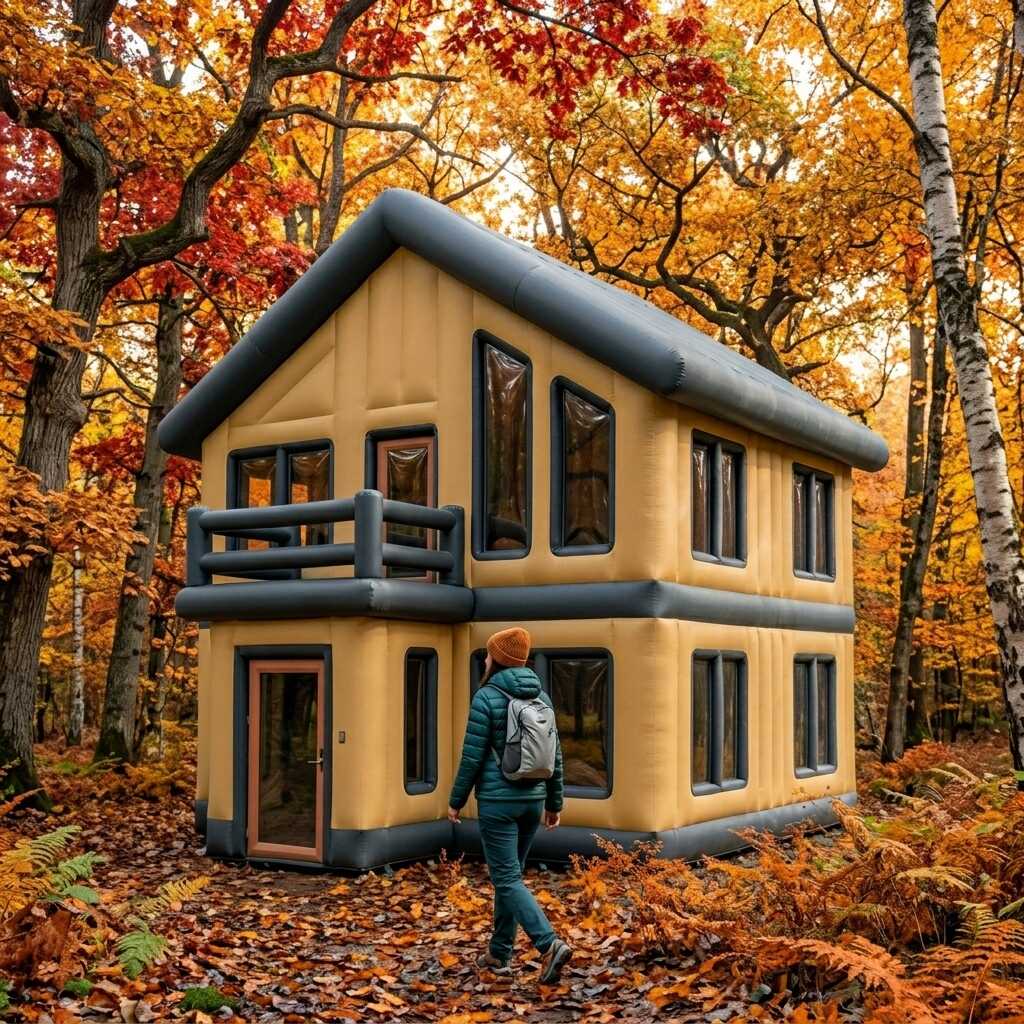
It is an surreal feeling to watch a literal house manifest out of thin air in the middle of a forest. The structure stands rigid, taut, and slightly futuristic against the backdrop of ancient oak trees and wild ferns.
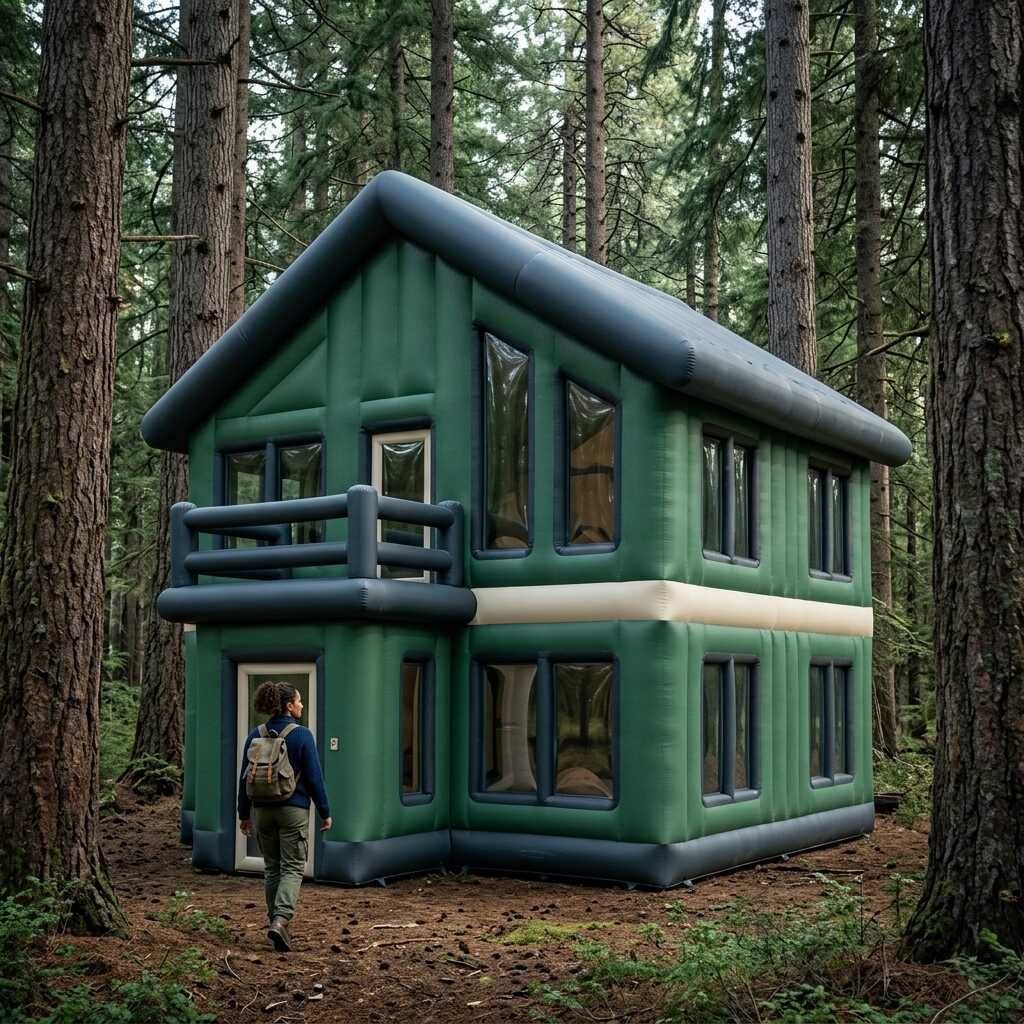
LIVING INSIDE THE BUBBLE: THE DAILY RHYTHMS
Once the house is inflated, stepping inside requires a complete recalibration of what “indoors” and “outdoors” mean. Most giant inflatable houses utilize a dual-zipper airlock system to prevent a sudden loss of pressure when entering and exiting. Zipping through the first door, closing it completely, and then unzipping the second door feels remarkably like entering a submarine or a cleanroom laboratory.
Inside, the space is staggering. High ceilings allow you to walk completely upright in every corner, eliminating the perpetual hunchback posture required by standard tents. The air feels different—vast, slightly insulated, and uniquely resonant. Because the walls are made of thick, acoustic-dampening PVC or specialized TPU, the internal environment has a quiet, cushioned stillness that cuts through the sharpest wilderness winds.
The Sensory Landscape of a Transparent Home
The defining characteristic of the experience is the visual vulnerability. When you live in a giant, semi-transparent or fully clear inflatable structure, you are living inside a literal fishbowl.
During the daytime, this is an unmatched luxury. Sunlight floods the space from every angle, creating a bright, warm greenhouse effect. You can sit on a sofa inside your pressurized bubble, sipping hot coffee, while watching a deer graze just twenty feet away. The traditional barriers of camping are completely dissolved; you are in nature, but you are entirely insulated from its discomforts.
However, this transparency works both ways. As twilight falls and you switch on an internal lantern, your giant inflatable house becomes a glowing beacon in the dark forest. To anyone—or anything—outside, you are on a brightly lit stage. The forest looks back at you. This realization induces a strange, thrilling hyper-awareness of your surroundings. You find yourself turning off the lights just to let your eyes adjust to the dark, watching the shadows of the trees dance across the curved vinyl walls.
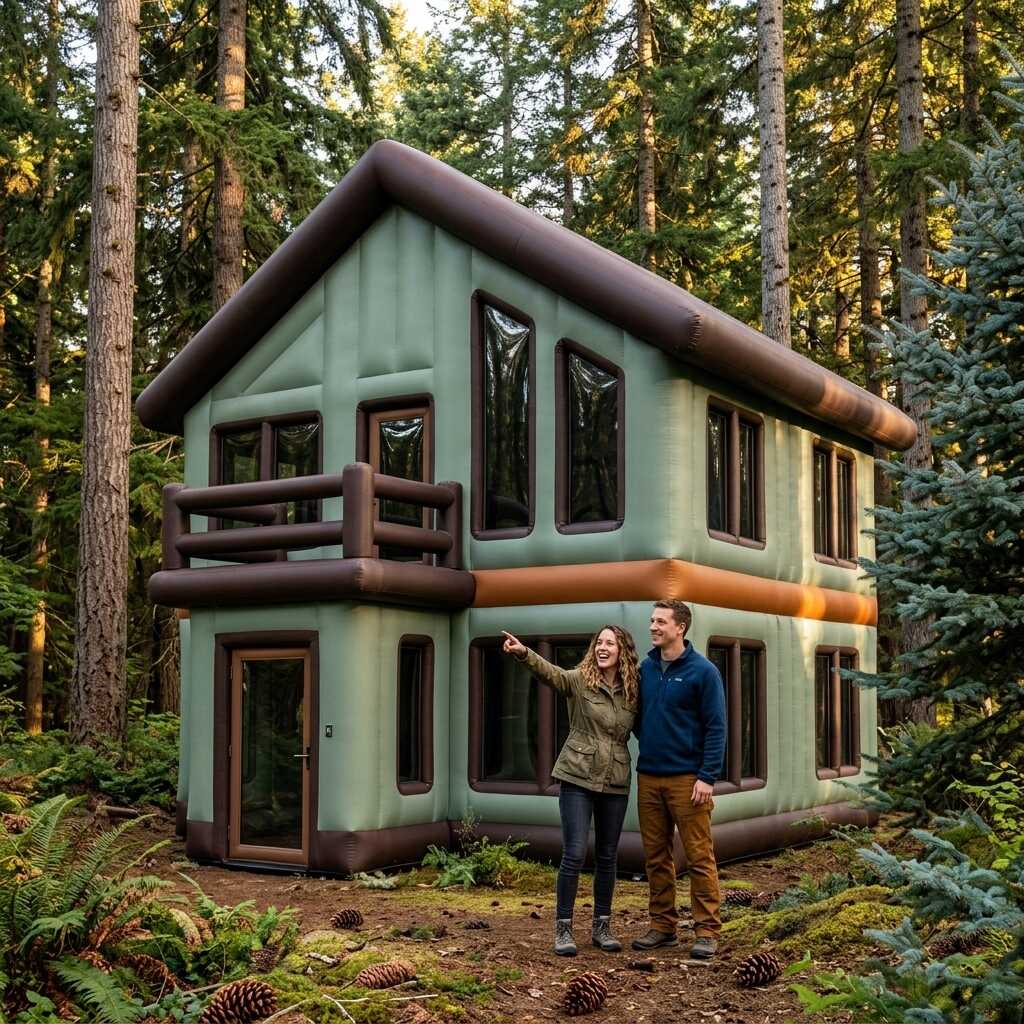
THE ECOSYSTEM OF COMFORT AND COLD
To truly understand what it is like to spend days inside an inflatable house, one must talk about the microclimate. Traditional canvas or nylon tents breathe; they allow air to pass through their fibers, which regulates moisture but lets in the cold. An inflatable house is an absolute barrier. It lets nothing in, and nothing out.
The Battle with Condensation
This absolute barrier creates a unique atmospheric challenge: condensation. A human being exhales a significant amount of moisture every night. In a sealed plastic environment, that moisture has nowhere to go. It rises, hits the cool vinyl ceiling, and condenses into tiny water droplets.
If your inflatable house lacks a sophisticated, continuous-low-noise ventilation system or a dedicated dehumidifier, you will quickly learn the reality of the “internal rainstorm.” Waking up at 3:00 AM to a stray drop of cold condensation falling directly onto your forehead is a rite of passage. Managing the environment requires a deliberate strategy:
-
Keeping ventilation flaps cracked despite the outside chill.
-
Running a small, portable power station to keep internal air circulating.
-
Monitoring the internal humidity levels like a meteorologist.
Thermal Dynamics: Greenhouse vs. Icebox
The thermal properties of a giant vinyl house are extreme. On a sunny, 75°F afternoon, the interior can rapidly spike past 90°F due to the greenhouse effect. It becomes a solar cooker, forcing you to retreat outside to the shade of the trees.
Conversely, when the sun dips below the horizon, the plastic walls offer zero thermal mass. The trapped heat vanishes within minutes, and the interior ambient temperature drops to match the outside air exactly. Camping in a giant inflatable house demands that you bring high-tier climate control gear. It means packing heavy-duty thermal blankets, space heaters if you have shore power, or high-quality cold-weather sleeping bags to handle the dramatic temperature swings.
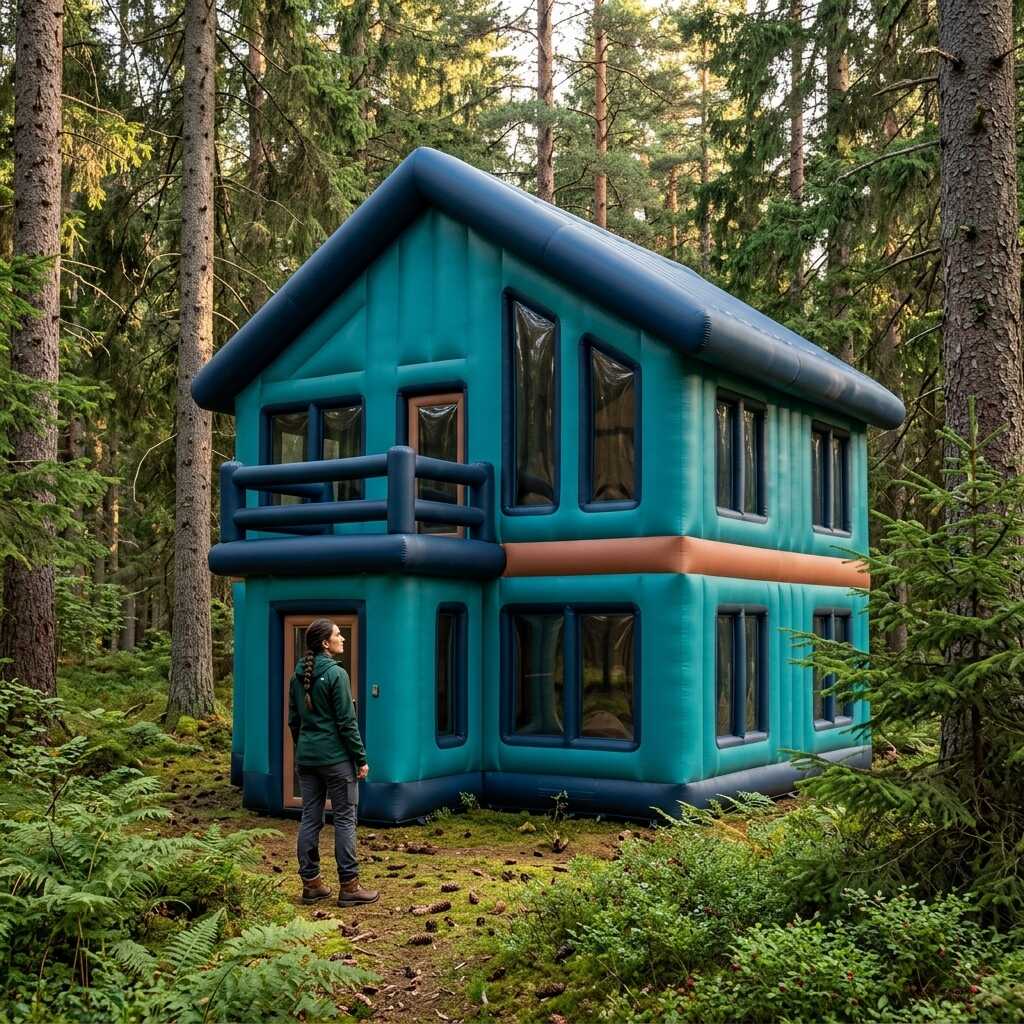
WHEN NATURE TESTS THE PRESSURE: STORMS AND WILDLIFE
The true test of any shelter does not happen during a calm, sunny afternoon; it happens when the wilderness decides to flex its muscles. There is a common misconception that an inflatable house is fragile—that a single sharp stick or a heavy gust of wind will pop it like a birthday balloon. The reality is far more complex and resilient.
Riding Out a High-Wind Gale
When a heavy thunderstorm rolls through the woods, inside a traditional tent, you listen to the fabric snap, rattle, and shake violently. The metal poles flex and groan under the strain. Inside an inflatable house, the experience is strangely organic.
Because the structure is supported by high-pressure air beams rather than rigid metal, it does not resist the wind with brute force; it absorbs it. When a violent gust hits the house, the walls yield slightly, flexing inward to distribute the load before snapping instantly back into their perfect geometric shape. It feels like being inside the belly of a large, gentle animal. The deep, low-frequency thud of the wind hitting the pressurized vinyl is incredibly comforting once you learn to trust the engineering. There are no poles to snap, no stakes to pull out under rigid leverage, and no rainfly to tear away into the night.
| Feature / Experience | Traditional Nylon Tent | Giant Inflatable House |
| Structural Backbone | Rigid fiberglass or aluminum poles | High-pressure PVC/TPU air beams |
| Response to High Wind | Shaking, rattling, risk of pole snapping | Flexing, absorbing, snapping back |
| Acoustic Environment | Loud fabric flapping, high-pitched rustling | Deep, muffled thuds, damp ambient sound |
| Water Resistance | Dependent on rainfly and seam taping | Complete, seamless hydrostatic barrier |
The Psychological Vulnerability to Wildlife
While the structure easily handles the weather, it does nothing to soothe the primal human subconscious when it comes to wildlife. In a standard tent, you are hidden behind opaque walls. What you cannot see, you can easily ignore.
In a transparent inflatable house, the boundary is invisible. If a raccoon, a stray dog, or a larger predator wanders near your site at midnight, you will see it clearly through the walls. The illusion of safety provided by a traditional brick-and-mortar home is entirely absent here. You realize that you are separated from the raw elements by nothing more than a fraction of an inch of pressurized plastic. This realization doesn’t ruin the experience; rather, it restores a deep, visceral sense of wildness to camping that modern luxury often strips away. It forces you to respect the environment you are occupying.
THE UNEXPECTED LOGISTICS: CARE AND DEFLATION
As the weekend comes to a close, the final chapter of the experience begins: the breakdown. This is where the true labor of owning and operating an inflatable house reveals itself, far away from the idealized imagery of lifestyle blogs.
The Clean Down
Before you can even think about deflating the structure, you have to clean it. Because the exterior surfaces are vast and made of static-prone vinyl, they attract every piece of pollen, pine sap, dust, and morning dew in the valley. Packing an inflatable house away while it is even slightly damp or dirty is a recipe for permanent mold, ruinous odors, and degraded materials.
The breakdown process involves a meticulous walk-around with microfiber towels, wiping down the massive curved exterior walls, clearing debris from the roof beams, and ensuring the underside footprint is completely dry. It is a physical, time-consuming task that requires patience and a genuine commitment to maintaining the gear.
THE CONCLUSION: RETURNING TO THE GRID
When you leave the campsite and return to the rigid, right-angled safety of a permanent concrete or wooden home, something inside your perspective has shifted. Spending days and nights inside a giant inflatable house changes your relationship with your environment.
It strips away the traditional boundaries of outdoor recreation. It is neither the rugged, minimal survivalism of traditional backpacking nor the static, insulated detachment of staying in a hard-sided cabin or an RV. Instead, it is a strange, hybrid state of living—a way to embed yourself completely within the visual beauty of the wilderness while carrying a spacious, pressurized sanctuary right along with you.
Ultimately, the experience leaves you with a profound appreciation for space, light, and structural engineering. You remember the way the morning sun filled the entire room at dawn, the sound of the wind flexing the walls during the storm, and the sight of the stars tracking across the clear ceiling while you drifted off to sleep. It is an experience that is complex, logistered, occasionally exhausting, but undeniably unforgettable. It proves that sometimes, looking at the world through a new kind of window is exactly what we need to see it clearly.