
THE EVOLUTION OF PERSONAL WATERCRAFT: THE RISE OF THE INFLATABLE JETSKI
The open water has always called to the adventurous, but for decades, answering that call required significant compromise. Since their commercial debut in the late 20th century, personal watercraft (PWCs) have been defined by rigid fiberglass hulls, heavy marine engines, and a demanding logistical footprint. To own a traditional jet ski was to commit to a lifestyle of trailers, dedicated garage storage, heavy-duty tow vehicles, and substantial maintenance schedules.
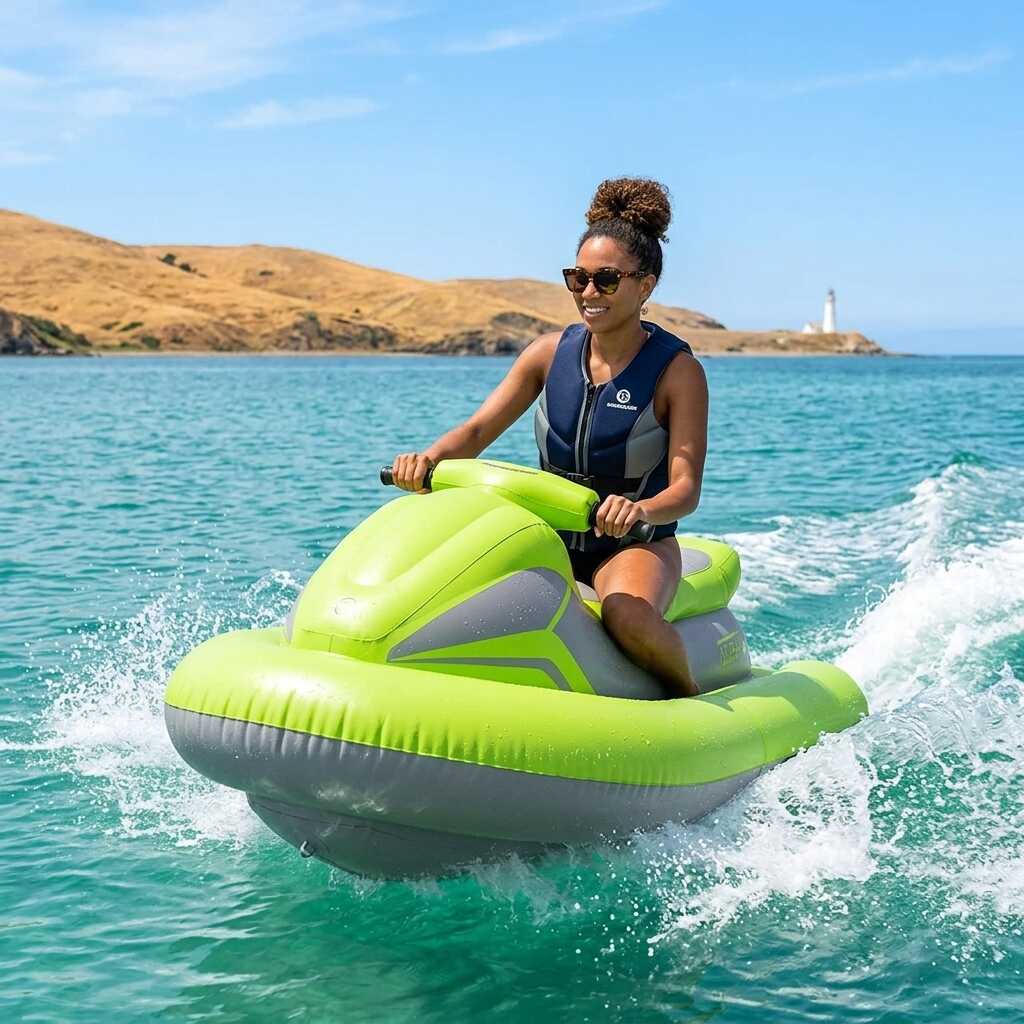
However, a quiet revolution has been brewing at the intersection of marine engineering and advanced material science. The traditional boundaries of maritime recreation are shifting due to a disruptive newcomer that is redefining accessibility on the water: the inflatable JetSki. This innovation is not merely a novelty or a watered-down alternative to fiberglass vessels. Instead, it represents a profound paradigm shift in how we conceptualize, transport, and experience aquatic speed. By fusing high-pressure drop-stitch technology with lightweight electric and modular propulsion systems, the inflatable watercraft has evolved from a backyard pool toy into a legitimate, high-performance category of personal watercraft.

THE RIGID ANCESTRY: UNDERSTANDING THE PWC FOOTPRINT
To appreciate the impact of the inflatable JetSki, one must first look at the legacy it is challenging. The classic personal watercraft architecture—pioneered by brands like Kawasaki, Sea-Doo, and Yamaha—relied heavily on mass and structural rigidity. Heavy fiberglass or composite hulls were necessary to slice through chop and withstand the intense forces generated by internal combustion internal-jet engines.
While these machines offered unmatched speed and thrill, they also introduced steep barriers to entry:
-
Logistical Friction: A standard modern PWC can easily weigh between 700 and 1,000 pounds. This weight demands a dedicated trailer, a vehicle with sufficient towing capacity, and the physical space to store the rig when the season ends.
-
Access Constraints: Launching a traditional watercraft requires a concrete boat ramp or a well-maintained beach access point. For urban apartment dwellers or those targeting remote, pristine lakes, ownership was practically impossible.
-
Maintenance Burden: Gas-powered marine engines require winterization, spark plug replacements, hull patching, and specialized mechanical knowledge.
These realities inevitably restricted PWC ownership to a specific demographic of waterfront property owners or dedicated hobbyists with ample storage space. The industry reached a plateau where innovation meant adding more horsepower, more weight, and more digital displays, rather than solving the fundamental problem of physical accessibility.
THE MATERIAL BREAKTHROUGH: THE MECHANICS OF INFLATABLE RIGIDITY
The skepticism surrounding an inflatable vessel capable of high-speed travel is entirely natural. Historically, inflatable watercraft were synonymous with soft, sagging hulls that buckled under the weight of an occupant or folded when hitting a wave. The transition from these pliable structures to high-performance personal watercraft is entirely credited to a manufacturing marvel known as drop-stitch fabric.
Drop-stitch construction utilizes tens of thousands of fine polyester threads that connect two parallel layers of durable, marine-grade PVC (polyvinyl chloride). When the chamber is inflated to high pressures—often between 15 and 20 PSI (pounds per square inch)—these internal threads pull tight, preventing the material from expanding outward into a rounded tube.
The result is a surface that is structurally uniform, incredibly dense, and remarkably rigid. When stepped on, a properly inflated drop-stitch hull feels as rock-hard as a traditional fiberglass deck. This extreme rigidity allows designers to sculpt hydrodynamically efficient hulls, sharp tracking fins, and stable platforms that can support both the rider and the propulsion unit without flexing or losing speed under load.
Furthermore, modern multi-layer PVC composites are highly resistant to punctures, abrasions, UV degradation, and saltwater exposure. The tough exterior skin means that scraping against a gravel shoreline or bumping into a wooden dock—events that would cause costly gel-coat cracks on a fiberglass jet ski—results in nothing more than a superficial scuff.

THE PROPULSION TRANSITION: ELECTRIC AND MODULAR MOTORS
A rigid hull is only half of the equation; a personal watercraft requires a power source capable of moving it across the water at exhilarating speeds. The rise of the inflatable JetSki has uniquely coincided with the maturation of high-density lithium-ion batteries and compact, brushless electric motors.
Traditional internal combustion engines, with their fuel tanks, oil reservoirs, and heavy exhaust systems, are fundamentally incompatible with a packable, inflatable platform. Electric propulsion, conversely, fits this design language perfectly.
THE ADVANTAGES OF THE COMPACT ELECTRIC POWERTRAIN
Modern inflatable watercraft utilize compact jet pumps or high-torque electric thrusters built into modular pods. These motor units can be detached from the deflated hull in seconds, keeping the component pieces lightweight and manageable for a single person to carry.
-
Instantaneous Torque: Electric motors deliver maximum torque immediately, allowing the lightweight inflatable hull to pop up onto a plane—skimming across the surface rather than plowing through the water—with remarkable efficiency.
-
Silent Exploration: The loud, high-pitched whine of a traditional two-stroke or four-stroke PWC engine has long been a source of tension between riders and coastal communities or wildlife. Electric inflatable units operate in near-silence, allowing users to explore natural environments without disrupting the ecosystem or disturbing others.
-
Zero Mechanical Overhead: With fewer moving parts, there are no fuel lines to clog, no oil to change, and no complex winterization protocols. Maintenance is reduced to rinsing the salt water off the unit and plugging the battery pack into a standard wall outlet.

REDEFINING THE WATERWAY EXPERIENCE: DISMANTLING BARRIERS
The true significance of this evolution lies in the democratization of water sports. The inflatable JetSki completely dismantles the traditional logistical barriers, opening up the sport to an entirely new demographic of outdoor enthusiasts.
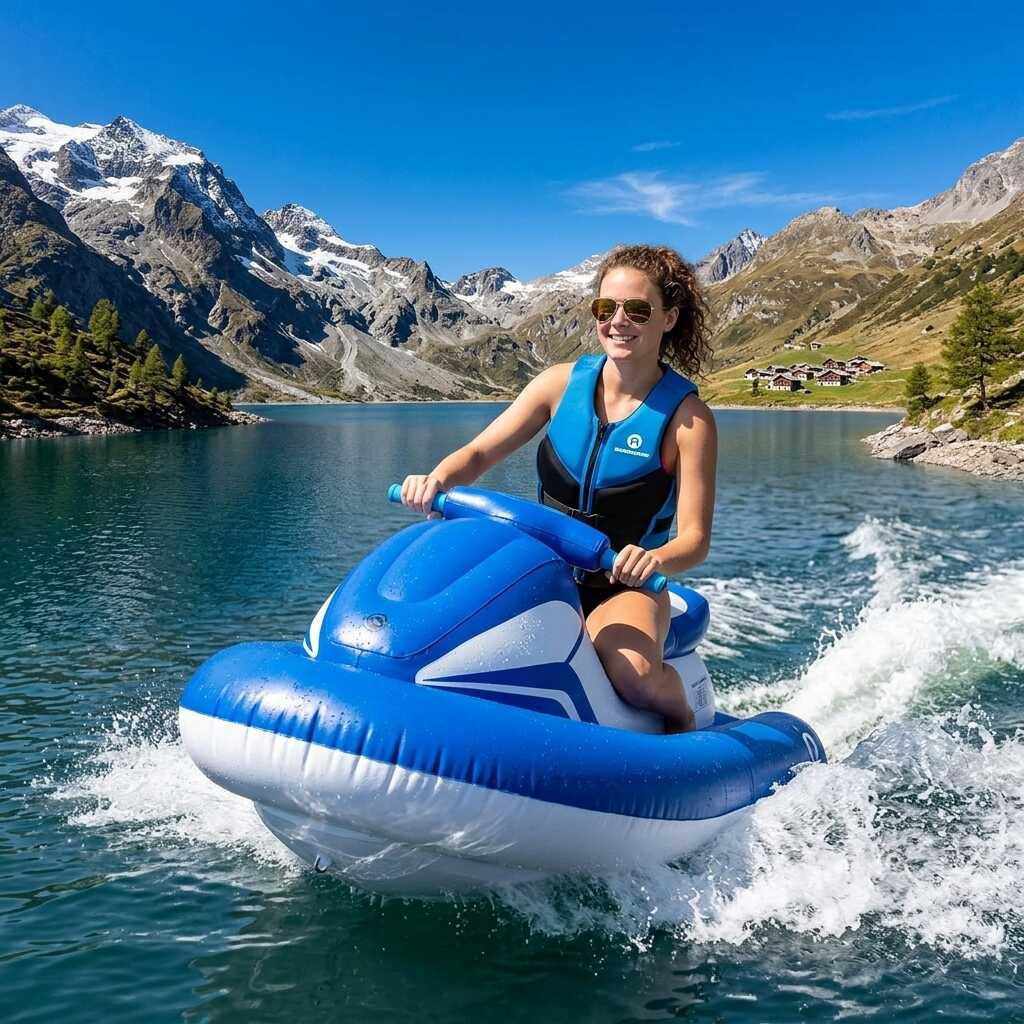
Consider the transport sequence of an inflatable system. Instead of hitching a trailer and backing it down a crowded boat ramp, an entire watercraft setup can fit neatly into the trunk of a compact sedan or the back seat of an SUV. A single user can transport the deflated hull in a heavy-duty backpack, load the battery and motor module into a separate carrying case, and hike down to a remote alpine lake, a hidden river bend, or a secluded beach that a trailer could never reach.
Upon arrival, inflation takes less than ten minutes using an electric pump powered by a vehicle’s 12V outlet. The modular components snap or bolt into place without tools, and the craft is ready for launch directly from a shoreline, a low dock, or even rocks.
This portability transforms the personal watercraft from a highly calculated weekend production into a spontaneous afternoon activity. It enables urban residents, apartment renters, and nomadic travelers to participate in a sport that was previously barred by their living arrangements or vehicle choices.
THE STABILITY AND SAFETY COEFFICIENT
Beyond portability, the physical properties of inflatable hulls introduce unexpected benefits regarding safety and stability on the water. Fiberglass hulls rely on precise weight distribution and complex hull geometry to maintain balance; if a traditional PWC capsizes, flipping it back over in deep water requires significant physical strength and technique.
In contrast, an inflatable platform possesses an inherently high volume of buoyancy relative to its weight. The wide, flat profiles typical of drop-stitch designs create an incredibly stable platform that is highly resistant to rolling. For beginners, young riders, or those using the craft for utility purposes like marine photography or fishing, this stability builds immediate confidence.
If the craft does flip, its lighter weight makes righting the vessel straightforward. Additionally, falling against an inflated PVC surface or getting bumped by the hull while swimming alongside it is significantly safer than making contact with a solid, unyielding fiberglass edge.
THE FUTURE RIPPLE EFFECT
We are currently witnessing the early chapters of this transition, but the trajectory is clear. As battery energy densities continue to climb, we can expect the weight of these modular propulsion units to drop even further while extending runtime and top speeds.
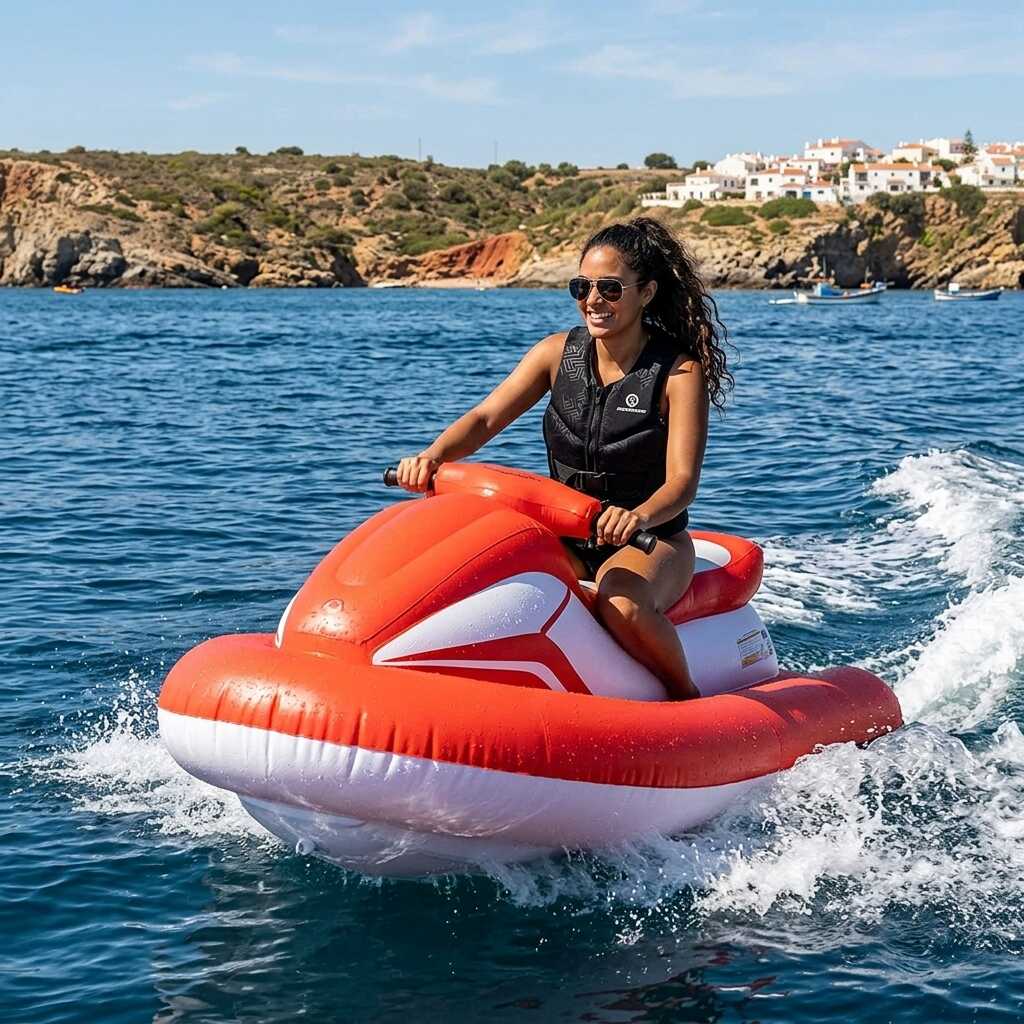
The evolution of the inflatable JetSki is a testament to what happens when engineering shifts its focus from sheer power to intelligent efficiency. It proves that a watercraft does not need to be permanent, heavy, or demanding to provide a genuine connection to the thrill of speed on the water. By trading the trailer for a backpack, the modern rider loses none of the adventure, while gaining an unprecedented level of freedom. The future of personal watercraft is no longer anchored to the garage; it is flexible, packable, and ready to unfold wherever the water flows.