
GIANT INFLATABLE DRAGON WATER SLIDE: DIMENSIONS, SETUP, AND SAFETY GUIDE
INTRODUCTION
Backyard entertainment has undergone a massive evolution. There was a time when a simple plastic slip-and-slide or a basic oscillating sprinkler was enough to keep neighborhood kids occupied for a summer afternoon. Today, those modest setups have been replaced by commercial-grade, experiential residential attractions. Standing at the absolute pinnacle of this backyard revolution is the Giant Inflatable Dragon Water Slide.
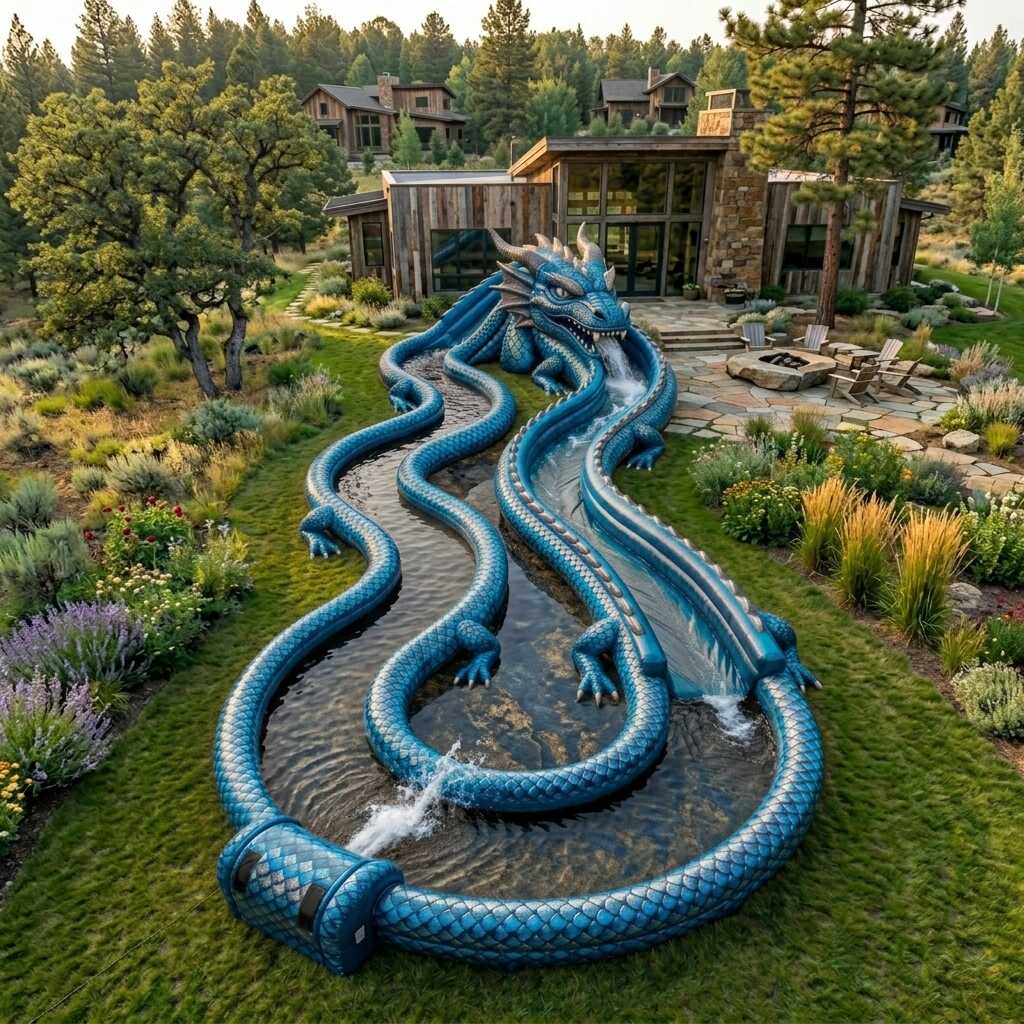
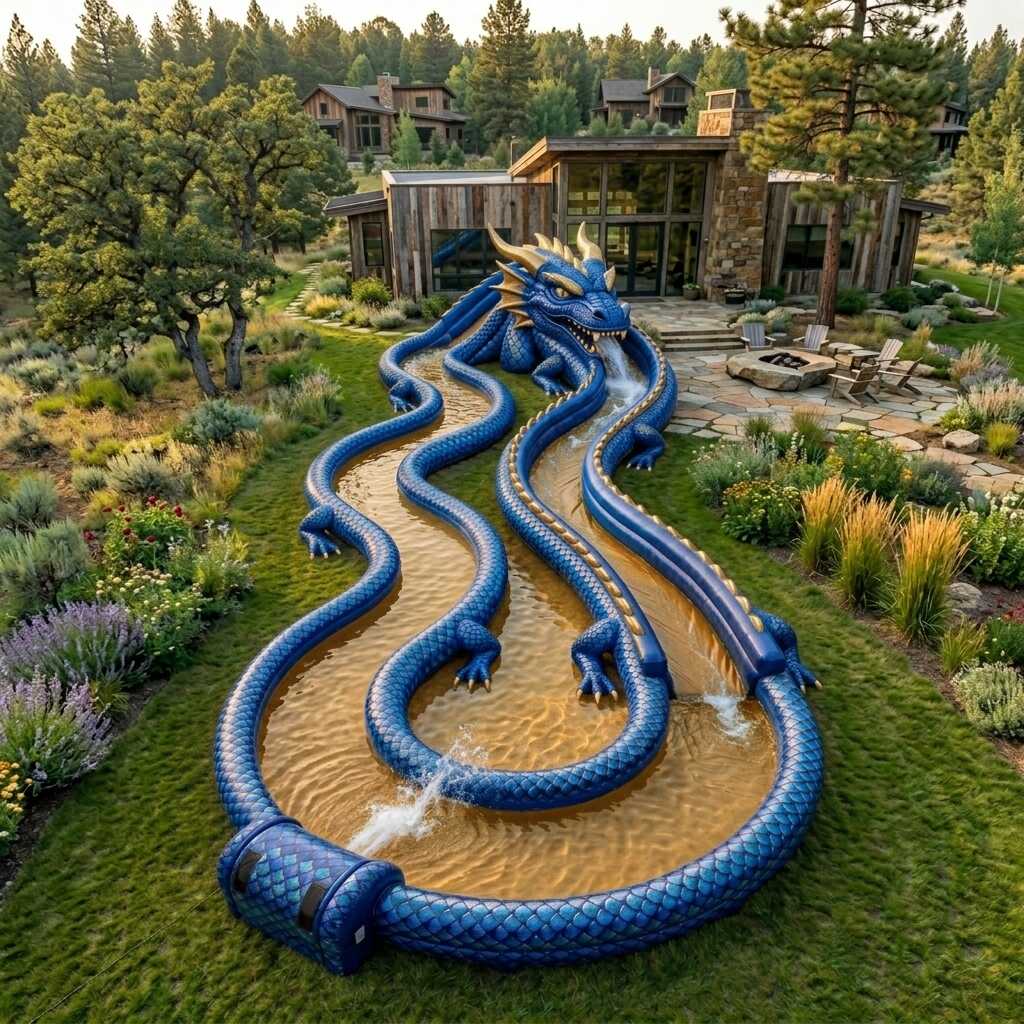
This is not just a piece of play equipment; it is a towering, visually striking centerpiece that transforms an ordinary lawn into a temporary water park. Dominated by mythical aesthetics—often featuring cascading water mimics, massive clawed pillars, and a towering dragon head framing the drop—this specific inflatable structure has become highly sought after for large family gatherings, community events, and milestone celebrations.
However, hosting an attraction of this scale requires more than just an open patch of grass and a garden hose. Because of its sheer mass, wind resistance, and the physics of moving water combined with rapid descent, a Giant Inflatable Dragon Water Slide demands rigorous logistical planning. To ensure the experience matches the excitement, hosts must treat it with the same operational respect as a mechanical amusement ride. This comprehensive guide provides an exhaustive look into the critical engineering dimensions, precise physical setup protocols, and uncompromised safety strategies required to manage this monumental summer feature successfully.

PART I: UNDERSTANDING THE DIMENSIONS AND ANATOMICAL SCALE
Before a single anchor is driven into the ground, you must fully grasp the physical footprint and structural volume of a Giant Inflatable Dragon Water Slide. These structures are massive engineering undertakings made of heavy-duty PVC vinyl, and failing to accurately measure your available space can result in property damage or severe operational hazards.
Footprint and Spatial Clearance
A standard commercial-grade giant dragon slide typically demands a monumental clearing. While sizes vary slightly by manufacturer, a standard model occupies an average footprint of 30 to 40 feet in length, 15 to 20 feet in width, and can tower anywhere from 18 to 25 feet into the air.
However, measuring just the physical vinyl is a critical mistake. You must account for a “dynamic clearance zone.”
-
The Perimeter Buffer: Maintain a minimum of 5 to 6 feet of completely unobstructed clearance on all four sides of the inflatable. This space ensures the vinyl does not rub against abrasive surfaces (like fences or brick walls) when it sways in the wind.
-
The Exit Zone: The splash pool or slip-out extension at the bottom requires an extra 10 feet of clear, soft terrain beyond the physical boundary to allow riders to safely exit the splash zone without colliding with obstacles.
-
Overhead Clearance: This is the most frequently overlooked dimension. You must ensure there are zero tree branches, roof overhangs, or—most importantly—low-hanging utility and power lines within 10 feet of the slide’s peak height.
Weight, Material Density, and Ground Pressure
When deflated and tightly rolled, a commercial dragon water slide is an incredibly dense, heavy mass. Manufactured from 15-ounce to 18-ounce heavy-duty, UV-resistant, fire-retardant Ripstop PVC vinyl, the dry weight of the structure alone can range between 350 and 600 pounds.
Once the water systems are fully operational, the weight distribution changes drastically. A standard built-in splash pool at the base can hold anywhere from 300 to 500 gallons of water. Given that water weighs approximately 8.34 pounds per gallon, you are adding an immediate 2,500 to 4,000 pounds of static weight to the footprint. This immense ground pressure means the slide must only be placed on highly stable, compacted, and level earth.
PART II: STEP-BY-STEP SETUP PROTOCOL AND INFRASTRUCTURE REQUIREMENTS
Setting up a multi-hundred-pound inflatable requires a systematic, step-by-step approach. Rushing the installation process or cutting corners on infrastructure can lead to structural collapse, motor burnout, or water flooding.
Site Selection and Preparation
The ideal site is a completely flat, pristine grass lawn. Avoid concrete, asphalt, or gravel surfaces whenever possible, as these drastically accelerate vinyl wear and offer no natural shock absorption for exiting riders.
-
Clear the Terrain: Inspect the setup area meticulously. Remove every single stick, rock, pinecone, toy, or sharp root. Even a tiny, sharp pebble under a 500-pound water pool can puncture the PVC under the pressure of shifting body weights.
-
Lay the Ground Barrier: Always lay down a heavy-duty tarpaulin sheet that is slightly larger than the slide’s footprint. This protects the underbelly of the inflatable from mud, moisture, and friction, making the post-event pack-up significantly easier.
Unrolling and Positioning
Because of the slide’s weight, move it to the center of the tarp using a heavy-duty hand truck or appliance dolly.
-
Identify the orientation of the slide before unrolling. Ensure the long exit lane faces away from structural obstacles and the inflation tubes (intake ports) face toward your electrical source.
-
Unroll the vinyl flat across the tarp, smoothing out major wrinkles. Locate the heavy-duty zippers or deflation flaps around the base and ensure they are zipped completely shut and securely buckled.
Electrical and Inflation Systems
A giant water slide requires continuous air pressure to stay upright; it does not “fill up and seal.” This requires one or two commercial-grade leaf blowers (usually 1.5 to 2.0 horsepower each) running constantly.
-
Power Delivery: Plug the blowers directly into a dedicated 110V/15A or 20A circuit breaker. If you must use an extension cord, it must be a heavy-duty, outdoor-rated, 10-gauge or 12-gauge cord, and it should never exceed 50 feet in length to prevent voltage drops that cause motor overheating.
-
The Inflation Process: Securely attach the slide’s long intake tube to the mouth of the blower using the built-in strap or a heavy-duty ratchet strap. Ensure the tube is straight and completely free of twists. Turn on the blower. The dragon structure will begin to self-animate, rising to its full height over the course of 3 to 5 minutes. Walk around the unit during inflation to assist any sections that catch or fold over on themselves.
Water Line Integration
Once fully inflated, attach your primary garden hose to the slide’s built-in internal bladder misting system, which usually runs along the top arch of the dragon’s head. Adjust the spigot so that the spray provides a steady, gentle mist across the entire sliding surface. Avoid turning the hose on full blast, as over-saturating the slide creates heavy pooling that strains the structural seams and wastes excessive amounts of water.

PART III: COMPREHENSIVE SAFETY STRATEGIES AND RISK MANAGEMENT
Operating a large-scale water attraction carries inherent risks, ranging from environmental variables to human behavior. A successful host must establish strict, unyielding operational rules to guarantee the physical well-being of every participant.
Structural Anchoring: The Defense Against Wind
The massive vertical profile of a dragon slide acts exactly like a giant ship sail. A sudden gust of wind can easily lift, flip, or travel an unanchored slide, resulting in catastrophic injuries.
-
Staking: If setup is on grass, you must drive heavy-duty, 18-inch to 24-inch steel J-hook stakes directly into the ground through every single anchor loop sewn into the base of the vinyl. Drive them at a slight angle away from the inflatable until they are flush with the ground.
-
Tie-Down Straps: Connect heavy-duty ratchet straps from the upper tether points on the dragon’s shoulders/head down to secure ground anchor points.
-
The Wind Threshold Rule: Keep a handheld anemometer (wind speed gauge) on-site, or closely monitor local weather apps. Absolutely deflate the slide immediately if sustained winds or unexpected gusts reach 15 miles per hour. Never risk “waiting out” a sudden summer storm while the unit is vertical.
Supervision, Capacity, and Rider Behavior
Mechanical and structural safety measures mean nothing without strict human oversight.
-
Dedicated Attendants: Assign a minimum of two responsible adults to manage the slide at all times. One attendant must stand at the base of the ladder to control the line and monitor entry weight, while the second attendant must have a clear line of sight to the top platform and the splash pool to manage descent intervals.
-
One-at-a-Time Rule: Only allow a single rider down the slide lane at any given time. A massive percentage of inflatable injuries occur when a second rider collides with someone who hasn’t yet exited the splash pool.
-
Physical Constraints: Group riders by size and age. Do not allow toddlers to use the slide at the same time as teenagers or adults. Enforce strict posture rules: riders must descend face-up, feet-first, with hands crossed over their chest. Never allow head-first diving or sliding on the stomach, as this can cause severe spinal or neck trauma.
+-----------------------------------------------------------------------+
|                       CRITICAL OPERATIONAL CHECKS                     |
+-----------------------------------------------------------------------+
|  [ ] Wind check: Must be strictly under 15 mph (24 km/h).            |
|  [ ] Anchors: All 18-24" J-hooks driven flush into level ground.      |
|  [ ] GFCI: Blowers plugged exclusively into ground-fault protected    |
|      circuits.                                                        |
|  [ ] Clearance: 6-foot side perimeter and 10-foot overhead buffer     |
|      verified clear.                                                  |
+-----------------------------------------------------------------------+
Water and Electrical Safety (GFCI)
Water and electricity are a deadly combination. The heavy-duty air blowers must be placed a minimum of 10 feet away from the water splash zones, damp grass, or drainage runoff. Crucially, the power source must be protected by a Ground Fault Circuit Interrupter (GFCI) outlet or breaker. A GFCI monitors electrical current flow and will instantly shut down power within milliseconds if it detects a current leakage to ground, completely mitigating the risk of accidental electrocution.
CONCLUSION
Managing a Giant Inflatable Dragon Water Slide is a highly rewarding endeavor that creates unforgettable summer experiences, but it is a responsibility that demands meticulous preparation and consistent operational discipline. By carefully analyzing the massive physical footprint and overhead dimensions, executing a systematic step-by-step setup plan, and rigorously enforcing wind, anchoring, and passenger safety protocols, you transform a potentially chaotic backyard hazard into a perfectly managed, secure environment. Treat the scale of the structure with respect, remain vigilant with supervision, and the legendary presence of the dragon will provide safe, thrilling, and flawless water park entertainment right at home.