
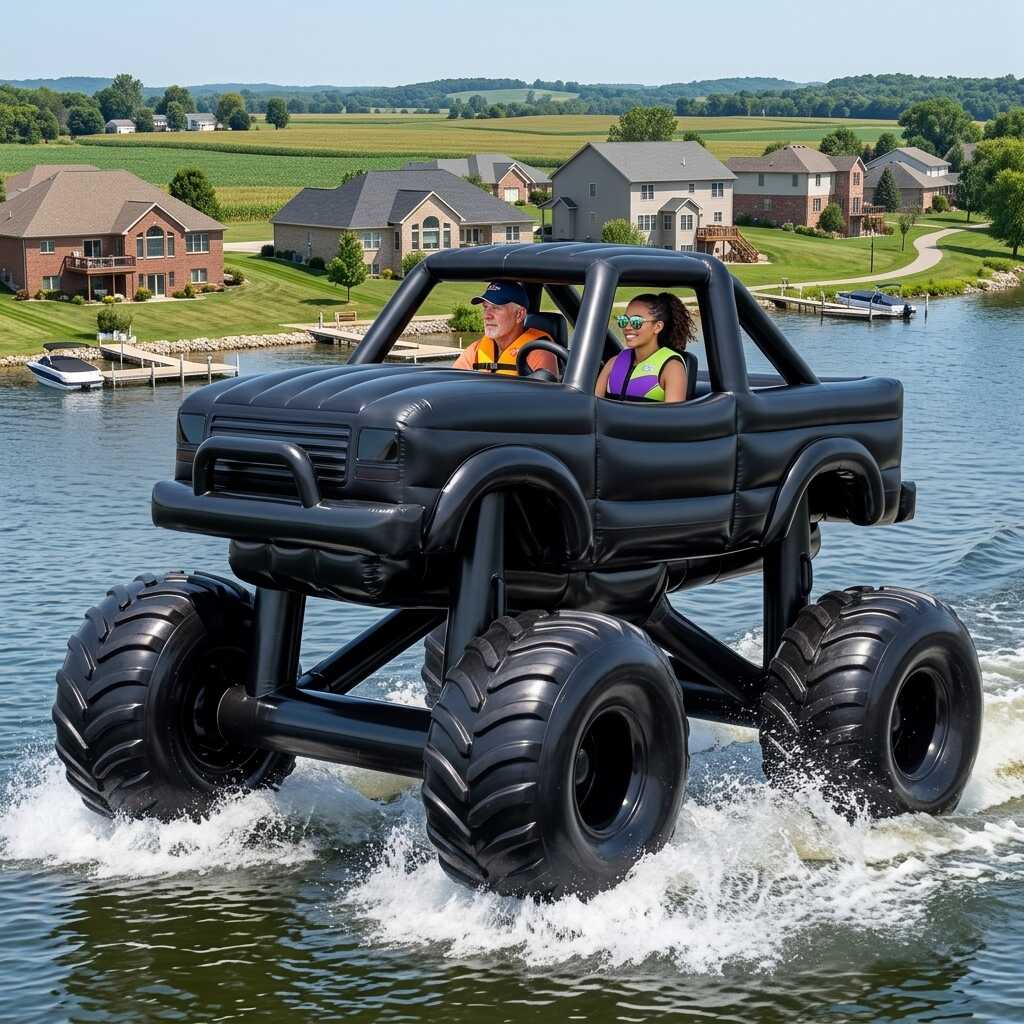
The boundary between terrestrial powerhouses and aquatic engineering continues to blur as modern recreational design embraces bolder, larger-than-life aesthetics. Among the most striking manifestations of this trend is the inflatable monster truck boat. This design hybrid fuses the rugged, unmistakable silhouette of a stadium monster truck with the buoyant, streamlined requirements of a recreational watercraft. Far from being a standard inflatable raft, these concept vessels utilize advanced architectural principles to replicate heavy-duty automotive styling in a flexible, air-filled medium.
When adapting a massive, ground-pounding truck into an aquatic vessel, designers face the unique challenge of maintaining visual authenticity without compromising hydrodynamics. The immense wheels, aggressive grilles, raised chassis, and roaring engine blocks that define a monster truck must be meticulously translated into inflatable chambers that sit balanced on the water line. This introductory analysis explores the cutting-edge design concepts, sophisticated materials, and striking color palettes that turn the humble inflatable into a commanding, stadium-inspired water beast.
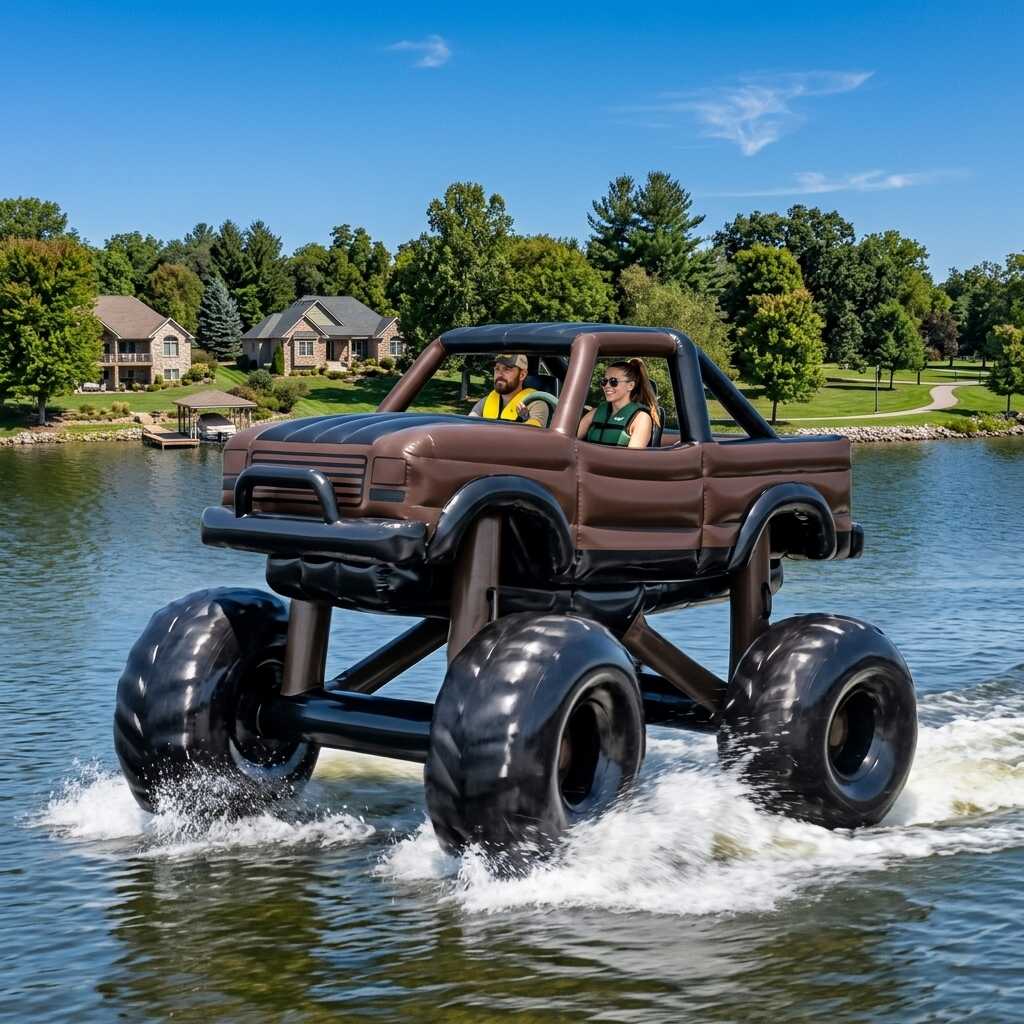
Part I: Structural Geometry and Hull Design Concepts
At the core of every inflatable monster truck boat concept lies a balance between thematic form and nautical function. Unlike a rigid vehicle body, an inflatable structure relies on internal air pressure and chamber segmentation to maintain its shape against water resistance.
Dual-Chamber Pontoon Stabilizers
To replicate the lifted stance of a real monster truck while preventing the vessel from capsizing, designers utilize a dual-chamber pontoon system disguised as oversized off-road tires. The main hull rests atop these parallel pontoons, which provide a low center of gravity. Each “tire” is actually an independent air cell featuring heavy horizontal drop-stitching. This internal network of thousands of polyester threads allows the cylindrical shapes to handle high pressure, keeping the outer edges perfectly flat and rigid rather than ballooning into simple spheres.
The Elevated Cockpit and Faux Chassis
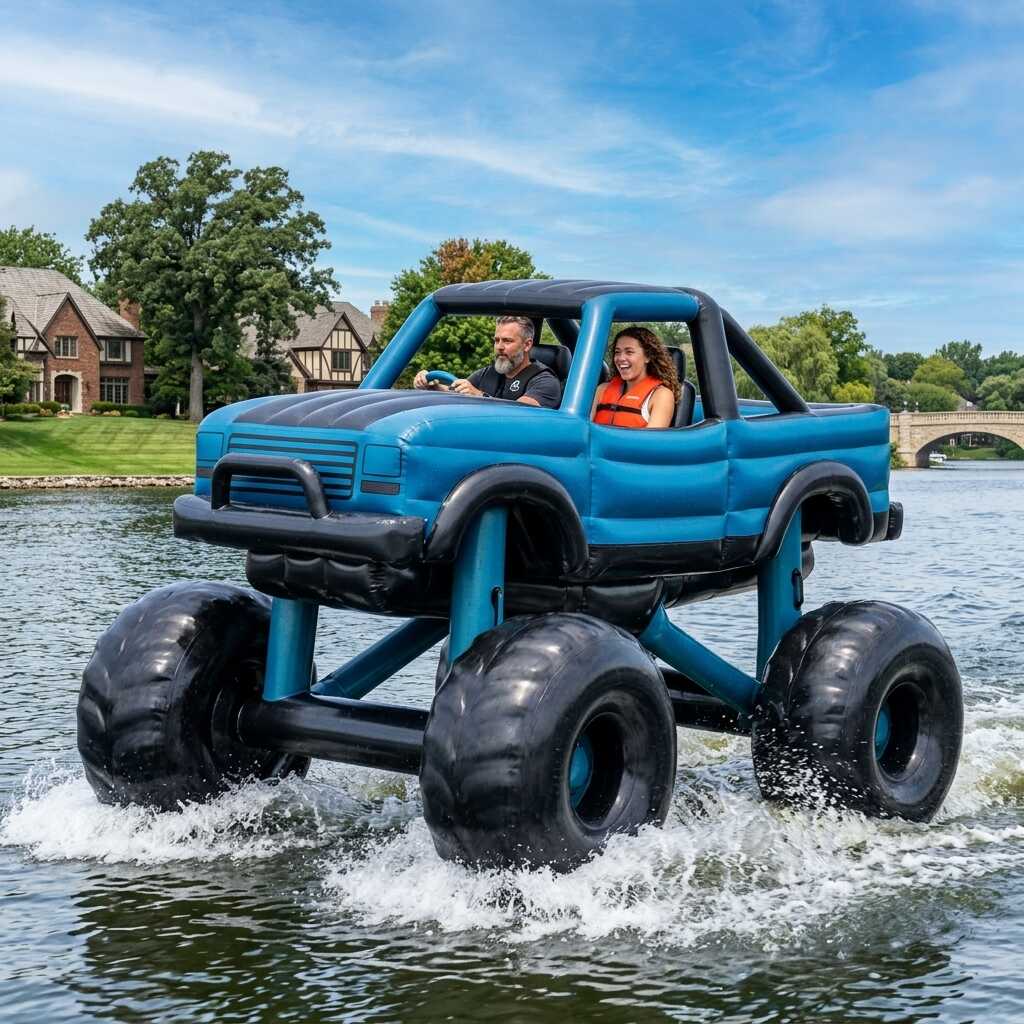
Part II: Exterior Appearance and Scale Details
The true visual impact of an inflatable monster truck boat depends on its surface details. Translating sharp metallic edges, deep tire treads, and complex engine machinery into a soft, air-inflated medium requires creative sculptural design.
Three-Dimensional Molded Treads
The most defining feature of any monster truck is its massive set of tires. On these innovative watercraft concepts, the outer pontoons are wrapped in raised, textured PVC strips that mimic heavy-duty agricultural or mud-terrain treads. Rather than just printing a pattern onto flat plastic, designers use a thermal welding process to attach thick, semi-rigid rubberized blocks directly to the main air chambers. These deep grooves look incredibly realistic and also provide minor paddle-like tracking benefits as the vessel moves through calm waters.
Aggressive Grilles and Integrated Exhaust Stacks
The bow of the craft is shaped to look like a menacing truck front. This includes a prominent, forward-leaning grille section with vertical or hexagonal mesh styling pressed directly into the PVC fabric. Flanking the grille are molded cylindrical chambers that mirror heavy-duty triple-induction hoods. At the rear, twin vertical cylinders extend upward to resemble chrome exhaust smoke stacks. These stacks double as functional structural pillars that strengthen the rear transom walls.
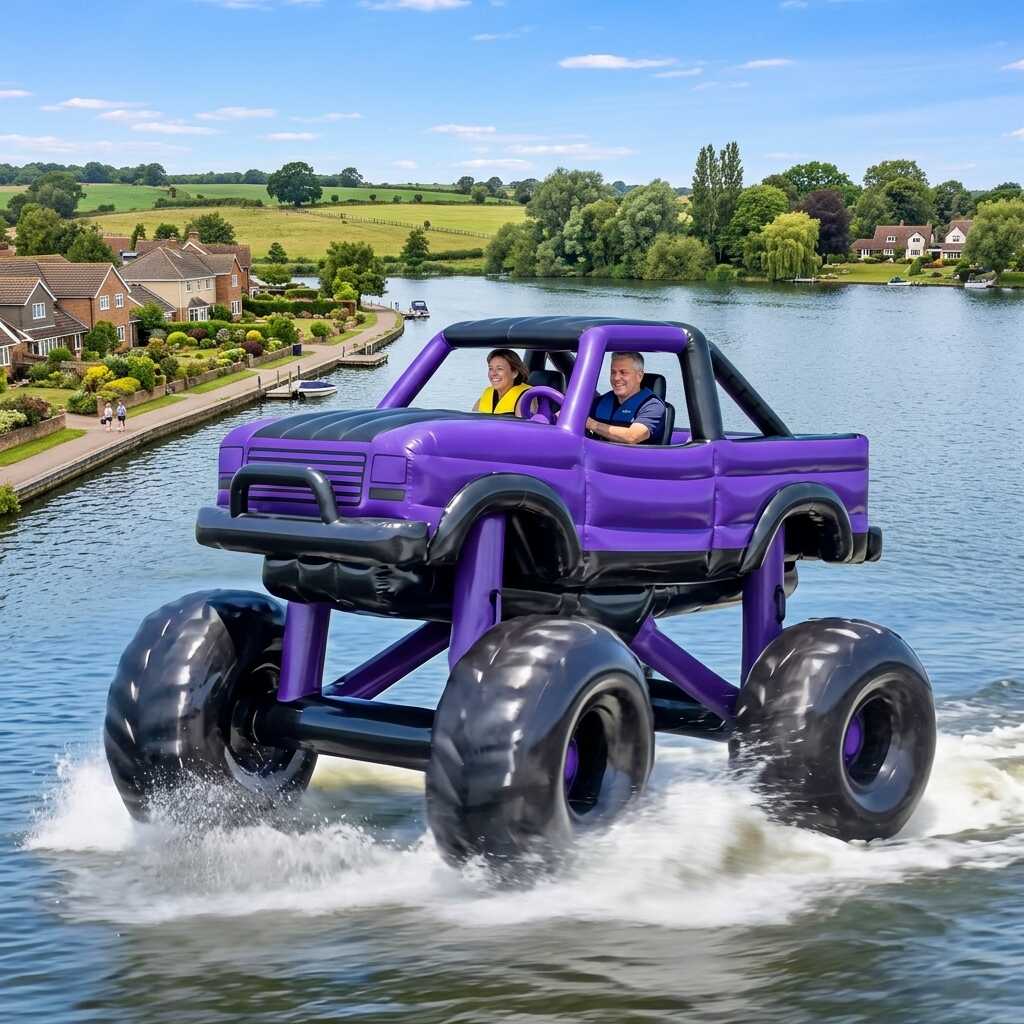
Part III: Advanced Material Composition
Creating a giant, high-riding inflatable requires advanced textiles that go far beyond standard pool float plastics. These concept boats are engineered to hold precise automotive shapes under varying temperatures and pressures.
Commercial-Grade Military PVC and Drop-Stitch Fabric
The primary skin of these premium concepts consists of multi-layer, 1100-denier PVC fabric. This material features a dense woven base layer sandwiched between protective outer coatings, making it highly resistant to punctures, abrasions, and ultraviolet (UV) degradation. For sections requiring flat, rigid surfaces—such as the truck bed floor or the front hood—designers turn to double-wall drop-stitch fabrics. This technique allows the chambers to be inflated to over 15 PSI, resulting in a surface as rigid as a traditional fiberglass boat hull.
+-------------------------------------------------------------+
|               Multi-Layer PVC Composition                   |
+-------------------------------------------------------------+
| [Top Layer]     UV-Resistant Polyurethane Coating           |
| [Middle Layer]  1100-Denier High-Tensile Polyester Weave    |
| [Bottom Layer]  Air-Tight Reinforced Polymer Film           |
+-------------------------------------------------------------+
Reinforced Seams and Thermofused Overlays
Because the monster truck shape features sharp angles, multi-way intersections, and intricate corners, the seams are a critical focus. Concepts utilize overlapping welded seams rather than simple glue. Using radio-frequency (RF) energy, the layers of PVC are fused together at a molecular level, creating a single, continuous sheet. Critical stress spots, like the joints where the faux wheels meet the main body, are reinforced with extra layers of heavy-duty tape for maximum durability.
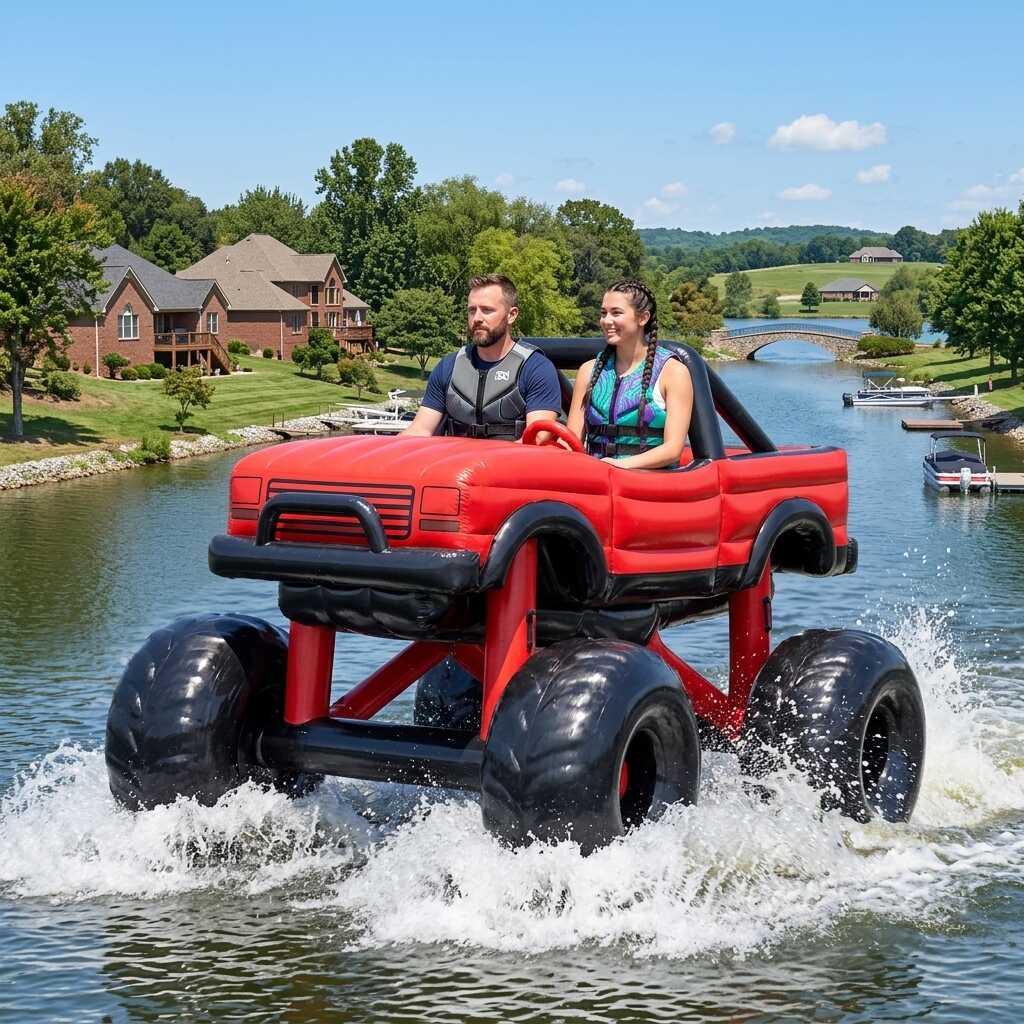
Part IV: Color Palettes and Graphic Accents
The color choices for an inflatable monster truck boat are designed to capture the high-octane energy of a stadium monster truck rally. The goal is maximum visibility and sharp contrast.
| Design Archetype | Primary Colors | Graphic Elements | Visual Impact |
| The Toxic Avenger | Neon Lime Green, Matte Black | Acid splatter prints, radioactive symbols | High-contrast, futuristic neon look |
| The Racing Classic | High-Gloss Fire Engine Red, Crimson | Clean white racing stripes, checkered patterns | Traditional motorsport feel |
| The Stealth Bomber | Textured Charcoal Grey, Satin Black | Digital camouflage, low-reflectivity accents | Aggressive, industrial, and tactical |
The graphics are applied using specialized UV-cured marine inks. These inks sink deep into the outer PVC layer, ensuring the intricate flame packages, mechanical gears, and faux-metallic rivet designs won’t crack, fade, or peel after long exposures to sun and water.
Conclusion
The inflatable monster truck boat stands as a fascinating intersection of aggressive automotive styling and advanced marine inflatables. By leveraging heavy-duty structural geometry, multi-layer drop-stitch fabrics, and bold, high-contrast color schemes, these concepts successfully translate land-based power into an eye-catching watercraft. The combination of independent air chambers, molded three-dimensional tire treads, and rugged grilles creates a commanding presence on the water. Ultimately, these design innovations showcase how modern engineering can transform flexible textiles into rigid, intricate, and jaw-dropping floating sculptures.