
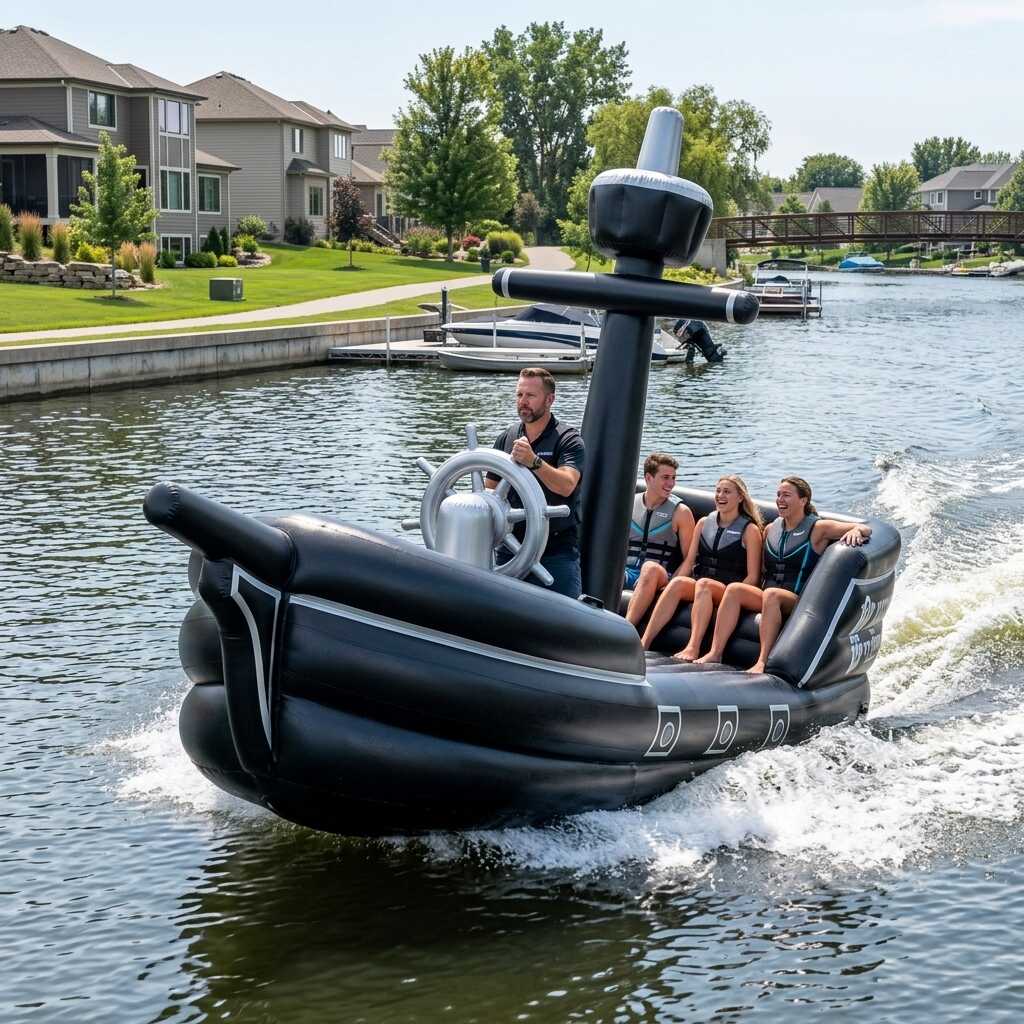
The intersection of recreational watercraft design and imaginative play has sparked a new era of novelty marine engineering. At the forefront of this evolution is a unique vessel that seamlessly bridges the gap between whimsical fantasy and functional aquatic transport: the inflatable pirate ship electric boat. Far from a simple pool float or a rigid traditional dinghy, this innovative craft represents a specialized category of maritime design where structural integrity meets theatrical aesthetics.
Designing an inflatable boat that mirrors the intricate details of a historic 17th-century privateer man-of-war—while remaining entirely buoyant, inflatable, and motorized—requires a meticulous balance of form and physics. Every curve of the hull, placement of the mast, and selection of material must serve dual purposes: capturing the adventurous spirit of a classic tall ship and maintaining optimal hydrodynamic performance. This article dives deep into the architectural blueprint of the inflatable pirate ship electric boat, examining the precise design mechanics, visual aesthetics, robust material compositions, and color palettes that bring this extraordinary vessel to life.
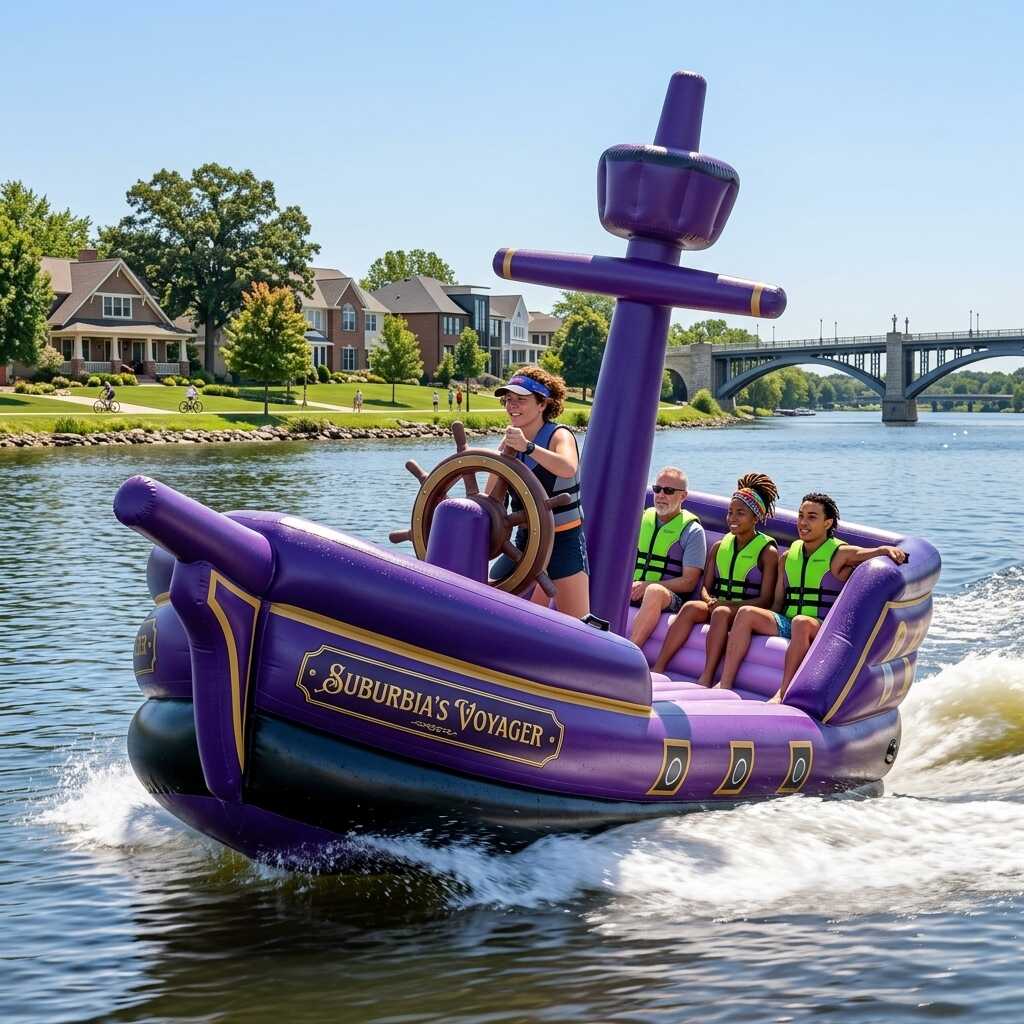
The Engineering Architecture and Structural Design
The fundamental challenge in creating an inflatable pirate ship electric boat lies in its physical architecture. Traditional inflatable boats rely on streamlined, low-profile pontoon structures to minimize wind resistance and maximize stability. Conversely, a pirate ship requires verticality, complex geometries, and prominent upper works such as bows, sterncastles, and masts.
Hydrodynamic Hull and Stability Foundations
To ensure the vessel remains stable while supporting elevated inflatable structures, the hull utilizes a advanced multi-chamber configuration. The base of the boat features a heavy-duty, V-shaped or catamaran-style inflatable hull that cuts through water surface tension efficiently. This lower chamber provides the primary buoyancy and acts as the foundational platform for the decorative elements above. By keeping the center of gravity low—specifically integrating the battery compartments and electric motor mounts directly into the lowest rigid or semi-rigid section of the floor—designers offset the sail-like wind resistance created by the ship’s elevated bow and stern.
Integrating the Electric Propulsion System
Unlike standard inflatables where an outboard motor is clamped onto a basic transom as an afterthought, the electric motor of the pirate ship boat is a core component of the structural blueprint. The stern is engineered with an integrated, heavy-duty composite or marine-grade aluminum motor mount molded directly into the inflatable chambers. The design accommodates clean routing for electrical wiring, running internally through protective PVC conduits from the mid-ship battery housing to the aft motor. This internal integration ensures that the mechanical components do not disrupt the continuous visual line of the ship’s hull.
Elevated Inflatable Geometries
Rising above the waterline are the signature elements that define the vessel’s profile. The bow transitions into an elongated, high-reaching prow, mimicking a classic galleon beakhead. At the rear, the side chambers rise sharply to form an enclosed sterncastle. To maintain the rigid upright posture of these tall walls without adding heavy internal framing, engineers employ drop-stitch technology or high-pressure, independent structural pillars. These independent chambers ensure that even if one decorative element loses pressure, the primary hull remains fully inflated and safe.
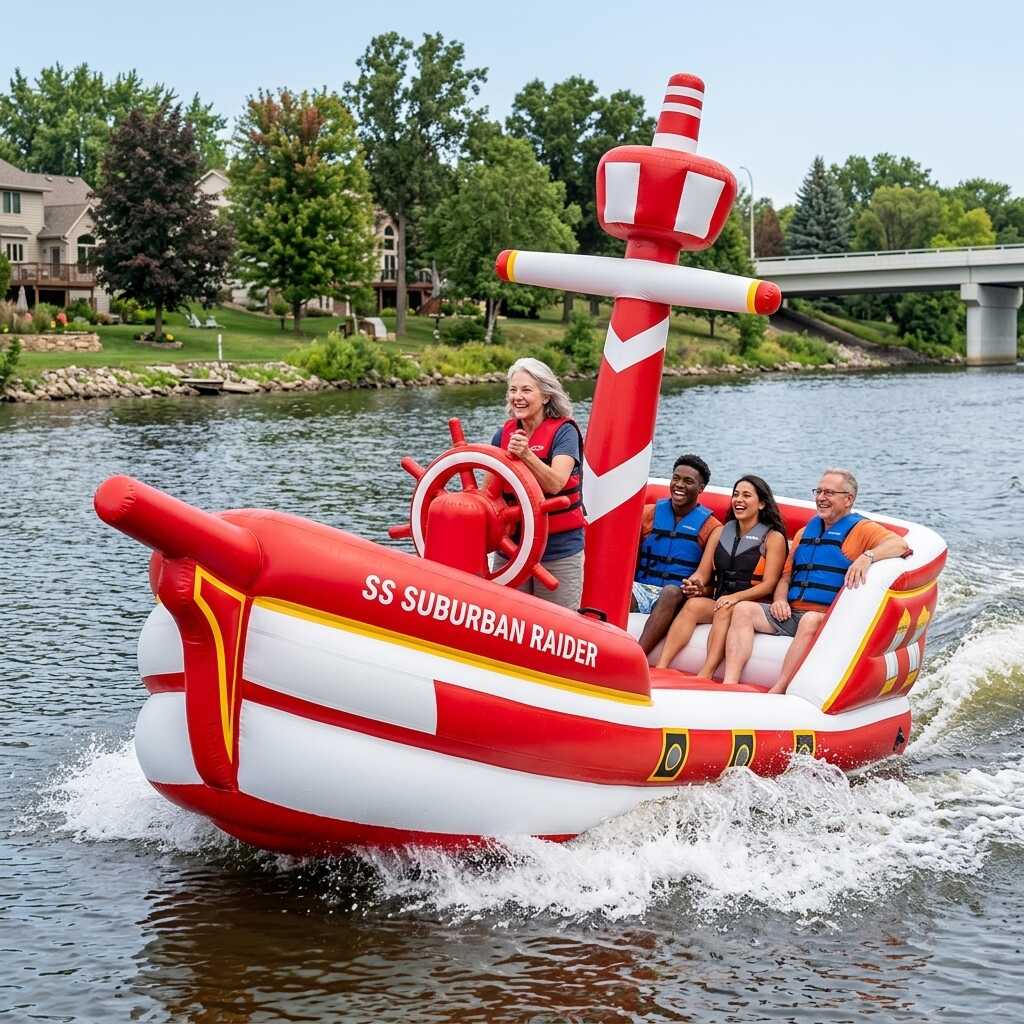
Aesthetic Appearances and Historic Detailing
The visual impact of the inflatable pirate ship electric boat depends heavily on its thematic details. Transforming flat fabric panels into a three-dimensional illusion of a wooden warship requires clever manipulation of shape, texture, and specialized attachments.
Authentic Silhouettes and Appendages
From a distance, the silhouette of the craft immediately communicates its pirate identity. The bow features an inflatable bowsprit—the long spar projecting forward from the vessel’s prow. Mid-ship, a prominent inflatable mast rises vertically, supported by stylized inflatable shrouds and stays that mimic traditional rigging. Suspended from the yardarm is a stylized, square-rigged sail. Because a functional cloth sail would create unpredictable handling in high winds, these sails are often designed as low-profile, perforated fabrics or sleek inflatable shapes configured to allow excess wind to pass through while retaining the classic square shape.
Surface Texturing and Simulated Carpentry
To move away from the generic, glossy look of standard pool toys, the exterior surfaces of the boat undergo advanced high-definition graphic sublimation printing. The outer layer displays highly detailed textures of weathered oak planks, complete with simulated wood grain, iron rivets, and structural seams. This optical illusion gives the flexible PVC or Hypalon fabric the visual weight and rugged texture of authentic timber.
Ornamental Accents
No pirate ship is complete without its weaponry and lore. The port and starboard sides of the main hull are adorned with printed or low-profile inflatable gunports, complete with protruding cannon barrels. The bow is sculpted to accommodate a classic figurehead—often a stylized skull, mermaid, or sea serpent—molded directly into the forward nose cone. The sterncastle features faux multi-paned captain’s quarters windows, adding depth and a sense of scale to the overall presentation.
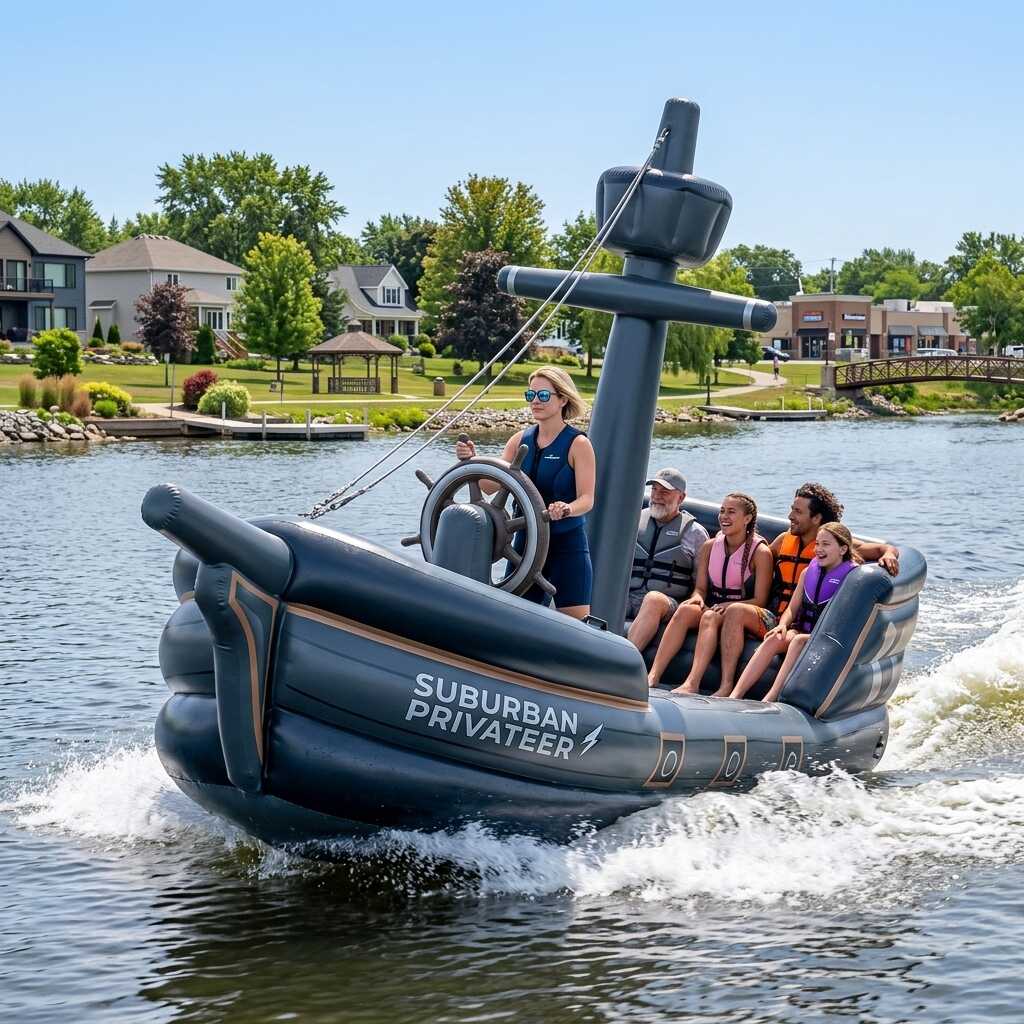
Advanced Materials and Manufacturing Processes
The realization of an inflatable pirate ship electric boat demands materials that offer extreme durability, flexibility, and resistance to environmental degradation. Because the craft is motorized, the stresses placed on the seams and fabric are significantly higher than those on passive towed inflatables.
High-Deniere Composite Fabrics
The primary skin of the vessel is typically constructed from heavy-duty, military-grade PVC (Polyvinyl Chloride) or Hypalon reinforced with a high-denier polyester base mesh (ranging from 1,000 to 1,600 denier). This composite material provides exceptional resistance to punctures, abrasions, and tears. Hypalon, in particular, offers superior resistance to UV radiation, chemical exposure from fuel or oils, and environmental stressors, ensuring the ship’s detailed graphics do not fade or degrade over time under intense sunlight.
| Component | Primary Material | Function / Advantage |
| Main Hull & Pontoons | 1,100+ Denier Reinforced PVC / Hypalon | High puncture resistance, structural rigidity |
| Deck & Floor Platform | Drop-Stitch Fabric (Double-Wall) | Creates a rock-hard, flat surface when fully inflated |
| Transom & Motor Mount | Marine-Grade Aluminum or Fiberglass Composite | Rigid support for the electric motor propulsion |
| Masts & Rigging Accents | Medium-Pressure Independent PVC Chambers | Lightweight verticality without tipping the vessel |
Drop-Stitch Technology for Rigid Decks
To allow passengers to move about the deck of the pirate ship with stability, the floor utilizes double-wall drop-stitch construction. This technology involves tens of thousands of fine nylon threads connecting two parallel layers of fabric. When inflated to high pressures (typically 10–15 PSI), the floor becomes rock-hard and perfectly flat, mimicking a genuine wooden deck. This eliminates the flexing or sagging common in standard inflatable floors and provides a solid foundation for steering mechanisms and seating.
Reinforced Seam Construction
The seams are the most critical points of any inflatable craft. For a motorized pirate ship, standard glued seams are insufficient. Manufacturers employ advanced thermal welding or high-frequency radio waves to fuse the overlapping fabric layers at a molecular level. Where welding is not possible due to intricate geometries, double-taped vulcanized chemical bonding is utilized. Critical stress points, such as the junctions where the mast meets the deck or where the bowsprit extends from the hull, feature multi-layer reinforcement patches to distribute mechanical loads evenly.
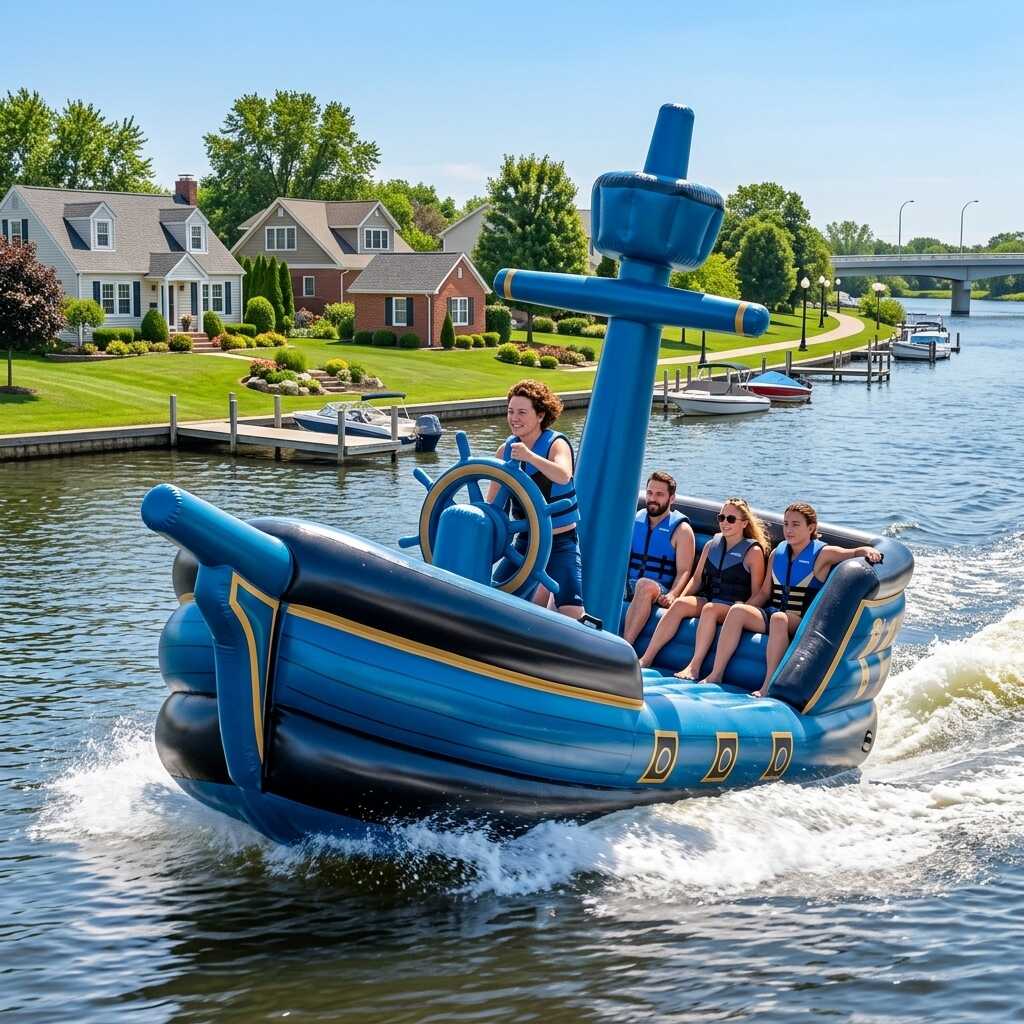
Thematic Color Palettes and Visual Chemistry
The color scheme of the inflatable pirate ship electric boat is carefully curated to evoke a historical, adventurous atmosphere while maintaining high visibility on open water. The design balances dark, rich tones with stark, iconic contrasts.
[Deep Charcoal / Black]  -->  Dominates the lower hull, giving a heavy, imposing look.
[Weathered Oak Brown]    -->  Covers the mid-hull and deck, simulating historic wood planks.
[Crimson Red Accents]    -->  Highlights gunports, trim lines, and regal sterncastle details.
[Bone White & Charcoal]  -->  Forms the striking contrast of the sails and Jolly Roger insignia.
The primary body of the ship utilizes a spectrum of deep, organic earth tones. Rich mahogany, dark walnut, and weathered oak browns dominate the hull and deck surfaces, establishing the illusion of a solid wood structure. The lower pontoons often transition into deep charcoal or matte black, hiding water lines and scuff marks while giving the vessel an imposing, low-slung profile on the water.
To prevent the boat from looking monotonous, vibrant contrast colors are strategically applied to functional and decorative lines. Crimson red and deep burgundy are utilized along the gunwale, the interior linings of the gunports, and the trim of the sterncastle, mirroring the traditional paint schemes of historical naval vessels. The mast and rigging elements maintain a dark charcoal tone to contrast sharply against the sky. Finally, the sails feature a striking combination of bone white or stark black, serves as the perfect canvas for the iconic skull-and-crossbones insignia, ensuring the ship is instantly recognizable from afar.
Conclusion
The inflatable pirate ship electric boat is a masterclass in modern novelty maritime design. By successfully merging complex historical aesthetics with cutting-edge inflatable technology and clean electric propulsion, designers have created a vessel that defies the limitations of traditional flexible watercraft. Through the use of multi-chambered high-denier fabrics, high-definition sublimation printing, rigid drop-stitch flooring, and a carefully balanced, historically inspired color palette, this unique craft achieves an impressive visual presence without sacrificing structural integrity or hydrodynamic stability. It stands as a prime example of how ambitious thematic design can completely transform standard marine engineering into a captivating, functional work of art.