
The intersection of automotive history and lifestyle design has produced some of the most enduring cultural symbols of the modern era. Among these, the classic Volkswagen Type 2 vehicle—known affectionately across the globe as the VW camper van, bus, or bulli—stands as an unrivaled emblem of freedom, mid-century counterculture, and distinctive industrial design. While the original vehicles remain highly sought-after collector items, their specific visual signature has migrated into numerous lifestyle products. One of the most visually striking and literal translations of this automotive icon into a functional textile product is the VW car sleeping bag.
This article explores the specific retro aesthetic of this unique piece of outdoor and indoor gear. By focusing purely on its structural design, graphic presentation, materials, and color taxonomy, we can dissect how a multi-ton steel automobile is successfully reimagined into a soft, packable textile format. The VW car sleeping bag serves as an excellent case study in how vintage industrial geometry can be preserved and celebrated through modern fabric manufacturing, maintaining a precise nostalgic allure through pure appearance and tangible form.
Part I: Structural Design and Graphic Silhouette
Replicating Automotive Geometry on a Flat Canvas
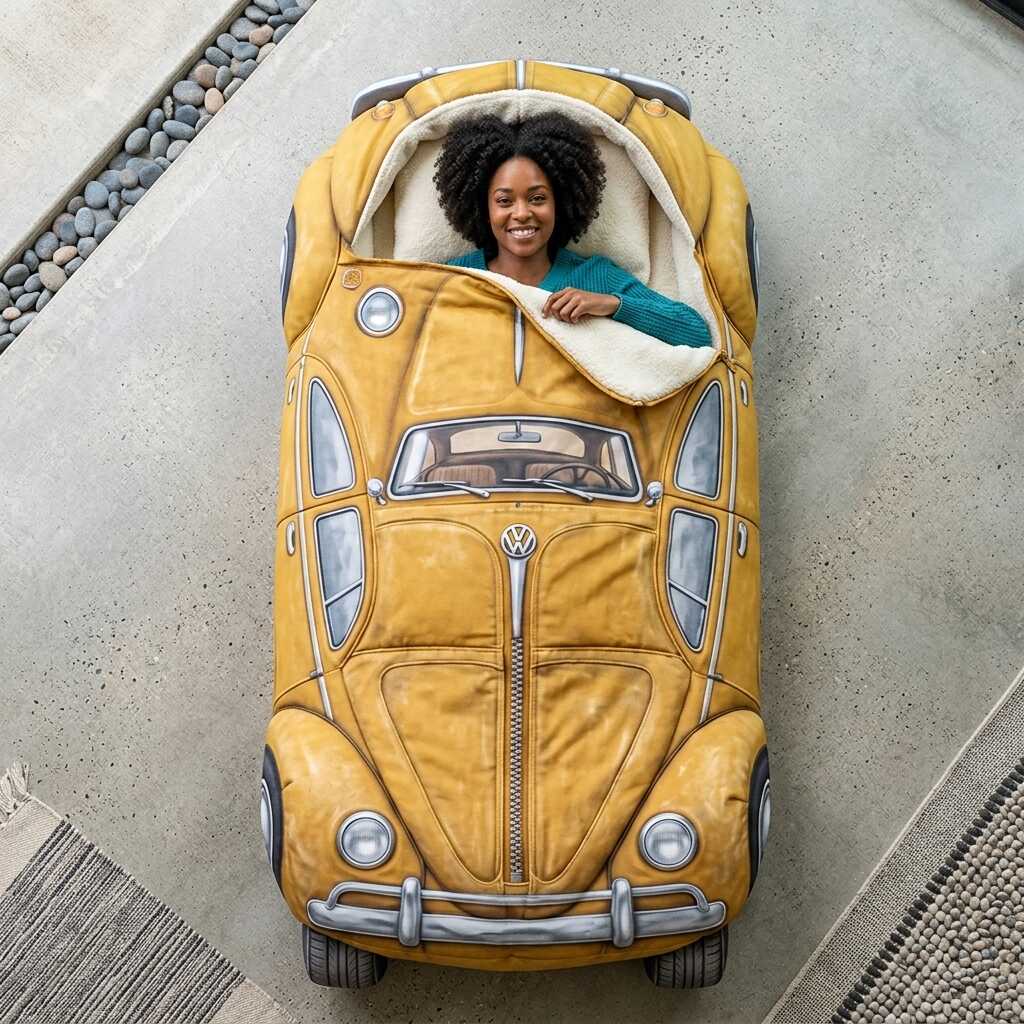
The fundamental challenge in creating a VW car sleeping bag lies in translating a three-dimensional, boxy vehicular shape onto a flexible, two-dimensional rectangular textile envelope. The design achieves this by utilizing a full-scale, high-fidelity graphic print across the top boundary of the sleeping bag. When fully laid flat or zipped shut, the bag acts as a visual canvas that mimics the exact facial proportions of the 1965 Volkswagen T1 split-screen model.
Unlike standard mummy or envelope sleeping bags that feature solid colors or abstract geometric patterns, the exterior shell of the VW car sleeping bag is explicitly mapped to replicate automotive panels. The design maintains a strict rectangular profile to ensure that the proportions of the van’s front end are not distorted or tapered abnormally at the feet. This structural choice ensures that the graphic elements remain aligned, clean, and highly recognizable from a distance.
The Iconic Front Profiling
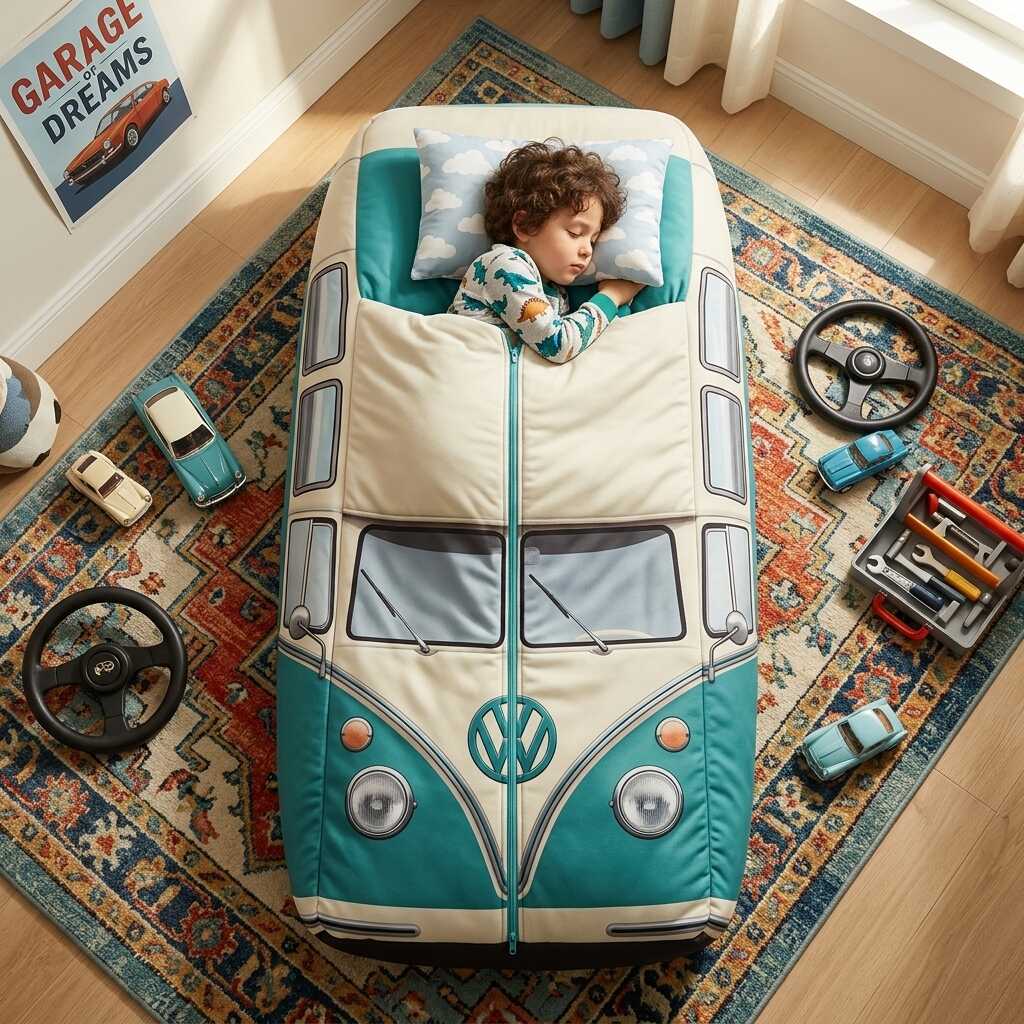
The primary visual anchor of the VW car sleeping bag is the replication of the vehicle’s legendary front facade. The design successfully incorporates several key historical elements directly onto the top section of the textile fabric:
-
The Split-Screen Windshield: The upper portion of the bag features a clear graphical representation of the classic dual-window design, complete with printed black frames and stylized windshield wipers.
-
The Prominent V-Shape Panel: Below the windshield, the fabric showcases the unmistakable sweeping “V” lines that define the face of the vintage vehicle, dividing the surface into distinct color zones.
-
The Oversized Round Headlights: Positioned symmetrically on either side of the lower V-crest, the printed circular headlights feature internal concentric detailing to mimic the glass fluting of original 1960s automotive lamps.
-
The Authentic Emblem Centerpiece: Right in the center of the V-shape sits a scaled, high-contrast replication of the circular Volkswagen logo, serving as the ultimate focal point of the entire graphic design.
By keeping these graphical elements in their exact historical proportions, the design achieves an instantaneous retro recognition without needing to alter the practical, rectangular envelope shape required for a functional sleeping system.
Part II: Color Taxonomy and Retro Palettes
Authentic Split-Tone Schemes
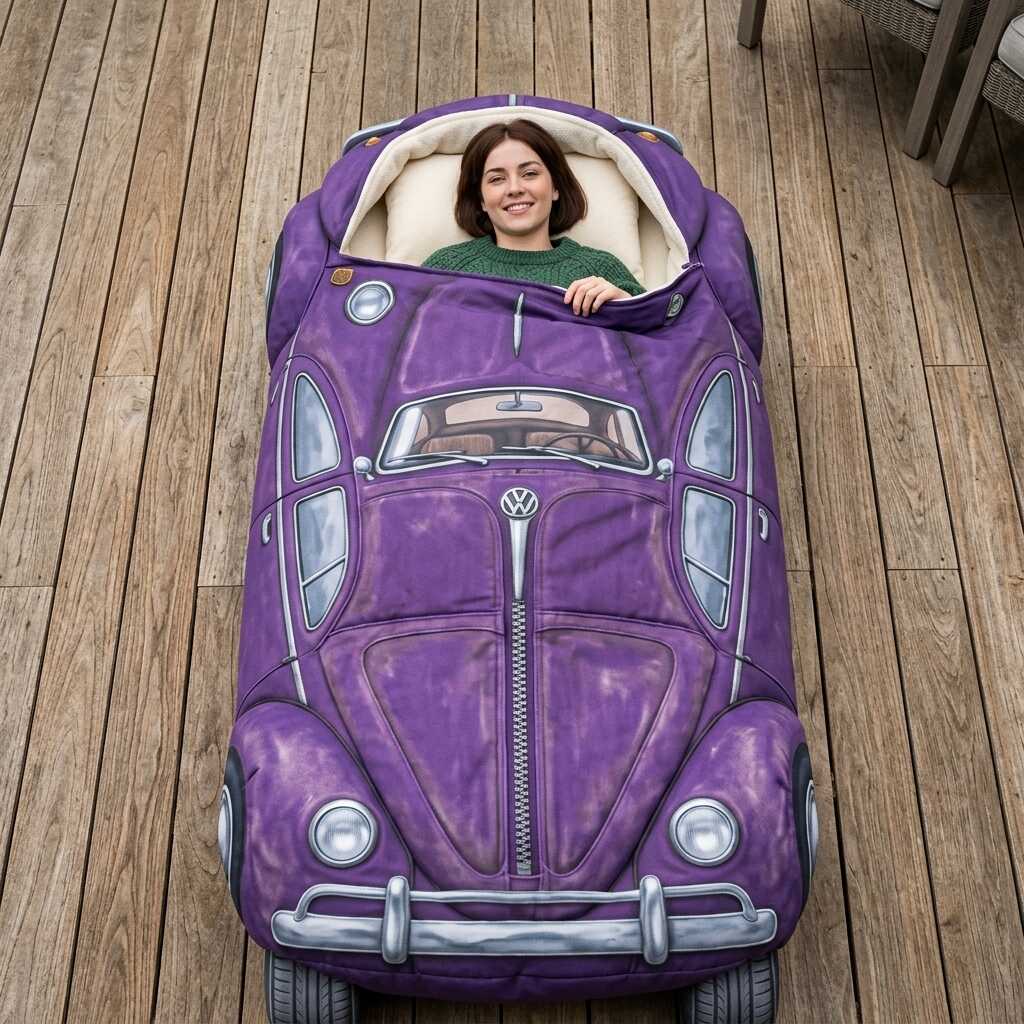
Color is a vital component of the vintage aesthetic, and the VW car sleeping bag mirrors the exact factory color configurations that defined the roads of the 1960s and 1970s. The most prominent design feature of these bags is the two-tone color blocking. Historically, VW vans featured a crisp, off-white or pastel upper section paired with a bold, saturated lower half. The sleeping bag replicates this distribution perfectly: the top section surrounding the windshield remains a clean, neutral white, while the lower body transitions into a vibrant heritage hue.
The Vintage Color Spectrum
The product is typically manufactured in a select range of traditional retro color options, each contributing a specific mood to the product’s overall appearance:
| Color Variant | Historical Context | Visual Impact |
| Classic Heritage Blue | Inspired by original factory shades like Horizon Blue. | Delivers a cool, calm, and mid-century aesthetic that highlights the white V-shape contrast. |
| Vibrant Sunset Red | Mimics the highly sought-after wax-red tones of vintage models. | Provides a high-contrast, energetic visual that commands immediate attention when laid flat. |
| Earthton Mint Green | Replicates the soft pastel greens popular in late 60s design. | Offers an organic, subtle retro look that aligns beautifully with traditional outdoor environments. |
Saturated Accents and High-Contrast Liners
Beyond the primary two-tone body, the color design incorporates specific accent tones to ground the piece. The lower border of the bag often features a deep black or dark grey block that represents the bumper and lower chassis of the vehicle. Additionally, the interior liner of the bag is frequently dyed in a solid, complementary neutral tone—such as deep charcoal, slate grey, or crisp white—creating a stark, clean contrast when the main zipper is pulled down to expose the internal filling.
Part III: Materials, Textures, and Hardware Integration
Technical Polyester Outer Shell
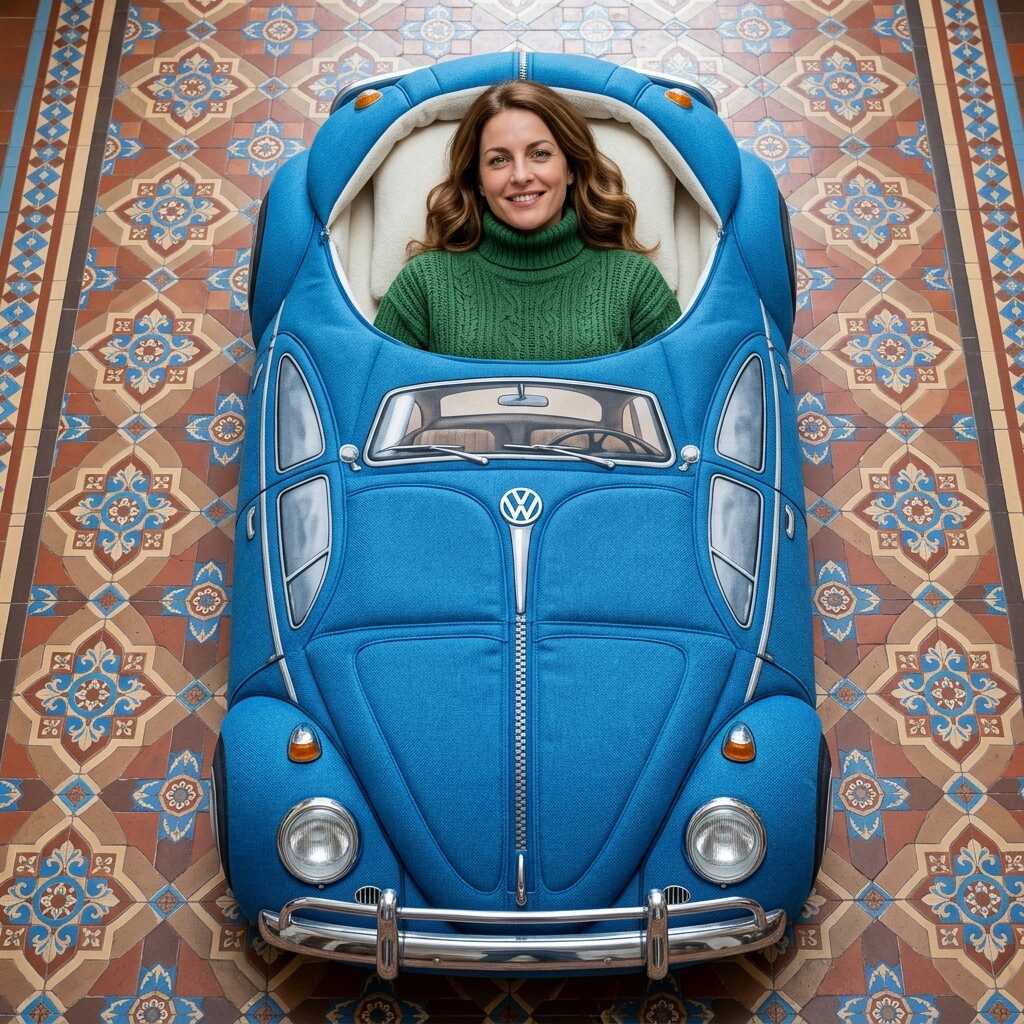
While the appearance of the VW car sleeping bag is firmly rooted in the past, its material composition relies on modern textile engineering to achieve a sleek, durable finish. The outer shell is constructed from a high-density, lightweight polyester fabric (typically 190T to 210T thread count).
This material choice is crucial for the product’s aesthetic success for several reasons:
-
Print Clarity: The smooth surface of synthetic polyester allows for incredibly sharp sublimation or screen-printing lines, ensuring the intricate details of the VW logo, headlights, and grilles do not bleed or blur into the fabric fibers.
-
Surface Sheen: The fabric possesses a subtle, semi-gloss matte sheen that faintly mimics the reflective quality of clean, lacquered automotive sheet metal without looking artificially shiny.
-
Crease Resistance: Polyester maintains its shape and resists heavy wrinkling, ensuring that the graphic layout of the van remains flat, legible, and unmarred by deep folds when unfolded.
Internal Insulation and Lining Materials
Beneath the graphic exterior, the bag features a multi-layered construction designed to provide physical volume. The internal insulation layer typically consists of a hollow-fiber synthetic fill (ranging from 250g/m² to 300g/m²). This filling gives the bag a plush, substantial thickness, providing the structured body required to make the printed car silhouette look full and three-dimensional rather than flat and limp.
The inner lining—the fabric that comes into direct contact with the interior space—is typically made from either a brushed polyester or a soft poly-cotton blend. This fabric features a completely matte, non-slip texture that contrasts sharply with the slicker, printed exterior shell, offering a tactile variation between the outside “automotive” surface and the soft interior cavity.
+--------------------------------------------------------+
|  [OUTER SHELL]  190T/210T Printed Polyester (Sleek)    |
+--------------------------------------------------------+
|  [INSULATION]   Hollow-Fiber Synthetic Fill (Plush)    |
+--------------------------------------------------------+
|  [INNER LINER]  Brushed Polyester/Poly-Cotton (Matte)  |
+--------------------------------------------------------+
Hardware and Zipper Architecture
The physical assembly of the VW car sleeping bag relies on heavy-duty, two-way zipper tracks that run along two sides of the rectangular perimeter. The hardware is selected to blend seamlessly with the product’s edge profile. Usually finished in a dark charcoal or matching body color, the zipper tracks do not interrupt the continuity of the printed automotive graphic.
The two-way functionality of the slider mechanism allows the bag to be unzipped entirely and laid out flat as a large, continuous double-blanket. When opened this way, the product displays a mirrored layout of the camper van design, doubling the visual impact of the retro graphic across a wider surface area.
Conclusion
The VW car sleeping bag represents a masterful blend of historical automotive branding and modern textile design. By prioritizing the exact visual markers of the mid-century Volkswagen Type 2—specifically the split-screen layout, the symmetrical round headlights, the clean V-shaped front fascia, and the authentic two-tone pastel color palettes—the product transcends the boundaries of standard outdoor utilities.
Its aesthetic success is heavily supported by the use of high-density polyester fabrics that maintain print precision, a structured hollow-fiber fill that provides volumetric shape, and subtle, integrated hardware that preserves the unbroken continuity of the graphic canvas. Ultimately, the bag stands as an exceptional example of how iconic industrial design can be preserved, honored, and beautifully displayed through an entirely soft and flexible medium.