
The landscape of personal grooming hardware has undergone a radical transformation over the past decade. Devices that once occupied a strictly utilitarian, hidden corner of the bathroom cabinet have transitioned into highly sophisticated pieces of industrial artistry. At the forefront of this paradigm shift is a specialized category of body grooming tools tailored specifically for the torso’s unique topography. The Lawn Mower Chest Shaver represents a definitive milestone in this lineage, serving as a case study for how ergonomics, advanced metallurgy, structural composition, and targeted color theory can converge to redefine an entire product category.
For years, male grooming devices relied on generic blueprints shared with standard facial trimmers. These legacy designs consistently failed to account for the expansive, undulating surface area of the human chest, which demands an entirely distinct approach to balance, blade exposure, and physical manipulation. The Lawn Mower Chest Shaver breaks away from these historical constraints. By analyzing this tool strictly through the lens of industrial design, structural engineering, and aesthetic identity, we can observe how contemporary product architecture elevates a functional tool into an object of high-design excellence.
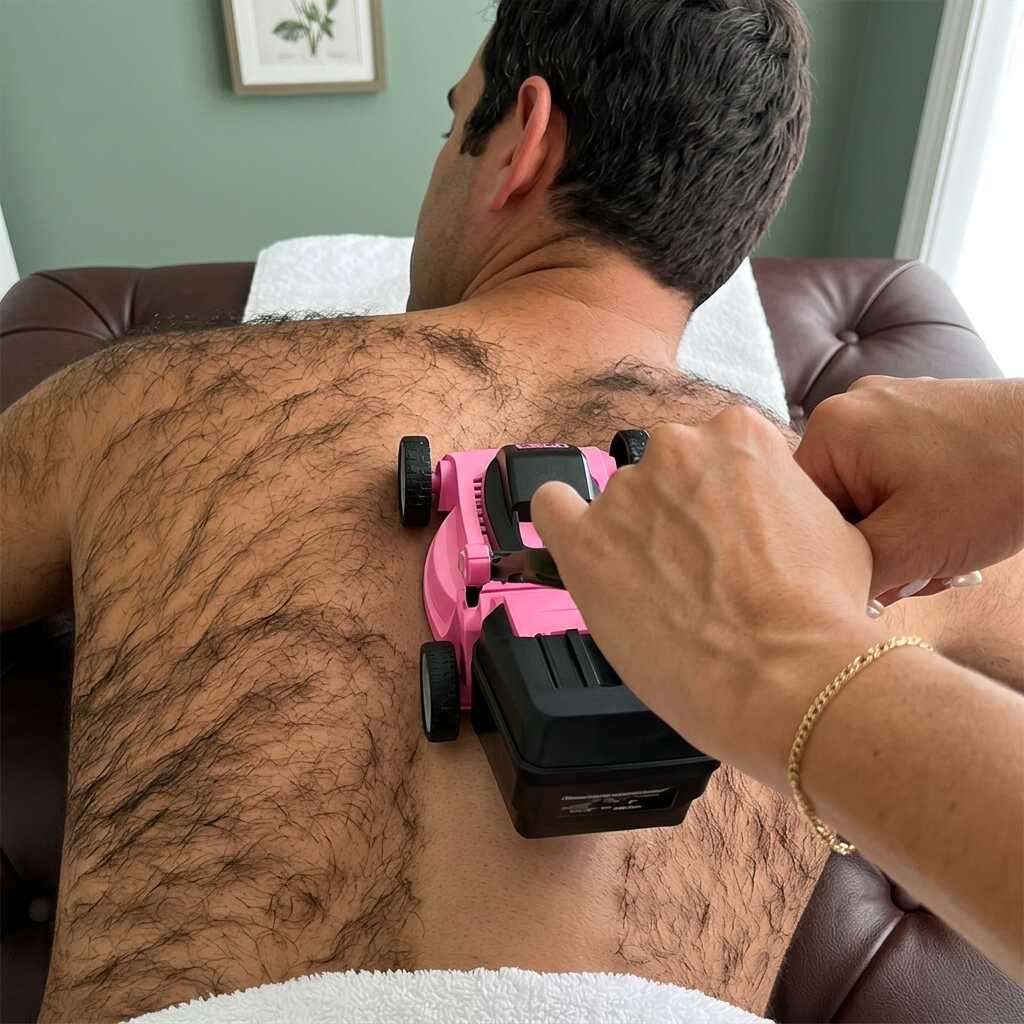
The Architecture of Form: Structural Blueprint and Ergonomics
The physical silhouette of the Lawn Mower Chest Shaver is rooted in a minimalist, organic geometric language. Unlike traditional cylindrical trimmers that force the hand into a rigid, perpendicular grip, this device utilizes an asymmetrical, gently curved chassis engineered to act as a physical extension of the arm. The primary longitudinal axis features a distinct mid-body arch, a design choice engineered to naturally distribute weight and shift the center of gravity closer to the cutting head.
The Contoured Gripping Matrix
The mid-section of the handle transitions from a smooth, matte upper housing into a deeply textured, debossed micro-grid layout on the underbelly. This structural juxtaposition serves a dual purpose in form and tactile feedback:
-
The Palm Swell: The upper casing features a subtle lateral expansion that fills the natural hollow of a cupped palm, maximizing surface contact without increasing the bulk of the tool.
-
The Index Anchors: Near the neck of the device, the chassis tapers into a dual-sided concave indentation. This provides a structural ledge where the index finger and thumb can pinch the unit, granting micro-directional control over the angle of the head.
-
Flared Base Geometry: The base of the handle flares outward slightly, ensuring that even when held at the very end of the shaft to reach across the torso, the device remains securely anchored within the hand.
Cutting Head Angle and Alignment
One of the most critical evolutions in the architecture of the Lawn Mower Chest Shaver is the fixed angular offset of the cutting assembly. The head sits at a precise 22.5-degree angle relative to the handle’s primary plane. This geometric configuration ensures that the blade remains perfectly parallel to the chest wall while the user’s elbow and wrist remain in a relaxed, neutral position. By embedding this angle directly into the hard plastic skeleton, the design naturally eliminates the awkward wrist over-extension typical of older grooming hardware.
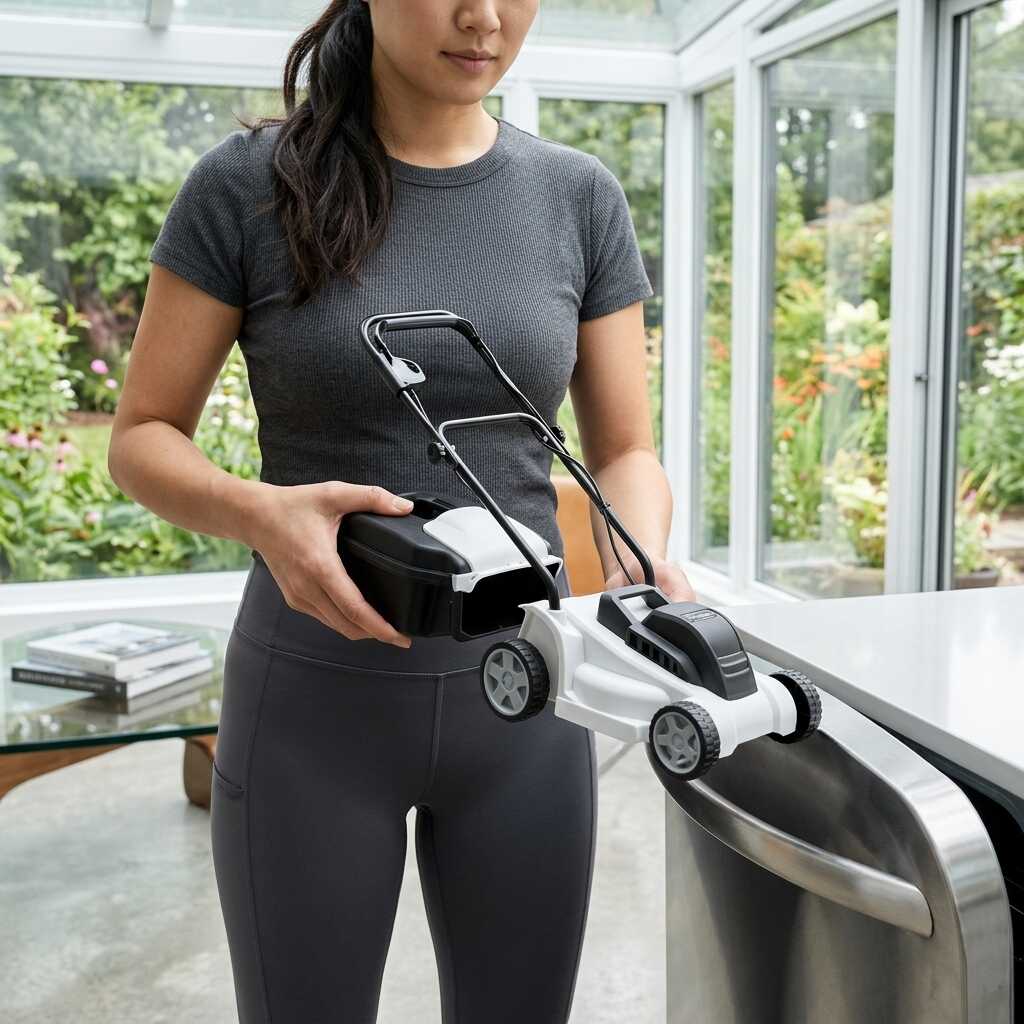
Advanced Materials: Engineering Longevity and Tactile Performance
The material composition of the Lawn Mower Chest Shaver is a carefully curated hybrid of high-performance polymers, specialized elastomers, and advanced metal alloys, each selected for structural integrity, weight optimization, and chemical resistance.
+-------------------------------------------------------------------------+
|                      MATERIAL ARCHITECTURE                              |
+--------------------------+----------------------------------------------+
| Core Skeleton & Housing  | High-Impact Polycarbonate/ABS Blend (PC-ABS) |
+--------------------------+----------------------------------------------+
| Tactile Grip Inlays      | Injection-Molded Thermoplastic Elastomer     |
+--------------------------+----------------------------------------------+
| Primary Cutter Element   | Zirconium Dioxide (ZrO2) Advanced Ceramic    |
+--------------------------+----------------------------------------------+
| Static Guide Blade       | 316L Surgical-Grade Stainless Steel          |
+--------------------------+----------------------------------------------+
High-Impact Polymers
The outer protective shell is molded from a premium blend of polycarbonate and acrylonitrile butadiene styrene (PC-ABS). This specific technical composite offers exceptional dimensional stability, meaning it resists warping or micro-fracturing under temperature fluctuations or accidental impacts. The surface of the PC-ABS is treated with a specialized scratch-resistant, non-porous topcoat that repels water, oils, and grooming formulas, keeping the structural core pristine.
Thermoplastic Elastomer (TPE) Inlays
Rather than utilizing cheap, glued-on rubber strips that degrade over time, the gripping zones are structurally integrated using a dual-shot injection molding process. The material chosen is a high-density Thermoplastic Elastomer (TPE). This TPE is engineered with a specific durometer (hardness rating) that yields slightly to intense localized pressure, giving a soft, premium feel while maintaining structural rigidity underneath.
Blade Metallurgy and Ceramics
The cutting head of the Lawn Mower Chest Shaver features a dual-material matrix that marks a massive leap forward from uniform steel configurations:
-
The Static Lower Blade: Fabricated from 316L surgical-grade stainless steel, this component is passivated to ensure total resistance to oxidation. The teeth are micro-machined with rounded, diamond-polished tips to present a smooth, non-snagging barrier.
-
The Kinetic Upper Blade: Composed of Zirconium Dioxide ($ZrO_2$), an advanced engineering ceramic. This material boasts a hardness rating second only to diamond, allowing the cutting edge to be honed to a microscopic sharpness that remains unchanged over hundreds of hours of friction. The ceramic matrix also features incredibly low thermal conductivity, preventing the blade from heating up during extended use.
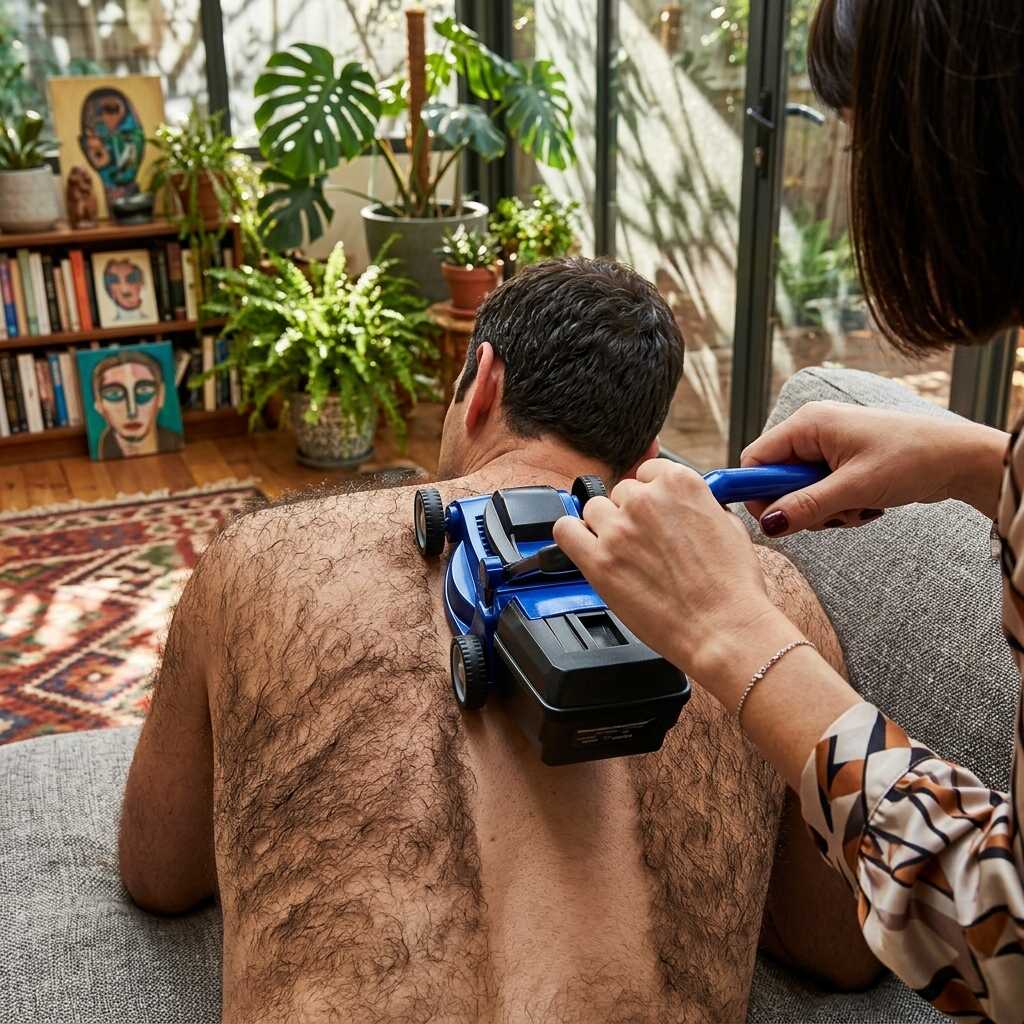
Color Theory and Visual Identity: The Aesthetics of Modern Grooming
The visual palette of the Lawn Mower Chest Shaver moves away from the loud, neon-accented or overly chromed aesthetics that historically dominated the men’s electronics market. Instead, it embraces a sophisticated, muted, and architectural color scheme that signals premium engineering and understated luxury.
The Primary Tone: Deep Obsidian and Graphite
The dominant surface area of the shaver is enveloped in a deeply saturated, ultra-matte Obsidian Black. This is contrasted alongside structural accents finished in a metallic Graphite Gray. The matte finish is highly intentional; it absorbs ambient light rather than reflecting it, emphasizing the clean lines, sharp chamfers, and sculpted curves of the physical form.
Accents and Interface Highlights
Visual accents are applied with extreme restraint to maintain a high-end, clutter-free aesthetic:
-
The Power Interface: The single mechanical button is constructed from a brushed anodized aluminum disk, offering a distinct metallic sheen that contrasts beautifully with the surrounding matte polymer.
-
The LED Luminescent Array: Status indicators are driven by micro-LEDs recessed beneath a smoked, semi-translucent polycarbonate window. When inactive, the interface completely disappears into the black housing, preserving the unbroken visual flow of the product. When illuminated, the LEDs emit a crisp, low-wavelength white light that avoids visual glare.
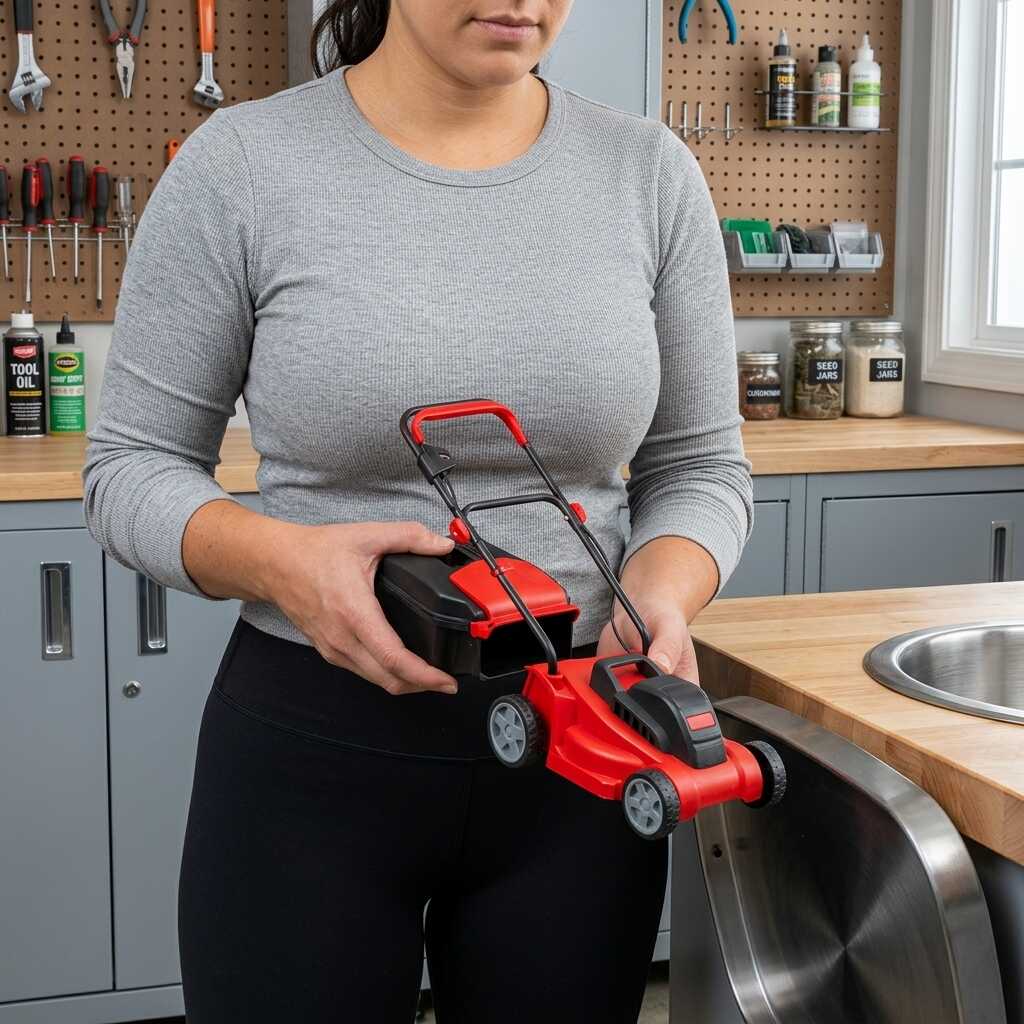
Conclusion
The Lawn Mower Chest Shaver is far more than a simple iteration of a legacy grooming tool; it represents a comprehensive evolution in industrial design specifically calibrated for the modern torso. From its mathematically optimized 22.5-degree cutting angle and ergonomic palm swell to the sophisticated integration of a PC-ABS skeleton and $ZrO_2$ ceramic blades, every millimeter of the device reflects purposeful engineering. By pairing this structural innovation with an understated, architectural palette of matte obsidian, graphite, and brushed aluminum, the design bridges the gap between mechanical efficiency and premium lifestyle aesthetics. Ultimately, the product establishes a new benchmark for how personal hardware should look, feel, and function, securing its place as an iconic milestone in the ongoing evolution of grooming product design.