
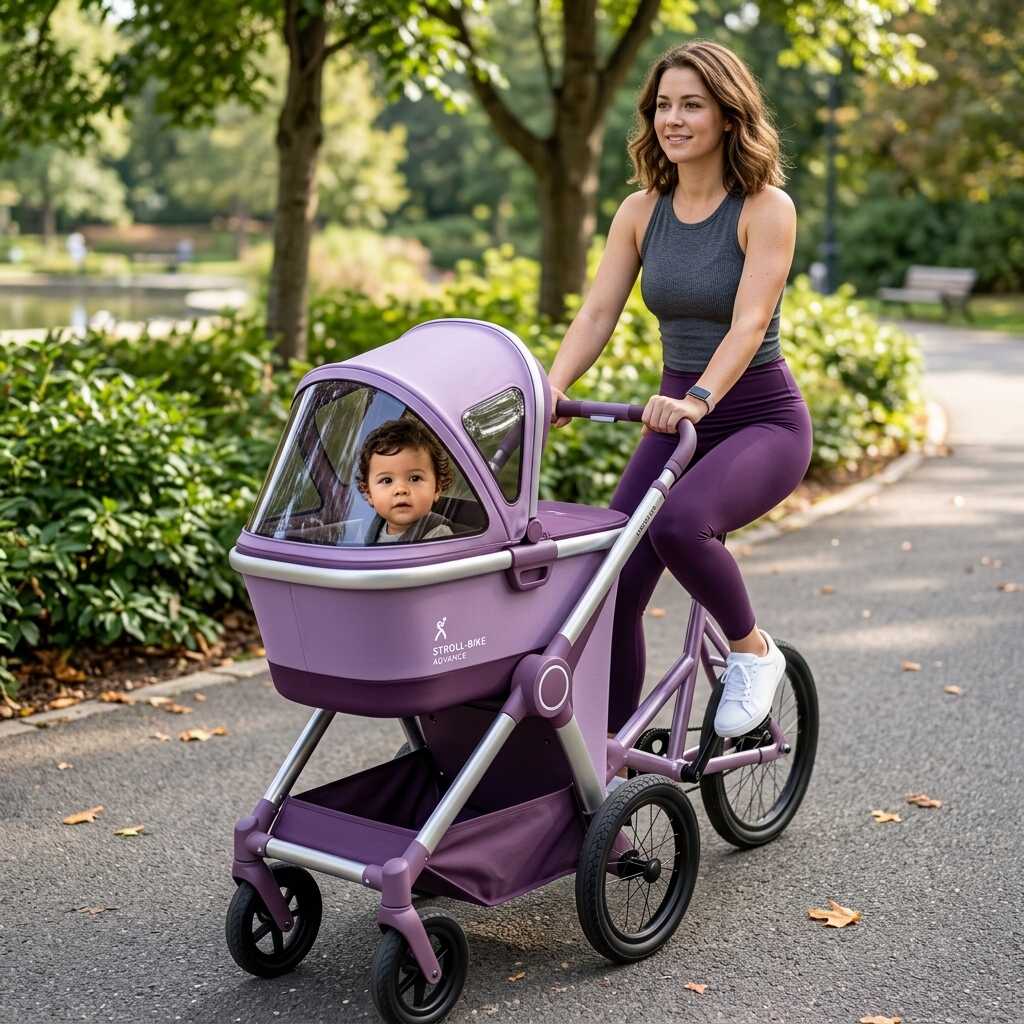
Modern micro-mobility engineering frequently demands the integration of two distinct physical forms into a single unified chassis. Among the most complex examples of this mechanical synthesis is the Converting Bicycle Stroller. By merging the high-speed rotational mechanics and structural geometry of a utility tricycle or bicycle with the compact, low-center-of-gravity enclosure of a child transport pram, this hybrid vehicle represents a sophisticated study in kinematics, metallurgy, and industrial design.
Rather than appending a temporary trailer to a standard cycle frame, a purpose-built Converting Bicycle Stroller functions as an adaptable transformable apparatus. In its primary riding configuration, the vehicle presents as a forward-load cargo tricycle or long-wheelbase cycle, positioning the seating capsule directly between or ahead of the front steering axis. In its converted secondary state, the rear drive assembly folds forward, tucks beneath the chassis, or detaches through modular linkages, reconfiguring the system into a three- or four-wheeled stroller. Achieving this transformation requires specialized structural architecture, advanced material selection, precise joint kinematics, and deliberate visual design.
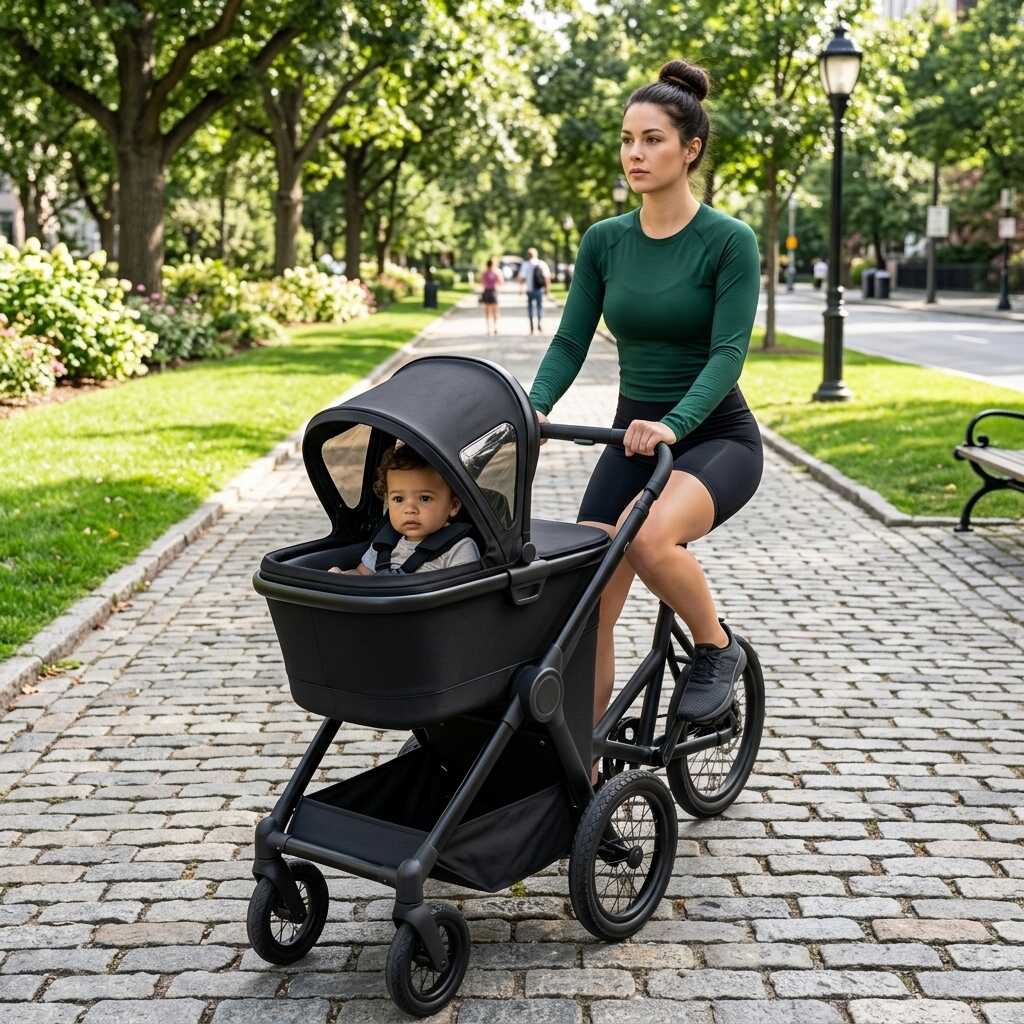
Part I: Structural Architecture and Dual-Geometry Frame Design
The core engineering feat of any Converting Bicycle Stroller lies in its frame geometry. Traditional bicycles rely on rigid triangular frame structures to distribute load vectors efficiently across top tubes, down tubes, and chainstays. Conversely, standard strollers utilize lightweight scissor-hinge or planar folding linkages engineered for compact linear compression. Bridging these opposing structural requirements necessitates a dual-geometry hybrid frame.
       +-------------------------------------------------+
       |           DUAL-GEOMETRY FRAMEWORK               |
       +-------------------------------------------------+
                               |
       +-----------------------+-------------------------+
       |                                                 |
       v                                                 v
[ Riding Configuration ]                    [ Stroller Configuration ]
* Extended Wheelbase (~145–165 cm)          * Compact Footprint (~90–110 cm)
* Stepped-headset angle (~68-72°)           * Vertical Caster Orientation (90°)
* Engaged Rear Drive-Arm & Chain tension    * Retracted/Tucked Drive-Arm
Frame Topography and Pivot Kinematics
The main load-bearing spine consists of a central longitudinal beam equipped with primary and secondary locking pivots. In the extended cycling layout:
-
The wheelbase measures between 145 cm and 165 cm, providing directional stability at higher rolling velocities.
-
The steering head tube operates at an angle of roughly 68° to 72°, matching standard urban cycle handling characteristics.
When transitioning to the stroller configuration:
-
The frame’s primary hinge disengages via a spring-loaded safety detent.
-
The rear swingarm rotates along a curved trajectory—either sweeping under the main cabin or telescoping inward—shortening the total operational length to approximately 90 cm to 110 cm.
-
The steering axis shifts to a vertical 90° orientation, locking the front casters for immediate 360-degree rotational maneuvering.
Load Distribution and Structural Reinforcement
Because the passenger compartment sits forward of the rider in the cycling orientation, the front fork or steering linkage must handle both cantilevered downward forces and lateral torque during turns. Multi-linkage steering arms run parallel underneath the cabin subframe, connecting the rear handlebars directly to the front wheel hubs via sealed ball-joint rod ends. Cross-braced structural gussets reinforce the primary folding joints to prevent frame flex under dynamic load shifts.
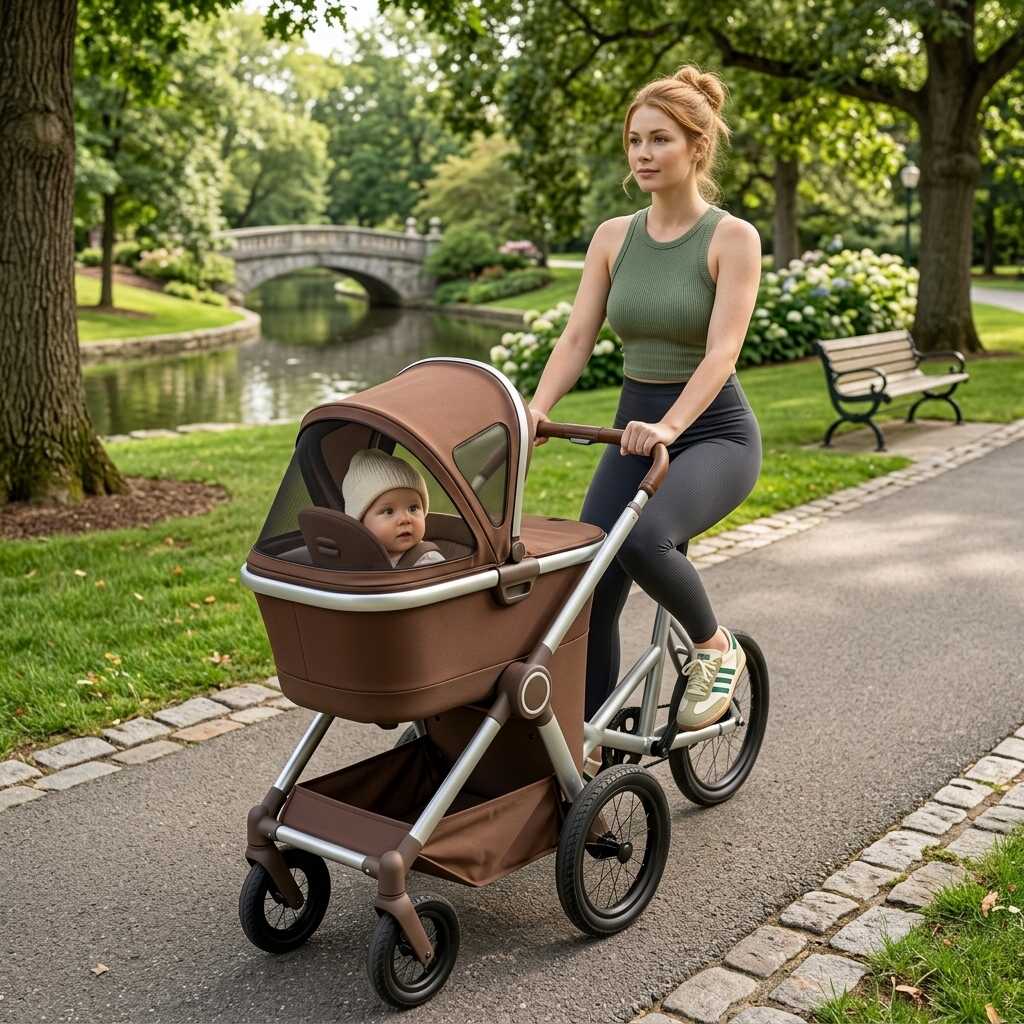
Part II: Material Science and Component Fabrication
Selecting materials for a Converting Bicycle Stroller requires balancing structural rigidity against overall weight. Because the frame must endure high cycle fatigue, impact forces, and manual transformation, engineers utilize high-grade metals, structural polymers, and specialized technical textiles.
| Component Area | Material Selection | Primary Technical Properties |
| Main Frame Spine | 6061-T6 Aluminum Alloy | Hydroformed, high yield strength, corrosion resistant |
| Transformation Hinges | Forged 7075-T6 Aluminum / Stainless Steel | Zero-backlash tolerance, high shear stress endurance |
| Passenger Shell | High-Density Polyethylene (HDPE) | Energy-absorbing, impact-resistant structural core |
| Enclosure Canopy | 600D Ripstop Polyester with TPU Coating | Waterproof, UV50+ rated, tear-resistant woven structure |
| Tires & Treads | High-density Polyurethane / Ethylene-Vinyl Acetate | Puncture-proof, low rolling resistance, vibration damping |
                       MATERIAL COMPOSITION

       [ 6061-T6 Aluminum ] ---------> Chassis & Main Beams
       [ 7075-T6 Forgings ] ---------> High-Stress Pivot Hinges
       [ Molded HDPE Shell ] ---------> Passenger Bucket Frame
       [ 600D Ripstop TPU ] ---------> Weather Protection Canopy
Frame Metallurgy
-
6061-T6 Aluminum Alloy: The primary tubing uses hydroformed 6061-T6 aluminum. Hydroforming allows manufacturers to vary tube cross-sections—shaping ovalized profiles near high-stress joints for torsional stiffness while maintaining rounded profiles along straight runs to minimize weight.
-
Forged 7075-T6 Components: High-stress locking latches, quick-release linkage pins, and pivot knuckles are forged from 7075-T6 aluminum or investment-cast 304 stainless steel, ensuring zero frame play and resistance to shear stresses.
Cabin Shell and Seat Materials
The passenger compartment utilizes a semi-rigid safety cell constructed from blow-molded High-Density Polyethylene (HDPE) or thermoformed ABS plastic. This shell is suspended within an outer perimeter ring of tubular aluminum, creating an integrated crumple zone. Inner seating pads use open-cell polyurethane foam covered in moisture-wicking synthetic mesh textiles, offering dampening against low-frequency ground vibrations.
Canopy and Enclosure Fabrics
The outer weather cover uses heavy-duty 600-denier ripstop polyester backed with a thermoplastic polyurethane (TPU) waterproof membrane. Side windows feature clear, flexible 0.5 mm PVC-free polyurethane sheets that retain optical clarity without cracking during repeated folding operations.
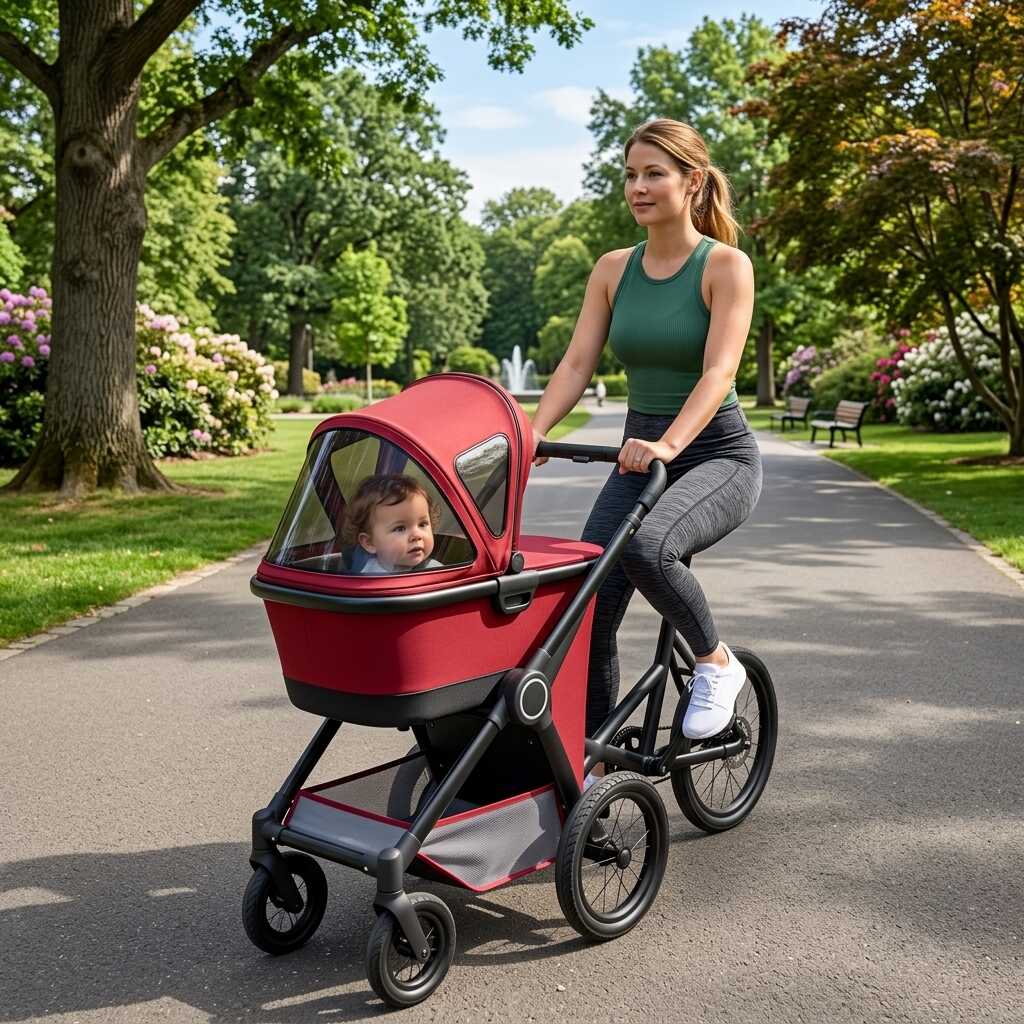
Part III: Visual Appearance, Surface Finishes, and Color Palettes
The visual aesthetic of a Converting Bicycle Stroller must harmonize two traditionally separate product categories: the athletic design language of urban bicycles and the clean curves of modern child care products.
                  VISUAL & COLOR ARCHITECTURE

   [ Matte Anodized Frame ] -------> Industrial Precision Core
   [ Dual-Tone Textile ] ----------> Soft Architectural Shell
   [ High-Contrast Accents ] ------> Functional Touchpoints & Latches
Surface Treatments and Metal Finishes
-
Anodized Frame Surfaces: Metal frame members often receive type II matte anodizing or textured powder-coating. Anodized finishes provide a durable oxide layer that prevents surface scratching during transition maneuvers, while matte textured powder coatings conceal structural weld seams and create a tactile finish.
-
Satin vs. Gloss Accents: Mechanical interfaces—such as release triggers, hinge levers, and folding buttons—frequently sport high-gloss or contrasting satin treatments to visually distinguish actionable components from static frame elements.
Color Palettes and Geometric Styling
-
Neutral Base Tones: Frame structures typically utilize architectural neutral shades—such as graphite grey, matte obsidian black, brushed silver, or warm titanium. These deep tones visually anchor the vehicle and reduce the apparent visual bulk of the dual-frame mechanism.
-
Textile Colorways: The cabin enclosure provides the primary color field. Common palettes include slate blue, olive green, mustard yellow, and charcoal red. These muted, nature-inspired hues blend smoothly with urban environments while resisting visible soil accumulation.
-
High-Contrast Touchpoint Keying: Engineers use bright orange, anodized red, or high-visibility yellow on transformation levers, seatbelt buckles, and brake engagement pedals. This functional color coding guides the user directly to primary mechanical controls.
-
Reflective Structural Detailing: Retroreflective silver threads are woven directly into the canopy seams, complemented by laser-etched reflective decals along the outer frame tubing, enhancing low-light visibility without altering daytime aesthetics.
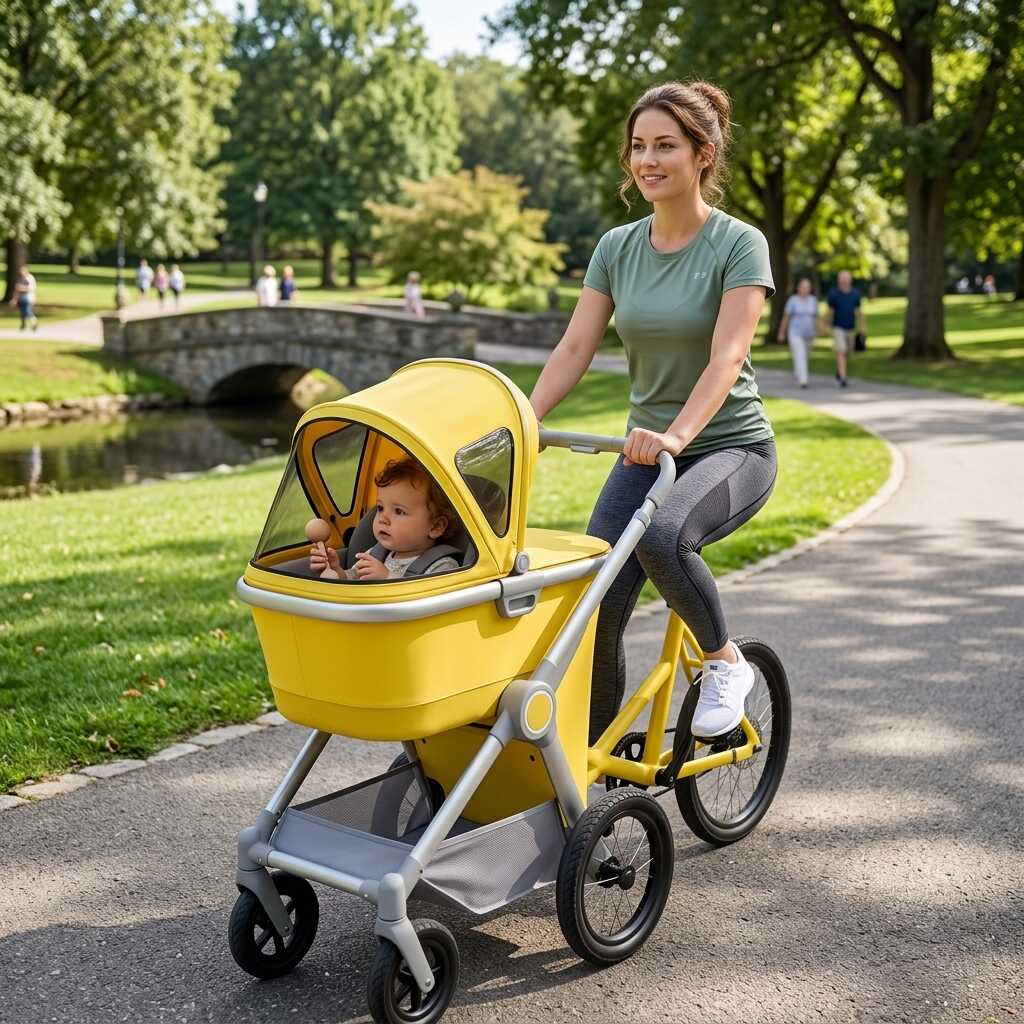
Part IV: Mechanical Conversion Systems and Wheel Dynamics
Transforming a Converting Bicycle Stroller between its two functional modes relies on integrated kinematic linkages that alter both track width and steering geometry simultaneously.
              TRANSFORMATION MECHANICS SEQUENCE

  [ Unlock Secondary Latch ] ---> [ Pivot Rear Swingarm Forward ]
                                              |
                                              v
  [ Lock Drive Assembly ] <----- [ Compress/Retract Handlebars ]
Quick-Release and Telescoping Steering
The steering assembly uses a dual-stage telescoping handlebar stem with an internal spline arrangement. In cycling mode, the stem extends upward and backward to establish an upright riding posture. During conversion, a central push-button disengages an internal detent pin, allowing the stem to slide downward into the frame head tube and lock into a shorter, vertical pushing handle position.
Drive-Train Disengagement and Folding
To prevent the chain or drive belt from slacking or binding during conversion:
-
Concentric Swingarm Pivots: The rear drive assembly rotates around a pivot axis concentric with the bottom bracket shell, keeping chain tension constant throughout the folding arc.
-
Internal Gear Hub Integration: Internal gear hubs (such as 3-speed or 8-speed planetary systems) or direct belt-drive assemblies eliminate exposed derailleur cages, keeping lubricant sealed inside and preventing gear snagging during fold operations.
Wheel Configuration and Braking Dynamics
-
Front Caster Conversion: In bike mode, the front wheels lock into a fixed forward direction to maintain stable linear tracking. Converting to stroller mode releases an internal spring-loaded alignment pin, enabling 360-degree caster rotation on dual ball-bearing races.
-
Integrated Braking Linkages: Stopping power comes from dual-piston mechanical or hydraulic disc brakes mounted to the front wheels. A central equalizer splitter distributes braking force evenly across both wheels, while a frame-mounted mechanical toggle latch serves as a static parking brake in stroller mode.
Conclusion
The engineering of a Converting Bicycle Stroller represents a thorough integration of mechanical design, metallurgy, and functional aesthetics. By overcoming the physical challenges of dual-geometry frame design, variable steering kinematics, and structural load management, these vehicles successfully bridge two distinct form factors within a single frame. Through the precise application of hydroformed aluminum, durable technical fabrics, clear color-coded touchpoints, and smooth transformation mechanisms, the converting bicycle stroller stands as a compelling example of modern multi-modal transport design.