
Airports have a way of testing patience. Long corridors, tight connections, and the constant juggling of bags can turn even a short layover into a small ordeal. It’s no surprise, then, that travelers and designers alike have spent years looking for smarter ways to move through these spaces. One idea that keeps resurfacing, and quietly gaining traction, is the luggage shaped scooter — a hybrid object that looks like a suitcase but behaves like a personal mobility device.
This concept isn’t about flashy gadgetry for its own sake. It’s a response to a very ordinary frustration: why should a bag just sit there and be dragged, when the same object could also help you get where you’re going? In this article, we’ll look at what makes the luggage shaped scooter such an interesting design direction, how it fits into the broader story of travel innovation, and why it continues to capture attention online.
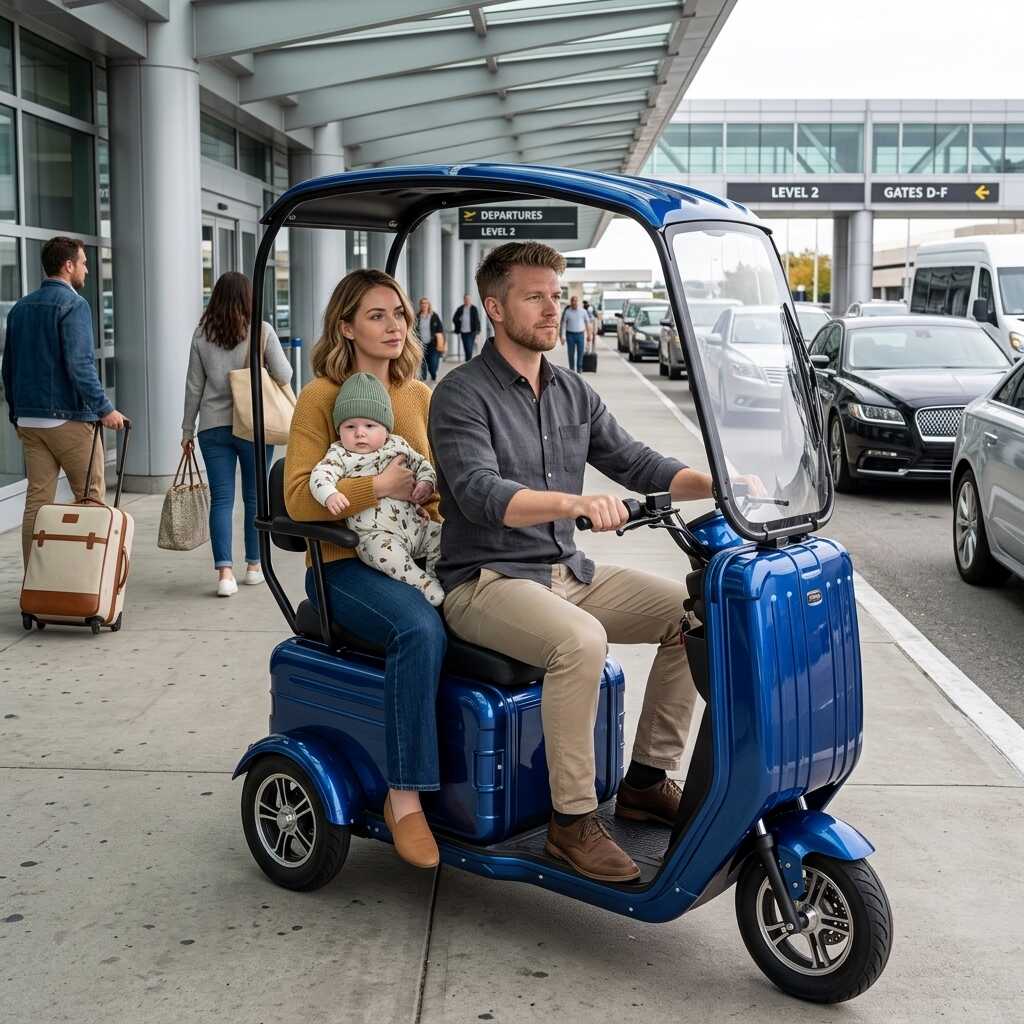
What Exactly Is a Luggage Shaped Scooter?
At its core, a luggage shaped scooter is exactly what the name suggests: a piece of luggage — typically a hard-shell case — that has been engineered with wheels, a foldable stand platform, and sometimes a retractable handlebar, allowing a person to stand on it and ride short distances. Instead of carrying two separate items (a suitcase and, say, a folding scooter or skateboard), the traveler carries one object that serves both purposes.
The design usually keeps the external silhouette close to a standard carry-on case, so it doesn’t look out of place next to conventional luggage in an overhead bin or a rental car trunk. The transformation into a scooter mode is achieved through hidden mechanisms — a pull-out platform near the base, sturdier wheel assemblies than typical luggage wheels, and a handle that can lock into a riding position rather than just a towing position.
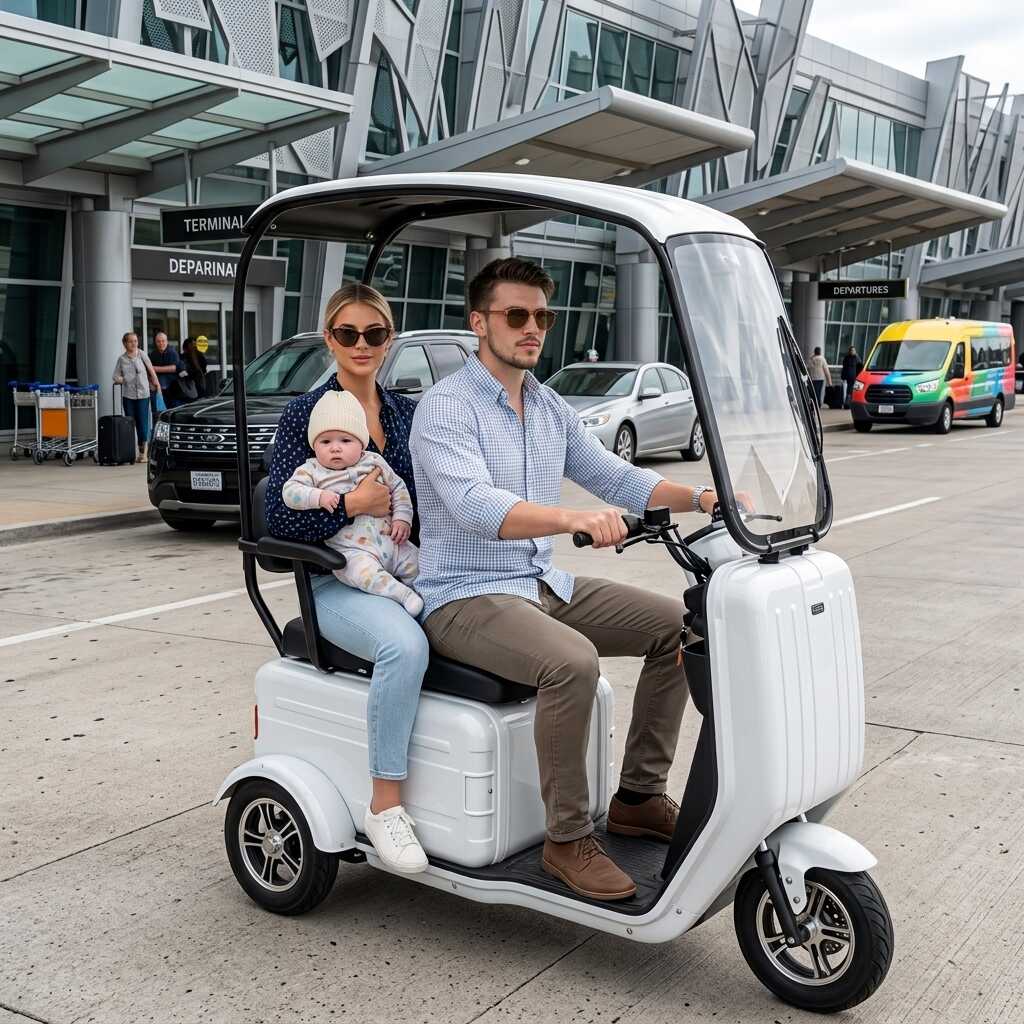
Why This Idea Resonates With Modern Travelers
Travel habits have shifted significantly over the last decade. More people are moving through cities on foot, using public transit, or navigating sprawling airport terminals that seem to grow larger every year. In that context, the appeal of a luggage shaped scooter becomes clear.
Solving the “Two Object” Problem
Anyone who has tried to manage a suitcase, a backpack, and a personal transport device at the same time knows how quickly hands and shoulders run out of room. A combined design removes one of those objects from the equation entirely. Instead of choosing between comfort and speed, travelers get both from a single item.
Matching the Pace of Modern Terminals
International airports have expanded dramatically, and gate-to-gate walks can stretch well beyond a kilometer. A scooter-luggage hybrid offers a practical way to cover that distance without breaking a sweat or missing a boarding call, while still functioning as ordinary luggage the moment it needs to be checked or stowed.
A Natural Fit for Micro-Mobility Culture
Cities worldwide have embraced micro-mobility — scooters, e-bikes, and compact personal transporters have become part of daily life in many urban centers. The luggage shaped scooter taps into this same cultural shift, applying the logic of micro-mobility to an object most people already own and use regularly.
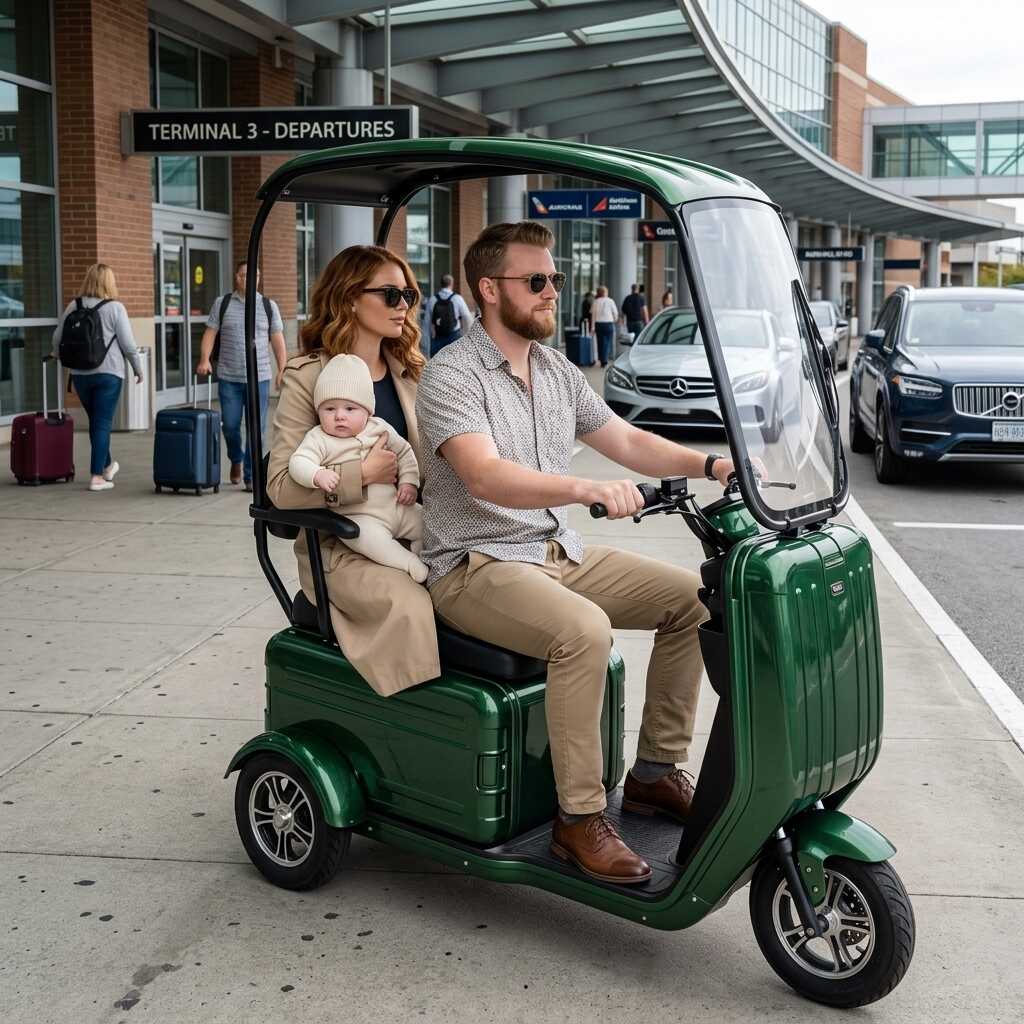
Design Considerations Behind the Concept
Designing an object that has to perform two very different jobs is not simple. A suitcase needs to protect its contents, stack efficiently, and meet size restrictions for carry-on compartments. A scooter, on the other hand, needs a stable platform, responsive wheels, and enough structural rigidity to support a person’s weight safely.
Balancing Stability and Portability
Engineers working on this kind of hybrid design have to think carefully about weight distribution. If the scooter platform is too far forward or too far back, the ride becomes unstable. At the same time, the case still needs to be light enough to lift into an overhead compartment without straining the traveler.
Durability of Moving Parts
Standard luggage wheels are built for rolling on smooth floors at a walking pace, not for supporting a rider’s full body weight while in motion. Any credible luggage shaped scooter design has to reinforce these components significantly, often borrowing engineering principles from kick scooters and skateboards rather than traditional suitcase manufacturing.
Folding Mechanisms That Disappear When Not in Use
One of the more elegant aspects of this design category is how well the scooter components hide themselves. When folded, the platform and handlebar mechanisms need to sit flush enough that the object still resembles ordinary luggage, both for aesthetic reasons and for compliance with airline sizing gauges.
How This Fits Into the Bigger Picture of Travel Design
The luggage shaped scooter isn’t happening in isolation. It’s part of a broader wave of thinking that treats travel objects as multi-functional tools rather than single-purpose items. Backpacks that double as travel pillows, jackets with built-in inflatable neck support, and even shoes designed for airport security efficiency are all part of the same design philosophy: reduce friction wherever possible.
This mindset reflects a deeper truth about how people travel today. Trips are often faster-paced, with tighter connections and less downtime between destinations. Objects that can adapt to multiple needs — without adding extra weight or bulk — fit naturally into that rhythm. The luggage shaped scooter is a clear example of designers listening closely to real travel behavior and responding with something genuinely useful.
The Role of Online Curiosity in Popularizing the Concept
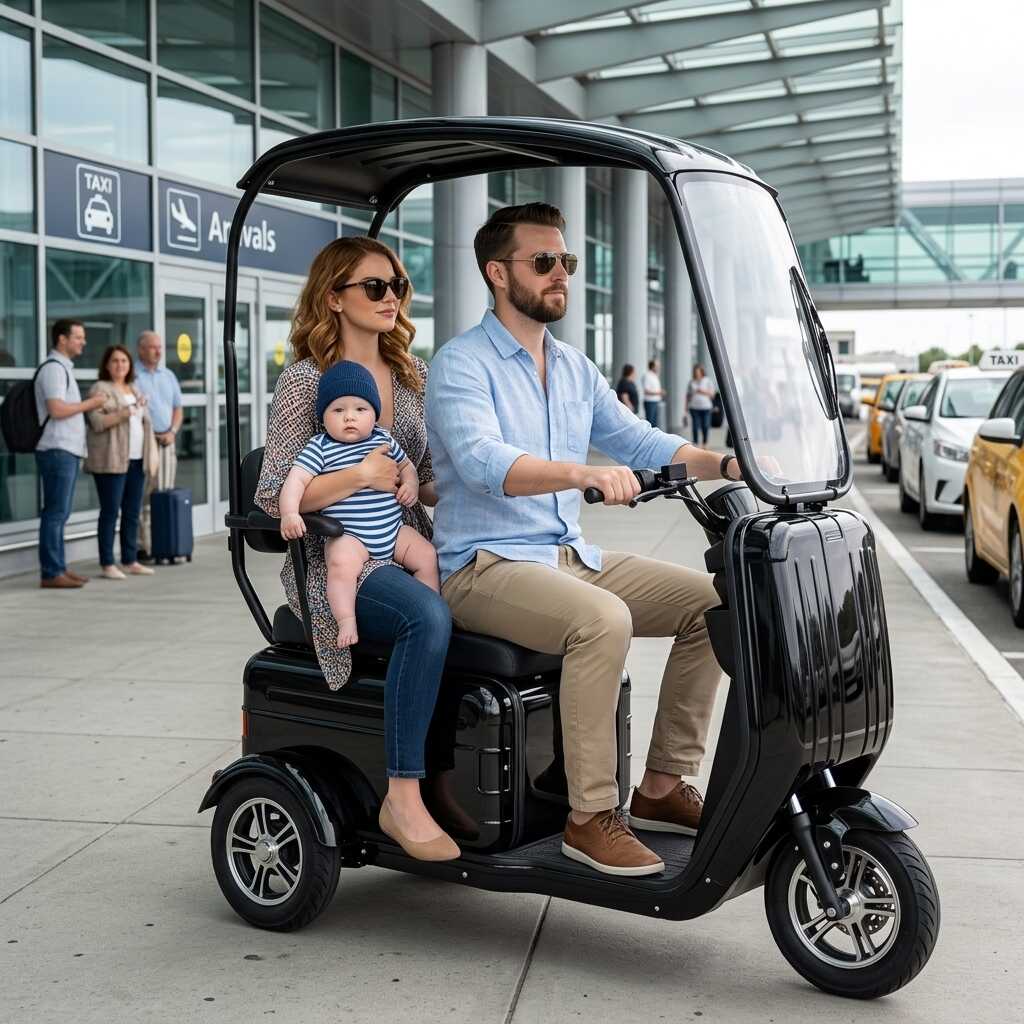
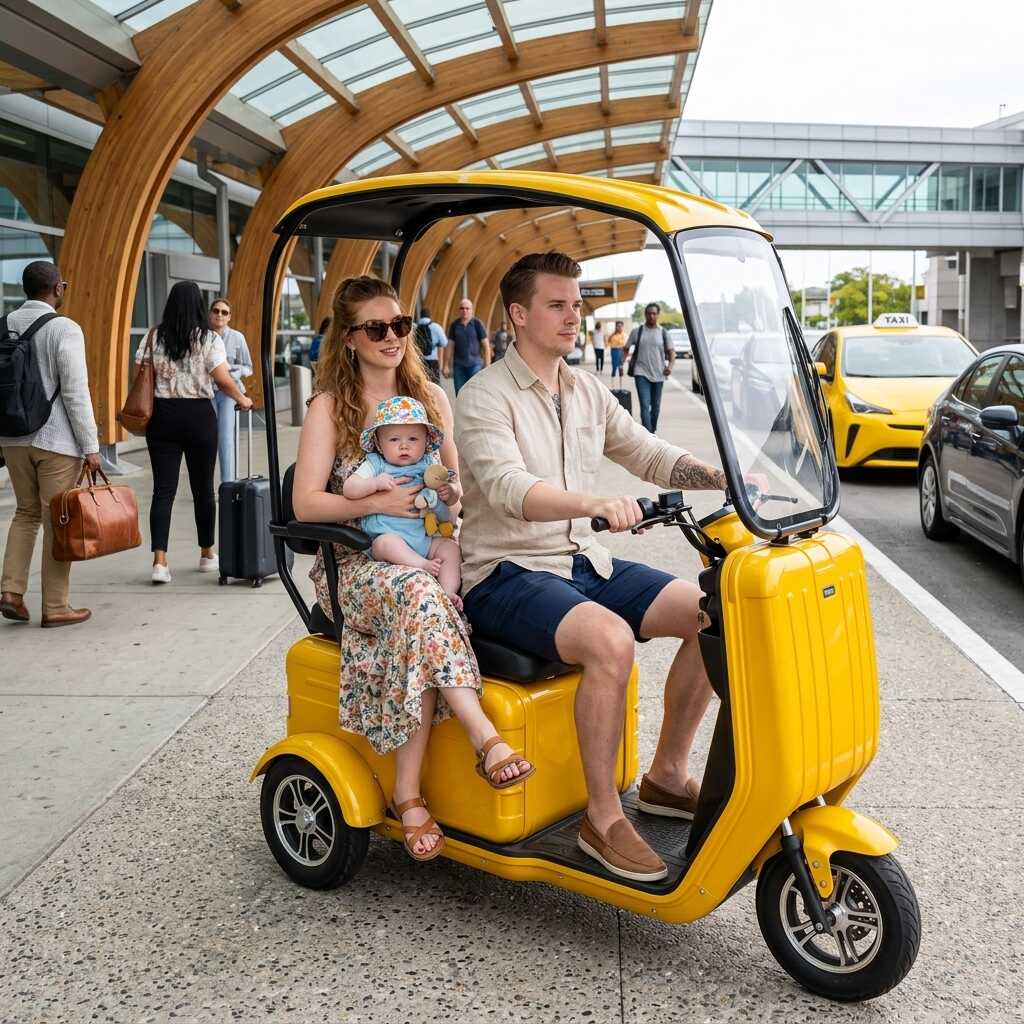
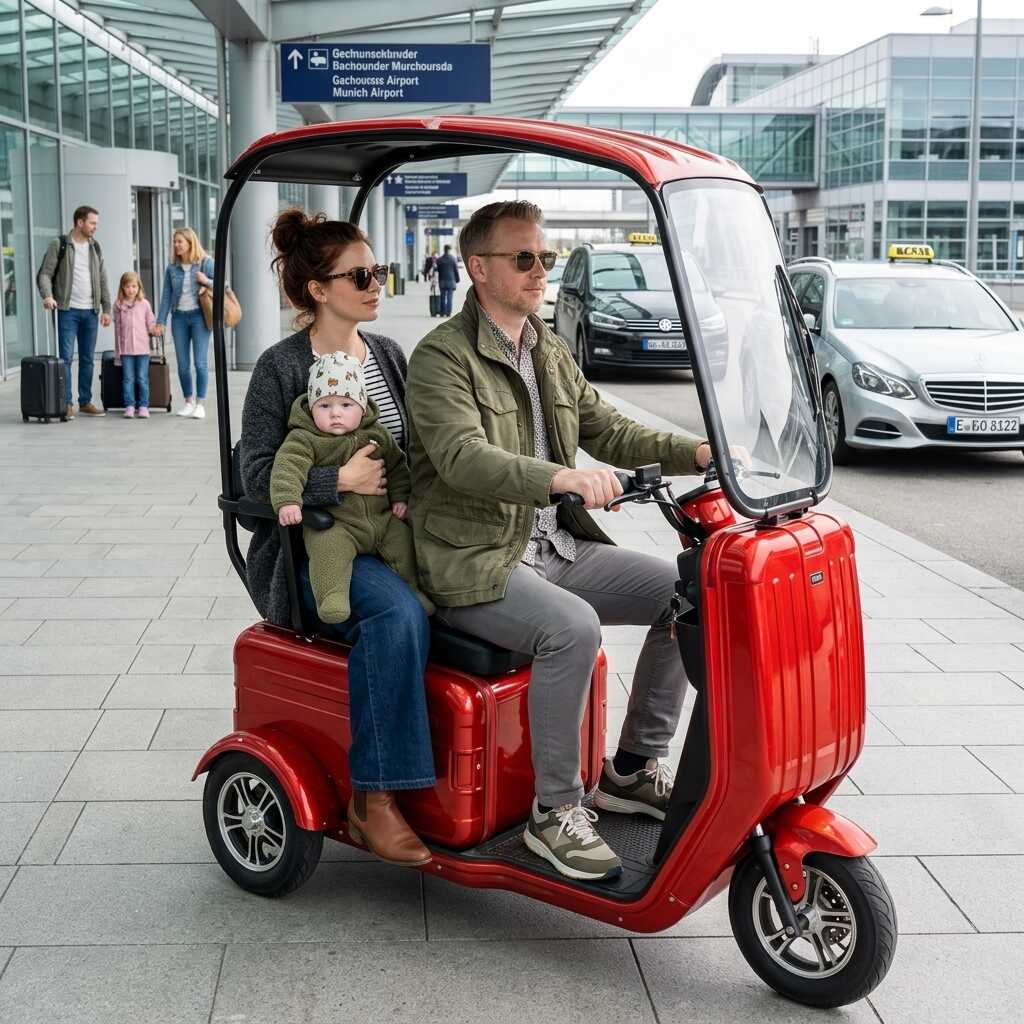
It’s worth noting why ideas like this spread so quickly across search engines and social platforms. Novel hybrid objects tend to capture attention because they challenge an assumption people didn’t realize they had — in this case, the assumption that luggage and personal transportation have to remain separate categories. Videos and articles showing someone gliding through an airport terminal on their suitcase tend to generate curiosity precisely because the image is unexpected, yet immediately understandable.
This kind of visual clarity is part of why the concept continues to trend in search results. It doesn’t require a lengthy explanation to grasp; a single image or short clip communicates the entire idea. That simplicity, paired with genuine practical appeal, is a strong combination for sustained online interest.
Final Thoughts
The luggage shaped scooter represents a small but telling shift in how we think about the objects we carry through airports and cities. Rather than treating travel gear as fixed, single-purpose items, designers are increasingly asking how these objects might do more without asking travelers to carry more. Whether or not this particular hybrid becomes a permanent fixture of modern travel, it reflects a design instinct worth paying attention to: solving real, everyday friction with ideas that are as practical as they are clever.
As airports continue to grow and travel schedules stay tight, concepts like this remind us that innovation doesn’t always mean something entirely new. Sometimes it simply means looking at two familiar objects and asking why they couldn’t be one.