
There’s a particular kind of engineering challenge that sits at the intersection of comfort, humor, and functionality — and few objects capture that intersection quite like a sleeping bag shaped like a dog. The Luxarts Dog Shaped Sleeping Bag is one of those rare camping and lounging accessories that manages to be playful without sacrificing the practical demands of insulation, durability, and ergonomic fit. To understand why this design has captured so much attention, it helps to pull it apart piece by piece — not to shop for one, but to genuinely appreciate the thinking behind it.
Why Novelty Shapes Are Harder Than They Look
At first glance, a novelty-shaped sleeping bag seems like a simple idea: take a standard rectangular or mummy-style bag, add some ears, a tail, and a snout, and call it done. In practice, the geometry involved is far trickier than that. A human body sleeping inside a bag needs room to shift, roll, and stretch the legs, while the outer silhouette has to read clearly as a dog from a distance. Balancing those two requirements — internal comfort versus external recognizability — is the central design puzzle behind something like the Luxarts Dog Shaped Sleeping Bag.
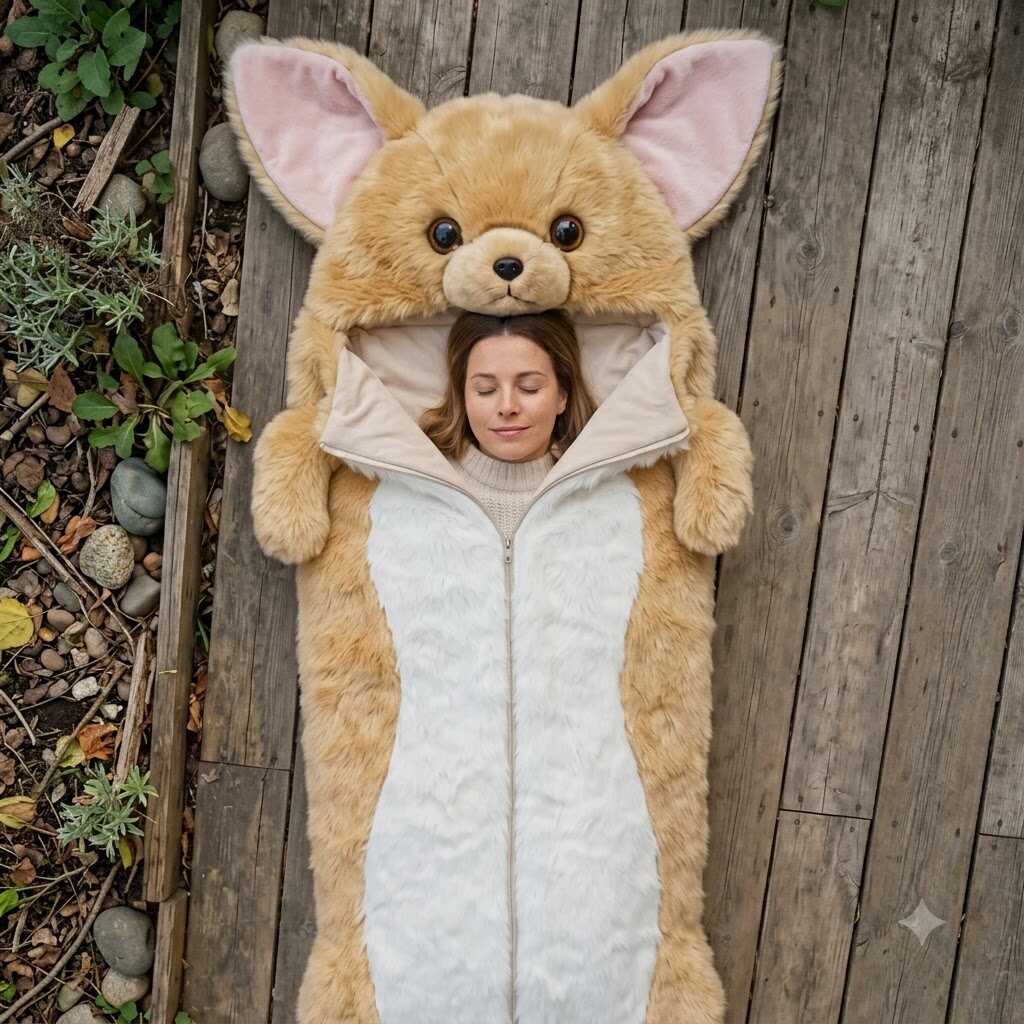
Pattern makers who work on shaped sleeping bags typically start with a standard mummy or rectangular block pattern and then “sculpt” it outward. The paws, ears, and tail are essentially appliqué shapes stitched onto or built into panels that don’t interfere with the sleeper’s actual space. This is why, if you look closely at well-made shaped sleeping bags, the decorative silhouette elements are usually padded separately from the main sleeping chamber. It keeps the INSULATION where it matters — around the torso and legs — rather than wasting fill material on a tail that nobody sleeps inside.
Material Choices and the Insulation Puzzle
Insulation is where the real engineering trade-offs happen. Manufacturers generally choose between polyester hollow-fiber fill, down alternative fill, or occasionally cotton-blend batting, depending on the target climate and price point of the finished product. Hollow-fiber polyester is the most common choice for novelty-shaped bags because it holds its loft even when compressed into unusual curves — something natural down struggles with, since down tends to shift and clump when forced into non-standard cavities like a tapered “snout” section.
The outer shell fabric also plays a bigger role than most people realize. A shiny, slick polyester taffeta might look appealing in product photography, but it can make a sleeping bag slide around on hardwood floors or tiled surfaces, which matters if the item doubles as a lounging accessory rather than strictly an outdoor camping tool. Many designers instead lean toward a brushed or peached polyester finish, which has a slight texture that grips the floor better and feels softer against skin — a small but meaningful DESIGN decision that separates amateur novelty products from professionally engineered ones.
The Zipper Problem Nobody Talks About
Zippers are the unsung heroes — or villains — of shaped sleeping bag design. On a standard rectangular bag, a zipper runs in a straight line and is relatively simple to install. On a dog-shaped bag, the zipper has to navigate curves around the head section, sometimes wrapping close to where the “ears” attach, all while remaining smooth enough that a half-asleep user doesn’t snag fabric on the pull tab at 2 a.m.
Good manufacturing practice calls for reinforced zipper tape at every curve point, plus a fabric guard sewn along the zipper’s interior edge to prevent the metal or plastic teeth from touching skin directly. This is a detail that separates budget knockoffs from more thoughtfully constructed products — the difference between a smooth midnight bathroom trip and a scratched cheek.
Stitching Techniques That Hold Novelty Shapes Together
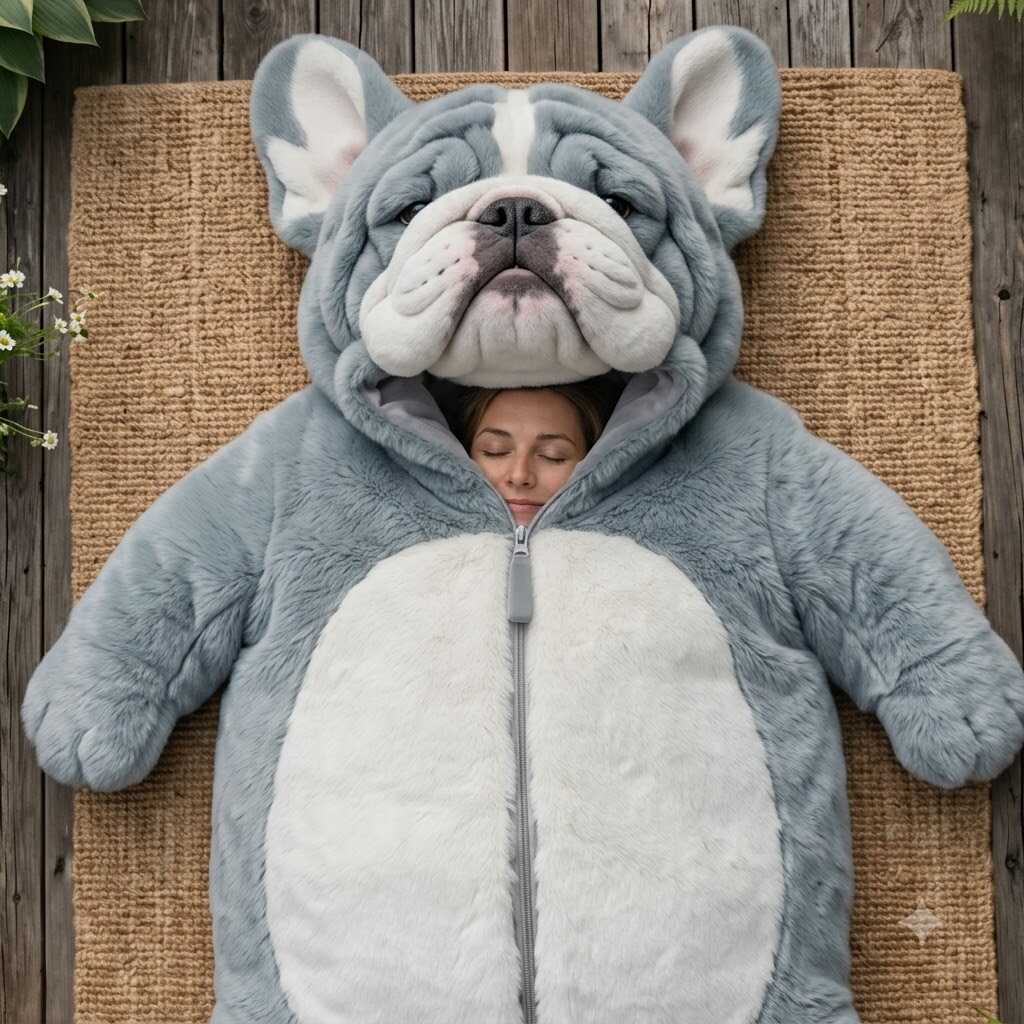
Because a shaped sleeping bag has more seams than a conventional one — think of every curve needed to form paws, a tail, or a rounded hood — stitch density becomes critical. Flat-lock or double-needle stitching is generally preferred over a single straight seam because it distributes stress across a wider area of fabric. Given that a sleeping bag gets pulled, sat on, rolled up, and stuffed into a storage bag repeatedly, seams around high-stress points like the tail base or hood opening need to be engineered to survive years of that kind of handling rather than looking good only on day one.
Some manufacturers also incorporate a technique called “boxed” seam construction at the foot end, which prevents the classic problem of a sleeping bag’s bottom corner twisting or bunching after repeated washes. It’s a subtle touch, but it’s exactly the kind of detail that shows up in reviews as “just feels sturdier” even when the reviewer can’t articulate why.
DIY Approaches: What Hobbyists Can Learn
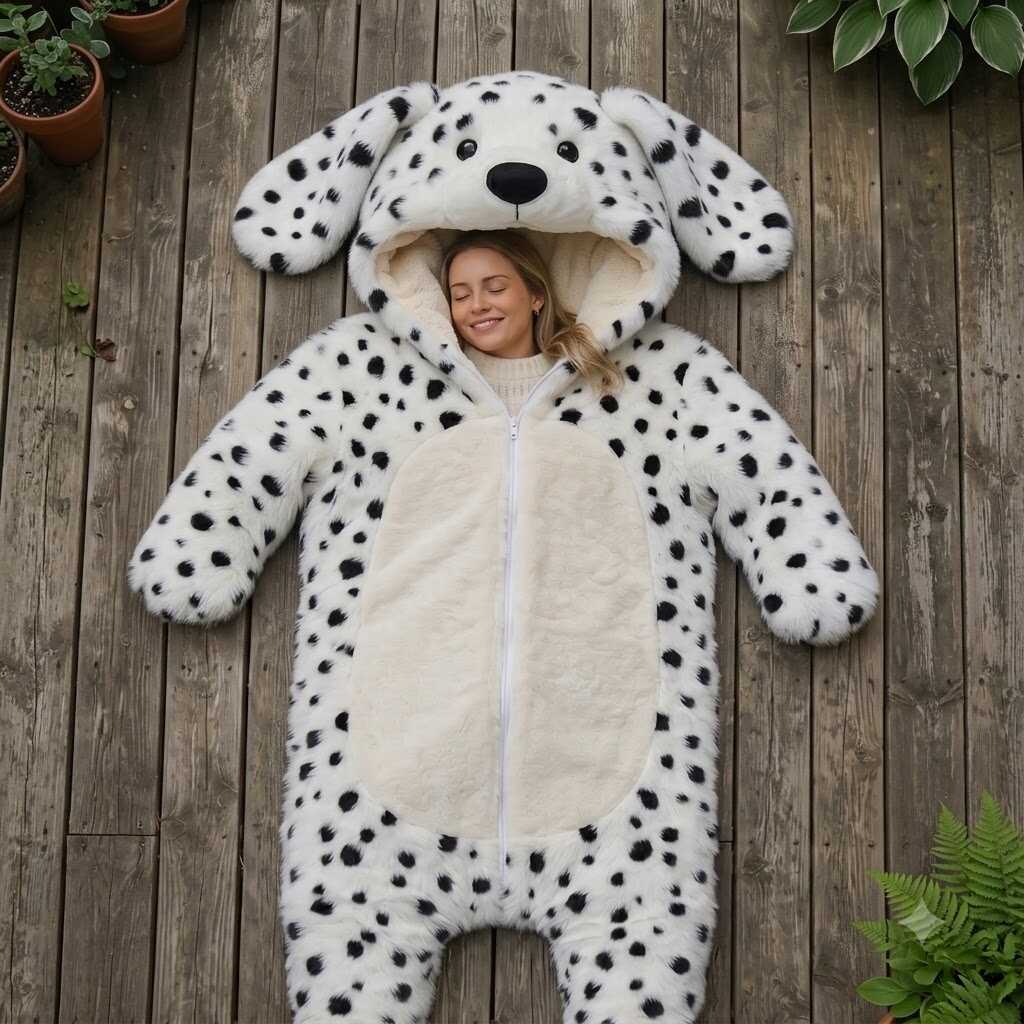
For sewing hobbyists who want to attempt their own version of a novelty animal-shaped sleeping bag, the biggest lesson from commercial designs like this one is to build the pattern in layers rather than trying to draft the whole silhouette at once. Start with a functional inner shell sized to a standard body length and width. Then create a second, looser outer shell that carries all the decorative shaping — the ears, tail, and paw details — and quilt the two layers together only at strategic anchor points.
This layered approach avoids one of the most common amateur mistakes: sewing the decorative shape directly into the structural seams of the sleeping bag, which creates pressure points and weak spots that fail after a handful of uses. It also makes future repairs far easier, since a torn ear or frayed tail can be patched without unpicking the entire sleeping chamber.
Home sewists attempting a similar project should also pay close attention to fill weight distribution. Using a fill calculator based on grams per square meter, rather than eyeballing stuffing amounts, produces a far more even loft and prevents the classic “lumpy” appearance that plagues homemade projects. It’s tedious, but it’s the difference between a craft-fair-quality piece and something that looks genuinely manufactured.
The Bigger Picture: Comfort Objects as Functional Design
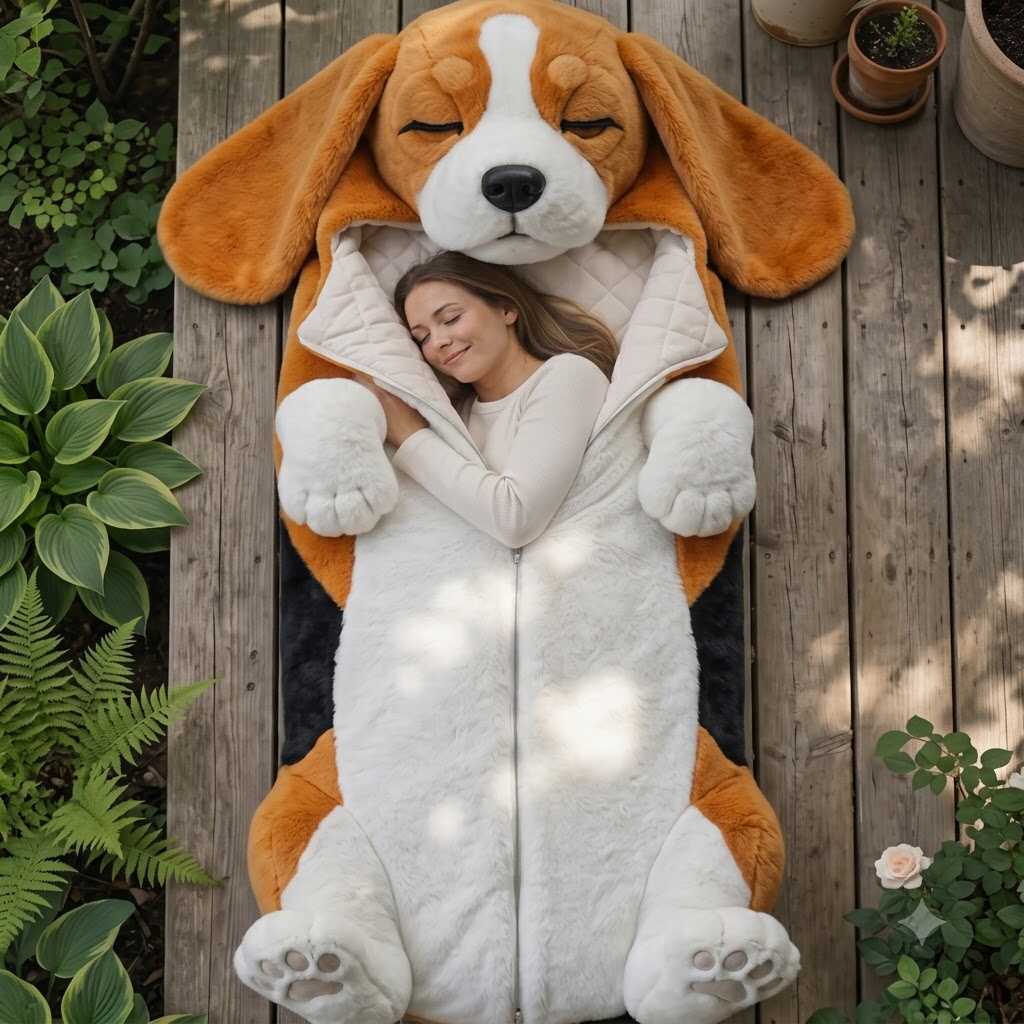
What makes a piece like the Luxarts Dog Shaped Sleeping Bag interesting from a design standpoint isn’t just the novelty factor — it’s how much unseen engineering goes into making something whimsical also genuinely comfortable and durable. The COMFORT of a sleeping bag isn’t an accident; it’s the result of dozens of small decisions about seam placement, fill type, fabric texture, and zipper construction, all working in concert so that the finished product feels effortless to use, even though nothing about producing it was effortless at all.
In an industry crowded with generic rectangular bags, shaped designs like this one represent a genuine manufacturing challenge — one that blends traditional textile engineering with a bit of whimsical creativity. Whether you’re a hobbyist sewer curious about pattern drafting or simply someone who appreciates good industrial design, there’s a lot to admire in how a simple concept like “a sleeping bag shaped like a dog” gets transformed into a carefully engineered object through pattern-making precision, thoughtful material selection, and stitching techniques refined over years of iteration.