
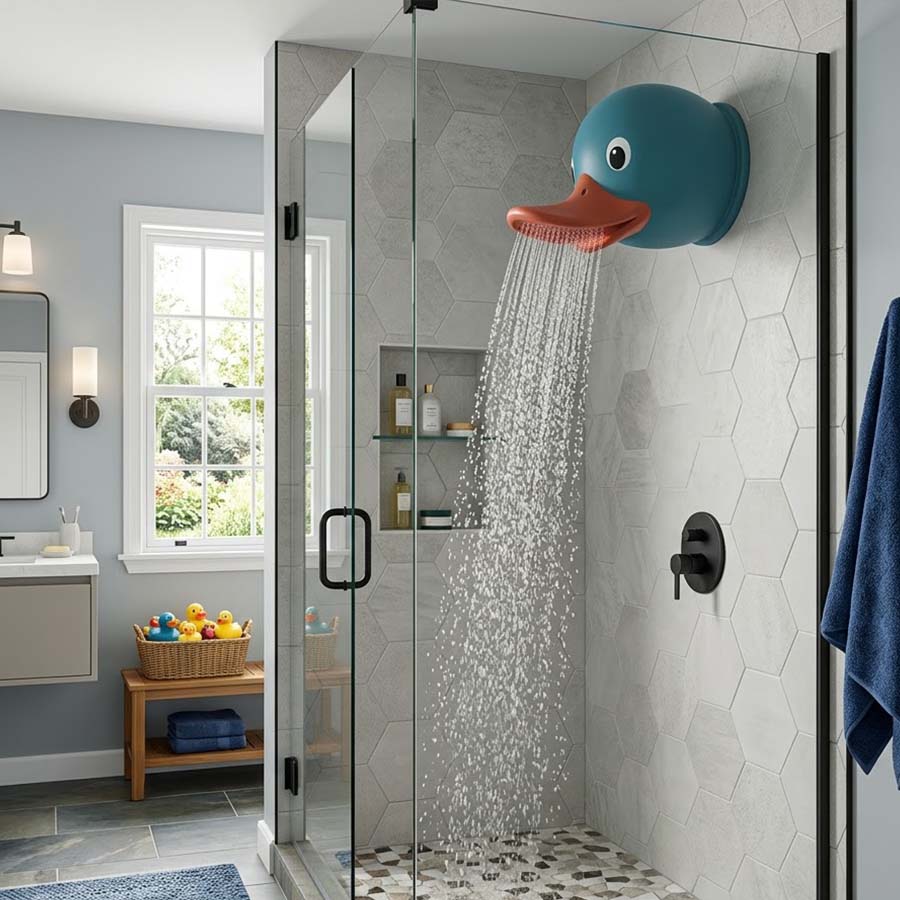
There’s a particular kind of scroll-stopping moment that happens when you see a bathroom photo that doesn’t look like every other bathroom photo. That’s exactly what’s been happening with the Duck Shaped Shower, a design concept that has quietly taken over interior design boards, renovation forums, and short-form video feeds over the past several months. What started as a quirky one-off installation in a handful of boutique homes has turned into a full-blown design movement, and it says a lot about where residential design is headed in 2026.
If you haven’t seen it yet, picture this: a shower enclosure — sometimes just the drain cover, sometimes the entire fixture silhouette — molded to echo the rounded, friendly form of a duck. It sounds almost too playful to be taken seriously as a design choice, but that’s precisely why it’s working. In a category that has spent decades chasing minimalism, the duck shower is a small rebellion, and people are here for it.
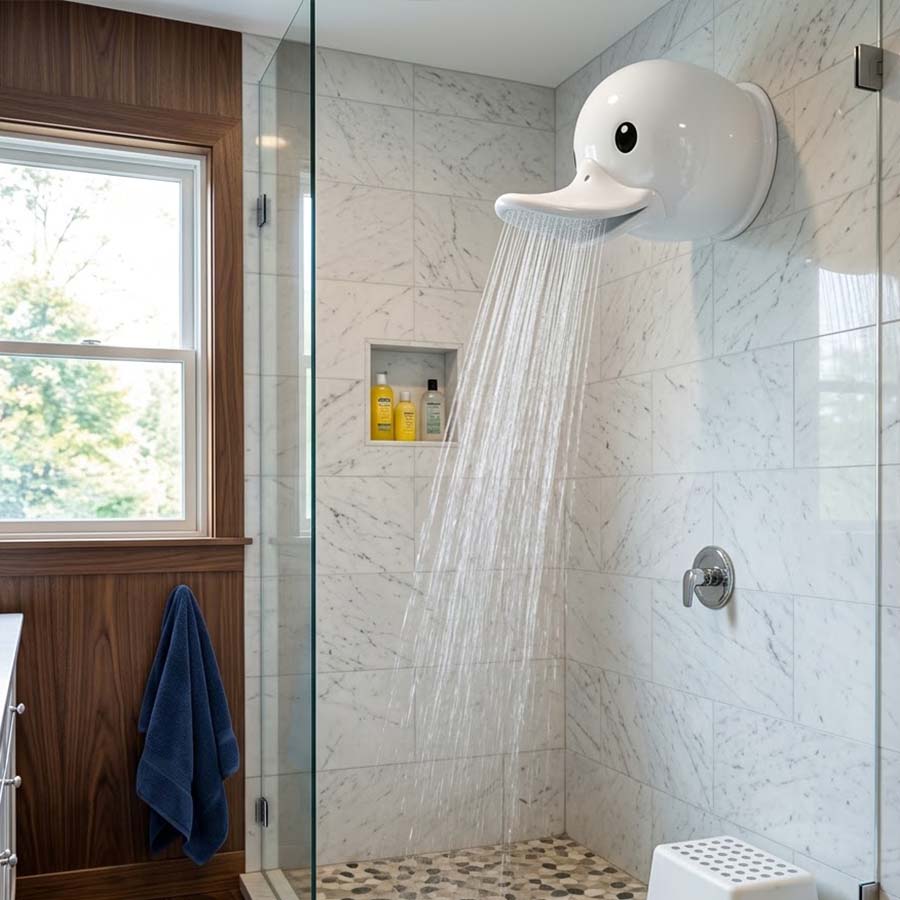
Why the Duck Shape Struck a Nerve
Bathroom design has been dominated by clean lines, matte black fixtures, and monochrome tile for so long that a lot of homeowners started to feel like their spaces looked identical to their neighbor’s. Design fatigue is real, and when something breaks that pattern — especially something nostalgic and unexpected like a duck silhouette — it tends to spread fast.
There’s also a psychological angle worth mentioning. The duck is one of the most universally recognized “comfort” shapes in Western design culture, largely thanks to its association with childhood bath time. Bringing that shape into an adult, grown-up bathroom creates a kind of visual dissonance that people find charming rather than childish. Designers describe it as “adult regression done tastefully,” and that framing has resonated with a surprisingly wide audience, from young renters personalizing a small apartment to parents building whimsical family bathrooms.
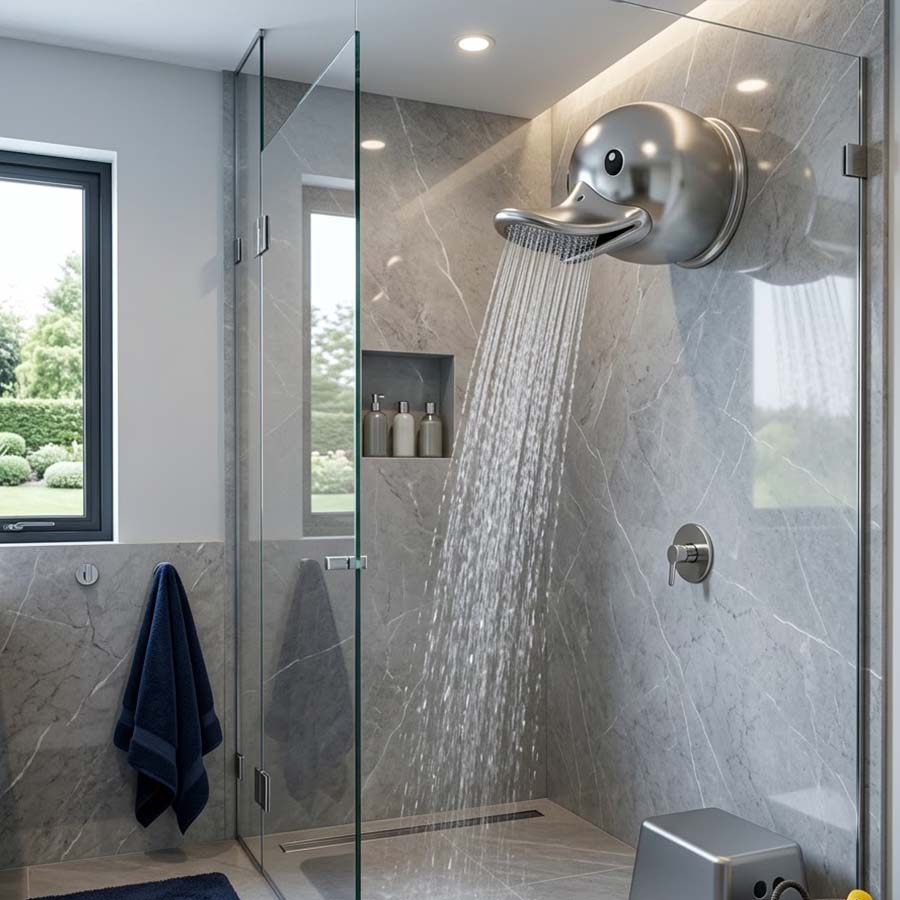
The DIY Angle: Why Homeowners Are Building Their Own
Unlike a lot of design trends that require a full contractor overhaul, the duck shower concept has become popular specifically because it’s approachable for home DIY projects. You don’t need to gut your bathroom to bring the aesthetic in. Here’s how most hobbyist builders are approaching it:
1. Silicone Mold Casting for Fixtures The most common entry point is casting a duck-shaped soap dish, drain cover, or showerhead surround using food-grade silicone molds. These molds are widely available in craft supply catalogs, and the process only requires a two-part resin or concrete mix, a curing period of 24 to 48 hours, and basic sanding tools to smooth the final piece.
2. Tile Mosaic Techniques For those who want the duck motif built into the wall itself rather than as an add-on fixture, tile mosaic work has become the go-to method. Builders sketch a simplified duck outline, then use small-format tiles — usually 1-inch squares — in white, yellow, and orange to build the shape directly into the shower surround. This technique takes patience but requires no specialized tools beyond a wet saw and standard tile adhesive.
3. 3D-Printed Accent Panels The more tech-forward crowd has started experimenting with 3D-printed ABS or PETG panels that snap onto existing shower walls. Because these plastics are water-resistant when properly sealed, hobbyists have been sharing print files that let anyone with access to a home printer recreate the look without any wet-work skill at all.
4. Custom Fiberglass Shells For the more ambitious builds — think entire shower basins shaped like a duck’s body — fiberglass shell fabrication is the method of choice among small-batch fabricators. This involves building a foam or clay base form, layering fiberglass cloth and resin over it, then finishing with a gel coat for water resistance. It’s a labor-intensive process, but the results are dramatic enough that they’ve become a recurring feature in design showcase videos.
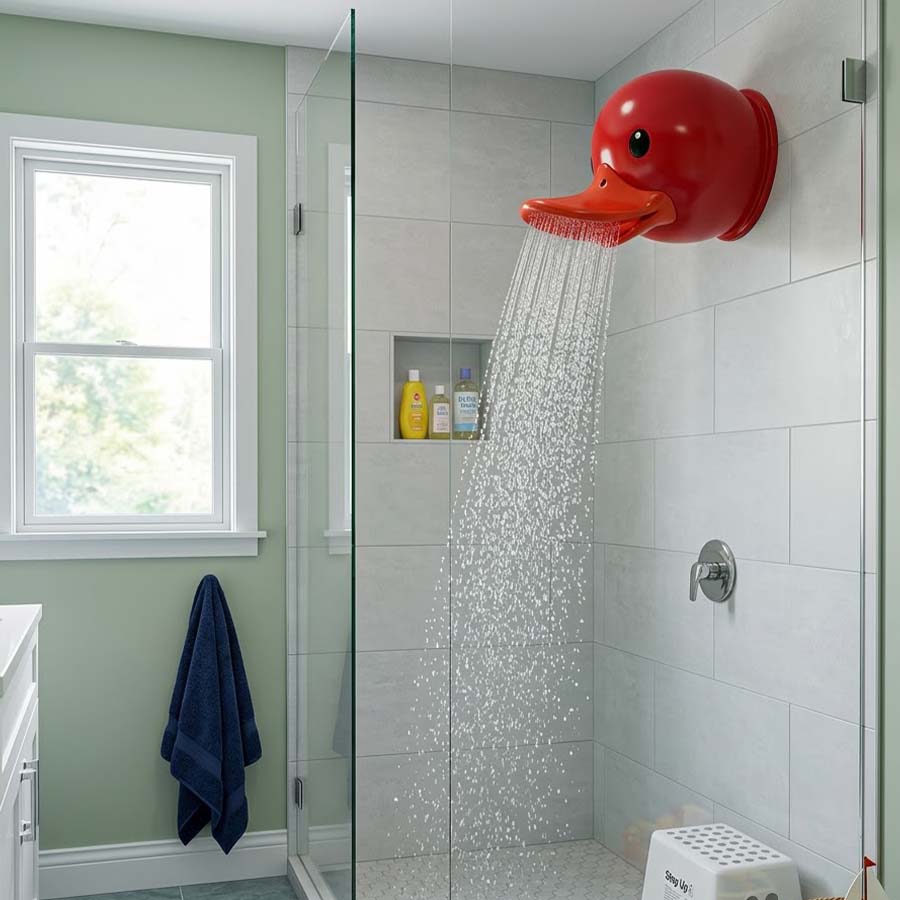
The Manufacturing Side: How Small Studios Are Producing at Scale
Behind the viral photos is a smaller, less visible story about manufacturing. Several independent design studios have begun formalizing what was once a one-off novelty into a repeatable production process. Understanding how this works helps explain why the trend has staying power rather than fading as a meme.
Most studios producing duck-shaped fixtures rely on a rotational or injection molding process for the smaller accessory pieces — soap trays, drain covers, and shelf inserts. A master mold is CNC-machined from an aluminum block based on a 3D-modeled duck form, and that master is then used to produce silicone production molds. This two-step process allows for consistent detail across the rounded curves of the bill, the eyes, and the wing contours, which are notoriously hard to replicate with hand-casting alone.
For larger fixtures, like full shower basins, studios generally shift to fiberglass reinforced plastic (FRP) production, similar to what’s used in bathtub manufacturing more broadly. The process involves spraying a gel coat into a female mold, layering chopped fiberglass strand mat, and curing under controlled humidity to avoid warping. Because the duck form has more surface curvature than a standard rectangular basin, manufacturers have had to develop custom tooling with additional support ribbing to keep the shape structurally sound under water weight and daily use.
Surface finishing is another area where the trend has pushed innovation. Traditional bathroom fixtures are usually left in flat white or bone tones, but duck-shaped designs have driven demand for two-tone gel coats — a soft yellow body paired with an orange accent for the bill — that are baked into the mold rather than painted afterward. This matters for durability, since painted finishes tend to chip with repeated scrubbing, while integrated gel-coat color holds up far longer.
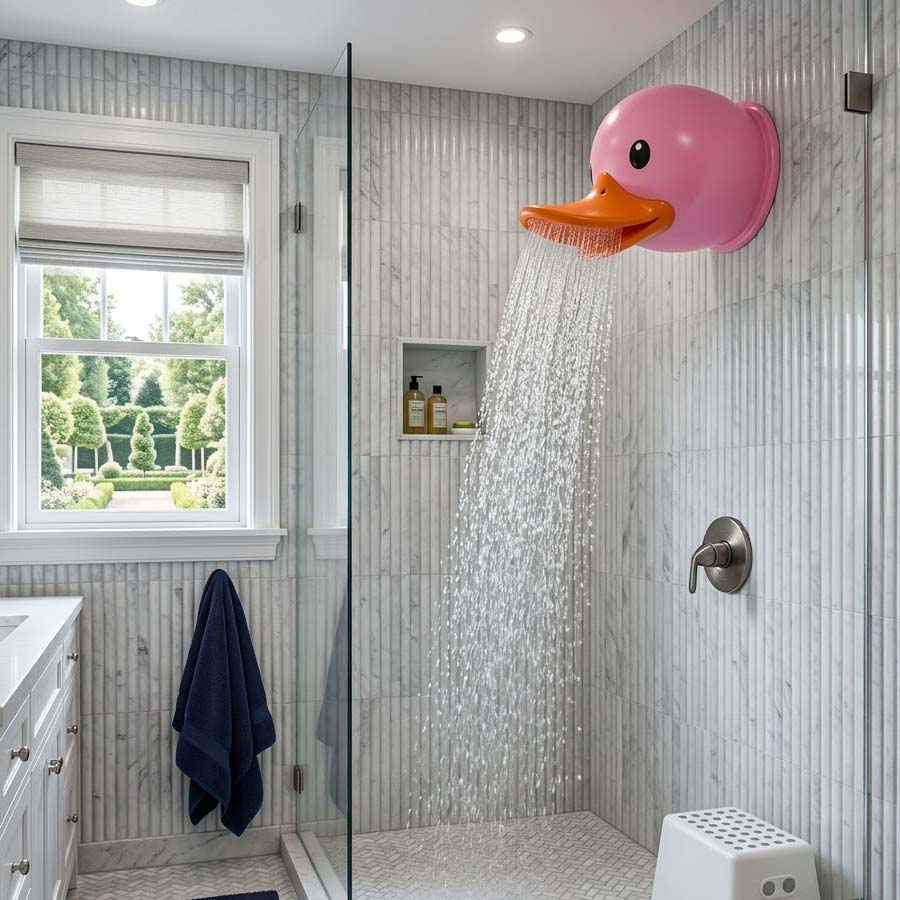
Where the Trend Might Go Next
Design trends like this one tend to follow a predictable arc: a viral spark, a wave of DIY imitation, and then a slow maturation into more refined, design-forward interpretations. That third phase already seems to be underway. Some designers are moving away from literal duck silhouettes and toward more abstract interpretations — rounded, bill-like spouts or subtly curved basin edges that hint at the shape without fully committing to it. This “soft nod” approach may end up being what carries the trend past its novelty phase and into something with genuine longevity in bathroom design.
There’s also growing interest in expanding the concept beyond ducks entirely. Designers experimenting with the same molding and tiling techniques have started prototyping other animal-inspired forms — turtles, frogs, even whimsical cloud shapes — suggesting that the real lasting contribution of this trend isn’t the duck itself, but the permission it gave designers to treat bathroom fixtures as playful sculptural objects rather than purely functional ones.
Final Thoughts
The Duck Shaped Shower trend is a reminder that design movements don’t always come from high-concept studios or expensive renovation budgets. Sometimes they start with someone in their garage, a bag of tile, and a willingness to make their bathroom a little less serious. Whether you’re casting your own duck-shaped drain cover or just watching the trend unfold online, it’s a good snapshot of where playful, personality-driven design is heading — one curved, yellow silhouette at a time.