
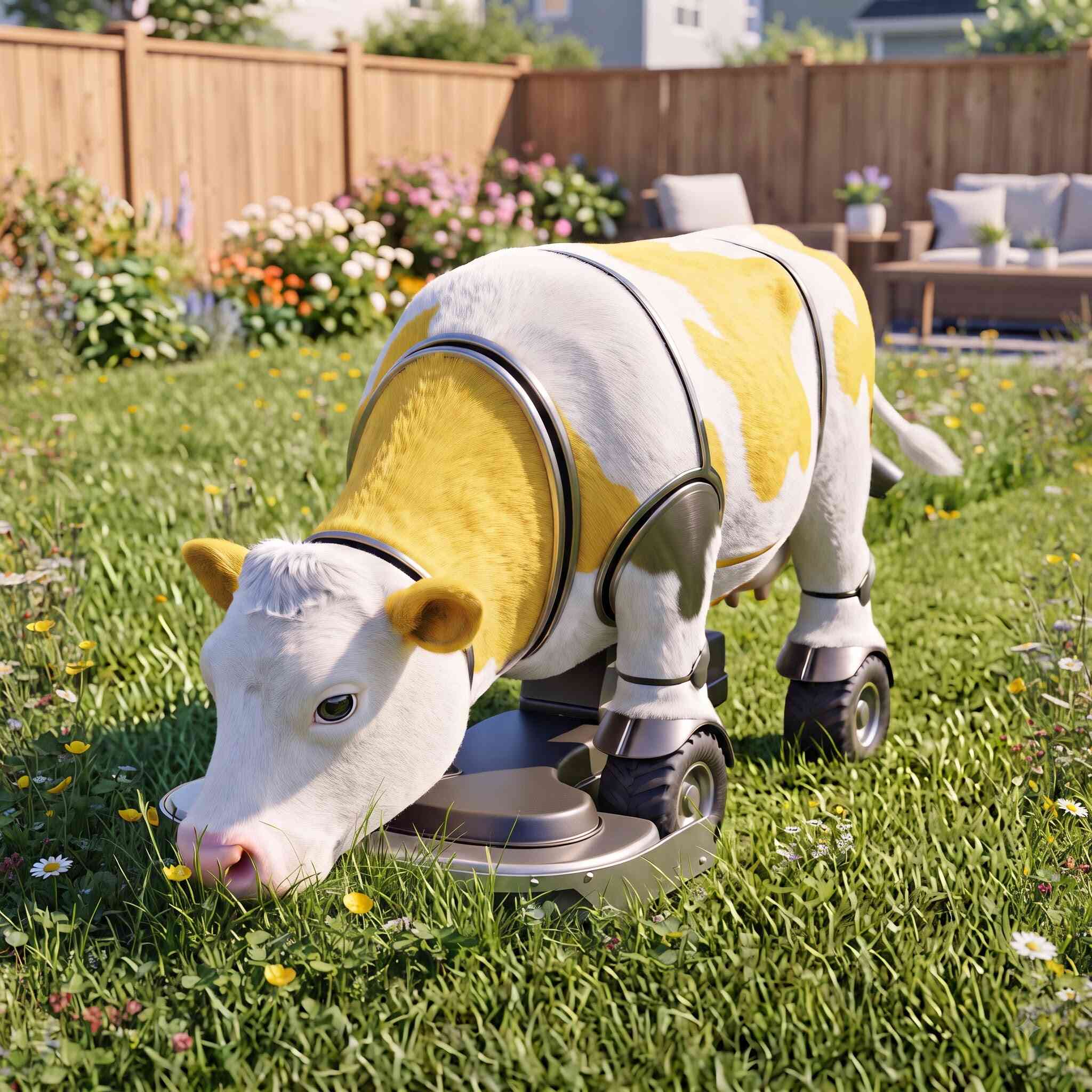
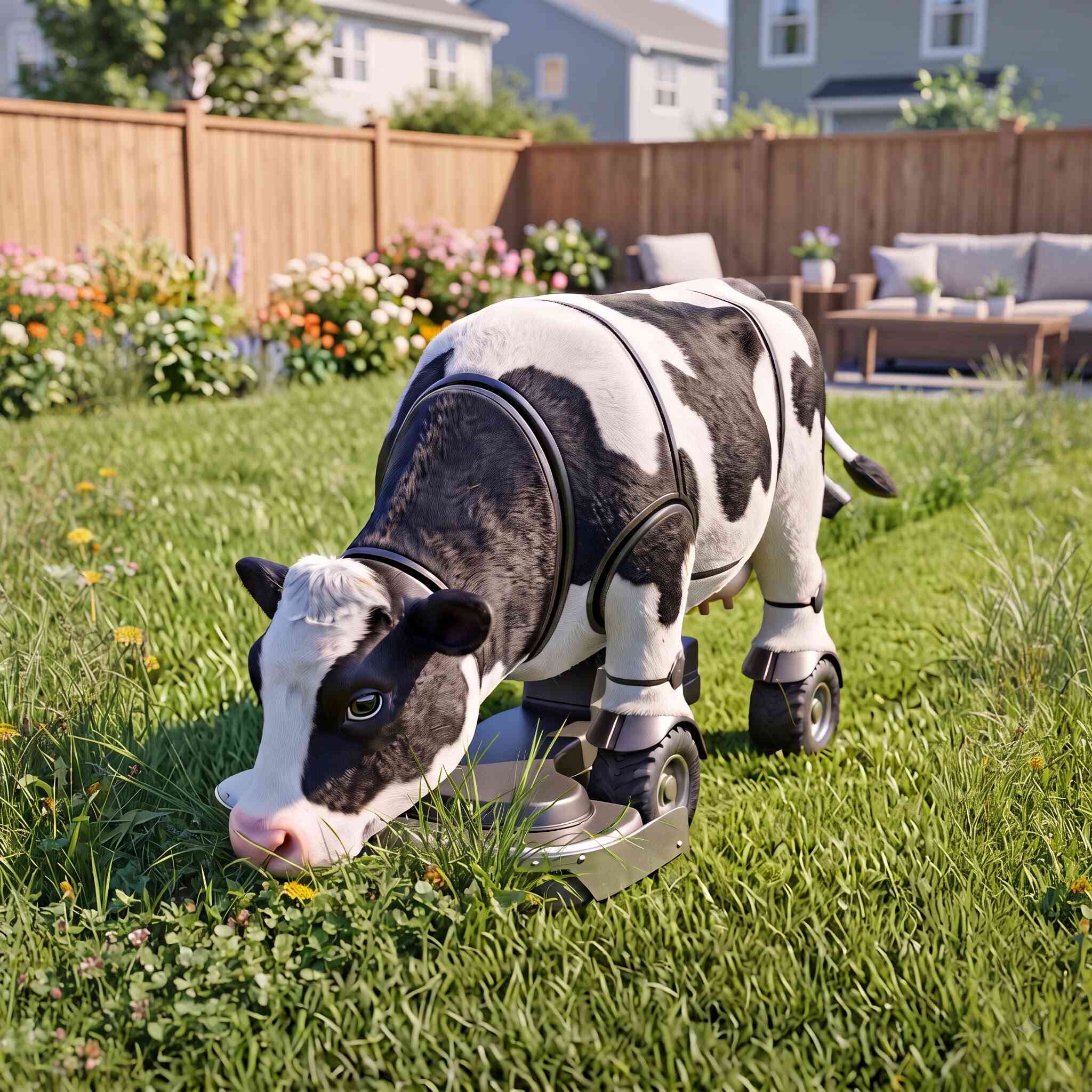
If you’ve scrolled through gardening forums or neighborhood Facebook groups lately, you’ve probably noticed something delightfully strange popping up on manicured lawns: a small, quiet machine gliding across the grass, dressed up to look like a tiny black-and-white cow. Welcome to the world of the Robot Cow Lawn Mower, a trend that’s equal parts practical technology and pure backyard whimsy.
What started as a niche hobby among robotic mower owners has turned into a full-blown design movement. People aren’t just mowing their lawns anymore — they’re turning the chore into a character. And once you understand why, it’s hard not to get a little swept up in the charm yourself.
Why the Robot Cow Lawn Mower Trend Exists in the First Place
Robotic lawn mowers have been around for years, quietly trimming grass while homeowners relax indoors. But somewhere along the way, someone realized that these boxy little machines, with their rounded bodies and low profiles, looked a bit like grazing animals moving across a field. It was a short leap from “this looks like it’s grazing” to “let’s make it LOOK like a cow that’s grazing.”
The appeal is obvious once you think about it. A Robot Cow Lawn Mower turns a purely functional gadget into a talking point. Neighbors stop to look. Kids get excited. Visitors ask questions. It transforms an invisible household task into something that adds personality to outdoor space. In an era where people are constantly looking for ways to make their homes feel more expressive and less generic, dressing up a mower as a cow is a low-effort, high-impact way to stand out.
There’s also a nostalgic, almost storybook quality to it. Cows grazing in a pasture evoke a sense of countryside calm — rolling hills, open fields, slow mornings. Recreating that image in a suburban backyard, even in miniature, taps into a kind of pastoral fantasy that a lot of homeowners find genuinely comforting.
The DIY Culture Behind the Cow Costume
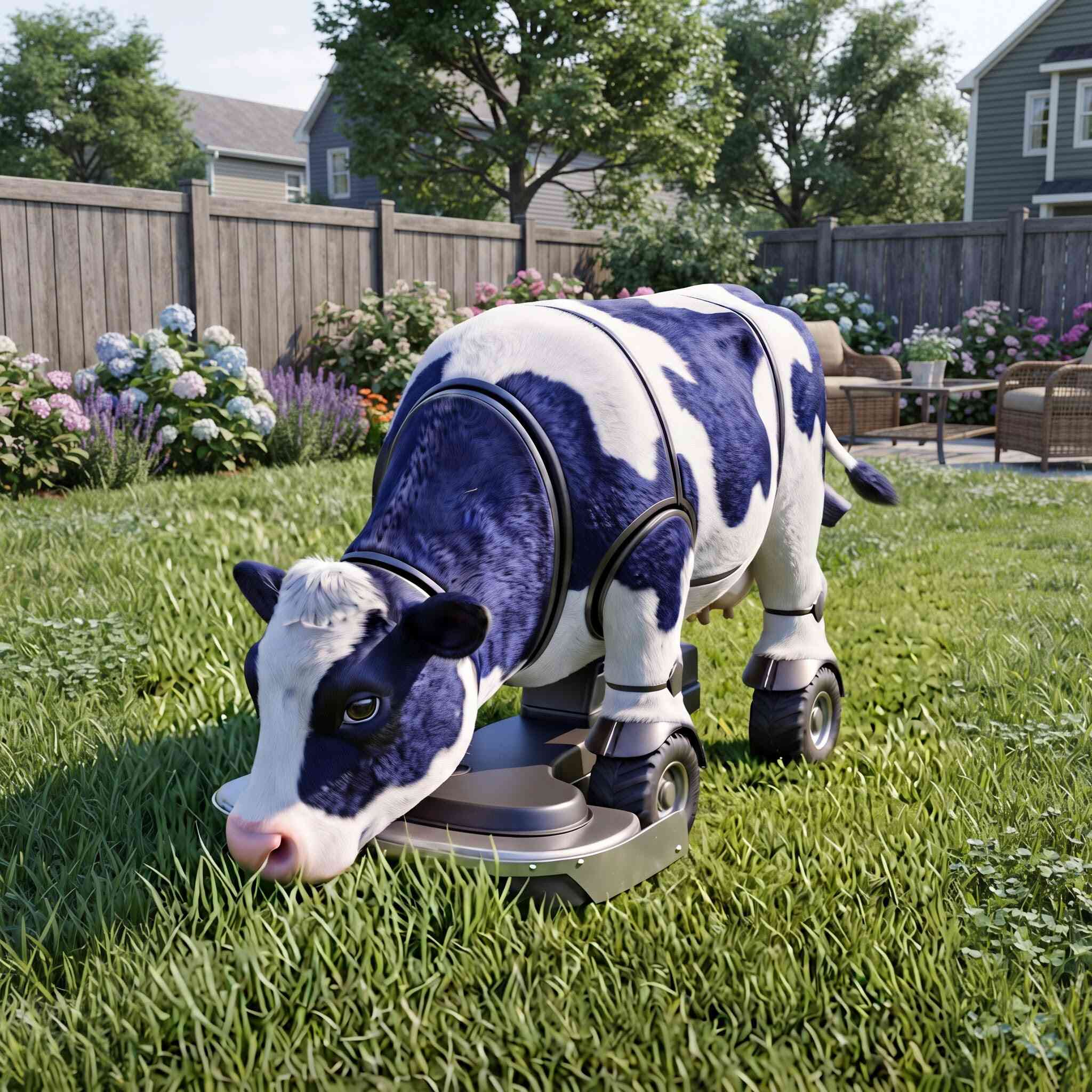
One of the most interesting parts of this trend is how much of it is homemade. Rather than treating their mower as a sealed appliance, hobbyists treat it as a blank canvas. Online communities are full of tutorials showing how to build a lightweight COW SHELL using foam board, plastic sheeting, or even old pillowcases painted with classic black-and-white patches.
Common DIY approaches include:
- Foam panel shells cut and curved to sit over the mower’s body without blocking its sensors
- Fabric “hide” covers made from stretchy black-and-white spandex or felt, sewn to fit snugly
- 3D-printed ear and horn attachments that clip onto the mower’s frame
- Painted eyes and a pink felt nose glued to the front bumper for that unmistakable cow face
- Small bell accessories attached with soft cord, mimicking the sound of real pasture cows
The unspoken rule in these communities is that function comes first. Any costume design has to leave the mower’s cameras, bump sensors, and charging contacts completely unobstructed. That constraint has actually pushed people to get more creative, since a floppy, oversized costume simply won’t work. The best designs are minimalist — just enough shape and color to read as “cow” from a distance, without adding bulk.
Beyond the Cow: A Whole Barnyard of Ideas
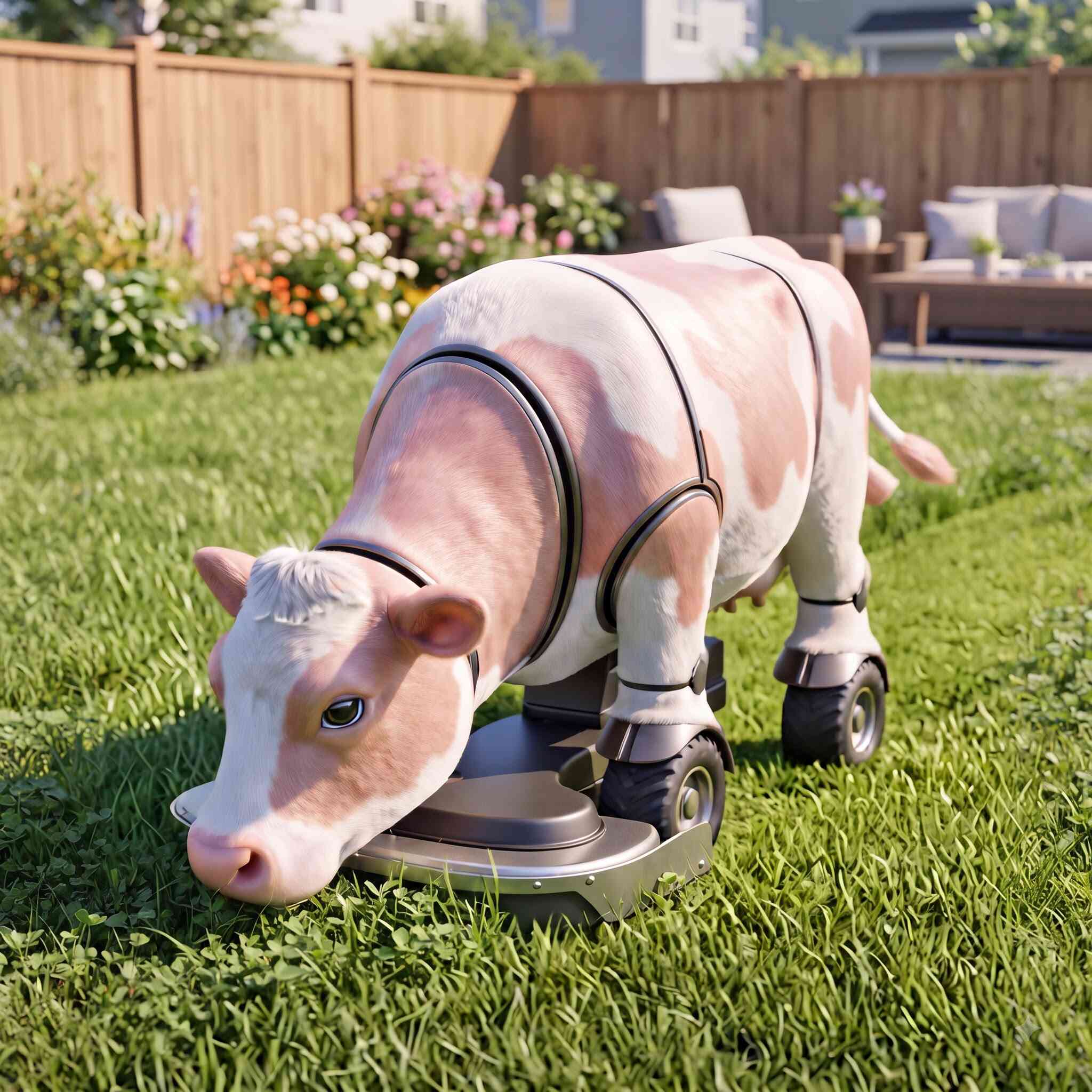
Once gardeners realized how much fun a cow-shaped mower could be, the concept naturally expanded. Now you’ll find robot mowers styled as sheep with fluffy white fleece covers, tiny “goats” with felt horns, and even panda-themed mowers for a more playful twist. Some people lean into a full FARM AESTHETIC, adding miniature fences, a toy barn near the charging dock, or a hand-painted “Pasture Crossing” sign near the lawn’s edge.
This broader animal-mower movement is sometimes called “ROBOT LIVESTOCK” landscaping, and it plays especially well in gardens that already lean toward a rustic or countryside theme. A mower dressed as a cow fits naturally next to wildflower borders, wooden fencing, or a vegetable patch, reinforcing a cohesive outdoor story rather than looking like a random gadget.
Garden designers who have picked up on the trend point out that it works because it treats the mower as a landscape element rather than a hidden tool. Instead of trying to camouflage a robot mower behind bushes, people are putting it front and center, letting it “graze” in open view as part of the yard’s character.
The Emotional Appeal: Why People Genuinely Love This
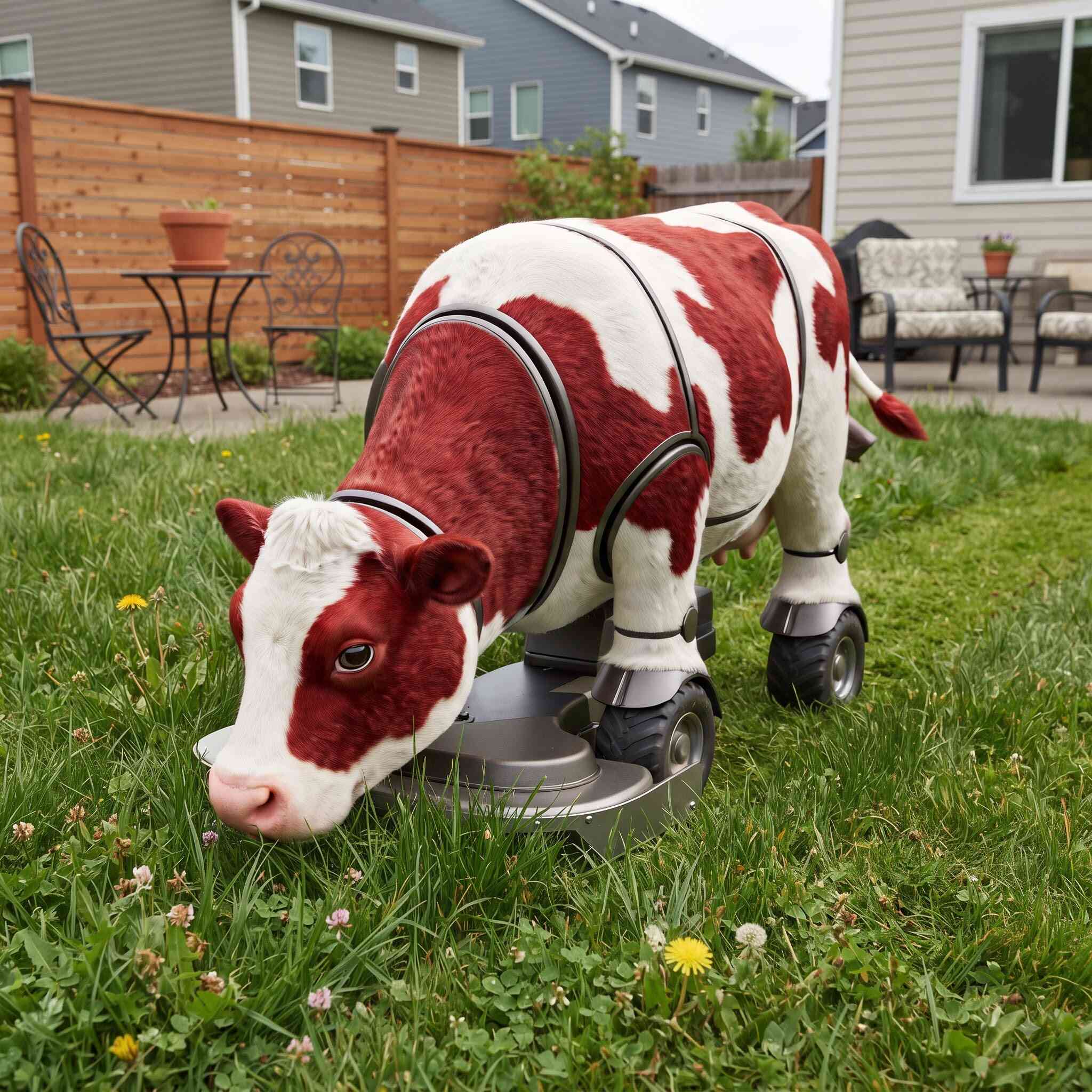
It’s easy to dismiss a cow-costumed mower as a novelty, but there’s something deeper going on. Watching a small robotic creature slowly move across a lawn, pausing here and there, mimics the rhythm of an actual grazing animal. That movement pattern is oddly soothing to watch. Several hobbyists have described sitting on their porch specifically to watch their “cow” do its rounds, the way someone might enjoy watching fish in a pond.
For families with young children, the trend adds an educational and imaginative layer too. Kids who might not care about lawn maintenance suddenly want to help name the mower, decorate its shell, or track its “grazing path” across the yard. It turns a mundane chore into a small, ongoing story that unfolds in the backyard every week.
There’s also a community aspect. Photos and videos of robot cow mowers frequently circulate online, with owners comparing costume designs, swapping printable templates for ears and horns, and troubleshooting how to keep fabric covers from interfering with navigation sensors. What began as a solo tinkering project for a few enthusiasts has become a shared creative hobby with its own inside jokes and seasonal traditions, like adding a Santa hat to the cow costume in December.
Practical Tips If You Want to Try the Look Yourself
For anyone inspired to try this at home, a few guiding principles from the community are worth keeping in mind:
- Prioritize sensors over style. Any costume element should never cover the mower’s bump sensors, rain sensors, or navigation cameras. Function always outranks fashion here.
- Use lightweight, breathable materials. Heavy fabric can trap heat around the motor. Felt, thin foam, and mesh work well.
- Keep it detachable. A costume that clips or straps on, rather than being glued permanently, makes it easy to remove for maintenance or charging.
- Match your garden’s theme. A cow costume looks best when the surrounding landscape supports the idea — think open lawn areas, natural fencing, or a countryside color palette.
- Test the fit slowly. Run the mower with the costume attached in a small supervised area first, to confirm nothing shifts or drags during normal operation.
Conclusion
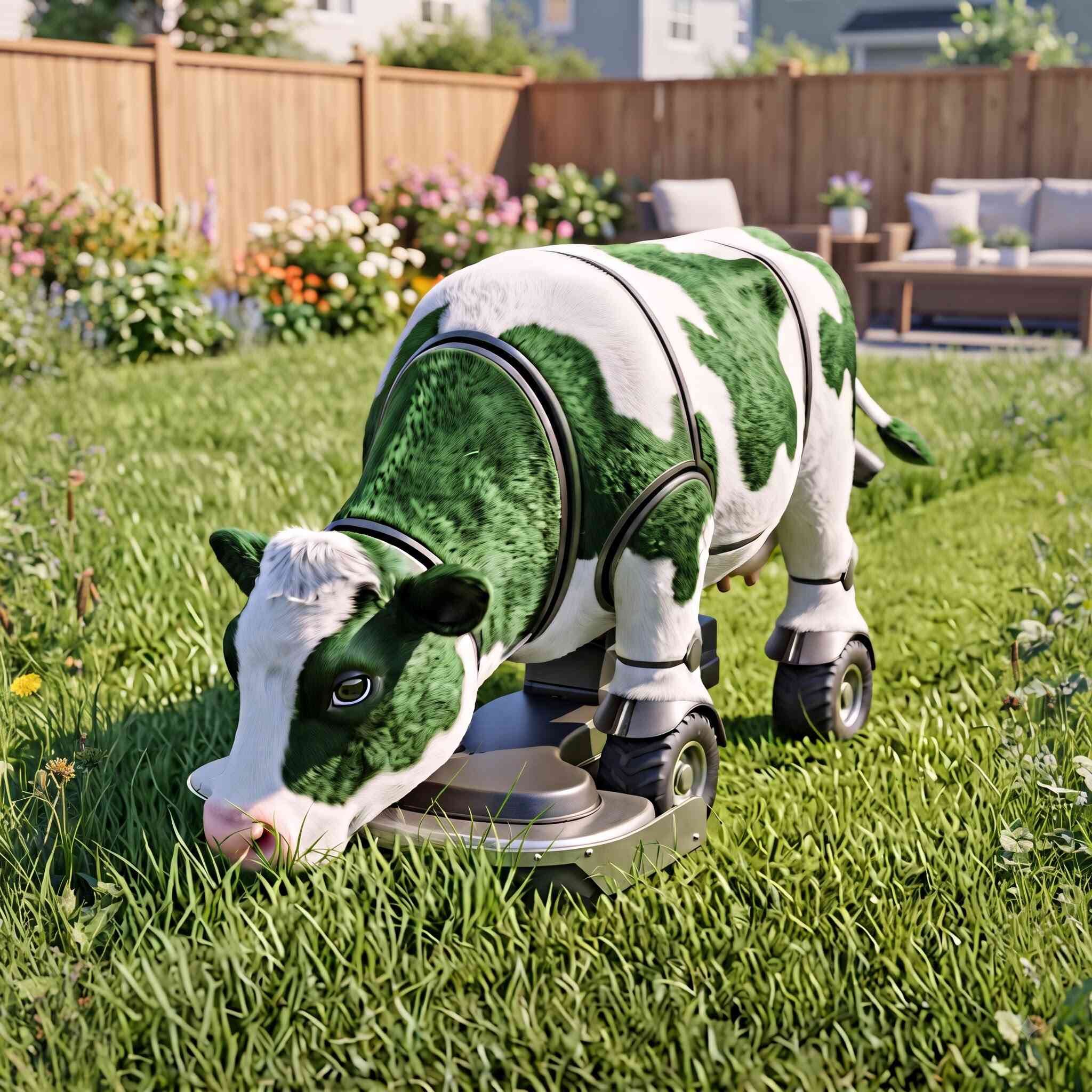
The Robot Cow Lawn Mower trend is a great example of how people take even the most practical household technology and turn it into something joyful and personal. It’s not just about mowing grass efficiently anymore — it’s about storytelling, creativity, and adding a bit of unexpected charm to everyday outdoor spaces. Whether it’s a simple felt costume thrown together on a weekend or an elaborate barnyard-themed garden setup, this trend shows that even robots can have a little personality. As more gardeners experiment with DIY designs and share their ideas online, it’s likely we’ll keep seeing this playful blend of technology and pastoral fantasy grow across modern gardens everywhere.