
There’s a special kind of magic in revisiting the memories of childhood—the cartoons that played on loop, the characters who felt like friends, and the worlds we longed to step into. For me, that world was always the mischievous, blue-furred alien from a distant galaxy: Stitch. From the moment I first watched Lilo & Stitch, I was captivated—not just by his chaotic energy, but by the emotional depth beneath his playful exterior. He wasn’t just a character; he was a symbol of belonging, of finding family in the most unexpected places.
As I grew older, the nostalgia for that film never faded. Instead, it deepened into something more intentional—a desire to create a space that didn’t just remind me of Stitch, but fully embraced the spirit of his world. I wanted to design a room that felt like a portal: a sanctuary where imagination could flourish, comfort could reign, and every detail whispered, “You are home.”
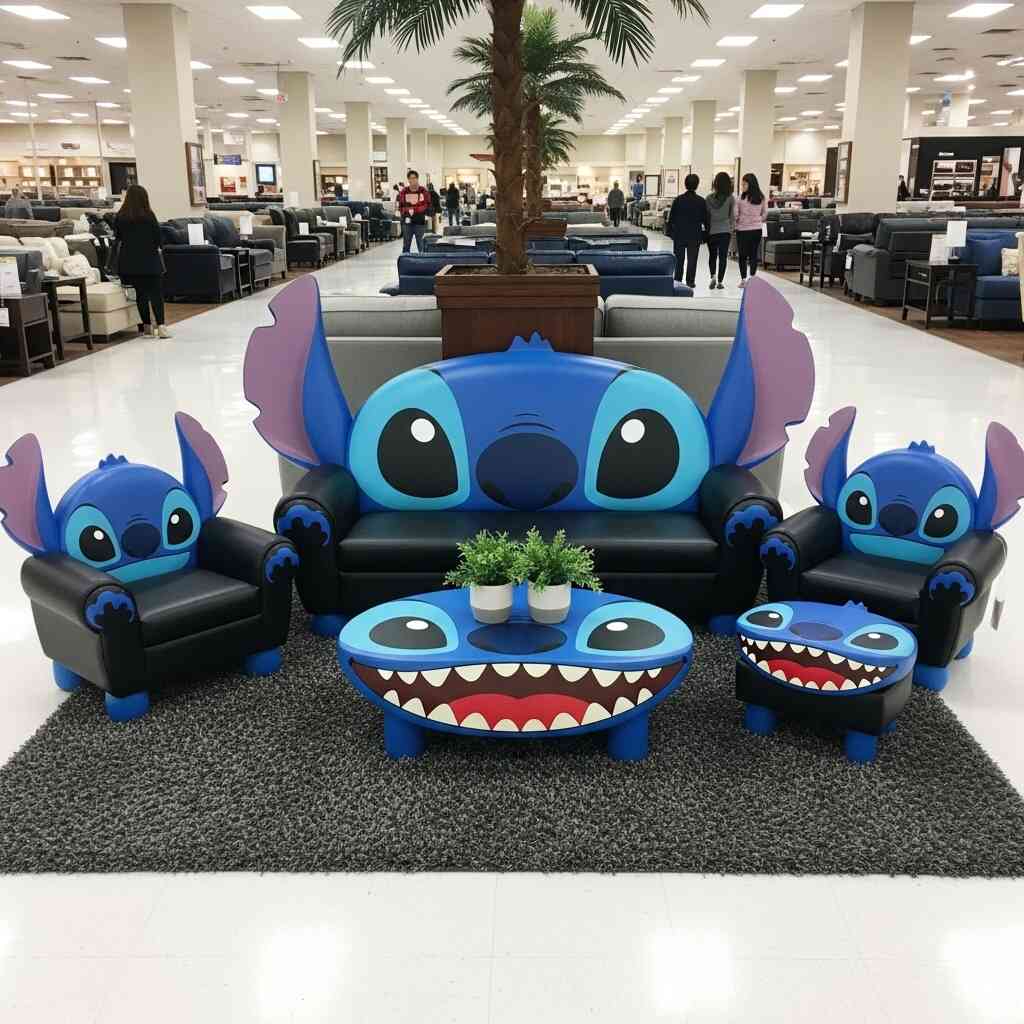
This journey wasn’t about decoration for decoration’s sake. It was about emotional resonance, about building a personal haven where the whimsy of childhood could coexist with the calm of adulthood. And at the heart of this transformation? A carefully curated Stitch-themed furniture set—not as a centerpiece of consumerism, but as a foundation for storytelling, memory, and self-expression.
In this article, I’ll walk you through the layers of this creative evolution: how I envisioned the space, selected meaningful elements (especially the furniture), and ultimately crafted a room that feels less like a bedroom and more like a dream I can step into each day.
Part 1: The Vision – From Nostalgia to Narrative
Before any paint was chosen or any fabric cut, I began with a vision. Not just “I want a Stitch room,” but “What does a Stitch room mean?” To answer that, I returned to the essence of the story.
Lilo & Stitch isn’t just a sci-fi comedy—it’s a tale of healing, of finding identity, and of creating family. The Hawaiian setting, with its lush greenery, turquoise waters, and laid-back spirit, is as much a character as Stitch himself. So, my room wouldn’t just be blue and feature plush toys. It would need to evoke that same sense of warmth, adventure, and gentle chaos.
I began by collecting visual inspiration: screenshots from the film, concept art, photos of Hawaiian landscapes, and even vintage tiki motifs. I noticed recurring themes—tropical patterns, soft lighting, natural textures, and a balance between playful and serene. This became my aesthetic compass.
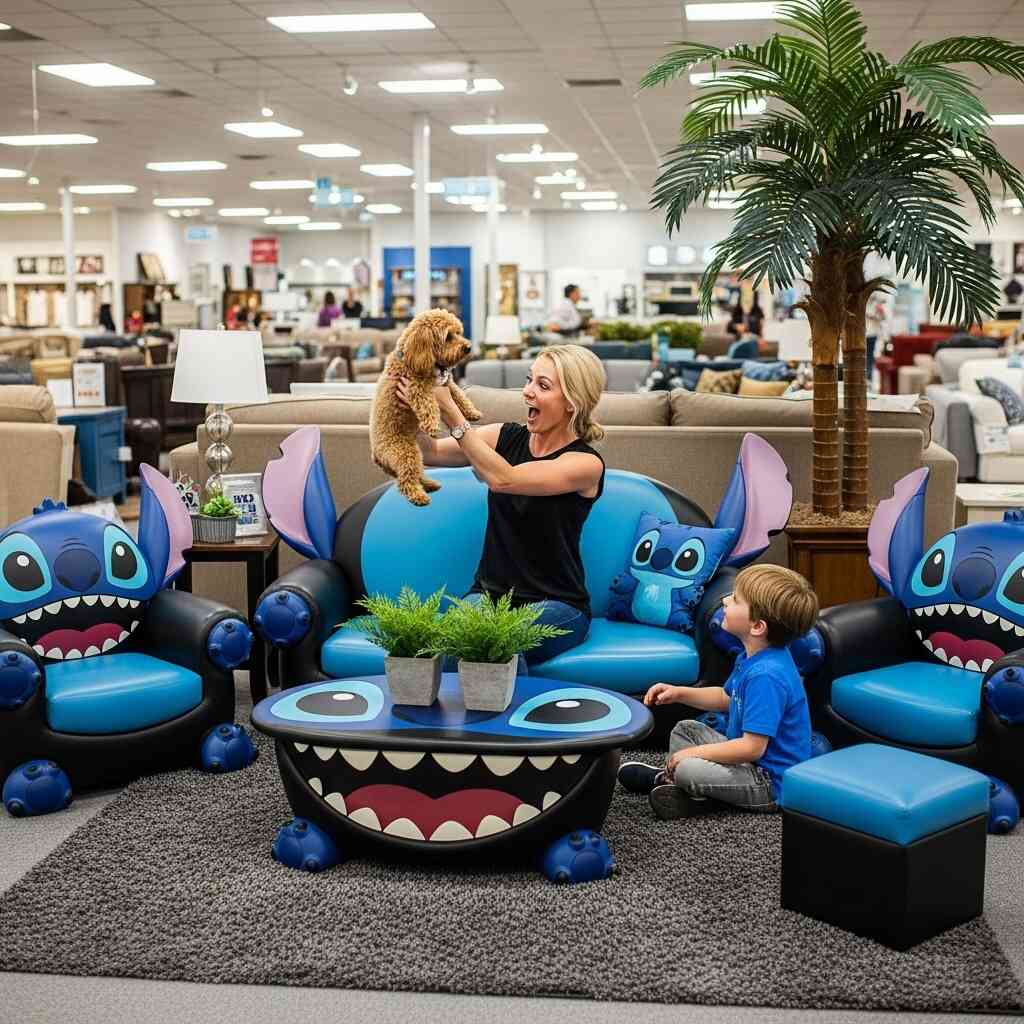
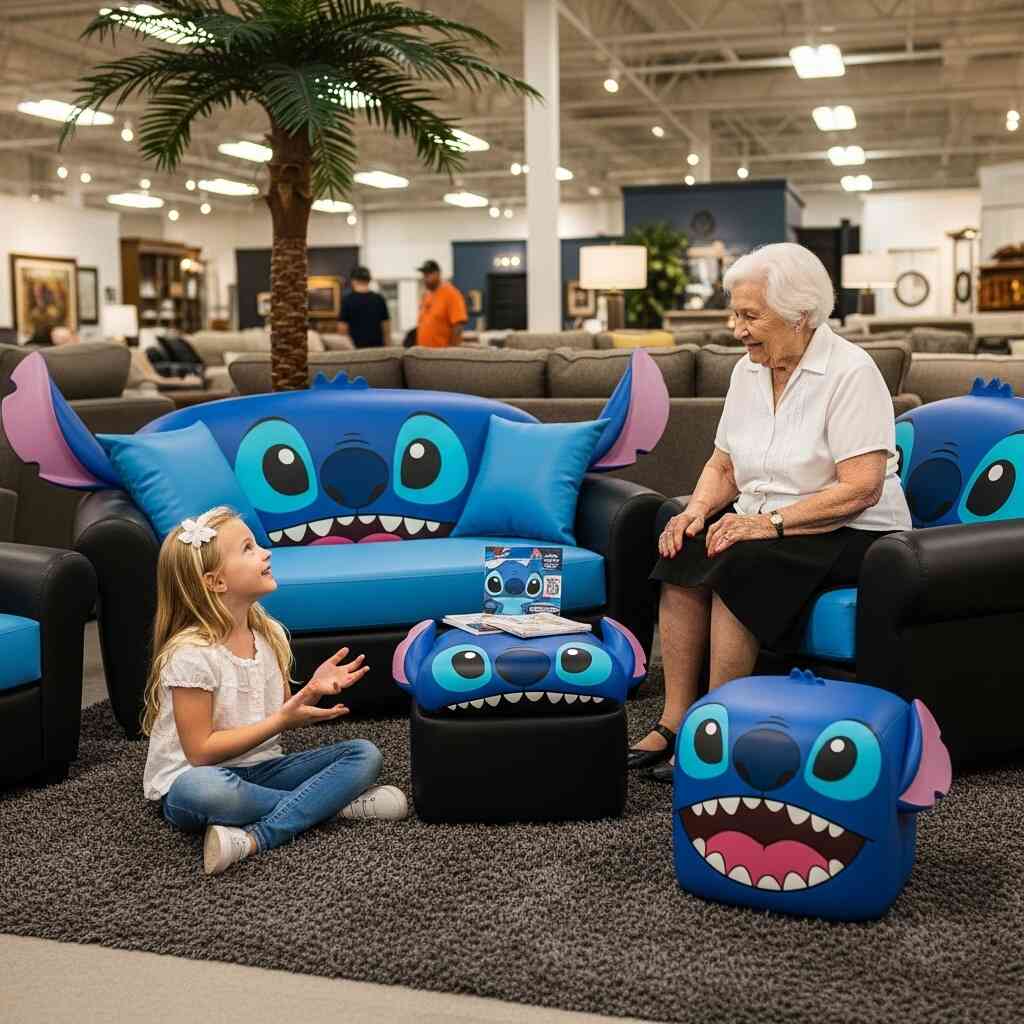
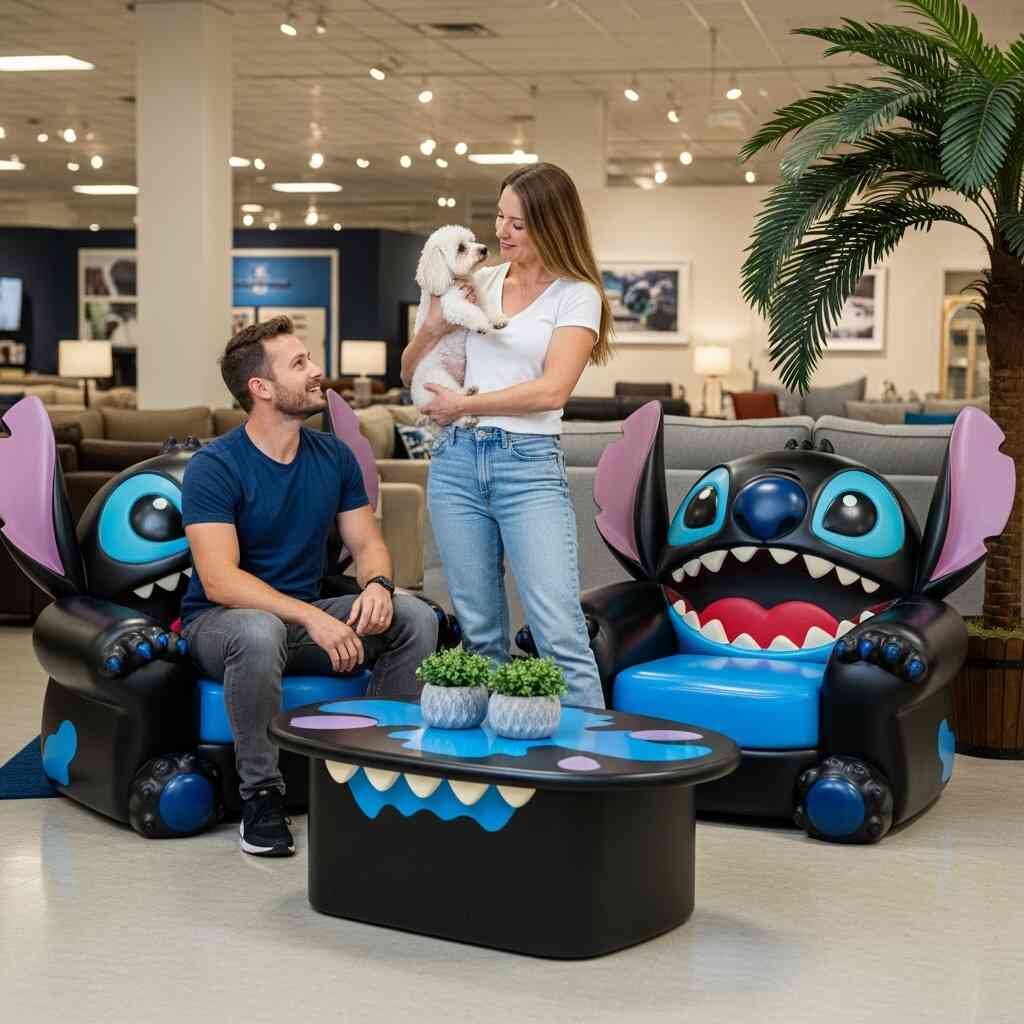
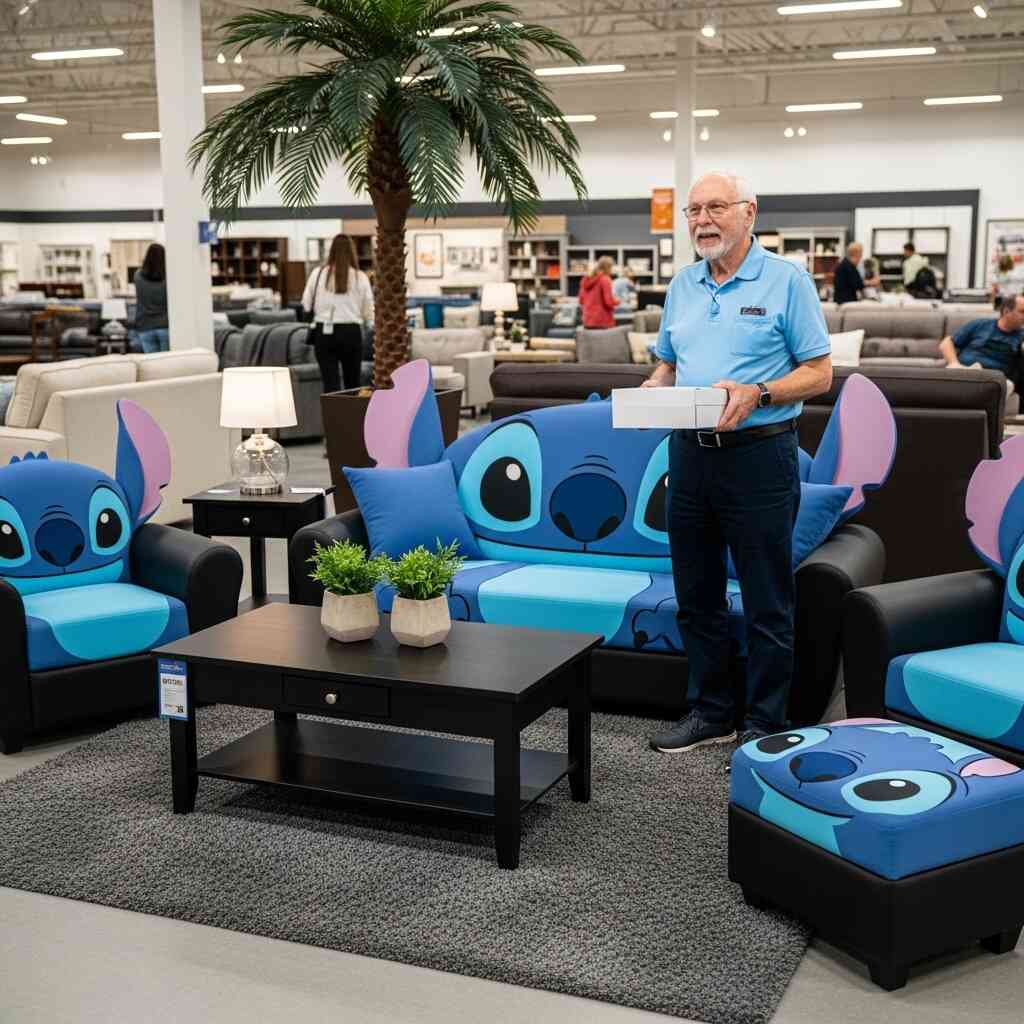
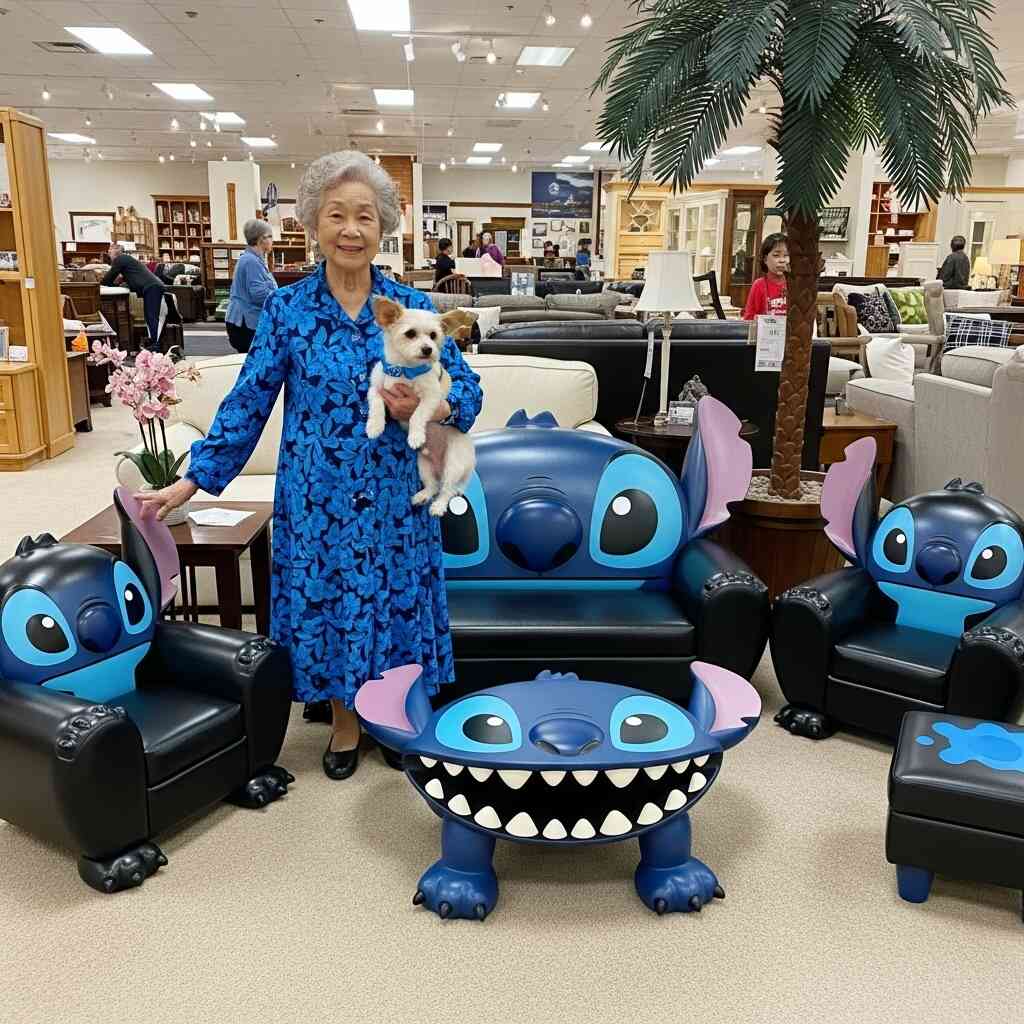
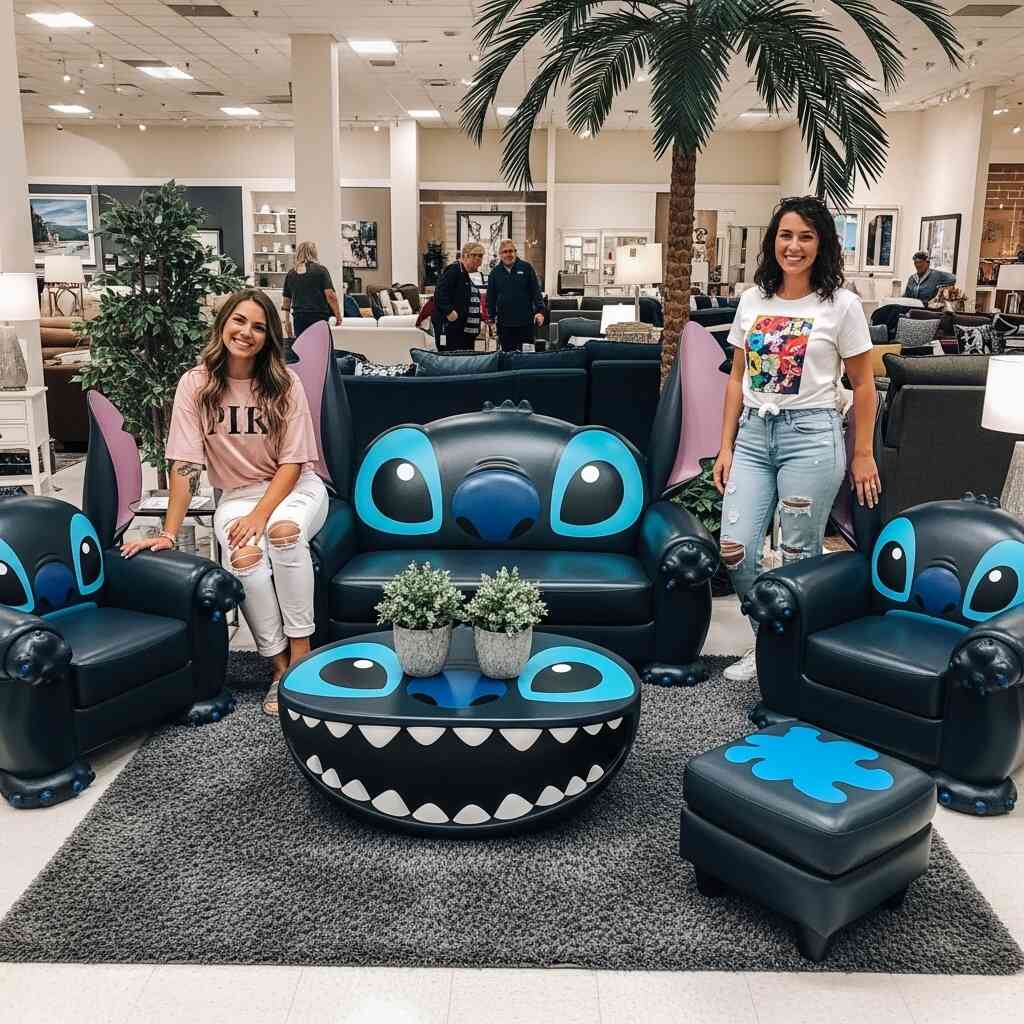
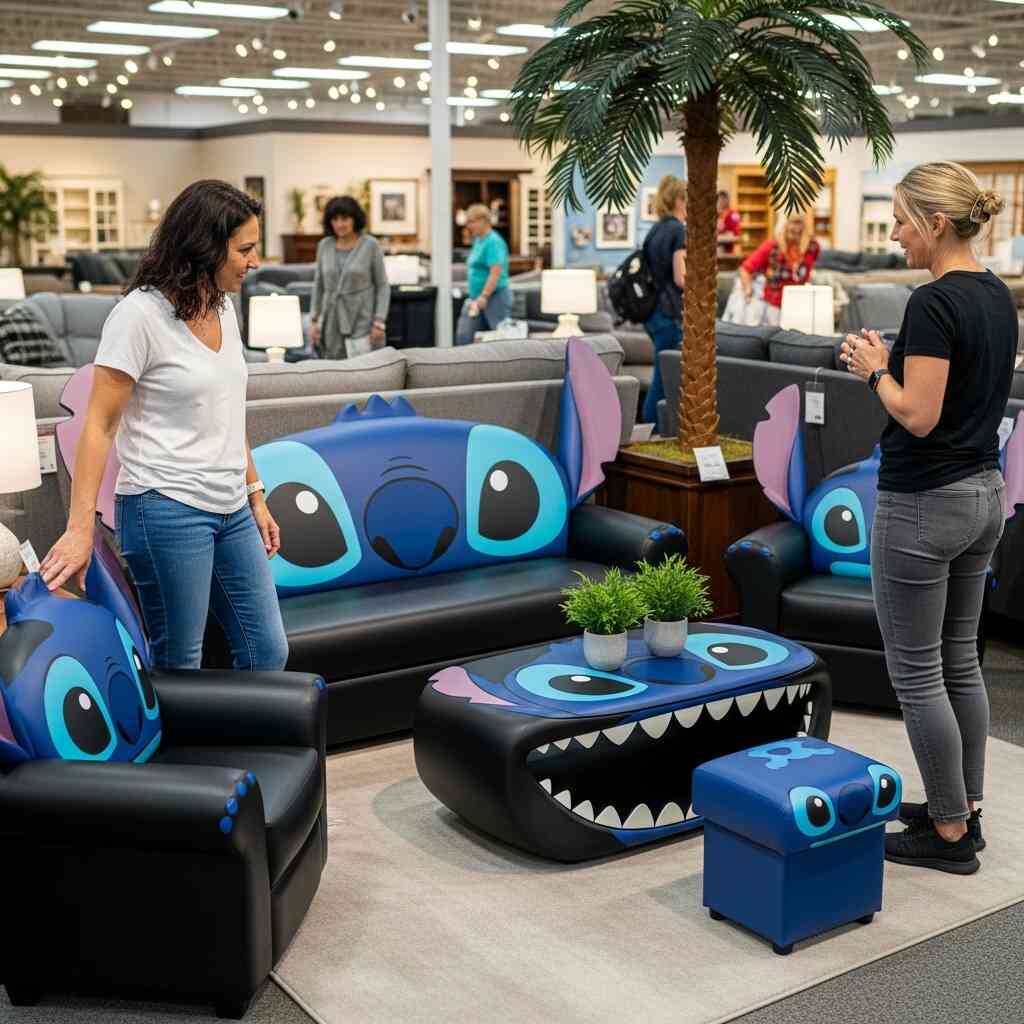
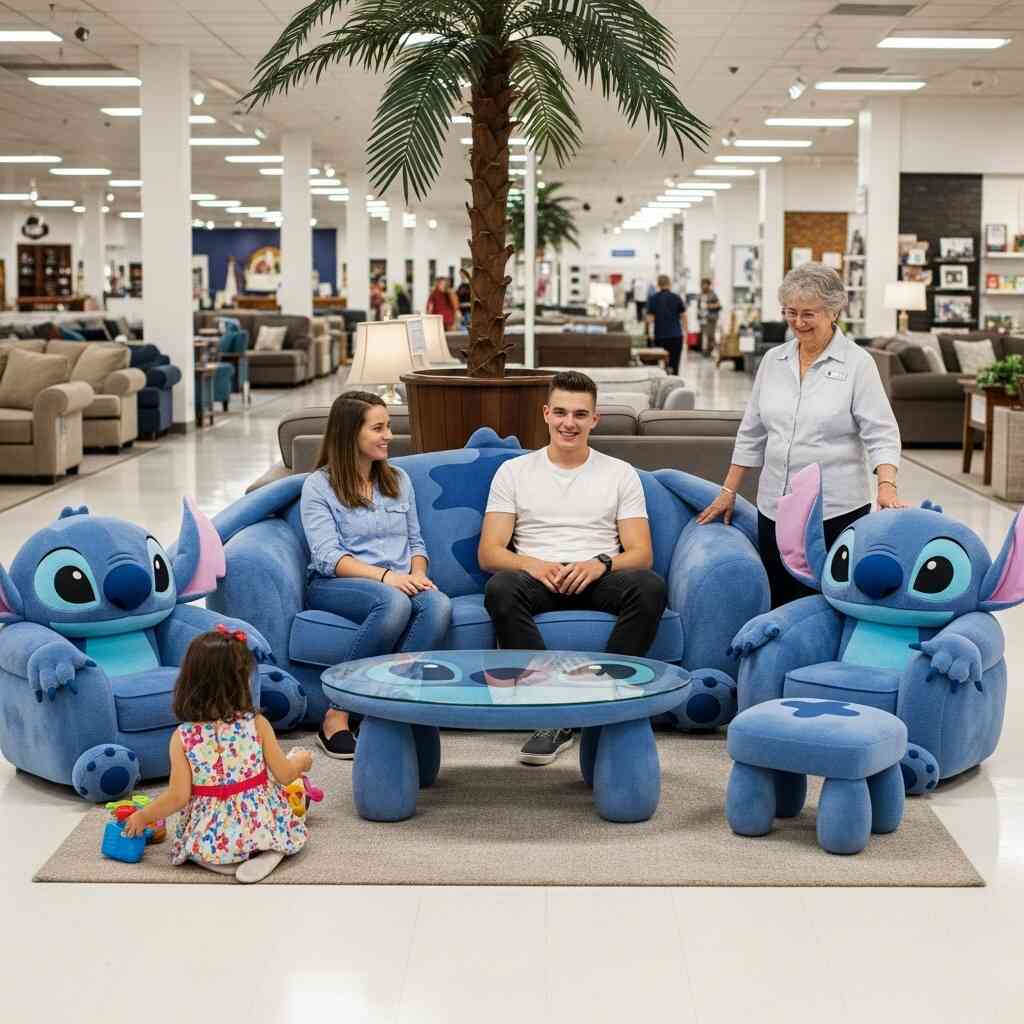
The Stitch-themed furniture set emerged as the anchor of this vision. Rather than choosing pieces that merely displayed Stitch’s image, I looked for designs that reflected his personality and environment. I imagined furniture that felt like it belonged on Kauai—crafted with care, infused with whimsy, and built to invite connection.
For example, the bed frame wasn’t just a platform for sleep; it became a “spaceship crash site,” with angular lines and subtle alien-inspired detailing. The nightstands echoed the shape of Hawaiian huts, with curved wood and soft blue inlays that mirrored Stitch’s fur. Even the wardrobe had a playful twist—its doors featured etched constellations, a nod to Stitch’s origins among the stars.
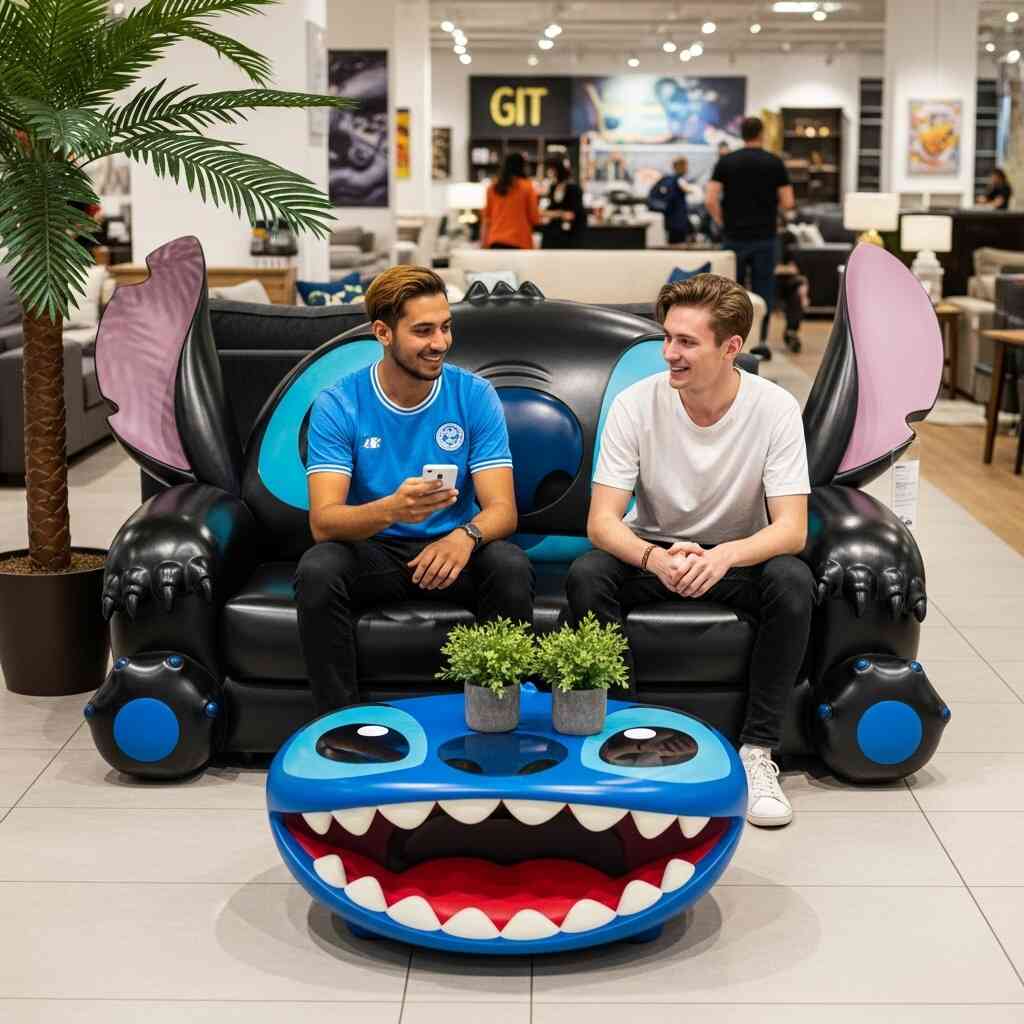
Each piece was selected not for its label or brand, but for how it contributed to the narrative. The furniture wasn’t just functional—it was storytelling. It whispered, “You’re not just in a room. You’re in a world.”
This intentionality extended beyond appearance. I considered how each item would feel to use. The bed needed to be cozy enough for late-night movie marathons. The reading chair had to cradle me like a hug after a long day. The desk should inspire creativity, as if Stitch himself might leap onto it to scribble wild inventions.
In this way, the Stitch-themed furniture set became more than a collection of objects. It became the architecture of a dream—a framework upon which memories could be built and emotions could be soothed.
Part 2: Designing the Details – Where Emotion Meets Environment
Once the foundation was set, I turned to the layers that would bring the room to life. This is where the transformation shifted from concept to lived experience. Every pillow, light fixture, and wall treatment was chosen with purpose, each contributing to the overarching theme of sanctuary.
Color Palette: The Language of Mood
The first step was defining the color palette. I avoided a cartoonish overload of bright blue and instead opted for a gradient of oceanic tones—deep navy, soft aqua, seafoam green, and sandy beige. These colors didn’t just reflect Stitch’s fur; they mirrored the Hawaiian coastline, grounding the room in a real, tactile place.
Accent walls were painted in a matte blue that shifts with the light, like water under a setting sun. The ceiling? A soft white with tiny glow-in-the-dark stars painted in constellations that Stitch might recognize from his galactic travels. At night, when the lights dim, the room becomes a quiet galaxy—calm, infinite, and full of wonder.
Textures and Materials: Comfort as a Philosophy
I wanted the room to feel lived in, not like a museum display. So I layered textures thoughtfully. Linen curtains flutter in the breeze, evoking island winds. A handwoven rug in tribal patterns adds warmth underfoot, while cotton throws in mismatched prints invite curling up with a book.
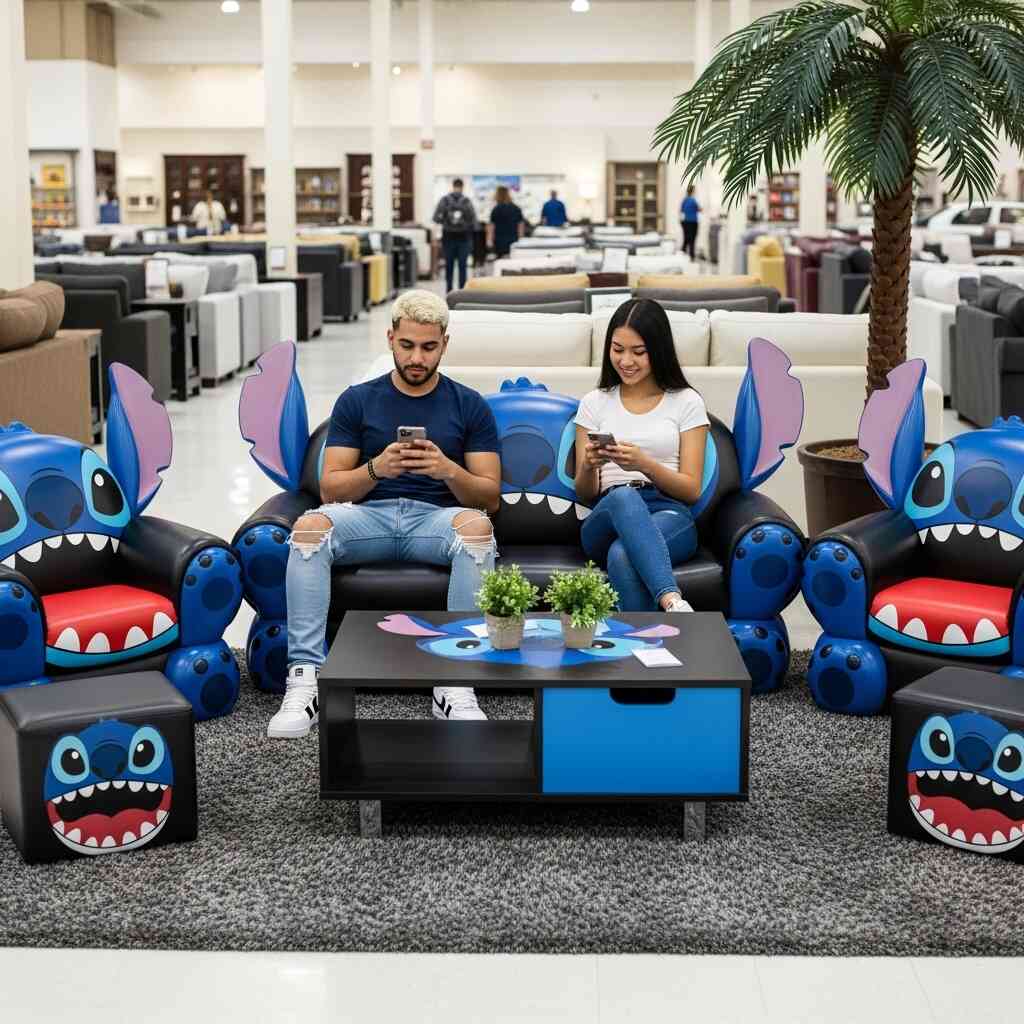
The Stitch-themed furniture set was designed with this tactile philosophy in mind. The bed frame, though angular in shape, has rounded edges and a soft-touch finish. Cushions on the reading nook feature embroidered patches of Stitch’s face, but the fabric is brushed microfiber—cozy, not costume-like.
Even the wood used in the furniture carries meaning. I chose reclaimed teak for its durability and natural grain, a nod to the resilience of both nature and spirit—much like Stitch’s journey from experiment to ohana.
Lighting: Crafting Atmosphere
Lighting transformed the room from daytime retreat to nighttime dreamland. I avoided harsh overhead lights in favor of layered illumination: a lava lamp shaped like a tiki idol, string lights draped like vines across the headboard, and a table lamp with a shade printed with Stitch’s paw prints.
At dusk, the room glows with a warm, underwater ambiance. The lighting doesn’t just illuminate—it transforms. It signals that this is a space for slowing down, for dreaming, for stepping outside the rush of daily life.
Wall Art and Personal Touches: Memory as Decoration
The walls became a gallery of personal meaning. Instead of mass-produced posters, I created custom artwork: watercolor paintings of Stitch and Lilo on the beach, framed pages from my childhood sketchbook, and a large canvas print of a galaxy with the words “Ohana means family” written in Hawaiian script.
Shelves display handmade items—a ceramic mug shaped like a spaceship, a driftwood sculpture of Stitch’s ear, a journal covered in tropical fabric. These aren’t just decorations; they’re artifacts of a life lived with intention.
One corner of the room is dedicated to a small altar-like space: a wooden box filled with seashells, a photo of my family, and a tiny Stitch plush that’s been with me since I was ten. This spot isn’t about the character—it’s about what he represents: love, loyalty, and the beauty of being different.
Scent and Sound: The Invisible Layers
The final touches were sensory. I introduced a diffuser with a custom blend of coconut, plumeria, and sea salt—scents that instantly transport me to a Hawaiian shore. The aroma drifts through the room, subtle but constant, like a memory just out of reach.
For sound, I created a playlist of gentle ukulele covers of Disney songs, mixed with ocean waves and soft rain. When I lie in bed, the room doesn’t just look like a dream—it sounds and smells like one.
These elements, though intangible, are vital. They complete the illusion. They make the sanctuary feel alive.
Part 3: The Sanctuary – Where Dreams Take Root
Now, when I step into my room, it’s not just a physical transition—it’s emotional. The door closes, and the outside world fades. The Stitch-themed furniture set—once just an idea—now serves as the quiet backbone of a space where I can be fully myself.
This room is where I journal, where I cry, where I laugh at old memes, where I read poetry under the string lights. It’s where I host friends who gasp, “It’s like we’re in the movie!” and where I sit alone, feeling the weight of the day melt away.
But more than that, it’s a reminder of who I am and where I’ve come from.
Stitch was an outcast. He was made to destroy, but he chose to love. He found belonging not through perfection, but through connection. In many ways, this room is my declaration of self-acceptance. It’s okay to be chaotic. It’s okay to be soft. It’s okay to love something deeply, even if others don’t understand.
The furniture, the colors, the textures—they’re not just aesthetic choices. They’re affirmations. The bed is where I rest after emotional storms. The desk is where I create, even when I doubt myself. The reading nook is where I heal.
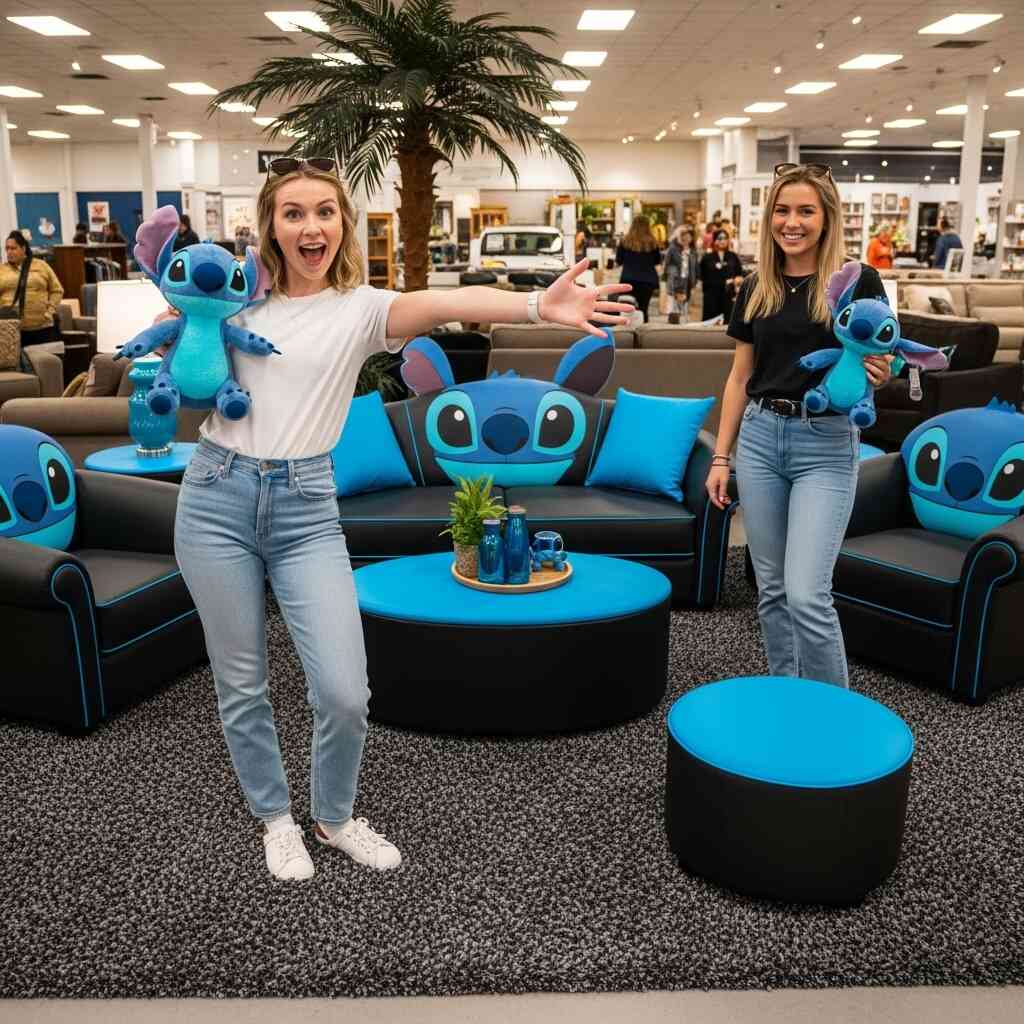
And when I look at the Stitch-themed furniture set, I don’t see merchandise. I see resilience. I see imagination. I see a little blue alien who taught me that family isn’t about blood—it’s about showing up.
This room has become a living metaphor. It’s proof that we can build spaces that reflect our inner worlds. That we can honor our pasts while designing futures filled with comfort and joy.
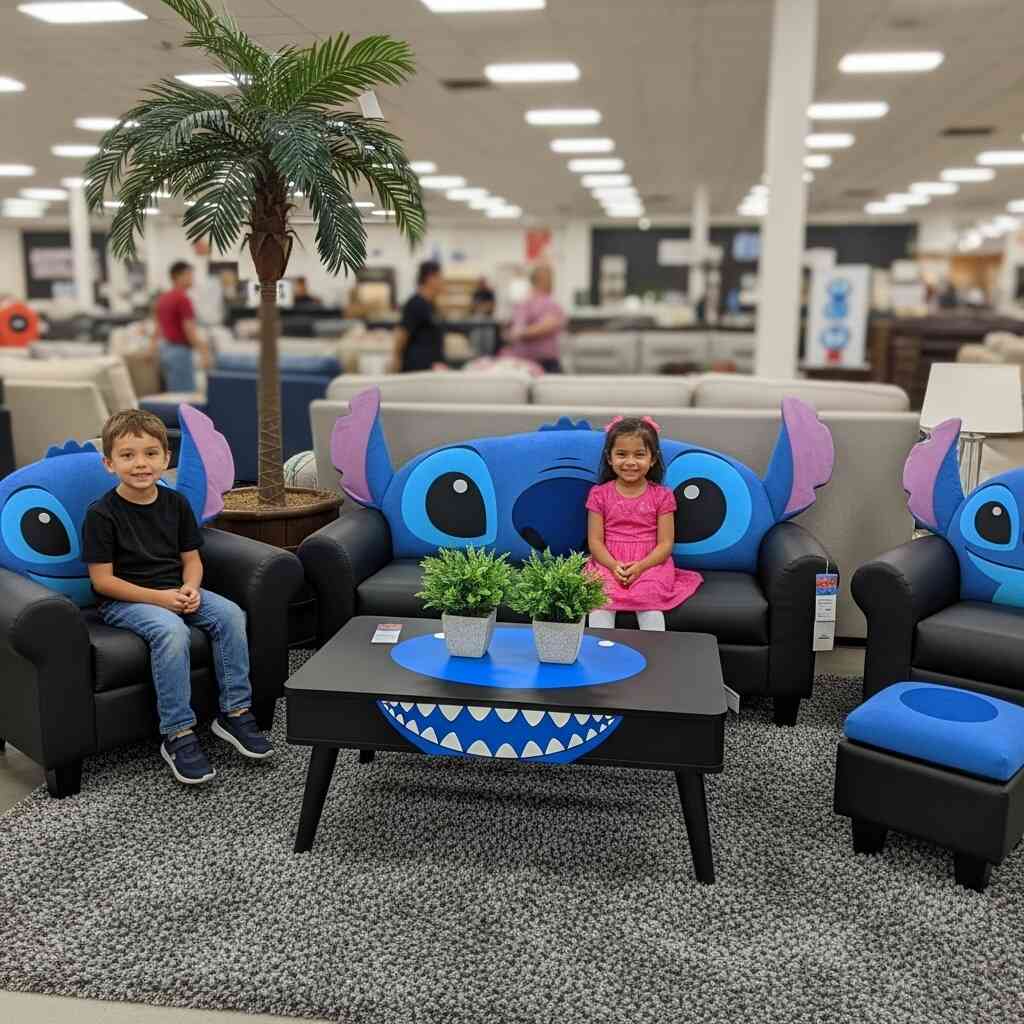
Conclusion: Stepping Into the Dream, One Room at a Time
Transforming my room into a Stitch-themed sanctuary wasn’t about recreating a movie set. It was about creating a home for my heart.
The journey taught me that design is deeply personal. It’s not about trends or aesthetics alone—it’s about meaning. Every choice, from the curve of a nightstand to the scent in the air, can carry intention. And when those choices align with our inner truth, they create more than a room—they create a refuge.
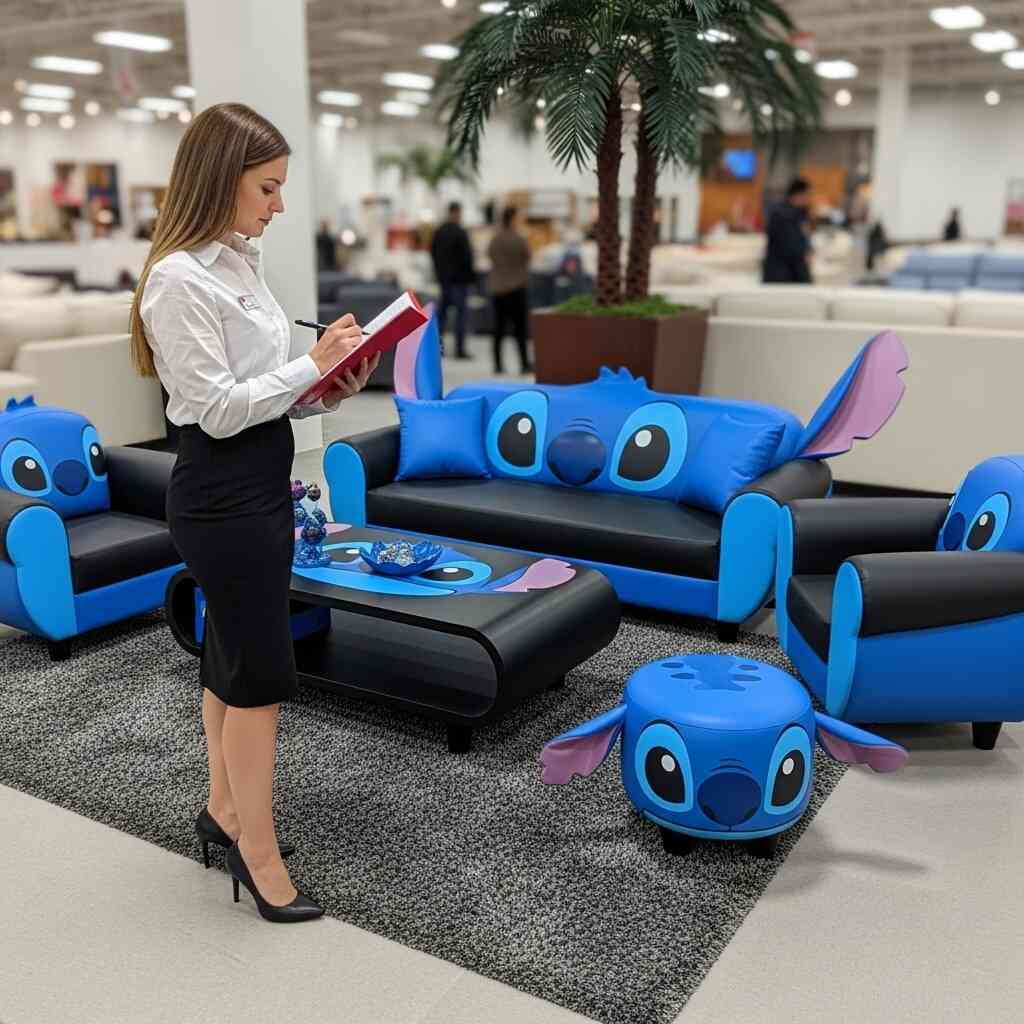
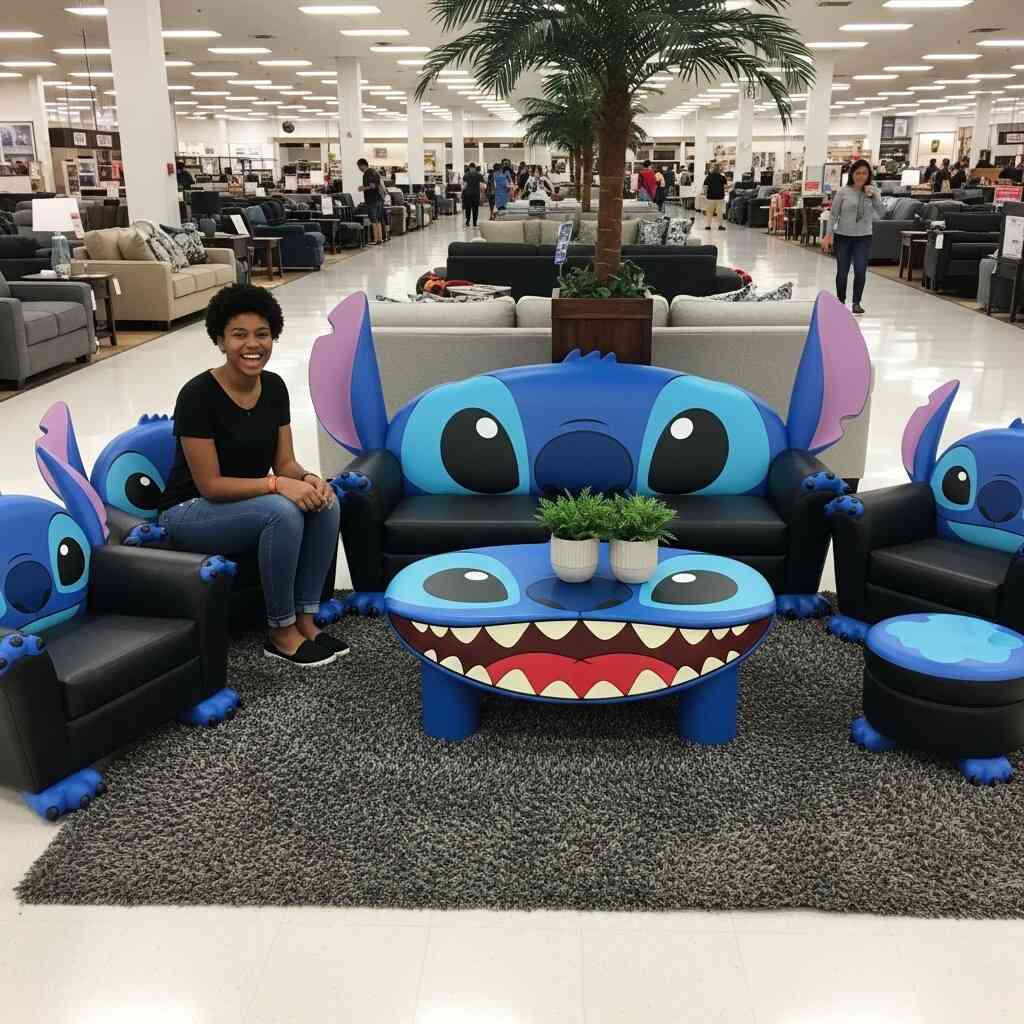
The Stitch-themed furniture set was the starting point, but it was never the destination. It was a vessel—a way to ground a dream in reality. It allowed me to step into a world where chaos and calm coexist, where childhood wonder meets adult wisdom, and where every object tells a story.
If there’s one lesson I’ve learned, it’s this: we all deserve a sanctuary. A place where we can breathe, remember, and dream. It doesn’t have to be themed around a cartoon character. It could be inspired by a forest, a city, a book, or a memory. What matters is that it feels like you.
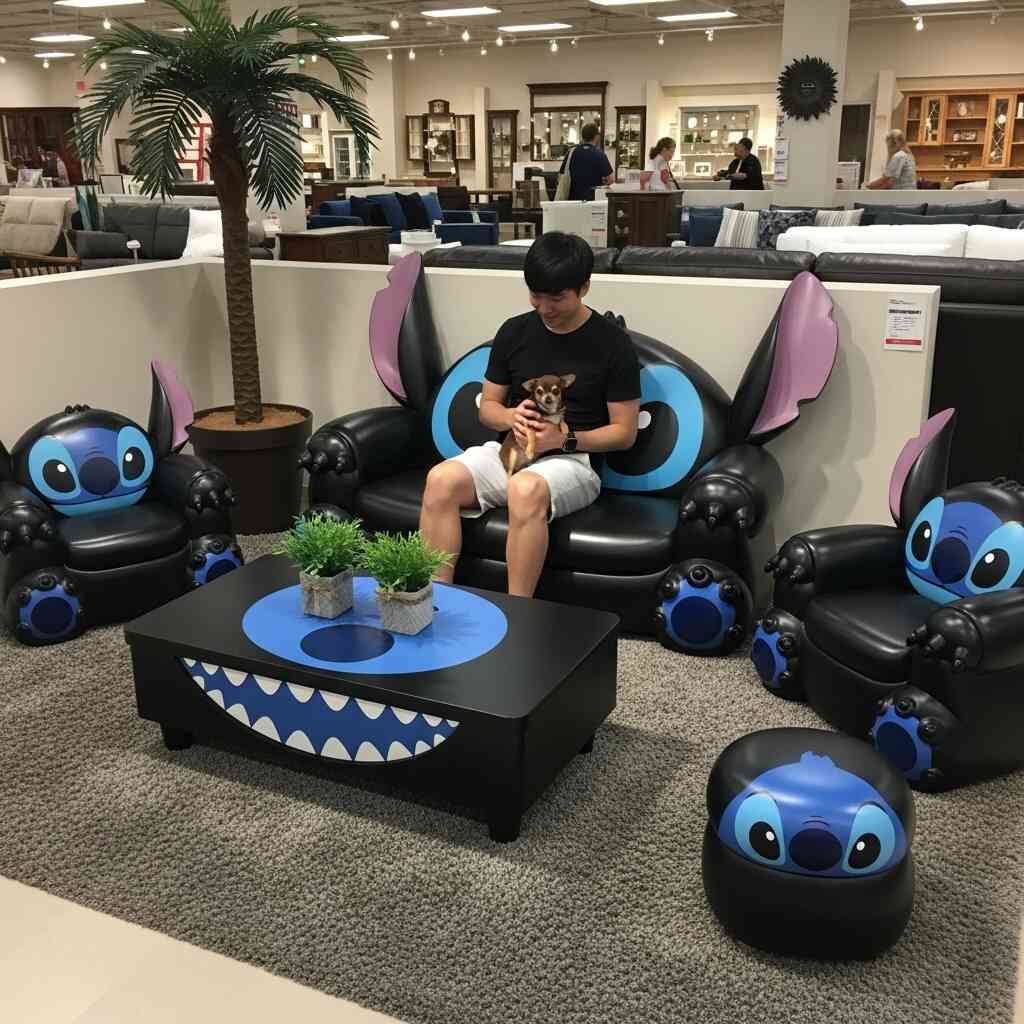
So, I encourage you: look around your space. What does it say about you? What dreams are waiting to be built into the walls, the furniture, the light?
Because a room is never just a room. It’s a possibility. It’s a promise. It’s a place where, if you’re brave enough to imagine it, you can step into a dream—and live there, every single day.