
Fashion has always been a mirror reflecting the evolving identity of culture, art, and imagination. From the structured elegance of Victorian corsets to the rebellious edge of punk leather jackets, clothing and accessories have served not only as tools of utility but as canvases for storytelling, symbolism, and self-expression. Among the most intimate and expressive elements of personal style is footwear. Shoes, more than any other garment, carry the weight of both the body and the narrative—literally and metaphorically. They ground us, yet they also elevate, transform, and transport. It is within this dynamic realm of footwear that a truly whimsical and boundary-pushing innovation has emerged: frog shaped heels.
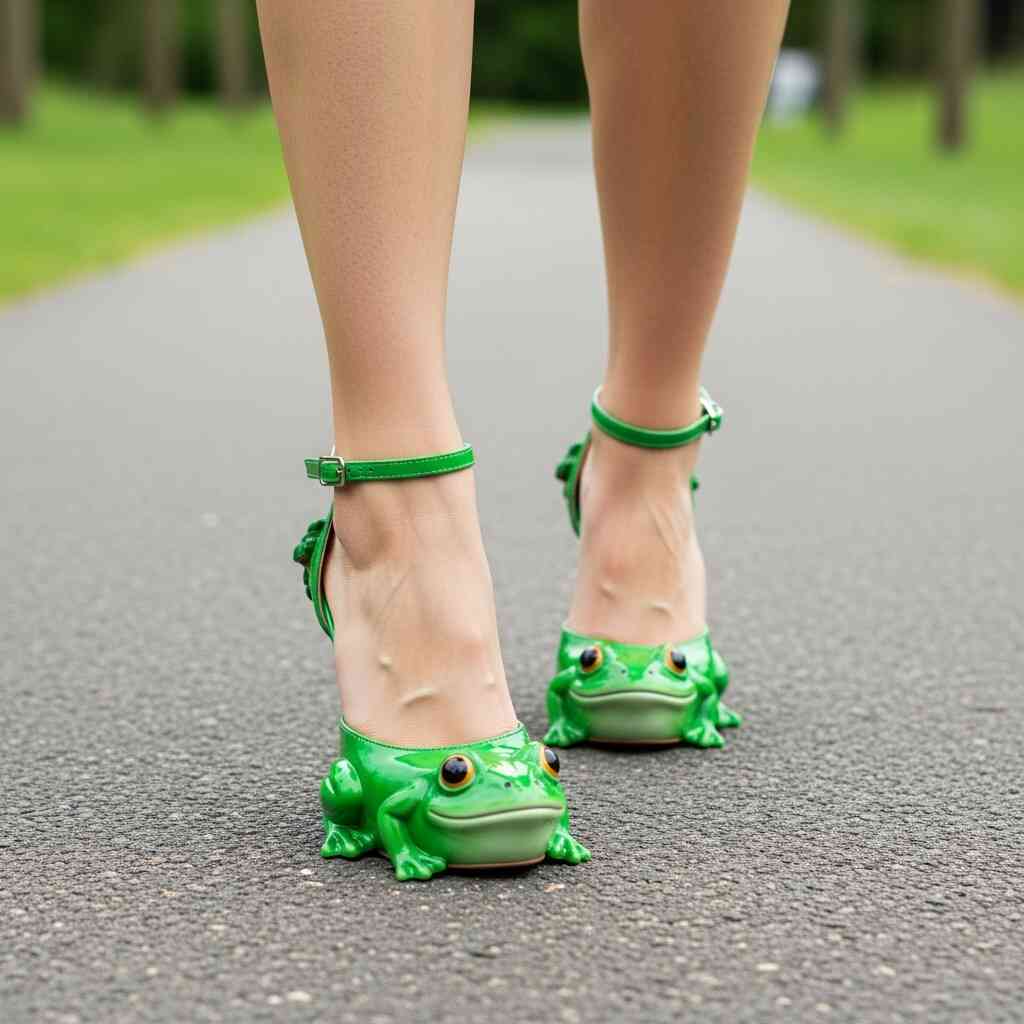
At first glance, the phrase “frog heels” may evoke a sense of surreal absurdity. How can a shoe’s heel resemble a frog? What purpose could such a design possibly serve? Yet, in the world of avant-garde fashion, purpose often takes a backseat to provocation, poetry, and possibility. Frog shaped heels are not about practicality or mass appeal—they are about imagination in motion. They represent a moment in design where the boundaries between biology, mythology, and aesthetics blur, allowing footwear to leap beyond conventional form into the realm of fantasy.
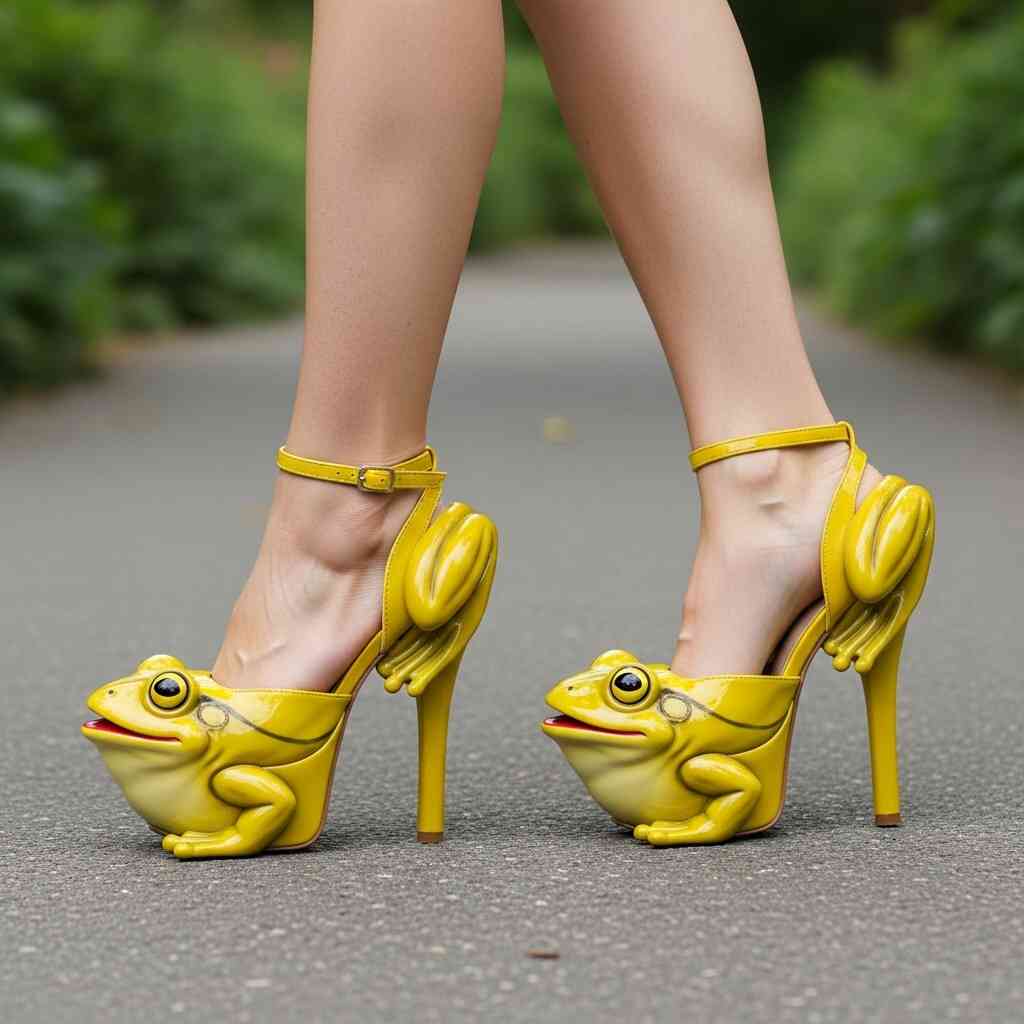
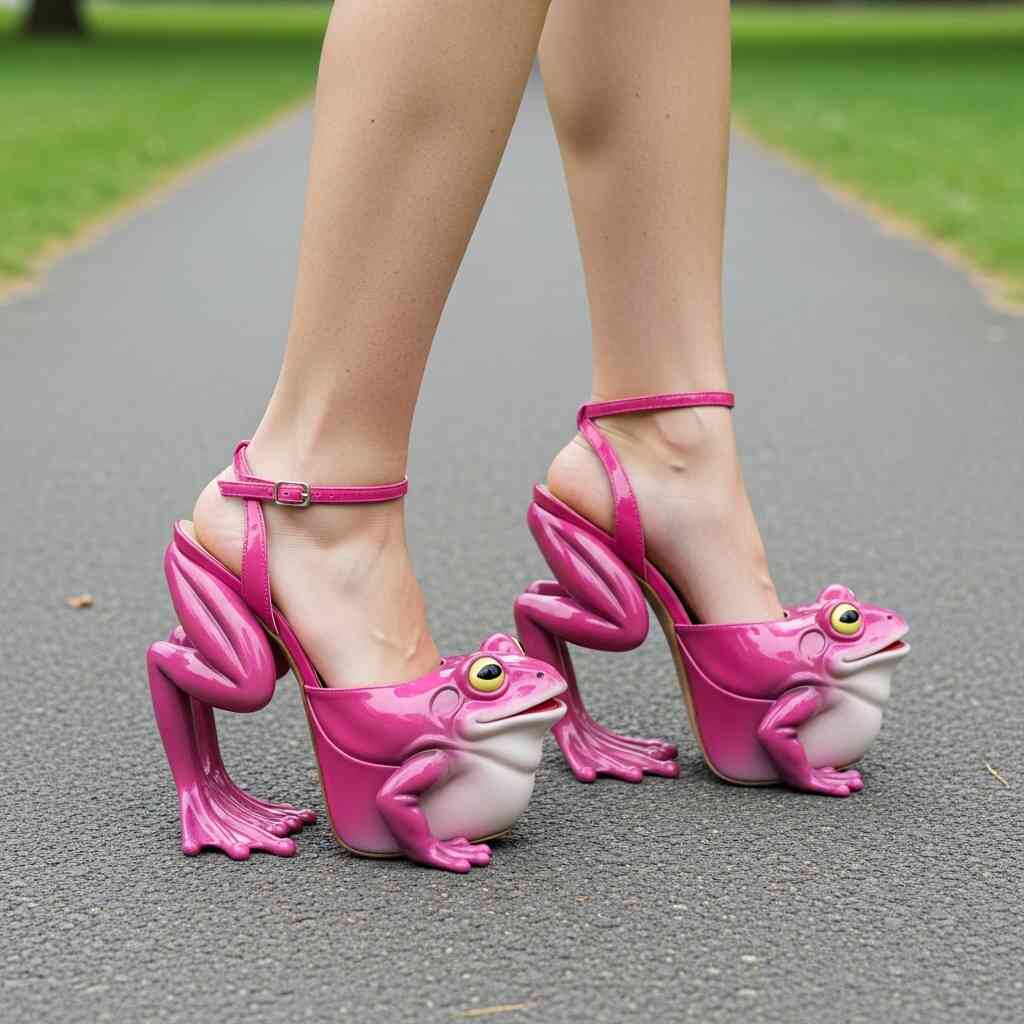
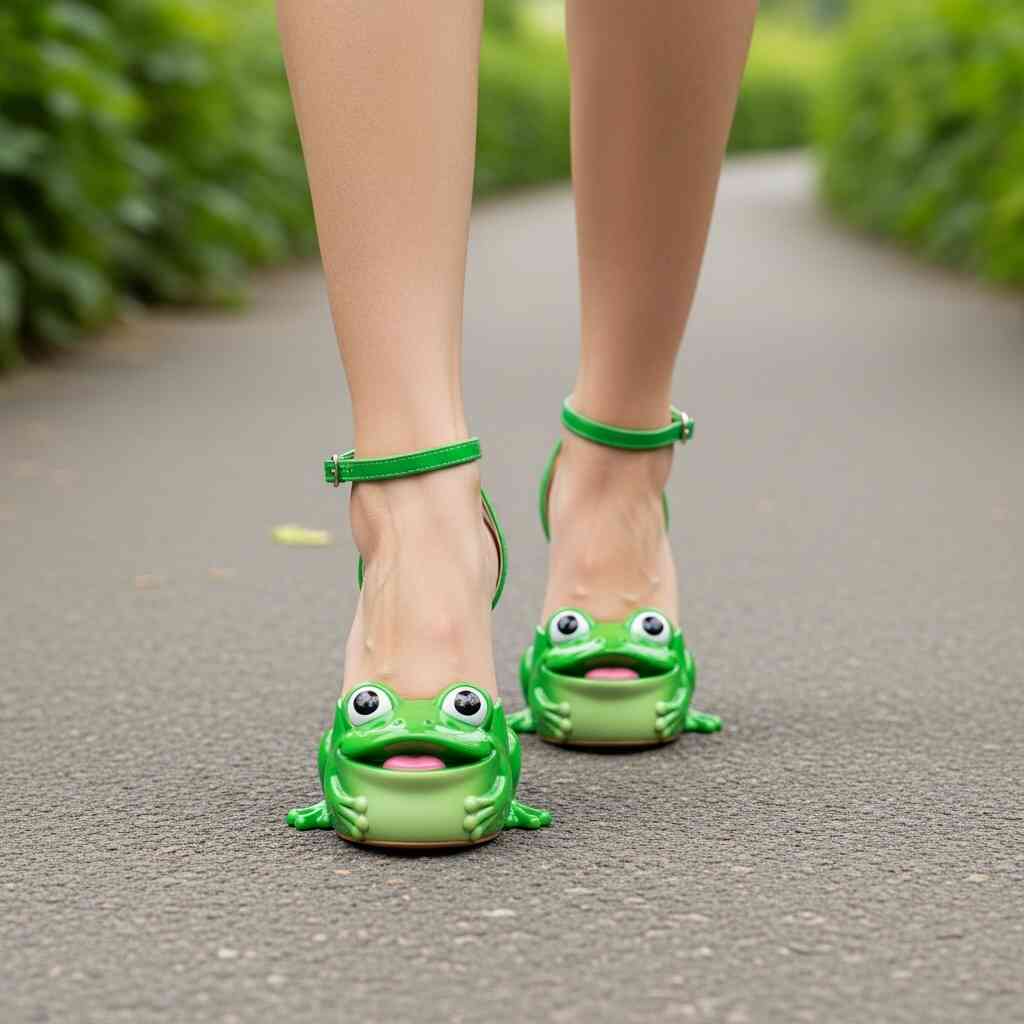
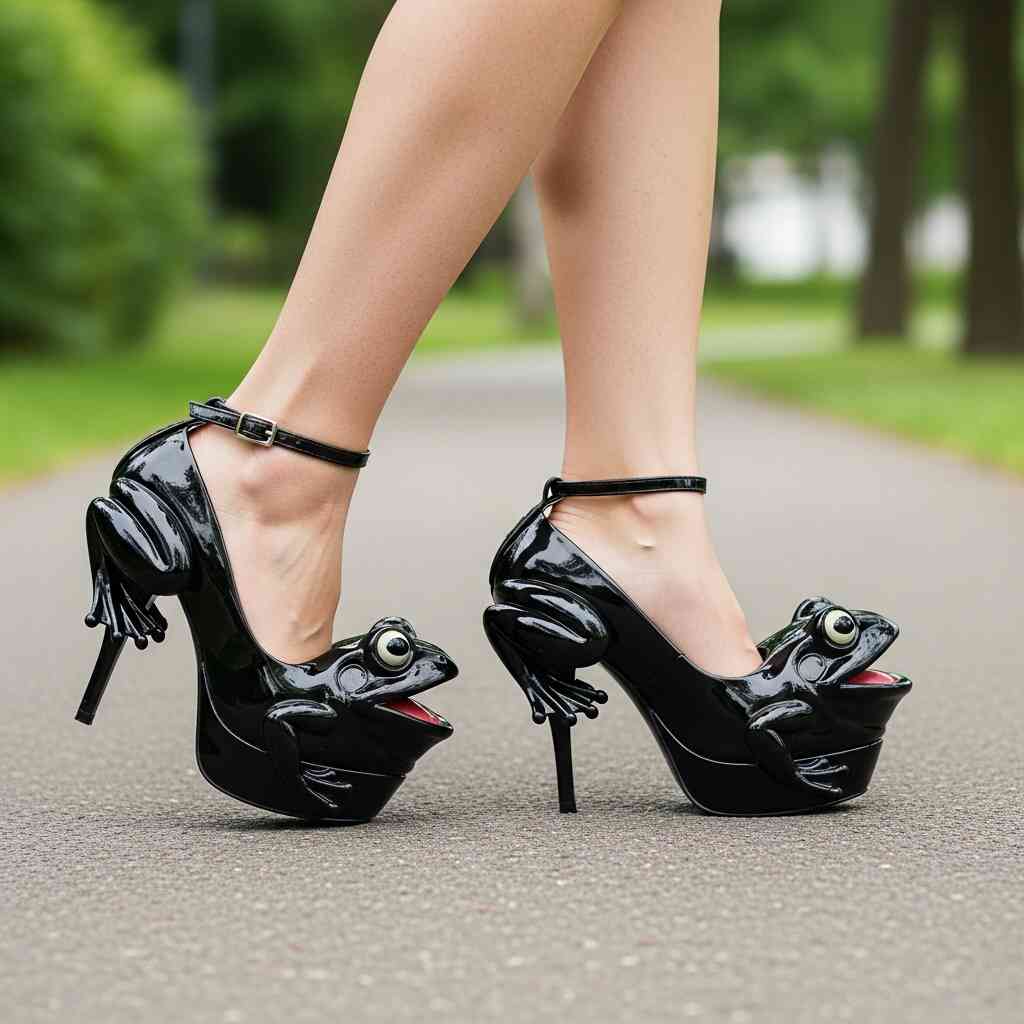
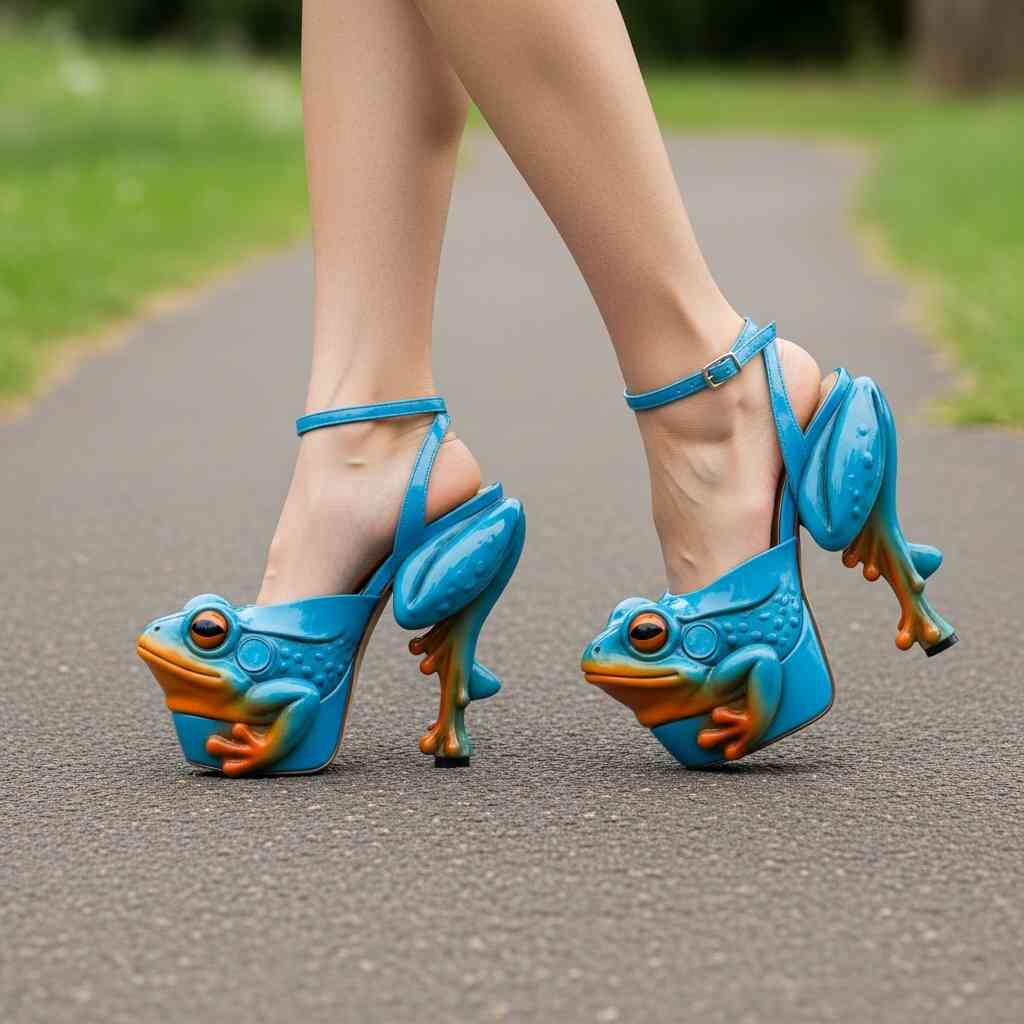
These sculptural heels, meticulously shaped to echo the silhouette of frogs—complete with bulging eyes, webbed feet, and crouching postures—challenge the very definition of what a shoe can be. They are not merely accessories; they are wearable art, miniature sculptures that transform the foot into a stage for storytelling. In this article, we will explore the deeper significance of frog shaped heels, tracing their roots in artistic movements, their symbolic resonance, and their role in redefining fashion as a medium of fantastical expression. By examining how these designs emerge from a confluence of nature, myth, and creative daring, we uncover how footwear has become a vehicle for narrative, emotion, and cultural commentary.
The Artistic Evolution: From Surrealism to Wearable Sculpture
To understand the emergence of frog shaped heels, one must first appreciate the broader artistic lineage that has paved the way for such imaginative footwear. The 20th century witnessed a radical transformation in how artists and designers perceived form and function. Movements like Surrealism, Dadaism, and later, postmodern design, rejected the notion that objects must serve purely utilitarian purposes. Instead, they embraced absurdity, dream logic, and symbolic juxtaposition as valid modes of communication.
Salvador Dalí, one of the most iconic figures of Surrealism, famously reimagined everyday objects—melting clocks, lobster telephones—infusing them with psychological depth and visual surprise. His collaboration with fashion designer Elsa Schiaparelli in the 1930s produced garments and accessories that defied convention, including the now-legendary shoe hat. This blending of categories—footwear becoming headwear—laid the conceptual groundwork for future designers to experiment with form in ways that prioritized metaphor over mechanics.
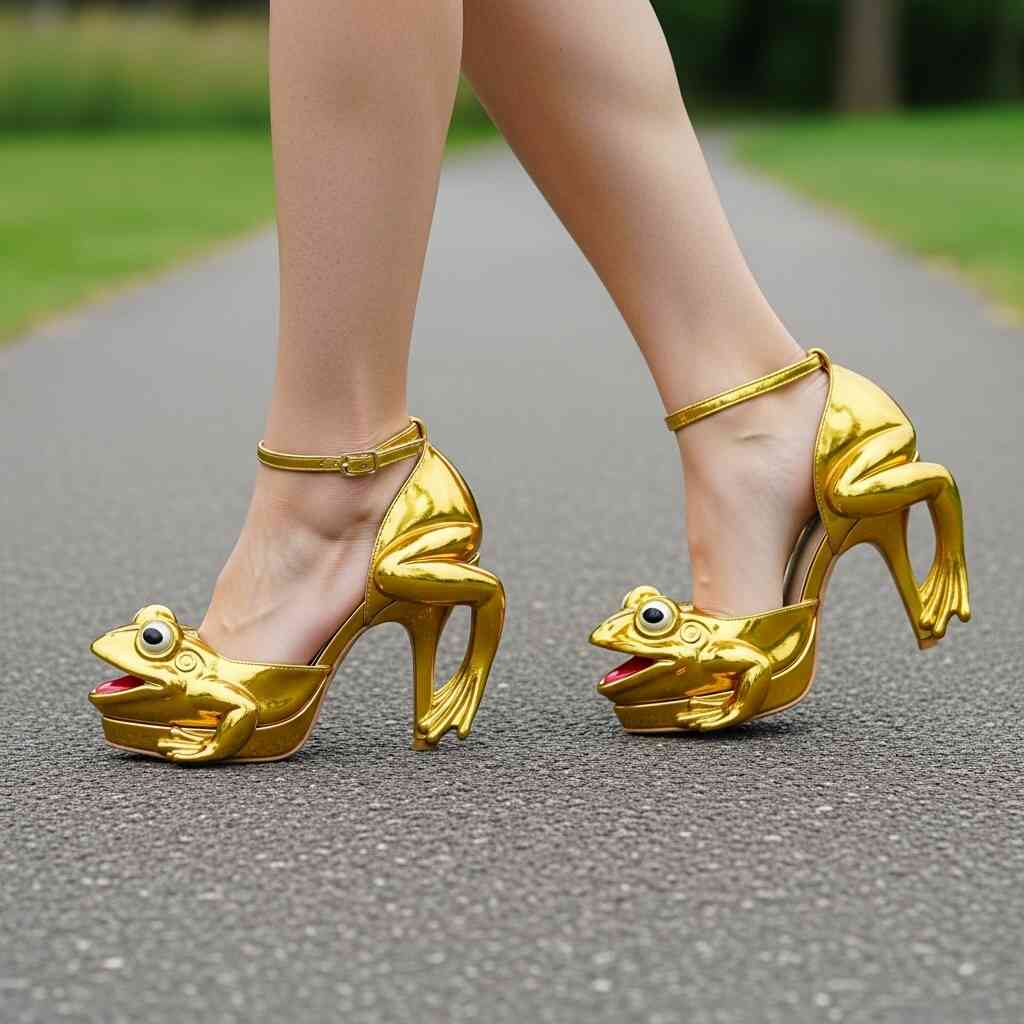
It is within this legacy that frog shaped heels find their artistic home. Like Dalí’s melting clocks, they distort reality to reveal deeper truths. A heel shaped like a frog does not merely mimic an animal; it invokes a mood, a memory, a myth. The frog, as a creature, has long occupied a liminal space in human consciousness—neither fully land-bound nor entirely aquatic, emerging from ponds and vanishing into the underbrush. It is a symbol of transformation, of cycles, of the mysterious boundary between worlds.
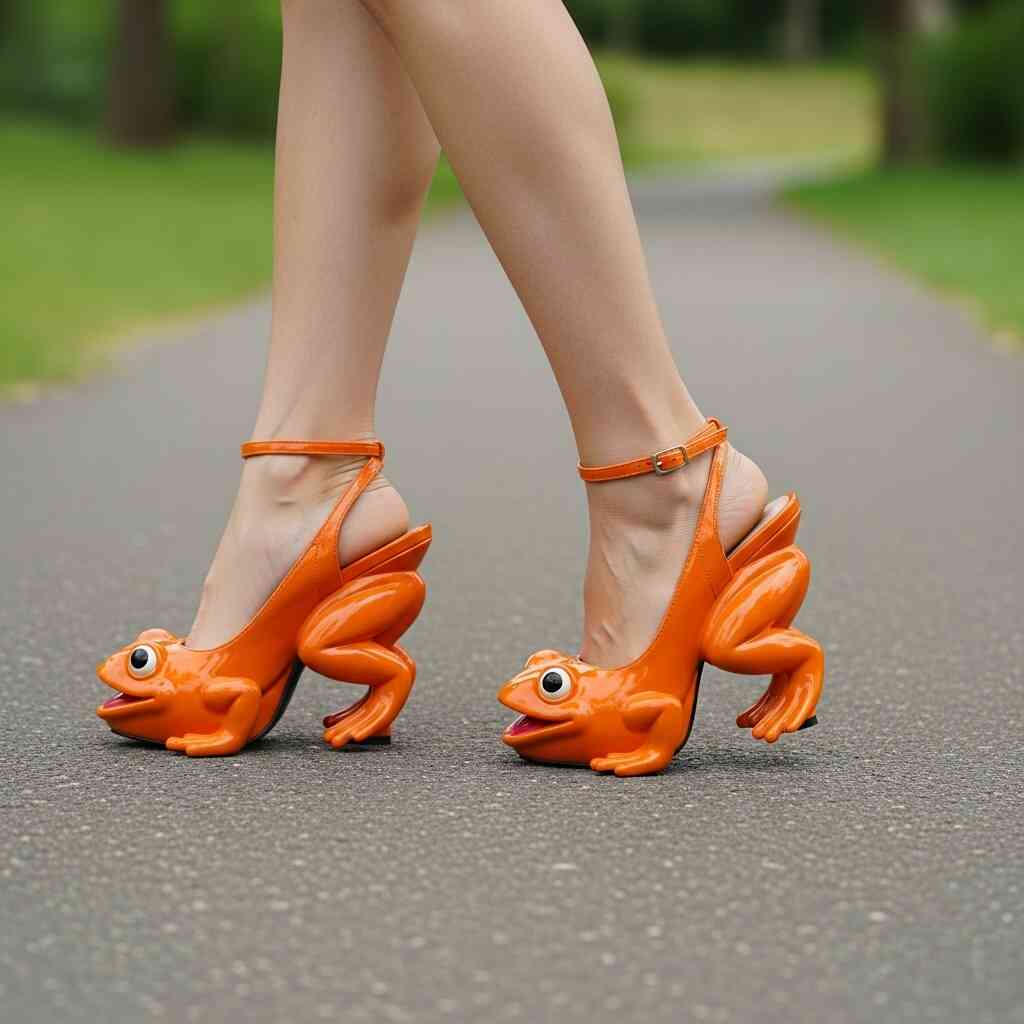
Contemporary designers who craft frog shaped heels draw from this rich symbolic well. Their work often blurs the line between sculpture and utility. The heel becomes a three-dimensional character, poised mid-leap or crouched in quiet observation. Materials are chosen not just for durability but for their ability to capture texture—the glossy sheen of amphibian skin, the delicate articulation of webbed toes, the subtle curve of a frog’s spine. Every detail is rendered with a sculptor’s precision, turning the shoe into a kinetic artwork that moves with the wearer.
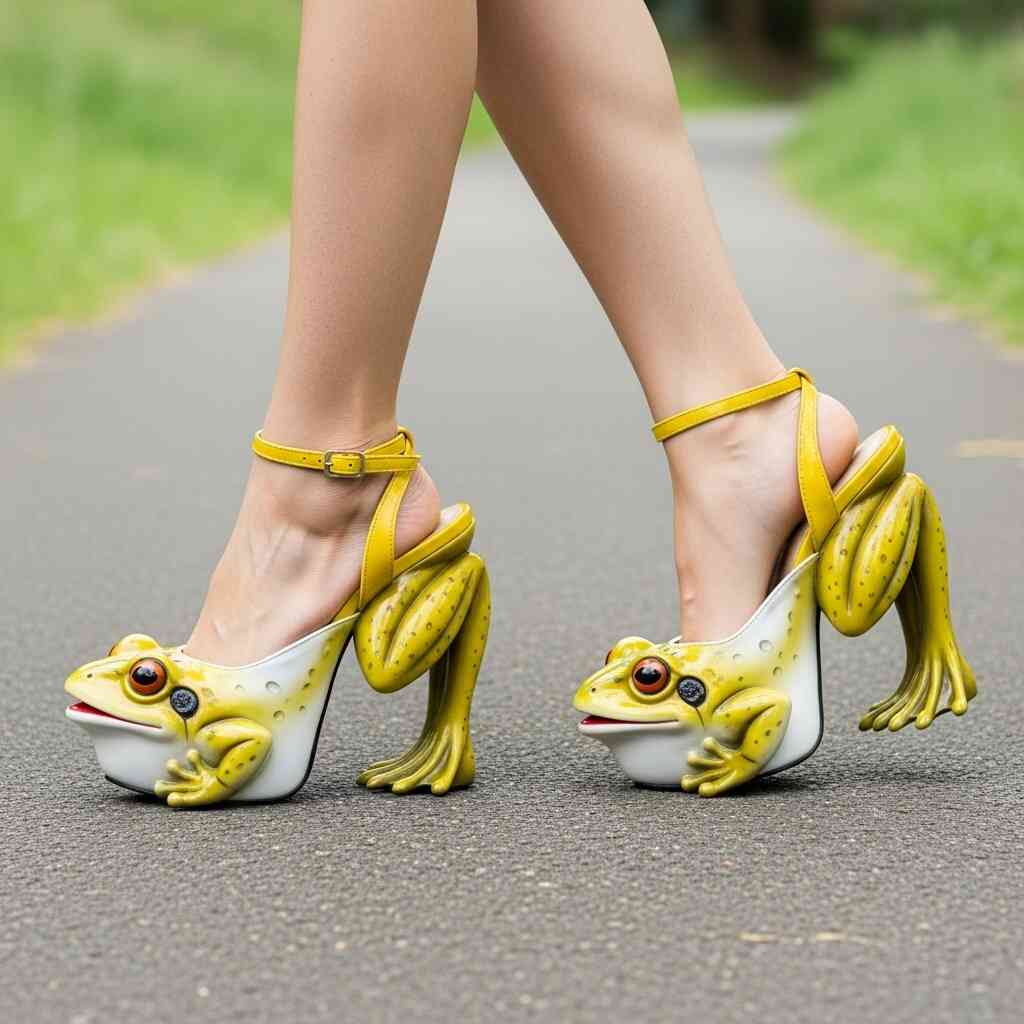
This evolution from functional footwear to wearable sculpture reflects a broader shift in fashion’s role in society. No longer content to merely clothe the body, fashion now seeks to challenge, provoke, and enchant. Frog shaped heels are emblematic of this shift. They do not blend into the background; they demand attention, invite interpretation, and spark conversation. They are not worn to match an outfit but to complete a vision—a vision in which fashion is not just about appearance, but about experience, emotion, and narrative.
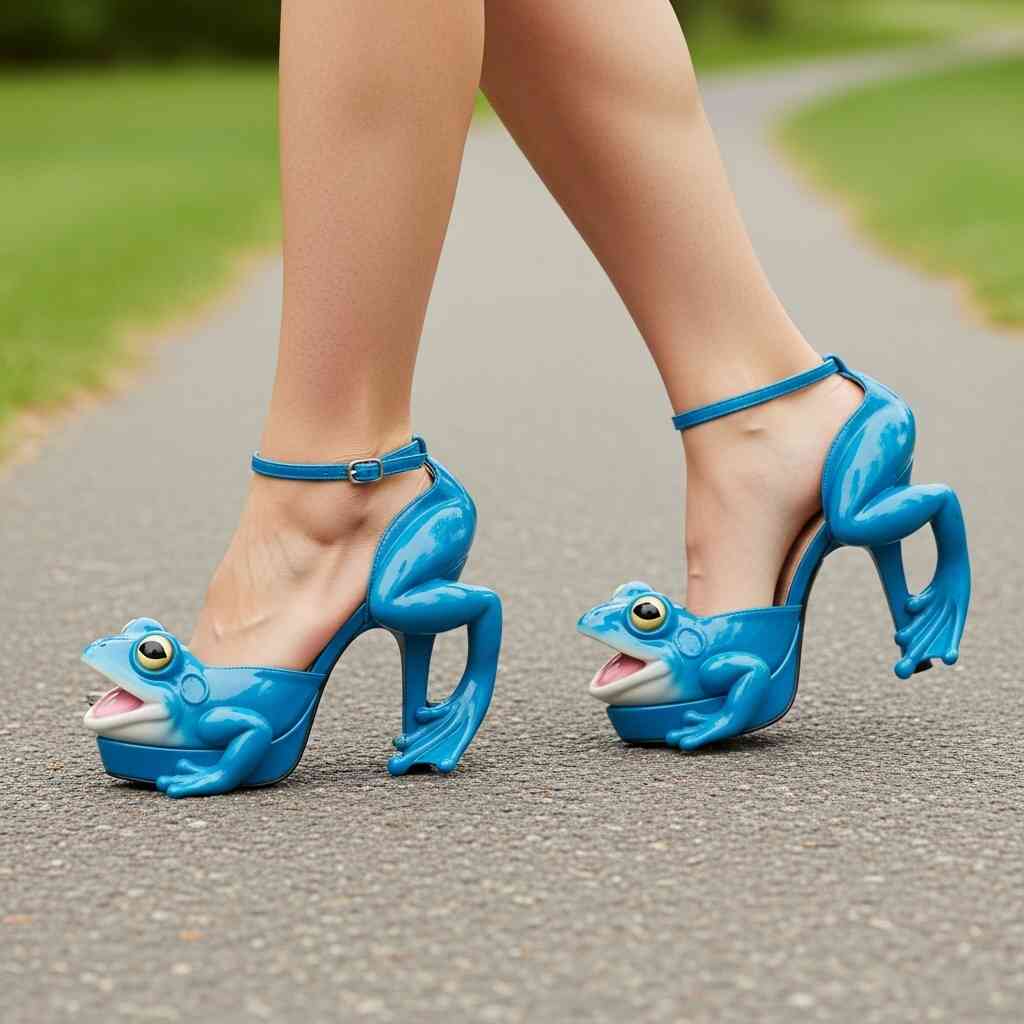
Moreover, the creation of such heels often involves interdisciplinary collaboration. Designers consult with biologists to accurately capture the anatomy of frogs, work with digital modelers to prototype complex forms, and employ artisans skilled in resin casting, metalwork, or hand-painted finishes. The process itself becomes a performance of creativity, where science, art, and craftsmanship converge. In this way, frog shaped heels are not just products of imagination—they are testaments to the power of human ingenuity when unbound by convention.
Symbolism and Storytelling: The Frog as Muse in Fashion Mythology
Beyond their visual impact, frog shaped heels carry a profound symbolic weight. The frog, across cultures and epochs, has been a creature of myth, transformation, and duality. In ancient Egypt, the goddess Heqet, depicted with the head of a frog, was associated with fertility and rebirth, presiding over the miracle of life emerging from water. In Chinese folklore, the three-legged toad, Jin Chan, is a symbol of prosperity and protection, often depicted holding a coin in its mouth. In European fairy tales, frogs are enchanted princes waiting to be kissed, embodying the promise of transformation through love and courage.
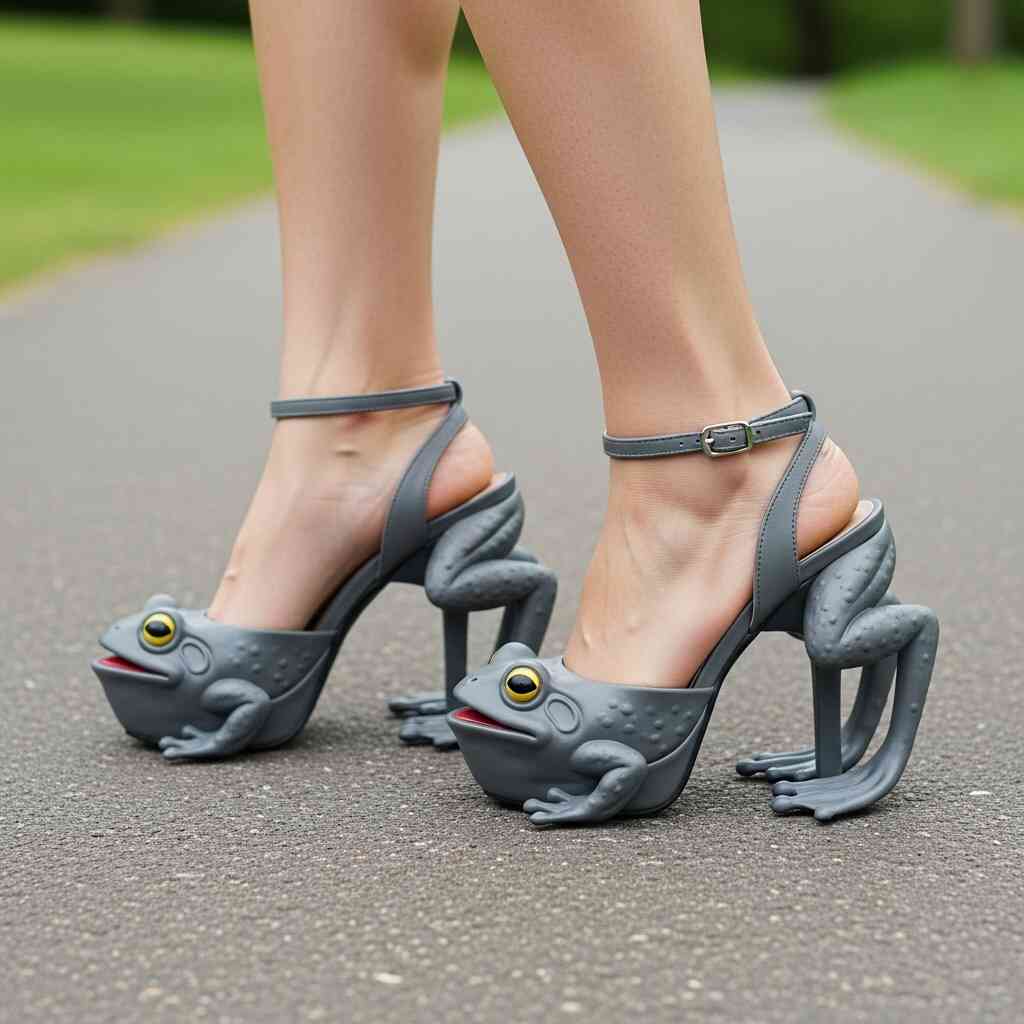
These narratives are not lost on the designers who create frog shaped heels. Rather, they are deliberately invoked, embedded into the very structure of the footwear. A heel shaped like a frog does not simply look like an animal—it becomes a vessel for these ancient stories. When a wearer steps forward, the frog appears to leap with them, as if carrying the momentum of metamorphosis. The act of walking becomes a ritual, a reenactment of the frog’s journey from water to land, from larva to adult, from obscurity to presence.
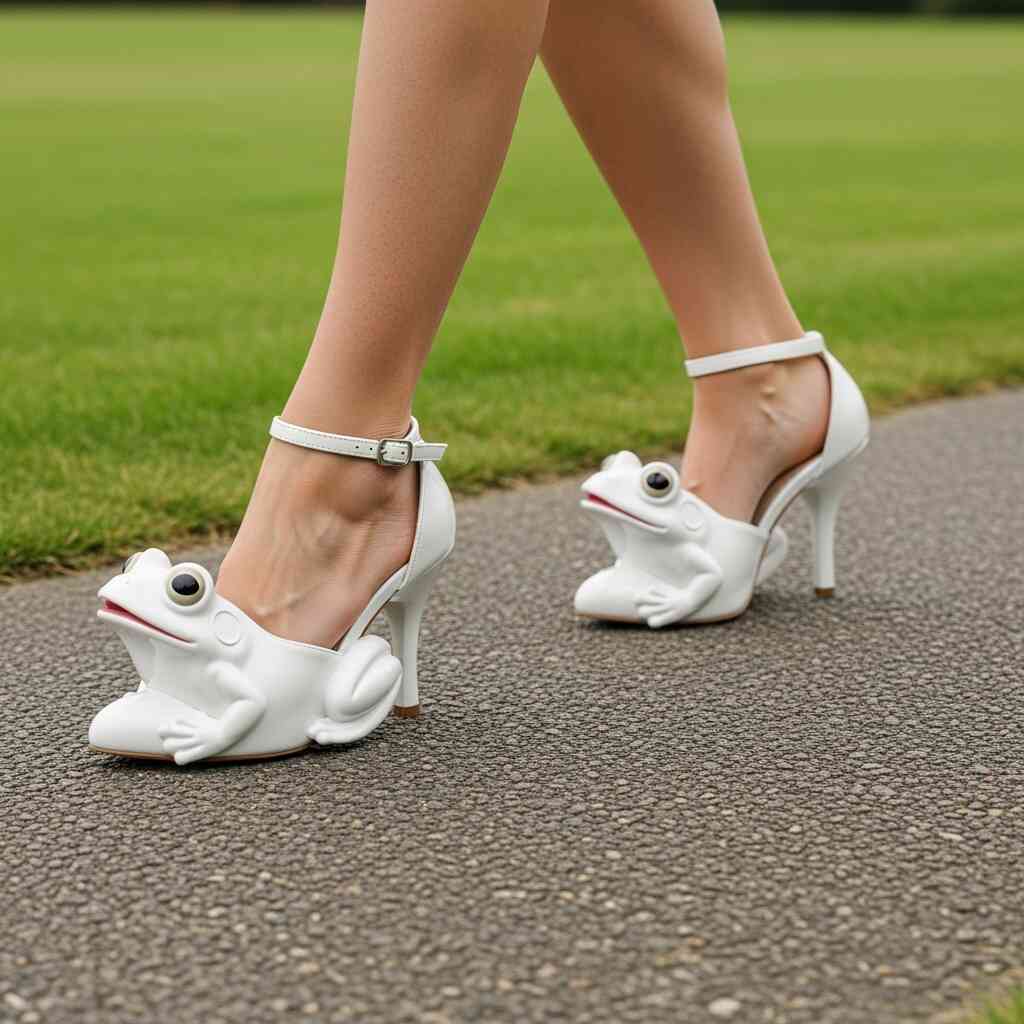
In this sense, frog shaped heels are deeply allegorical. They speak to the idea of personal transformation—a theme central to fashion itself. Clothing and accessories have long been tools of reinvention, allowing individuals to step into new identities, to shed old skins, and to emerge renewed. The frog, with its dramatic life cycle, is the perfect symbol for this process. By wearing heels that embody the frog’s form, the wearer aligns themselves with this narrative of change, resilience, and renewal.
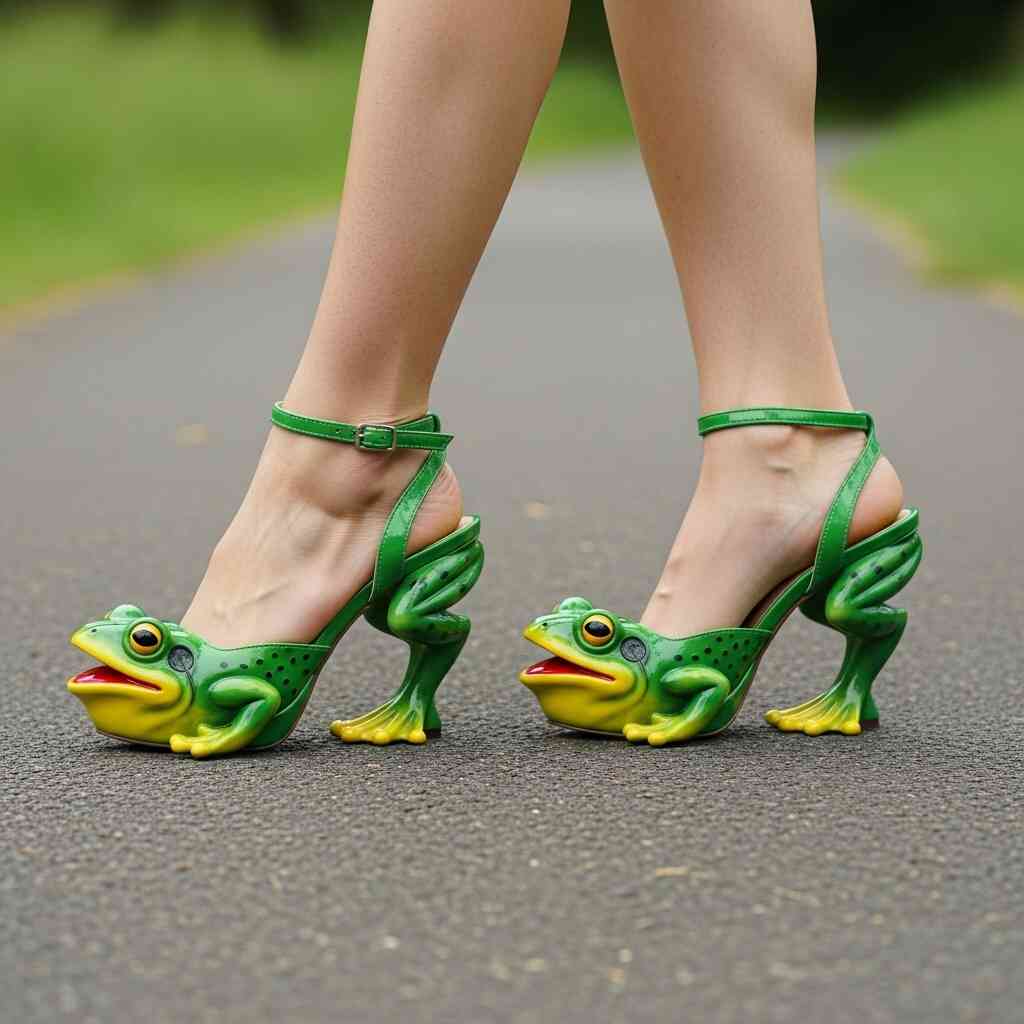
Moreover, the frog’s association with water—both literal and metaphorical—adds another layer of meaning. Water is a universal symbol of emotion, the subconscious, and the unknown. Frogs thrive at the edge of ponds and marshes, places where solid ground meets fluid depth. This liminality makes them ideal metaphors for those who navigate the boundaries of identity, culture, or creativity. Frog shaped heels, therefore, can be seen as emblems of those who exist between worlds—artists, dreamers, and visionaries who refuse to be confined by categories.
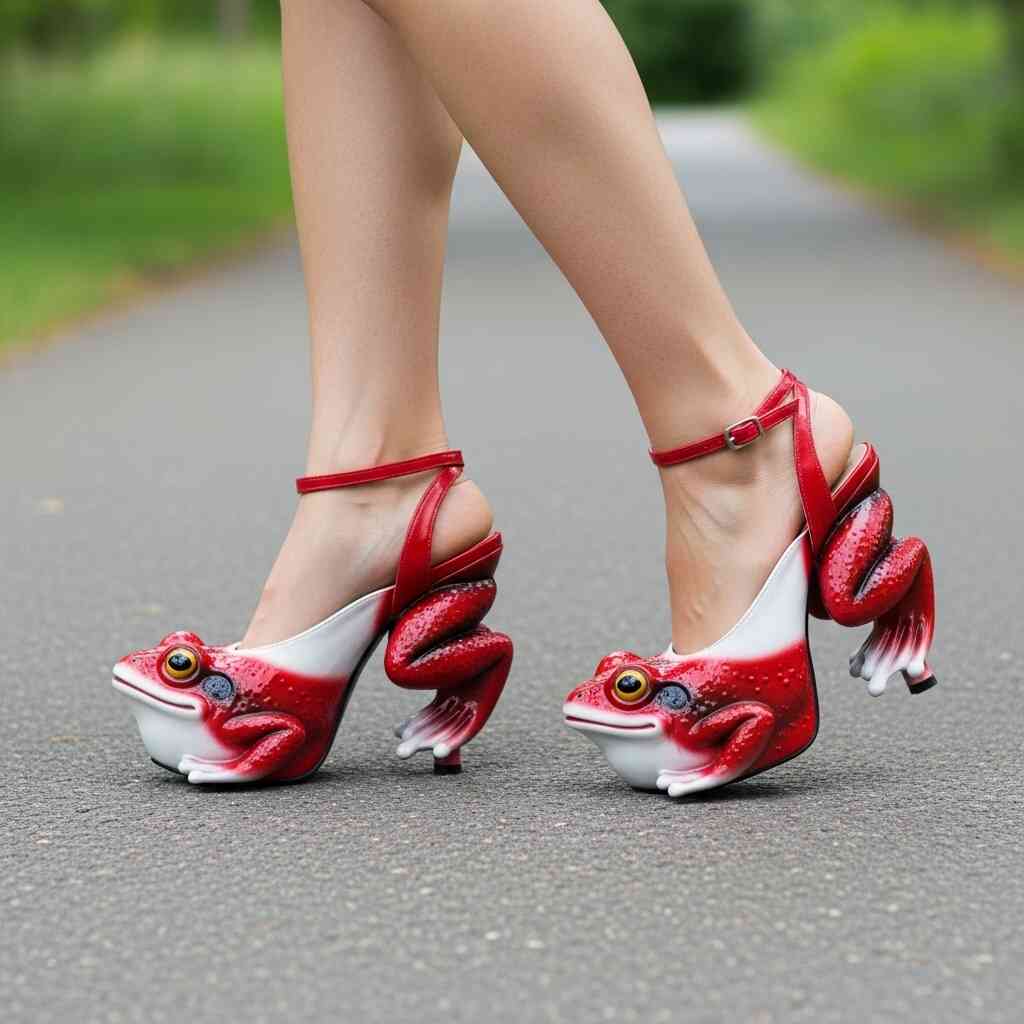
The placement of the frog on the heel—the lowest part of the shoe, yet the source of elevation—is also significant. In fashion, the heel is what lifts the body, altering posture, gait, and presence. It is a mechanism of transformation in its own right. By shaping the heel into a frog, the designer literalizes this idea: transformation is not just an effect of wearing high heels; it is embedded in their very form. The frog becomes the engine of elevation, both physically and symbolically.
This storytelling function extends to the broader cultural moment in which these designs emerge. In an age of climate change, biodiversity loss, and environmental uncertainty, the frog—often seen as an indicator species for ecosystem health—takes on new relevance. Its presence in fashion can be interpreted as a quiet act of ecological remembrance, a way of honoring the natural world even as it recedes. Frog shaped heels, in this light, are not merely whimsical; they are elegiac, a tribute to creatures that inhabit the fragile margins of existence.
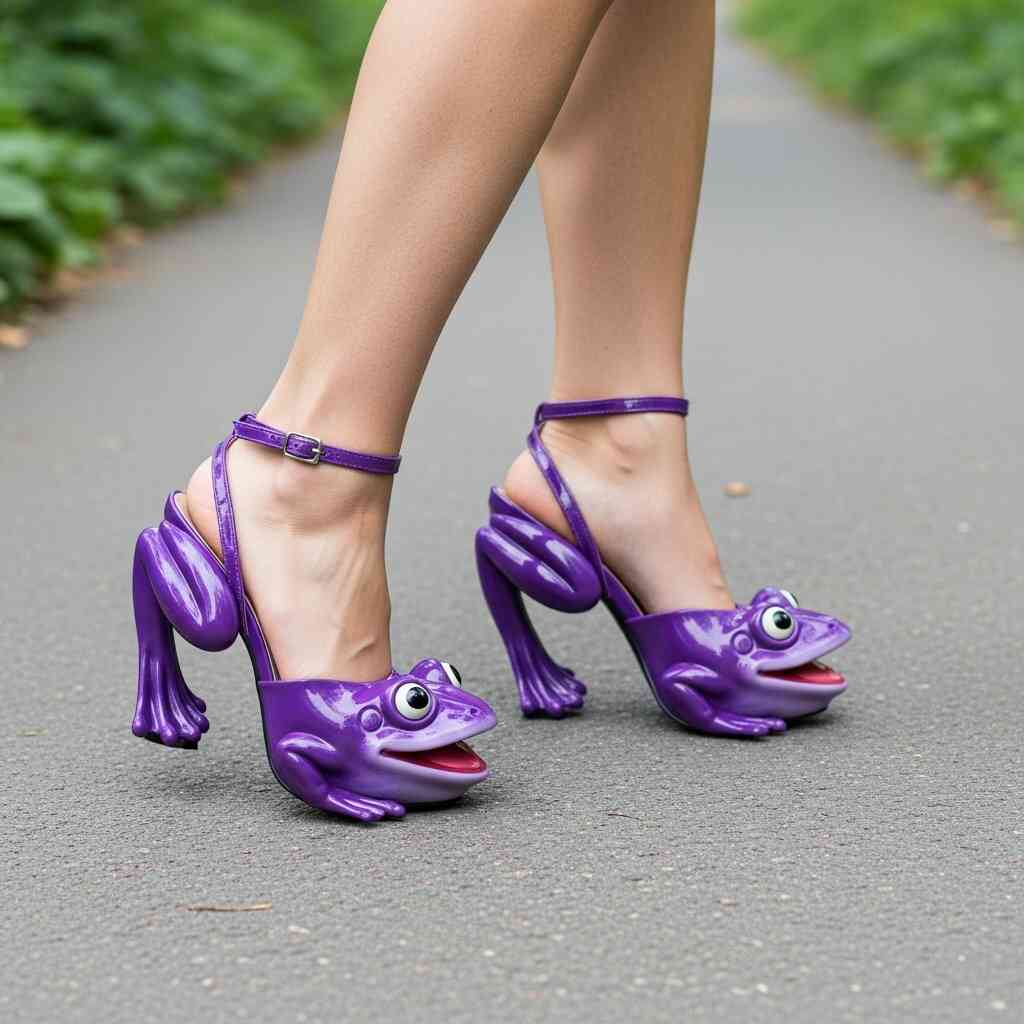
Furthermore, the choice of the frog over more traditionally “noble” animals—such as horses, lions, or eagles—challenges hierarchies of beauty and value in design. The frog is not typically considered majestic or glamorous. It is slimy, small, and often overlooked. Yet, by elevating it to the status of a fashion icon, designers subvert conventional aesthetics, suggesting that beauty can be found in the unexpected, the humble, the overlooked. This democratization of form is itself a radical act, one that expands the vocabulary of fashion to include the strange, the grotesque, and the wondrous.
In performances, exhibitions, and editorial shoots, frog shaped heels often appear in contexts that amplify their symbolic resonance. Paired with flowing, aquatic-inspired garments or staged in surreal, dreamlike environments, they become part of a larger narrative—a modern myth in which the wearer is both protagonist and shaman, moving between realms with the quiet power of a creature that knows how to navigate both land and water.
Conclusion: The Future of Fashion as a Leap into the Imaginary
Frog shaped heels are more than a passing trend or a quirky design experiment. They represent a pivotal moment in the evolution of fashion—one in which the boundaries between art, nature, and identity are not just blurred but actively dissolved. In a world increasingly dominated by mass production, digital replication, and algorithmic trends, these heels stand as defiant monuments to individuality, craftsmanship, and imaginative courage.
They remind us that fashion is not merely about covering the body or signaling status. At its highest expression, fashion is a form of storytelling, a way of encoding meaning into the objects we wear. Frog shaped heels, with their intricate forms and layered symbolism, exemplify this potential. They invite us to see footwear not as a passive accessory but as an active participant in the drama of self-expression.
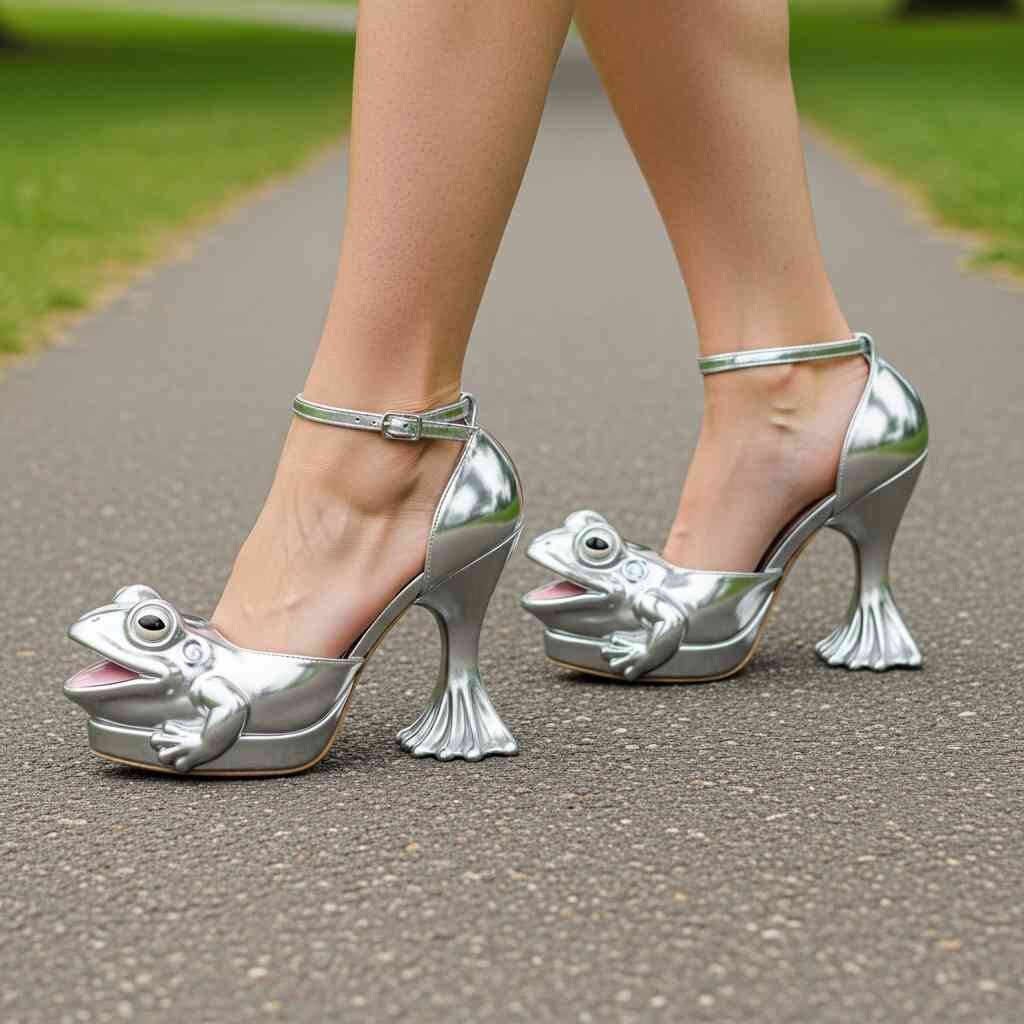
Moreover, they challenge us to reconsider our relationship with the natural world. In an era where human activity threatens countless species, including many amphibians, the presence of a frog on a heel becomes a quiet act of reverence. It is a way of carrying the wild into the urban, of honoring the small and the slimy alongside the sleek and the shiny. In doing so, frog shaped heels become more than art—they become acts of ecological and emotional remembrance.
The future of fashion may well lie in this willingness to leap into the unknown. As designers continue to explore the intersections of biology, mythology, and technology, we can expect to see more footwear that defies categorization—shoes shaped like insects, roots, celestial bodies, or abstract emotions. The frog, with its ancient symbolism and uncanny presence, is merely the beginning.
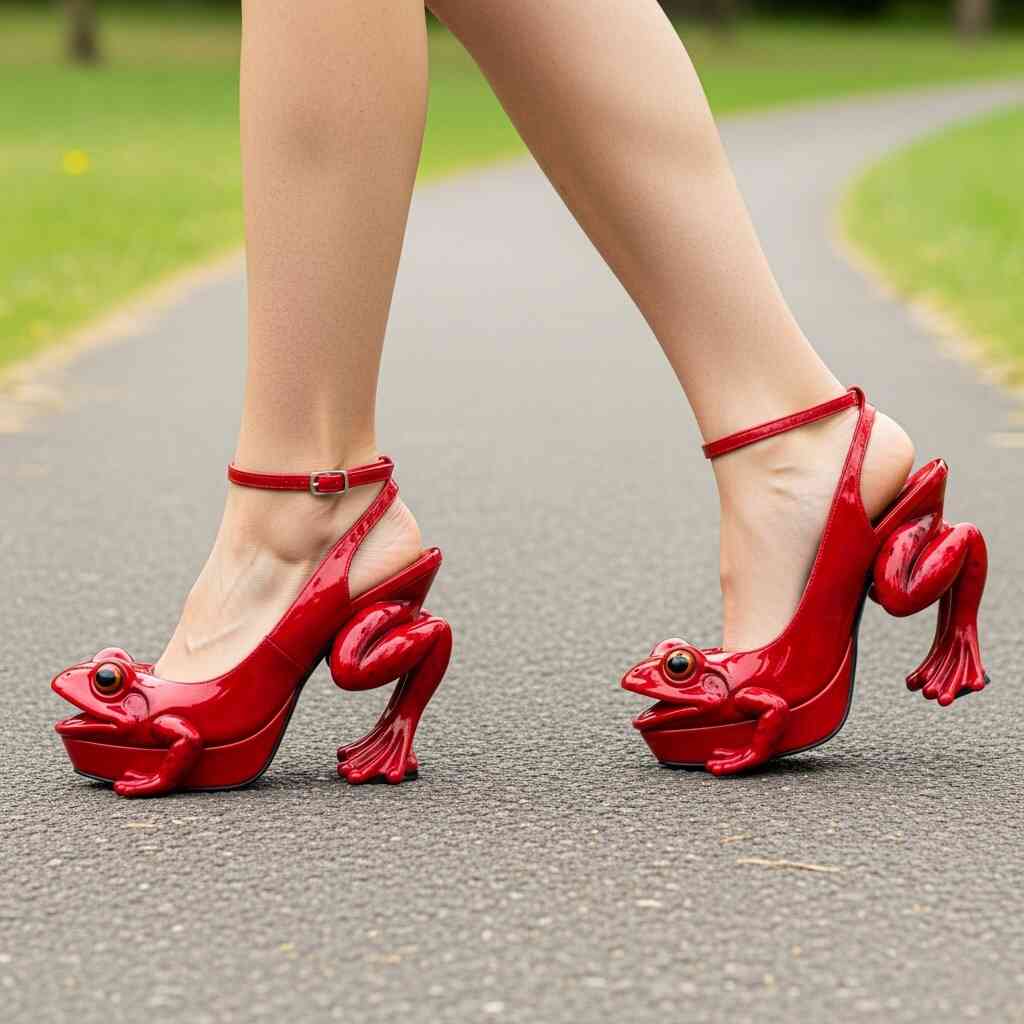
Ultimately, frog shaped heels are not about the shoes themselves, but about the act of leaping. They are a metaphor for the creative impulse—the willingness to jump from the familiar into the fantastic, to trust in the possibility of transformation. Every time a wearer steps forward on a frog-shaped heel, they enact this leap, not just physically but spiritually. They become part of a larger narrative—one in which fashion is not confined to the surface, but dives deep into the waters of imagination, emerging renewed, reshaped, and ready to leap again.
In this way, frog shaped heels are not just a statement about style. They are a manifesto for a different kind of fashion—one that embraces wonder, honors nature, and dares to believe that even the smallest creature can carry the weight of a dream. They are a reminder that sometimes, the most profound revolutions begin not with a roar, but with a quiet croak from the edge of the pond. And sometimes, they begin with a single, fantastical step.