
There is a quiet magic that unfolds when twilight settles over a child’s room — a hush that ushers in the realm of imagination, where reality dissolves and fantasy reigns. In this liminal space between wakefulness and sleep, ordinary furniture transforms. A dresser becomes a treasure chest. A rug, a dragon’s lair. And towering above it all, presiding with turrets and battlements, stands the Castle Bunk Bed — not merely a structure of wood and screws, but a sovereign monument to dreams.
The Castle Bunk Bed is more than architecture scaled for small bodies. It is a vessel. A portal. A whispered invitation to realms where valor is tested nightly, where crowns are donned without ceremony, and where the only currency is wonder. Its silhouette against the bedroom wall is a declaration: Here, slumber is sacred. Here, the mundane is banished. Here, every pillow fort is a keep, every blanket a royal robe, every yawn the prelude to an epic.
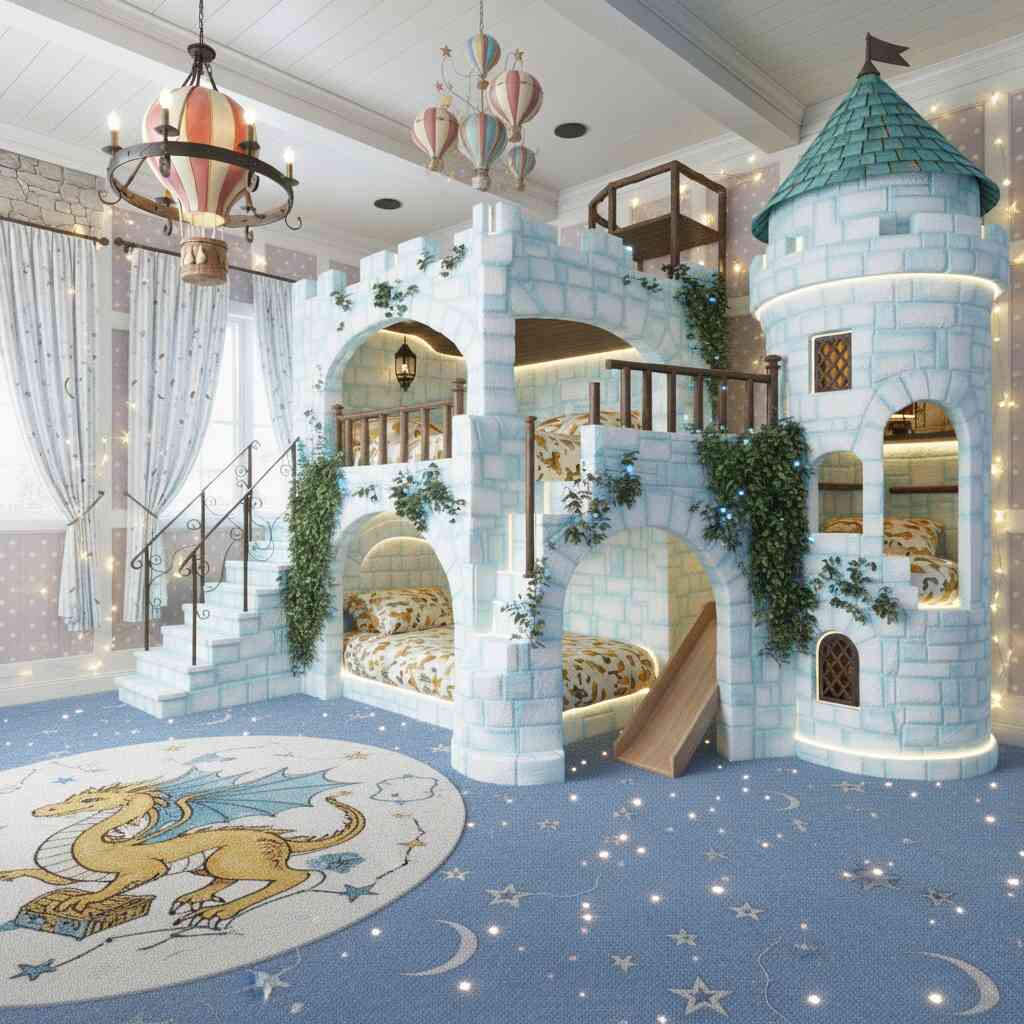
To understand the Castle Bunk Bed is to understand childhood itself — not as a phase to be outgrown, but as a kingdom to be explored, defended, and cherished. It is where knights nap atop towers, surveying dreamscapes from their lofty perches, and where princesses dream beneath arched windows, guarded by invisible sentinels of starlight. This is not just a place to rest the body — it is a sanctuary for the soul’s most untamed flights.
Let us draw back the velvet curtain of night and step across the threshold. Let us uncover the secrets whispered in hushed giggles and midnight confessions. Let us wander through the corridors of this enchanted architecture, where every creak of the ladder is a herald’s trumpet, and every stuffed dragon perched on a pillow is a loyal subject awaiting orders.
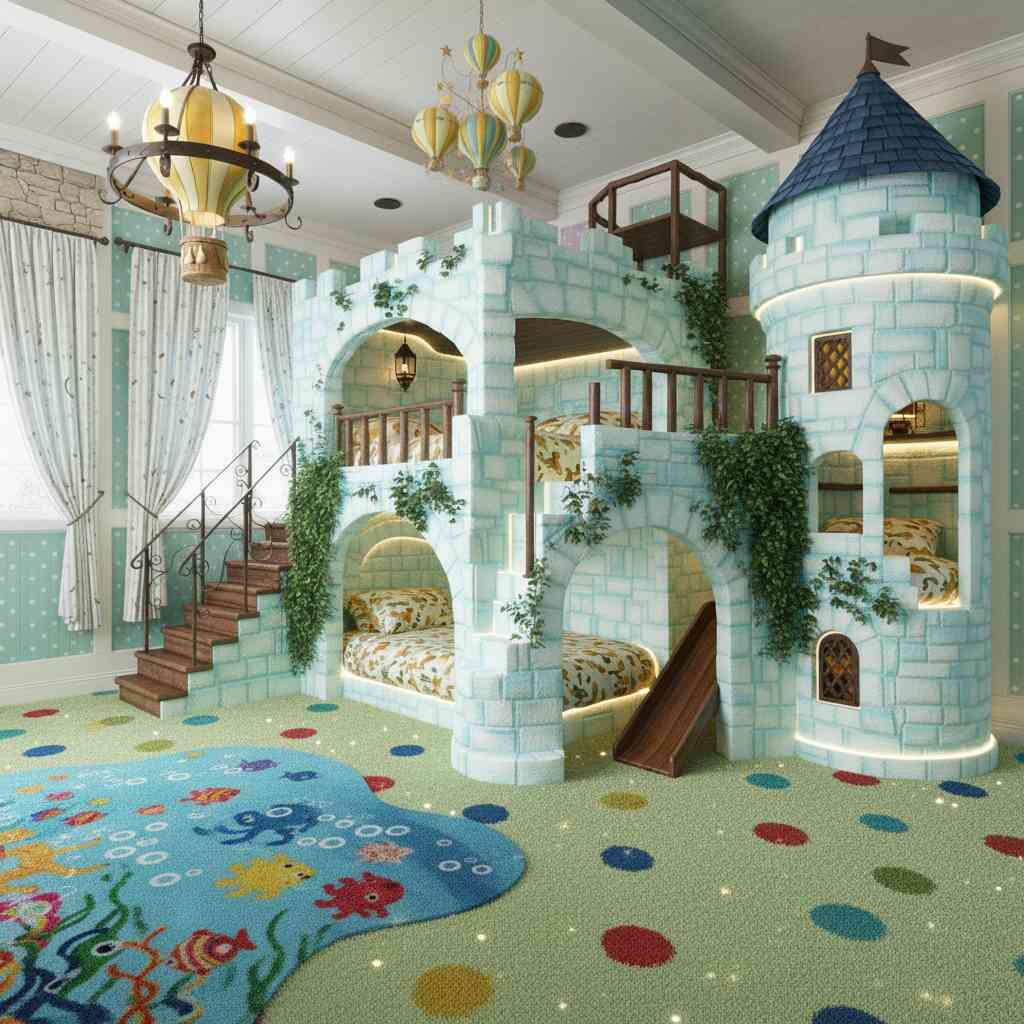
Part I: The Architecture of Imagination — Design as Destiny
Turrets, Towers, and the Top Bunk Throne
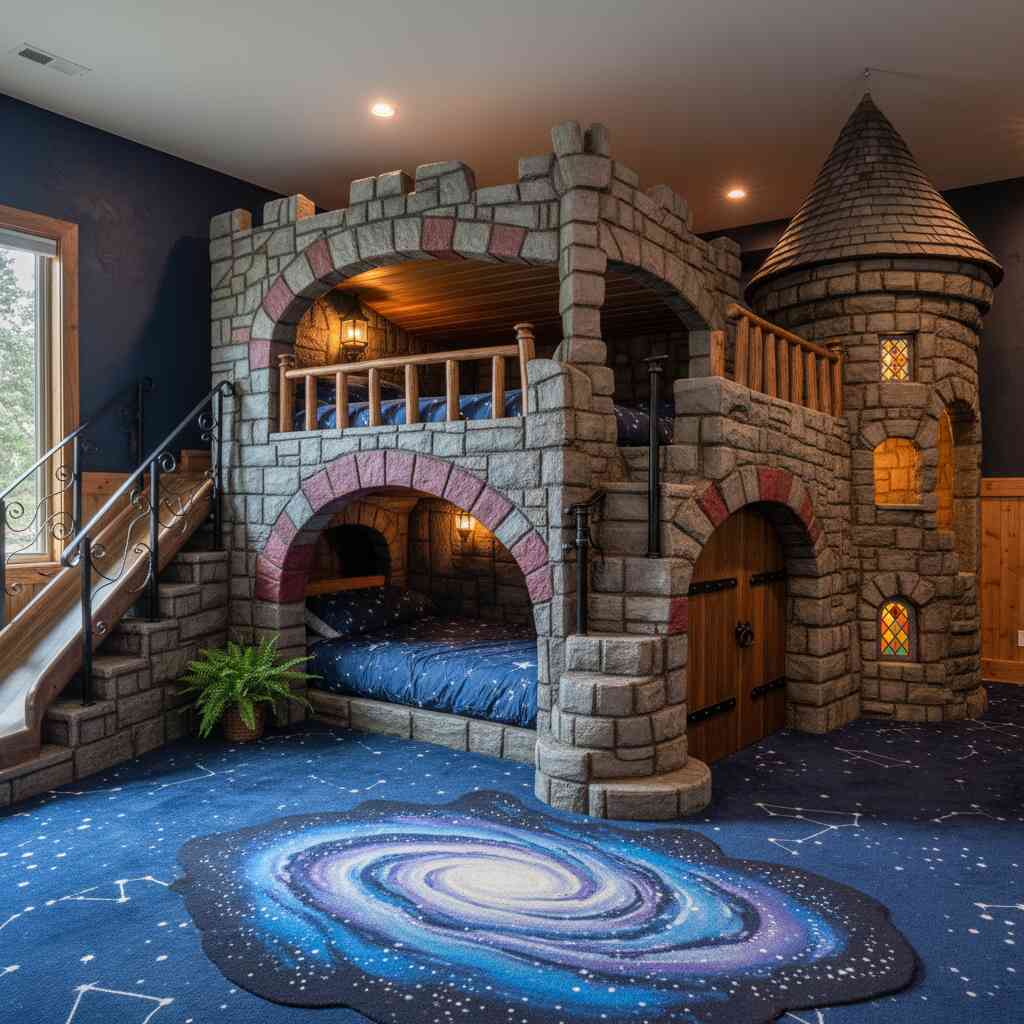
The Castle Bunk Bed does not simply occupy space — it commands it. Its verticality is no accident. Like the castles of old, it reaches skyward, defying gravity and logic, asserting dominion over the horizontal world below. The top bunk is not merely higher — it is holier. It is the throne room, the watchtower, the eagle’s nest from which one surveys the kingdom of blankets, toys, and bedtime stories.
Children who ascend to the top bunk do not climb — they are coronated. There is a ritual to it: the careful grip on wooden rails, the triumphant swing of the leg over the guardrail, the sigh of conquest as they sink into their nest of quilts. From this vantage, the world is different. The ceiling becomes a vaulted hall. The glow-in-the-dark stars on its surface? Constellations charted only by royal decree. The ceiling fan? A chandelier spun by invisible courtiers.
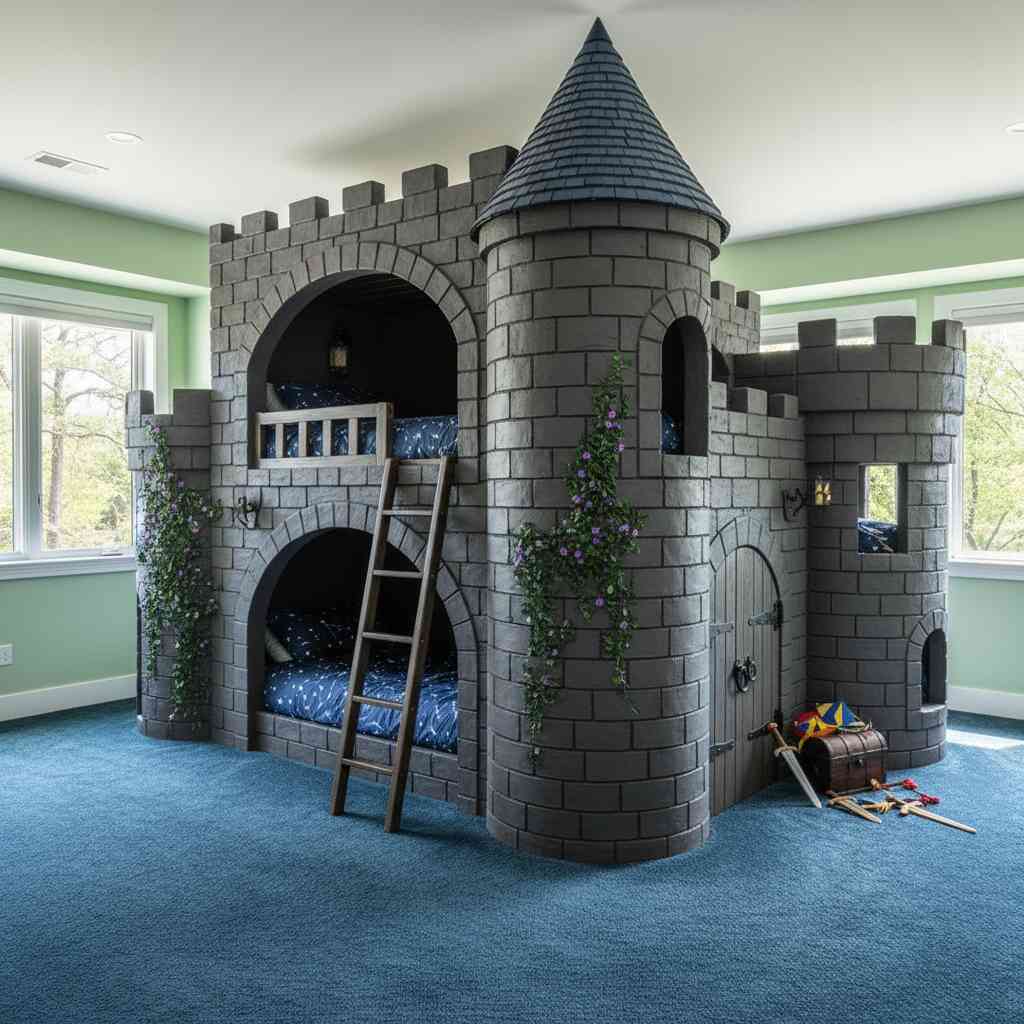
The architecture invites role-play not by suggestion, but by inevitability. Arched windows carved into the headboard are not decorative — they are spyholes for spotting approaching ogres. The ladder? A secret staircase known only to the bravest knights. Even the guardrails, often embellished with faux stone or heraldic motifs, serve as battlements from which defenders hurl pillows at marauding stuffed bears.
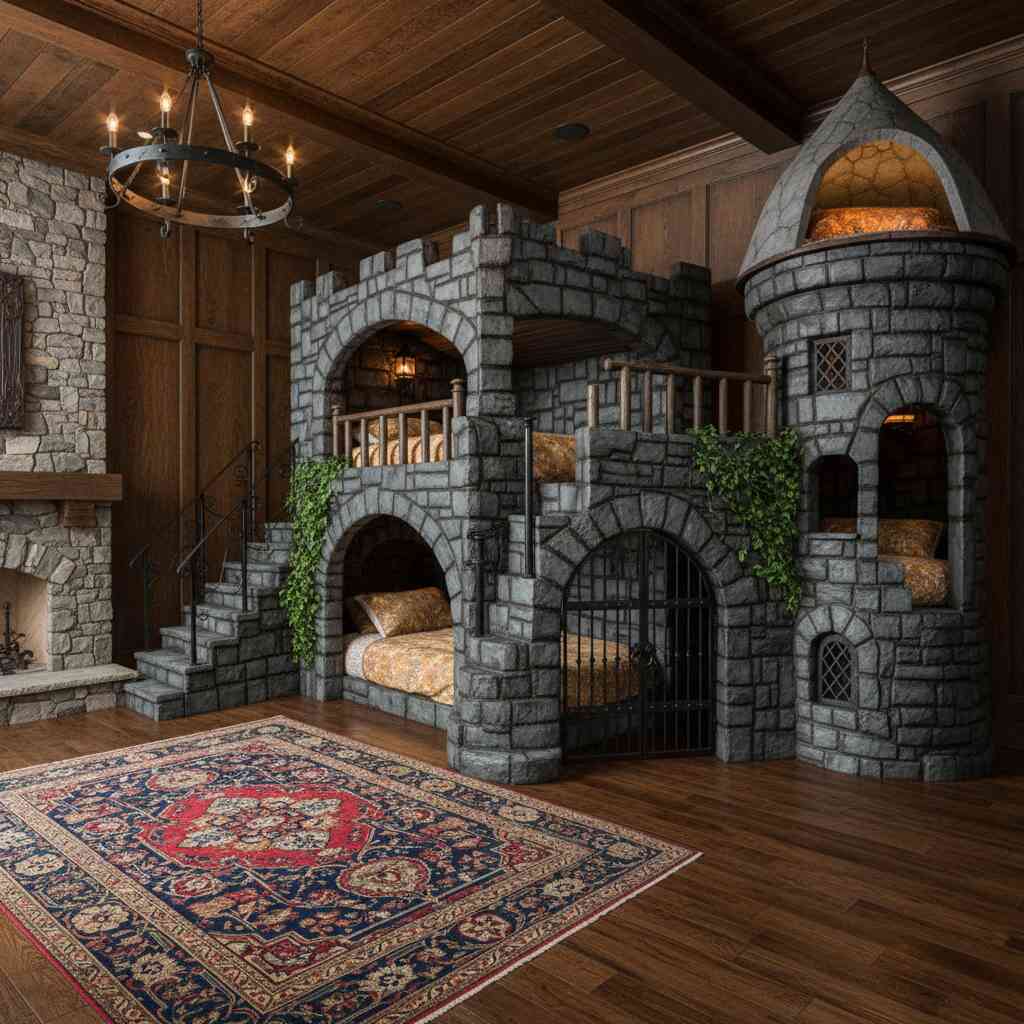
The Lower Keep — Where Dreams Are Forged in Shadow
While the top bunk soars, the lower bunk roots. It is the dungeon turned sanctuary, the crypt turned chapel, the hidden chamber where whispered secrets and midnight snacks are exchanged like sacred vows. Here, beneath the looming silhouette of the upper realm, dwellers of the lower bunk craft their own legends.
There is intimacy in the lower chamber. The ceiling is closer, the walls feel nearer — not confining, but comforting. It is a cocoon woven from shadow and safety. A string of fairy lights becomes a circlet of enchanted gems. A pile of books transforms into a library of forbidden tomes. The child who claims this space does not feel beneath — they feel embedded. Protected. Essential.
In many Castle Bunk Beds, the lower bunk is framed by faux stone archways or carved portcullises, turning entry into ceremony. To crawl beneath the lintel is to cross into legend. Some designs even include hidden nooks — alcoves disguised as secret passages — where a child might stash their most treasured artifacts: a smooth river stone, a folded drawing of a dragon, a note passed at school declaring eternal friendship.
This duality — the soaring and the grounded, the visible and the veiled — mirrors the dual nature of childhood itself. One moment, the child is a fearless explorer scaling peaks; the next, a quiet dreamer curled in the safety of shadows. The Castle Bunk Bed does not choose between these states — it sanctifies both.
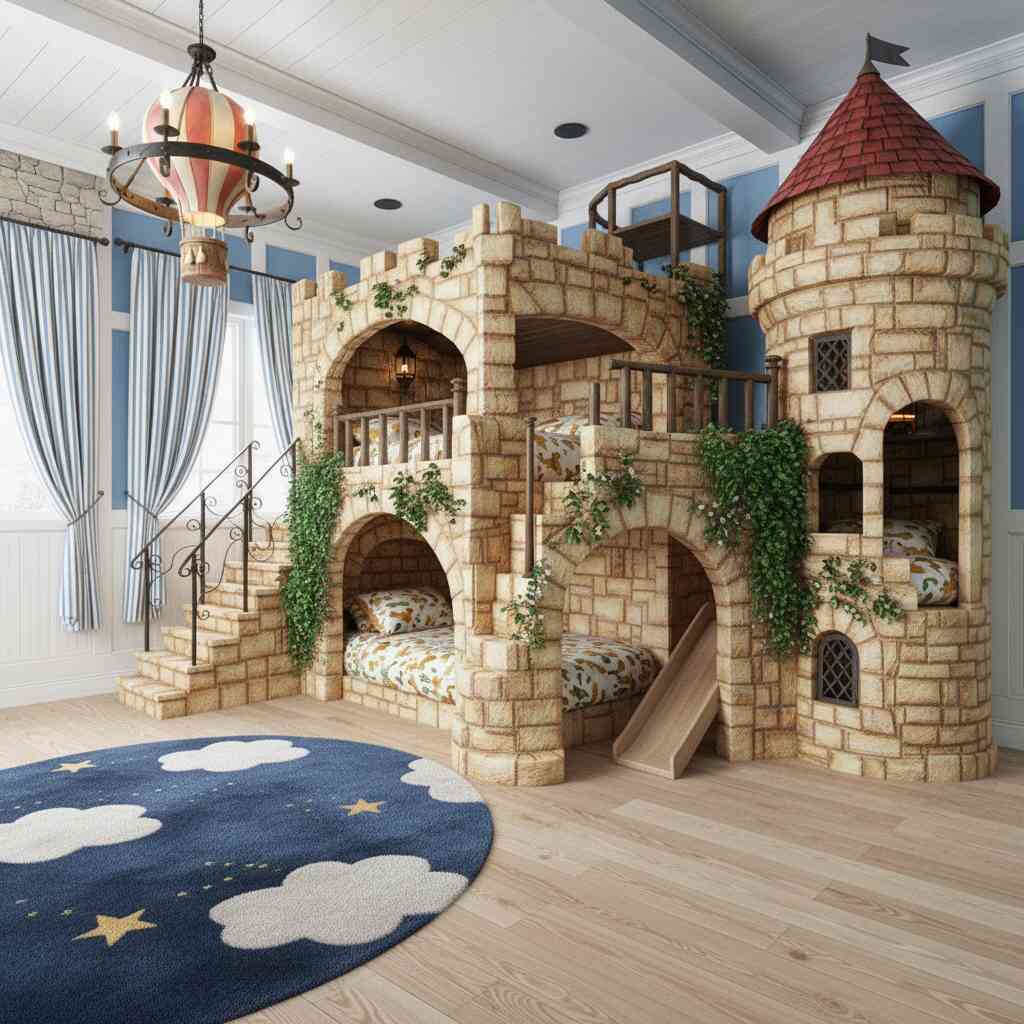
Whispers in the Wood — The Language of Detail
Every curve, every carved crest, every faux-brick panel speaks a silent language. The Castle Bunk Bed is a storyteller. Its details are not ornament — they are narrative.
Consider the turret finials that crown the bedposts — are they merely decorative spires? Or are they watchtowers where spectral guards keep vigil through the night? The scalloped edges along the canopy frame — do they mimic castle parapets, or the lace collars of royal gowns? Even the grain of the wood, if left visible, becomes part of the lore — the “dragon-scale texture” of the western wall, the “enchanted oak” harvested from the Whispering Woods.
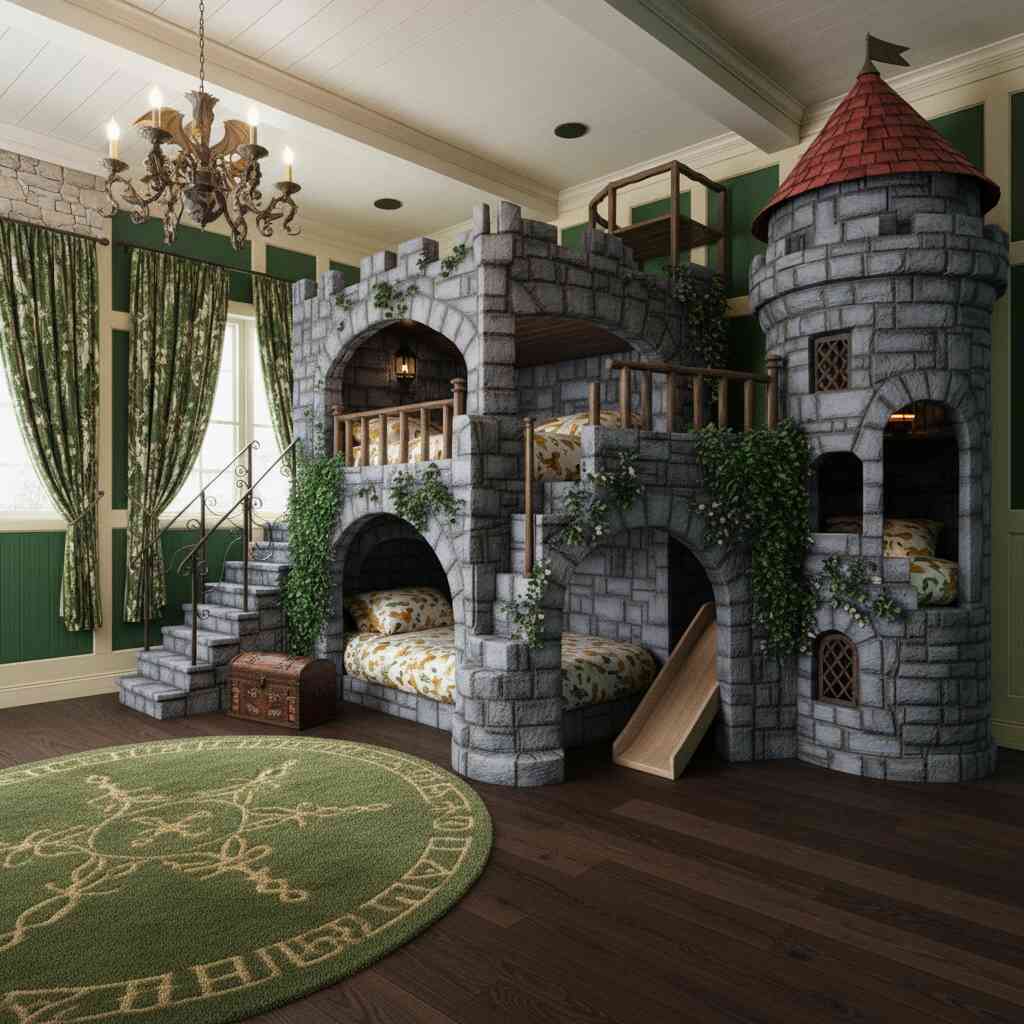
Children read these details like runes. They assign meaning where none was intended, weaving the physical into the mythical. A knot in the wood becomes a hidden face. A shadow cast by the bedside lamp becomes a lurking troll. The creak of a settling joint? The groan of an ancient gate, stirred by the wind of forgotten spells.
This is the genius of the Castle Bunk Bed — it does not dictate the story. It provides the stage, the props, the atmosphere. The child is playwright, director, and lead actor. The bed is merely the enchanted set — richly detailed enough to inspire, open-ended enough to allow infinite reinterpretation.
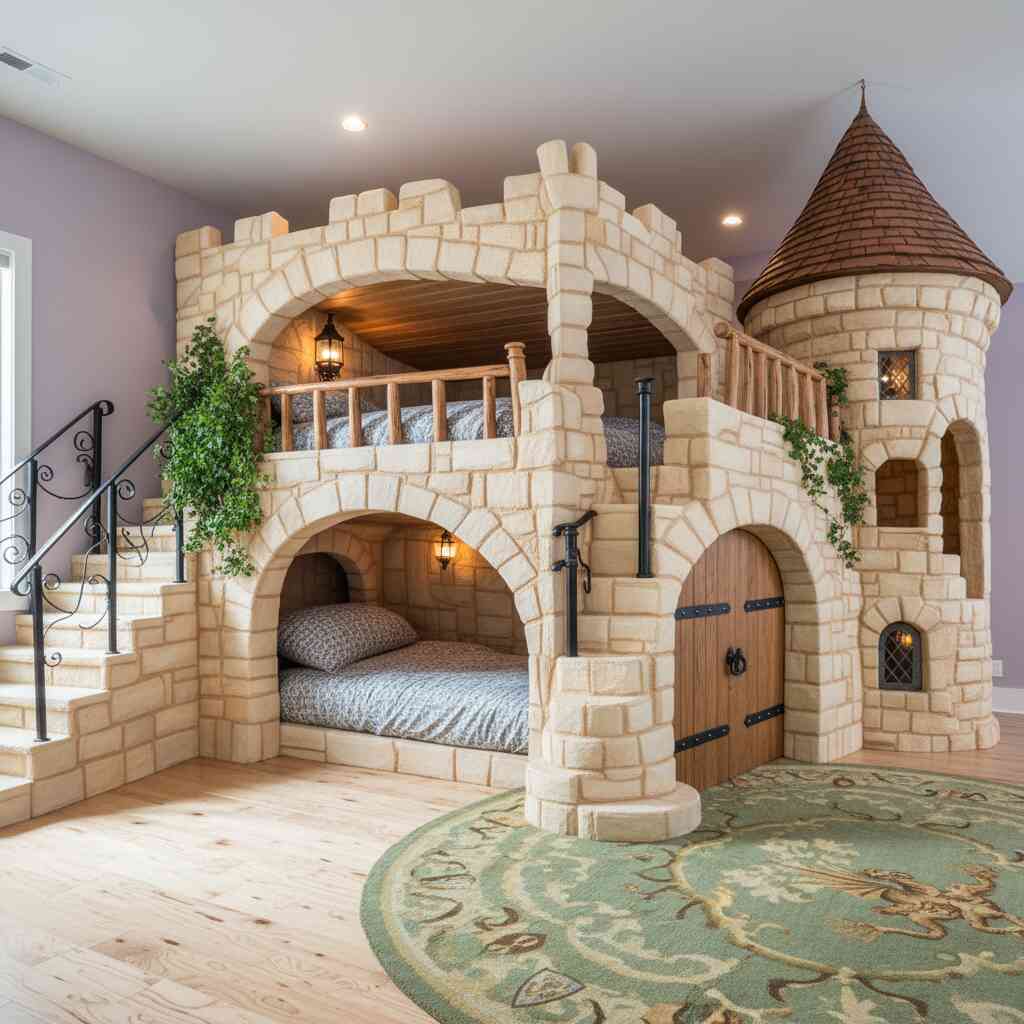
Part II: The Inhabitants — Knights, Princesses, and the Roles We Dream Into
The Knight Who Naps — Valor in Repose
The child who claims the top bunk often does so with the solemnity of a knight accepting a quest. There is bravery in the climb, nobility in the vigil. From this height, they are charged with watching over the realm — siblings, stuffed animals, the glowing nightlight that stands sentinel in the corner.
But knights, even the bravest, must rest. And so, in the Castle Bunk Bed, valor is not measured in battles won, but in dreams defended. The knight who naps does not surrender — they recharge. Their armor (pajamas emblazoned with dragons or spaceships) is laid aside not in defeat, but in sacred trust. Their sword (a cardboard tube wrapped in tinfoil) rests against the wall, ready for tomorrow’s skirmish with the Pillow Dragon or the Sock Goblins under the bed.
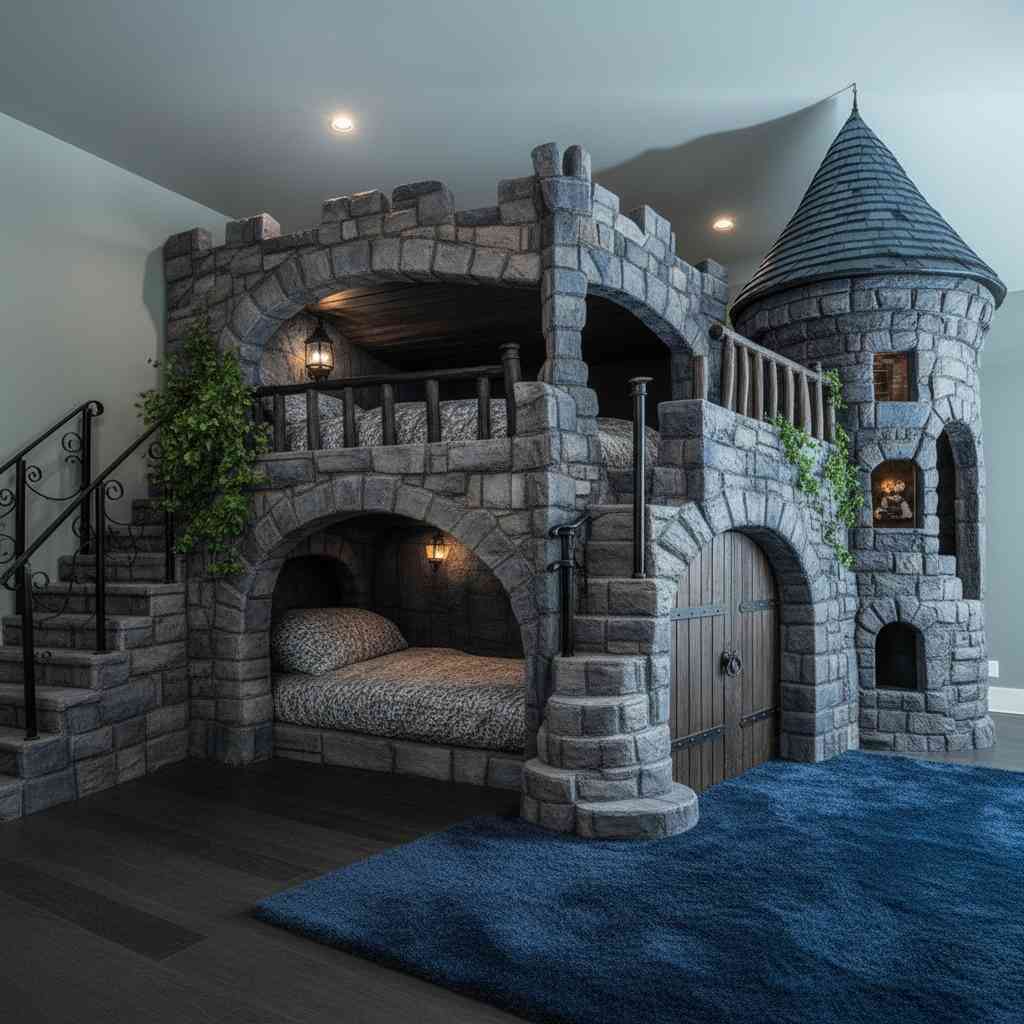
There is a quiet dignity in this repose. The knight dreams not of conquest, but of camaraderie — of feasts in the great hall (the kitchen table at breakfast), of tournaments in the backyard, of quests undertaken hand-in-hand with fellow adventurers. Their slumber is not passive — it is preparation. Each breath is a vow: I will wake. I will rise. I will protect.
And when they do wake — blinking in the dawn’s first light, hair tousled like a battle-worn helmet — they descend the ladder not as a child, but as a champion returned from the realm of Morpheus, ready to face the day’s new adventures.
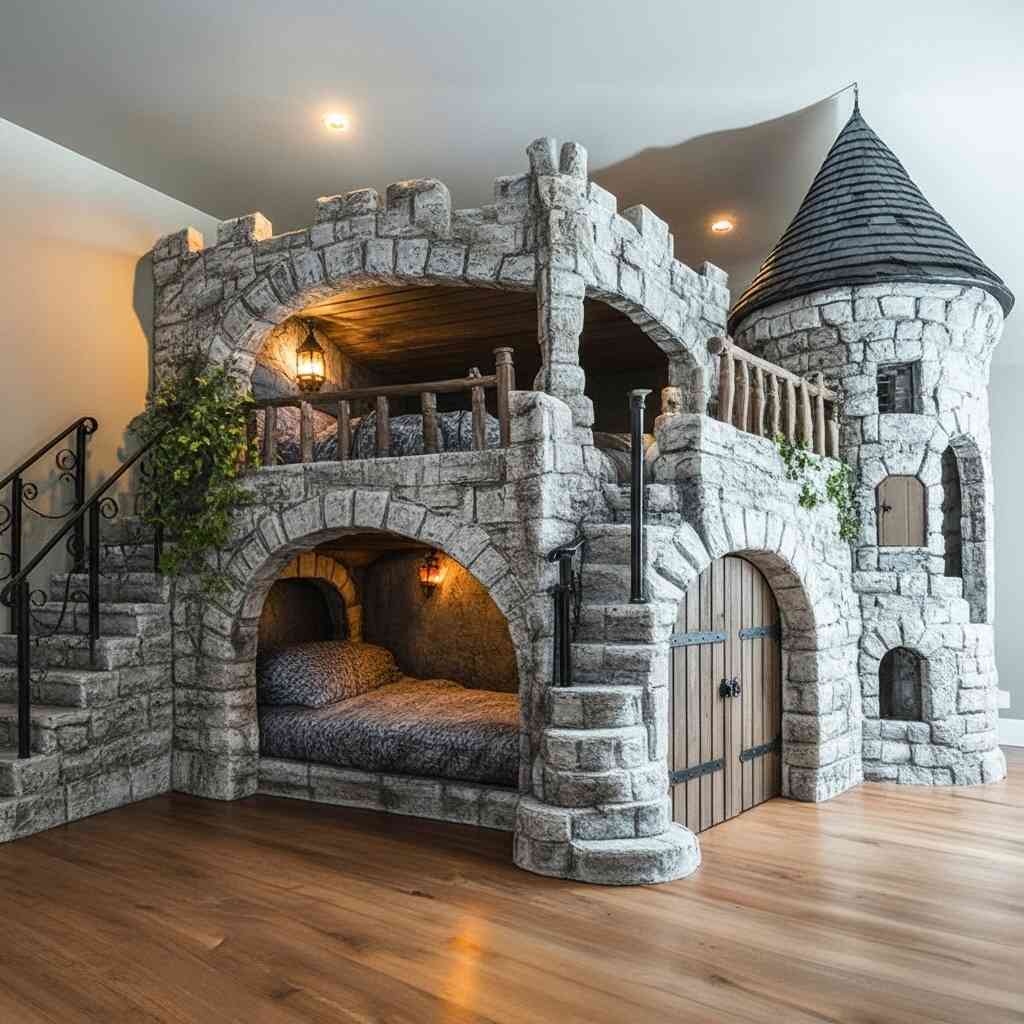
The Princess Who Dreams — Sovereignty of the Inner Realm
Below, in the hushed chamber of the lower bunk, dwells the princess. But not the damsel of old tales — no, this princess is sovereign. She rules not by decree, but by imagination. Her crown is invisible, woven from starlight and lullabies. Her throne? A nest of mismatched pillows and a well-loved stuffed unicorn.
The princess does not wait to be rescued. She dreams of rescuing others — of healing wounded griffins with enchanted herbs, of negotiating peace between warring tribes of garden gnomes, of discovering lost libraries hidden beneath the roots of ancient trees. Her power lies not in force, but in vision. In empathy. In the quiet courage it takes to believe in magic when the world insists on logic.
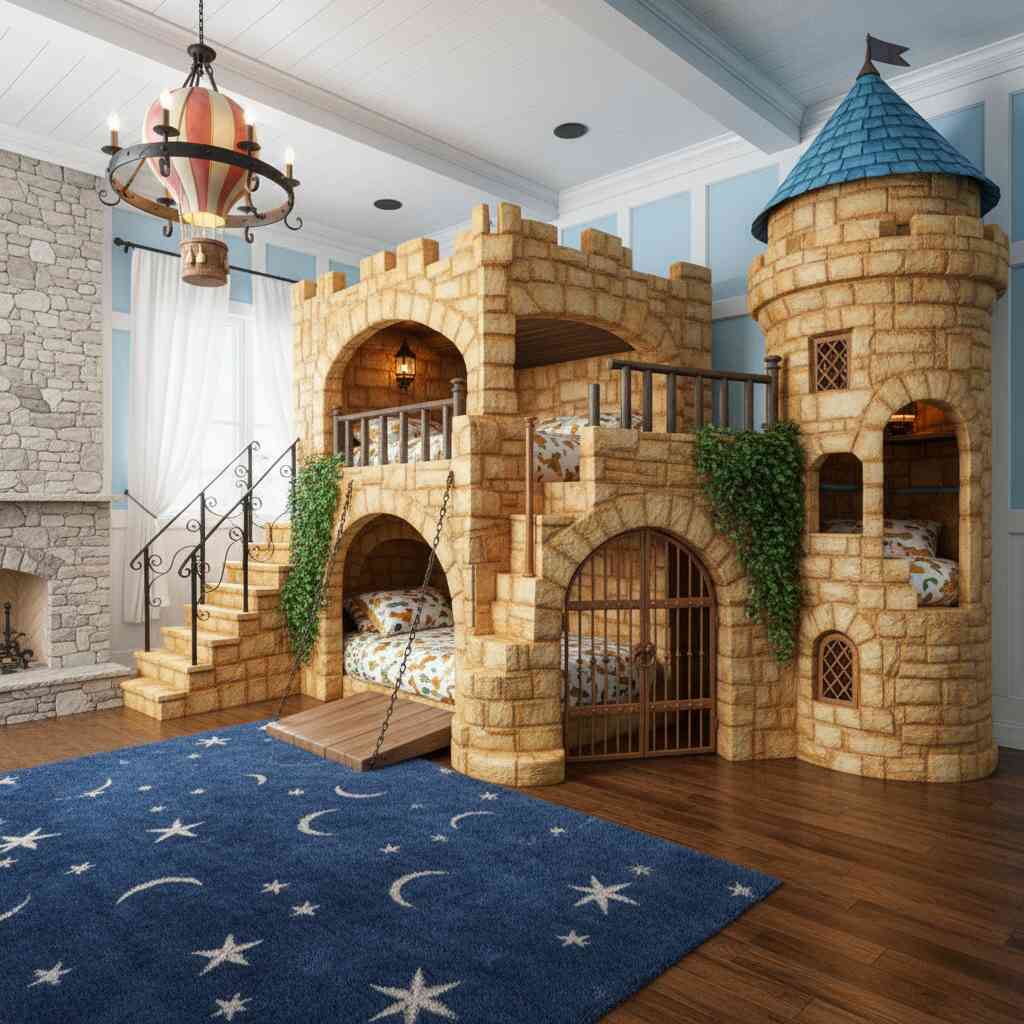
Her dreams are tapestries — rich, layered, and alive. She converses with moon-maidens who drift through her window. She receives counsel from wise owls perched on her bookshelf. She maps constellations on her ceiling with glow-in-the-dark stickers, each one a kingdom she will one day visit.
The Castle Bunk Bed shelters her not as a cage, but as a sanctum. Within its arched embrace, she is free to be soft and strong, whimsical and wise, vulnerable and victorious — all at once. The world outside may demand she grow up, sit still, be practical. But here, in her enchanted keep, she is eternal. Untamed. Whole.
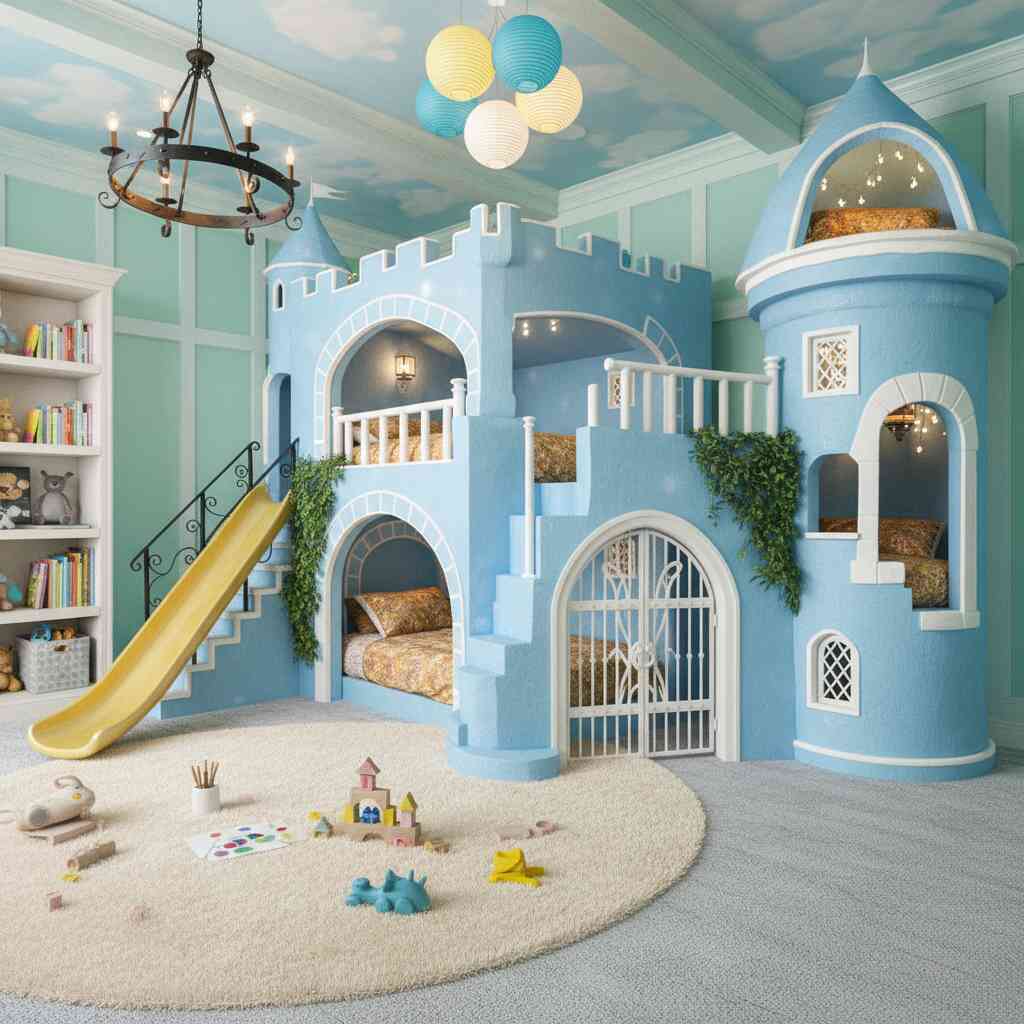
The Shifting Crowns — Fluidity of Fantasy
What makes the Castle Bunk Bed truly magical is its refusal to fix roles. Today’s knight may be tomorrow’s wizard. This week’s princess may next week command a fleet of pillow-ships as Admiral of the Blanket Seas. The architecture does not constrain — it liberates.
Siblings trade places with the solemnity of a royal exchange. “You be the dragon-keeper tonight,” one whispers. “I’ll be the moon-priestess,” replies the other. Gender, age, even personality dissolve in the alchemy of play. The shy child becomes a roaring giant. The boisterous one transforms into a silent guardian of ancient runes.
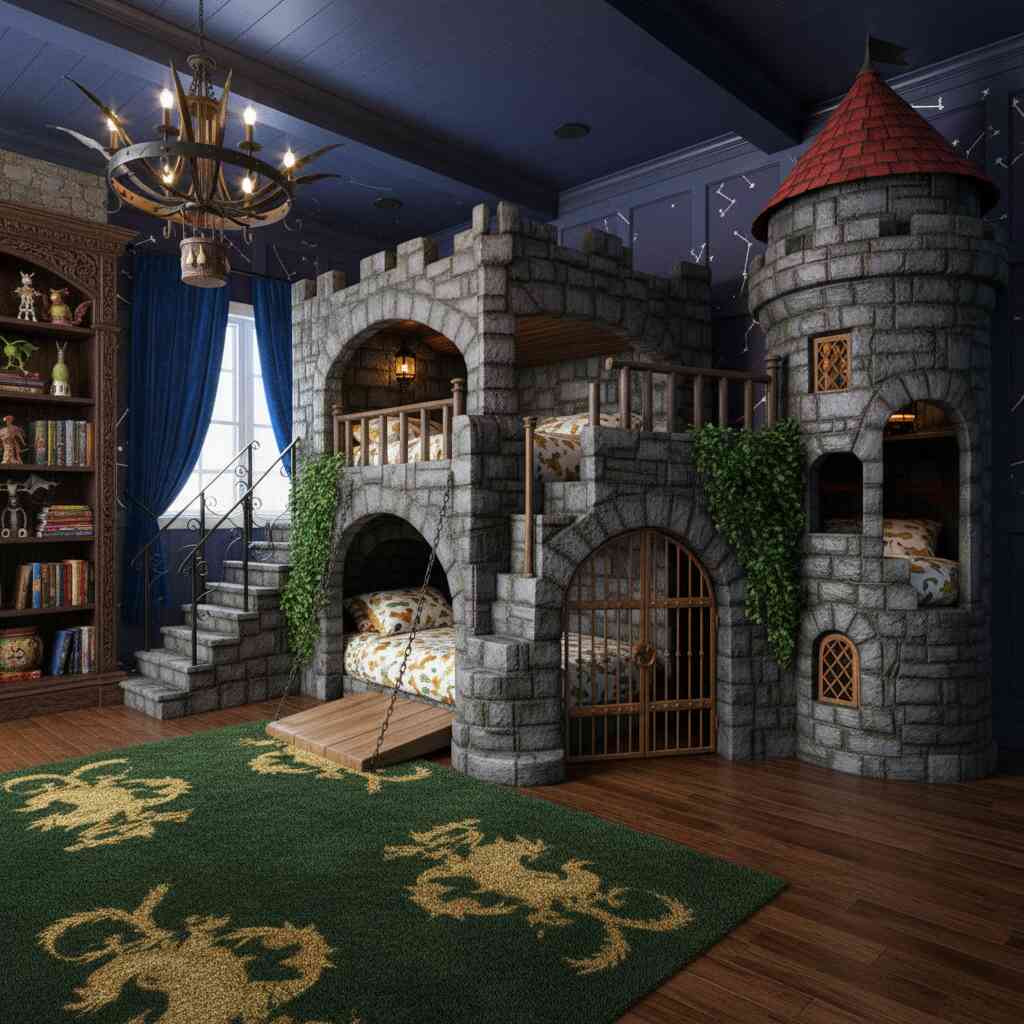
This fluidity is perhaps the bed’s greatest gift. It teaches, without lesson, that identity is not fixed — that we contain multitudes. That to dream is to try on selves like costumes in a royal wardrobe, discarding none, embracing all. The Castle Bunk Bed does not ask, “Who are you?” It whispers, “Who will you be tonight?”
And in that question lies the heart of childhood — and, if we are brave enough to remember, the heart of being human.
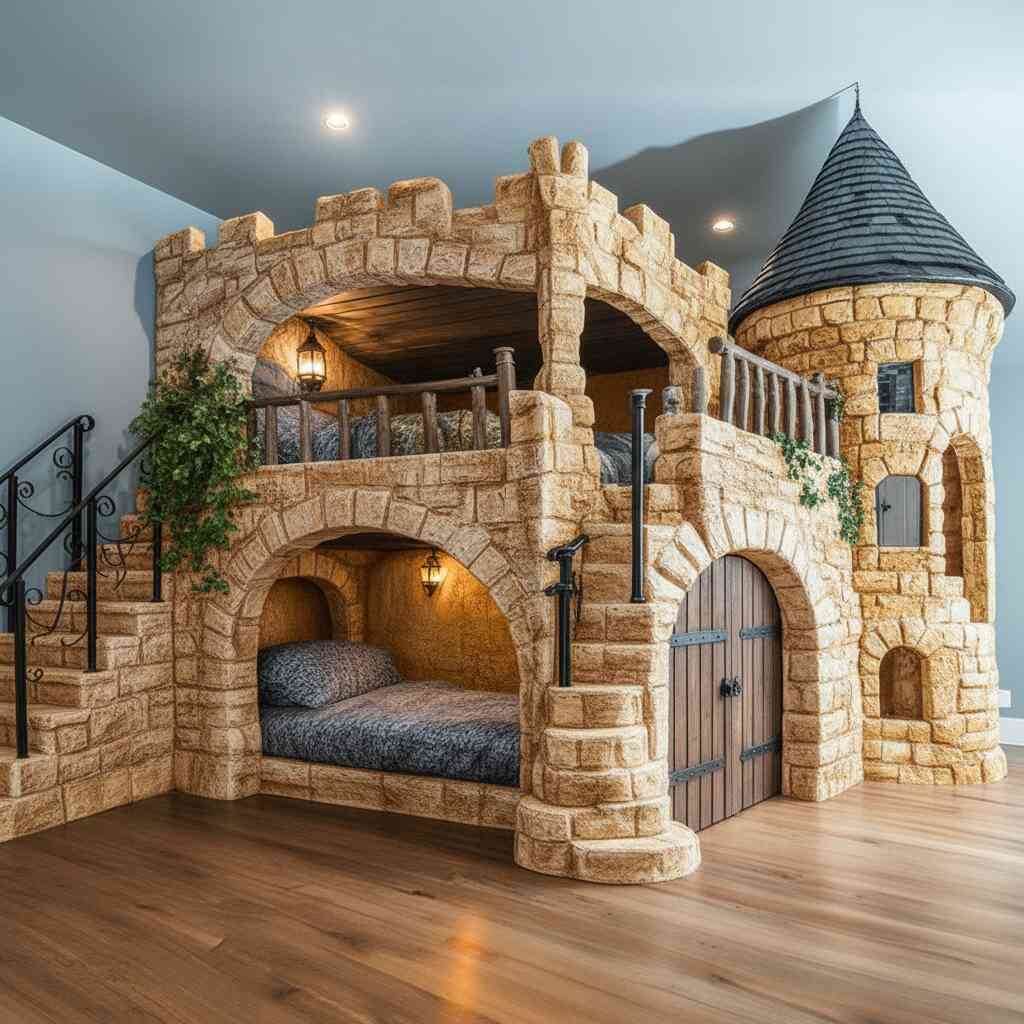
Part III: The Realm Beyond Sleep — Where Magic Lingers in Daylight
Dawn’s First Light — When the Castle Becomes a Fortress of Play
The true test of any enchanted object is not how it serves the night, but how it endures the day. The Castle Bunk Bed does not retreat when the sun rises — it transforms.
By daylight, it is no longer just a bed. It is a command center. A spaceship cockpit. A jungle canopy. A pirate ship’s crow’s nest. The same structure that cradled dreams now fuels adventures. Blankets become sails. Pillows, barricades. The ladder? A rope bridge over a canyon of carpet-shark-infested waters.
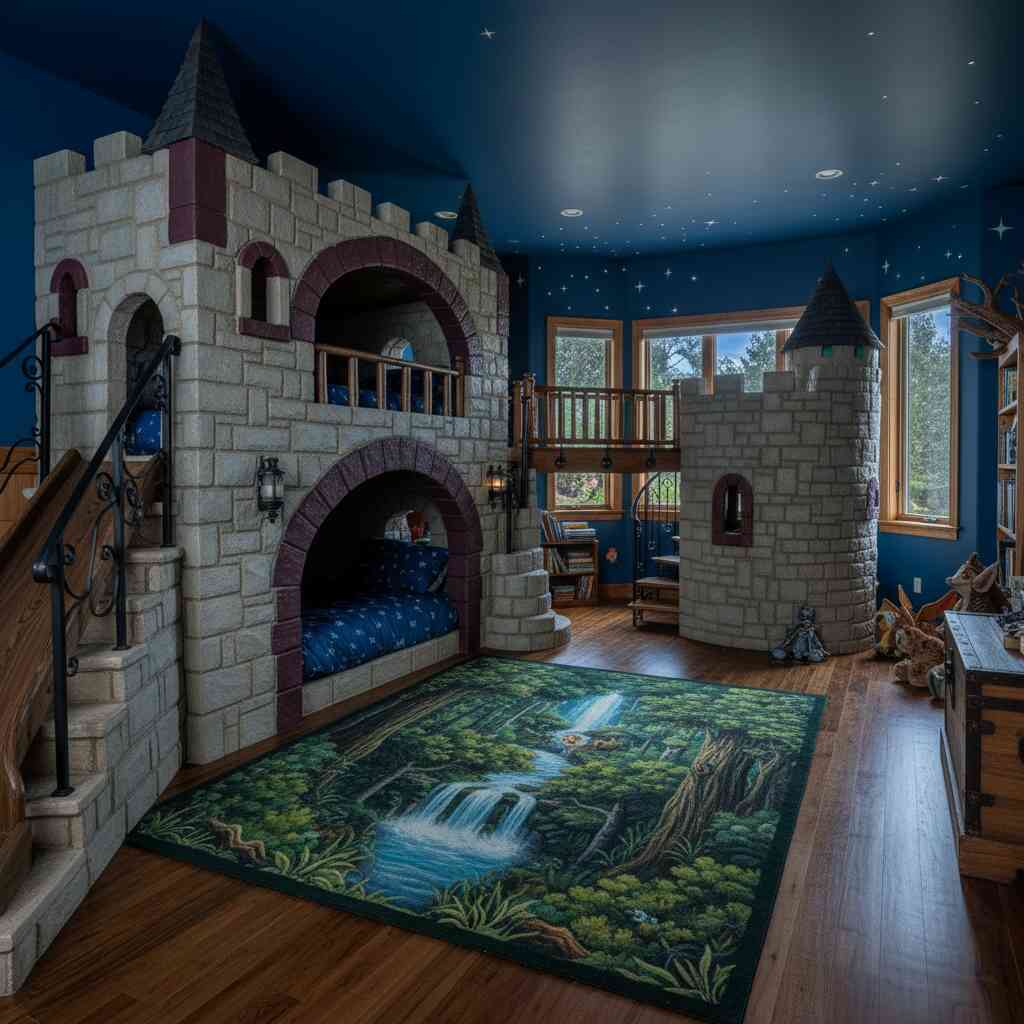
Children do not see furniture — they see possibility. The Castle Bunk Bed, with its inherent theatricality, invites this transformation. Its towers become perches for lookout duty. Its lower chamber, a laboratory for potion-making (read: mixing juice and cereal in a plastic cup). Even the space beneath — often ignored in lesser beds — becomes a secret tunnel, a bear’s den, a time machine’s engine room.
This is where the magic of the Castle Bunk Bed reveals its deepest secret: it is not bound by function. It exists in the liminal space between utility and fantasy, equally at home in the practical world of naptime and the boundless realm of make-believe. It does not ask the child to choose between rest and play — it insists they are one and the same.
The Echoes in the Walls — Memory Woven into Wood
Years pass. Children grow. The Castle Bunk Bed, once a towering citadel, begins to feel smaller. The climb to the top bunk becomes effortless — then unnecessary. The lower chamber, once a realm of mystery, is now just a place to stack laundry or store off-season clothes.
But the magic does not vanish. It settles. It seeps into the grain of the wood, into the scratches on the ladder rungs, into the faint crayon marks hidden behind the headboard — battle maps, perhaps, or the hastily scrawled names of imaginary kingdoms.
Parents tuck away the bedding, dismantle the guardrails, pack the bed into storage — or pass it on to younger cousins, neighbors, friends. But they cannot pack away the memories. They hear them in the quiet of the empty room — the echo of laughter bouncing off faux stone walls, the ghost of whispered secrets traded under cover of night, the phantom creak of small feet ascending to dreams.
The Castle Bunk Bed leaves its mark not on the floor, but on the soul. Those who slept within its walls carry its enchantment forward — into treehouses, into college dorms, into their own children’s rooms. They may not remember every adventure, but they remember the feeling: the safety of stone walls, the thrill of height, the comfort of hidden nooks, the certainty that magic was not outside — it was within, summoned by nothing more than belief and a well-placed pillow.
Guardians of the Threshold — The Adults Who Keep the Magic Alive
And what of the grown-ups? The ones who assembled the bed with wrenches and patience, who tucked blankets around dreaming knights, who pretended not to hear the midnight giggles drifting down from the tower?
They, too, are part of the realm. Not as rulers, but as stewards. They are the castle’s silent guardians — the ones who leave the nightlight on, who “accidentally” forget to close the curtains so the moon can visit, who nod solemnly when told that the stuffed bear must sleep on the rampart to stand watch.
They understand, even if they do not say it aloud, that the Castle Bunk Bed is not about sleep. It is about sanctuary. About giving children a space where they are not just safe, but sovereign. Where they can rehearse courage, practice compassion, explore identity — all under the guise of play.
These adults know that childhood is not preparation for life — it is life, in its most vivid, unfiltered form. And the Castle Bunk Bed? It is the stage upon which that life unfolds, night after night, dream after dream.
Conclusion: The Eternal Keep — Where Every Child is Royalty
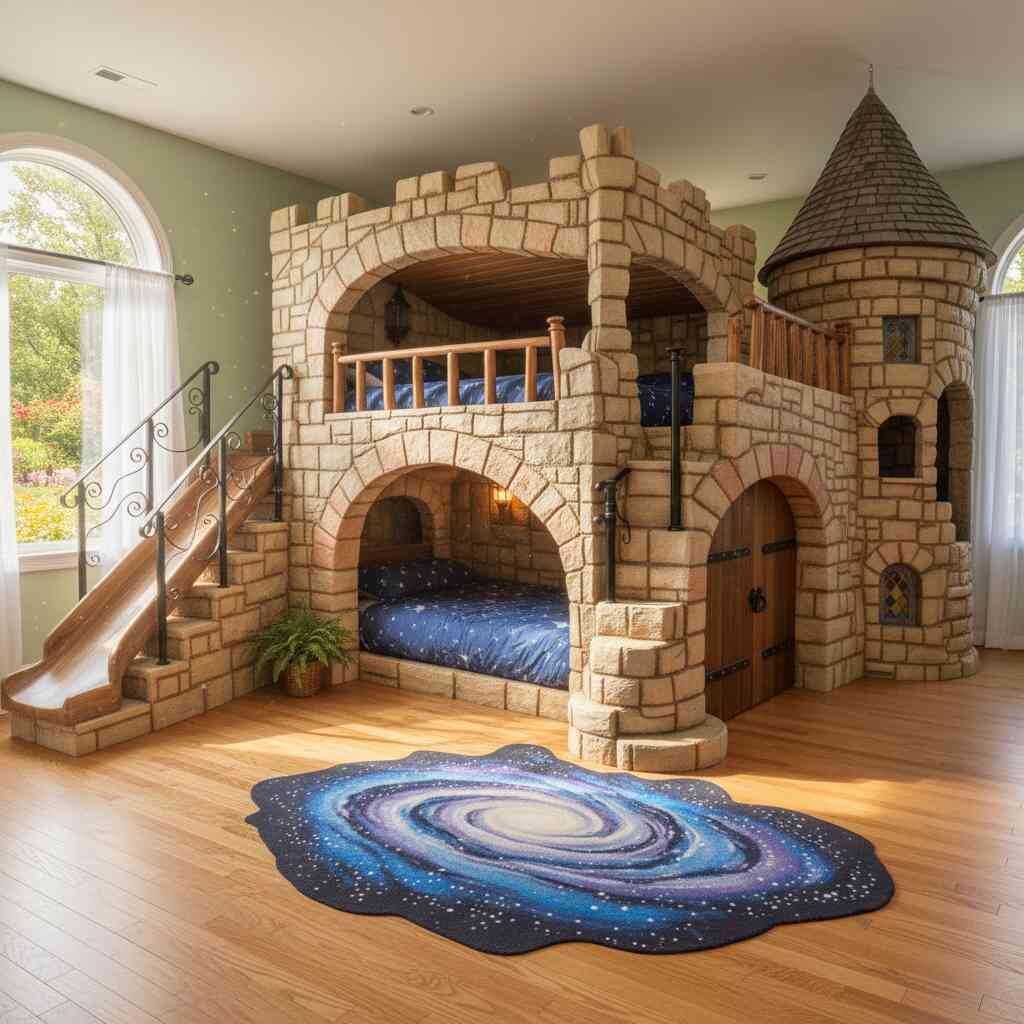
The Castle Bunk Bed does not belong to the world of things. It belongs to the world of becoming.
It is where small bodies rest, yes — but where vast souls expand. Where fear is faced not with lectures, but with dragon-slaying dreams. Where loneliness is answered not with screens, but with whispered stories shared through the bars of a guardrail. Where the self is not defined by grades or teams or likes, but by the roles we dare to dream into being.
In a world that hurries children to grow up, to sit still, to be practical, the Castle Bunk Bed stands as quiet rebellion. It says: Not yet. Not here. Here, you are king. Here, you are queen. Here, you are free.
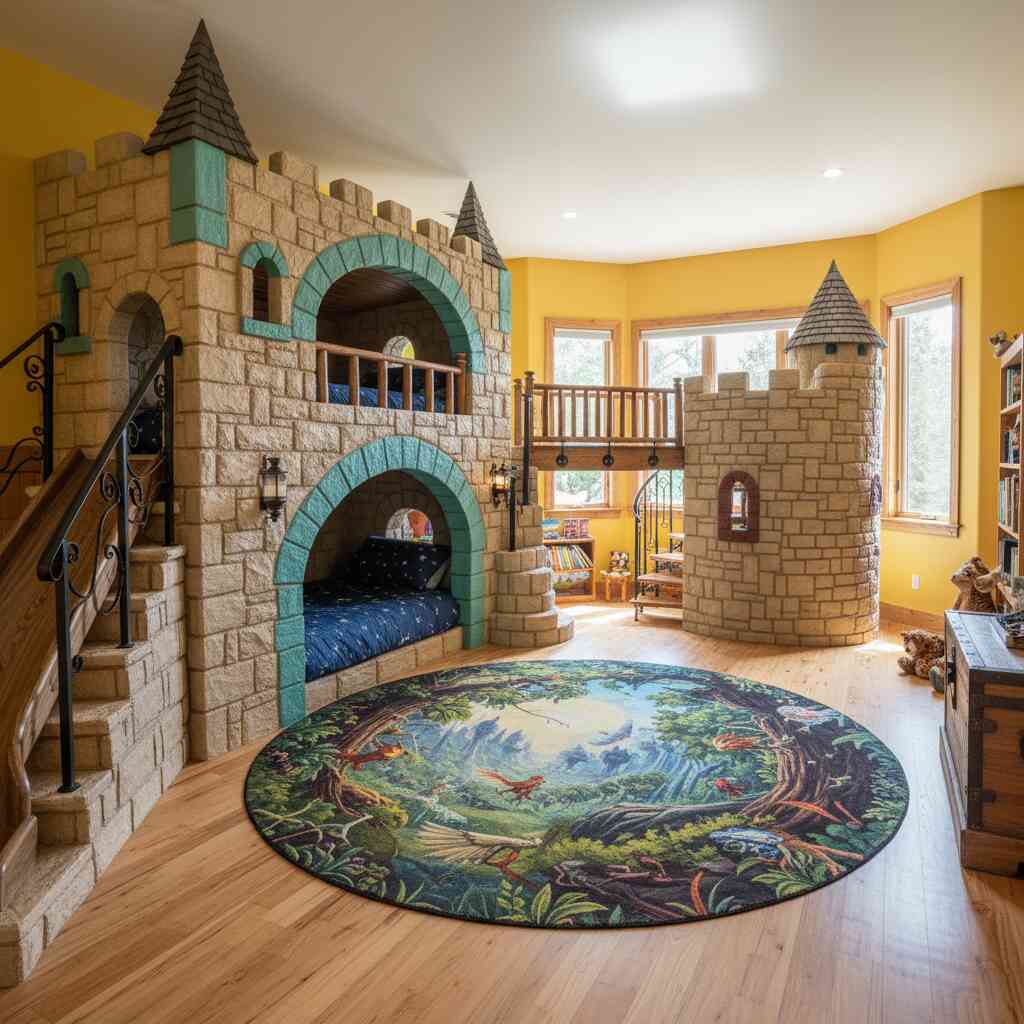
Its turrets may be plywood. Its banners, bedsheets. Its moat, a scattering of Legos. But its magic? That is real. Woven from belief. Strengthened by laughter. Sanctified by sleep.
So let the knights nap. Let the princesses dream. Let the dragons nap beneath the bed and the wizards scribble spells on the walls. Let the Castle Bunk Bed stand — not as furniture, but as testament.
Testament to the truth that childhood is not a waiting room. It is a realm. And every child who enters it — climbing, crawling, whispering, wondering — is royalty.