
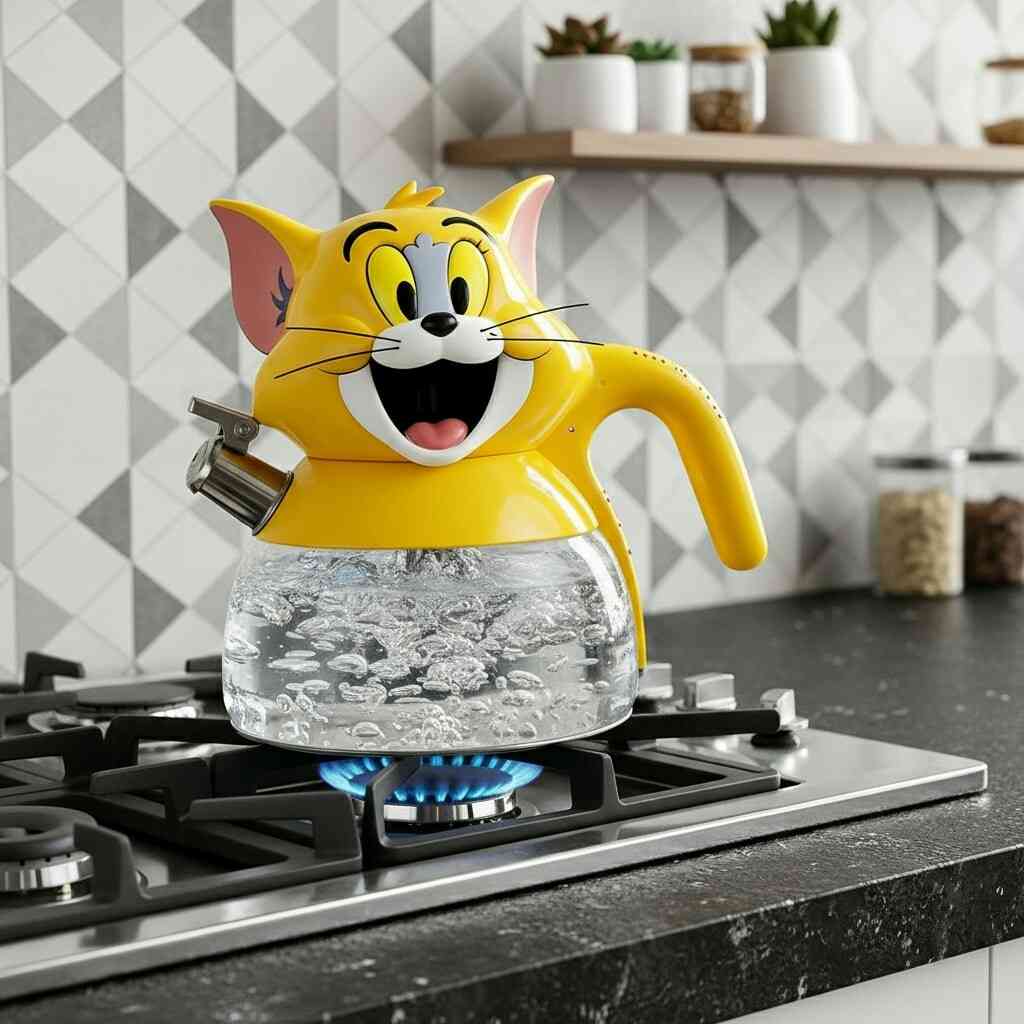
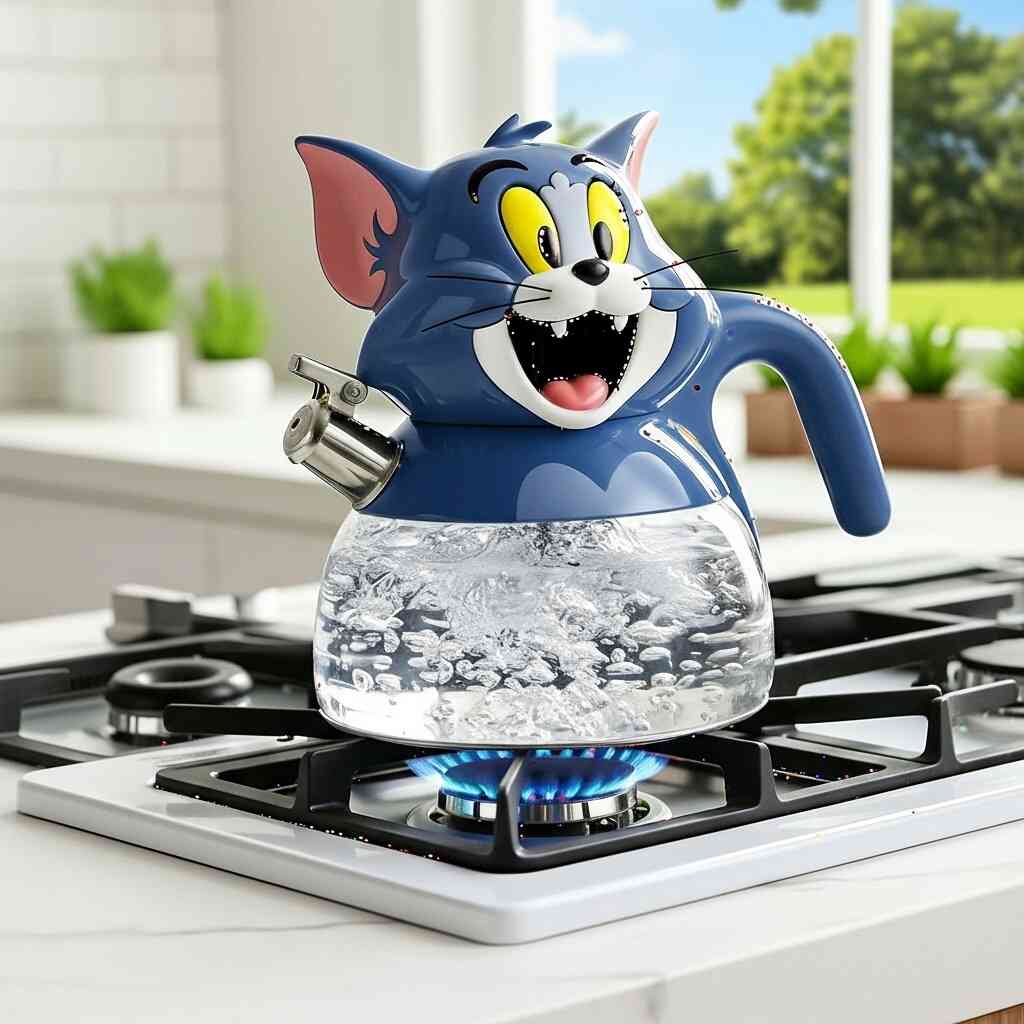
In an era where design trends lean toward minimalism, digital interfaces, and sleek modernity, there remains a quiet but persistent reverence for the past — particularly for the animated charm of mid-20th century cartoons. Among the most enduring icons of this golden age is the cat-and-mouse duo Tom and Jerry, whose slapstick choreography, expressive silence, and timeless rivalry have transcended generations. Now, in an unexpected yet deeply resonant form, their spirit has been resurrected not on screen, but in the kitchen: the Tom and Jerry Kettle. More than a mere vessel for boiling water, this kettle embodies the aesthetic, emotional, and cultural essence of its animated predecessors. It does not shout its nostalgia; it whispers it — through curved spouts that mimic a cat’s arc, through handle shapes that echo a mouse’s leap, through color palettes that recall hand-painted cels from 1940s MGM studios. The Tom and Jerry Kettle is not a product of marketing strategy or mass appeal; it is a love letter to animation history, crafted by those who remember the joy of watching two adversaries dance across the screen without uttering a single word.
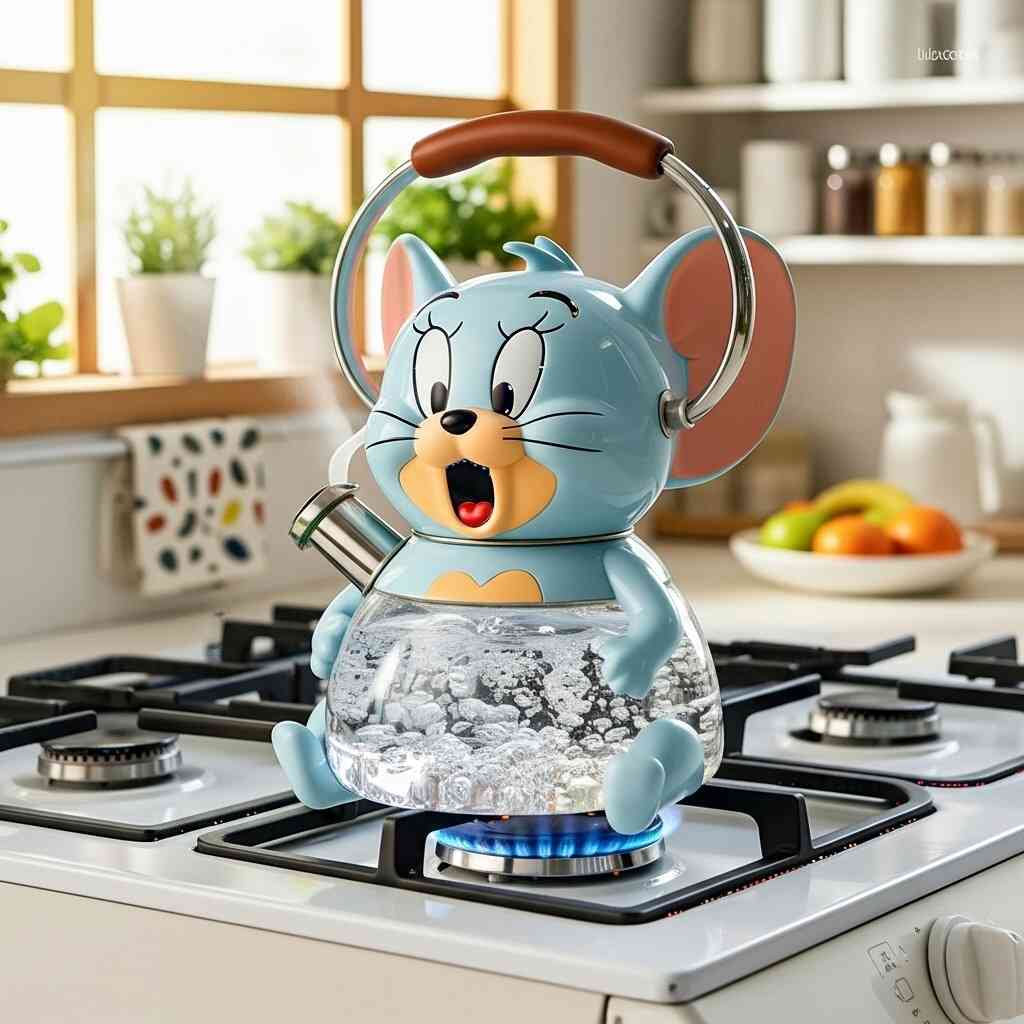
The kettle’s existence speaks to something deeper than functionality. In a world increasingly dominated by efficiency and speed, the Tom and Jerry Kettle invites us to slow down — to pause while the water sings, to watch the steam curl like Jerry’s tail as he dodges Tom’s swipe, to find delight in the ritual rather than the result. Its design does not seek to replicate the cartoon literally, but to evoke its soul. This article explores how the Tom and Jerry Kettle channels the spirit of classic animation, reimagining everyday domestic objects through the lens of timeless humor, visual poetry, and cultural memory.
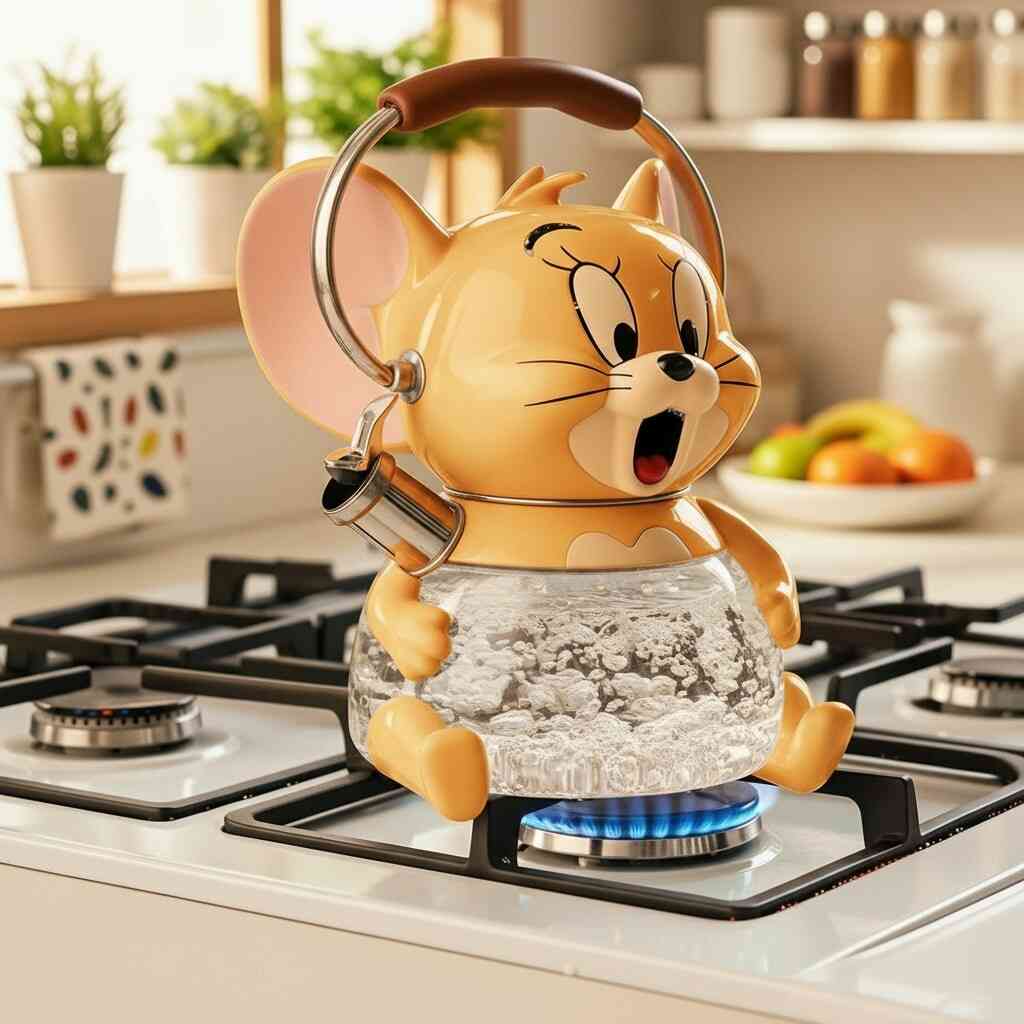
Aesthetic Homage: Where Form Meets Film
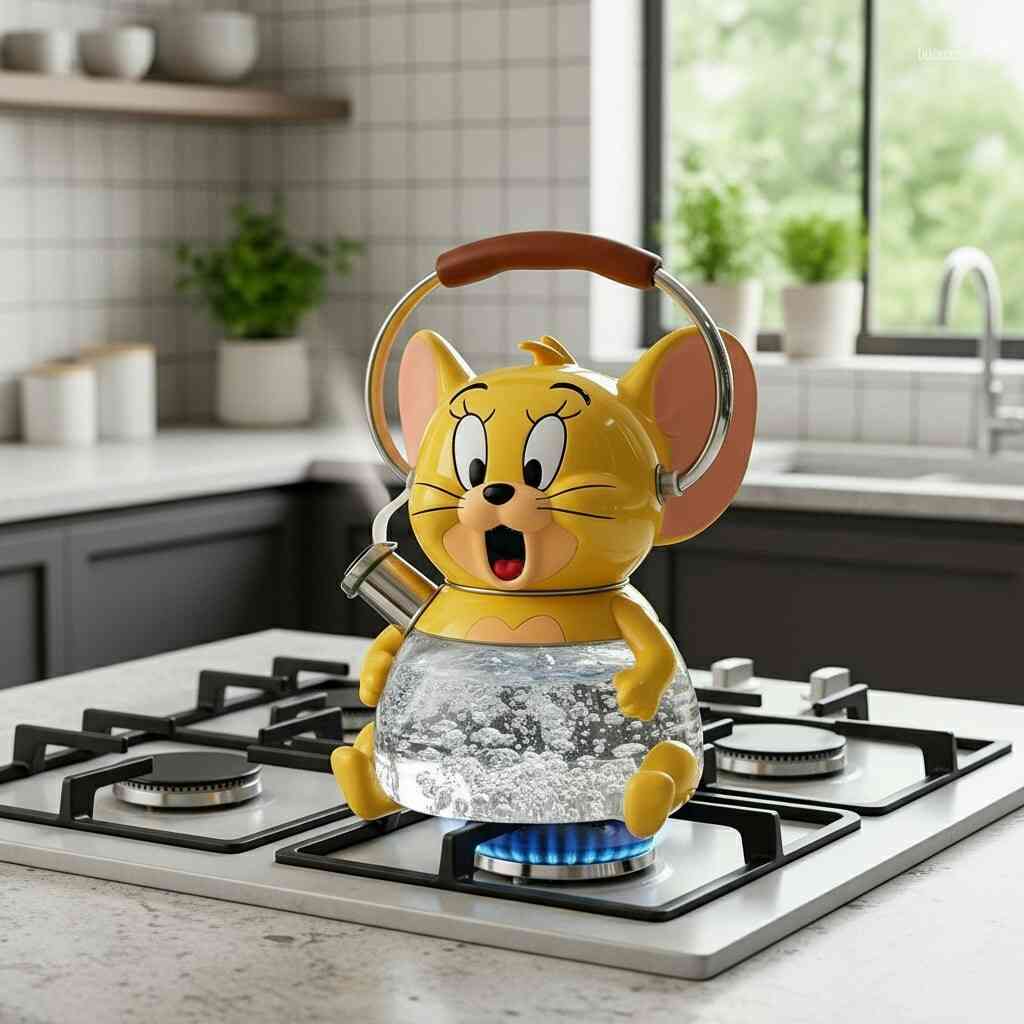
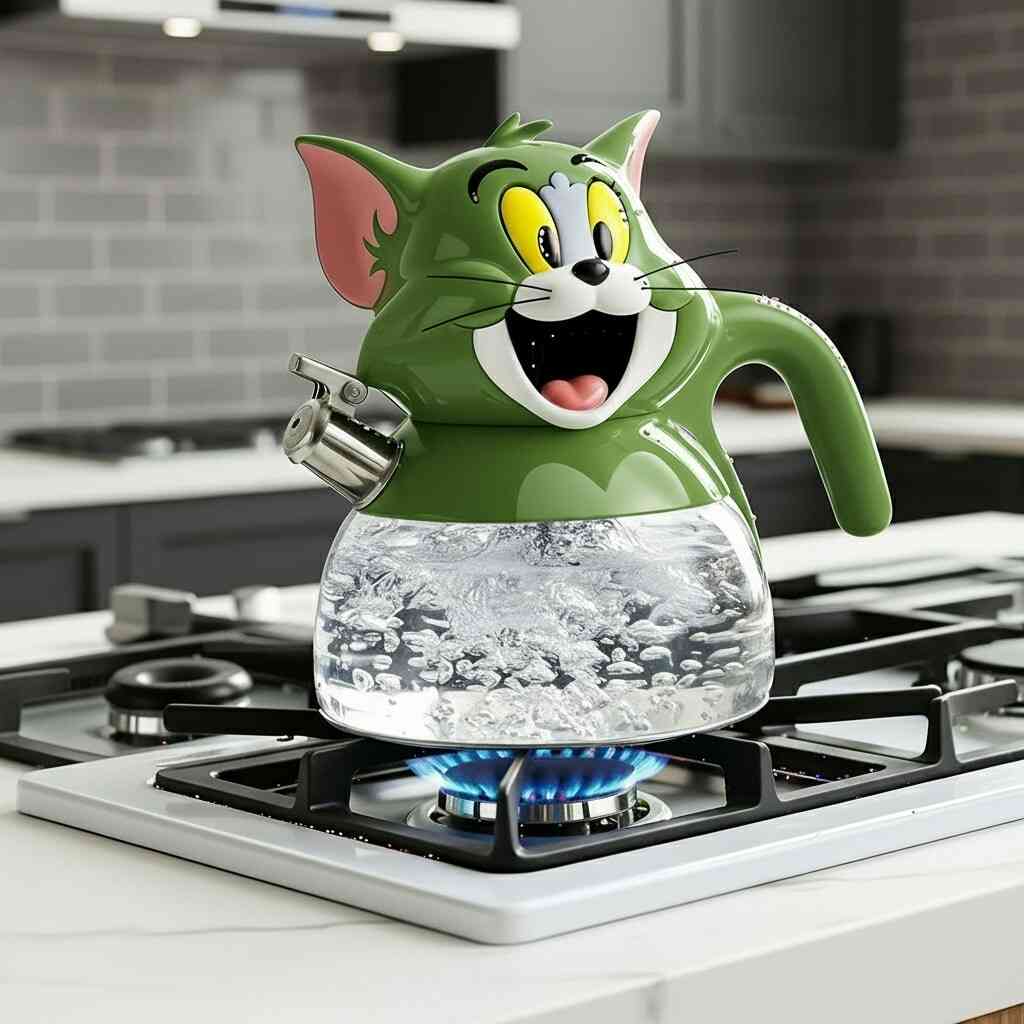
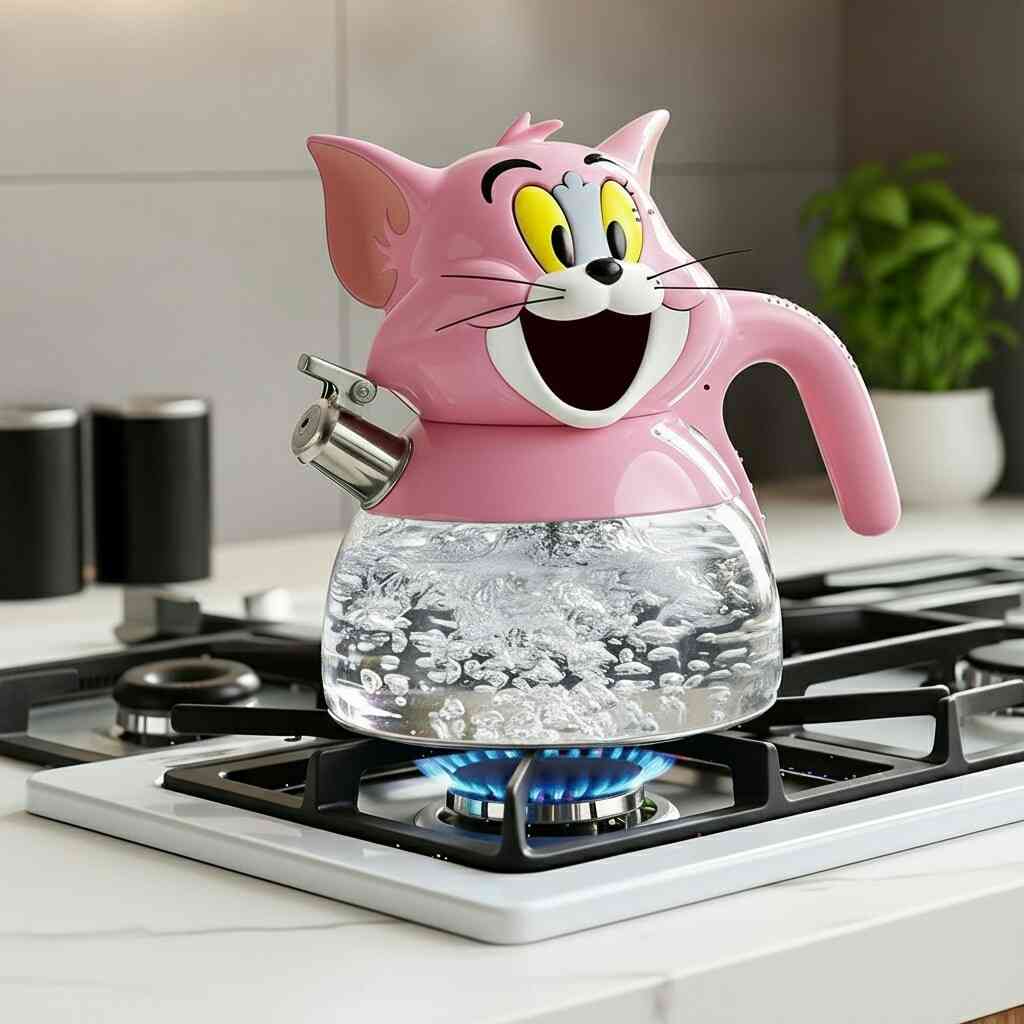
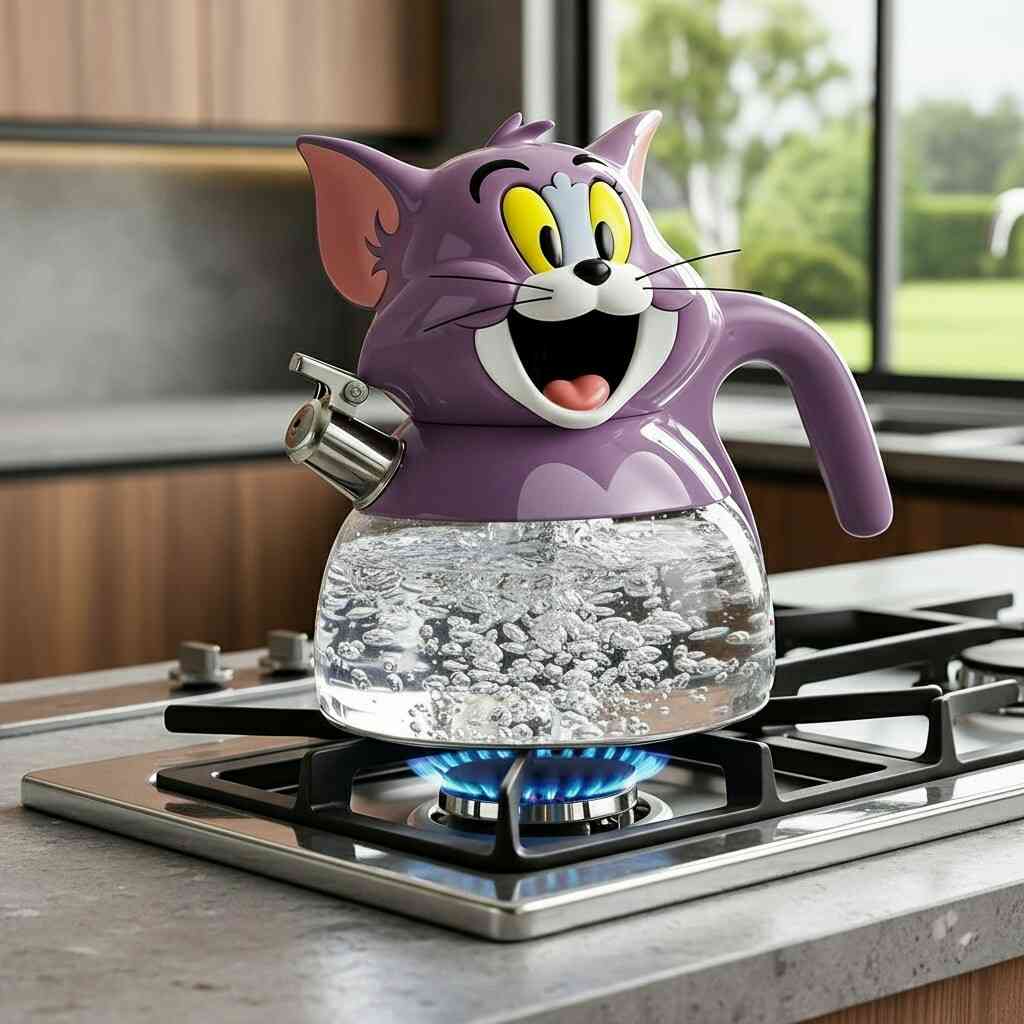
The Tom and Jerry Kettle is a masterclass in subtle homage. Unlike many retro-inspired household items that plaster logos or character images onto surfaces, this kettle avoids direct representation entirely. There are no printed faces, no cartoon outlines, no neon eyes staring out from the lid. Instead, its beauty lies in abstraction — in curves that suggest motion, in angles that imply tension, in proportions that mirror the exaggerated physics of the original shorts.
Consider the spout. Designed with a gentle upward curve, it mimics the trajectory of Tom leaping after Jerry, suspended mid-air just before the inevitable crash. The curve is not sharp, not clinical — it flows like ink on celluloid, carrying the viewer’s eye along a path of implied momentum. The handle, too, is sculpted with intention: slightly wider at the grip, tapering into a delicate arch that recalls Jerry’s slender silhouette as he scampers under furniture. The knob atop the lid is subtly rounded, evoking the roundness of Tom’s head, while the base widens with a soft bulge reminiscent of his belly when he’s caught off guard.
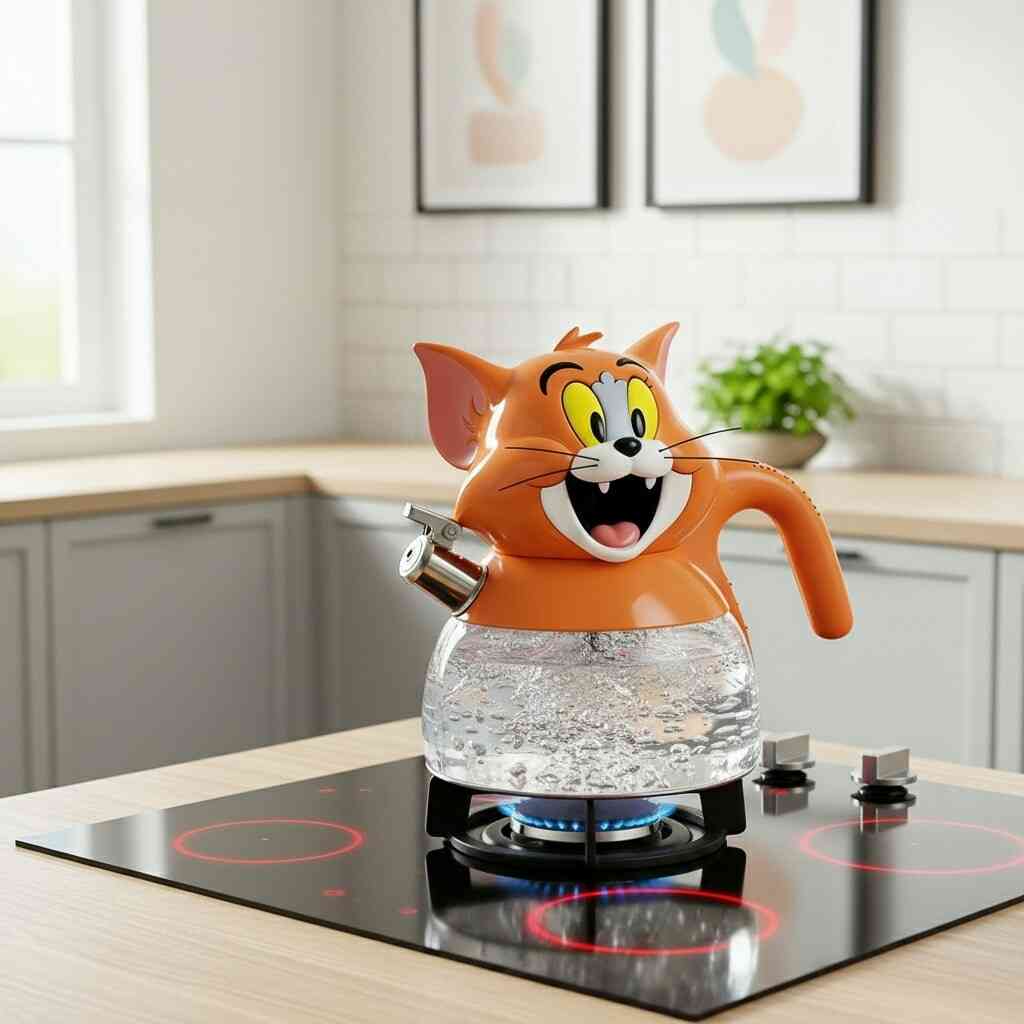
Even the material choice carries meaning. The kettle is typically finished in matte enamel — not glossy, not reflective — lending it the same tactile warmth as aged animation cels stored in studio archives. The colors, too, are carefully calibrated: muted blues and creams for the body, with accents of burnt orange and charcoal that echo the limited palette of early Technicolor cartoons. These are not bold primary colors screaming for attention; they are hues that whisper of projection rooms lit only by flickering light, of Saturday mornings spent curled on the floor with a bowl of cereal and wide-eyed wonder.
The absence of sound in the original cartoons was not a limitation — it was an artistic triumph. And so, too, is the silence of the Tom and Jerry Kettle. It does not beep, flash, or announce itself with digital tones. When the water boils, it sings — a low, rising whistle that builds like the crescendo of a jazz score accompanying a chase scene. The whistle’s tone is intentionally old-fashioned, echoing the mechanical whistles of 1950s teakettles, which themselves were designed to be musical rather than merely functional. In this way, the kettle becomes an instrument — one that plays the symphony of domestic life with the rhythm of a Looney Tunes gag.
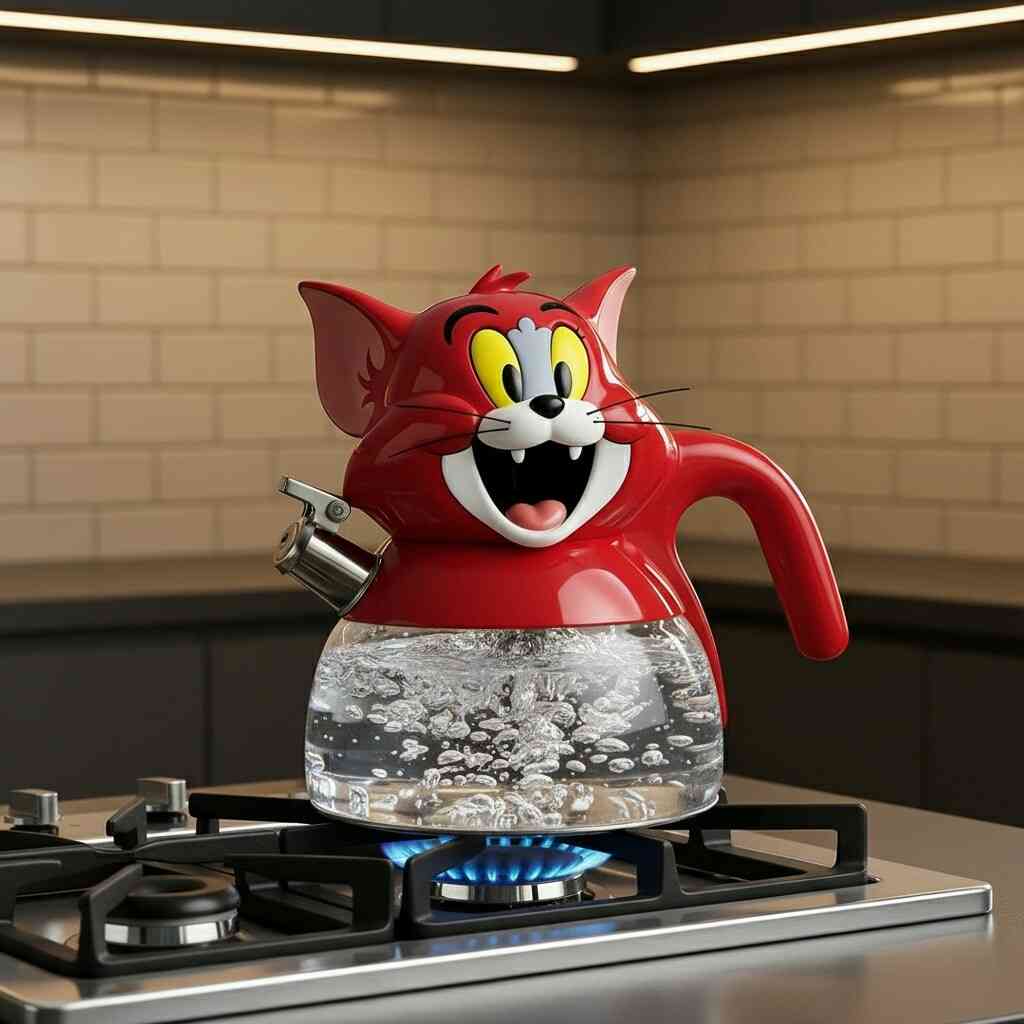
Cultural Resonance: Nostalgia Without Sentimentality
To call the Tom and Jerry Kettle nostalgic would be accurate, but incomplete. Nostalgia often implies longing for a lost time, sometimes tinged with melancholy. But this kettle does not mourn the past — it celebrates its vitality. It does not ask you to remember the 1940s; it asks you to feel them.
The original Tom and Jerry cartoons were born in a world recovering from depression and war. They offered no moral lessons, no political commentary, no redemption arcs. What they offered was pure kinetic joy — chaos rendered beautiful through timing, rhythm, and precision. The characters never spoke, yet communicated more than most modern protagonists with monologues. Their relationship was not friendship, not enmity — it was a dance. A perpetual ballet of pursuit and evasion, destruction and survival, each episode resetting to zero as if time itself had been rewound.
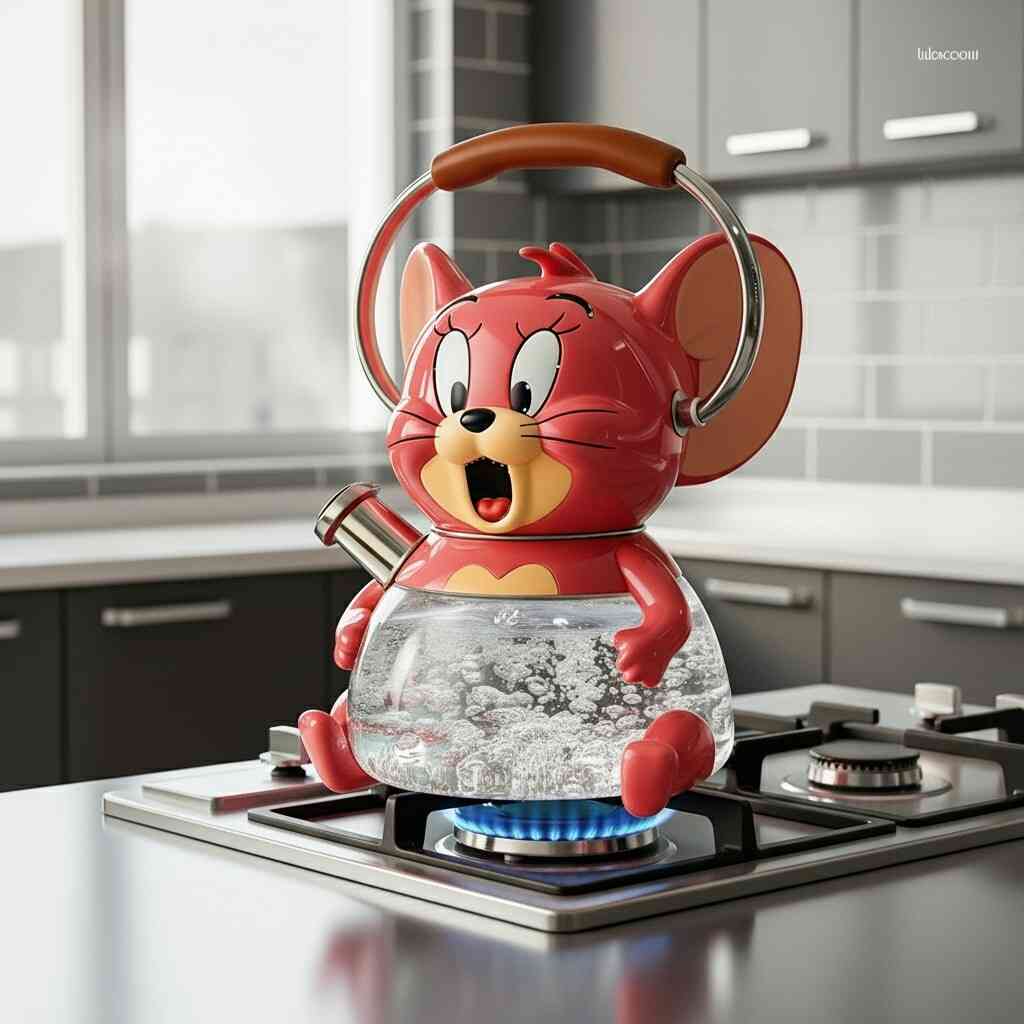
The Tom and Jerry Kettle captures this cyclical nature. It does not promise efficiency or innovation. It promises repetition — the same ritual, the same sound, the same moment of anticipation. You fill it. You place it on the stove. You wait. And when the whistle sounds, you know: the chase has reached its climax. The kettle becomes a silent participant in your daily routine, a reminder that even in mundane acts — making tea, pouring coffee — there can be drama, suspense, and release.
This resonance is felt most keenly by those who grew up with the cartoons on grainy television screens or VHS tapes, but also by younger generations discovering them through streaming platforms. There is something universally human in the dynamic between opposites locked in playful conflict — in the idea that struggle can be beautiful, that failure can be funny, that energy can persist endlessly without resolution. The Tom and Jerry Kettle makes this philosophy tangible. It doesn’t solve problems. It doesn’t streamline life. It simply exists, humming quietly in the corner of the kitchen, waiting to remind you that joy lives in the in-between moments.
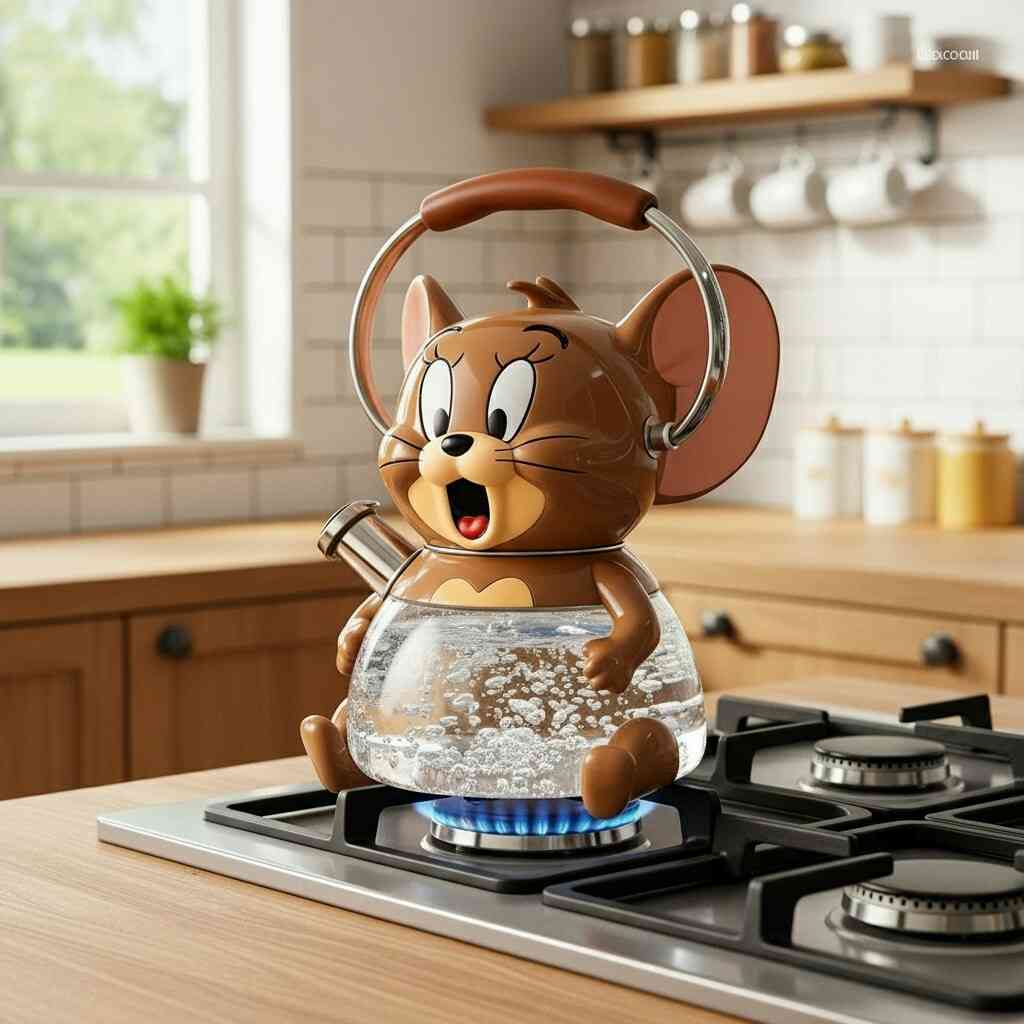
Design Philosophy: Minimalism with Maximum Soul
Modern design often equates elegance with reduction — clean lines, neutral tones, hidden mechanisms. But the Tom and Jerry Kettle challenges this notion by proving that minimalism need not mean emptiness. On the contrary, its minimalism is layered with meaning. Each contour, each texture, each weight distribution has been considered not for industrial uniformity, but for emotional impact.
There are no buttons. No LED displays. No smartphone connectivity. The kettle operates on the simplest principle: heat causes water to boil, and boiling water produces steam, which escapes through a precisely engineered whistle. This simplicity echoes the storytelling of the original cartoons — no dialogue, no exposition, no backstories. Just movement. Just consequence. Just cause and effect, rendered with perfect comedic timing.
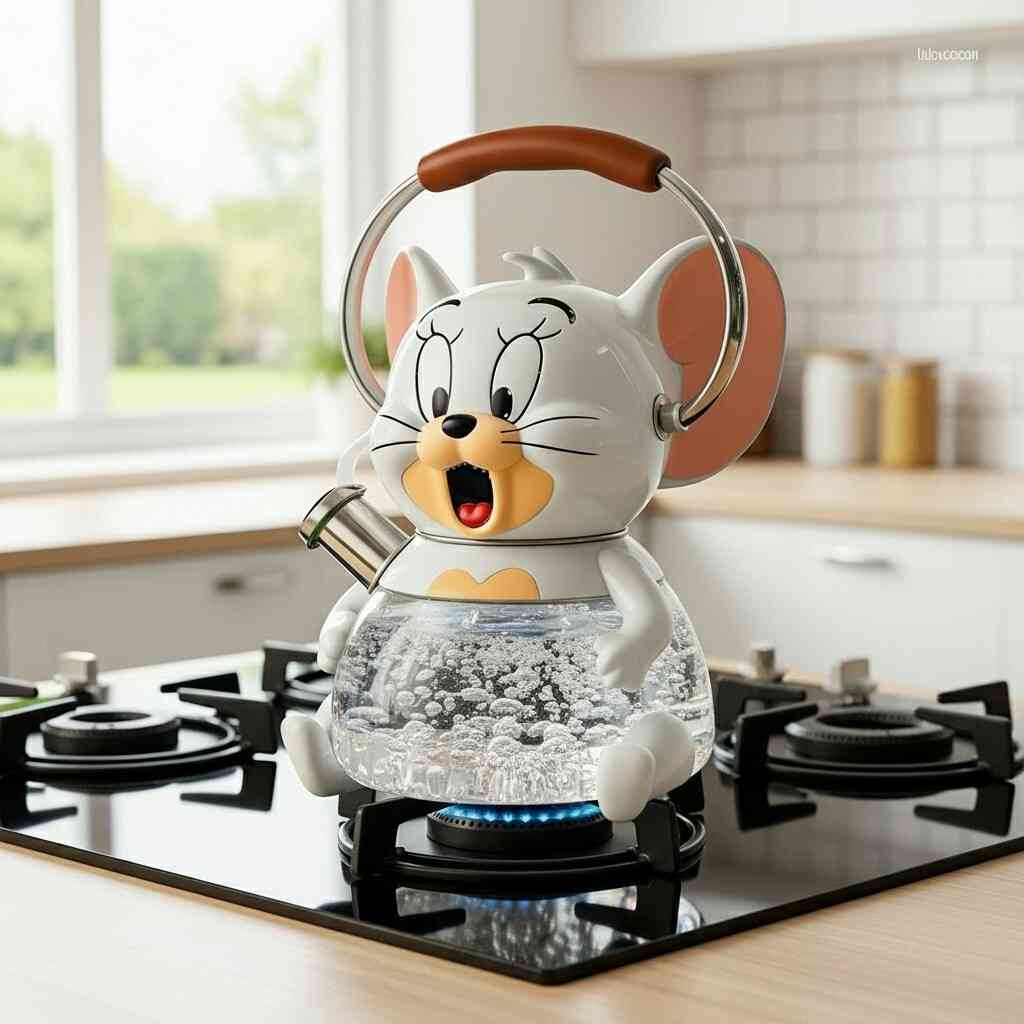
The kettle’s craftsmanship reflects a reverence for analog processes. Many versions are hand-finished, with slight imperfections in the enamel that resemble the brushstrokes of original animators who painted each frame by hand. The weight of the kettle in your hands feels substantial — not heavy, but grounded — like the physicality of celluloid film. It does not feel disposable. It feels heirloom-worthy. To hold it is to feel connected to a lineage of artisans, both in animation and in metalwork, who believed that objects could carry emotion.
Even the packaging tells a story. Rather than plastic clamshells or cardboard boxes filled with plastic inserts, the Tom and Jerry Kettle arrives wrapped in recycled kraft paper tied with twine, stamped with a simple line drawing of Tom mid-leap and Jerry peeking from behind a teacup. The instruction manual? A single sheet of paper with no text — only a sequence of six illustrated panels showing the kettle being filled, placed on the stove, whistling, poured, cleaned, and set aside. It’s a silent comic strip, inviting the user to become part of the narrative.
This philosophy extends beyond aesthetics into ethics. The kettle is built to last. Repairs are encouraged. Replacement parts are available. There is no planned obsolescence. In a culture obsessed with constant upgrade cycles, the Tom and Jerry Kettle stands as a quiet rebellion — a statement that some things are worth preserving, not replacing.
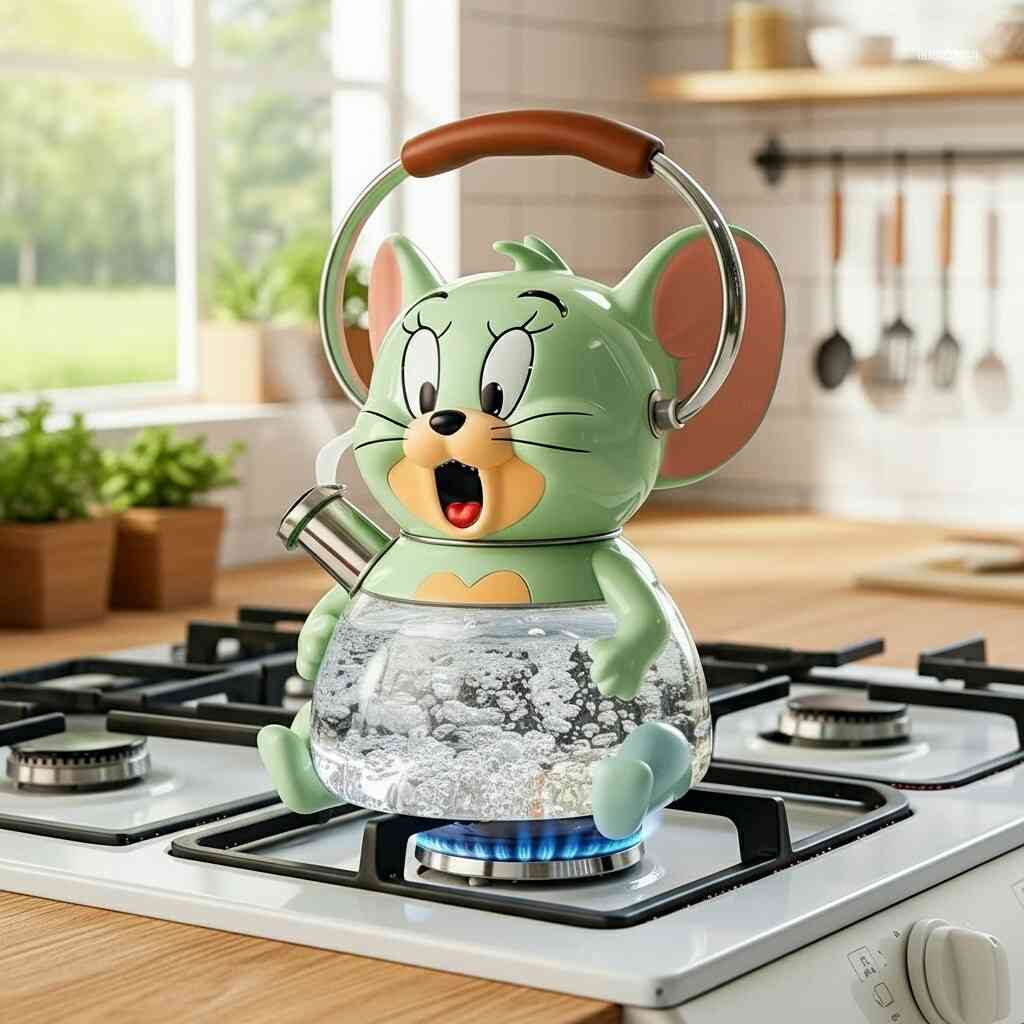
The Quiet Theater of Daily Life
One might ask: why a kettle? Why not a toaster shaped like Jerry’s tail? Or a coffee mug with Tom’s whiskers etched in gold? The answer lies in the nature of the kettle itself. Unlike other kitchen appliances, the kettle is inherently performative. It does not merely function — it announces. It sings. It demands attention. It turns a simple act — heating water — into an event.
In this way, the Tom and Jerry Kettle transforms the kitchen into a stage. Every time it whistles, it is a curtain rising. The steam rising from the spout becomes the cloud of dust kicked up during a high-speed chase. The hiss of escaping vapor is the squeak of Jerry’s tiny feet. Even the clink of the lid as it settles after boiling echoes the final thud of Tom landing on his backside.
There is no audience for this performance except the person using it — and perhaps a pet cat dozing nearby, unaware that it is sharing space with a tribute to its fictional nemesis. Yet, in that solitude, the ritual gains intimacy. You don’t need to show it off. You don’t need to post it online. You simply experience it. And in experiencing it, you become part of the cartoon’s legacy.
This is the true magic of the Tom and Jerry Kettle. It does not require recognition to be meaningful. It does not need to be trendy. It thrives in quiet corners — beside a window where morning light catches the enamel, or on a counter cluttered with mugs and spoons, where its presence is as natural as the smell of brewing tea. It belongs to the domestic sublime — the ordinary made extraordinary through attention, care, and memory.
It also invites reflection on what we value in our environments. In homes increasingly curated for Instagrammable perfection, the Tom and Jerry Kettle resists the pressure to be photogenic. It is not symmetrical. It does not match the countertops. It does not coordinate with the curtains. It is quirky. It is imperfect. It is alive.
And perhaps that is its greatest gift — reminding us that beauty does not always lie in harmony, but in contrast. In tension. In the messy, joyful collision of opposites.
The Legacy of Silent Comedy in Everyday Objects
The Tom and Jerry Kettle is more than a nod to animation history — it is part of a broader revival of silent comedy aesthetics in contemporary design. From typewriters that mimic the clack of Keystone Cops’ footsteps to lamps shaped like falling anvils, designers are beginning to recognize that humor, timing, and physicality are not relics of the past, but tools for deepening human connection with objects.
What sets the Tom and Jerry Kettle apart is its refusal to caricature. It does not reduce Tom and Jerry to mascots. It does not commodify their likeness. Instead, it absorbs their essence — the elasticity of motion, the exaggeration of consequence, the dignity in defeat — and translates it into the language of form and function. It is a testament to the fact that great art does not need to be loud to be remembered.
In a world saturated with stimuli — notifications, algorithms, influencers, endless content — the kettle offers stillness. It asks nothing of you except patience. It rewards you not with convenience, but with presence. When you hear its whistle, you are not interrupted by a message. You are invited into a moment — brief, fleeting, but complete.
This is the genius of Tom and Jerry themselves: they made entire worlds out of silence. They told stories with a single glance, a raised eyebrow, a perfectly timed slip on a banana peel. The kettle, in its own quiet way, does the same. It doesn’t explain itself. It doesn’t justify its existence. It simply is.
And in that being, it becomes something far greater than an appliance.
Conclusion
The Tom and Jerry Kettle is not a novelty. It is not a gimmick. It is not a collectible for die-hard fans alone. It is a quiet monument to the power of play, to the endurance of laughter, and to the poetic potential of everyday objects. In its curves and whistles, in its weight and warmth, it carries the spirit of two characters who danced through chaos without ever needing words. It reminds us that joy can be found in repetition, that beauty resides in asymmetry, and that the most profound connections are often made in silence.
We live in a time when technology seeks to eliminate friction, to make everything faster, smoother, quieter. But the Tom and Jerry Kettle reintroduces friction as art. The scrape of the handle against the counter. The hiss of steam escaping. The metallic ring of the lid closing. These are not flaws to be corrected — they are the music of living.
To use this kettle is to participate in a tradition older than smartphones, older than flat-screen TVs, older than the very concept of “design thinking.” It is a link to a time when entertainment was handmade, when humor came from movement, and when a simple object could spark a smile without saying a word.
There will come a day when newer kettles, smarter and sleeker, take their place on countertops. But the Tom and Jerry Kettle will endure — not because it is the best, but because it is true. It does not pretend to be modern. It does not apologize for being old-fashioned. It simply sings, in its own rusty, glorious way, the song of a cartoon that refused to grow up — and in doing so, taught us all how to stay young.
It is not just a kettle. It is a keeper of memories. A vessel of whimsy. A silent partner in the daily ritual of making tea. And in its humble, unassuming way, it keeps the spirit of Tom and Jerry alive — not on screens, but in the steam rising from your cup, in the quiet pause before you pour, in the small, sweet moment when the world slows down just long enough to let you laugh again.