
The Living Echo of Myth at the Heart of the Home
In the quiet corners of ancient palaces, the hushed sanctuaries of temples, and the intimate dining chambers of ancestral homes, a silent dialogue between earth and eternity unfolds—not through words, but through form. At the center of this silent discourse often stands a singular object: the Dragon-Themed Table. More than mere furniture, it is an altar to cosmology, a canvas for mythology, and a vessel for cultural memory. To encounter a Dragon-Themed Table is not merely to observe wood, stone, or metal shaped into a surface; it is to stand before a living symbol—a convergence of spiritual aspiration, natural force, and human reverence.
Across Asia, Europe, and even in diasporic communities far from their origins, the dragon has never been simply a creature of fantasy. It is a cosmic archetype: a guardian of thresholds, a mediator between heaven and earth, a harbinger of transformation, and sometimes, a mirror of imperial authority. When this mythic being is rendered upon a table—the very locus of communion, nourishment, and ritual—it becomes a sacred geometry of culture. The Dragon-Themed Table does not merely hold dishes or documents; it holds meaning. It carries the weight of dynasties, the breath of monsoons, the whispers of ancestors, and the unspoken prayers of those who gather around it.
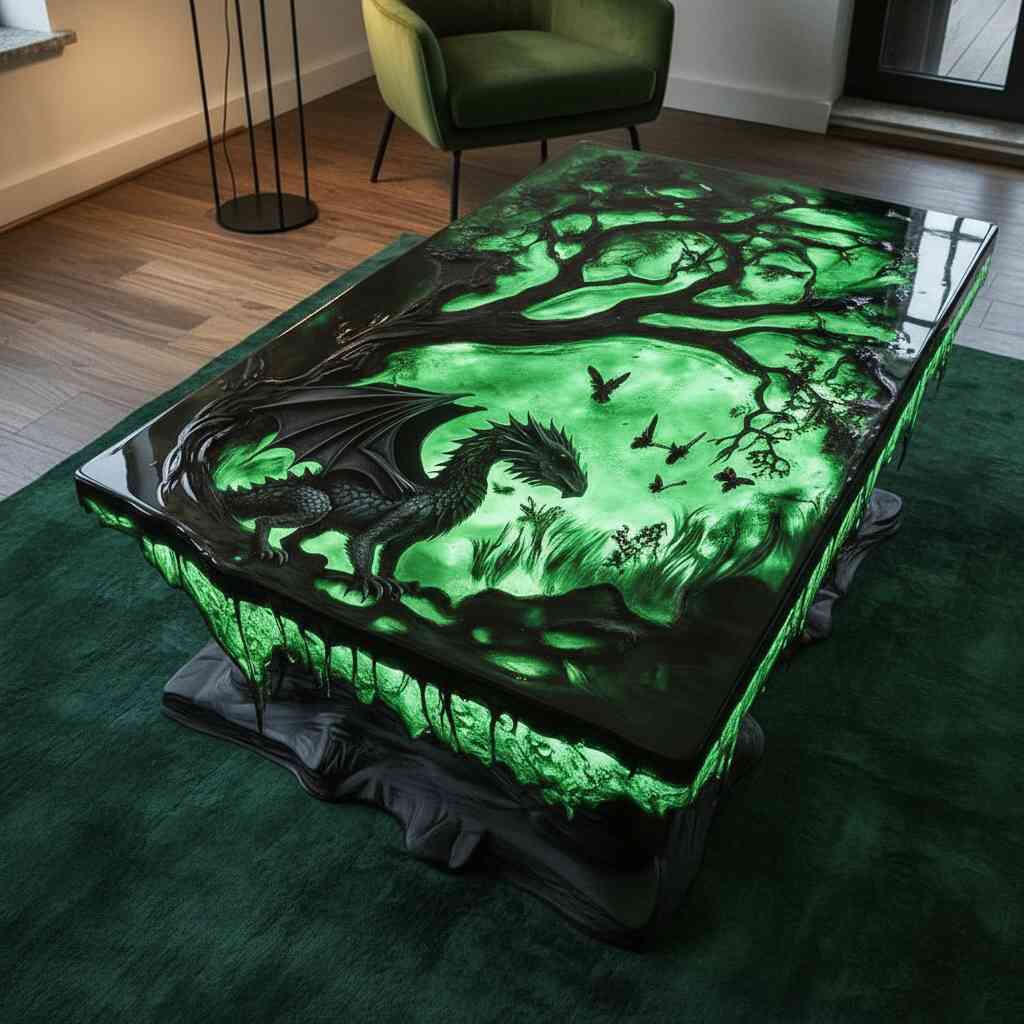
This article explores the profound artistry and layered symbolism embedded within Dragon-Themed Tables across cultures, examining how these objects transcend utility to become vessels of spiritual narrative, social order, and aesthetic philosophy. We will journey through the visual language of dragons on tables—from the coiling scales of Chinese imperial lacquer to the serpentine grace of European heraldic carvings—and uncover how the placement of such a table within a space transforms architecture into theology.
I. The Dragon as Cosmic Architect: Eastern Traditions and the Sacred Geometry of the Table
In East Asian civilizations—particularly in China, Japan, Korea, and Vietnam—the dragon is not a beast to be tamed, but a celestial principle made manifest. Unlike its Western counterpart, often depicted as a malevolent hoarder of treasure, the Eastern dragon is a benevolent force of creation, associated with water, rain, fertility, and imperial mandate. Its presence on a Dragon-Themed Table is not decorative flourish; it is cosmological assertion.
In traditional Chinese architecture and interior design, the table was never merely functional. The zhuo (桌), particularly in elite households and imperial courts, was a stage for ritualized meals, scholarly gatherings, and ancestral veneration. To place a dragon upon this surface was to invoke the Dragon King—Longwang—who ruled the seas and skies, ensuring balance between yin and yang. A Dragon-Themed Table in a Ming Dynasty scholar’s study might feature a low, rectangular table carved with five-clawed dragons winding along its legs, their bodies forming arches that support the tabletop like pillars holding up the heavens. Each scale, each curl of the tail, was meticulously chiseled to reflect Daoist principles of flow and harmony.
The number of claws mattered profoundly. Five-clawed dragons were reserved for the emperor alone; four-clawed for nobility; three for commoners. Thus, a Dragon-Themed Table became a silent ledger of social hierarchy, where every curve spoke of rank, lineage, and divine sanction. The dragon’s head, often positioned at the table’s front edge, faced inward—not outward—as if guarding the sacred space within. Guests seated around it were not just participants in a meal; they were witnesses to a cosmic order. The table became a microcosm: the dragon beneath represented the earth, the tabletop the flat plane of human affairs, and above, the air and sky where the dragon’s spirit ascended.
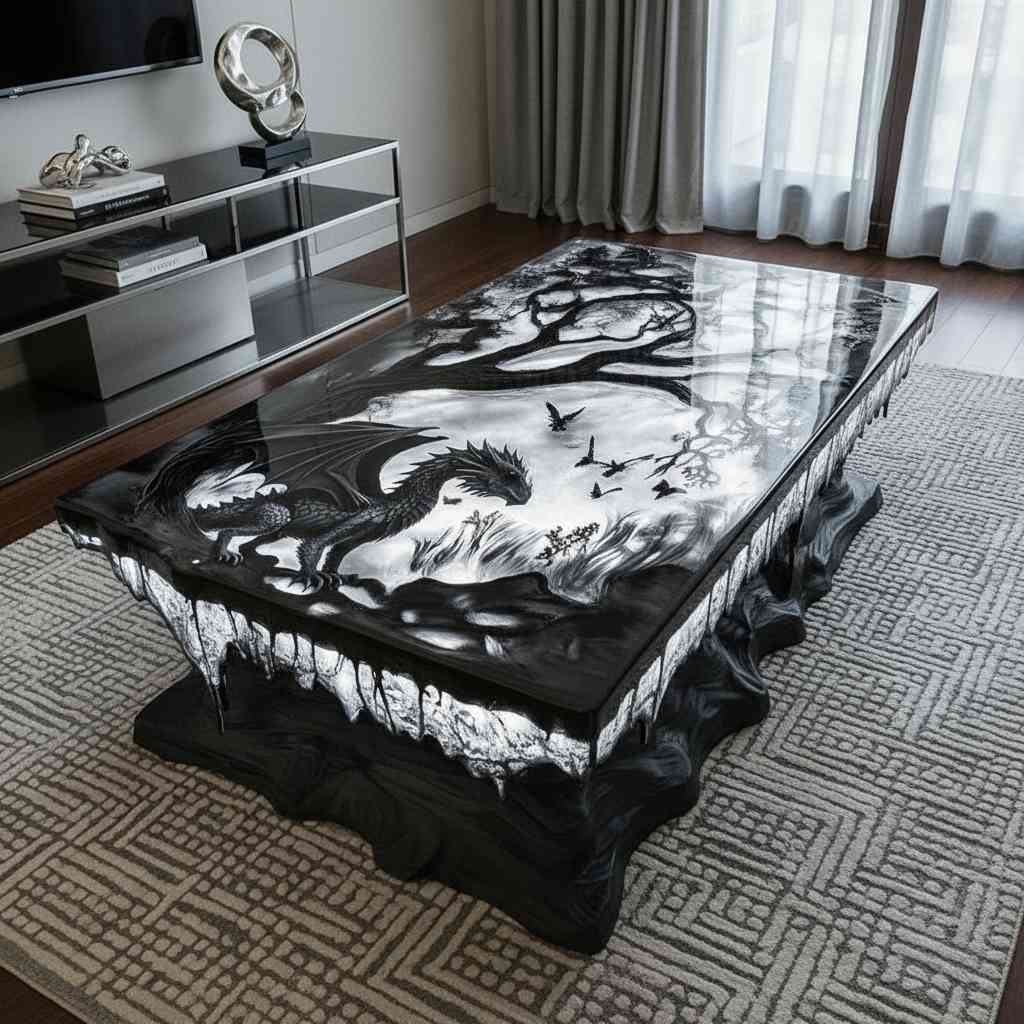
Japanese interpretations, though less overtly imperial, carried similar gravitas. In tea ceremony rooms, a low, tatami-aligned table might bear subtle dragon motifs carved into its wooden frame or inlaid with mother-of-pearl. These dragons were not fierce, but contemplative—coiled gently around the legs, their eyes closed, embodying wabi-sabi, the beauty of impermanence. Here, the dragon did not dominate; it listened. It absorbed the silence between sips of matcha, the rustle of silk robes, the breath of meditation. The Dragon-Themed Table in this context was a bridge between the mundane act of drinking tea and the transcendent experience of mindfulness.
Korean Joseon-era tables, especially those used in ancestral rites (jesa), often featured dragons carved into the apron beneath the tabletop. These dragons were stylized, elongated, and integrated into cloud patterns—an allusion to the dragon’s role as a rain-bringer and thus, a giver of life. During rituals, offerings of rice, wine, and fruit were placed upon the table, and the dragon below seemed to receive them, channeling the sustenance upward to the spirits of the departed. The table became a conduit, a terrestrial altar where the visible met the invisible.
What emerges from these traditions is not mere ornamentation, but a deep-seated belief that furniture can carry spiritual energy. The Dragon-Themed Table is not passive. It is active. It participates. It remembers. Every grain of wood, every stroke of lacquer, every contour of the dragon’s body is imbued with intentionality—a hand-carved invocation of cosmic balance.
II. The Western Dragon Reimagined: Heraldry, Power, and the Table as Throne of Narrative
While Eastern dragons are fluid, benevolent, and celestial, Western dragons have long been associated with chaos, conquest, and the heroic struggle against primal forces. Yet when rendered upon a Dragon-Themed Table in medieval European halls, Renaissance manors, or Gothic cathedrals, the creature undergoes a remarkable metamorphosis—from monster to monument.
In medieval Europe, tables were not only places of feasting but also seats of governance. The Round Table of Arthurian legend, though not explicitly dragon-themed, laid the groundwork for a new symbolic architecture: the table as a site of equality, justice, and mythic destiny. Later, as heraldry flourished in the 12th to 16th centuries, noble families began commissioning massive oak tables adorned with family crests, often incorporating winged serpents, wyverns, or fully scaled dragons as supporters.
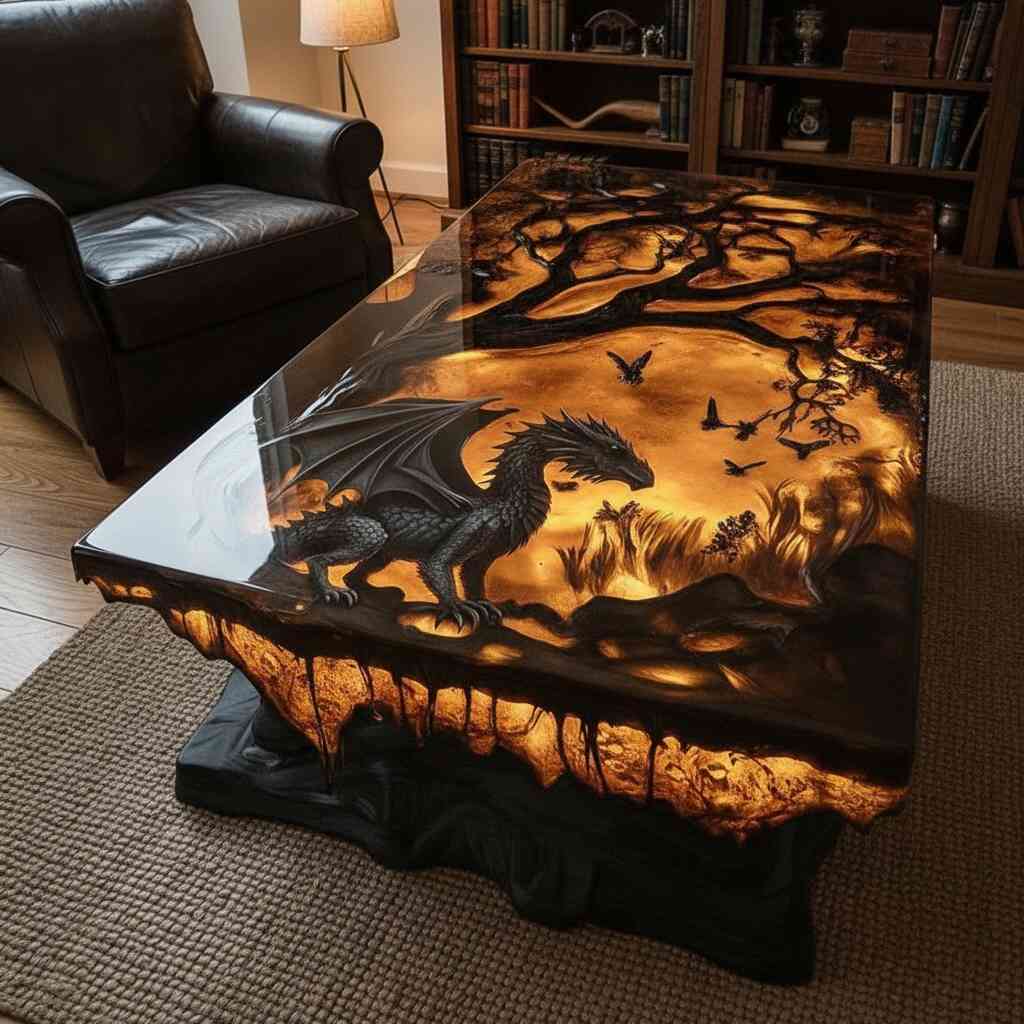
A Dragon-Themed Table in a Tudor great hall might feature two rampant dragons, forelegs raised, flanking the central panel of the tabletop. Their tails entwine beneath the table’s base, forming a protective arc—an architectural embrace. These dragons were not guardians of nature, but symbols of sovereign power. They represented the family’s claimed descent from ancient heroes, their ferocity a metaphor for resilience, their wings suggesting dominion over both land and air.
Yet there is deeper nuance here. In Christian iconography, the dragon was frequently equated with Satan—the adversary defeated by saints and kings. But in secular contexts, particularly among nobility, the dragon became a paradoxical emblem: the very force that needed to be conquered was now adopted as a badge of honor. To place a dragon upon the table was to assert mastery over chaos—not through violence, but through integration. The table, then, became a statement of controlled power: “We do not fear the dragon; we wear it.”
In Renaissance Italy, where classical antiquity was revived with fervor, Dragon-Themed Tables took on a more artistic, almost theatrical quality. Artists like Benvenuto Cellini and Andrea Palladio incorporated dragon motifs into marble and bronze tables, drawing inspiration from Roman sarcophagi and Etruscan reliefs. Here, the dragon was no longer merely a symbol of power, but a personification of elemental force—earth, fire, wind, and water—brought into harmonious tension with human intellect. The table’s surface, smooth and polished, contrasted with the rough, textured scales of the dragon’s limbs rising from its base, creating a visual dialogue between order and wildness.
Perhaps most poignantly, in the grand salons of 18th-century aristocratic homes, Dragon-Themed Tables served as conversation pieces—objects designed not for utility, but for contemplation. A table carved with a single, sinuous dragon spiraling upward from one leg, coiling around the central column, and finally dissolving into floral vines at the tabletop’s edge, embodied the Enlightenment ideal of reason emerging from primordial chaos. The dragon, once feared, had become a muse—a reminder that civilization itself was born from the taming of untamed forces.
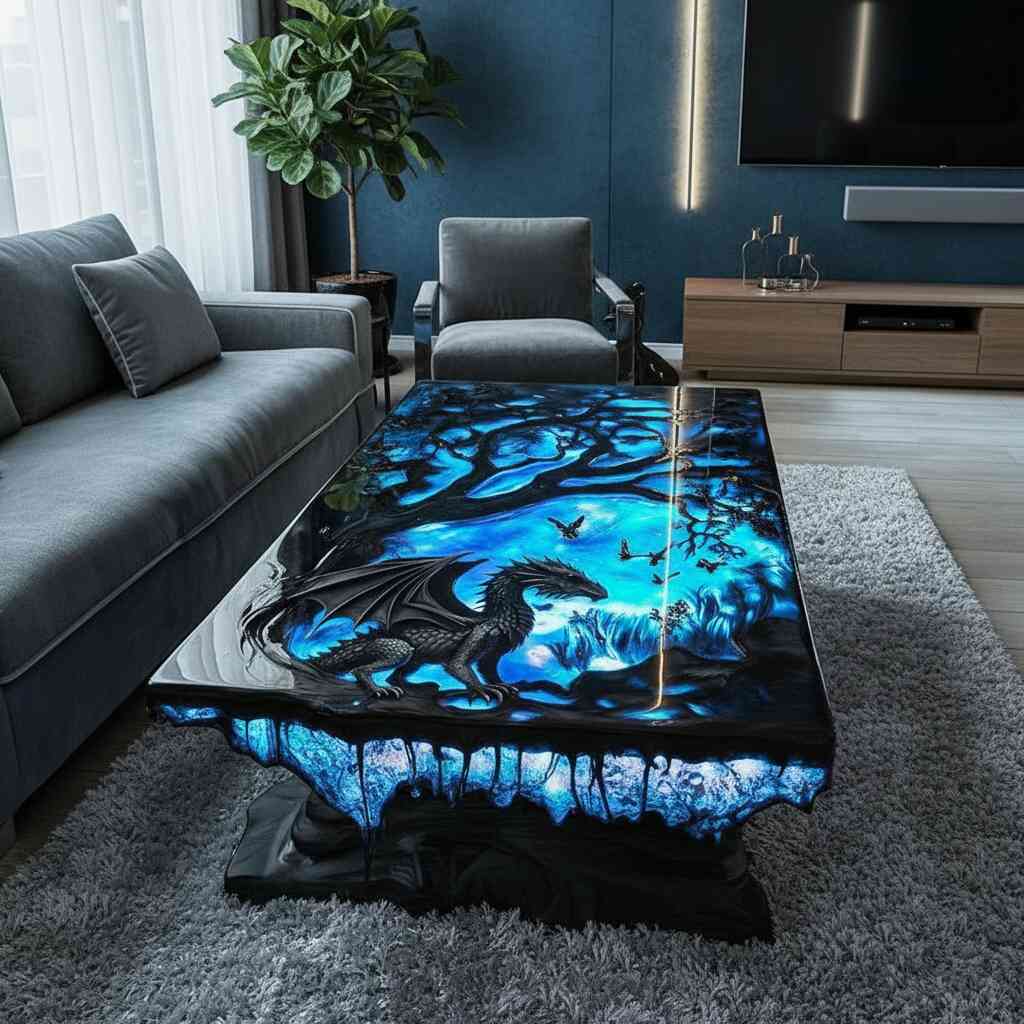
Even in ecclesiastical settings, where religious imagery dominated, Dragon-Themed Tables appeared in cloister refectories and bishop’s dining chambers. There, the dragon was often shown being subdued by a saint—St. George, St. Michael, or St. Margaret—its body bent beneath the weight of divine authority. The table became a theological text: a daily reminder that even the most fearsome powers could be subdued by faith, virtue, and order.
These Western iterations reveal a different kind of symbolism: the Dragon-Themed Table as a narrative stage. It does not merely house objects; it stages stories. Every guest who sat at such a table became part of the mythos—their conversations echoing the ancient battles between light and darkness, control and chaos. The table, therefore, was not a surface but a script.
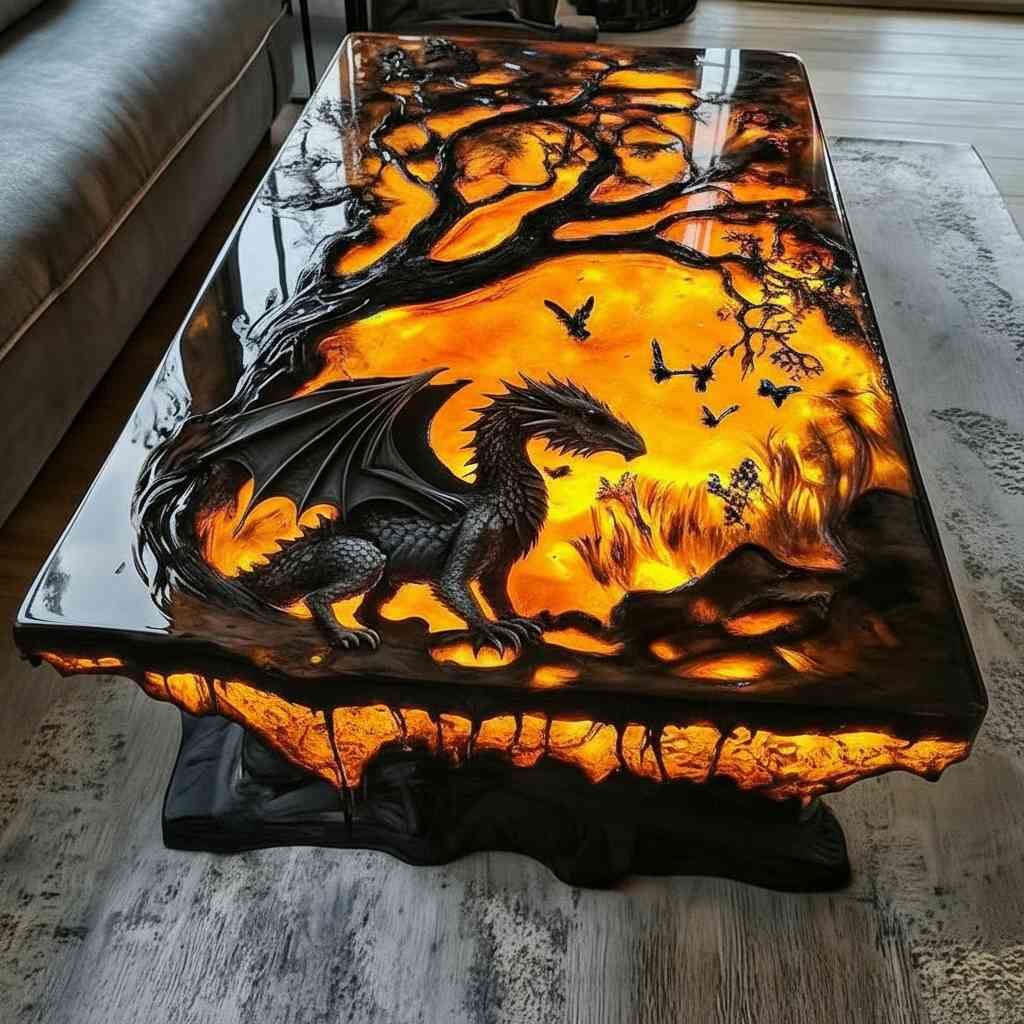
III. The Dragon-Themed Table as Cultural Memory: Ritual, Identity, and the Persistence of Myth
Beyond the confines of royal courts and noble halls, the Dragon-Themed Table finds its most enduring resonance in domestic spaces where culture is preserved through generations. In diasporic communities—Chinese immigrants in San Francisco’s Chinatown, Vietnamese refugees in Paris, Indonesian families in Amsterdam—the Dragon-Themed Table becomes a vessel of identity, a tangible link to a homeland whose political and social landscapes have changed irrevocably.
For many, the table passed down from grandparents is not simply furniture. It is a relic. Often hidden during times of upheaval—buried under floorboards, smuggled in trunks, or concealed behind false panels—it emerges again in exile, reassembled with care, polished with oil and prayer. The dragon on its surface, weathered by time, still coils with unmistakable dignity. In these homes, the Dragon-Themed Table becomes the heart of the household—not because of its size or material, but because of what it represents: continuity.
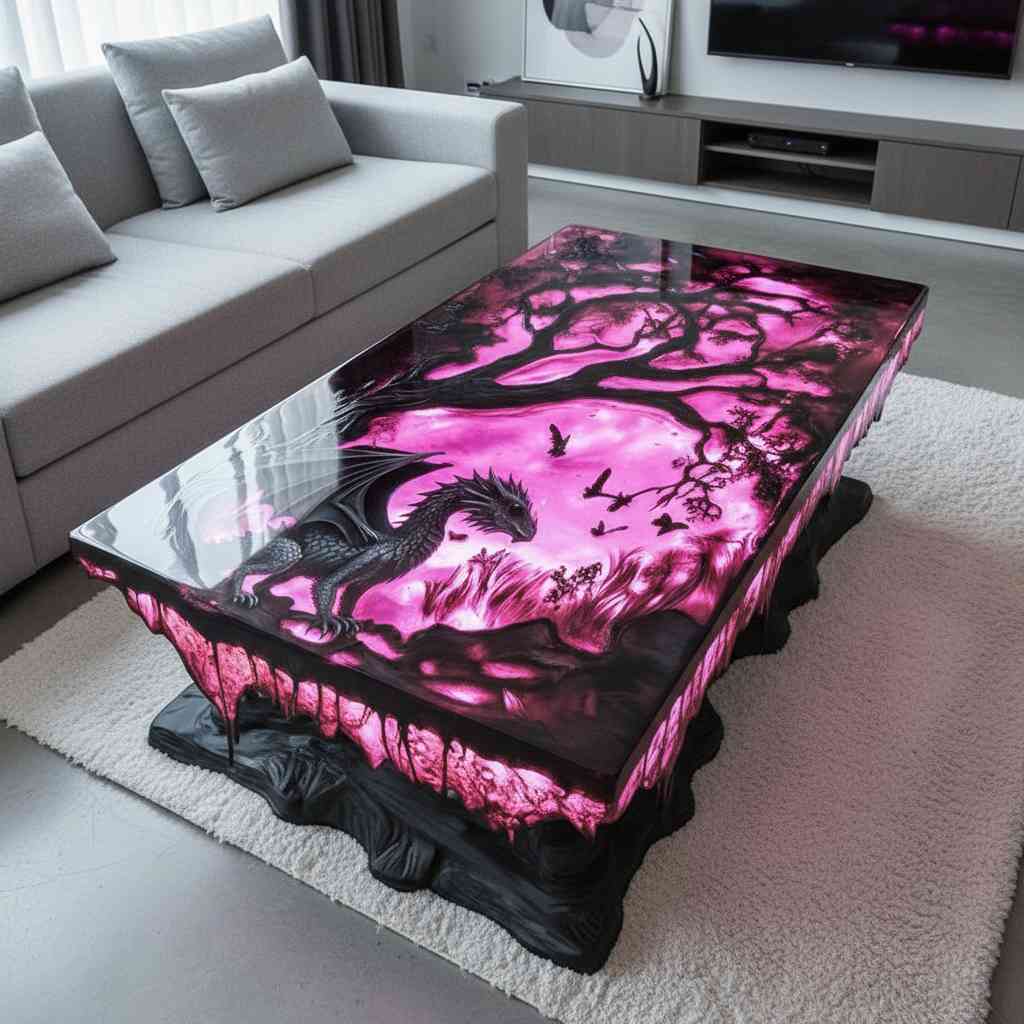
During Lunar New Year, the table may be draped in red cloth, laden with oranges, dumplings, and incense. The dragon beneath seems to stir, as if sensing the ancestral spirits drawn to the scent of roasted duck and steamed buns. Children are taught to bow before the table before eating—not out of superstition, but reverence. The dragon, they learn, is not a decoration; it is a witness. It saw their grandmother flee war. It held the first meal after their father arrived in a foreign land. It remembers.
In contemporary indigenous and neo-traditional movements, artists are reviving Dragon-Themed Tables not as relics of the past, but as living expressions of cultural reclamation. Native American artisans in the Pacific Northwest, inspired by serpent deities of their own mythologies, collaborate with East Asian woodworkers to create hybrid tables where dragon forms merge with thunderbird motifs. In these creations, the dragon is no longer exclusively Chinese or Japanese—it becomes a universal symbol of ancestral wisdom, bridging continents and centuries.
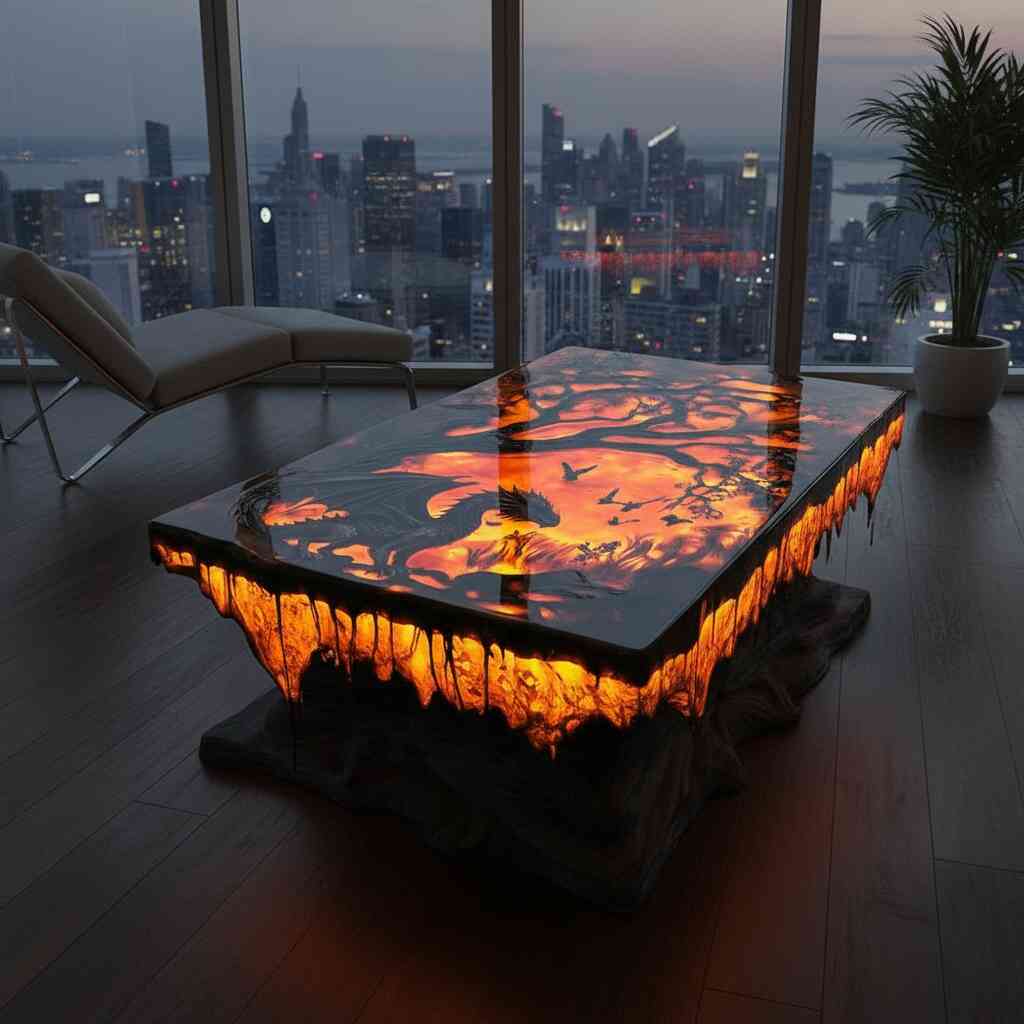
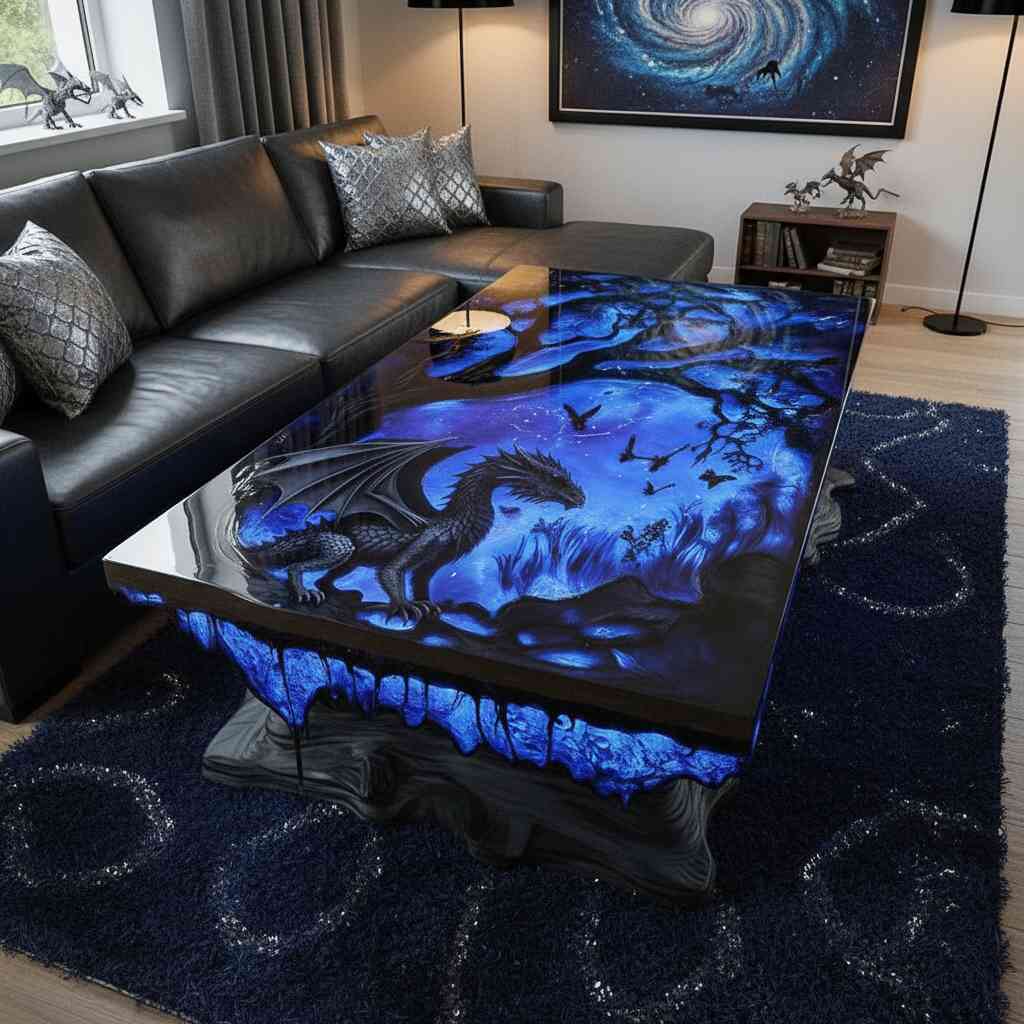
Even in modern minimalist interiors, the Dragon-Themed Table persists—not in literal form, but in essence. Designers speak of “dragon lines”: the curved, undulating edges of a table that echo the dragon’s spine, the way its silhouette moves through space. These are not reproductions of ancient carvings, but interpretations of the dragon’s spirit: movement, resilience, unseen power. A sculptor in Kyoto might shape a single slab of black basalt into a low table whose contours suggest a dragon sleeping beneath the surface, its presence felt rather than seen. This is the ultimate evolution of the Dragon-Themed Table: not as ornament, but as aura.
The symbolism endures because the dragon speaks to something fundamental in the human psyche: the desire to connect with forces beyond our control, to find meaning in the unknown, to believe that the ground beneath us, the table we eat from, the space we inhabit, is alive with memory.
In Buddhist monasteries in Tibet, monks still carve dragon motifs into wooden tables used for scripture copying. The dragon, they say, is the embodiment of prajna—transcendent wisdom. As the monk’s brush moves across paper, the dragon beneath the table absorbs the energy of his devotion. The table, then, becomes a silent participant in enlightenment.
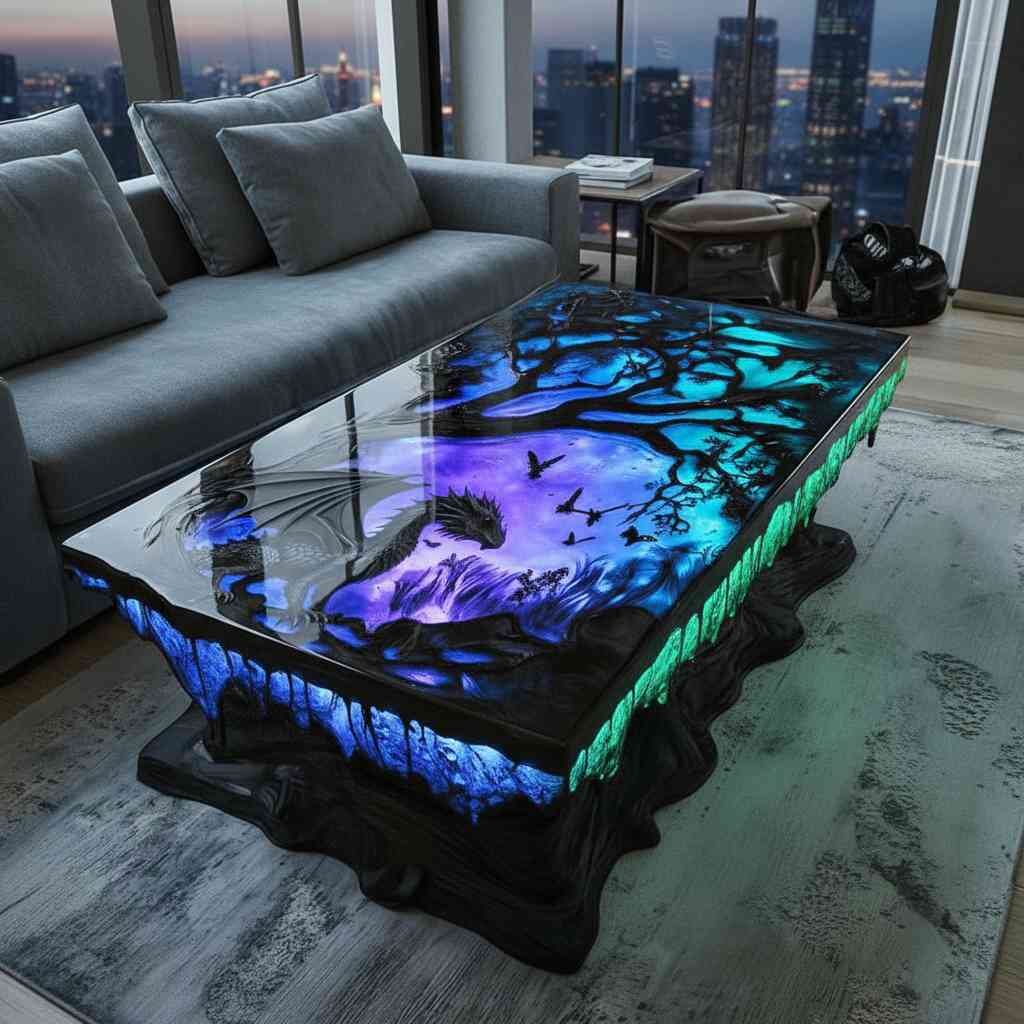
Conclusion: The Table That Breathes—Where Myth Meets the Everyday
To understand the Dragon-Themed Table is to understand how cultures translate the sublime into the ordinary. It is not enough to say that dragons represent power, wisdom, or protection. Those are abstractions. The true magic lies in how these abstractions are made tactile—how a dragon’s tail becomes the leg of a table, how its scales are etched into the grain of walnut, how its gaze, frozen in centuries-old craftsmanship, still watches over a child’s homework, a widow’s evening tea, a family’s laughter after a long day.
The Dragon-Themed Table is neither museum piece nor historical curiosity. It is a living archive. It is the silent witness to birthdays, funerals, reconciliations, and quiet moments of solitude. It holds the weight of grief and the warmth of joy without judgment. It does not demand worship, yet it invites reverence. It does not shout its meaning—it waits.
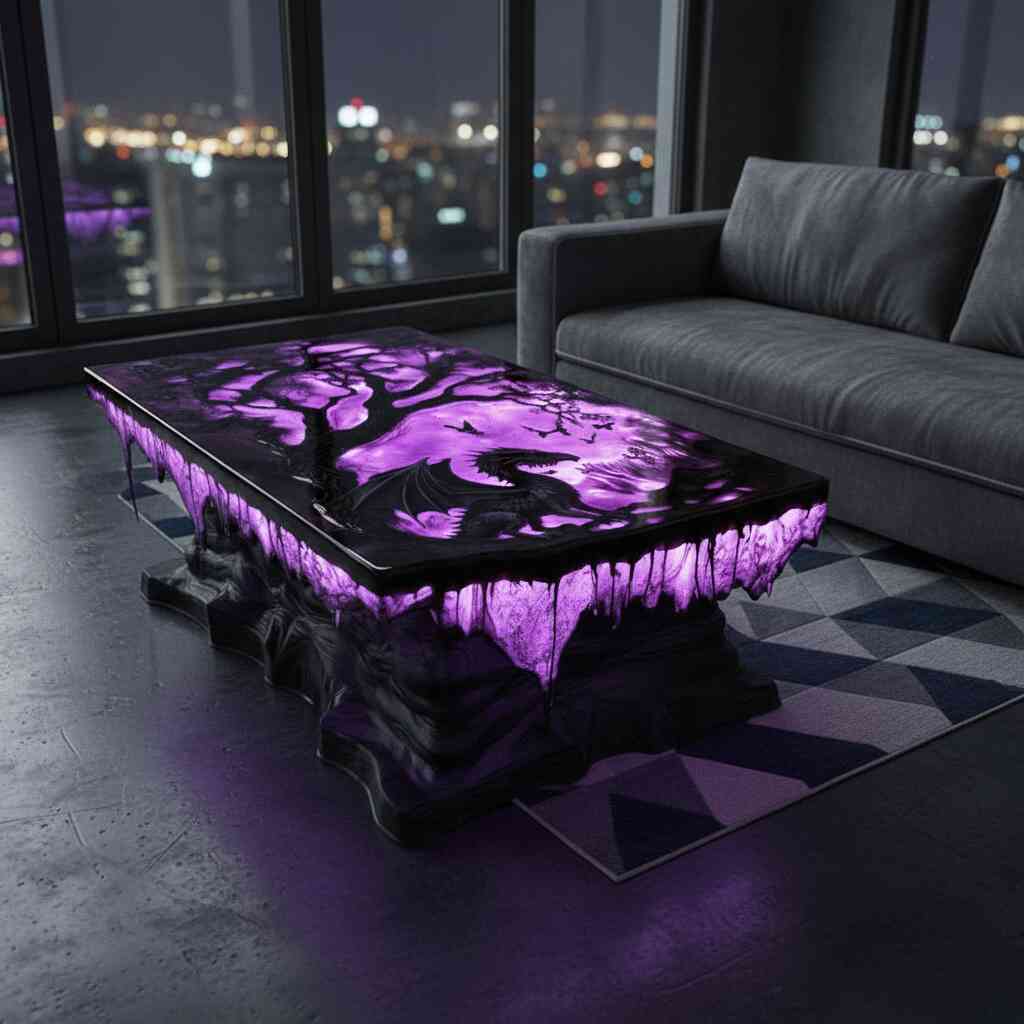
In a world increasingly dominated by mass production, digital interfaces, and disposable objects, the Dragon-Themed Table stands as a defiant testament to craftsmanship, patience, and the enduring need for myth. It reminds us that our environments are not neutral canvases—they are sacred texts written in wood, stone, and metal. The dragon on the table is not there because it looks impressive. It is there because it must be.
It is there because humanity, across time and terrain, has always sought to surround itself with symbols that whisper: You are not alone. You are part of something older. Something greater.
To sit at a Dragon-Themed Table is to sit beneath the gaze of the cosmos. To touch its surface is to touch history. To pass it down is to pass on a soul.
And so, in the quiet of a home, where the scent of incense lingers and the light slants through bamboo blinds, the Dragon-Themed Table remains—unmoving, eternal, breathing.