
In the ever-evolving landscape of interior design, where trends flicker like candlelight and styles cycle with the seasons, certain elements emerge not merely as decorative choices but as profound statements of identity, artistry, and connection to the natural world. Among these, geode backsplashes have risen with quiet yet undeniable force, capturing the imaginations of designers, homeowners, and artists alike. More than just a surface treatment for kitchens or bathrooms, geode backsplashes represent a fusion of geological wonder and human creativity—a marriage of raw earth and refined aesthetics that speaks to a deeper yearning for authenticity, texture, and timeless beauty in our living spaces.
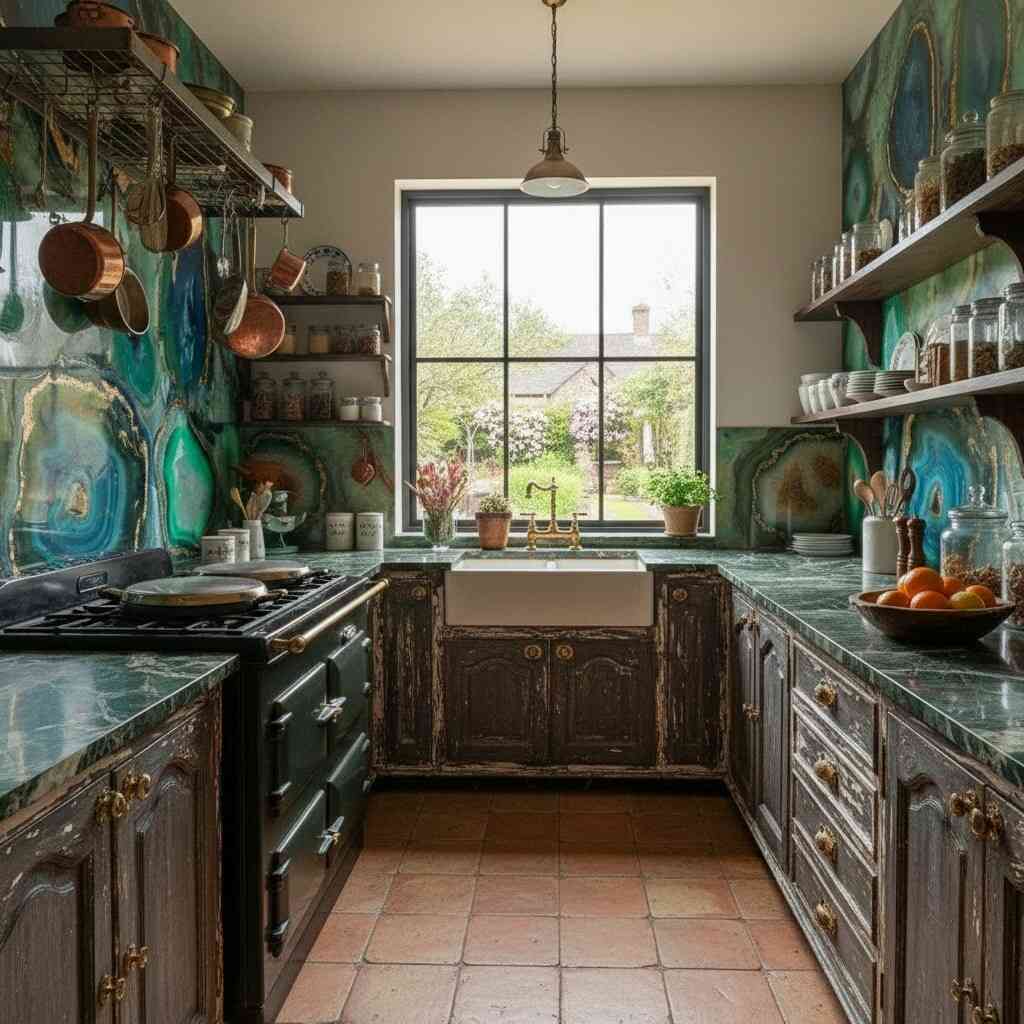
Geodes, those unassuming rock formations that conceal glittering crystalline interiors, have long fascinated collectors and geologists. Their transformation from dull exteriors to radiant cores mirrors a universal narrative of hidden potential and unexpected revelation. When translated into the language of interior design—specifically as backsplashes—this natural phenomenon transcends its mineral origins to become a focal point of emotional resonance and visual poetry. In contemporary interiors, where minimalism often reigns and surfaces can feel sterile or impersonal, geode backsplashes reintroduce a sense of wonder, tactility, and organic complexity. They are not merely installed; they are curated, contemplated, and celebrated as living art derived from the earth’s ancient processes.
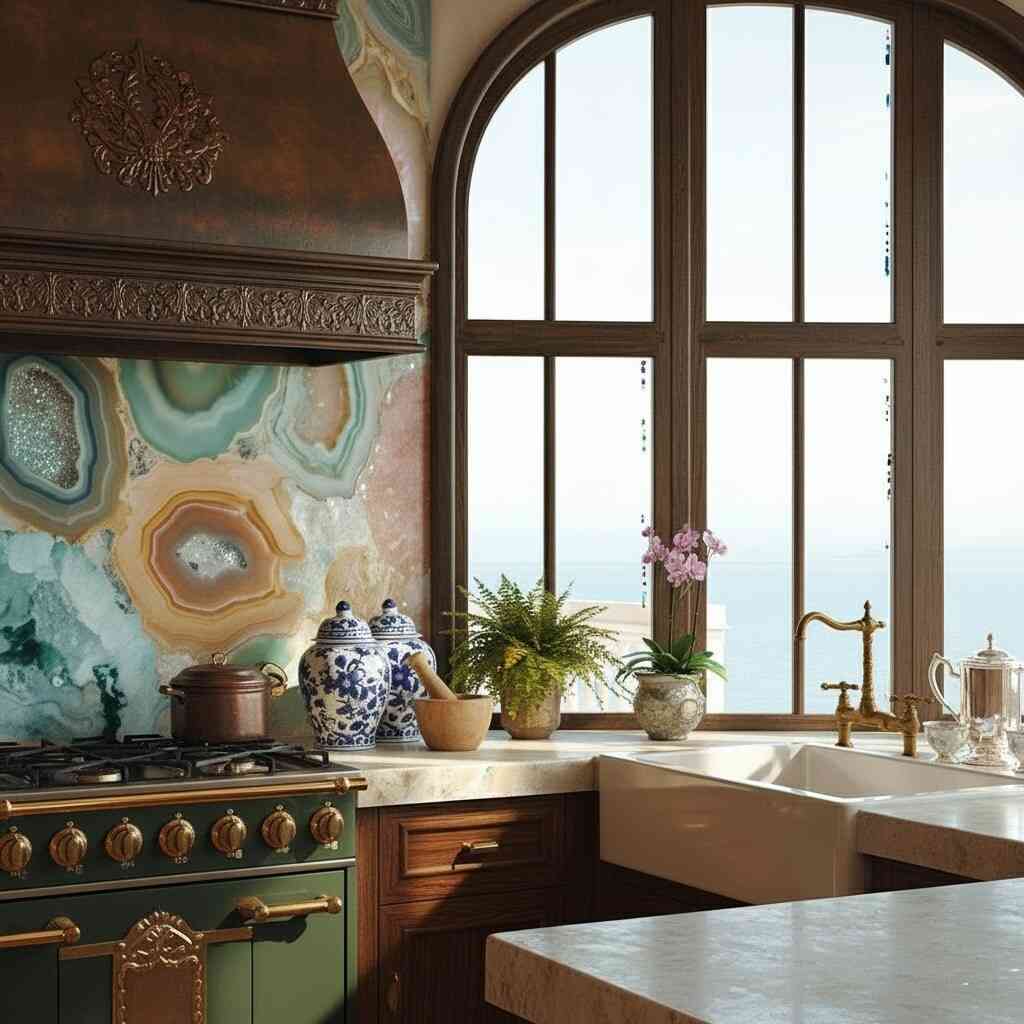
This article explores the multifaceted allure of geode backsplashes, delving into their aesthetic power, symbolic depth, and harmonious integration within modern design philosophies. Through three distinct lenses—visual magnetism, conceptual resonance, and spatial transformation—we uncover why these crystalline installations have become more than a trend, evolving instead into a meaningful design language that bridges nature and nurture, past and present, function and fantasy.
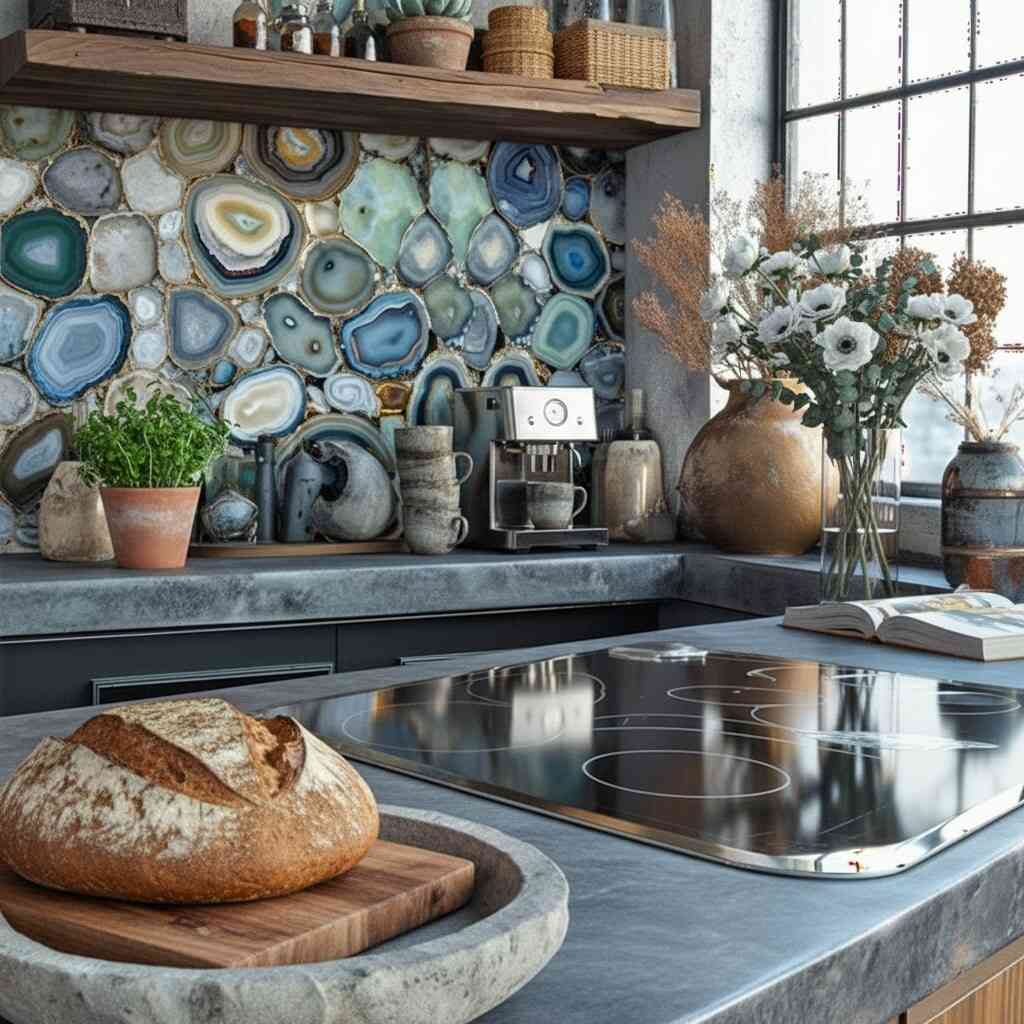
Part I: The Visual Magnetism of Crystalline Surfaces
At first glance, a geode backsplash commands attention not through loudness, but through quiet intensity. Unlike uniform tiles or sleek metallic finishes, geode surfaces are inherently irregular, layered, and luminous. Each piece is a unique fragment of geological history, bearing the fingerprints of millennia—mineral deposits, temperature shifts, and slow crystallization processes that cannot be replicated by human hands. This inherent uniqueness ensures that no two geode backsplashes are identical, imbuing every installation with a sense of singularity and authenticity rarely found in mass-produced design elements.
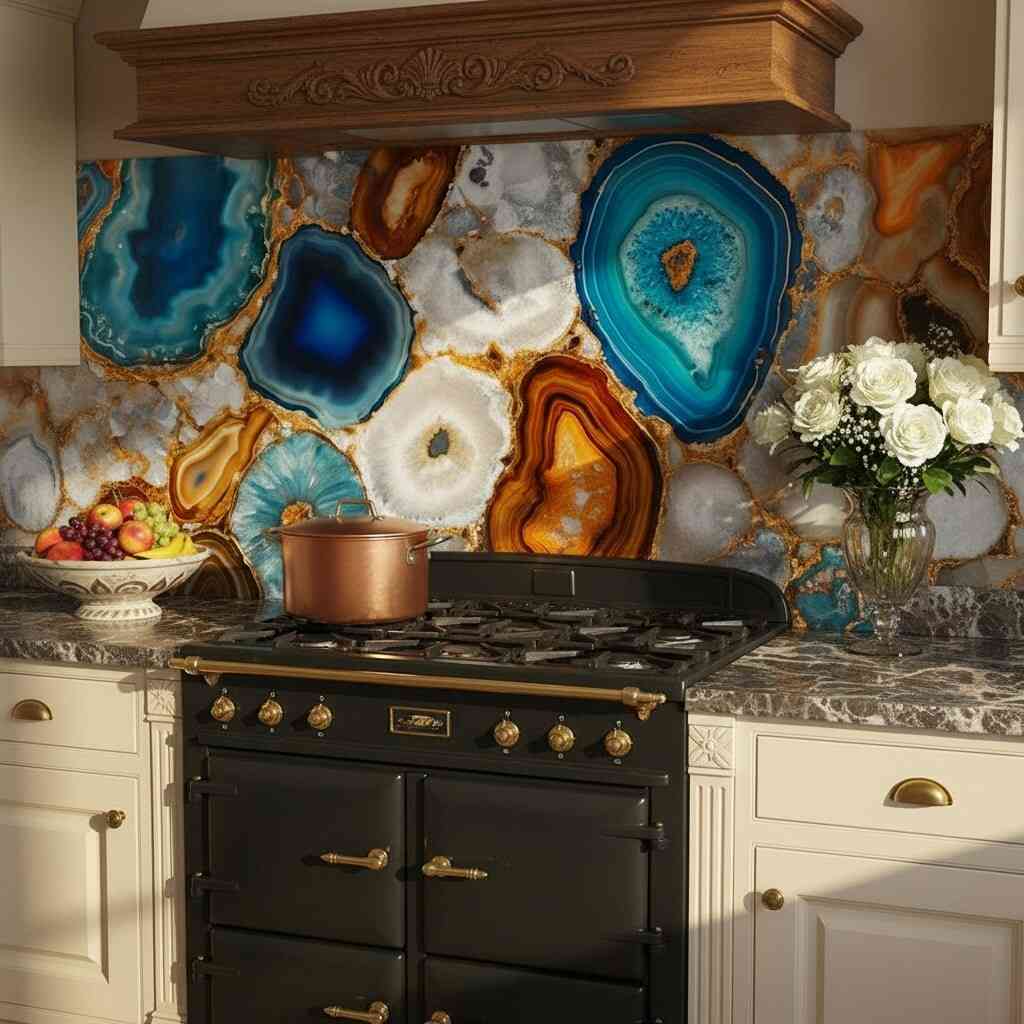
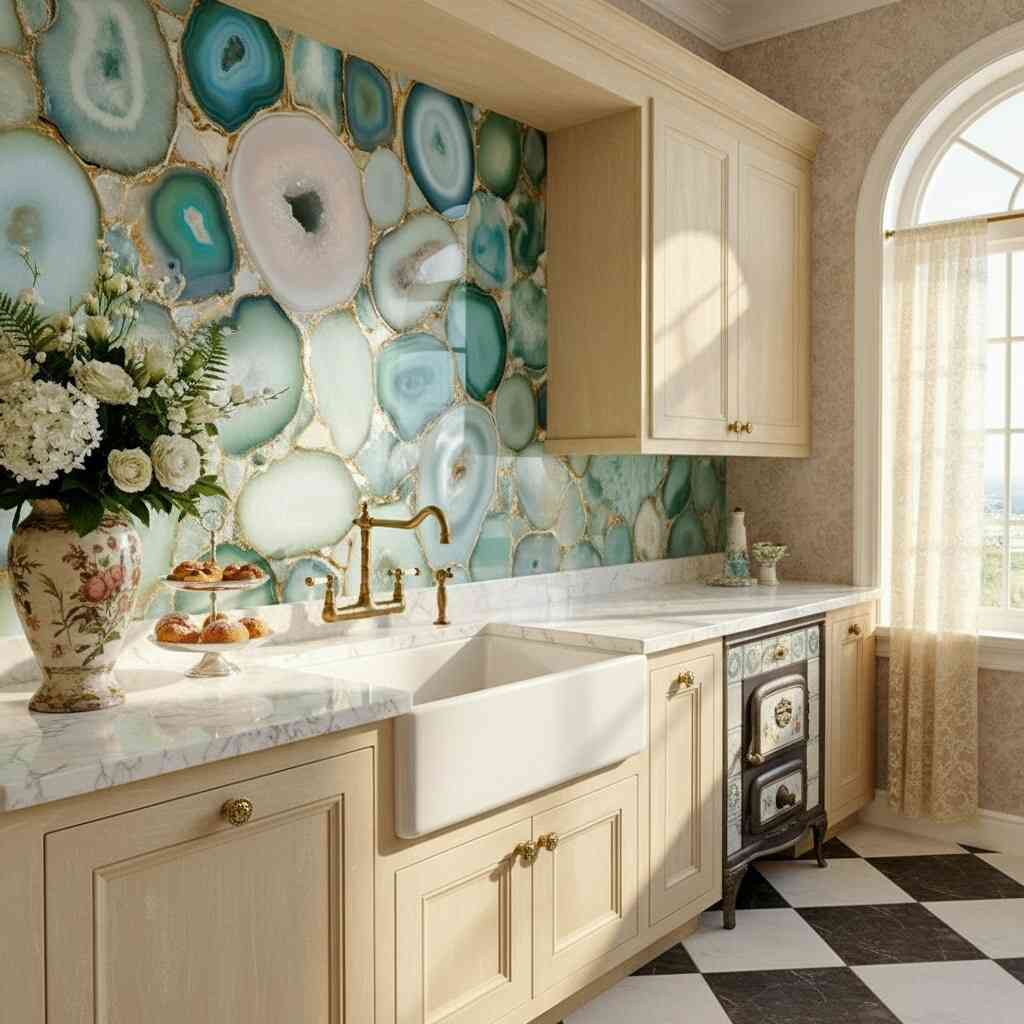
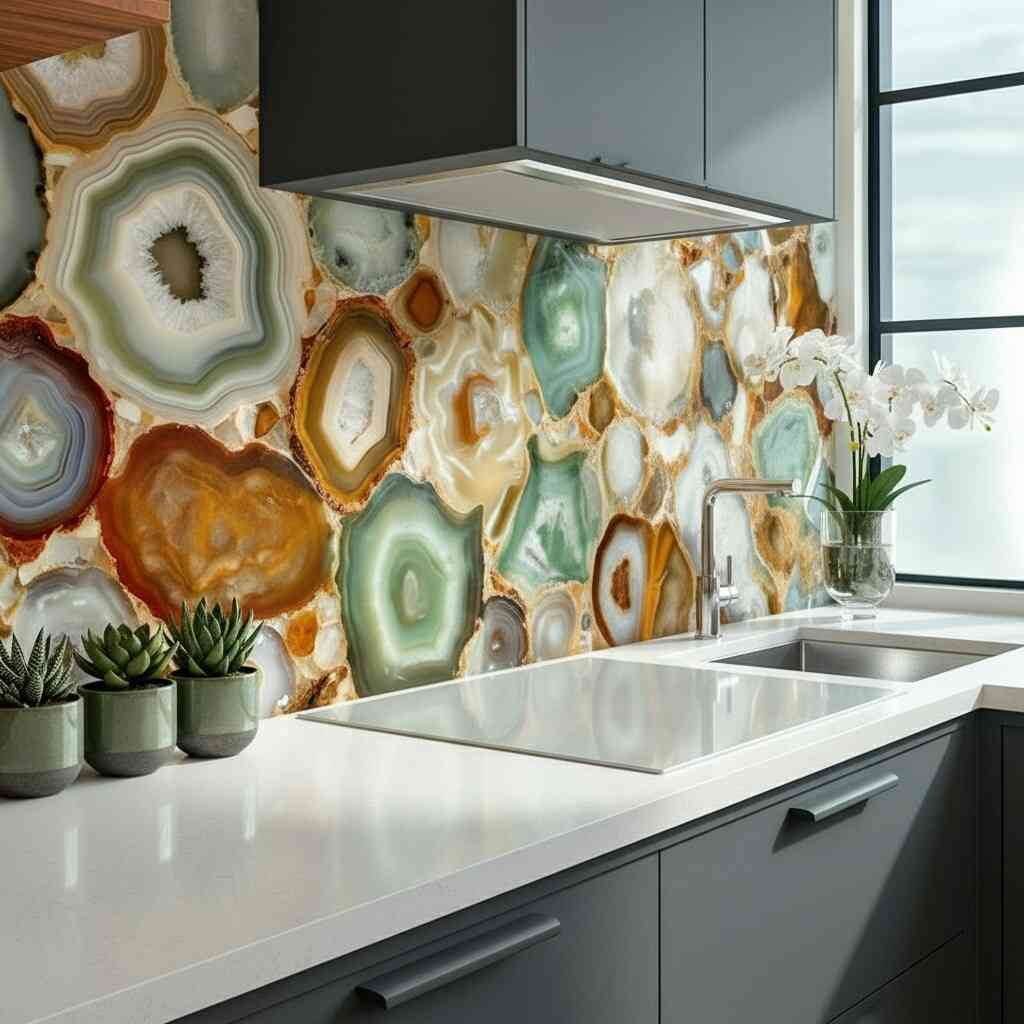
The visual power of geode backsplashes lies in their dynamic interplay of texture, color, and light. Amethyst geodes, for instance, offer deep purples that shift from violet to magenta depending on ambient lighting, while agate slices reveal concentric bands of ochre, cream, and rust that echo the stratification of sedimentary rock. Clear quartz varieties shimmer with refractive brilliance, catching and scattering light like prisms, whereas smoky quartz introduces a moody, introspective depth. These natural palettes do not compete with surrounding elements; rather, they anchor them, providing a grounding yet ethereal presence that elevates the entire space.
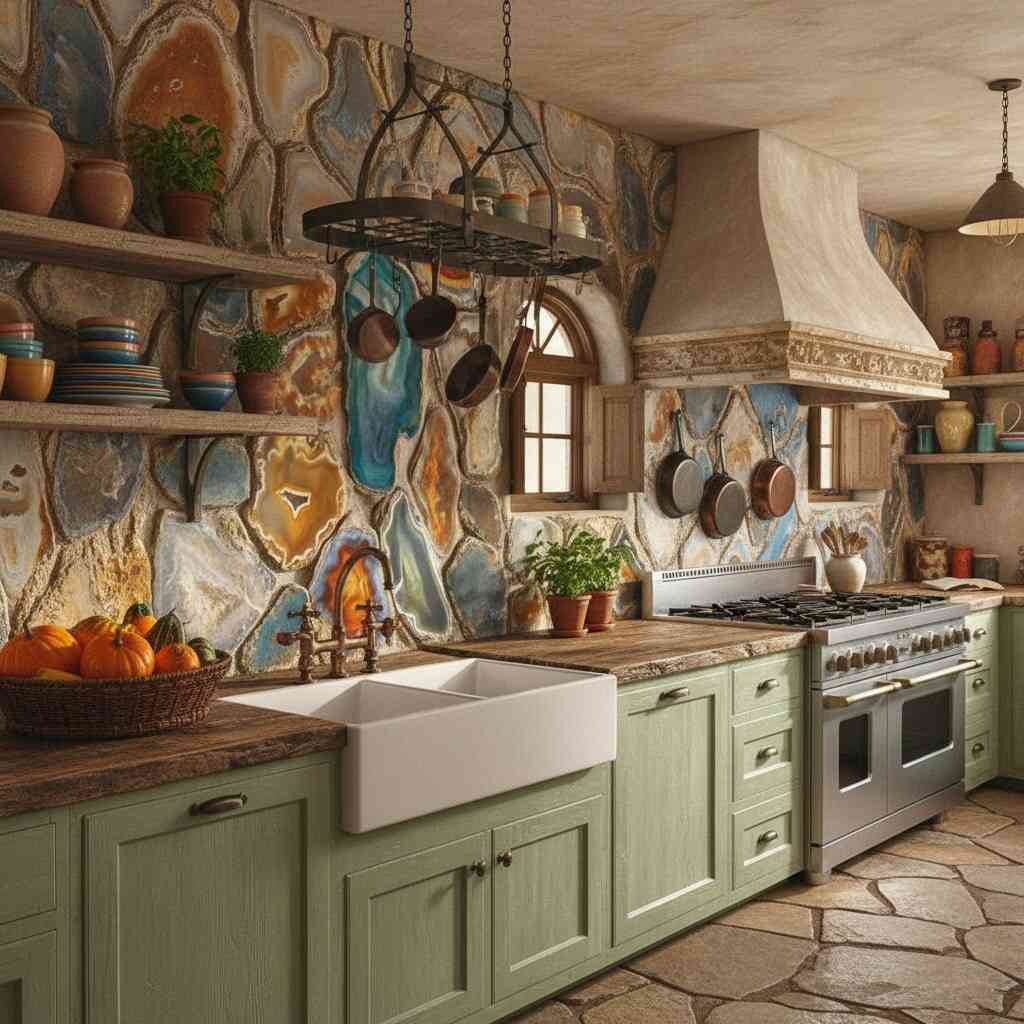
Moreover, the crystalline structure of geodes introduces a dimensionality that flat surfaces cannot replicate. Light doesn’t just reflect off a geode backsplash—it penetrates, refracts, and dances within its facets. In the morning, sunlight may ignite a cascade of tiny rainbows across a kitchen counter; in the evening, under warm LED lighting, the same surface might glow with an inner fire. This kinetic quality ensures that the backsplash is never static—it evolves with the day, the season, and even the viewer’s perspective. It becomes a living canvas, responsive and alive.
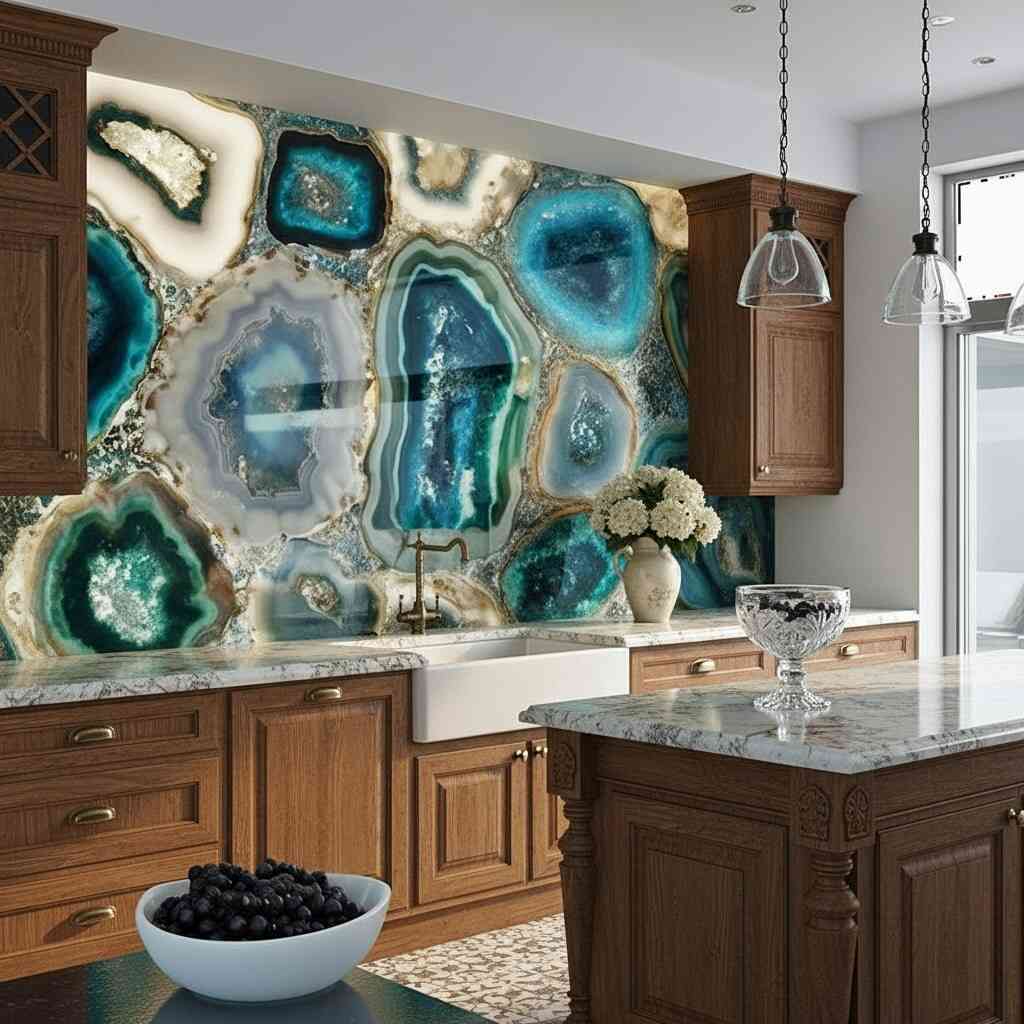
Contemporary design, with its emphasis on clean lines and uncluttered spaces, might seem at odds with such organic complexity. Yet it is precisely this contrast that makes geode backsplashes so compelling. Against a backdrop of matte cabinetry, brushed steel fixtures, or smooth concrete countertops, the geode emerges as a deliberate counterpoint—a reminder that beauty often resides in imperfection, asymmetry, and the unpredictable. Designers leverage this tension to create interiors that feel both modern and soulful, structured yet infused with natural spontaneity.
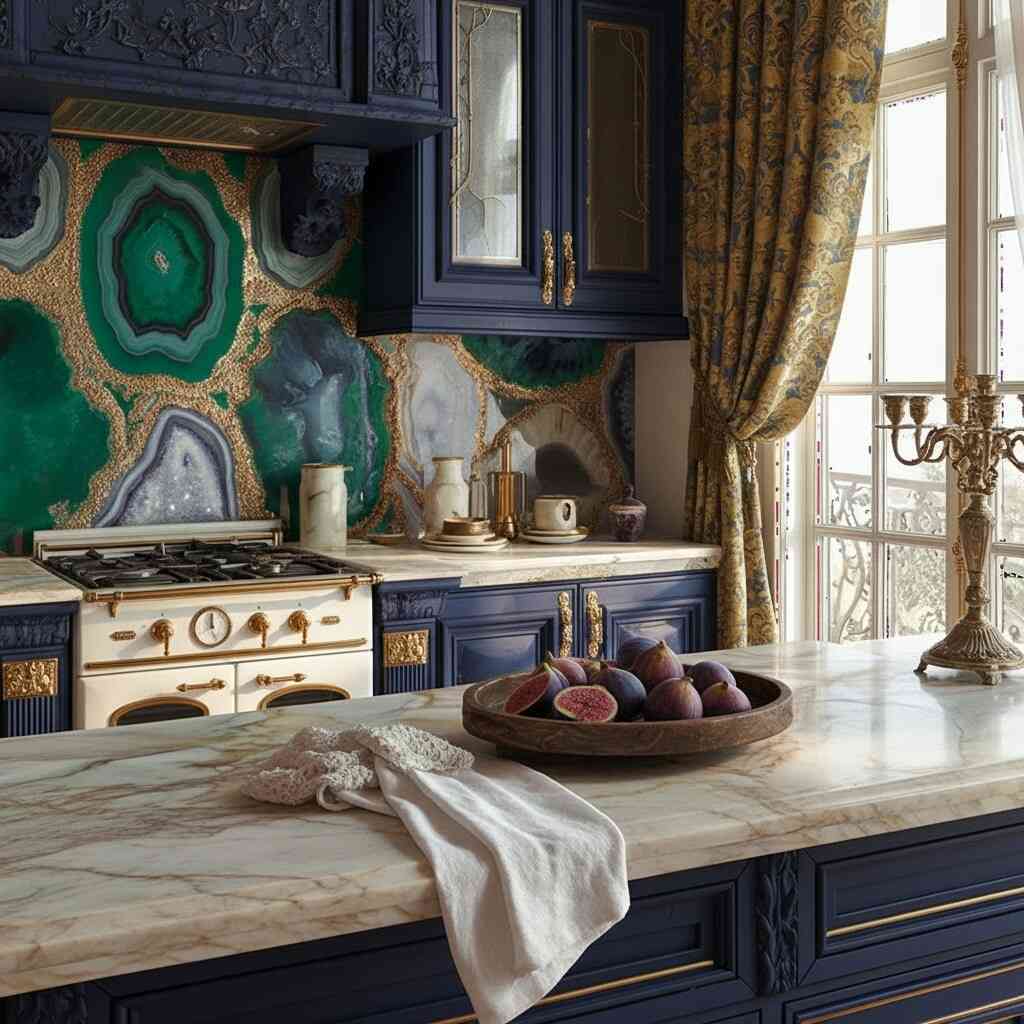
The craftsmanship involved in installing a geode backsplash further enhances its visual magnetism. Unlike standard tiles that follow predictable grout lines, geode installations often require meticulous hand-cutting and custom fitting to honor the stone’s natural contours. The result is a mosaic that feels both intentional and organic, as if the wall itself has cracked open to reveal its crystalline heart. This artisanal approach reinforces the idea that the backsplash is not just a functional shield against splashes and stains, but a curated artwork—a testament to patience, skill, and reverence for the material.
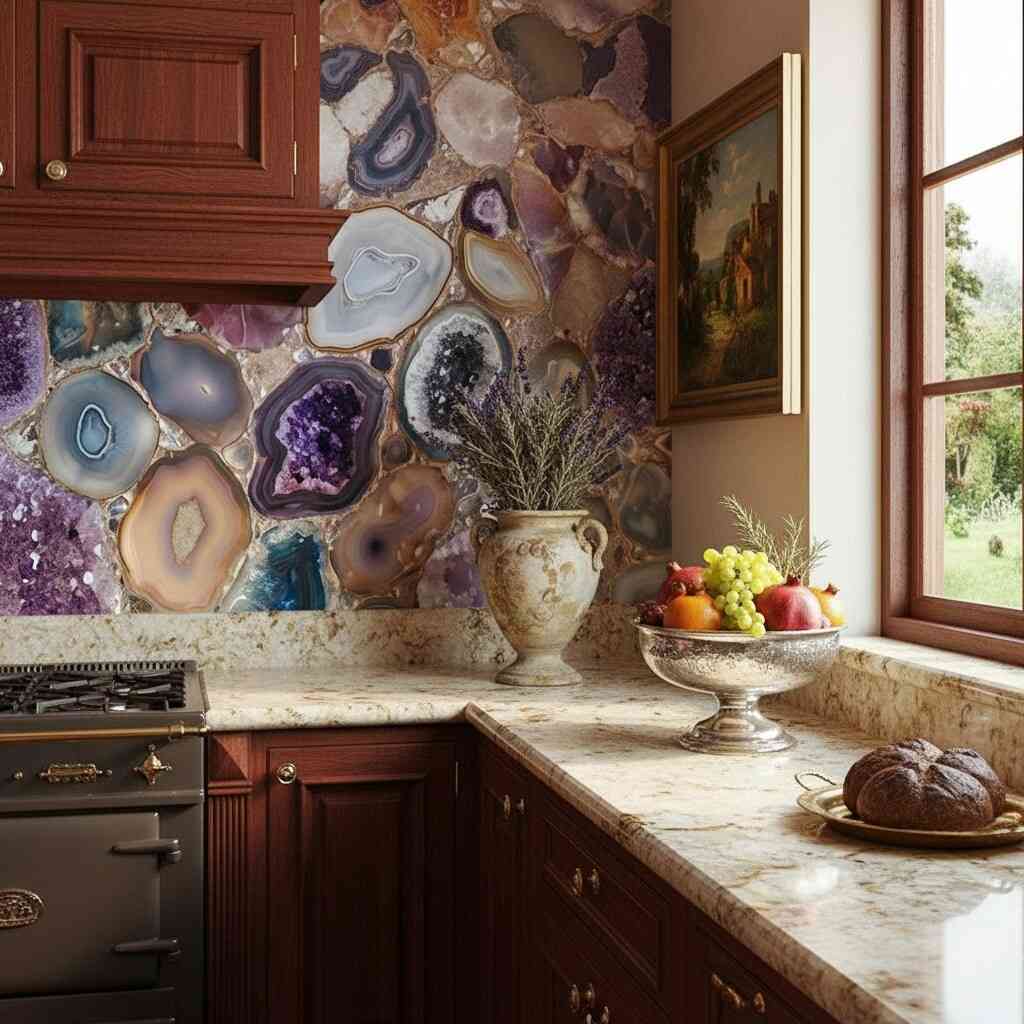
Part II: Symbolic Resonance – Geodes as Metaphors in Domestic Space
Beyond their undeniable visual appeal, geode backsplashes carry a rich symbolic weight that resonates deeply within the context of contemporary living. In an age marked by digital saturation, environmental disconnection, and a longing for mindfulness, the geode functions as a potent metaphor for inner beauty, hidden potential, and the rewards of patience.
Geodes begin as hollow cavities in volcanic or sedimentary rock, often appearing as ordinary, unremarkable stones from the outside. It is only through time—sometimes millions of years—and the slow, steady deposition of mineral-rich water that their interiors transform into glittering cathedrals of crystal. This process mirrors human experiences of growth, healing, and self-discovery. The geode reminds us that what is most valuable is not always immediately visible; that depth, clarity, and brilliance can emerge from periods of stillness and pressure.
When placed in the heart of the home—most commonly in the kitchen, a space of nourishment, gathering, and daily ritual—the geode backsplash becomes more than decoration. It becomes a silent teacher, a visual mantra. Every time one prepares a meal, washes dishes, or shares coffee at the counter, the geode offers a subtle invitation to look beneath the surface, to honor one’s own hidden strengths, and to appreciate the slow unfolding of life’s complexities. In this sense, the backsplash transcends utility to become a spiritual anchor within domestic architecture.
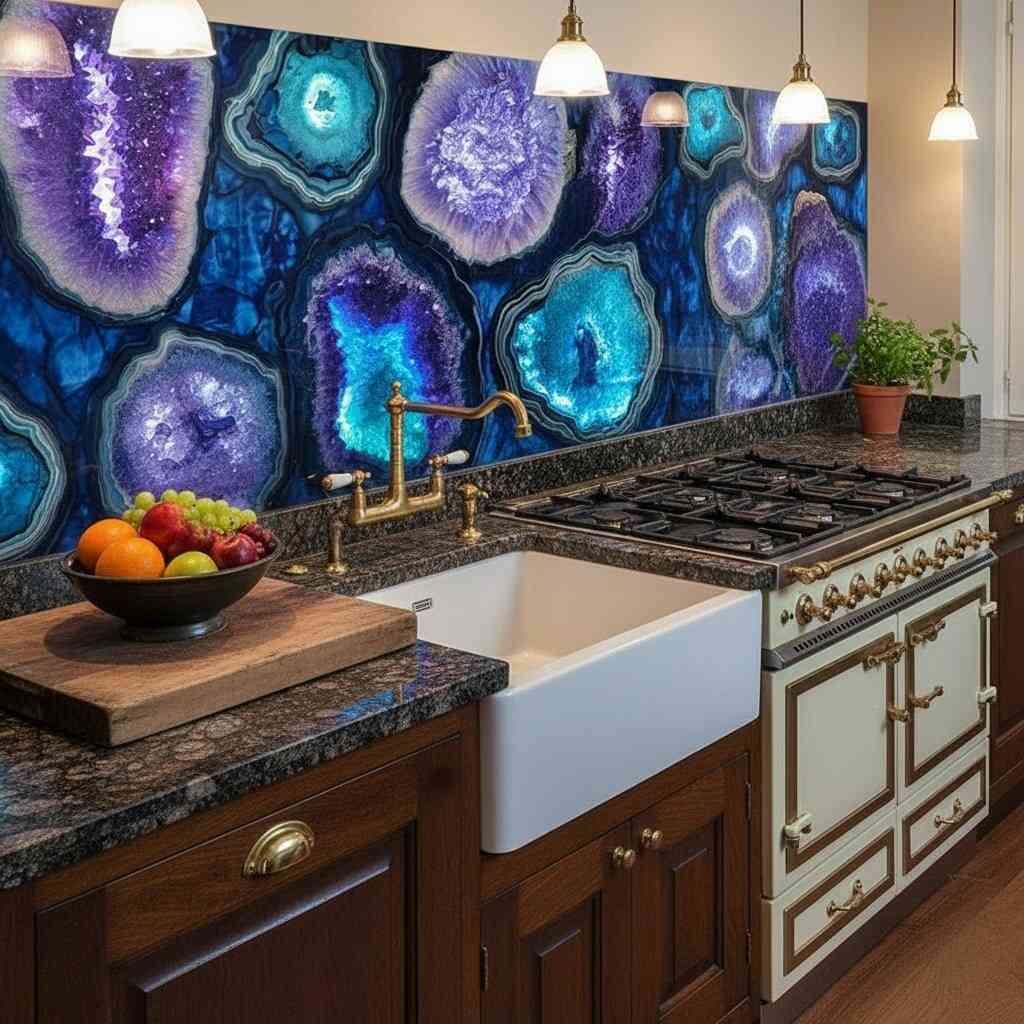
This symbolic layer aligns seamlessly with broader cultural shifts toward biophilic design—the practice of integrating natural elements into built environments to enhance well-being and connection to the earth. Geode backsplashes are not representations of nature; they are nature, preserved and elevated. They bring the geological timescale into the human one, offering a tangible link to the planet’s ancient rhythms. In a world increasingly defined by ephemerality—disposable goods, fleeting trends, digital transience—the permanence and authenticity of stone provide a grounding counterbalance.
Furthermore, geodes have long held significance in various spiritual and metaphysical traditions. Amethyst is associated with calm and clarity; clear quartz with energy amplification and purity; agate with balance and protection. While a geode backsplash need not be chosen for its esoteric properties, its presence can subtly reinforce these qualities within a space. Even for those who do not ascribe to crystal healing, the psychological impact of surrounding oneself with natural forms known for their harmony and symmetry can be profoundly calming. The fractal patterns of crystal growth echo those found in snowflakes, seashells, and galaxies—universal signatures of order within chaos.
In contemporary interior design, where personalization and narrative are increasingly valued over generic aesthetics, the geode backsplash allows homeowners to embed meaning into their environment. It becomes a story—not just of the stone’s origin, but of the inhabitant’s values: a reverence for nature, an appreciation for craftsmanship, a desire for spaces that inspire rather than merely accommodate. It transforms the kitchen or bathroom from a utilitarian zone into a sanctuary of reflection and beauty.
Part III: Spatial Transformation and the Integration of Natural Art
The final dimension of the geode backsplash’s allure lies in its transformative effect on architectural space. A well-placed geode installation does not merely occupy a wall—it redefines the room’s energy, scale, and emotional tone. In minimalist interiors, where surfaces are often neutral and restrained, the geode acts as a dramatic yet harmonious focal point. It draws the eye without overwhelming, creating a visual anchor that organizes the space around it.
Consider a small urban kitchen with white cabinetry and stainless steel appliances. Without a distinctive element, such a space risks feeling clinical or impersonal. Introducing a geode backsplash—perhaps a vertical panel of sliced agate backlit to enhance its translucency—immediately injects warmth, color, and narrative. The room no longer feels like a showroom; it feels inhabited, curated, alive. The geode becomes the soul of the space, around which all other elements orbit.
In open-concept homes, where kitchens flow into living areas, the backsplash often serves as a visual divider. A geode installation here can function as a semi-transparent screen or a sculptural partition, offering both separation and continuity. Its organic forms soften the hard edges of modern architecture, creating a dialogue between structure and spontaneity. When backlit—a common technique in high-end installations—the geode glows like a stained-glass window, casting colored shadows and ambient light that shift throughout the day. This not only enhances the aesthetic experience but also contributes to the room’s mood and atmosphere in a way that artificial lighting alone cannot achieve.
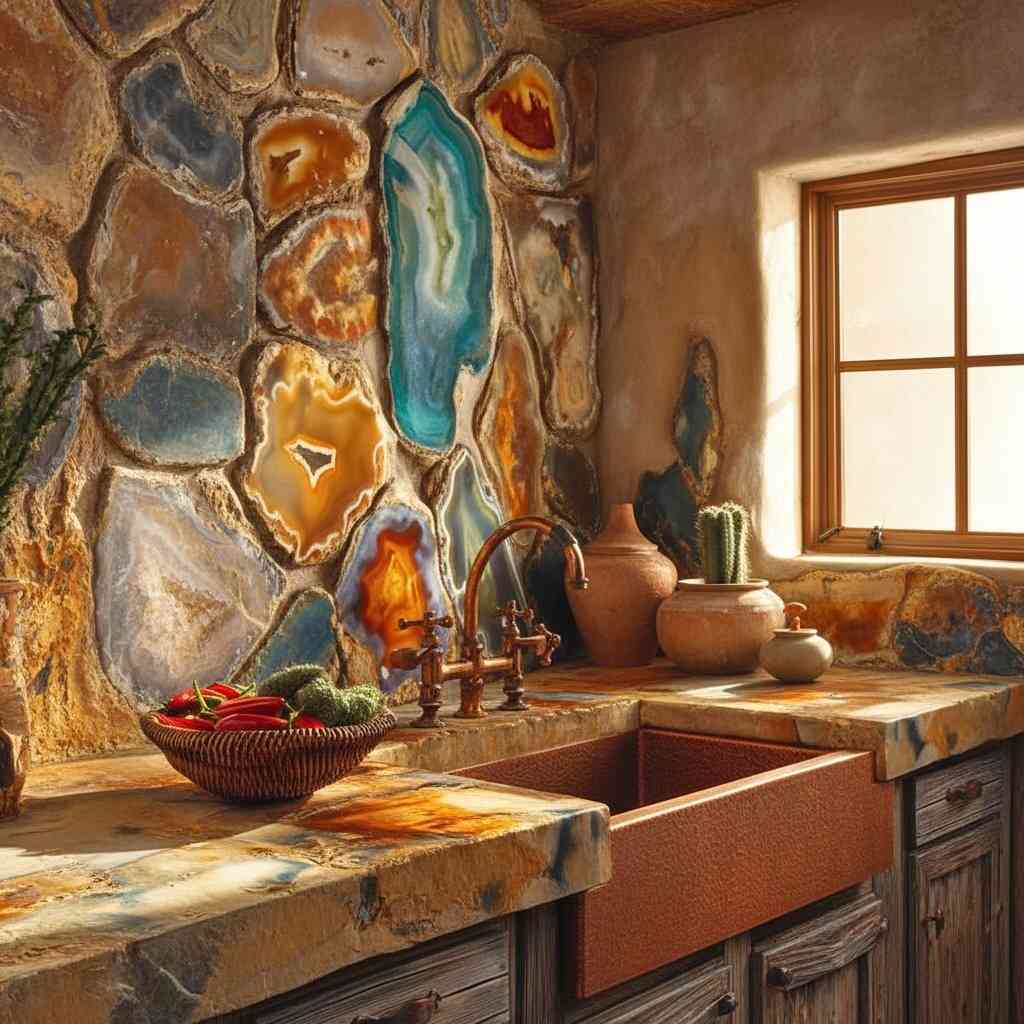
The integration of geode backsplashes also challenges conventional notions of what a backsplash should be. Traditionally, backsplashes are protective, utilitarian surfaces—easy to clean, durable, and unobtrusive. While geode installations are indeed sealed and maintained for practicality, they refuse to remain in the background. They demand engagement. They invite touch, closer inspection, and contemplation. This redefinition aligns with a broader movement in interior design toward “experiential spaces”—environments designed not just to be seen, but to be felt and remembered.
Importantly, the success of a geode backsplash hinges on thoughtful integration. It is not a standalone spectacle but part of a larger design conversation. Complementary materials—such as wood countertops, linen curtains, or matte black fixtures—can enhance its natural elegance without competing for attention. Lighting plays a crucial role: directional spotlights can highlight crystalline facets, while ambient cove lighting can create a soft halo effect. Even the choice of grout (often minimal or absent in high-end installations) affects how the geode is perceived—whether as a fragmented mosaic or a continuous geological slice.
Moreover, geode backsplashes encourage a slower, more intentional way of inhabiting space. In a culture of speed and distraction, they ask us to pause—to notice the subtle gradations in a band of agate, to marvel at the geometric precision of quartz points, to reflect on the time it took for such beauty to form. This mindfulness extends beyond aesthetics into a philosophy of living: one that values depth over speed, authenticity over convenience, and connection over consumption.
Conclusion: The Enduring Spell of Earth’s Hidden Treasures
The allure of geode backsplashes in contemporary interior design is not a passing fancy born of Instagram aesthetics or fleeting luxury trends. It is a profound response to a collective desire for meaning, beauty, and reconnection—with the earth, with time, and with ourselves. These crystalline installations are more than decorative surfaces; they are portals to geological time, metaphors for inner transformation, and catalysts for spatial poetry.
In choosing a geode backsplash, one does not simply select a material—they invite a story into their home. A story written in minerals and millennia, in pressure and patience, in hidden light waiting to be revealed. In the quiet gleam of amethyst or the earthy bands of agate, we find not just a design element, but a reminder: that the most extraordinary beauty often lies beneath the surface, waiting for the right moment—and the right space—to shine.
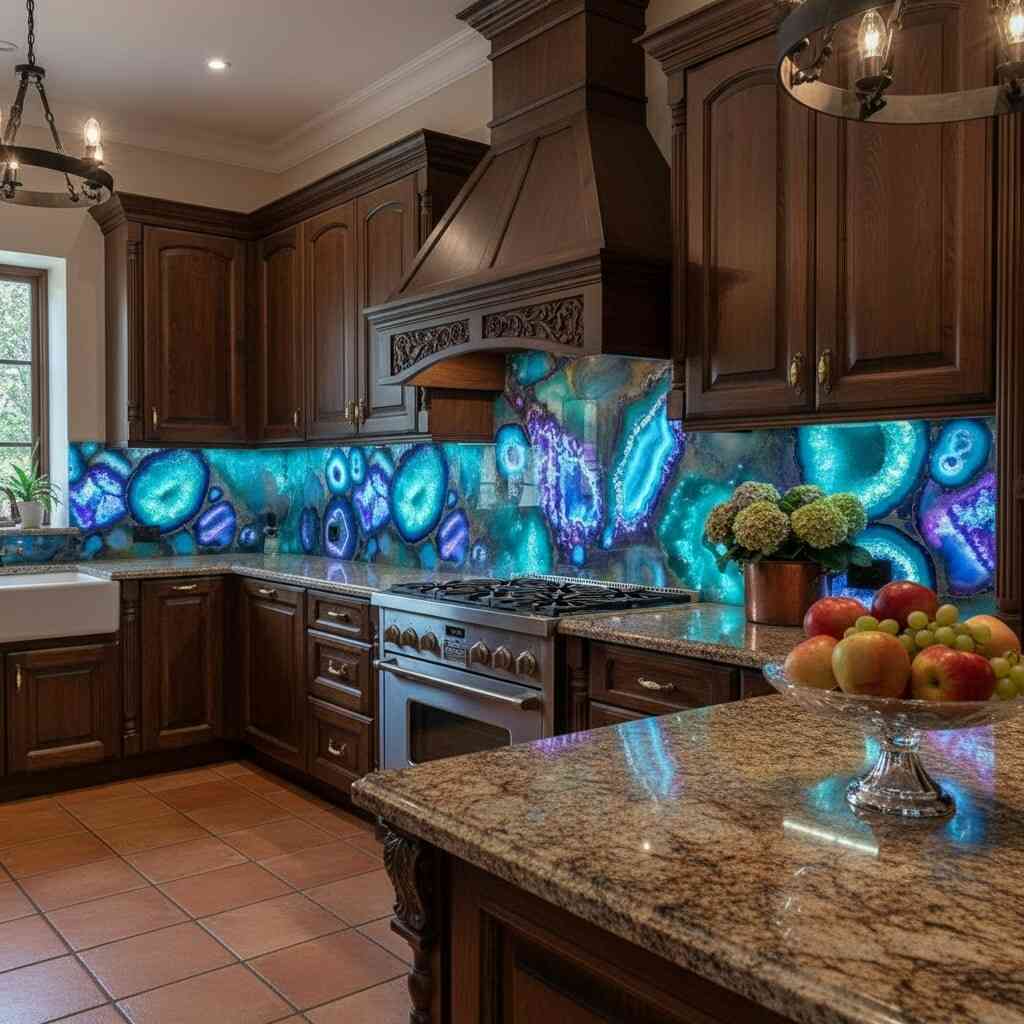
As contemporary design continues to evolve, embracing sustainability, authenticity, and emotional resonance, the geode backsplash stands as a luminous testament to the enduring power of nature’s artistry. It is not merely a trend to be followed, but a language to be spoken—a way of saying, through stone and light, that our homes can be both modern and magical, functional and deeply felt. In the heart of our kitchens and bathrooms, where daily life unfolds in its most ordinary and intimate forms, the geode offers a spark of the sublime—a crystalline whisper from the earth that we are never too far from wonder.