
The Rise of Tank Shaped Recliners: Blending Comfort with Bold Design
In the ever-evolving landscape of interior design, furniture has long served as both a functional necessity and a canvas for personal expression. From the ornate chaise lounges of Victorian salons to the minimalist lines of mid-century modern sofas, each era imprints its values, aesthetics, and technological capabilities onto the objects we sit upon. Today, a new and unexpected silhouette is rolling across living rooms and man caves alike: the tank shaped recliner. More than a mere novelty or eccentricity, these bold pieces represent a fascinating convergence of comfort, cultural symbolism, and audacious design philosophy. The rise of tank shaped recliners isn’t just about seating—it’s about redefining what furniture can communicate, how it can embody power, protection, and playfulness, all while cradling the human form in ergonomic luxury. This article explores the phenomenon of tank shaped recliners through three lenses: their conceptual origins and cultural resonance, their unique synthesis of form and function, and their role as emblematic artifacts of contemporary design sensibilities.
From Battlefield to Living Room: The Symbolic Journey of the Tank Form
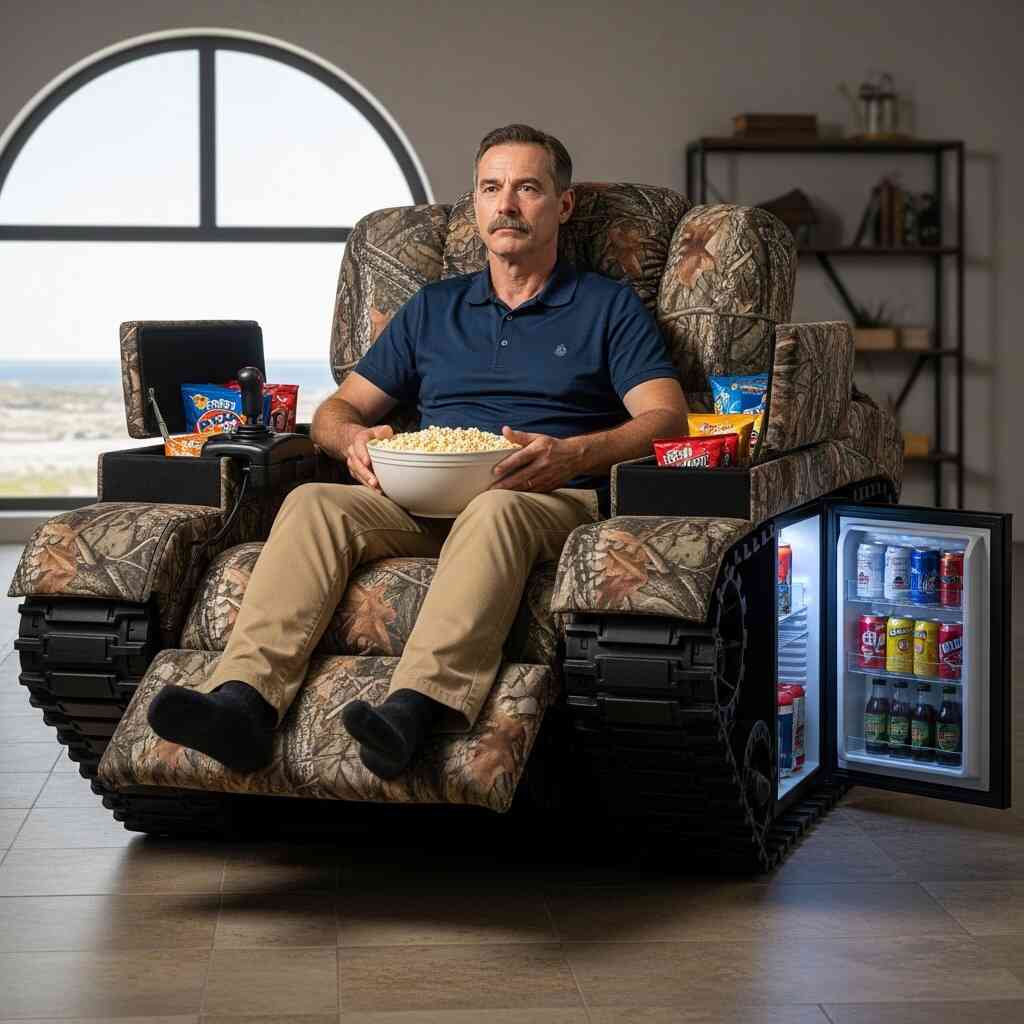
At first glance, the idea of modeling a recliner after a military tank might seem jarring—a juxtaposition of violence and relaxation, aggression and repose. Yet, to understand the appeal of tank shaped recliners, one must look beyond the literal machinery of war and into the deeper cultural meanings the tank has accrued over the past century. Originally developed during the First World War as a solution to the stalemate of trench warfare, the tank quickly became a symbol of technological ingenuity, resilience, and unstoppable forward momentum. In popular culture—from Hollywood war epics to video games and comic books—the tank evolved into an icon of strength, reliability, and even heroism. It is not merely a weapon; it is a mobile fortress, a vessel that shields its occupants while projecting power outward.
This symbolic duality—protection and presence—resonates powerfully in domestic spaces. In an age marked by uncertainty, rapid change, and digital overload, many individuals seek refuge in their homes, craving both physical comfort and psychological sanctuary. The tank shaped recliner, with its armored curves, imposing silhouette, and enveloping structure, offers a tactile manifestation of that desire. It doesn’t just sit in a room; it occupies it with quiet authority. Unlike sleek, low-profile modernist furniture that recedes into the background, the tank recliner asserts itself as a statement piece—a throne for the modern homeowner who values both comfort and character.
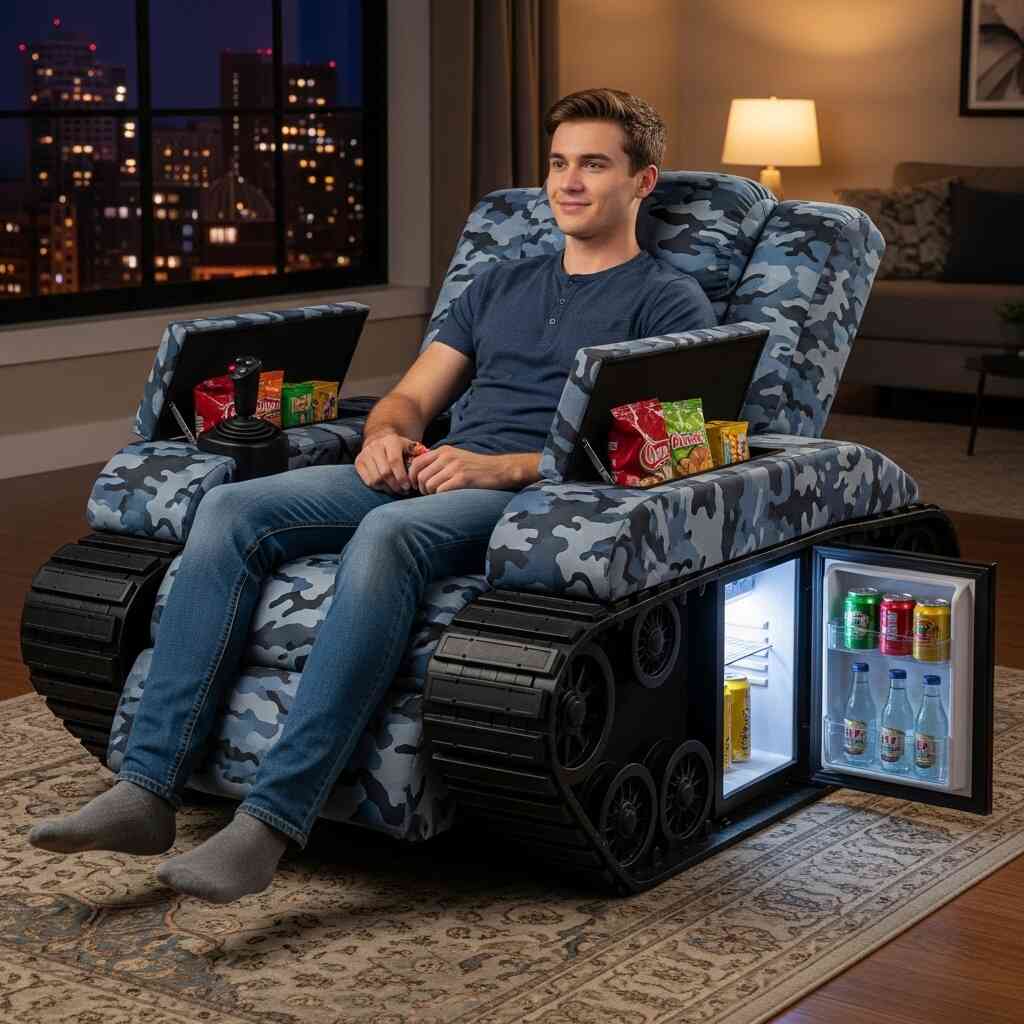
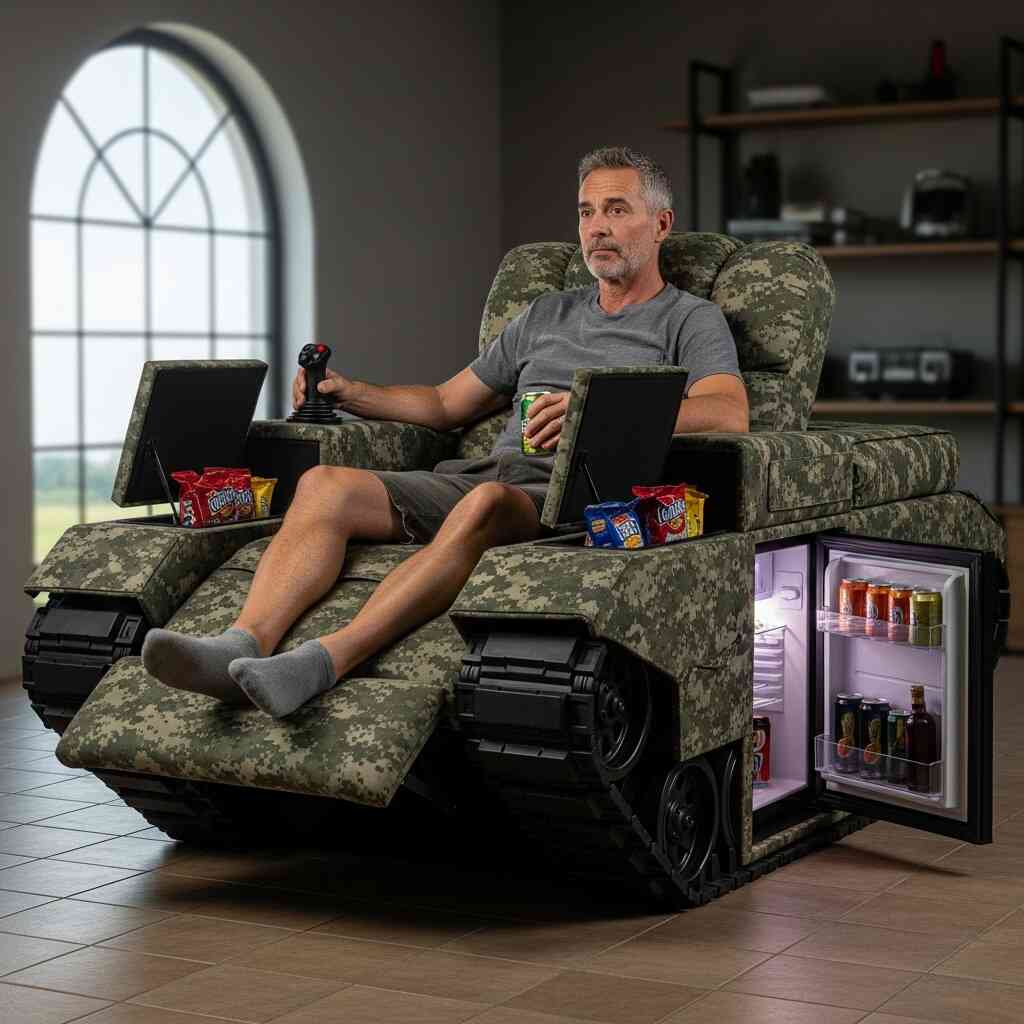
Moreover, the aesthetic of the tank has been softened and reinterpreted through the lens of design. Designers aren’t replicating actual military hardware; they’re abstracting its essential forms—the rounded turret, the broad track-like base, the robust chassis—and translating them into organic, inviting shapes. The result is a piece that evokes the tank’s essence without its menace. In this way, the tank shaped recliner becomes a postmodern artifact: it borrows from a symbol of conflict but repurposes it for peace, turning armor into upholstery, and firepower into footrests.
Engineering Comfort Within an Armored Shell: Form Meets Function
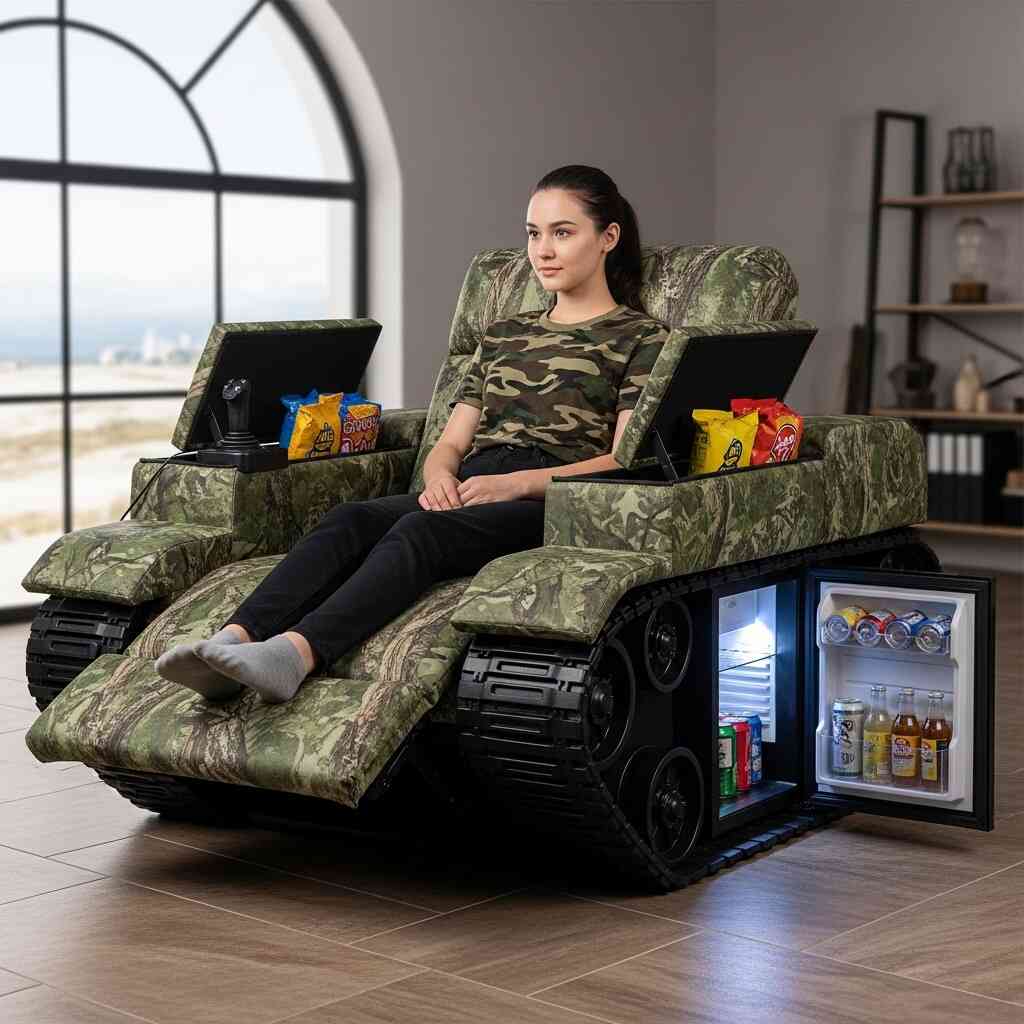
One might assume that a recliner modeled after a 60-ton battle vehicle would prioritize spectacle over sit-ability. But the true ingenuity of tank shaped recliners lies in their ability to reconcile dramatic form with exceptional function. Far from being mere sculptural curiosities, these recliners are often engineered with the same attention to ergonomic detail as high-end conventional models. The challenge for designers is not just to mimic the tank’s silhouette, but to ensure that every curve, angle, and contour serves the human body in repose.
Consider the “turret” element—the rounded upper back and headrest that mimics a tank’s rotating gun emplacement. In well-crafted tank shaped recliners, this feature is not static; it often incorporates adjustable lumbar support, memory foam padding, and even built-in neck cradles that pivot subtly to accommodate different postures. The broad, low-slung base—inspired by tank treads—provides exceptional stability, eliminating the wobble that can plague lighter recliners. This grounded foundation enhances the sense of security and enclosure, making the user feel cradled rather than confined.
The reclining mechanism itself is another area where innovation shines. Many tank shaped recliners utilize smooth, quiet electric motors that allow for infinite positioning—reclining from upright to near-horizontal with the press of a button. Some models integrate massage functions, heating elements, or even ambient lighting that glows softly from beneath the “treads,” enhancing the immersive experience. The upholstery choices also reflect a balance between ruggedness and refinement: top-grain leather, heavy-duty microfiber, or textured performance fabrics that echo the utilitarian textures of military gear while offering softness to the touch.
What’s particularly compelling is how the tank form enhances, rather than hinders, comfort. The enveloping shape creates a cocoon-like environment that blocks out visual distractions, promoting relaxation and focus—ideal for reading, gaming, or watching films. The high back and side wings provide acoustic buffering, subtly dampening ambient noise. In essence, the tank shaped recliner leverages its bold architecture to create a micro-environment of calm within the chaos of daily life. It is not merely a chair; it is a personal retreat, engineered for both physical ease and mental decompression.
A Statement of Identity: Tank Shaped Recliners in Contemporary Design Culture
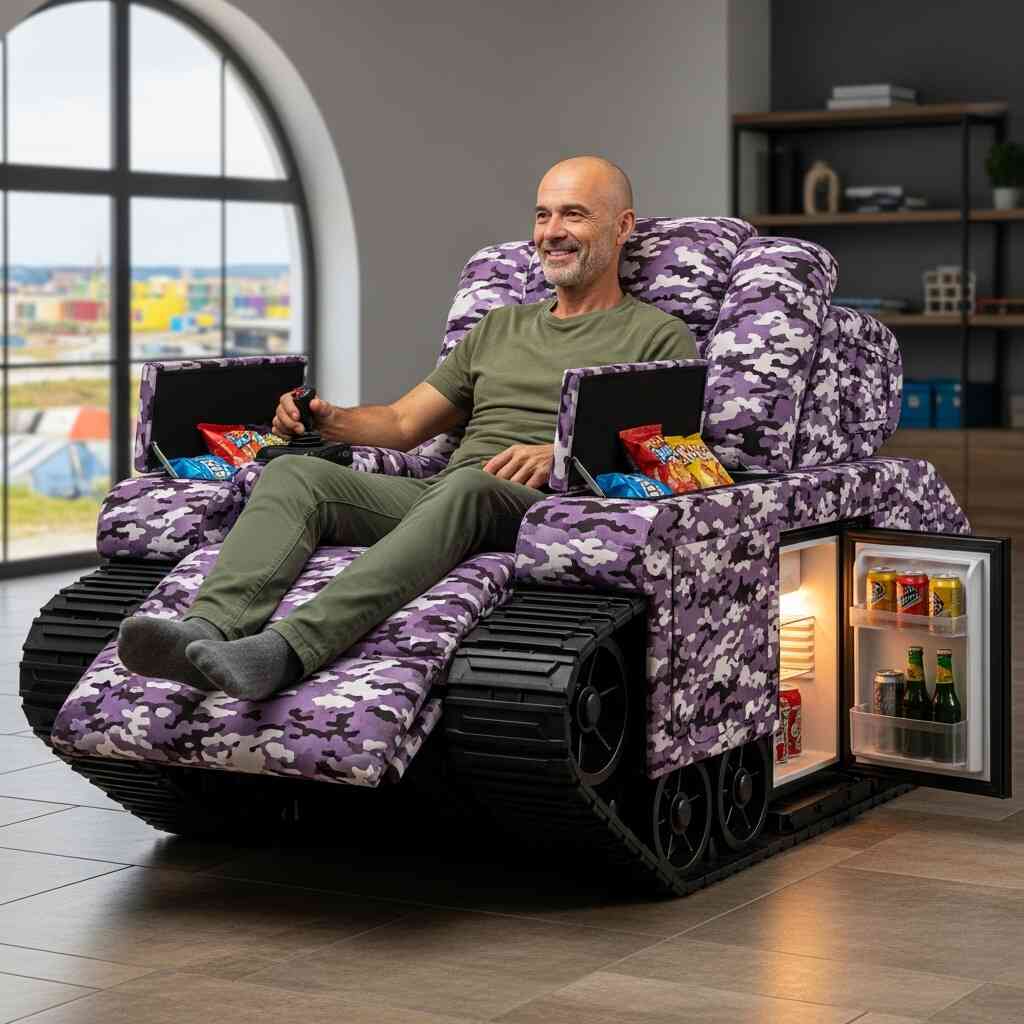
Beyond their functional merits, tank shaped recliners occupy a unique space in the cultural discourse around interior design. In an era increasingly defined by individualism and self-expression, furniture has become a medium through which people articulate their identities, interests, and worldviews. The minimalist “less is more” ethos that dominated the early 21st century is giving way to a more eclectic, personality-driven approach—one that embraces maximalism, nostalgia, and thematic storytelling. Within this context, the tank shaped recliner emerges as a deliberate and unapologetic declaration.
For some, it’s a tribute to military history or a nod to childhood fascinations with machinery and heroism. For others, it’s an embrace of industrial aesthetics or a playful subversion of domestic norms. The chair becomes a conversation starter, a focal point that challenges the neutrality of conventional living room layouts. It resists blending in; instead, it demands engagement, whether through admiration, curiosity, or even playful skepticism.
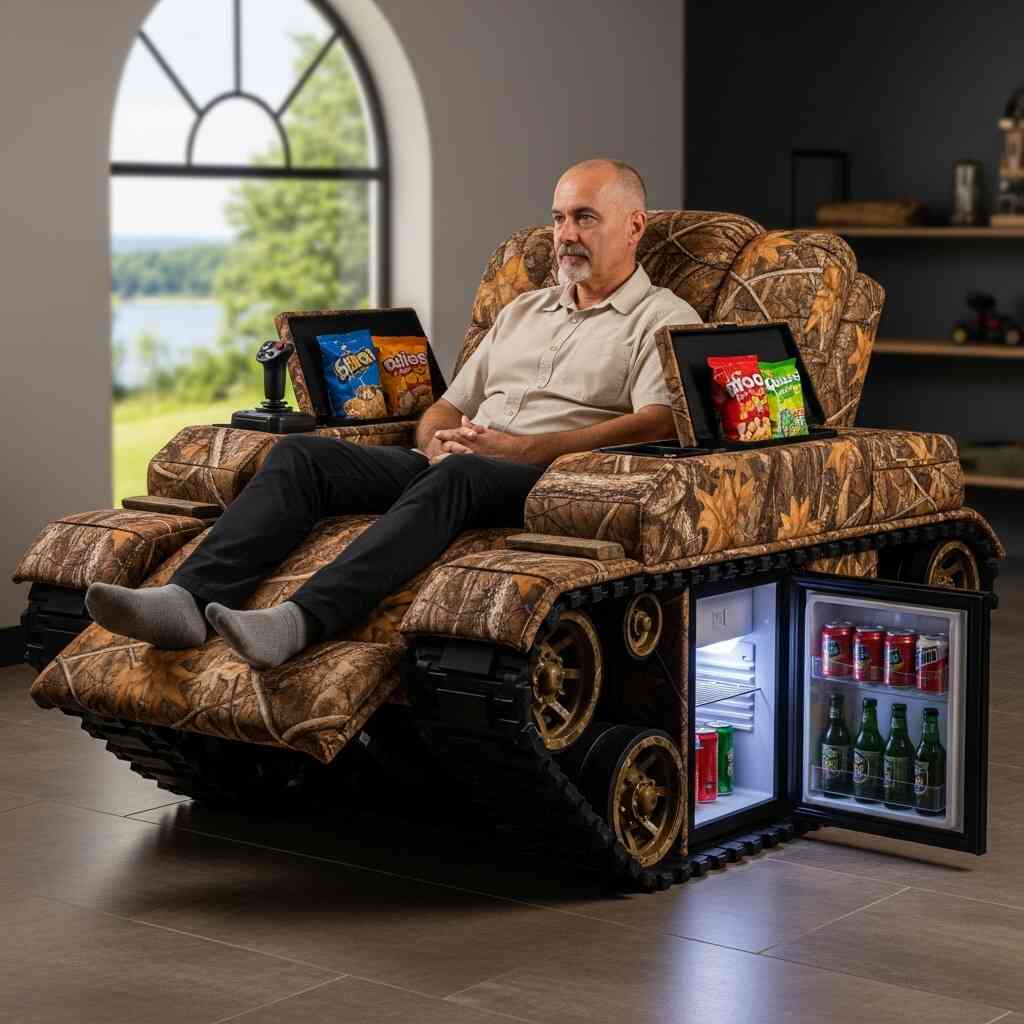
This aligns with broader trends in design that celebrate hybridity and narrative. Just as architects now blend rustic and futuristic elements, or fashion designers merge streetwear with haute couture, furniture designers are experimenting with unexpected forms that carry emotional and cultural weight. The tank shaped recliner is part of this movement—a piece that refuses to be categorized strictly as “functional” or “decorative.” It is both, and more: it is experiential. Sitting in one is not a passive act; it is an immersion into a curated atmosphere that blends nostalgia, fantasy, and tactile comfort.
Furthermore, the popularity of themed entertainment spaces—home theaters, gaming dens, hobby rooms—has created fertile ground for such bold furniture choices. In these environments, immersion is key, and every object contributes to the overall ambiance. A tank shaped recliner doesn’t just furnish a room; it completes a world. Paired with vintage military posters, model tanks on shelves, or even a sound system that mimics battlefield acoustics (for the truly committed), the recliner becomes the centerpiece of a lived-in narrative.
Critics might dismiss such pieces as gimmicks, but this overlooks their deeper significance. In a world saturated with mass-produced, interchangeable goods, the tank shaped recliner represents a return to furniture with personality—objects that tell stories, provoke thought, and reflect the complexities of human taste. They challenge the notion that domestic spaces must be serene, neutral, or universally appealing. Instead, they champion the idea that a home should be a reflection of its inhabitant’s inner world, however unconventional that may be.
Conclusion: More Than a Chair—A Cultural Artifact of Comfort and Courage
The rise of tank shaped recliners is not a fleeting trend or a marketing stunt; it is a meaningful evolution in the language of furniture design. These pieces embody a profound synthesis of opposites: aggression and gentleness, history and futurism, utility and artistry. They transform a symbol of war into a vessel of peace, repurposing the tank’s formidable presence into a source of personal sanctuary. In doing so, they speak to a contemporary desire for spaces that are not only comfortable but also charged with meaning and identity.
What makes tank shaped recliners so compelling is their ability to transcend their literal form. They are not just chairs that look like tanks—they are meditations on protection, resilience, and the human need for both physical and psychological refuge. Their bold design invites us to reconsider the role of furniture in our lives: not merely as objects we use, but as extensions of who we are and what we value.
As design continues to evolve in response to cultural shifts, technological advances, and individual expression, we can expect more such hybrids—pieces that blur the lines between function and fantasy, history and home. The tank shaped recliner stands as a testament to the power of design to reimagine, reinterpret, and ultimately, to comfort. It reminds us that even the most unlikely forms can be reshaped into havens of rest, proving that sometimes, the boldest designs offer the softest landings. In a world that often feels fragmented and uncertain, perhaps there is something deeply reassuring about curling up inside a symbol of strength—reclined, relaxed, and ready to face whatever comes next.