
Stepping Into a New Dimension of Aquatic Adventure
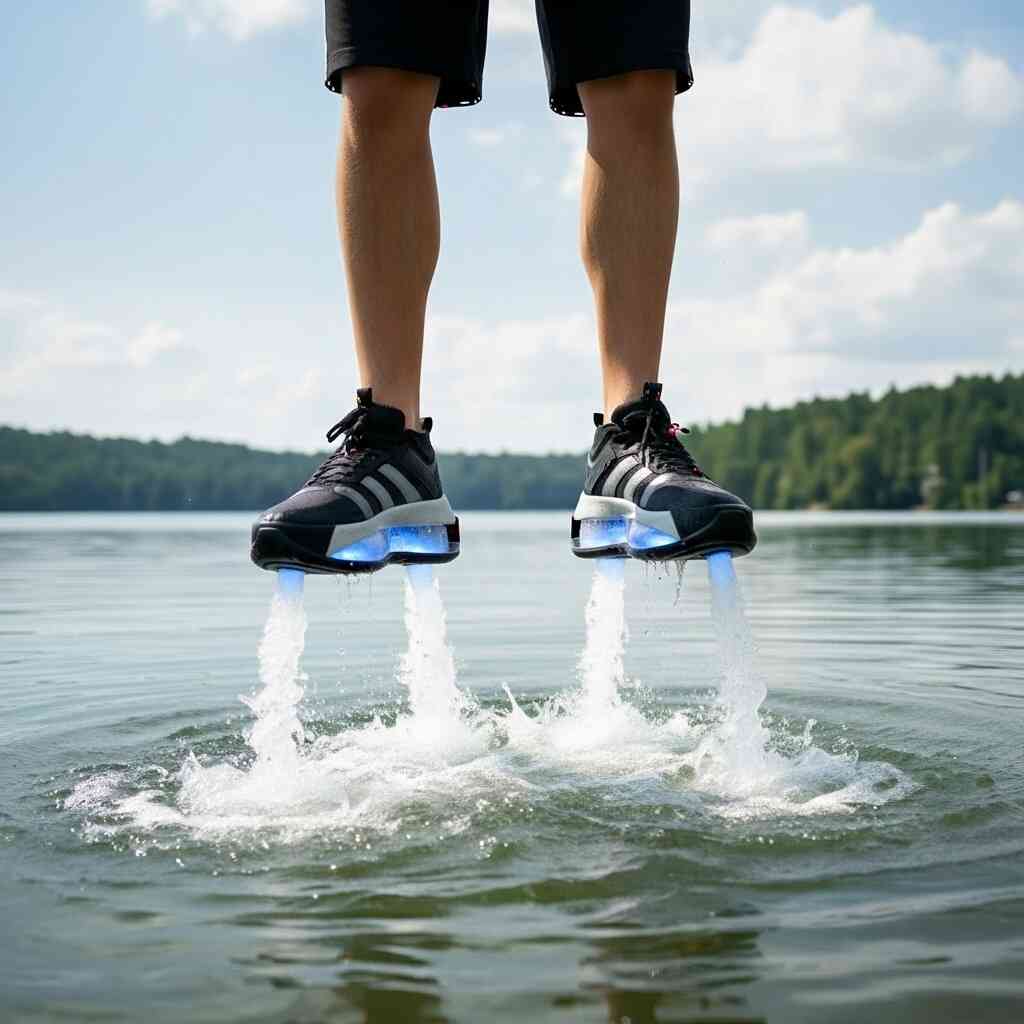
Imagine standing knee-deep in the calm, sunlit waters of a lake or the gentle surf of a quiet coastline. Beneath your feet, instead of sand or pebbles, you feel the hum of pressurized water coursing through sleek, futuristic footwear. With a subtle shift in balance and a gentle squeeze of a throttle, you rise—not by swimming, not by paddling—but by the raw, exhilarating force of water itself. You hover above the surface, then lift higher, skimming just inches above the waves before soaring several feet into the air. This is not science fiction. This is the reality offered by water jet shoes—a revolutionary fusion of hydrodynamics, engineering, and human aspiration that transforms the simple act of standing in water into an experience of weightless freedom.
Water jet shoes represent a thrilling frontier in recreational water sports, one that blurs the line between human capability and mechanical augmentation. Unlike traditional watercraft that require steering wheels, hulls, or even a seated position, water jet shoes place the user directly at the heart of propulsion and balance, creating an intimate, responsive, and deeply personal interaction with the aquatic environment. For beginners, the concept may seem intimidating—how does one simply “walk on water” using jets? But beneath the spectacle lies a surprisingly accessible entry point into a world where physics, play, and personal discovery converge. This article serves as a comprehensive beginner’s guide to understanding, experiencing, and appreciating the phenomenon of water jet shoes—not as mere gadgets, but as portals to a new kind of hydro-powered fun.
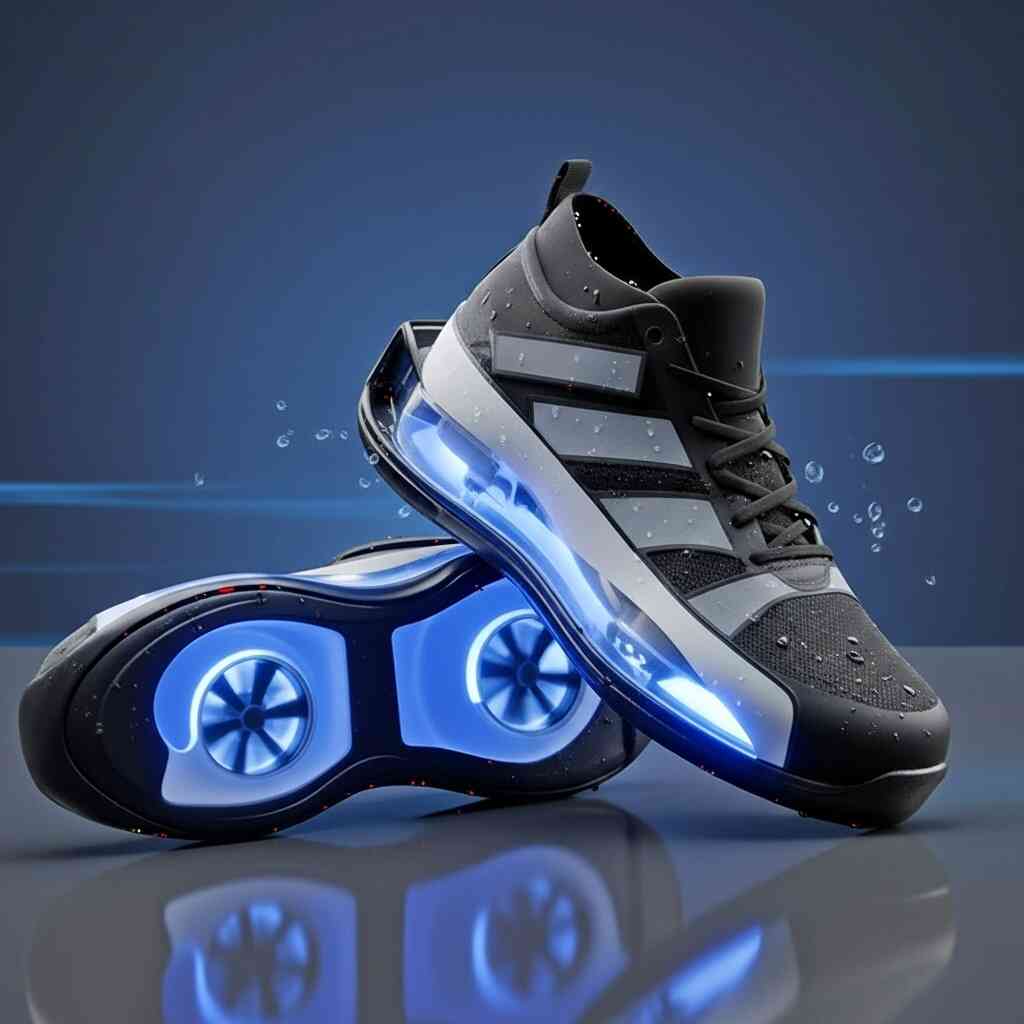
Part 1: Understanding the Mechanics Behind the Magic
At first glance, water jet shoes appear almost magical. How can a pair of boots strapped to your feet lift you into the air using nothing but water? The answer lies in Newton’s Third Law of Motion: for every action, there is an equal and opposite reaction. Water jet shoes harness this fundamental principle through a clever system of water propulsion that transforms ordinary seawater or lake water into a powerful upward thrust.
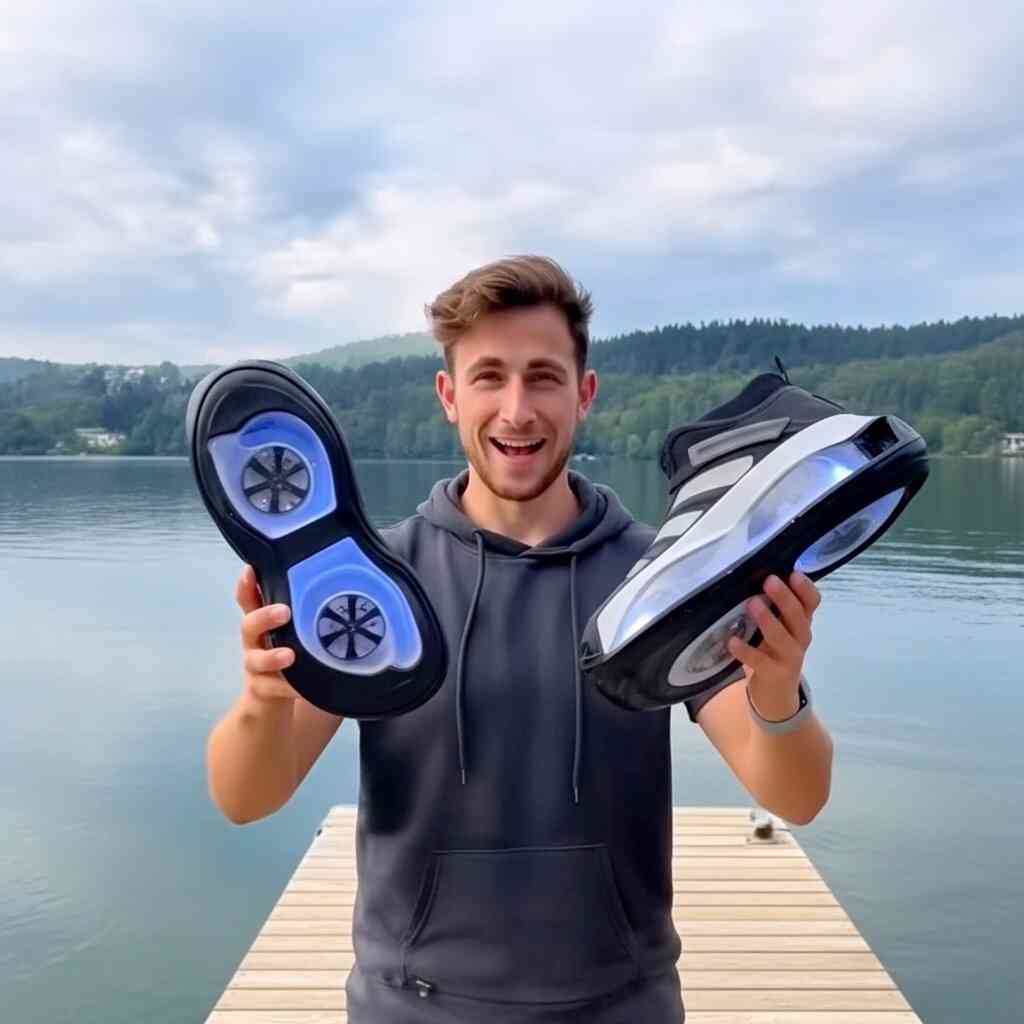
The core components of a typical water jet shoe setup include the shoes themselves, a buoyant platform or board (often worn like water skis), a high-pressure hose, and a personal watercraft (PWC)—commonly known as a jet ski—that serves as the power source. The PWC’s engine drives an impeller pump, which draws in water from beneath the craft and expels it at high velocity through the hose connected to the user’s footwear. This expelled water creates a reactive force that pushes the user upward. By adjusting their body position and controlling the throttle (usually via a handheld remote or handlebar-mounted control), the rider modulates the amount of thrust, enabling everything from gentle hovering to dramatic aerial maneuvers.
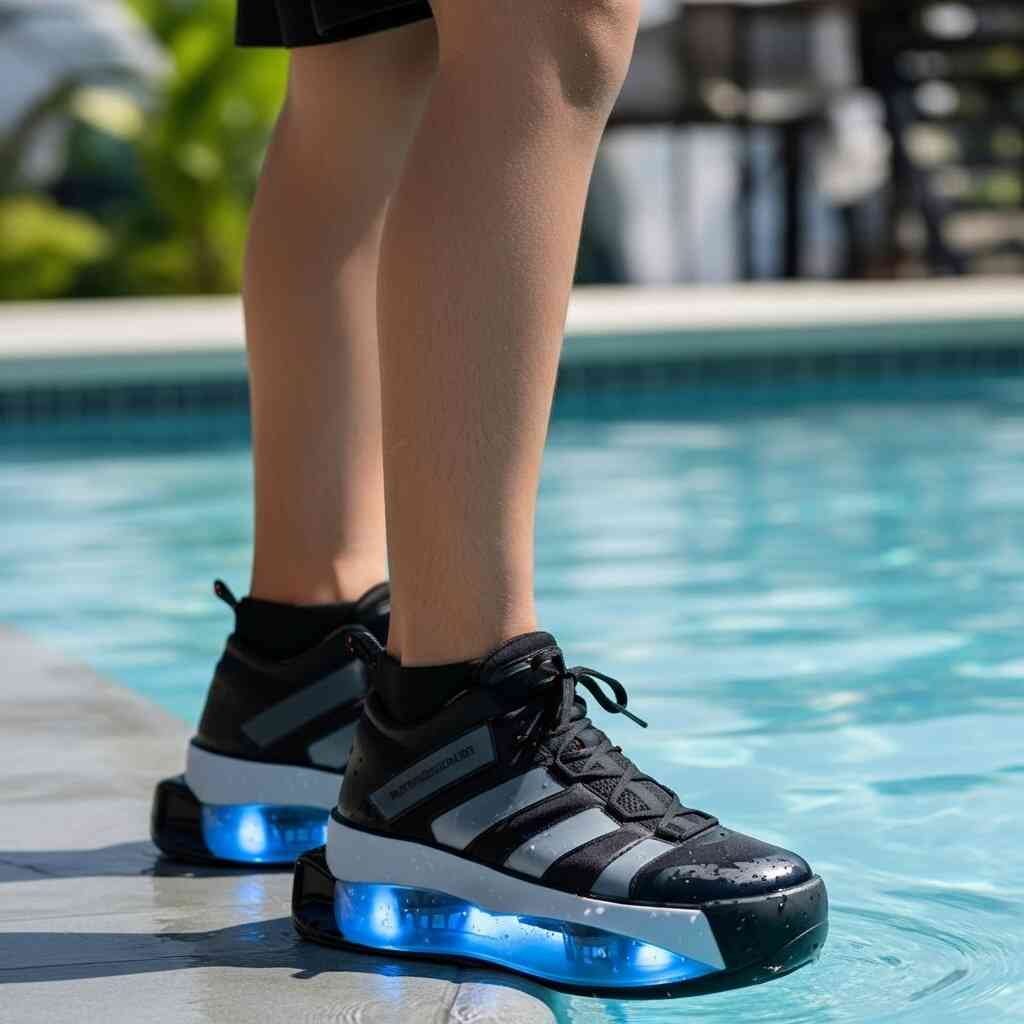
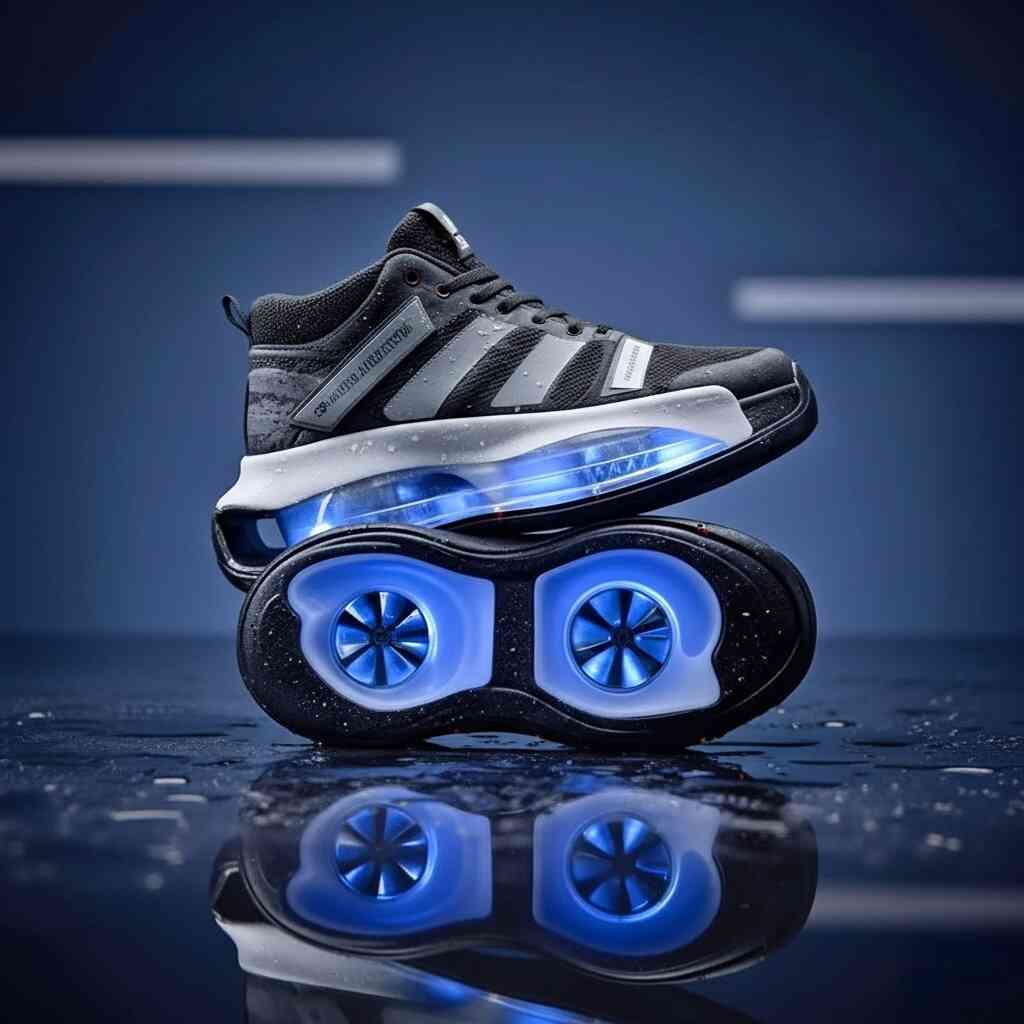
What sets water jet shoes apart from other hydroflight devices—such as flyboards or jetpacks—is their foot-centric design. Instead of being strapped to a single nozzle behind the back or under the feet in a centralized unit, water jet shoes distribute propulsion through two independent nozzles, one under each foot. This configuration mimics the natural stance and balance of walking or standing, offering a more intuitive and grounded (ironically) sense of control. For beginners, this bilateral setup can feel more familiar and less disorienting than systems that lift the body from a single point.
It’s important to note that water jet shoes do not contain their own power source. They are tethered, both physically and functionally, to the PWC, which remains nearby on the surface. This tethering ensures a continuous supply of pressurized water and also acts as a safety feature, limiting the distance a rider can travel from the support craft. While this may seem restrictive, it actually enhances the learning curve for newcomers, as it keeps the experience contained within a manageable area and allows for immediate assistance from a spotter or instructor.
The physics involved are elegant in their simplicity but nuanced in execution. Stability is achieved not through rigid structures but through dynamic equilibrium—constant micro-adjustments of ankle, knee, and hip position that respond to the shifting forces of thrust and gravity. Learning to “fly” with water jet shoes is less about brute strength and more about finesse, timing, and proprioception (the body’s awareness of its position in space). This makes the activity uniquely engaging: it challenges the mind as much as the body, turning each session into a dance between human intuition and hydraulic power.
Part 2: The Beginner’s Journey—From First Steps to First Flight
Stepping into water jet shoes for the first time is an experience layered with anticipation, curiosity, and a healthy dose of nervous excitement. Unlike learning to swim or paddleboard—activities that build on familiar terrestrial movements—water jet propulsion introduces a completely new sensory and motor paradigm. The good news? With proper guidance, patience, and a willingness to embrace the learning process, most beginners can achieve stable hovering within a single session.
Safety First: The Foundation of Fun
Before even touching the shoes, safety must be the primary focus. Reputable operators and training programs emphasize the use of a certified personal flotation device (PFD), a helmet (especially in shallow or rocky areas), and often a wetsuit for thermal protection and abrasion resistance. Equally important is the presence of a trained spotter—usually the person operating the PWC—who can monitor the rider’s position, adjust engine power as needed, and respond instantly to any instability or distress.
Beginners should also familiarize themselves with hand signals and communication protocols. Since verbal communication is difficult over the sound of the engine and rushing water, standardized gestures (e.g., thumbs up for “more power,” thumbs down for “less,” waving arms for “stop”) become essential tools for a smooth and safe session.
The First Hover: Finding Balance in the Unfamiliar
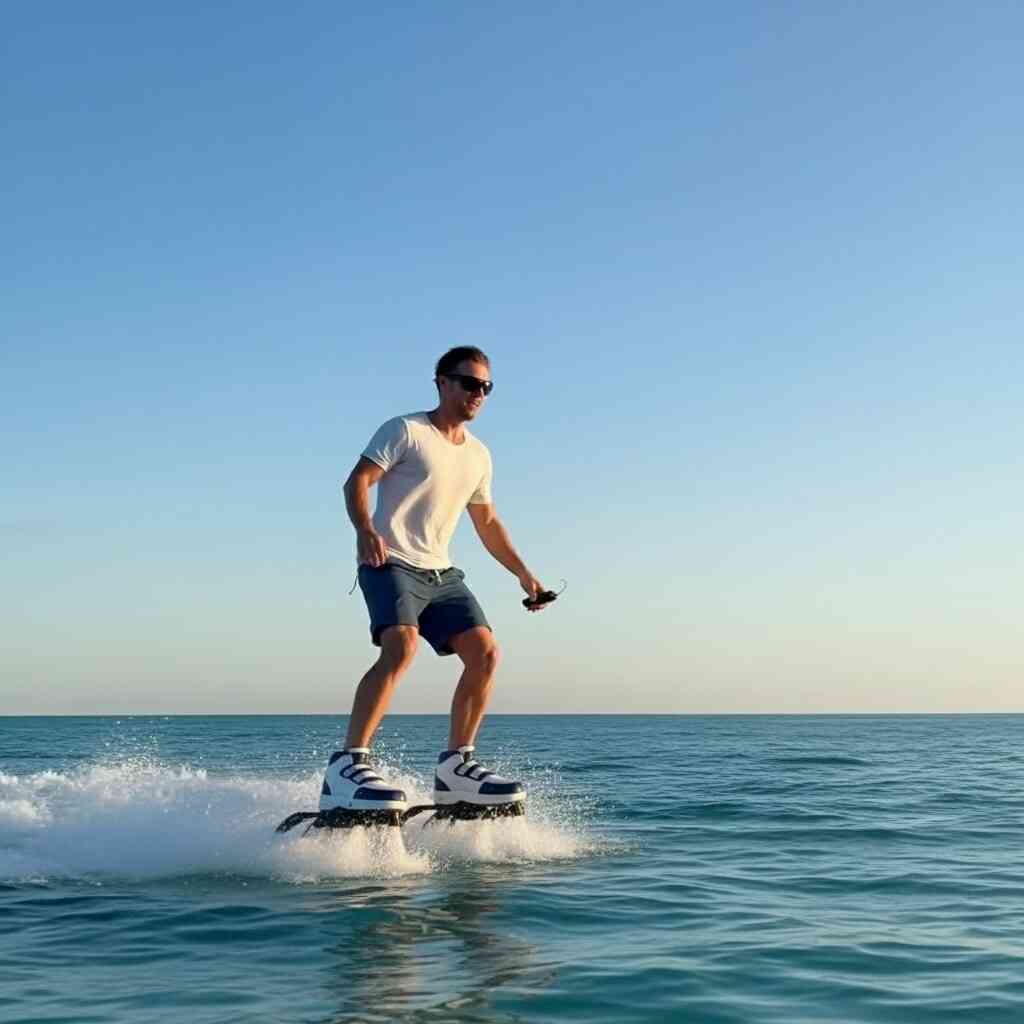
Most first-time users begin in waist-deep water, standing on the buoyant board with the jet shoes secured to their feet. The instructor starts the PWC at low power, allowing a gentle stream of water to flow through the system. At this stage, the goal isn’t to fly—it’s to feel the thrust and understand how subtle shifts in posture affect balance.
Many beginners instinctively lean backward, mimicking the posture of water skiing. However, with water jet shoes, the optimal stance is upright or slightly forward, with knees bent and core engaged. Leaning too far back can cause the feet to rise uncontrollably, leading to a backward fall—a common but harmless beginner mistake. Conversely, leaning too far forward may cause the rider to pitch face-first into the water. The key is to find the “sweet spot” where the upward thrust counteracts gravity just enough to lift the board off the surface while maintaining control.
This initial phase often involves a series of short, bobbing ascents and gentle dips—a rhythmic dance of trial and error. Each attempt builds neuromuscular memory, teaching the body how to interpret and respond to the forces at play. Most learners report a sudden “aha!” moment when balance clicks into place, and they achieve their first sustained hover just above the water’s surface. It’s a moment of pure, unfiltered joy—a tangible realization that they are, quite literally, defying gravity with nothing but water and willpower.
Progression: From Hovering to Controlled Flight
Once stable hovering is mastered, the next step is controlled vertical ascent. By gently increasing throttle (via the handheld control), the rider can rise higher—first to knee height, then waist height, and eventually several feet above the water. At this stage, directional control becomes possible. Tilting one foot slightly forward or backward creates differential thrust, allowing the rider to move laterally, rotate, or even perform slow, sweeping arcs across the surface.
Advanced maneuvers—such as spins, flips, or high jumps—are well beyond the beginner scope and require significant practice, physical conditioning, and expert supervision. But even at the introductory level, the sense of three-dimensional freedom is profound. Unlike boats or skis that are confined to the water’s plane, water jet shoes unlock the vertical axis, turning the aquatic environment into a volumetric playground.
Mindset Matters: Embracing the Learning Curve
Perhaps the most overlooked aspect of learning water jet shoes is the psychological component. Fear of falling, concern about looking clumsy, or frustration with slow progress can hinder the experience. Yet every expert flyer once wobbled, splashed, and tumbled. The beauty of water jet shoes lies not in perfection, but in the process—the willingness to fall, laugh, and try again. The water is forgiving; the stakes are low; and the reward—a few seconds of silent, weightless suspension above the waves—is worth every stumble.
Moreover, the activity cultivates mindfulness. To maintain balance, the rider must be fully present, attuned to the subtle feedback from their body and the machine. In a world saturated with digital distractions, this kind of embodied focus is increasingly rare—and deeply restorative.

Part 3: The Deeper Appeal—Why Water Jet Shoes Captivate the Imagination
Beyond the adrenaline and novelty, water jet shoes resonate on a symbolic and experiential level. They tap into a primal human dream: the desire to transcend the limits of our physical form and move through the world in new ways. From Icarus to Iron Man, cultures have long mythologized flight as a metaphor for liberation, perspective, and possibility. Water jet shoes offer a grounded (or rather, ungrounded) version of this fantasy—one that is accessible, sustainable, and intimately connected to the natural world.
Unlike aerial drones or virtual reality, which mediate experience through screens and algorithms, water jet shoes demand direct engagement. There is no autopilot, no simulation—just you, the water, and the raw physics of motion. This authenticity fosters a deeper connection not only to one’s own body but also to the aquatic environment. Riders often describe a heightened awareness of wind, light, wave patterns, and even marine life below—a sensory immersion that transforms recreation into reverence.
Furthermore, water jet shoes democratize flight. They don’t require runways, wings, or fossil-fuel-burning engines. The “fuel” is water—abundant, renewable, and returned to the environment unchanged. The propulsion system is closed-loop: water is drawn in, accelerated, and expelled, creating thrust without combustion or emissions. In this sense, water jet shoes represent a harmonious blend of technology and ecology, proving that innovation need not come at the planet’s expense.
For beginners, this deeper dimension may not be immediately apparent. It emerges gradually—through the quiet moment when you hover motionless above a sun-dappled cove, or when you glance down and see your shadow rippling across the seabed. It’s in these instants that hydro-powered fun transcends sport and becomes something more: a meditation, a dialogue with nature, a reminder of human ingenuity and our enduring fascination with the elements.

Conclusion: Dipping Your Toes—Then Soaring—Into a New Aquatic Era
Water jet shoes are more than a recreational novelty; they are an invitation to reimagine our relationship with water, movement, and the boundaries of what’s possible. For the beginner, the journey begins with curiosity—a willingness to step into unfamiliar gear and trust the invisible forces that will lift you skyward. It continues through laughter-filled tumbles, moments of breakthrough, and the quiet awe of sustained flight.
This activity is not about speed, competition, or conquest. It’s about presence, balance, and the pure, unadulterated joy of defying expectations—both your own and those imposed by gravity. As you stand on the shore, gear in hand, remember that every expert was once a novice, every graceful arc began with a splash. The water is waiting, not to challenge you, but to welcome you into its fluid embrace.
So take that first step. Feel the thrust. Find your balance. And discover, for yourself, the hydro-powered magic of water jet shoes—not just as a device, but as a doorway to a new kind of fun, freedom, and wonder.