
When Whiskers Meet Wrought Iron
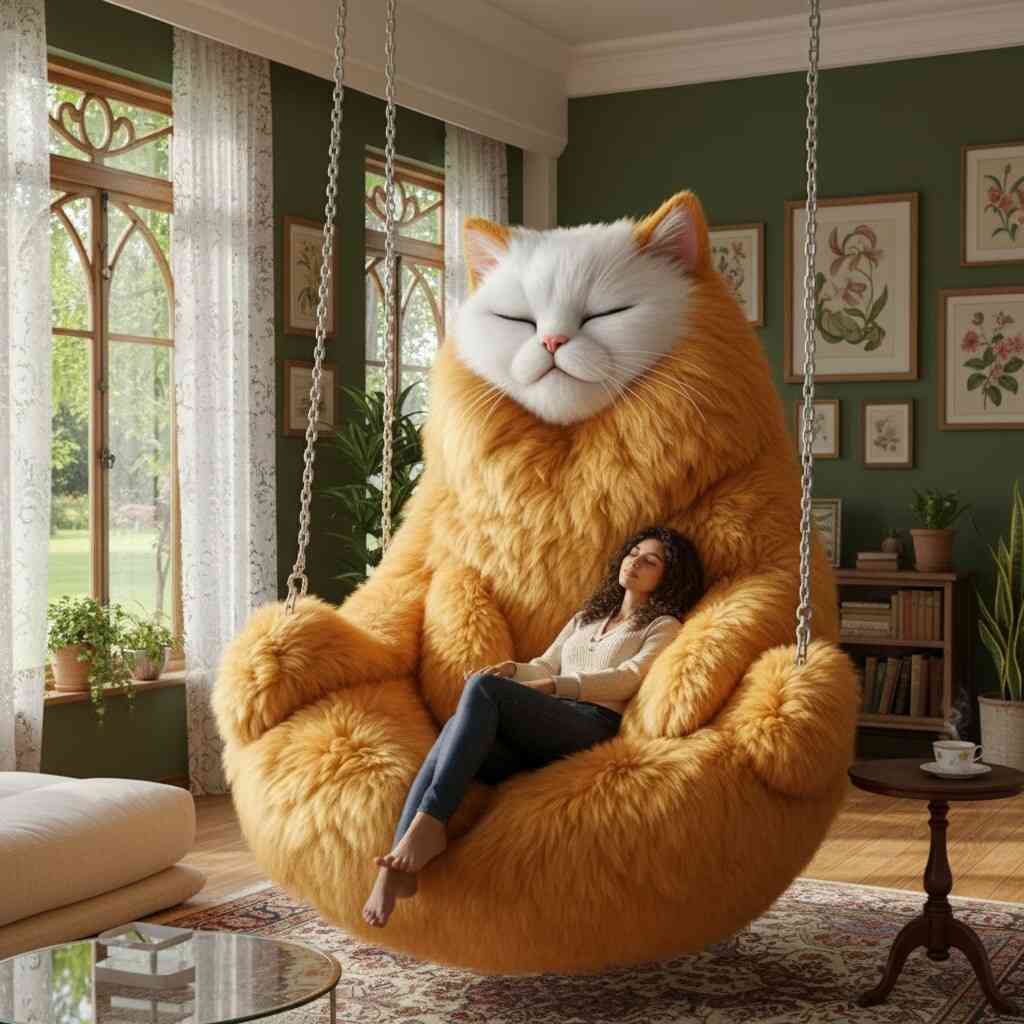
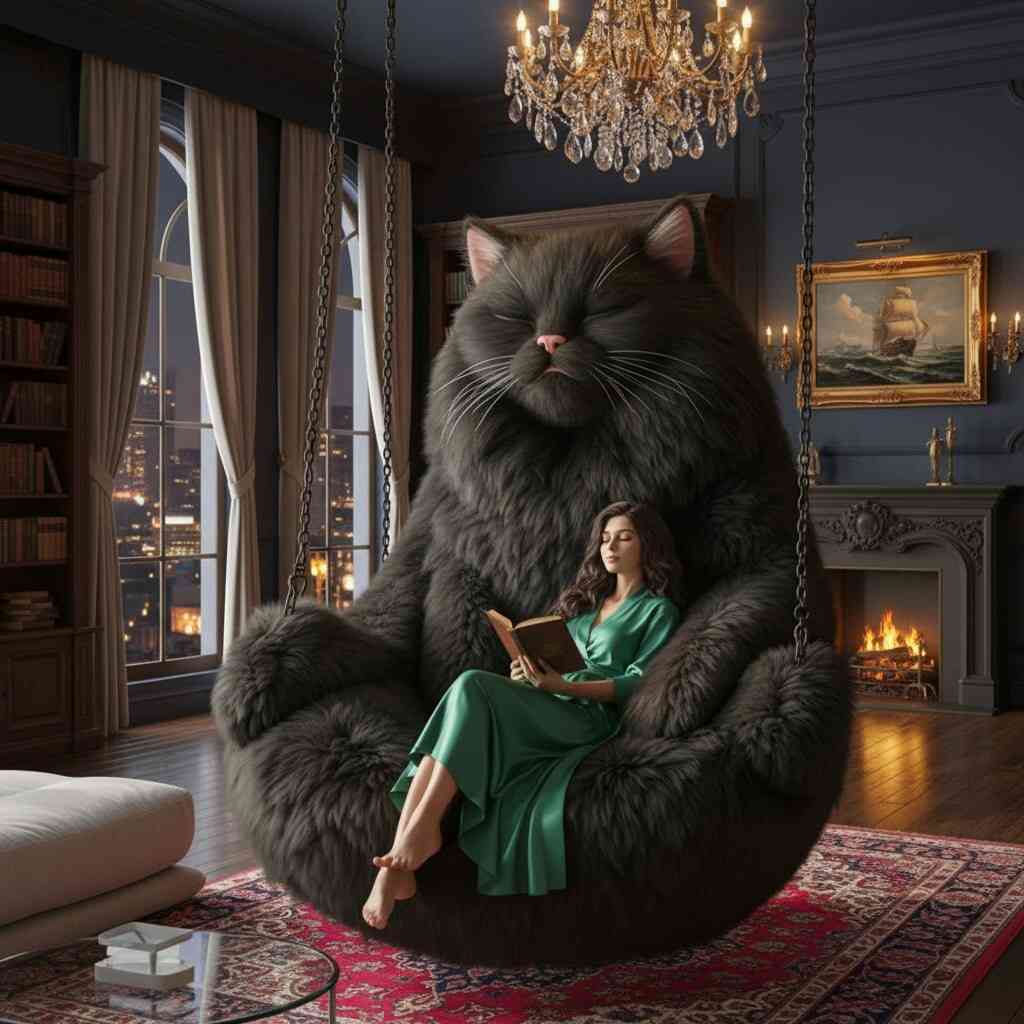
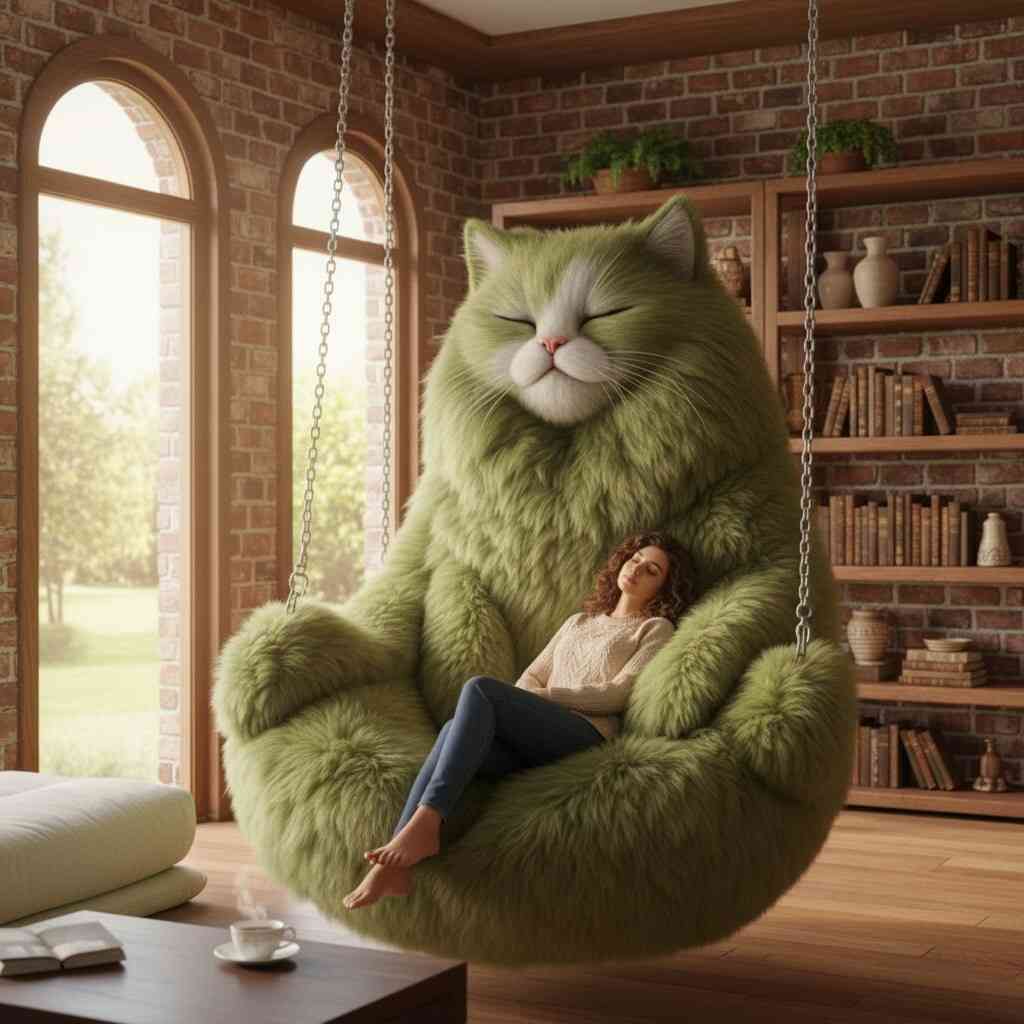
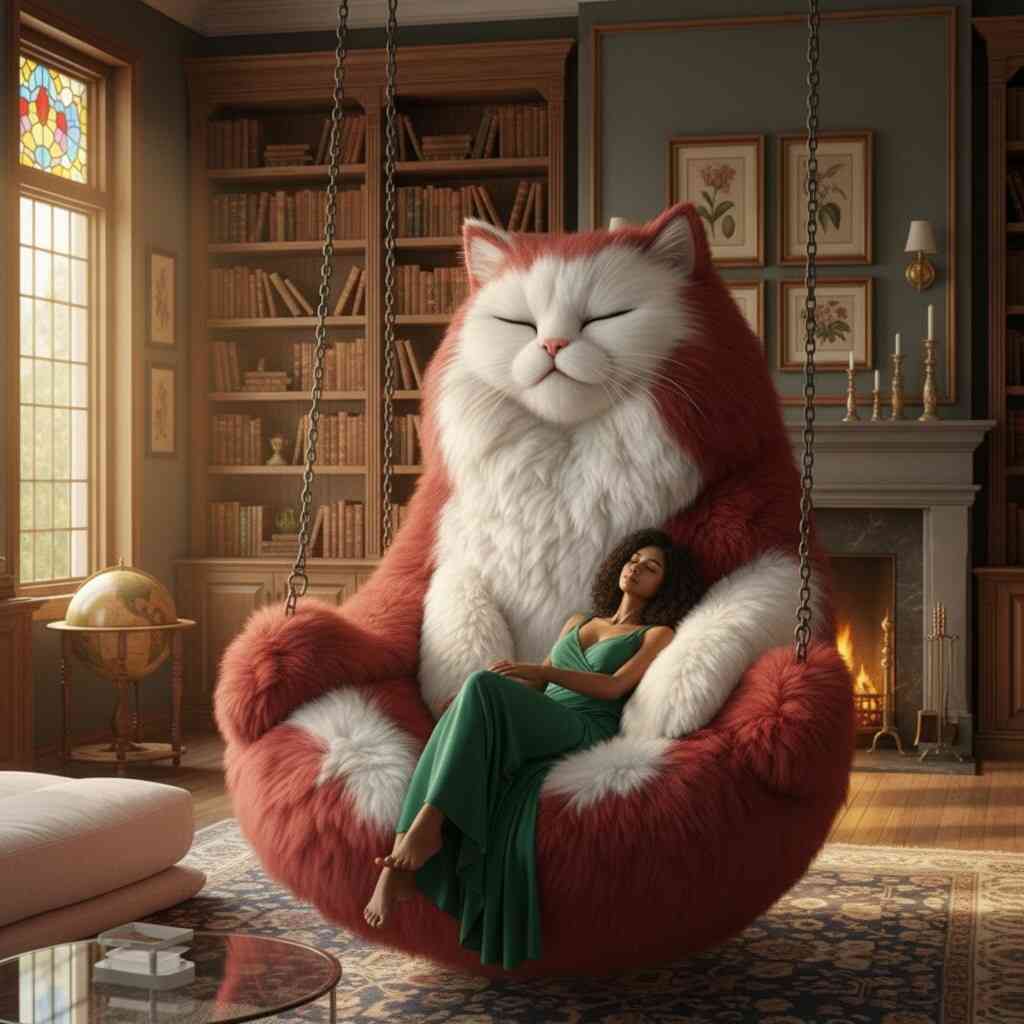
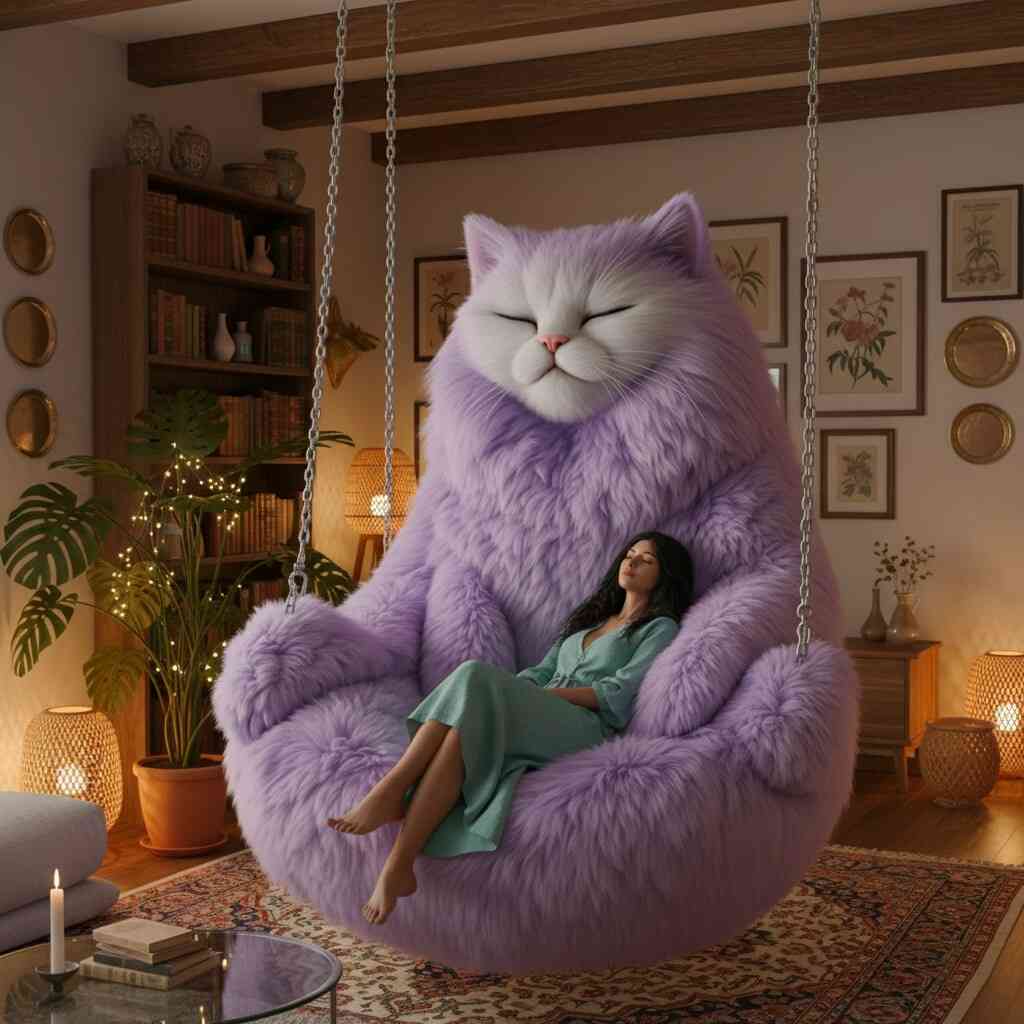
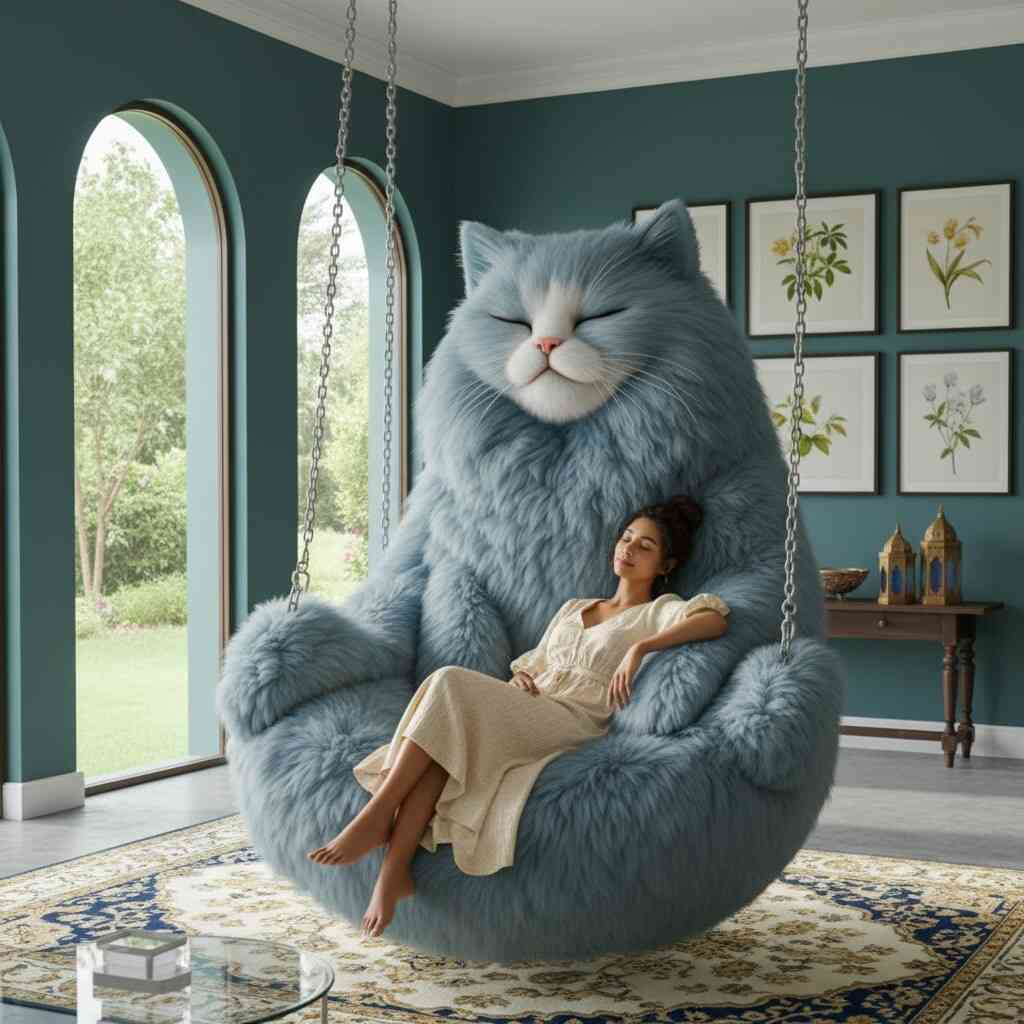
In the heart of a bustling metropolis—where steel towers glint under indifferent sunlight and sidewalks pulse with the rhythm of hurried footsteps—a curious anomaly appeared one spring morning. Suspended between two lampposts on a quiet side street in downtown Portland, Oregon, was a Giant Cat Swing: an oversized, weathered-wood seat shaped like a curled cat, suspended by thick hemp ropes, gently swaying in the breeze. No signage, no explanation—just the unmistakable silhouette of a feline mid-stretch, its tail looping into the armrest, its back arched in eternal leisure.
At first glance, it was absurd. At second glance, it was enchanting. By the third, it had become magnetic—drawing photographers, children, commuters, and even stray cats, who eyed it with cautious curiosity. Within days, the Giant Cat Swing had gone viral. Memes proliferated. Local news called it “Portland’s latest public enigma.” But beyond the novelty and internet buzz, something deeper began to unfold: the swing was no longer just an object. It had transmuted—through collective gaze, shared joy, and unspoken collaboration—into a symbol. A symbol of resistance against urban austerity. A manifesto in wood and rope. A quiet revolution in playfulness.
This article explores how such an improbable artifact—a Giant Cat Swing—transcended its physical form to become a luminous node in the global constellation of playful urban art. We will trace its emergence not as a singular event, but as part of a broader cultural reawakening: a return to whimsy, to generosity, to the sacred absurdity of joy in public space. In doing so, we reveal how an object designed to evoke a house cat’s nap-time ritual came to articulate a profound truth—that cities are not merely infrastructures of efficiency, but potential vessels of wonder.
Part I: The Birth of the Absurd—Origins in Anonymity and Affection
The Giant Cat Swing did not arrive with fanfare. It appeared overnight in early April 2023, installed—so the rumor went—by a loose collective of local artists and fabricators who called themselves The Purr League. (No formal confirmation was ever given; members remain anonymous to this day.) Its construction was meticulous: reclaimed Douglas fir, hand-carved with visible tool marks to preserve a sense of human touch; ropes braided by maritime artisans; joints reinforced with marine-grade hardware to withstand rain, wind, and the occasional overeager adult attempting a full swing.
What makes its genesis remarkable is not its craftsmanship—though that is undeniable—but its intent. Unlike many pieces of street art that seek to provoke outrage, critique power, or memorialize loss, the Giant Cat Swing offered no overt message of dissent. It did not depict suffering. It carried no slogan. It made no demand. Instead, it simply invited. Its invitation was wordless but unmistakable: Sit. Sway. Smile. Remember how to pause.
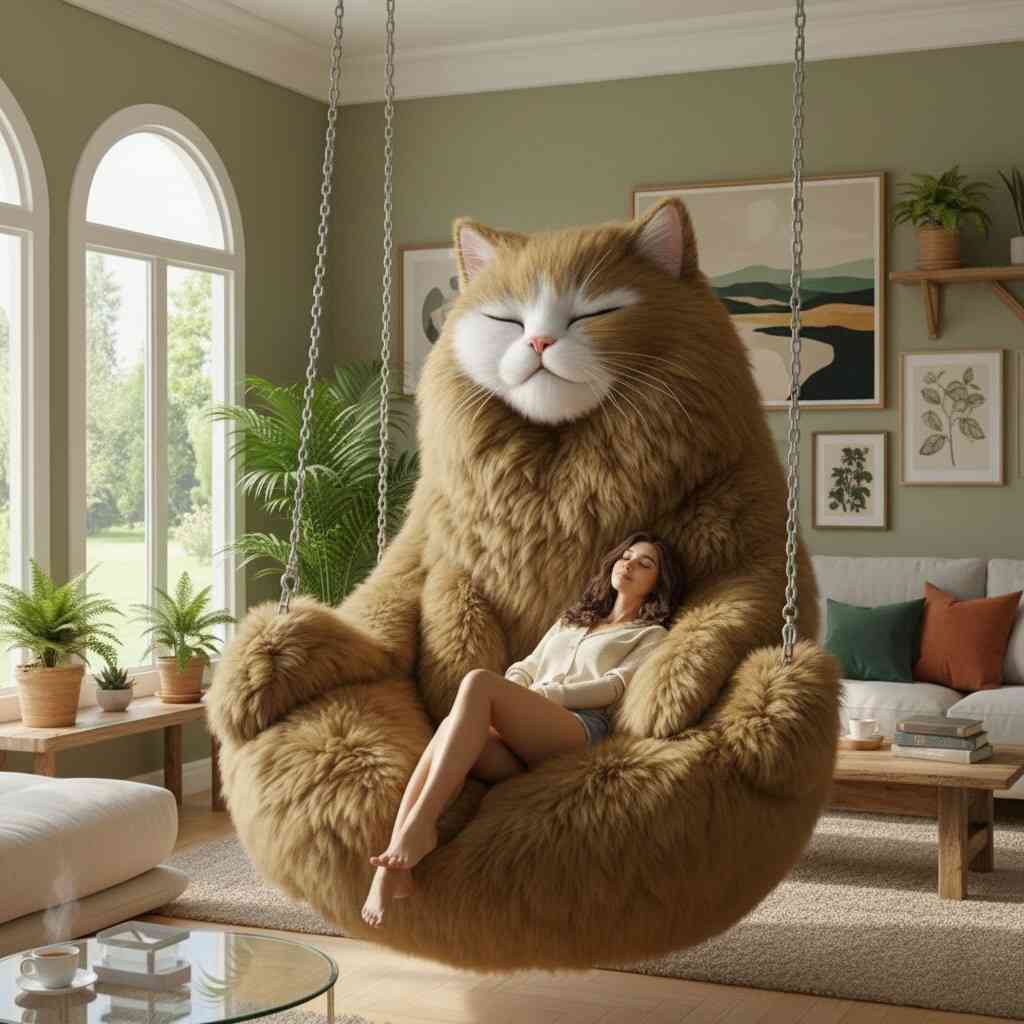
This refusal to weaponize art—even in a time rife with urgency—is itself a radical gesture. Play, in the public sphere, has long been relegated to designated zones: playgrounds for children, dog parks for pets, benches for the elderly. Adults walking city streets are expected to move with purpose—commuting, consuming, complying. To loiter is suspect. To play is borderline transgressive. And yet here was an object asking grown people to curl up, tuck their knees, and gently swing—not for exercise, not for utility, but for the sheer sensorial pleasure of motion and form.
In this, the Giant Cat Swing tapped into a lineage older than modern urbanism: the tradition of folk absurdism, where communities create objects of shared nonsense as acts of psychic survival. Think of the medieval Feast of Fools, where social hierarchies were inverted in raucous celebration; or the Dadaist readymades, which mocked reason by elevating the useless to the altar of art. But where Dada sought to dismantle meaning, the Giant Cat Swing sought to replenish it—not through logic, but through tenderness.
The cat, as icon, is crucial. Cats do not swing. They observe. They nap in sunbeams. They leap, yes—but rarely in arcs designed for repetition or spectacle. A cat swing is inherently paradoxical, a tender joke whispered between maker and passerby. It says: Look how seriously we take the unserious. Look how much care we’ve poured into a fiction. That paradox is where meaning begins to bloom.
Part II: Contagion of Joy—How Public Play Rewires Urban Experience
Within a week of its appearance, the Giant Cat Swing had altered the micro-ecology of its street. Local cafés reported customers lingering longer, ordering second drinks “just to watch people on the swing.” A preschool began weekly field trips, turning the swing into an impromptu storytelling stage. A violinist started playing Vivaldi at dusk, his melodies drifting into the creak of the ropes. Most remarkably, strangers began talking to one another—not about politics or weather, but about cats they’d loved, childhood swings, the feeling of weightlessness.
This phenomenon—call it play contagion—is well-documented in behavioral psychology. Play is inherently mimetic; seeing another person engage in non-utilitarian behavior lowers our own inhibitions against joy. But the Giant Cat Swing amplified this effect through scale and familiarity. Its giant proportions made it impossible to ignore, while its feline form rendered it instantly legible, even comforting. It was large enough to command urban space, yet intimate enough to cradle a human body.
Urban theorists have long lamented the “defensive architecture” of modern cities: anti-homeless spikes, benches angled to prevent lying down, public plazas surveilled and sterile. These designs communicate a clear message: This space is not for lingering. Not for dreaming. Not for you. In contrast, the Giant Cat Swing whispered the opposite: You belong here. Your delight has value. Your body is welcome.
It is no accident that cities with robust traditions of playful urban interventions—like Copenhagen’s Rainbow Crosswalks, Melbourne’s Laneway Commissions, or Barcelona’s Superblocks—also report higher levels of civic trust and social cohesion. Play isn’t frivolous; it’s foundational. When people play together in shared space, they build what sociologist Eric Klinenberg calls “social infrastructure”—the invisible networks of reciprocity that sustain communities in times of crisis.
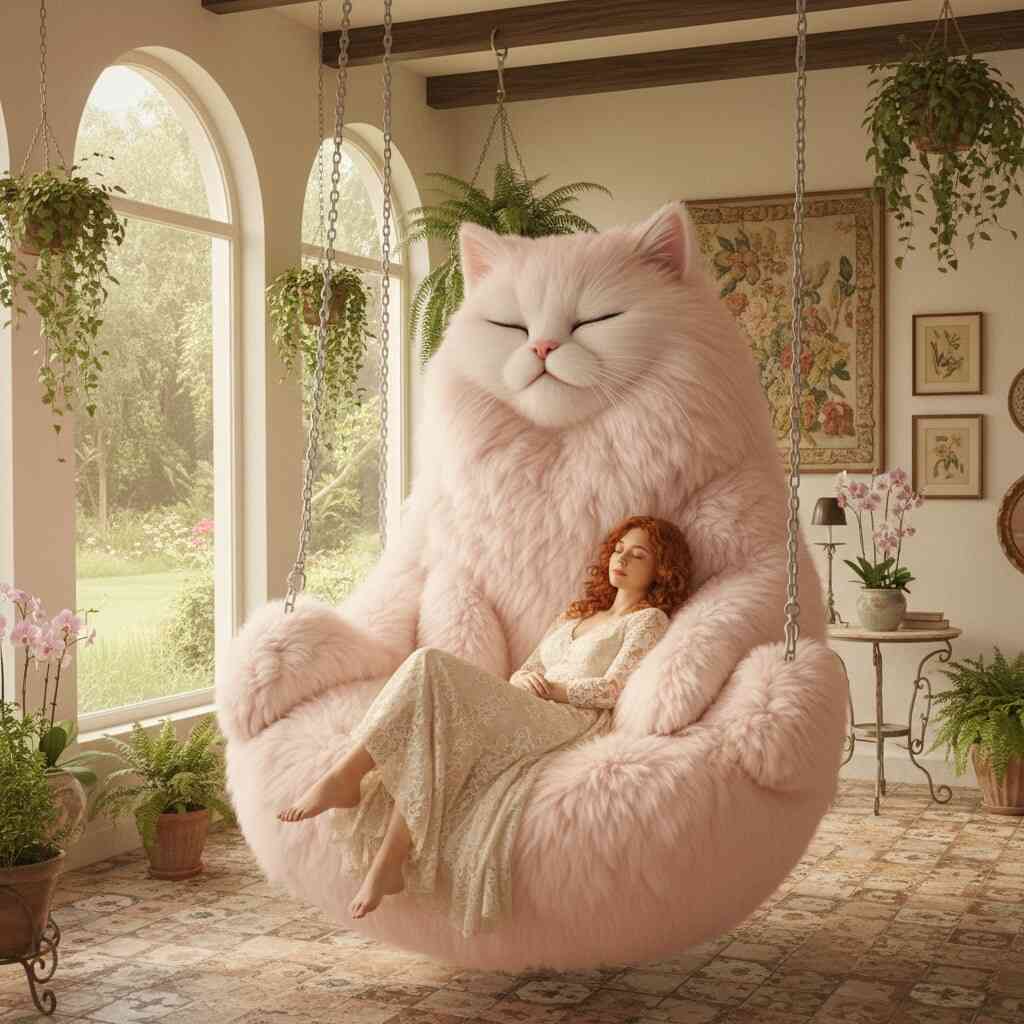
The Giant Cat Swing, then, functioned as a social catalyst. But its impact extended beyond human interaction. Local wildlife responded, too. Crows perched on its backrest. Squirrels investigated the ropes. And at least three neighborhood cats were photographed—by delighted onlookers—sitting beside the swing, as if keeping vigil over its feline spirit. In a city increasingly engineered for human efficiency, the swing became a rare commons where multispecies coexistence felt not just possible, but celebrated.
This inclusivity was further deepened by the swing’s temporality. Unlike permanent monuments—bronze generals on horseback, granite obelisks naming conquests—the Giant Cat Swing was never meant to endure. After six weeks, it vanished as mysteriously as it arrived. A small plaque, nailed to the lamppost, read only: “Thank you for swinging with us. —The Purr League” and included a QR code linking to a poem about naps and gravity.
Its ephemerality was essential. Permanent fixtures risk becoming invisible—absorbed into the background hum of the city. But something temporary? Something borrowed? That demands attention. It asks us to cherish the now. That it could disappear—and did—made each moment on the swing feel precious, fleeting, sacred.
Part III: Legacy in Motion—The Ripple Effect of Gentle Subversion
Though the original Giant Cat Swing is gone, its afterlife is vast. Inspired by its magic, over two dozen unofficial iterations have appeared worldwide: in a Tokyo alley draped in wisteria, a Berlin park reclaimed from industrial rubble, a Lisbon stairway cascading toward the Tagus River. None are exact replicas—each adapts to local materials, local cats, local light. One in Oaxaca is carved from jacaranda wood and painted with alebrije-inspired patterns. Another in Reykjavík is insulated with sheep’s wool, designed for winter swinging under the aurora.
These proliferations are not acts of copyright infringement; they are folk transmissions, akin to oral storytelling or communal quilting. They prove that the Giant Cat Swing was never about a single object, but about a permission structure: the idea that citizens can, and should, reclaim urban space for delight.
Municipal governments have taken notice—not by co-opting the swing (though several have attempted commissions, all politely declined by The Purr League), but by rethinking policy. Portland revised its public art guidelines in 2024 to include a “Playful Intervention” grant category, funding unsanctioned, ephemeral works that prioritize participation over permanence. Helsinki launched a “Joy Audit” of its public spaces, measuring not foot traffic or retail spend, but laughter density and pause frequency.
Academics have begun studying the swing’s impact. A 2024 study in The Journal of Urban Aesthetics found that streets featuring playful interventions reported a 27% decrease in perceived stress among pedestrians, even among those who never physically interacted with the art. Another paper, “Feline Morphology and Civic Trust,” argued that anthropomorphized, non-human forms—especially those evoking care and rest—generate higher levels of emotional safety than abstract or human-centric sculptures.
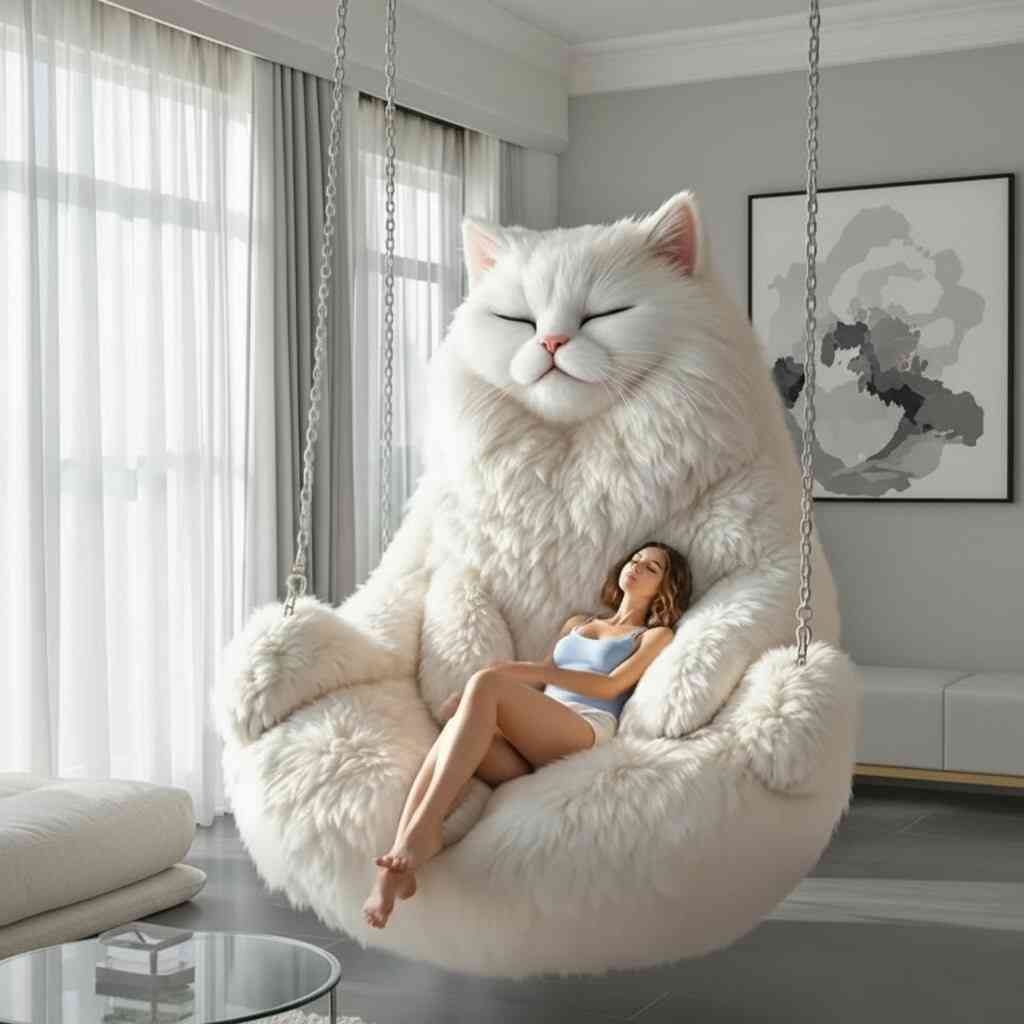
But perhaps the most profound legacy lies in the shift in public imagination. Before the Giant Cat Swing, it was easy to assume that meaningful urban change required scale, funding, bureaucracy. The swing proved otherwise: that a single, well-placed gesture—crafted with love, imbued with humor, offered without expectation—could recalibrate a city’s emotional climate.
It reminds us that play is not the opposite of seriousness—it is the antidote to despair. In an age of climate grief, political fracture, and digital saturation, the act of swinging—of yielding to rhythm, of trusting the rope—becomes quietly revolutionary. To swing is to momentarily surrender control. To swing as a cat is to embrace indolence as dignity, curiosity as compass, softness as strength.
And in doing so, we rediscover what cities were meant to be: not engines of extraction, but gardens of encounter. Not corridors of transit, but stages for becoming.
Conclusion: The Gravity of Lightness
The Giant Cat Swing did not solve housing insecurity. It did not decarbonize the grid. It did not end war. And yet—it mattered. Deeply.
Because what it offered was re-enchantment. In a world bent on optimization—on turning every second into productivity, every space into capital—the swing said: Stop. Breathe. Imagine a world where joy is infrastructure. It did not demand we fix everything at once. It asked only that we pause, curl into its wooden curve, and remember what it feels like to be held by something gentle.
That is the power of playful urban art: it does not shout. It resonates. Like a tuning fork struck in the chest, it vibrates at the frequency of our shared humanity—our need for silliness, for softness, for spaces that say yes instead of no.
The Giant Cat Swing endures not in wood and rope, but in memory and replication—in the grandmother who told her granddaughter about the day she swung like a cat at seventy-three; in the teenager who, for the first time, felt the city smile back; in the stray tabby who napped in its shadow, as if guarding a temple.
We do not need more monuments to power. We need more invitations to wonder. More odes to the ordinary. More objects that remind us: beneath the weight of the world, there is still—always—room to swing.
And perhaps, if we listen closely in the quiet hours, we can still hear it: the soft creak of hemp on iron, the whisper of wind through feline ears, the sound of a city remembering how to play.