
Where Nature Meets Modern Craftsmanship
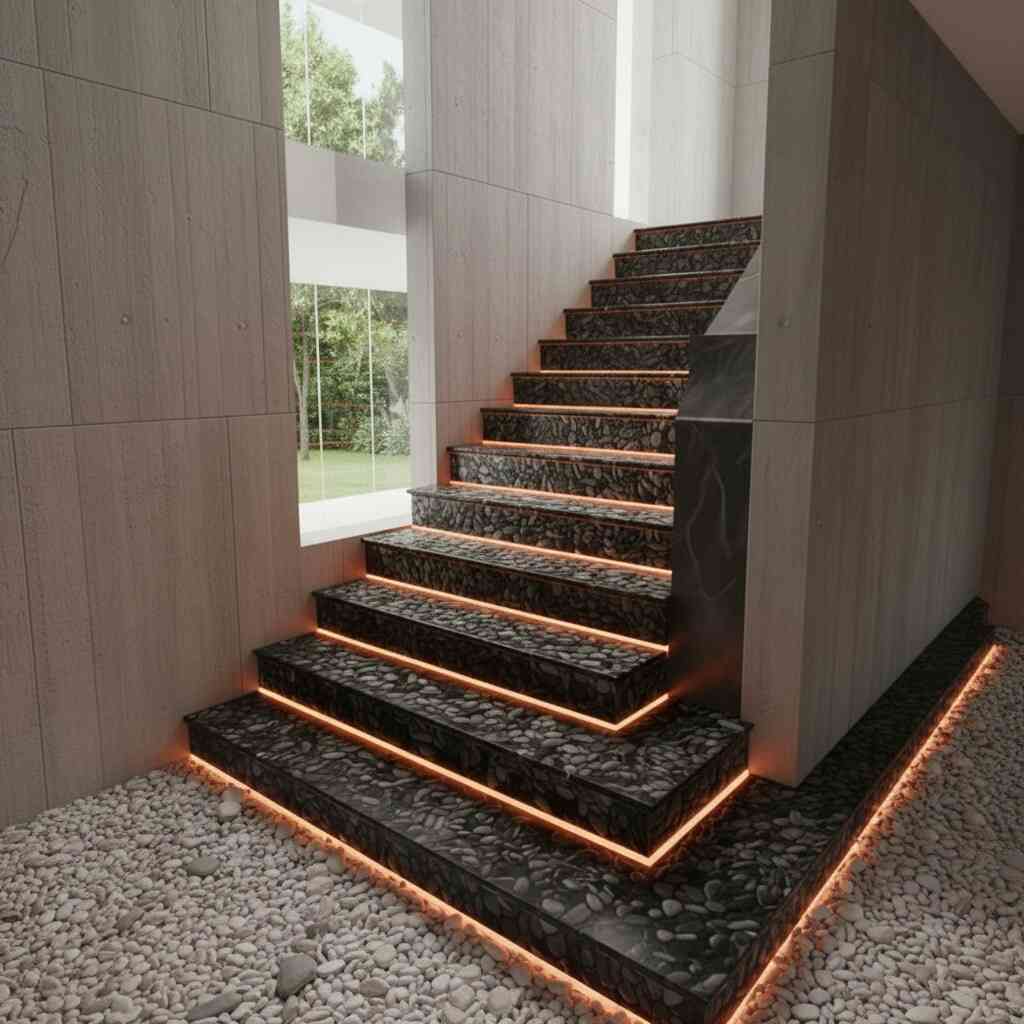
Staircases are more than functional connectors between levels—they are architectural statements, kinetic sculptures that guide movement and shape spatial experience. In contemporary design, the demand for surfaces that harmonize aesthetics with resilience has given rise to innovative material combinations. Among these, the pebble epoxy staircase stands apart as a compelling synthesis of organic texture and engineered refinement. Unlike conventional stair treads finished in wood, tile, or plain concrete, a pebble epoxy staircase integrates smooth river stones or crushed stone aggregates into a high-performance epoxy matrix—creating a surface that is simultaneously tactile, visually rich, and remarkably robust.
The phrase pebble epoxy staircase evokes a distinct sensory impression: the cool, rounded contours of natural stone; the glossy, seamless sheen of cured resin; the subtle interplay of light across irregular topographies. Yet its significance extends beyond appearance. A pebble epoxy staircase is not merely decorative—it represents a thoughtful convergence of material science and environmental sensitivity. The pebbles, often sourced locally or reclaimed from riverbeds and quarries, introduce a sense of geological continuity, grounding the structure in landscape memory. Meanwhile, the epoxy binder—typically a low-VOC, UV-stable formulation—ensures longevity and slip resistance, making it suitable for both humid interiors and exposed exterior applications.
This article delves deeply into the creative potential of the pebble epoxy staircase, examining how designers and artisans are reimagining this technique across diverse contexts. From minimalist lofts to coastal retreats, from sun-drenched patios to subterranean wine cellars, the pebble epoxy staircase offers a versatile canvas for expression—where craftsmanship meets intentionality, and where each step becomes an invitation to pause, observe, and connect.
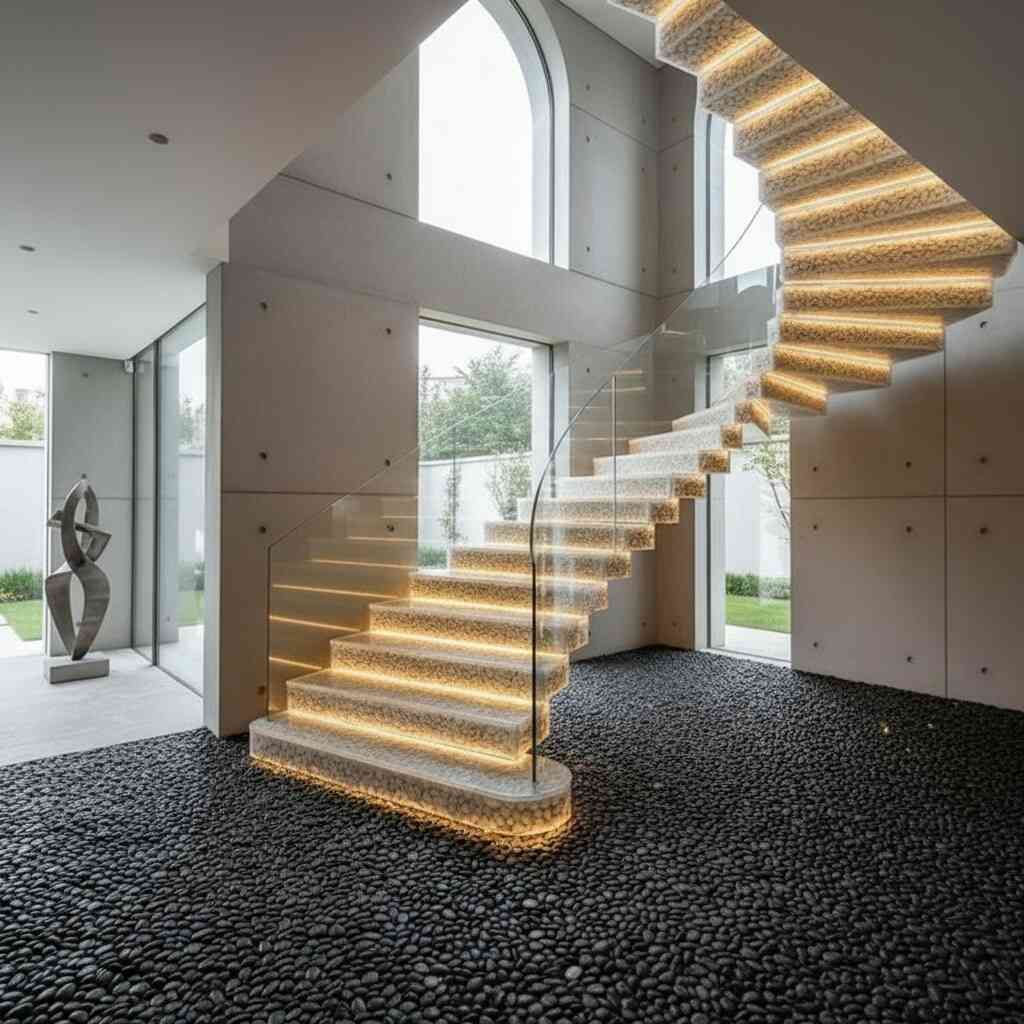
Part I: Understanding the Material Language—How Pebble Epoxy Works
Before exploring design ideas, it is essential to grasp the material language of the pebble epoxy staircase—not just how it is made, but what it signifies in architectural discourse.
At its core, a pebble epoxy staircase consists of two primary components: carefully selected aggregates and a structural resin system. The pebbles—ranging from smooth, uniformly sized river rocks (5–15mm in diameter) to mixed granitic or basaltic chips—form the visual and tactile foundation. Their color palette is inherently restrained: warm greys, muted ochres, deep charcoals, and milky quartz whites dominate, though dyed or heat-treated stones can subtly expand the spectrum. Crucially, the stones are not merely sprinkled on top; they are embedded into a layer of epoxy poured over a prepared substrate (often concrete, steel, or marine-grade plywood), pressed flush or slightly proud to create micro-relief.
The epoxy itself performs multiple roles. It encapsulates the pebbles, preventing displacement and erosion. It provides a waterproof, non-porous barrier—critical for outdoor or high-moisture environments like poolside access or basement entries. And when polished or sealed with a matte finish, it modulates reflectivity, ensuring safety without sacrificing elegance. UV-resistant formulations prevent yellowing, allowing outdoor installations to age gracefully under sunlight.
What makes this technique unique is its process-led artistry. Unlike prefabricated treads, each pebble epoxy pour is site-specific and hand-finished. The distribution of stones—whether dense and uniform, sparse and poetic, or arranged in gradients or patterns—requires deliberate choreography. Artisans may comb the surface with trowels to create ripples, use stencils to embed subtle motifs (a spiraling nautilus, a branching vein), or vary the pebble size across risers and treads to guide the eye rhythmically upward. This human touch ensures that no two staircases are identical. Even within a standardized architectural plan, the pebble epoxy staircase becomes a singular artifact—a signature of place and maker.
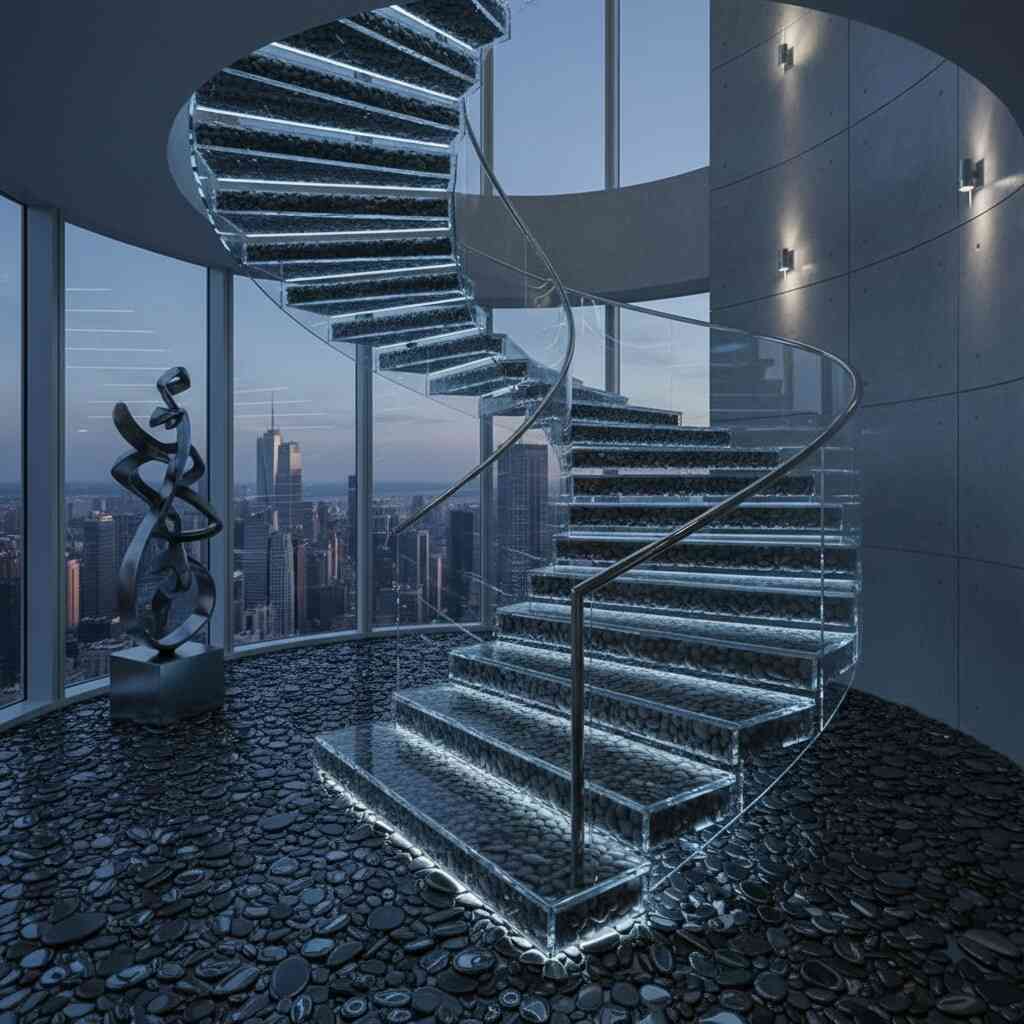
Part II: Creative Applications—Indoor Inspirations
Indoors, the pebble epoxy staircase transcends utilitarian expectations, acting as a spatial anchor—a focal point that mediates light, sound, and human interaction. Its versatility allows it to thrive in contrasting interior typologies, always reinforcing thematic coherence.
1. Earth-Toned Minimalism in Urban Lofts
In open-plan lofts with exposed steel beams and whitewashed walls, a monolithic pebble epoxy staircase in soft taupe or warm granite grey can serve as a grounding counterpoint to industrial austerity. Here, designers often opt for a low-relief finish: pebbles set just below the epoxy surface, sanded to a silk-matte seal that invites barefoot passage. The absence of grout lines or joints enhances the perception of continuity, making the staircase appear as if carved from a single geological stratum.
In one Tokyo-inspired project, the treads transition subtly from light limestone chips at the base to darker basalt at the upper landing—echoing the stratification of sedimentary rock. This gradient, nearly imperceptible from a distance, becomes a meditative detail upon ascent. Paired with recessed LED strip lighting beneath each tread, the stones catch and diffuse light like scattered riverbeds at dusk.
2. Organic Modernism in Timber-Clad Homes
For residences embracing biophilic design—think cedar ceilings, rammed earth walls, and panoramic glazing—the pebble epoxy staircase becomes a textural bridge between architecture and landscape. A staircase with irregular, multi-hued pebbles (ochre, sienna, slate) mimics the variegated palette of a forest floor. To avoid visual competition with warm wood tones, designers may introduce negative space: leaving the central third of each tread as smooth, polished epoxy, while flanking pebble bands run along the edges. This creates a symbolic path—literal and metaphorical—through nature.
Notably, in humid climates, such as Pacific Northwest cabins or Florida bungalows, this design also serves a pragmatic purpose: the pebbled edges enhance grip, while the central smooth zone allows for easy cleaning—ideal for muddy boots or pet paws.
3. Subterranean Elegance: Cellars, Libraries, and Meditation Spaces
Descending into a wine cellar, private library, or Zen-inspired meditation nook calls for a transition that signals a shift in atmosphere. Here, the pebble epoxy staircase can evoke the quietude of a cave or the solemnity of ancient steps. Deep charcoal or anthracite pebbles, set in a high-gloss black epoxy, create a mirror-like surface that reflects candlelight or soft wall sconces. The irregularity of the stones disrupts perfect reflection, producing a starfield-like shimmer—ideal for contemplative descent.
In one bespoke Kyoto-inspired residence, the staircase to the tea room features moss-influenced detailing: pale green-tinted epoxy pools in the interstitial gaps between dark pebbles, suggesting lichen growth over time. Though fully synthetic and maintenance-free, the effect is convincingly organic—honoring the Japanese aesthetic of wabi-sabi, where beauty resides in impermanence and imperfection.
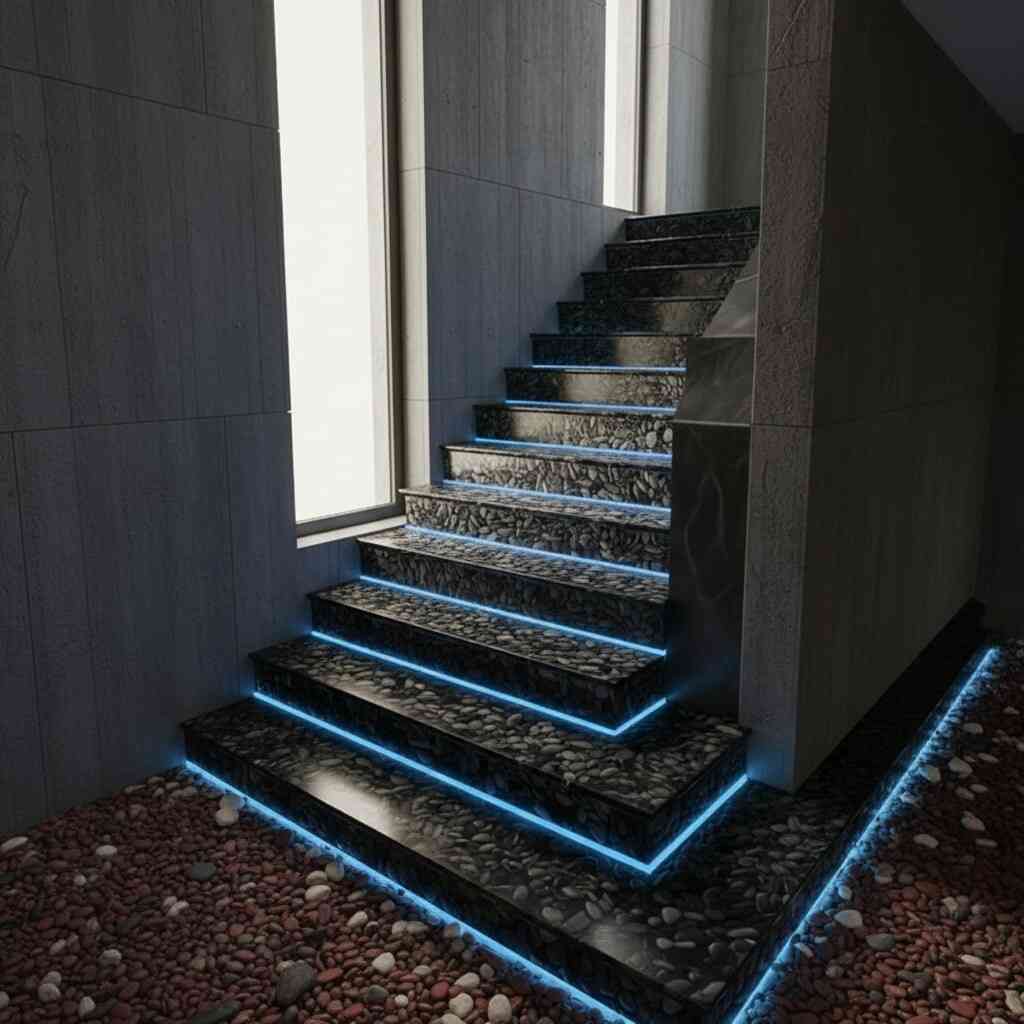
Part III: Expanding Horizons—Outdoor Possibilities
Outdoors, environmental exposure intensifies the design challenge—and the pebble epoxy staircase rises to meet it with remarkable adaptability. Sun, rain, freeze-thaw cycles, and foot traffic all test material integrity. Yet when properly formulated, pebble epoxy proves not only resilient but expressive, responding dynamically to changing conditions.
1. Coastal Resilience: Salt, Spray, and Serenity
Beachfront properties demand surfaces immune to salt corrosion and UV degradation. Traditional wood weathers quickly; tile becomes slippery; bare concrete cracks. A pebble epoxy staircase, however—with marine-grade epoxy and non-soluble aggregates—thrives. Designers in Southern California and the Mediterranean often select local beach pebbles: smooth, water-worn cobbles in creams and pale greys, sourced ethically from dredge-reclamation projects.
One elegant solution is the cantilevered floating tread: steel supports are encased in epoxy-pebble units that appear to hover above a gravel garden or planted slope. At low tide, sunlight glints off wet pebbles like tidal pools; at night, integrated fiber optics along the tread edges mimic bioluminescent plankton. The staircase becomes not just a connector, but a chronometer, marking time through light and moisture.
2. Terraced Gardens and Hillside Integration
In sloped landscapes—vineyards in Tuscany, hillside homes in Lisbon, or native plant gardens in Santa Fe—the pebble epoxy staircase can mimic natural stone terracing while offering superior ergonomics. Wide, shallow treads with gentle inclines reduce fatigue; pebble density is increased near the leading edge for slip resistance.
A particularly poetic implementation uses regional geology as narrative. In a Sonoran Desert garden, treads incorporate local granite chips, fossilized coral fragments, and crushed obsidian—each stratum representing a geological epoch. The epoxy binder is tinted with iron oxide to match the surrounding adobe walls, blurring the boundary between built and natural. Over time, desert rains darken the stones, enhancing contrast and deepening the sense of patina—though the surface remains impervious to erosion.
3. Urban Courtyards and Rooftop Oases
Even in dense cityscapes, the pebble epoxy staircase introduces a restorative, elemental presence. On a Manhattan rooftop terrace, a compact spiral staircase clad in white quartz pebbles becomes a luminous sculpture against blackened steel railings—its cool surface a welcome contrast to sun-baked decking.
In multi-family developments, shared stairwells transformed with pebble epoxy gain new dignity. Instead of echoing footsteps and sterile finishes, these staircases absorb sound and radiate calm. One Berlin housing co-op installed a community-engaged design: residents contributed small stones from hometown rivers—each tread embedded with a mix of personal geographies. The staircase became a shared archive, a tactile map of migration and memory.
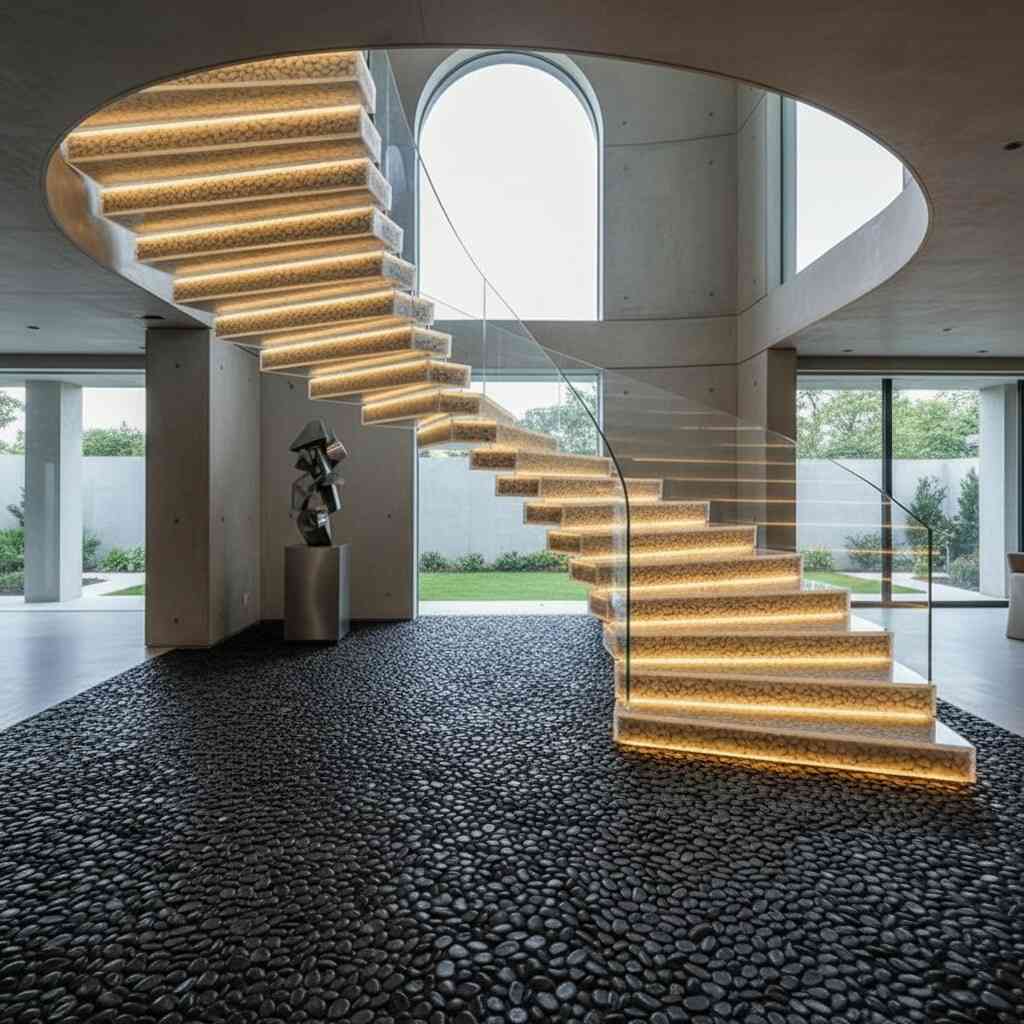
Synthesis: The Deeper Resonance of Pebble Epoxy
Beyond technique and typology, the pebble epoxy staircase speaks to a broader cultural shift—one that seeks re-enchantment in the built environment. In an age of mass production and digital saturation, there is growing reverence for surfaces that demand attention, that age with grace, and that retain traces of human intention.
The pebbles themselves are emissaries of deep time—each one shaped by millennia of water, wind, and tectonic pressure. To walk upon them is to engage in a micro-pilgrimage: a recognition of scale, of slowness, of continuity. The epoxy, though synthetic, is not a denial of nature but a mediator—a transparent lens that preserves and elevates the stone’s integrity without fossilizing it in permanence.
Moreover, the process supports circular principles. Offcuts from stone yards, reclaimed streambed material, and recycled glass aggregates can all find purpose in a pebble epoxy pour. When a staircase reaches the end of its service life, the epoxy can be mechanically removed, and the pebbles reused—a closed-loop ethos embodied in form.
Conclusion: Stepping Forward with Intention
A pebble epoxy staircase is more than a design choice. It is a declaration of values—durability over disposability, texture over flatness, presence over haste. Whether ascending through a sunlit atrium or descending into a shaded garden grotto, the user is not merely transported from one level to another; they are invited into a dialogue between hand and earth, between innovation and antiquity.
The creative possibilities are as varied as the landscapes and lives they serve. From monastic simplicity to vibrant regional storytelling, from rugged coastal pragmatism to urban poetic gesture—the pebble epoxy staircase adapts without compromising its essence. It does not shout; it murmurs. It does not dominate; it harmonizes.
In reimagining the staircase—a threshold, a hinge, a pause in vertical movement—we rediscover architecture’s most intimate function: not just shelter, but kinesthetic meaning. The pebble epoxy staircase, with its quiet strength and earth-rooted beauty, offers a path forward—one thoughtful, grounded step at a time.
And in a world increasingly defined by speed and abstraction, perhaps that is the most radical idea of all.