
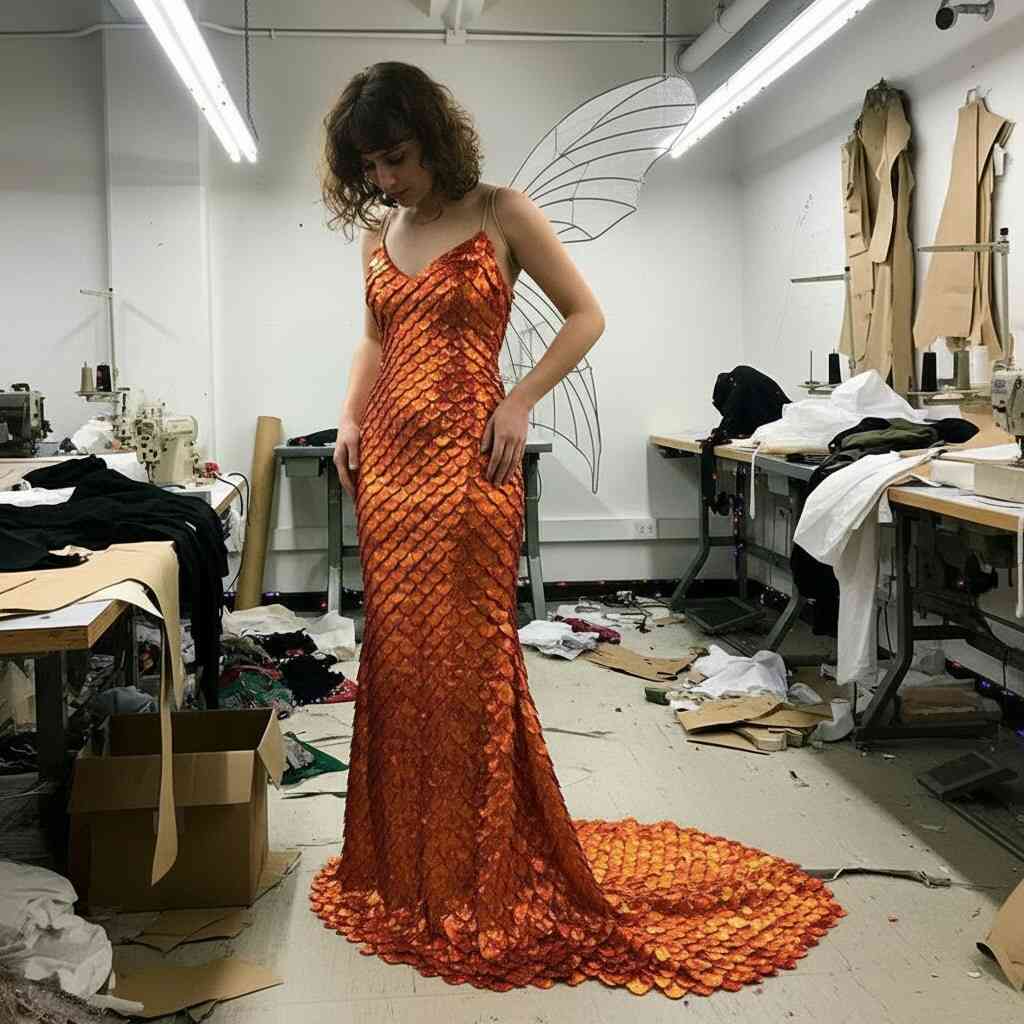
In the liminal space between legend and textile, where ancient archetypes meet contemporary expression, the dragon scale themed dress emerges—not as costume, but as cultural artifact. More than a mere aesthetic choice, this garment bridges millennia of mythopoeic tradition with the nuanced language of modern design. It is at once armor and adornment, memory and manifesto, evoking the primal power of the dragon while asserting the wearer’s agency in a world increasingly drawn to symbolic self-definition.
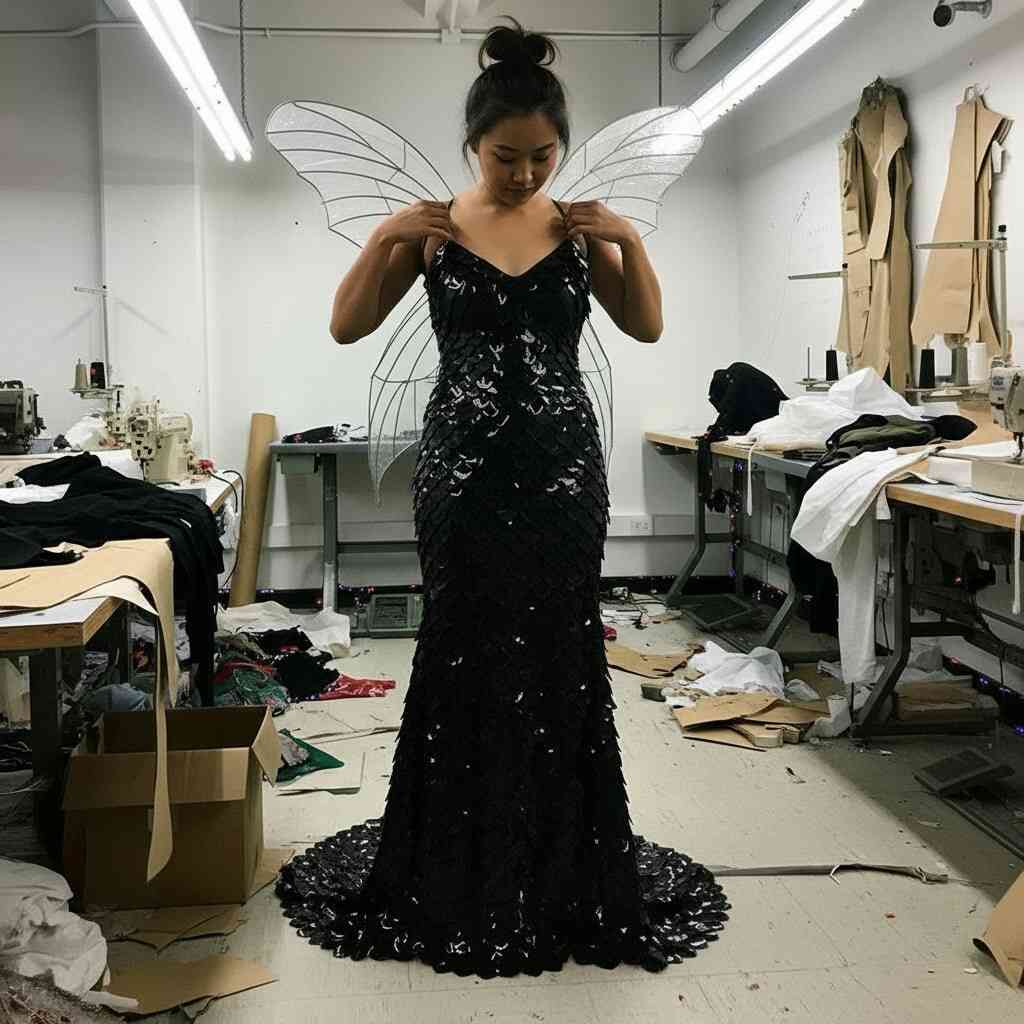
The dragon, across cultures, has long served as a vessel for humanity’s deepest fascinations: creation and destruction, wisdom and wrath, protection and peril. Its scales—impenetrable, iridescent, shifting in hue like molten ore under moonlight—have become enduring symbols of resilience, transformation, and otherworldly allure. To translate this iconography into wearable form is to engage in a dialogue between past and present, between collective unconscious and individual identity. A dragon scale themed dress does not simply imitate nature or fantasy; it reinterprets myth through materiality, inviting the wearer into an embodied narrative.
This article explores the dragon scale themed dress not as fashion trend, but as a convergence of mythic resonance, artisanal ingenuity, and semiotic depth. Through three interwoven lenses—the mythic inheritance of the dragon, the meticulous craft required to simulate its scales, and the layered symbolism such a garment carries in contemporary culture—we unravel why this design motif continues to captivate designers, wearers, and observers alike. In doing so, we illuminate how cloth can become cosmology, and how a dress can hold the echo of fire and flight.

Part I: Scales of Legend — Mythic Foundations of the Dragon Archetype
To dress in dragon scales is to don the skin of an archetype—one that has slithered, soared, and shimmered through human storytelling for over five thousand years. But the dragon is no monolith. Its form, temperament, and significance shift dramatically depending on geography and epoch: the benevolent long of Chinese cosmology, coiled around pearls of wisdom and cosmic balance; the treasure-hoarding drakon of Greco-Roman myth, slain by heroes yet guarding sacred thresholds; the apocalyptic draco of medieval Christian iconography, embodying sin and chaos; and the primordial Tiamat of Mesopotamian epic, whose dissected body becomes the vault of heaven and earth.
What unites these disparate figures is the scale—not merely as physical attribute, but as metaphysical signature. Dragon scales are rarely described as mere reptilian coverings; they are armored epiphanies. In the Classic of Mountains and Seas, the Chinese dragon’s scales number 81—an auspicious yang number, symbolizing celestial order. In Norse legend, Fáfnir’s transformation into a dragon is accompanied by scales that render him invulnerable, yet also isolate him from kin and conscience. In Japanese folklore, ryū scales catch light like polished jade or forged bronze, signifying both spiritual refinement and martial prowess.

The scale, then, functions as liminal tissue: boundary and bridge, defense and display. It is neither wholly organic nor inorganic—too structured for flesh, too fluid for metal. This ambiguity is key to its symbolic potency. Scales suggest metamorphosis (shedding old identities), protection (armor against external forces), and perception (each scale a micro-facet reflecting truth from different angles). Wearing a dragon scale themed dress, therefore, is an act of mythic citation—an invocation of these layered associations.
Consider the hatched scale motif common in East Asian textile arts: overlapping crescents echoing fish or serpent skin, rendered in silk brocade or metallic thread. Here, the dragon scale is not aggressive, but auspicious; it aligns the wearer with celestial harmony and dynastic continuity. Contrast this with the barbed or serrated scale patterns found in Gothic-inspired designs—sharp, tessellated, evoking Western dragons as trials to be overcome. The dragon scale themed dress, in its multiplicity, becomes a canvas for cultural memory—allowing the wearer to choose which mythic lineage to embody.
Importantly, modern reinterpretations rarely adhere to a single tradition. A contemporary dragon scale themed dress might fuse the iridescence of a Chinese long with the segmented ferocity of a European wyvern—reflecting a globalized, syncretic mythology. This hybridity is not dilution, but evolution: myth, like language, thrives on adaptation. To wear such a dress is to participate in the living tradition of storytelling—not as passive listener, but as active narrator.
Part II: The Alchemy of Fabric — Craft and Material Innovation
Translating myth into textile demands more than inspiration; it requires a near-alchemical mastery of materials, technique, and structural logic. The challenge of the dragon scale themed dress lies not in mere representation, but in simulation—how to evoke the tactile, visual, and kinetic qualities of dragon scales using human-made substances. This pursuit has spurred extraordinary innovations in textile engineering, pushing the boundaries of what cloth can be.
Historically, artisans turned to labor-intensive methods to approximate scale-like effects. In 18th-century France, écaille (tortoiseshell) embroidery used overlapping sequins or metal discs stitched in concentric rows to mimic reptilian dermis. Chinese kesi (cut-silk tapestry) weavers achieved scale patterns through discontinuous weft threads, building up motifs like mosaics—each “scale” a discrete unit of color and sheen. These techniques were time-consuming, often reserved for imperial or ceremonial wear, reinforcing the dragon’s association with sovereignty and sacred power.
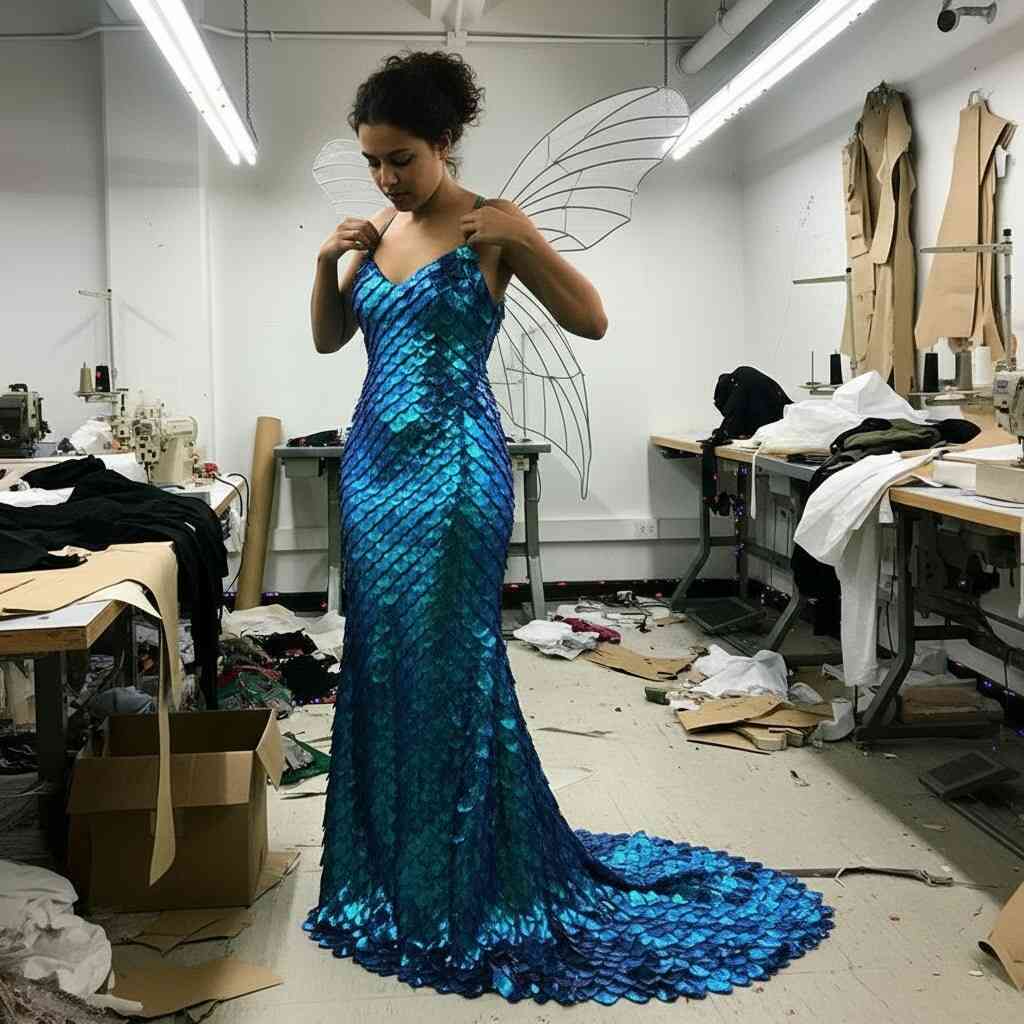
Modern design inherits this legacy but reimagines it through technology. Laser-cut leather, thermoformed polymers, 3D-printed bioplastics, and programmable smart fabrics now enable unprecedented fidelity and functionality. A dragon scale themed dress might feature hundreds of individually articulated polymer scales, each heat-molded to curve and overlap like true osteoderms, mounted on a flexible mesh underlayer that permits movement while preserving structure. The result is not static ornamentation, but dynamic architecture: as the wearer turns, the scales shift, catch light, whisper against one another—a kinetic embodiment of the dragon’s living presence.
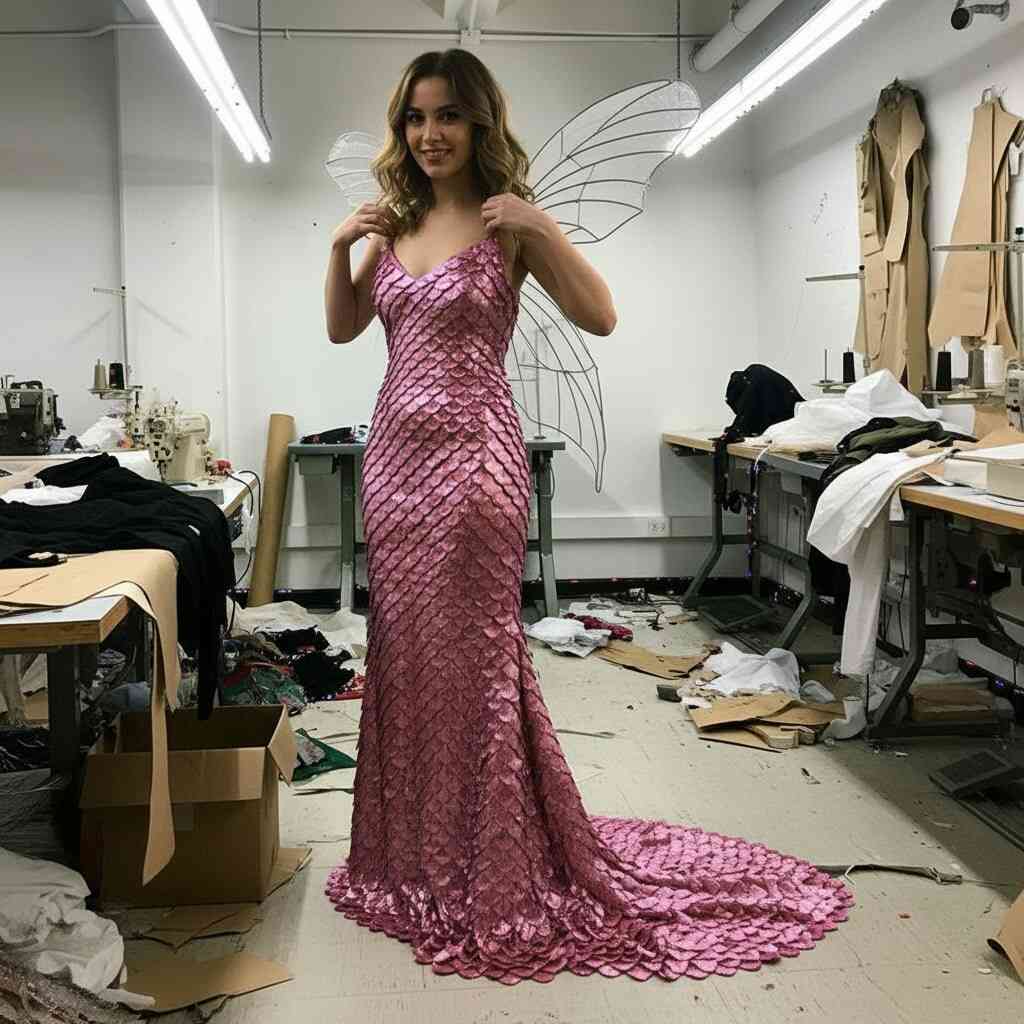
Material choice carries profound semiotic weight. Copper scales oxidize over time, developing verdigris patinas that echo ancient bronzes or alchemical transmutation. Anodized aluminum offers prismatic shifts—emerald to violet, gold to cobalt—as light strikes from different angles, recalling the “chameleon fire” described in Persian accounts of azhdaha. Silks dyed with natural indigo and madder root yield organic, breathing surfaces, while metallized synthetics gleam with uncanny, post-human brilliance. Each selection reorients the myth: copper speaks of time and transformation; aluminum of futurity and alien grace; silk of lineage and breath.
Perhaps most compelling is the rise of biomimetic textiles—fabrics engineered to replicate the microstructure of actual reptile scales. Researchers have developed laser-etched polyurethane films that mimic the nano-ridged surface of Varanus komodoensis skin, producing self-cleaning, water-repellent properties and iridescence through structural coloration (rather than pigment). When incorporated into a dragon scale themed dress, this isn’t just visual mimicry—it’s functional homage. The garment behaves like dragon skin: shedding moisture, refracting light, resisting abrasion. Here, craft transcends representation to achieve emulation—a convergence of myth and material science so intimate it borders on invocation.
Yet even amid technological marvels, handcraft remains vital. Many avant-garde designers collaborate with master embroiderers, metalsmiths, and leatherworkers to ensure each scale is placed with intention—not merely for coverage, but for rhythm, shadow, and narrative flow. The placement of larger “scute” scales along the spine, tapering to finer ventral ones; the asymmetry suggesting recent battle or regenerative growth; the deliberate omission of scales at joints to imply vulnerability—these decisions are compositional, almost poetic. The dragon scale themed dress, in its finest iterations, is less sewn than grown—a second skin articulated with reverence for the creature it honors.
Part III: Armored Identity — Symbolism and Embodied Meaning in Contemporary Context
In an era marked by fragmentation, environmental crisis, and digital disembodiment, the dragon scale themed dress resonates with renewed urgency—not as escapism, but as re-embodiment. It offers a potent grammar of selfhood: protective yet expressive, ancient yet adaptive, fierce yet elegant. To wear such a garment is to make a statement not about style, but about stance.
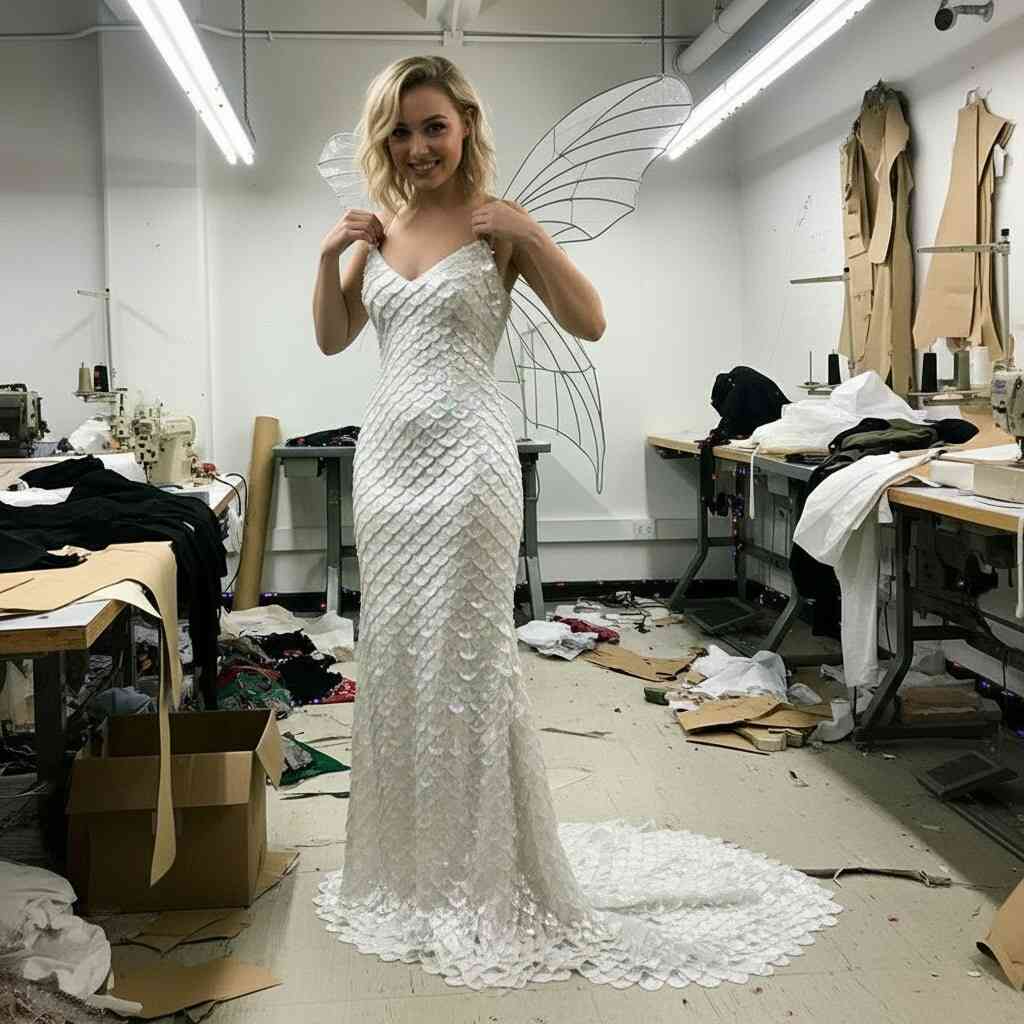
First and foremost, the dress functions as symbolic armor. In myth, dragon scales deflect sword and spell; in modern life, they metaphorically deflect scrutiny, expectation, and erasure. For many wearers—particularly those from marginalized communities—the dragon scale themed dress becomes a declaration of resilience. Its overlapping plates suggest cumulative strength: no single scale bears the full impact; protection emerges from interdependence. This mirrors contemporary understandings of identity as layered, intersectional, and self-assembled. One does not wear the dragon; one assembles it—one scale, one choice, one boundary at a time.
Simultaneously, the dress embodies transformation. Dragons in global myth are shape-shifters: serpents becoming storms, ancestors becoming constellations, hoarders becoming guardians. The very structure of a dragon scale themed dress—modular, articulated, capable of expansion and contraction—mirrors this flux. Its iridescence, too, is key: color that changes with perspective challenges fixed categorization. In a cultural moment where rigid binaries are increasingly questioned, the dragon’s chromatic ambiguity offers a visual metaphor for fluid identity. The wearer is not one thing—but many, shifting with context, light, and intention.
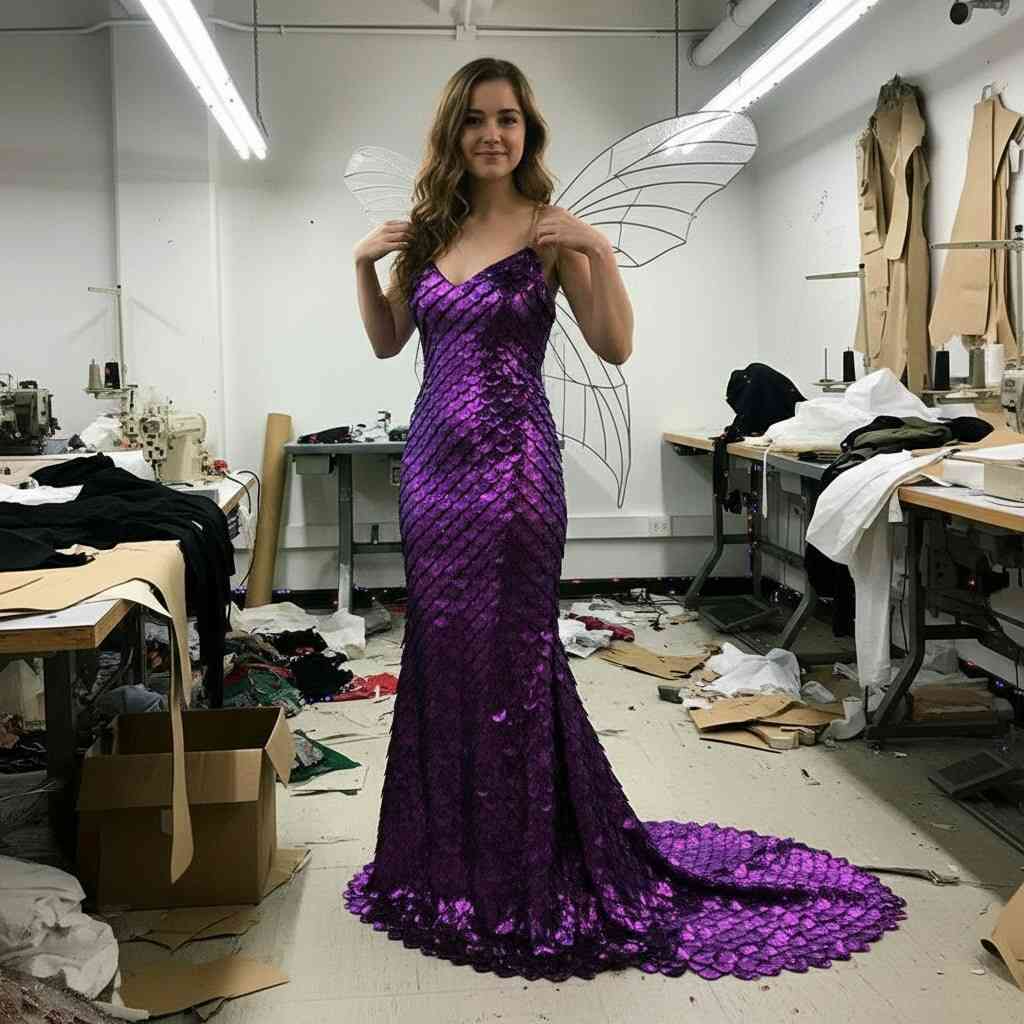
There is also profound ecological symbolism. As climate collapse accelerates, the dragon—long associated with elemental forces—reemerges not as monster, but as indicator species of the sacred. Indigenous traditions across the Americas, Asia, and Oceania hold serpentine or draconic beings as guardians of water, mountains, and subterranean realms. A dragon scale themed dress made from reclaimed metals, recycled polymers, or plant-dyed silks thus becomes an eco-sacrament: honoring the dragon as Earth’s ancient witness, and aligning the wearer with custodianship rather than conquest. The scale, in this reading, is not a trophy—but a covenant.
Critically, the dragon scale themed dress subverts traditional gendered narratives. Western dragons were often slain to rescue maidens; Eastern dragons were imperial mascots, inaccessible to commoners. Modern interpretations dismantle these hierarchies. Designers like Iris van Herpen or Guo Pei present the dragon not as adversary or sovereign, but as aspect—an inner force available to all. A nonbinary model in a titanium-scale gown; an elder woman in a deep-umber, hand-embroidered qipao-inspired piece—these images reclaim the dragon from patriarchal or aristocratic monopoly. The scale, once symbol of invulnerability for the powerful, becomes shared inheritance.
Even the act of wearing the dress is ritualistic. Its weight, its sound (the soft clink of metal, the rustle of layered organza), its requirement of deliberate movement—all demand presence. In a world of fast fashion and digital avatars, the dragon scale themed dress insists on the body as site of meaning. It cannot be fully appreciated in a thumbnail; it must be experienced in three dimensions, over time. This slowness is itself resistance—a return to ceremonial time, to embodied knowing.
Conclusion: The Living Scale — Myth Worn Forward
The dragon scale themed dress is more than ornament. It is a palimpsest—layered with myth, inscribed with craft, animated by symbolism. Each scale is a syllable in an ancient language, re-spoken in new syntax. Each seam, a suture between memory and possibility.
In donning such a garment, the wearer does not disguise themselves as a dragon. Rather, they acknowledge the dragon within: the capacity for fierce protection, for luminous transformation, for holding paradox—destruction and creation, solitude and sovereignty, earth and ether. The dress does not grant power; it reveals it, much as dragon scales in legend only gleam when the creature chooses to rise.
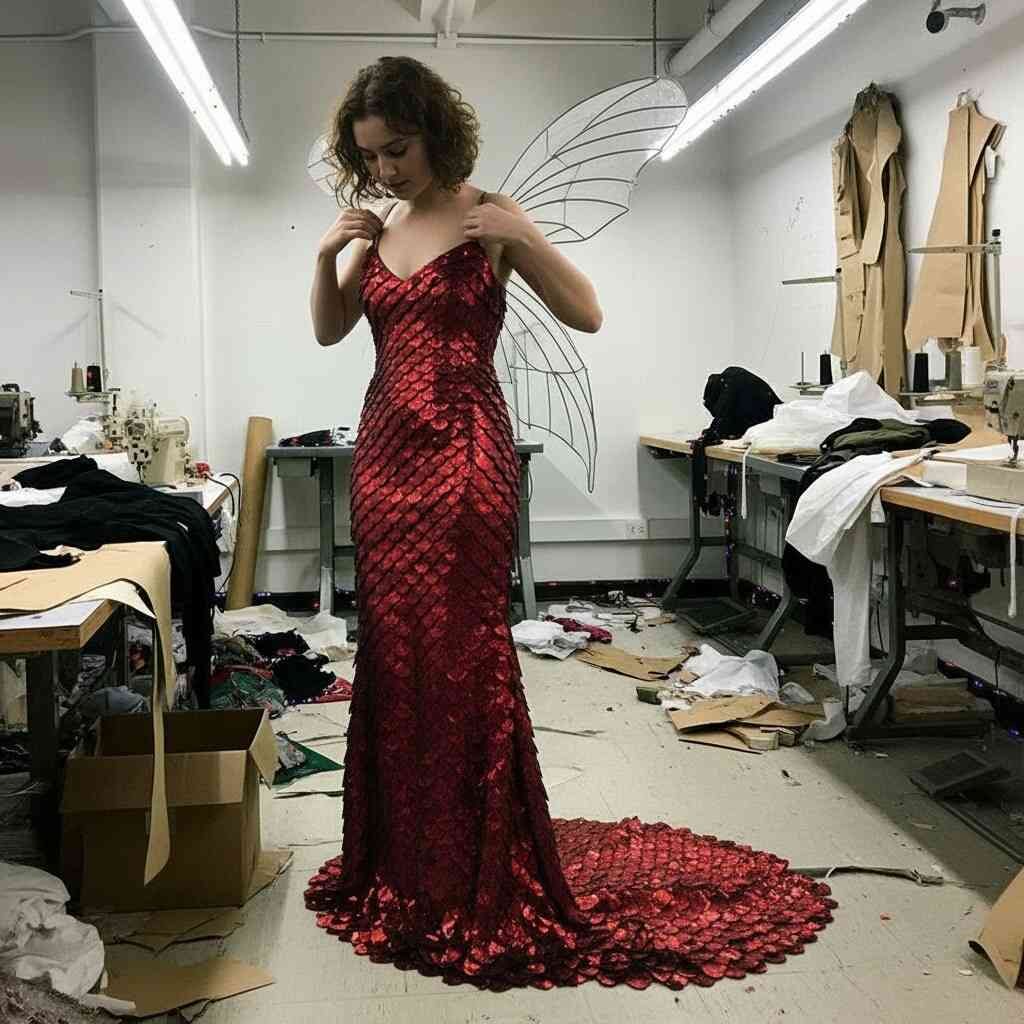
As we move deeper into the 21st century—a time of unprecedented volatility and reimagining—the dragon scale themed dress offers more than aesthetic pleasure. It offers orientation. It reminds us that myth is not obsolete, but renewable—that our oldest stories contain tools for navigating new terrains. The dragon, after all, survives by adapting: shedding scales, retreating to mountains, re-emerging when the world is ready to listen anew.
Perhaps this is the deepest truth held in the dragon scale themed dress: that resilience is not rigidity, but the wisdom to know when to armor, when to shimmer, and when—finally—to take flight.