
There’s a particular kind of joy that comes from turning a beloved shape into something you can actually sleep on. Anyone who has ever squealed a little at the sight of a rounded VW bus silhouette knows the feeling — that split-second nostalgia hit before the brain even catches up. So when a small team of product designers set out to build an inflatable VW bus bed, the goal wasn’t just to make a novelty air mattress. It was to capture a whole era of road-trip culture in a shape kids and adults alike could flop onto after a long day.
This is the story of how that idea moved from a napkin sketch to a fully engineered product — the decisions, the failures, and the surprisingly technical process behind something that looks, at first glance, like a simple inflatable toy.
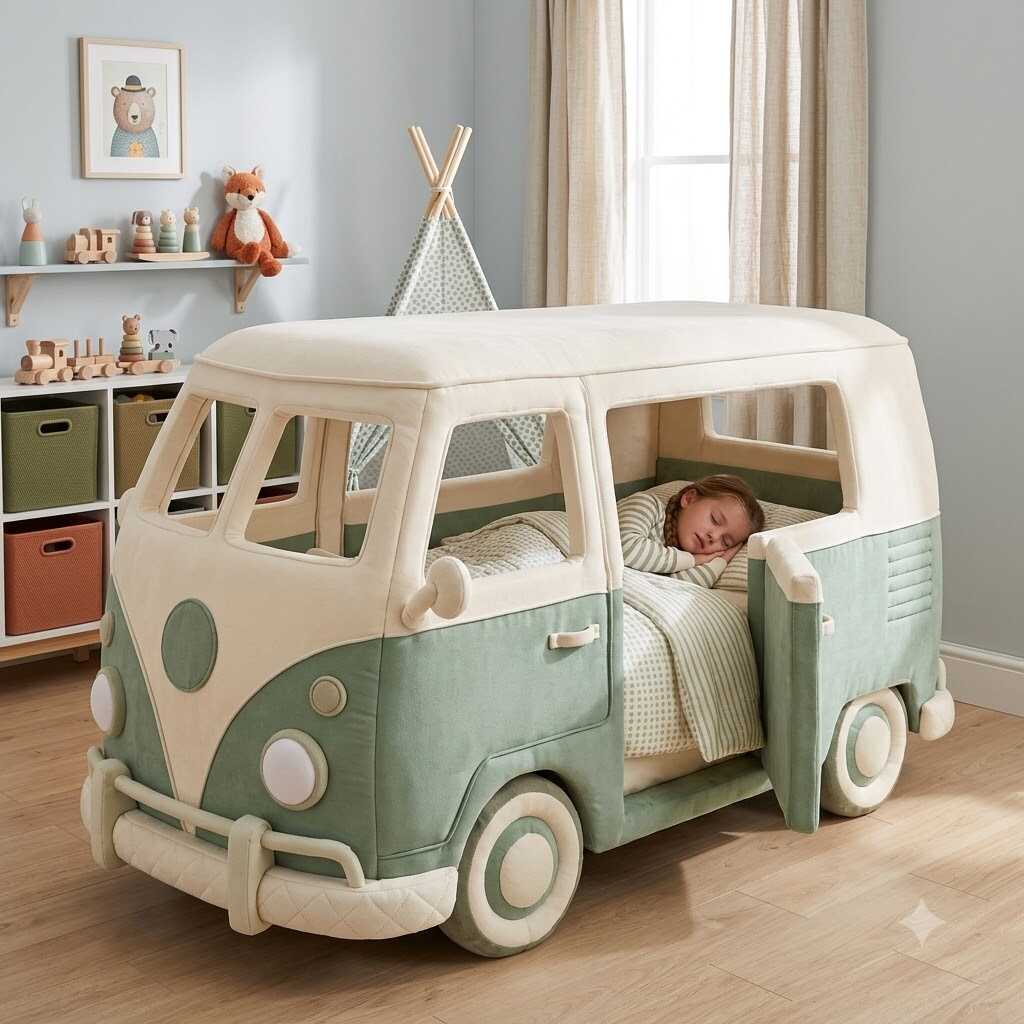
Where the Idea Actually Started
Every good Design story begins with a constraint. In this case, the constraint was space. The team wanted something that could serve as a guest bed, a camping cot, or a kids’ sleepover setup, but that didn’t require a garage to store. An inflatable structure solved the storage problem instantly, but it created a much harder one: how do you keep the iconic curves of a VW bus recognizable when the whole object needs to collapse flat and pack into a duffel bag?
Early sketches leaned heavily into caricature. The first few concept drawings exaggerated the rounded nose and the two-tone paint split, because those are the visual cues our brains latch onto immediately. Get the proportions wrong — make the windshield too tall, the wheel wells too small — and the whole thing stops reading as “VW bus” and starts reading as “generic van.” That single design constraint shaped nearly every decision that followed.
Turning a 2D Sketch Into a 3D Air Chamber
This is where things stop being about nostalgia and start being about physics. An inflatable object isn’t sculpted; it’s engineered from a network of internal air chambers, each one calculated to hold a specific shape once pressurized. The designers had to translate that soft, rounded VW silhouette into a set of interconnected baffles — internal walls of fabric that pull the outer skin into place as air fills the structure.
This is harder than it sounds. A flat sheet of fabric, when inflated without internal structure, just becomes a pillow-shaped blob. To get sharp-ish edges, like the flat front grille or the defined roofline of a VW bus, the team used a technique borrowed from inflatable kayak and stand-up paddleboard manufacturing: drop-stitch construction. Thousands of tiny threads connect the top and bottom fabric layers, holding them a fixed distance apart under pressure. Where the design called for rounder, softer curves — the wheel arches, the bumper — traditional tube-and-baffle construction worked better, since it naturally billows into smooth shapes.
Balancing these two construction methods inside a single bed frame took months of prototyping. Too much drop-stitch rigidity and the bed felt like sleeping on a boxy platform. Too much traditional baffling and the VW silhouette softened into mush.
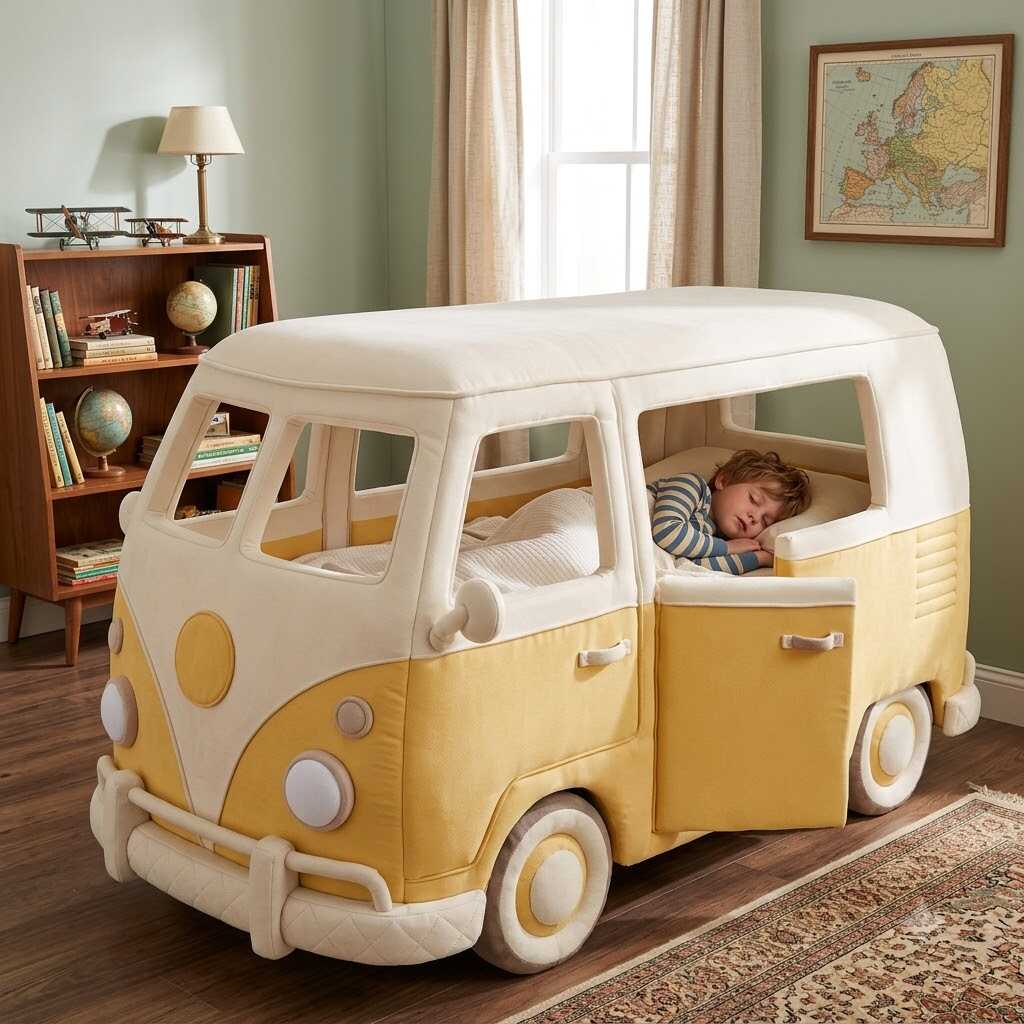
Material Choices Nobody Notices Until Something Goes Wrong
Fabric selection sounds like a boring footnote, but it’s actually one of the most consequential parts of the whole build. The outer skin needed to be UV-resistant (for camping use), abrasion-resistant (because kids), and puncture-resistant (because, again, kids). Most consumer air mattresses use simple PVC or TPU laminate, but a shape this specific needed a slightly heavier-gauge material around load-bearing seams — particularly around the “wheels,” which take repeated pressure every time someone sits down to put on their shoes.
Seam construction became its own mini design project. Every seam is a potential leak point, and a VW bus shape has a lot more seams than a rectangular mattress because of all the curved panel transitions. The team eventually settled on a double-welded seam process, running the fabric through heat and pressure twice along every curve to fuse the layers without stitching (stitch holes are notorious weak points in inflatable products).
Getting the Proportions Right for an Actual Human Body
A cute silhouette means nothing if the bed is uncomfortable, so ergonomics had to be layered on top of the aesthetic constraints. The sleeping surface — essentially the “roof” of the bus shape — needed a firmness profile similar to a standard air mattress, which meant a separate, adjustable air chamber independent from the decorative body panels. This is a subtle but important engineering choice: if the whole bed were one connected air chamber, adjusting firmness for sleep would also change the shape of the wheels and grille, distorting the design.
So the final structure uses a multi-chamber system: one chamber dedicated purely to the sleep surface, and separate, lower-pressure chambers for the decorative curves. This kind of chamber isolation is common in high-end inflatable furniture but rarely discussed publicly, since most consumer inflatables are marketed as a single unified product rather than a layered system.
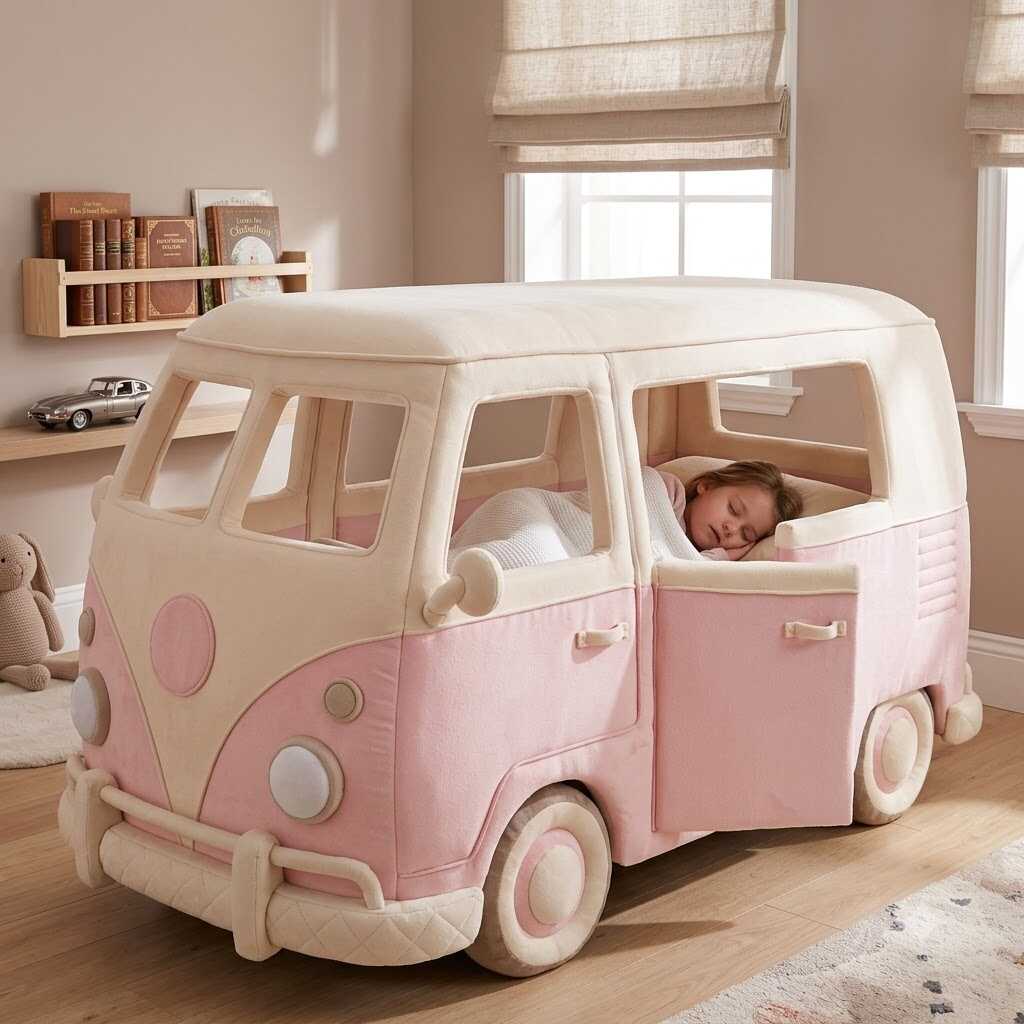
Prototyping, Testing, and a Lot of Deflated Failures
No inflatable product survives its first prototype. The earliest full-scale version of the bed held air for about six hours before a seam gave out along the rear bumper curve — a shape that, it turned out, put more stress on that particular weld than anywhere else on the bed. Subsequent prototypes moved the seam lines away from high-stress curve points entirely, a lesson borrowed from how tent and airbed manufacturers route seams away from load zones.
Print alignment was another repeated headache. Getting the two-tone paint job and window graphics to line up correctly across curved, inflating fabric is not like printing on a flat surface — the fabric stretches unevenly as it inflates, so the graphics had to be pre-distorted slightly during the printing stage to compensate. Without that adjustment, the classic split-window VW look would warp the moment the bed reached full pressure.
Why the Details Matter More Than They Seem To
What’s easy to miss, looking at the finished product, is how much of the design process was really about restraint. Every rounded edge, every seam placement, every choice of drop-stitch versus baffle construction was a negotiation between staying visually faithful to an iconic shape and staying structurally sound as an inflatable object. The final bed isn’t just a printed image of a VW bus stretched over an air mattress — it’s a genuinely engineered object where form and function were solved simultaneously, chamber by chamber.
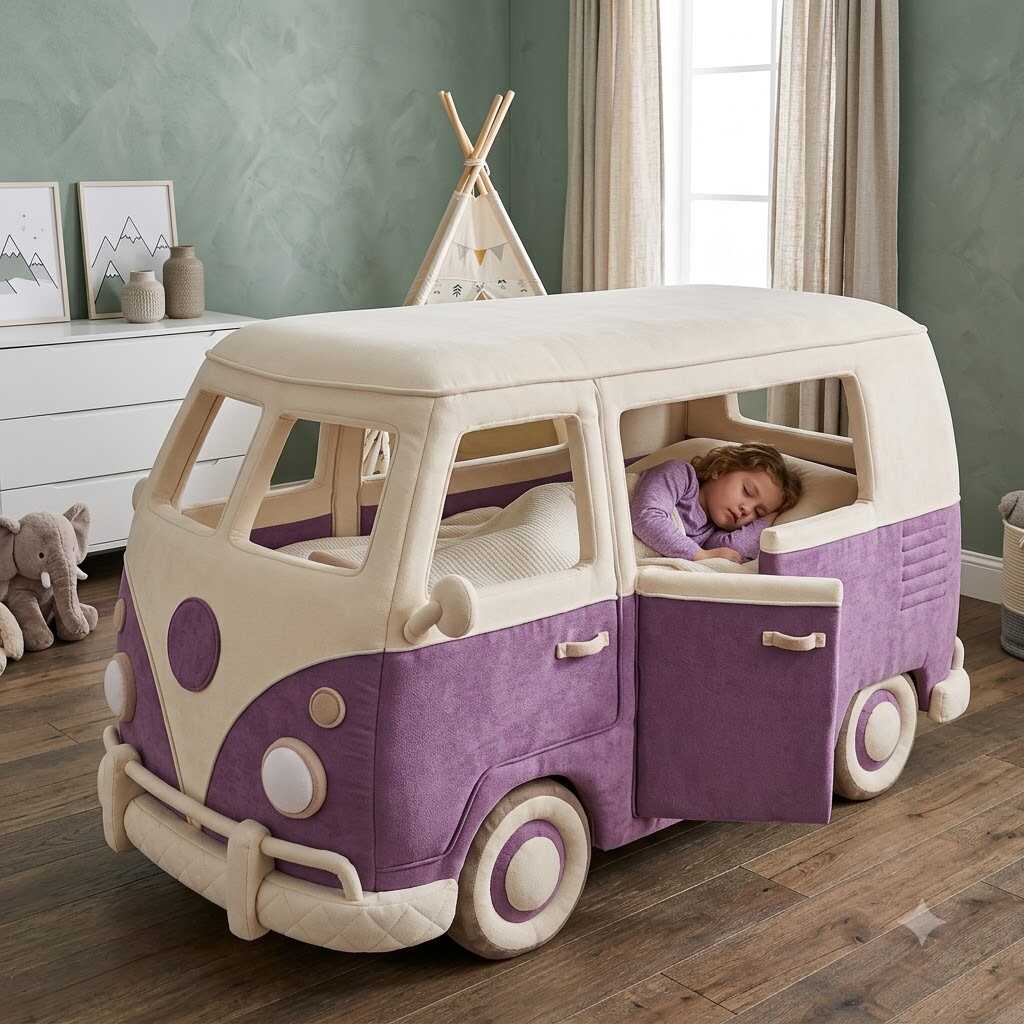
Conclusion
The path from sketch to sleep for an inflatable VW bus bed involves far more engineering than its playful appearance suggests. What starts as a nostalgic silhouette on paper has to survive drop-stitch calculations, seam-stress mapping, multi-chamber pressure isolation, and print-distortion testing before it ever becomes something you can actually rest your head on. It’s a reminder that even the most whimsical Design objects — the ones meant to make you smile the second you see them — are often built on a surprising amount of quiet, technical problem-solving.