
Rethinking the Boundaries of Interior Surfaces
In the evolving discourse of contemporary architecture and interior design, flooring is no longer merely a utilitarian surface—it is a canvas for expression, a testament to craftsmanship, and increasingly, a site of material innovation. Among the emerging frontiers in this domain lies bamboo epoxy shaped flooring, a hybrid system that challenges conventional understandings of both natural and synthetic construction materials. At first glance, the term may appear paradoxical: bamboo, an organic, rapidly renewable grass native to Asia; epoxy, a petroleum-derived thermosetting polymer known for its industrial strength and impermeability. Yet their synthesis—carefully engineered, deliberately articulated—results in a flooring typology that transcends simple categorization. It is neither wholly natural nor entirely synthetic; rather, it occupies a liminal space where sustainability, structural resilience, and aesthetic intentionality converge.
This article seeks not to promote or commodify bamboo epoxy shaped flooring, but to rigorously examine its essence: its material constitution, its structural logic, its design implications, and the philosophical underpinnings that make it significant beyond trends or market niches. We will explore how this flooring modality redefines texture, form, and function—not through gimmickry or ornamentation, but through methodical integration of biological intelligence and chemical precision. The aim is to illuminate bamboo epoxy shaped flooring not as a product, but as a process—one that reflects deeper shifts in how we conceive the relationship between built environments and ecological consciousness.

Part I: Material Foundations — Deconstructing the Composite
1.1 The Role of Bamboo: Beyond Sustainability Rhetoric
Bamboo is often heralded for its rapid growth, carbon sequestration capacity, and low-input cultivation. While these attributes are valid, in the context of bamboo epoxy shaped flooring, bamboo’s significance extends far beyond environmental metrics. Its physical properties—high tensile strength (comparable to mild steel), natural longitudinal fiber alignment, and dimensional variability—make it a uniquely expressive raw material. Unlike hardwoods, which are isotropic and uniform in grain, bamboo possesses anisotropic characteristics: its mechanical behavior differs depending on orientation, moisture content, and processing method.
In bamboo epoxy shaped flooring, bamboo is rarely used in its raw, culm-form. Instead, it undergoes transformation—typically into strand-woven, laminated, or engineered configurations. Strand-woven bamboo, for instance, involves shredding culms into fibers, compressing them under heat and pressure with adhesive resins (often phenolic or melamine-based), and forming dense blocks that are then sliced or milled. This process enhances durability while preserving the fibrous integrity of the material—critical for structural compatibility with epoxy.
Importantly, the bamboo component in this flooring system is not decorative veneer. It is load-bearing, dimensionally active, and acoustically responsive. Its hygroscopic nature—tendency to absorb or release moisture—introduces a dynamic behavior that must be carefully managed in composite design. This is where epoxy plays not just a binding role, but a regulatory one.
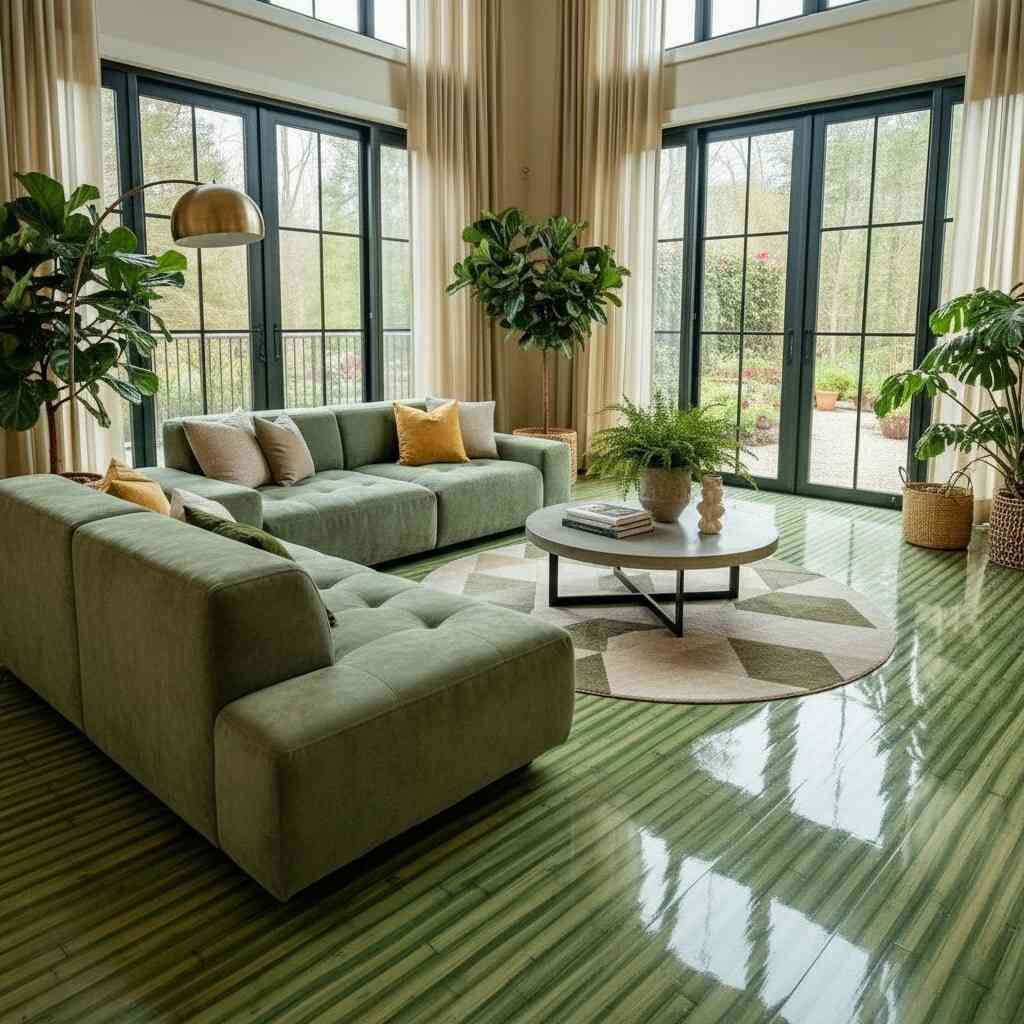
1.2 Epoxy Resin: The Molecular Scaffold
Epoxy, in its simplest definition, is a cross-linked polymer formed through the reaction of epoxide resins with polyamine hardeners. But in bamboo epoxy shaped flooring, epoxy functions as more than a glue or sealant. It is a matrix phase—a continuous, three-dimensional network that encapsulates, supports, and modulates the bamboo elements embedded within it.
The selection of epoxy formulation is pivotal. Standard industrial epoxies, optimized for mechanical strength and chemical resistance, may lack flexibility—leading to brittleness and potential delamination under thermal cycling or substrate movement. In contrast, flooring-grade epoxies used in this application are often modified: flexibilizers (such as polyurethane or polysulfide additives) are introduced to improve impact resistance; UV stabilizers mitigate yellowing in sunlit interiors; and low-viscosity formulations ensure deep penetration into bamboo’s capillary structure.
Crucially, the curing process is not passive. Controlled exothermic reactions during curing generate internal stresses that, if unmanaged, can distort the final form. Skilled fabricators therefore employ staged curing—ambient initial set, followed by elevated-temperature post-cure—to achieve dimensional stability. This level of chemical choreography ensures that the resin doesn’t merely coat the bamboo, but integrates with it at the microstructural level.
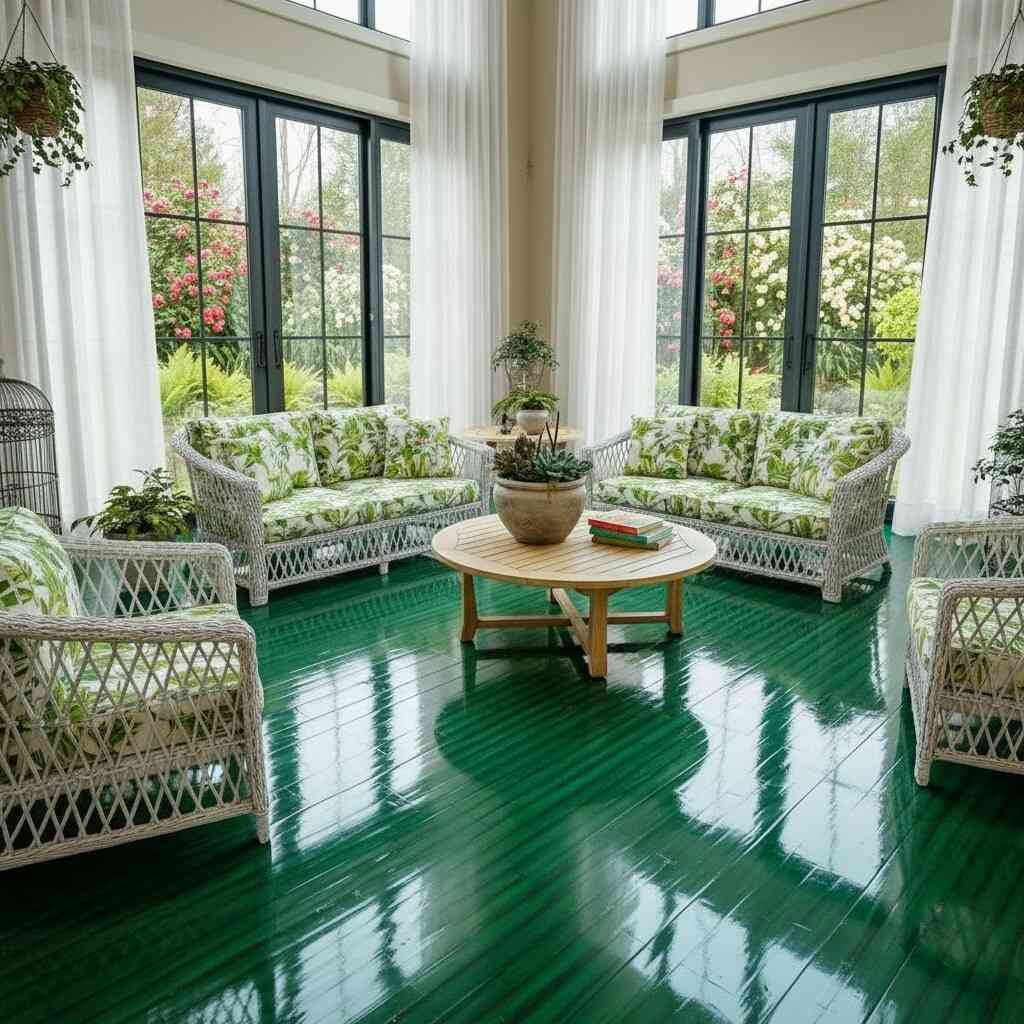
1.3 The Interface: Where Biology Meets Chemistry
The most critical aspect of bamboo epoxy shaped flooring is not the individual components, but the interface between them. Bamboo contains lignin, cellulose, and hemicellulose—all hydroxyl-rich compounds that can form hydrogen bonds with epoxy. However, raw bamboo surfaces are naturally hydrophobic due to waxy cuticles, creating adhesion challenges.
Surface preparation—through mechanical abrasion (e.g., sanding), chemical etching (alkaline or silane treatments), or plasma activation—is essential to promote covalent bonding. When successful, the interface becomes a gradient zone: not a sharp boundary, but a transitional stratum where resin diffuses microns into the bamboo cell walls, reinforcing them from within. This phenomenon, known as fiber-matrix interlocking, significantly enhances composite toughness—preventing crack propagation and delamination under shear or bending loads.
Recent studies using scanning electron microscopy (SEM) and X-ray microtomography have revealed that optimal bonding occurs when bamboo fibers are oriented perpendicular to applied stress vectors—a principle borrowed from composite engineering. Thus, the placement of bamboo elements (whether as ribbons, rods, or tessellated fragments) is not arbitrary, but structurally intentional.
Part II: Shaping the Surface — From Concept to Morphology
2.1 The Meaning of “Shaped”: Beyond Flatness
The term shaped in bamboo epoxy shaped flooring is deliberately precise. Unlike conventional flooring—be it parquet, vinyl plank, or poured epoxy—that adheres to planar geometry, shaped implies deliberate topographic modulation. This can range from subtle undulations (millimeter-scale relief) to pronounced three-dimensional forms (centimeter- or even decimeter-scale protrusions, recesses, or gradients).
This shaping is not achieved through post-installation carving (which would compromise structural integrity), but through mold casting or layered buildup. For instance:
- Negative molds (e.g., CNC-milled MDF or silicone forms) allow the uncured epoxy-bamboo slurry to be poured and set into precise contours—from rippling wave patterns inspired by natural erosion to geometric tessellations derived from algorithmic design.
- Additive layering involves successive applications of resin and bamboo inclusions, building depth incrementally—each layer cured before the next is applied. This method permits graded composites: denser, more rigid zones at load points; softer, more flexible zones in transitional areas.
The result is flooring that engages the body kinesthetically—not just visually. A gently rising ridge along a hallway can guide foot traffic; a recessed central zone in a communal space can define a gathering area without physical barriers. Shape becomes functional syntax.
2.2 Design Grammar: Pattern, Texture, and Light
Shaped also refers to the organizational logic of bamboo within the epoxy matrix. This is where design intentionality manifests most vividly.
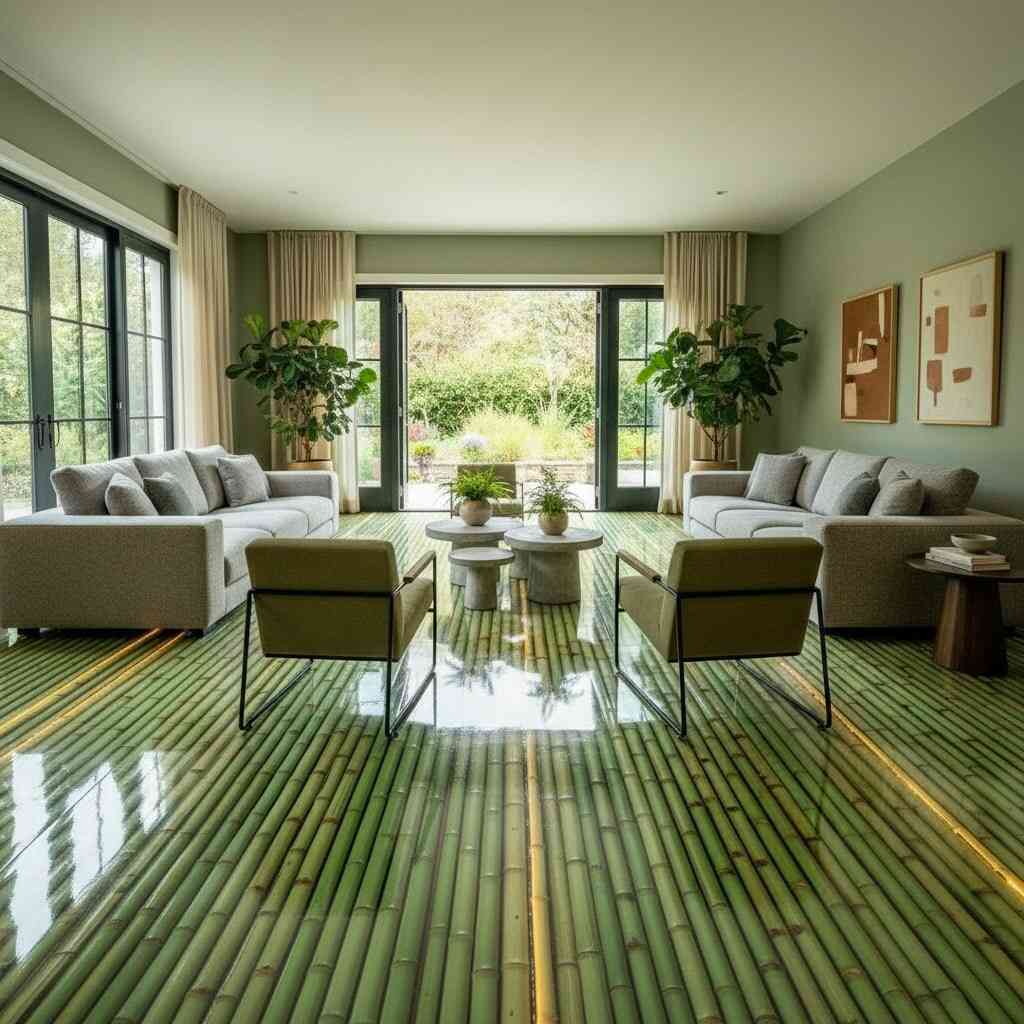
- Axial Alignment: Bamboo strands arranged in parallel create directional grain—echoing the linear growth of the plant itself. Under raking light, this produces rhythmic shadow-play, emphasizing movement and flow.
- Radial Symmetry: Concentric arrangements, often derived from cross-sections of culms or engineered rings, evoke botanical forms—growth rings, seed pods, vortex dynamics. These patterns invite contemplative engagement, slowing visual consumption.
- Stochastic Dispersion: Randomly oriented bamboo fragments suspended in translucent epoxy generate a “fossilized” aesthetic—as if botanical remnants were captured mid-fall in amber. This method celebrates imperfection: knots, nodes, and color variations become narrative elements rather than defects.
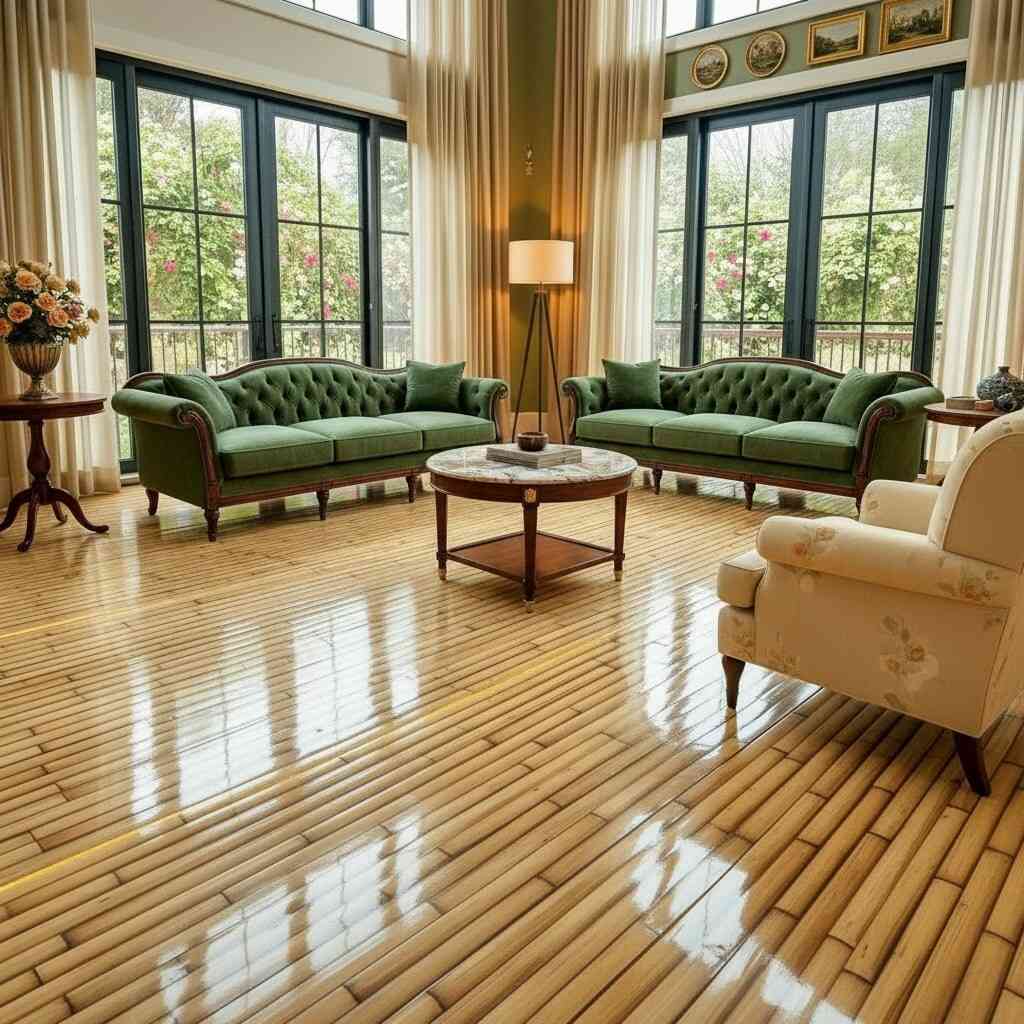
Texture, too, is layered. The surface may be polished to glass-like smoothness, exposing the full depth of embedded elements; or left with a satin, lightly pebbled finish that enhances slip resistance and tactile richness. Some designers introduce micro-shaping—laser-etching fine grooves or dimples into cured surfaces to modulate acoustics or provide subtle guidance for the visually impaired.
Light interaction is perhaps the most transformative aspect. Translucent or semi-transparent epoxy allows light to penetrate millimeters below the surface, backlighting bamboo fibers and creating a luminous depth rarely achievable in opaque materials. In spaces with dynamic lighting—skylights, LED coves, or diurnal sun paths—the floor becomes a responsive medium, shifting in tone and reflectance throughout the day.

2.3 Structural Integrity and Environmental Responsiveness
A common misconception is that shaped surfaces sacrifice durability. In bamboo epoxy shaped flooring, the opposite is often true: shaping can enhance structural performance. Curved geometries distribute loads more efficiently than flat planes (a principle seen in shell structures and vaulted architecture). A gently domed tile, for example, resists point loads better than a flat counterpart of equal thickness.
Moreover, the composite’s hygrothermal behavior is engineered for responsiveness—not resistance. Rather than attempting to eliminate bamboo’s natural expansion/contraction (an impossible task), designers anticipate it. Strategic gaps, expansion joints, and flexible epoxy zones accommodate seasonal movement without cracking. Some advanced iterations incorporate shape-memory polymers within the epoxy matrix—materials that reversibly change conformation with temperature, allowing the floor to “breathe” dynamically.
Thermal mass is another consideration. Bamboo has low thermal conductivity; epoxy moderates it further. The resulting floor remains comfortably temperate—cool in summer, neutral in winter—without requiring radiant heating. Acoustically, the combination dampens impact noise (footsteps, dropped objects) more effectively than hardwood or tile, contributing to spatial serenity.
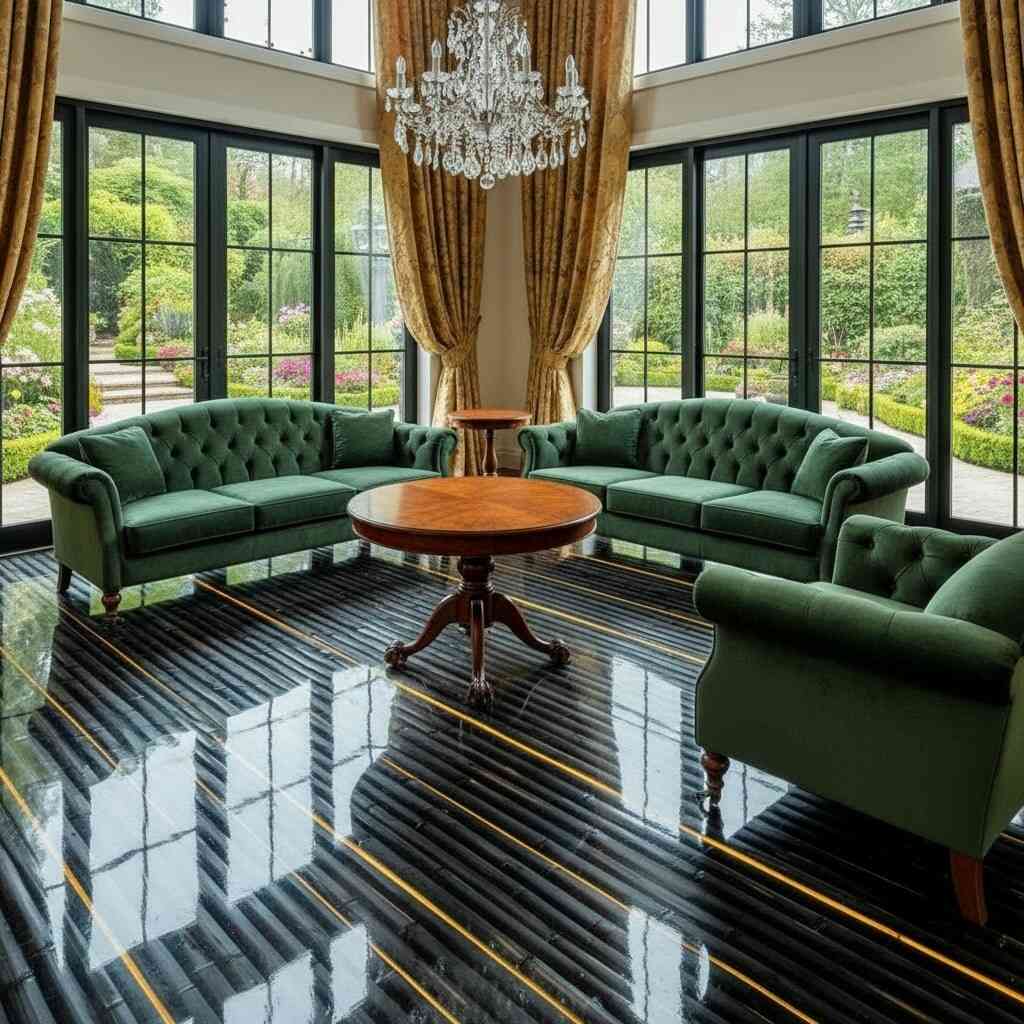
Part III: Philosophical and Cultural Resonance
3.1 Material Honesty and Tectonic Expression
- Bamboo epoxy shaped flooring* embodies a principle central to modern material philosophy: tectonic expression—the visible articulation of how a thing is made. Unlike laminates that conceal their construction, this flooring reveals its genesis. You can see where strands were laid, where resin pooled, where mold seams occurred. This is not imperfection; it is authenticity. It resists the homogenizing impulse of industrial finishes, instead celebrating process as part of meaning.
The shaping, too, is legible. A wave pattern isn’t printed—it is cast. Its curvature has physical cause: the mold, the pour, the cure. In an era of digital fabrication and parametric design, this tangibility grounds abstraction in material reality.
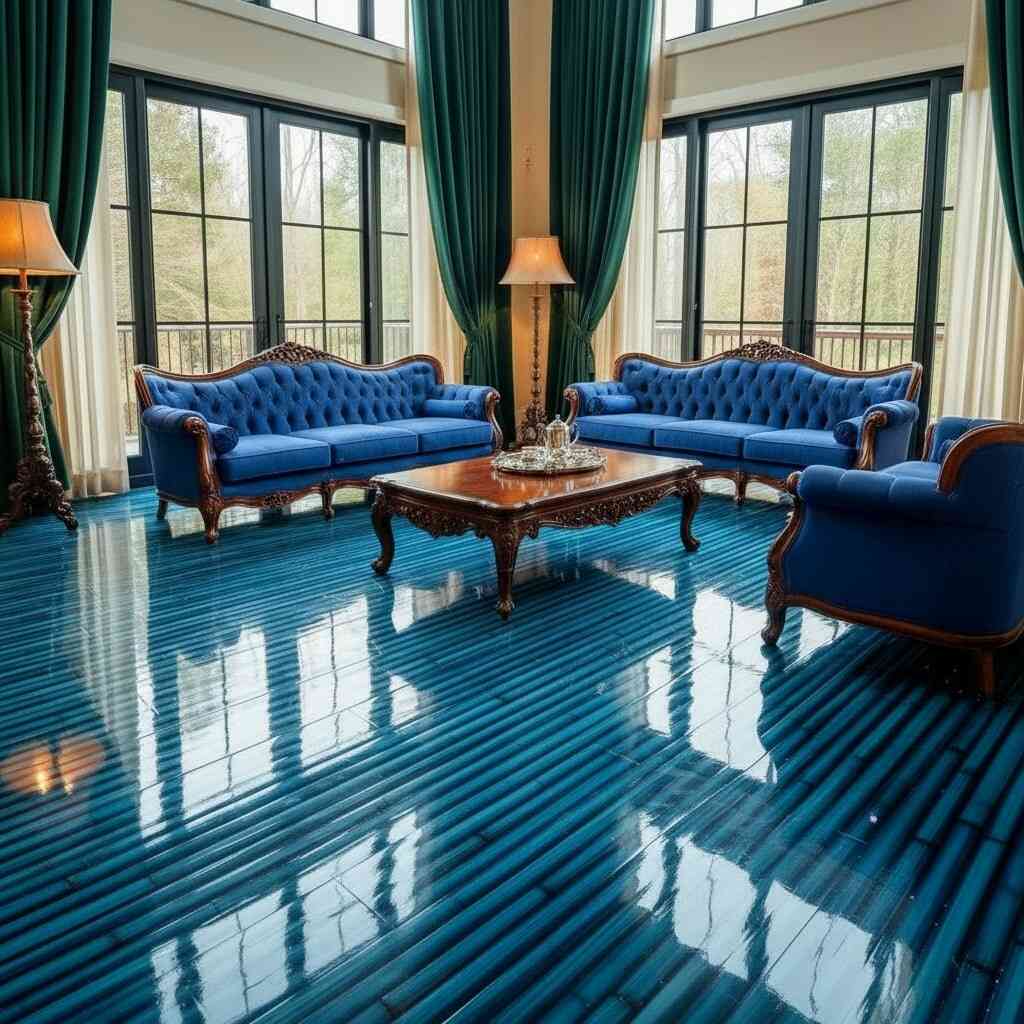
3.2 Temporality and Patina
Unlike inert surfaces that aim for perpetual newness, bamboo epoxy shaped flooring embraces temporal evolution. Bamboo may darken slightly with UV exposure; epoxy may develop a soft patina from foot traffic—not wear, but maturation. This aligns with Eastern aesthetics such as wabi-sabi: the acceptance of transience and imperfection as intrinsic to beauty.
The floor becomes a record—of use, of light, of time. Scratches aren’t flaws to be hidden; they’re traces of lived experience, integrated into the composite’s evolving narrative. Repair, when needed, isn’t about concealment but addition: new resin layers poured over damage, preserving history while restoring function.
3.3 Ecological Integration, Not Just Impact Reduction
Finally, bamboo epoxy shaped flooring reflects a shift from sustainability as mitigation (doing less harm) to sustainability as integration (participating in ecological cycles). Bamboo cultivation can restore degraded soils and support biodiversity when managed responsibly. Epoxy, though synthetic, can now be formulated with bio-based epoxides (e.g., from linseed or cardanol) and recycled content—reducing fossil dependence without sacrificing performance.
The flooring doesn’t just occupy space—it relates to it. Its forms may echo local topography (dunes, riverbeds, forest floors); its textures may reference regional craft traditions (woven mats, stamped earth). In this way, it becomes site-specific—not through branding, but through resonance.

Conclusion: A Surface That Thinks
Bamboo epoxy shaped flooring is not a trend. It is a proposition—a material argument for reimagining how floors function in human habitats. It asks us to consider surfaces not as passive backdrops, but as active participants: structurally intelligent, sensorially rich, ecologically literate.
Its meaning lies in synthesis—of organic and synthetic, tradition and innovation, form and function. It demonstrates that sustainability need not mean austerity; that strength need not mean rigidity; that beauty need not mean surface decoration.
To walk upon bamboo epoxy shaped flooring is to engage with a philosophy made tangible: the belief that our built environments can be both resilient and poetic, grounded in science yet open to wonder. In a world increasingly defined by abstraction—digital interfaces, virtual spaces, algorithmic logic—this flooring offers a counterpoint: a tactile, temporal, and deeply human experience, cast in resin and rooted in earth.
It is, ultimately, more than flooring.
It is a statement about how we choose to dwell.