
Small animals possess unique instinctual behaviors that dictate their rest and security requirements. For the domestic guinea pig (Cavia porcellus), burrowing into dark, enclosed spaces is a fundamental survival mechanism inherited from their wild ancestors. Providing an optimized sanctuary within a domestic enclosure involves balancing structural integrity with aesthetic appeal. A specialized guinea pig sleeping bag serves as an essential accessory, fulfilling the rodent’s physiological need for a low-light, insulating microclimate.
When conceptualizing design architectures for these small pet accessories, the focus shifts entirely to the intersection of textile engineering, structural aesthetics, and thematic visual design. Every element—from the choice of foundational textiles and structural ribbing to the deployment of complex pattern layouts and color palettes—plays a critical role in the final manifestation of the product. This article analyzes the technical and aesthetic design frameworks required to construct unique, high-quality sleeping pouches tailored specifically to the anatomical and instinctual profile of guinea pigs.
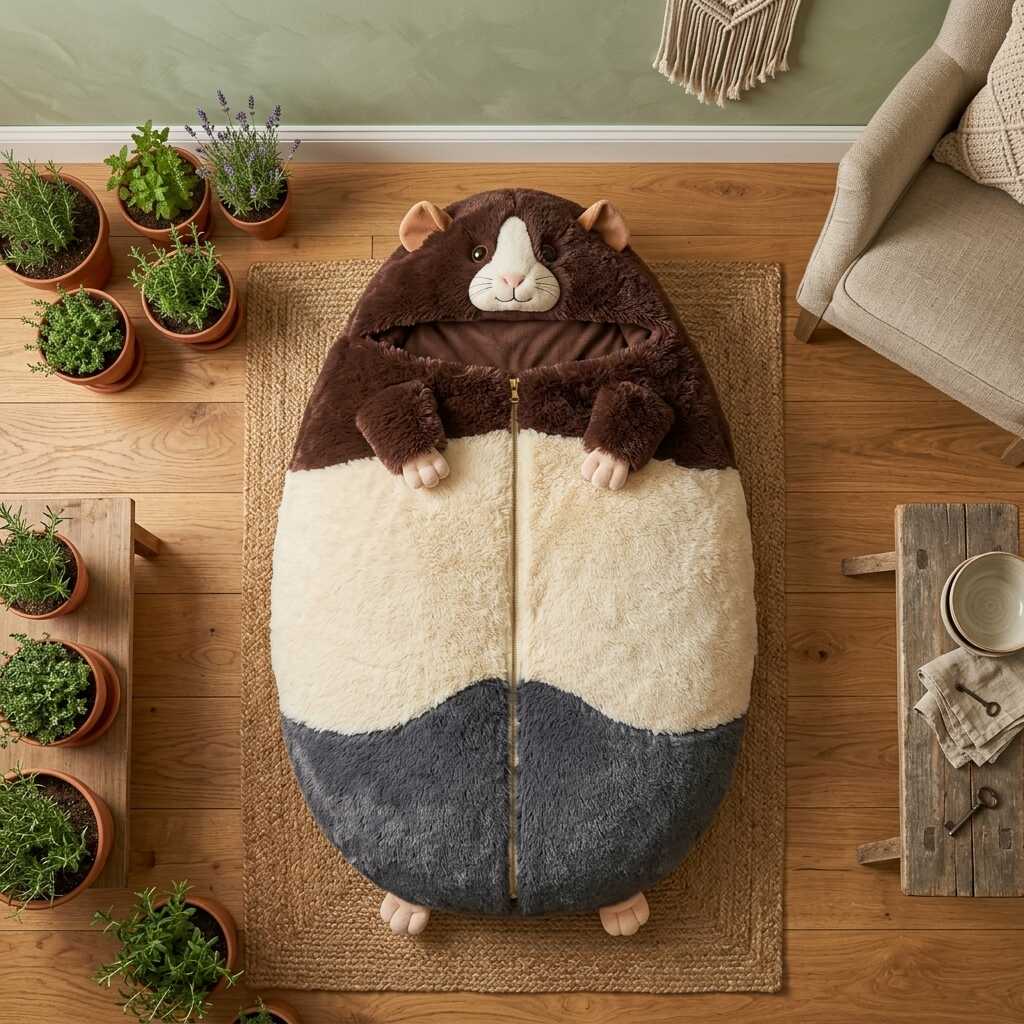
Architectural and Structural Typologies
The physical form of a guinea pig sleeping bag determines how it interacts with the physical layout of an enclosure and how the animal positions itself inside. Designers must consider structural stability to ensure the entry portal remains accessible while maintaining a shape that accommodates the elongated, low-slung anatomy of the animal.
The Classic Stay-Open Tunnel
The classic tunnel or sack design relies on structural reinforcement at the entry point. Without an internal support mechanism, flexible fabrics collapse under their own weight, blocking the entrance. To resolve this, the front opening incorporates a hidden, semi-rigid ring sewn directly into the hem.
-
Padded Foam Bands: High-density, non-toxic foam strips provide a soft, forgiving hoop that maintains a circular or oval aperture.
-
Plastic Boning Strips: Flexible polyester boning (similar to dressmaking boning) offers a highly resilient ring that retains its shape even after compression.
-
Quilted Ribs: Multiple parallel rows of dense stitching over thick batting create a self-supporting fabric arch that requires no structural inserts.
The Triangular Pouched Wigwam
Drawing inspiration from geometric tents, the triangular pouched design features a wide, flat rectangular base that tapers upwards to a single ridge line or apex. This creates a sloped roofline that naturally mimics a shallow burrow. The structural stability comes from the tension between the heavy base panel and the angled side walls, which can be reinforced with internal foam panels to prevent sagging.
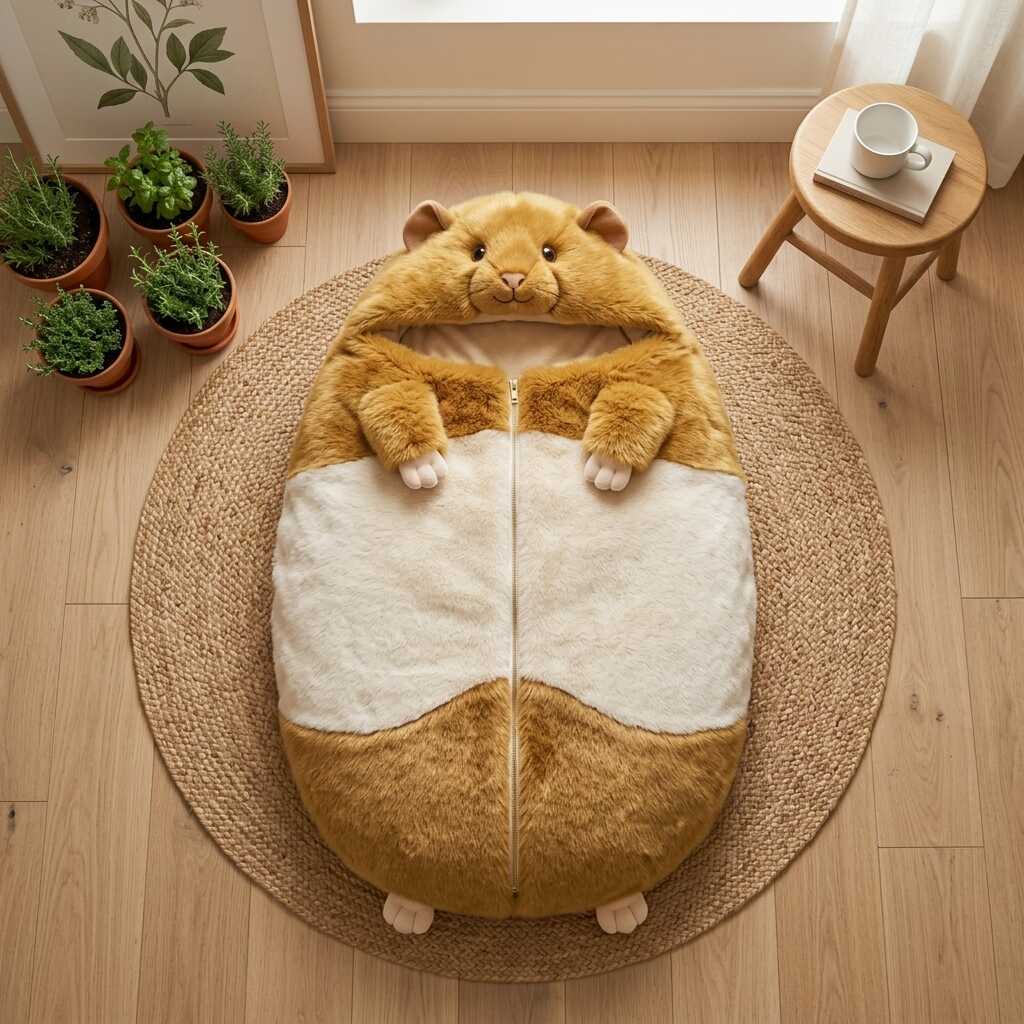
The Pocket Slice or “Slipper” Concept
Mimicking the appearance of a human slipper or a slice of pita bread, this topology features a flat, rigid bottom mat with a loose, drapery-style top cover attached along three edges. The top cover is intentionally patterned with excess fabric width, causing it to billow upward naturally. This design accommodates guinea pigs that prefer the tactile sensation of fabric resting lightly on their backs, creating a highly secure, swaddled environment.
Material Engineering and Textile Selection
The selection of fabrics for a guinea pig sleeping bag is governed by strict functional criteria: thermal efficiency, durability against continuous claw wear, resistance to fiber shedding, and structural weight. The architectural envelope is typically constructed using a multi-layered textile system.
+-------------------------------------------------------+
|  OUTER SHELL: Canvas, Duck, or Anti-Pill Polar Fleece  |
+-------------------------------------------------------+
|  INTERNAL BATTING: Breathable Polyester Padding       |
+-------------------------------------------------------+
|  LINING MATRIX: Ultra-Soft Coral Fleece or Sherpa      |
+-------------------------------------------------------+
The Outer Shell: Durability and Form
The exterior layer defines the visual identity and structural crispness of the bag. It must withstand external environmental friction within the habitat.
-
Cotton Duck and Canvas: Heavyweight woven cotton fabrics provide a flat, structured exterior surface that showcases printed patterns with high fidelity. These fabrics prevent the bag from rolling or shifting easily.
-
Anti-Pill Polar Fleece: A synthetic option that offers a soft exterior visual, providing a cohesive, completely plush appearance from the outside in. The anti-pill variant resists fuzzing after repeated washing.
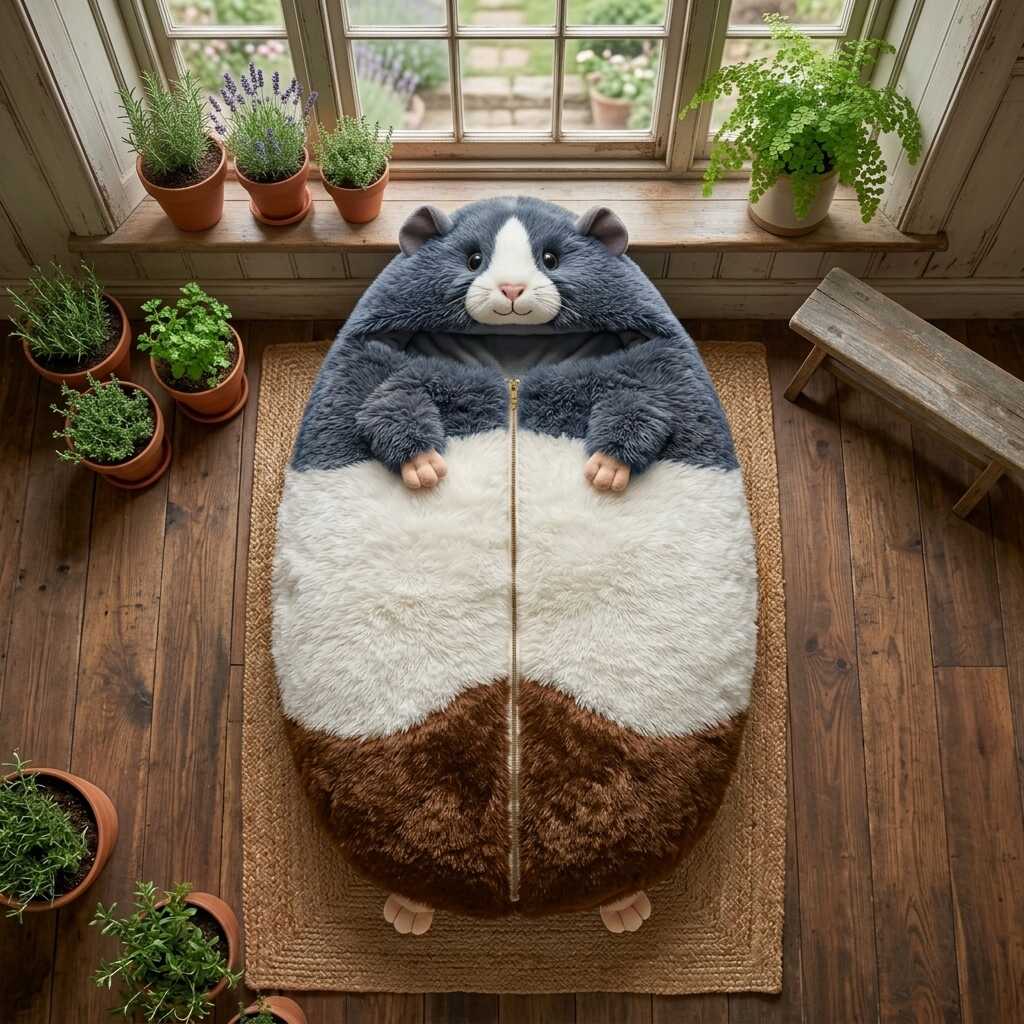
The Internal Batting: Insulation and Loft
Sandwiched between the outer and inner fabrics, the middle layer provides thermal insulation and structural volume. Needle-punched polyester batting or lightweight foam sheets are standard. This layer must be securely quilted to the outer shell using geometric stitch lines (e.g., diamonds, parallel channels) to prevent shifting, bunching, or separating during cleaning.
The Lining Matrix: Tactile Surface Comfort
The interior lining comes into direct contact with the animal’s coat.
-
Coral Fleece: Known for its high pile and deep knit texture, coral fleece features ultra-fine synthetic fibers that create a dense, velvety surface. It provides high heat retention while remaining lightweight.
-
Sherpa Fleece: Characterized by a crimped, bumpy texture that mimics natural sheep’s wool, sherpa fleece provides a highly tactile, dimensional interior environment that retains bulk under the weight of the animal.
Color Theory and Visual Patterns
The visual design of a guinea pig sleeping bag utilizes color palettes and print motifs to transform a functional habitat accessory into a stylized design piece. Creative directions generally fall into three distinct thematic categories.
       [COTTAGECORE ANIMAL PRINT]      [SCANDINAVIAN MINIMALISM]     [VICTORIAN ROYAL LUXURY]
       Muted Moss, Sage, Amber         Monochrome, Ochre, Charcoal    Emerald, Plum, Ruby
       Botanical & Woodland Motifs     Geometric Lines & Solids       Deep Quilting & Tufting
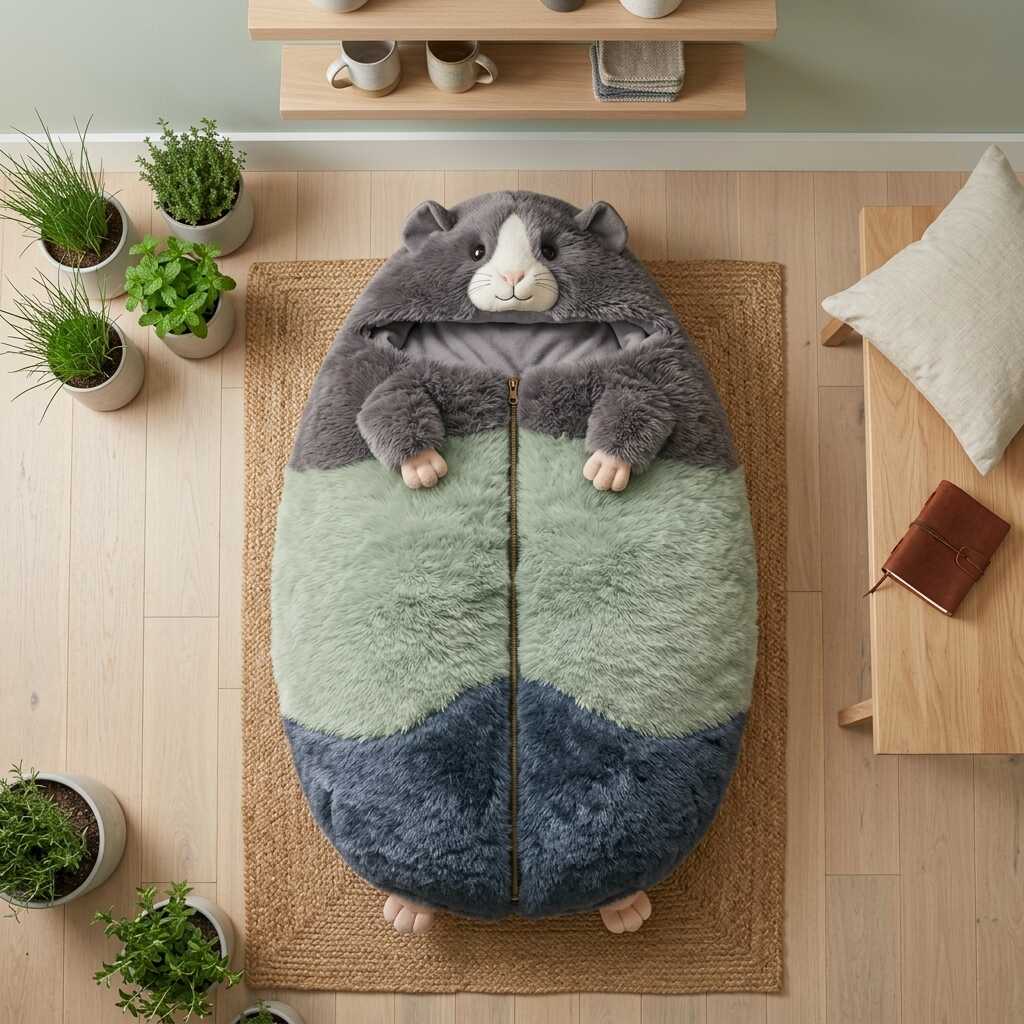
Theme 1: Cottagecore and Botanical Woodlands
This design direction leans into rustic, organic aesthetics, utilizing palettes derived directly from natural forest floors and meadowlands.
-
Palette: Muted moss greens, sage, deep amber, warm terracotta, and unbleached cream tones.
-
Motifs: Delicate line-art illustrations of ferns, acorns, miniature mushrooms, and stylized forest flora. The prints are kept small in scale to match the diminutive proportions of the sleeping bag itself.
Theme 2: Scandinavian Minimalism and Geometric Abstraction
For a contemporary aesthetic, this approach utilizes clean lines, high contrast, and simplified forms to create a modern architectural statement within the pet habitat.
-
Palette: Crisp monochrome bases (charcoal, slate grey, stark white) accented by singular mid-century tones like mustard ochre, burnt sienna, or dusty slate blue.
-
Motifs: Repeating herringbone structures, asymmetric triangles, simple Swiss cross patterns, and clean, unprinted solid color blocks paired with highly contrasting interior linings.
Theme 3: Regal Regency and Victorian Opulence
This style treats the small pet accessory as an item of historical luxury, employing deep, saturated jewel tones and rich textures.
-
Palette: Imperial emerald green, deep amethyst plum, royal ruby red, and accents of metallic old gold.
-
Motifs: Intricate baroque damask patterns, ornate crests, and exterior diamond-pattern quilting embellished with non-functional decorative trims along the outer perimeter edges.
Accent Elements and Superficial Design Details
The final design identity of a guinea pig sleeping bag relies on subtle, non-functional accent details that elevate its appearance without compromising safety.
Geometric Quilting Topstitches
Instead of standard straight lines, custom quilting designs can be stitched across the exterior shell. Hexagonal honeycomb patterns, undulating waves, or concentric circular stitch configurations add a subtle, three-dimensional texture to plain fabrics.
Structural Appliqués and Fabric Sculpting
Exterior fabric manipulation can introduce whimsical, structural details to the bag’s silhouette:
-
Top-Mounted Tabs: Small loops of heavy grosgrain ribbon or faux-leather tabs sewn into the top seams provide a clean, modern accent.
-
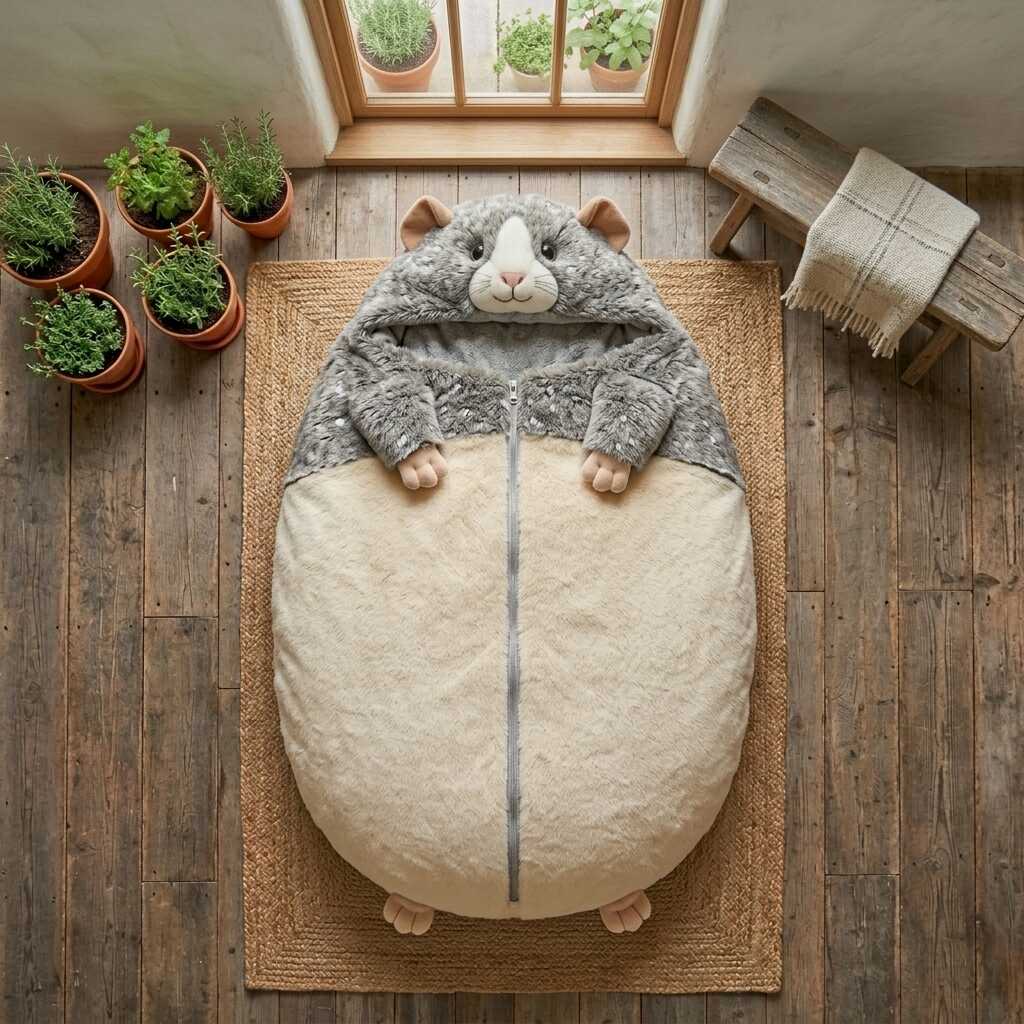
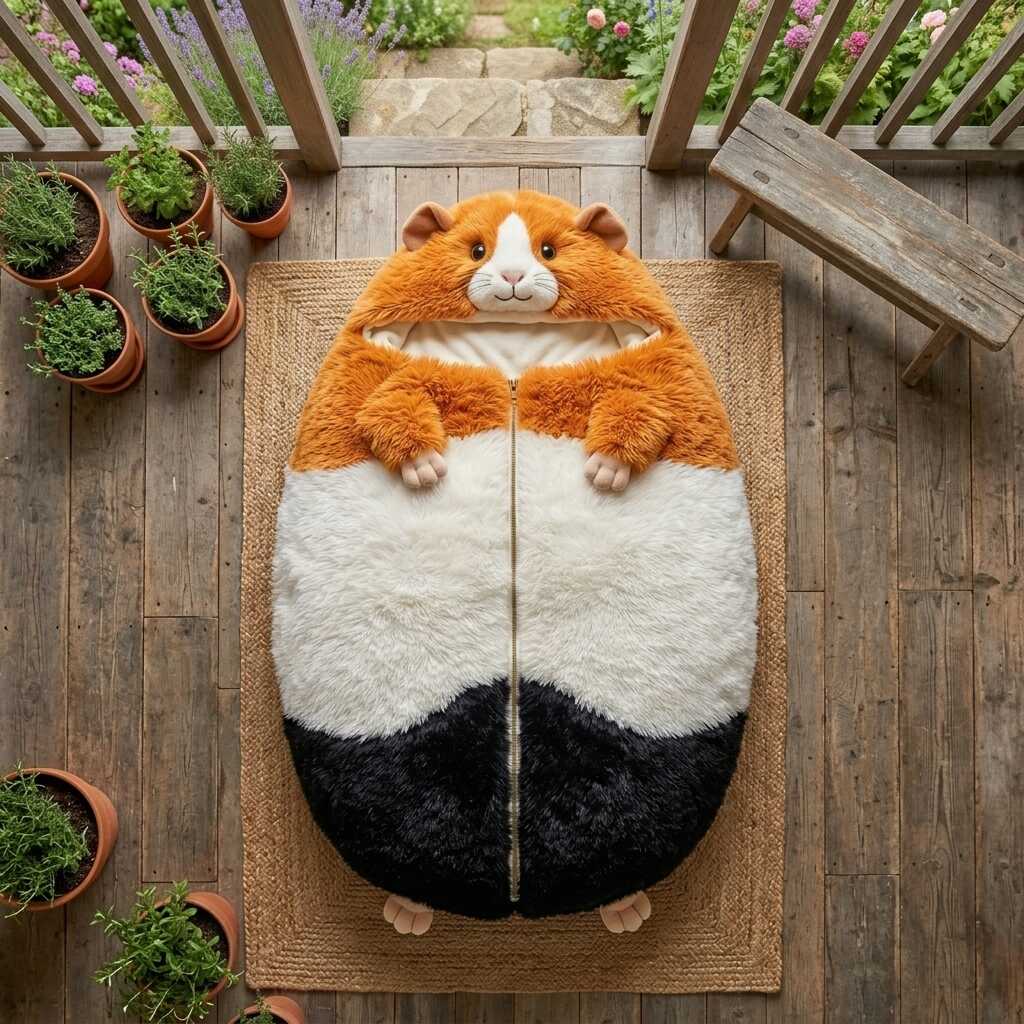
Sculpted Fabric Appliqués: Flat, low-profile fabric cutouts sewn flat against the outer shell can represent stylized animal ears (e.g., rounded bear ears or pointed fox ears) rising softly above the entry portal line, giving the entire bag a subtle character archetype.
Conclusion
The design architecture of a guinea pig sleeping bag requires careful alignment of material performance, structural stability, and visual aesthetics. By prioritizing stay-open structural engineering through the use of internal foam bones or quilted ribs, designers ensure that the accessory remains accessible and functional.
The careful layering of durable exterior canvas or polar fleece, insulating polyester batting, and ultra-soft coral or sherpa fleece linings creates a balanced microclimate that satisfies the natural burrowing instincts of small animals. When combined with thoughtful color theories—ranging from organic cottagecore motifs to minimalist geometric lines and opulent jewel-toned patterns—the sleeping bag transcends its basic functional purpose, becoming a sophisticated design element that complements and enhances the overall visual environment of the domestic habitat.