
When Comfort Becomes Culture
In an age where boundaries between disciplines blur with increasing fluidity—where streetwear influences haute couture, and minimalist design infiltrates domestic architecture—it is perhaps no surprise that the humble hoodie has transcended its sartorial origins to inspire an entirely new category of furniture. The emergence of the “Hoodie Themed Chair” is not merely a novelty or a passing trend; it is a cultural artifact that encapsulates our collective yearning for comfort, intimacy, and emotional resonance in everyday objects. More than just a seat, the Hoodie Themed Chair represents a philosophical shift in how we conceive of domestic space: not as a backdrop for life, but as an extension of personal identity and emotional sanctuary.
At first glance, the concept may seem whimsical—after all, how can a garment known for its softness, anonymity, and urban utility be translated into a piece of furniture? Yet, upon closer inspection, the Hoodie Themed Chair reveals itself as a profound synthesis of form, function, and feeling. It draws from the hoodie’s legacy as a symbol of youth rebellion, digital-age solitude, and unapologetic coziness, reinterpreting these qualities through the language of interior design. This article explores the cultural, aesthetic, and psychological dimensions of the Hoodie Themed Chair, tracing its conceptual roots, unpacking its design philosophy, and reflecting on what its rise tells us about contemporary life.
Part I: The Cultural Resonance of the Hoodie
To understand the Hoodie Themed Chair, one must first understand the hoodie itself—not just as a piece of clothing, but as a cultural signifier. Originally developed in the 1930s by companies like Champion for laborers and athletes seeking warmth and practicality, the hoodie evolved through decades of reinterpretation. By the 1970s and 1980s, it became a staple of hip-hop culture, worn by artists and dancers who valued its anonymity and ease of movement. In the 1990s, it was adopted by skaters, grunge musicians, and tech entrepreneurs alike—each group imbuing it with new meanings: rebellion, anti-fashion, or the uniform of the digital dreamer.
Crucially, the hoodie has always carried a dual identity. On one hand, it is a garment of vulnerability—its hood offering a literal and metaphorical shield from the world, a way to retreat inward. On the other, it is a symbol of defiance, famously worn during protests and social movements as a statement against profiling and injustice (most notably in the aftermath of Trayvon Martin’s death). This tension between protection and protest, between softness and strength, is central to the hoodie’s enduring appeal.
In the 21st century, as remote work, digital connectivity, and mental health awareness reshape our relationship with domestic space, the hoodie has become the unofficial uniform of the homebody. It is the armor of the introvert, the comfort blanket of the overstimulated, the wearable nest. It is no coincidence, then, that this same ethos has migrated from closet to living room. The Hoodie Themed Chair does not simply mimic the hoodie’s appearance; it channels its spirit—offering not just a place to sit, but a space to withdraw, to cocoon, to exist without performance.

Part II: From Fabric to Form – The Aesthetic Language of the Hoodie Themed Chair
The translation of a garment into furniture is no small feat. Clothing is dynamic—it moves with the body, responds to temperature, and ages with wear. Furniture, by contrast, is static, structural, and expected to endure. The design challenge of the Hoodie Themed Chair, therefore, lies in capturing the hoodie’s ephemeral qualities—its drape, its softness, its enveloping nature—within the constraints of architectural form.
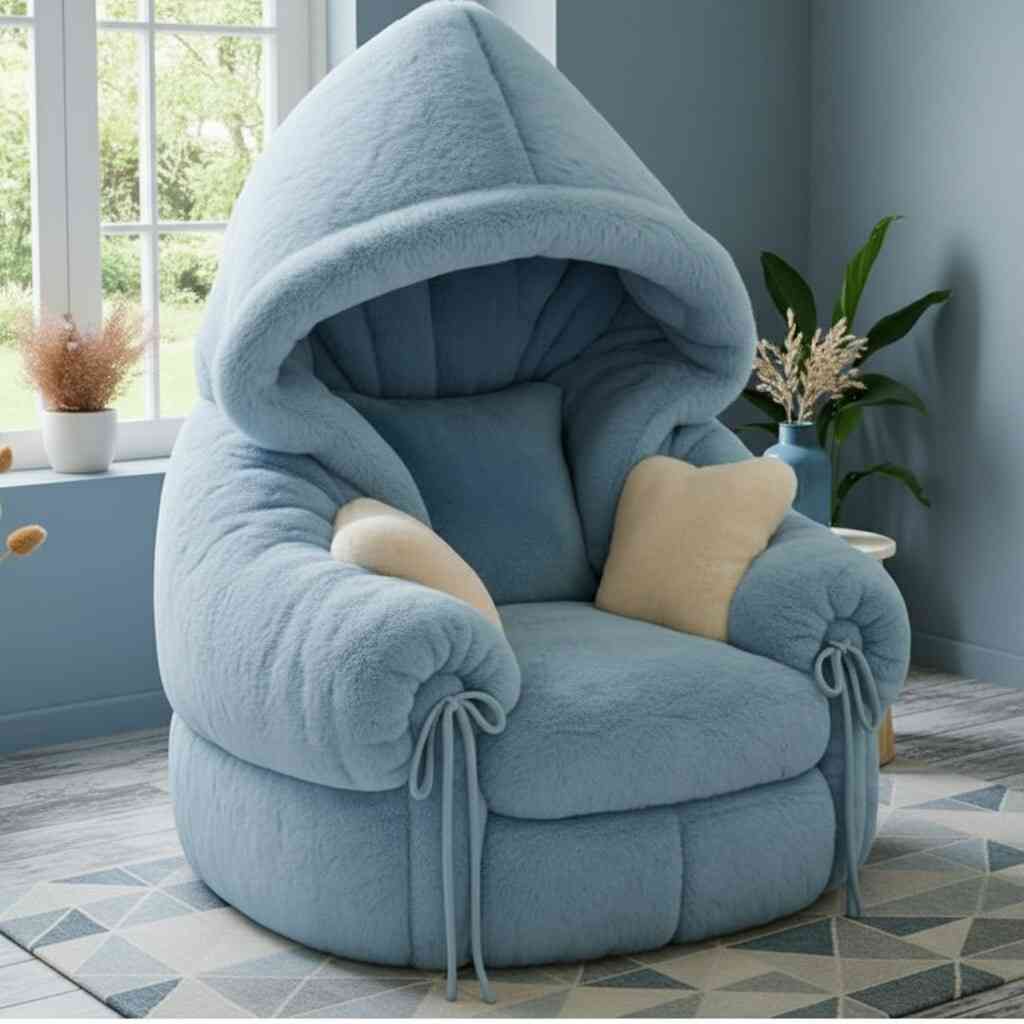
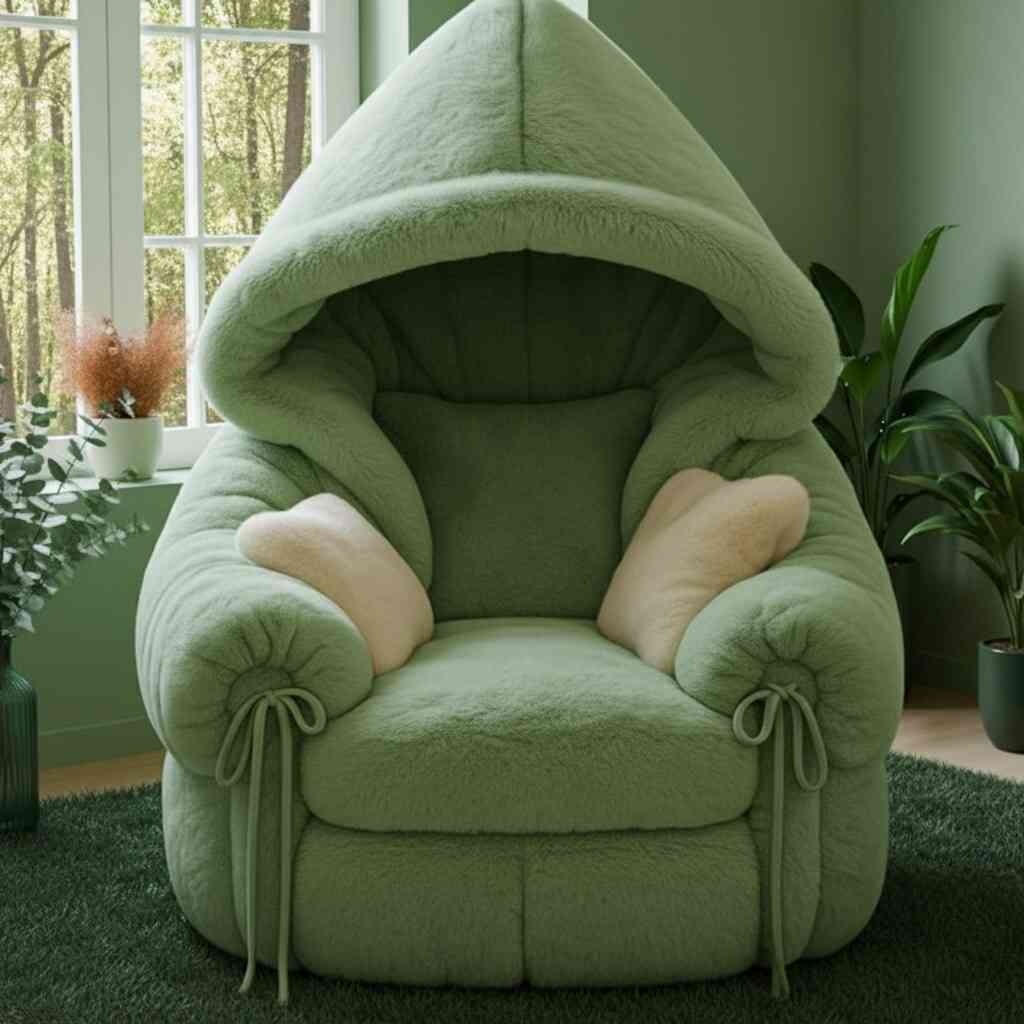
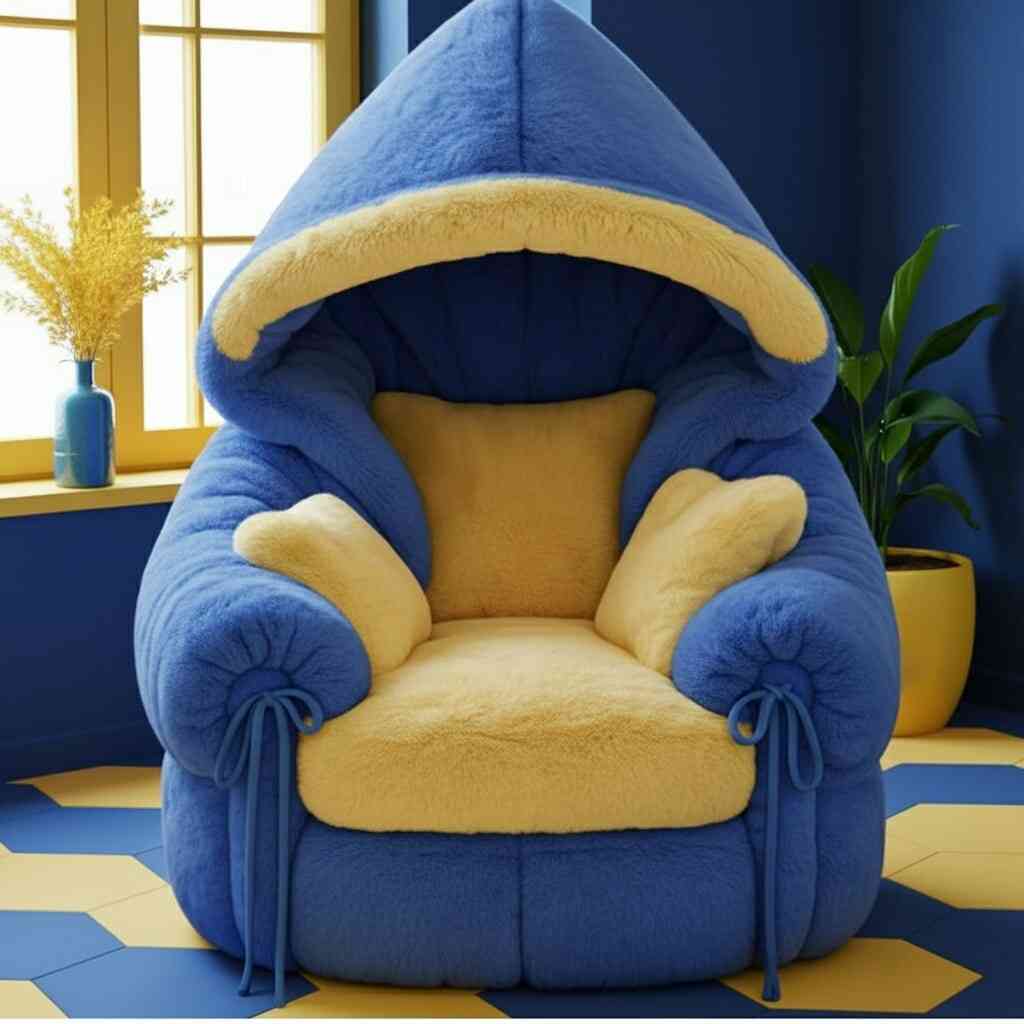
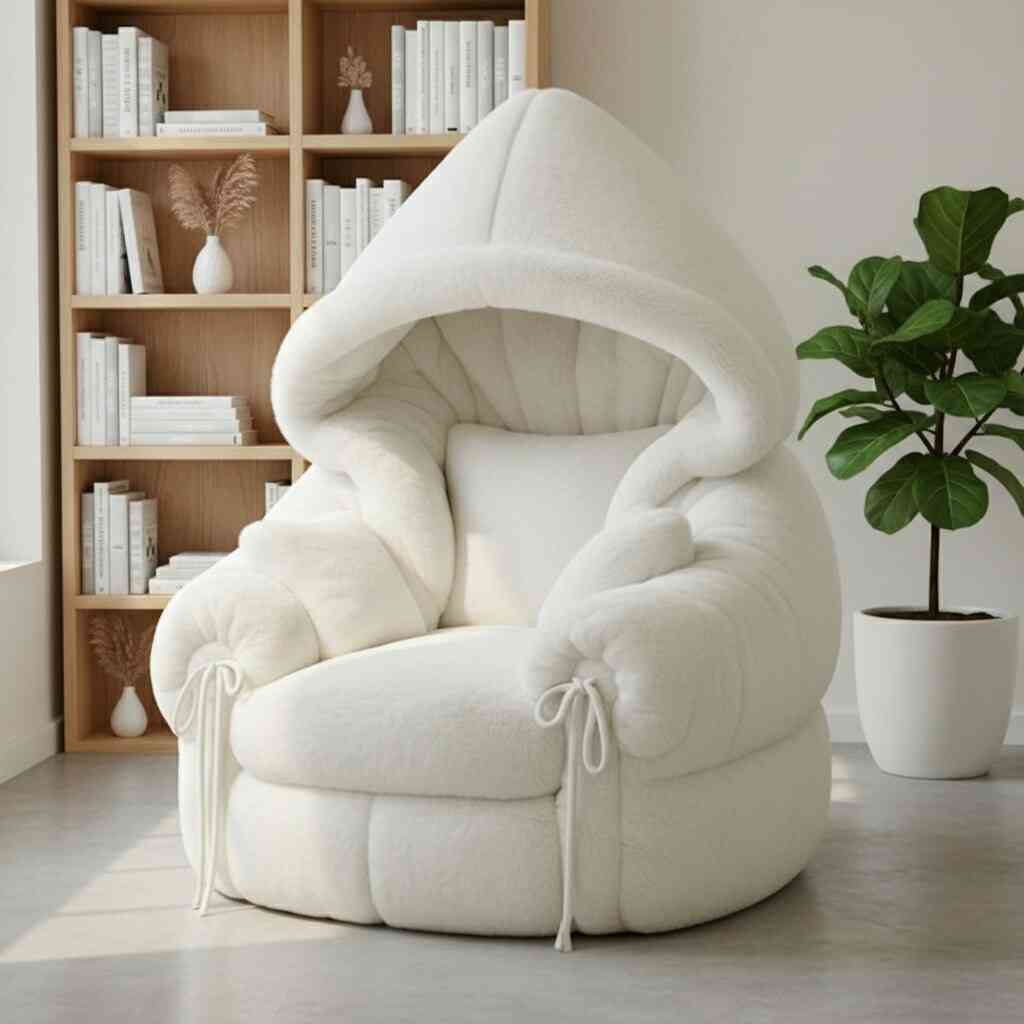
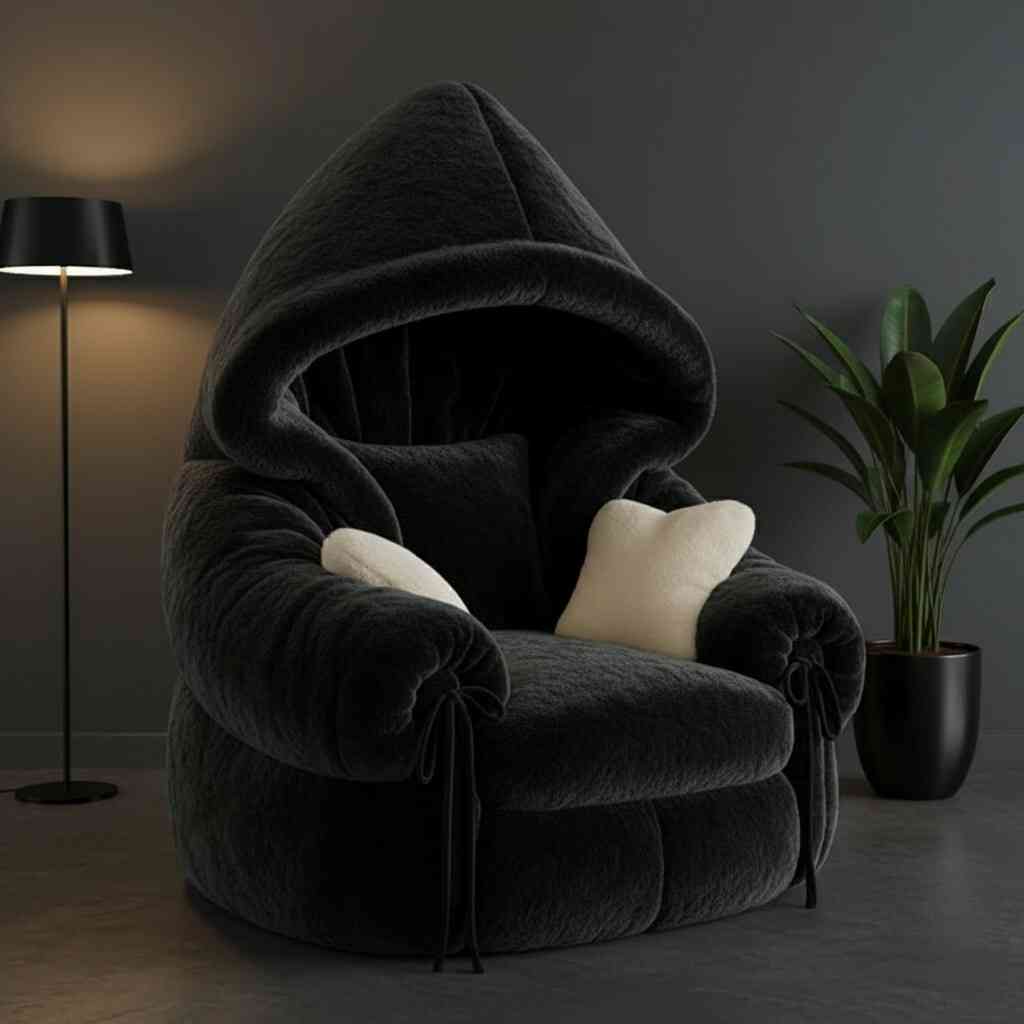
Visually, many Hoodie Themed Chairs echo the silhouette of a hoodie laid flat or gently draped over a form. The most distinctive feature is often the oversized hood-like canopy that arches over the backrest, creating a semi-enclosed nook that mimics the sensation of pulling a hood over one’s head. This architectural hood is not merely decorative; it serves as a psychological boundary, subtly signaling to others that the occupant is in a private, contemplative state. The chair’s armrests may be exaggerated and plush, resembling the kangaroo pocket of a hoodie, inviting the user to tuck their hands inside or rest their chin in a gesture of self-soothing.
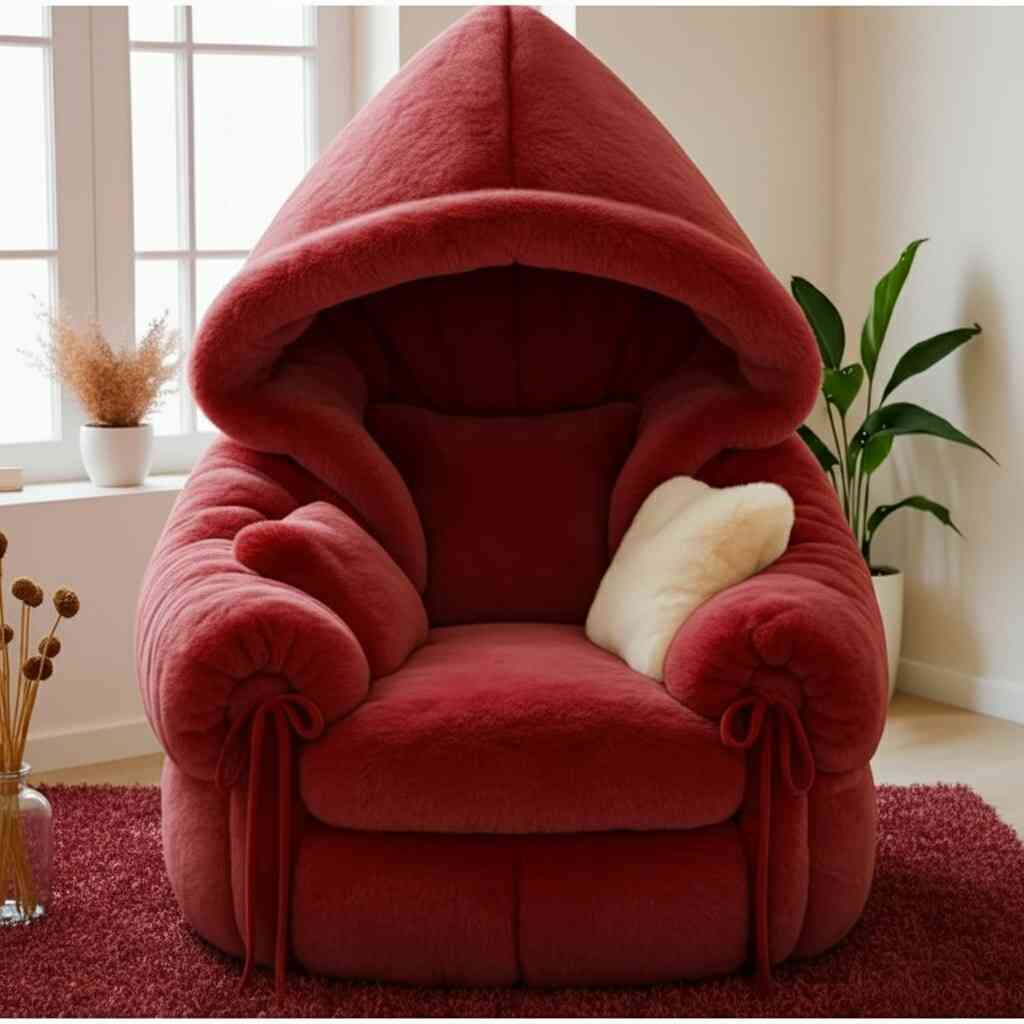
Materiality plays a crucial role in this translation. Designers often select textiles that echo the tactile experience of a well-worn hoodie: brushed cotton, fleece-like upholstery, or even looped terry fabrics that invite touch. The color palette tends toward muted, earthy tones—charcoal, oatmeal, heather gray—reinforcing the chair’s association with understatement and comfort rather than ostentation. Some iterations incorporate subtle textural details: drawstring-like cords along the backrest, ribbed cuffs at the base, or even asymmetrical stitching that recalls the handmade imperfections of vintage sweatshirts.
But beyond surface aesthetics, the Hoodie Themed Chair embodies a deeper design philosophy—one that prioritizes emotional ergonomics over mechanical efficiency. Traditional seating often emphasizes posture, support, and spatial economy. The Hoodie Themed Chair, however, embraces slouching, curling, and nesting as valid postures of rest. Its form follows feeling, not function alone. The back may recline slightly, the seat deep enough to tuck one’s legs beneath, the overall proportions generous and embracing. In doing so, it rejects the rigid formalism of mid-century modernism or the clinical minimalism of Scandinavian design in favor of something more human, more forgiving.
This shift reflects a broader evolution in interior design, where the home is increasingly seen not as a showcase for taste, but as a refuge for the self. In this context, the Hoodie Themed Chair becomes a kind of domestic sculpture—a functional object that also serves as a vessel for mood, memory, and mindfulness.
Part III: The Psychology of Coziness and the Domestic Self
The true power of the Hoodie Themed Chair lies not in its appearance, but in the emotional experience it facilitates. To sit in one is to be gently held—not just physically, but psychologically. This sensation taps into what psychologists and designers alike refer to as “enclosure” or “prospect-refuge theory”: the human preference for spaces that offer both a sense of safety (refuge) and a view of the surrounding environment (prospect). The Hoodie Themed Chair provides refuge through its enveloping form, while often maintaining an open front that allows the occupant to remain connected to their surroundings.
This balance is particularly resonant in our current cultural moment. We live in an era of constant connectivity, where the boundaries between work and leisure, public and private, have eroded. The smartphone buzzes, the email pings, the news scrolls endlessly—there is little room for true mental retreat. The Hoodie Themed Chair offers a micro-sanctuary, a designated zone where one can disengage without fully disconnecting. It is a physical manifestation of the phrase “I need a minute”—a minute to breathe, to think, to simply be.
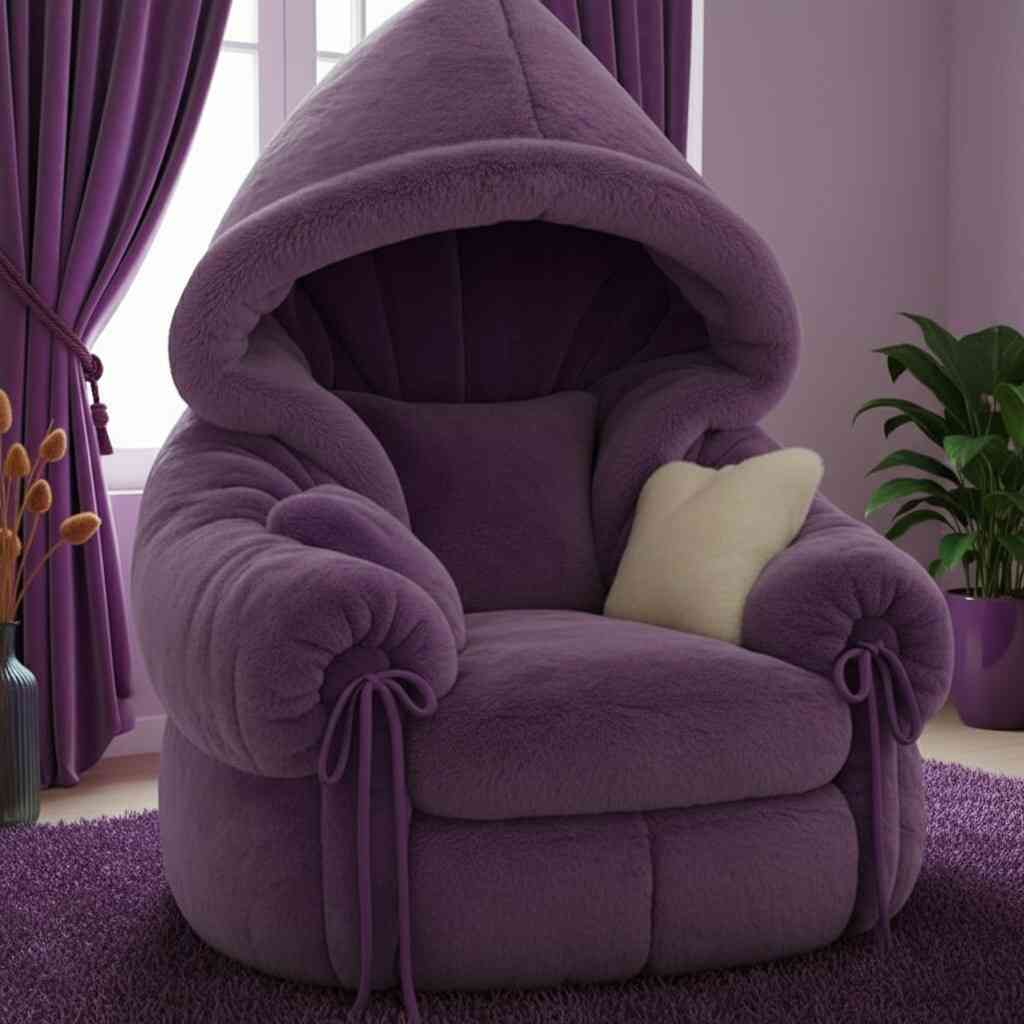
Moreover, the chair speaks to the growing cultural validation of softness. For much of the 20th century, design celebrated hardness: steel frames, glass surfaces, angular lines. Comfort was secondary to innovation or aesthetics. But in recent years, there has been a quiet revolution toward “soft design”—curved edges, plush textures, warm lighting, and organic forms. This shift mirrors broader societal movements that champion vulnerability, emotional intelligence, and self-care. The Hoodie Themed Chair is a product of this ethos. It does not demand attention; it offers solace. It does not command the room; it cradles the person within it.
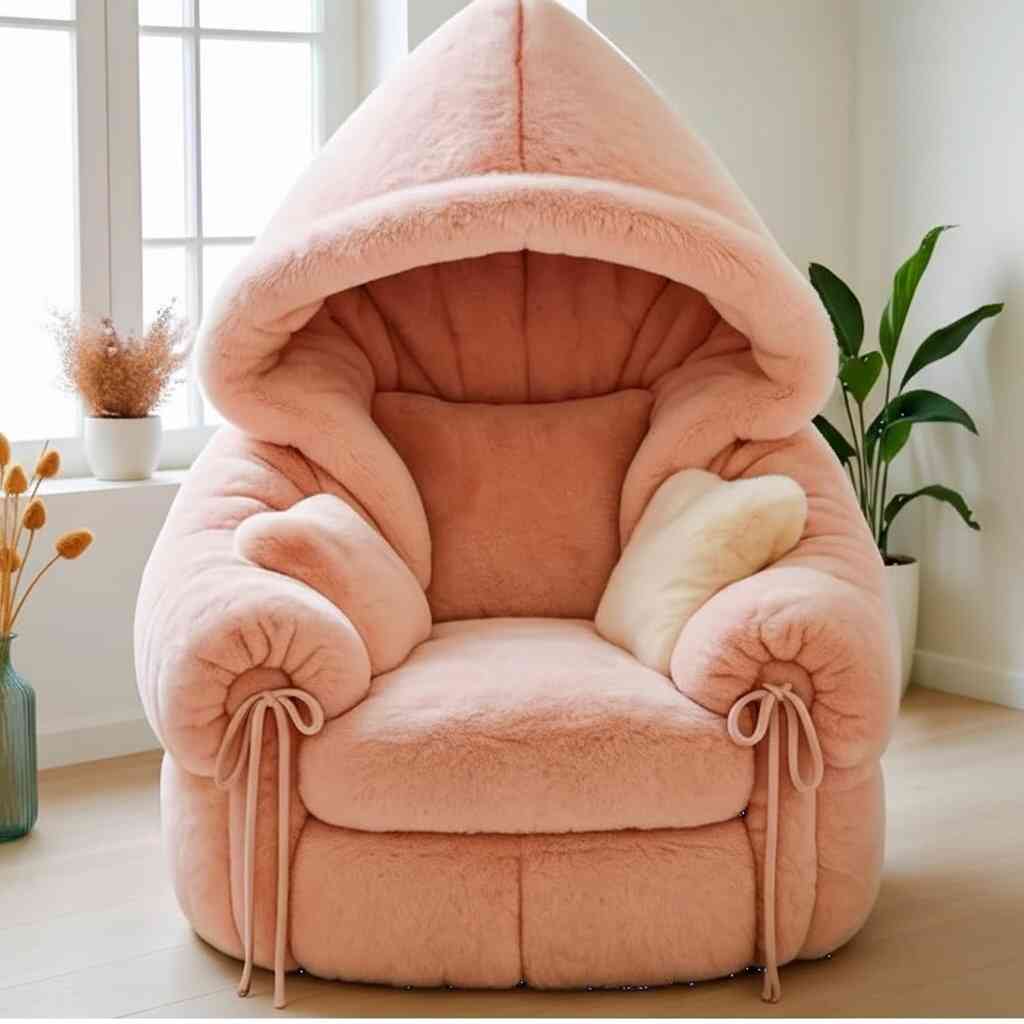
Interestingly, the chair also challenges traditional notions of domestic gender roles. Historically, “cozy” interiors were often coded as feminine, while “rational” or “efficient” spaces were masculine. The hoodie, too, has navigated complex gender terrain—once seen as masculine streetwear, now embraced across the spectrum. The Hoodie Themed Chair inherits this fluidity. It is neither overtly masculine nor feminine; it is human. It appeals to anyone who has ever sought comfort in a soft embrace, regardless of identity.
In this sense, the chair becomes more than furniture—it becomes a companion. Like a favorite hoodie that smells faintly of laundry detergent and memories, the Hoodie Themed Chair accumulates emotional weight over time. It is the place where one reads late into the night, where one cries after a hard day, where one daydreams while watching rain fall outside the window. It is not just occupied; it is inhabited.
Conclusion: The Hoodie Themed Chair as Cultural Mirror
The rise of the Hoodie Themed Chair is not an isolated phenomenon. It is part of a larger cultural recalibration—one that places emotional well-being at the center of design, that blurs the lines between public and private, fashion and function, utility and poetry. In translating the hoodie—a garment steeped in subversion, comfort, and identity—into a piece of furniture, designers have created more than a seating option; they have crafted a symbol of our times.
This chair reflects a society that is tired of performance, hungry for authenticity, and increasingly aware of the need for personal sanctuaries. It acknowledges that comfort is not laziness, that softness is not weakness, and that the spaces we inhabit should nurture us as much as they impress others. The Hoodie Themed Chair, in its quiet way, is a manifesto for a gentler, more introspective mode of living.

As we move further into an uncertain future—one marked by climate anxiety, digital saturation, and social fragmentation—the demand for objects that offer emotional refuge will only grow. The Hoodie Themed Chair stands as a testament to the power of design to respond not just to physical needs, but to the invisible contours of the human psyche. It is fashion made furniture, yes—but more importantly, it is feeling made form.
In the end, the Hoodie Themed Chair reminds us that sometimes, the most radical act is to sit still, wrapped in softness, and simply exist. And in a world that rarely allows for such stillness, that is no small thing.