
Summer design trends are shifting rapidly toward high-concept, stylized watercraft that merge the worlds of automotive engineering aesthetics and aquatic recreation. At the absolute forefront of this movement are Inflatable Race Car Boats. These products represent a significant departure from traditional, utilitarian pool floats and standard inflatable dinghies, instead embracing complex, multi-dimensional geometric profiles inspired directly by competitive motorsports. By capturing the aggressive lines, low-slung stances, and aerodynamic contours of Formula 1 cars, supercars, and vintage racers, these inflatables have redefined the visual landscape of modern waterfront leisure. This article provides a comprehensive exploration of the structural blueprints, material compositions, and vivid color theory driving the evolution of these high-octane aquatic designs.
Aerodynamic Profiles and Structural Geometry
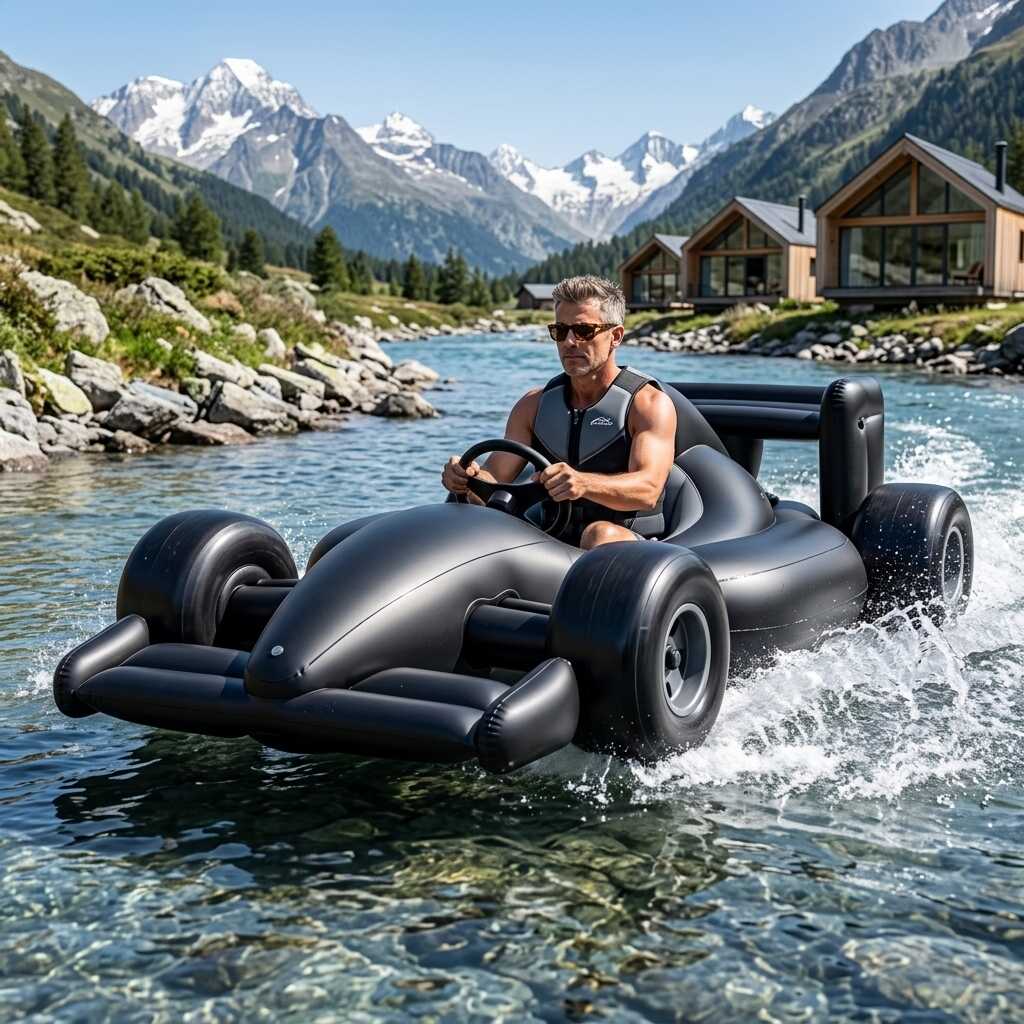
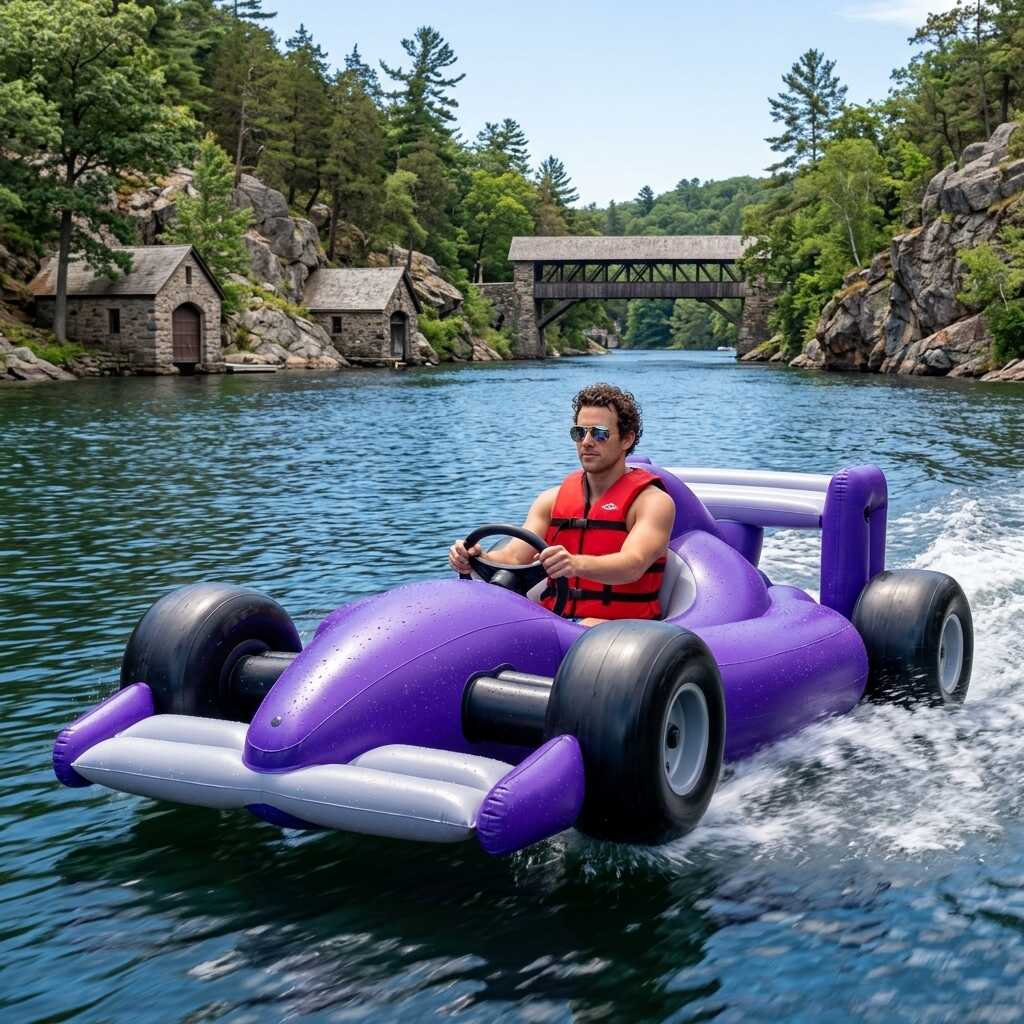
The defining characteristic of modern Inflatable Race Car Boats is their uncompromising adherence to automotive chassis design. Creating a convincing race car silhouette using air-filled chambers requires specialized internal engineering and advanced patterning techniques.
The Nose and Front Wing Assemblies
Traditional inflatables rely on simple rounded tubes, but race car-inspired watercraft utilize sharp, tapered bow designs that mimic the front splitters and nose cones of track vehicles. Manufacturers use drop-stitch construction or specialized internal baffles to form flat, rigid planes that cut through the water visually. These front wing extensions are not merely painted onto a flat surface; they are fully realized, multi-chambered structural elements that project outward from the main body, mirroring the downforce-generating components of open-wheel racers.
Cockpit Realism and Seating Integration
At the center of these designs is the recessed cockpit layout. Unlike standard flat raft surfaces, the seating area of an inflatable race car boat is dropped lower than the surrounding side pods. This low center of gravity configuration creates a deeply immersive visual profile. The interior walls of the cockpit frequently feature molded PVC steering wheels, faux dashboards with printed gauge clusters, and ergonomic side bolsters that replicate the bucket seats found in high-performance sports cars.
Rear Spoilers and Downforce Signifiers
Perhaps the most visually striking architectural feature of these products is the elevated rear wing or spoiler. Suspended over the back of the watercraft via reinforced inflatable pillars, these spoilers complete the fast-paced automotive illusion. The wings are engineered with precise internal cross-ribs to maintain a perfectly crisp, rectangular shape even under full inflation pressure, preventing the sagging or warping that typically plagues large inflatable overhangs.
Advanced Materials and Manufacturing Techniques
Achieving the sharp edges, rigid flat panels, and smooth surfaces necessary for a premium automotive aesthetic requires materials that go far beyond standard pool toy vinyl.
Heavy-Duty Polyvinyl Chloride (PVC)
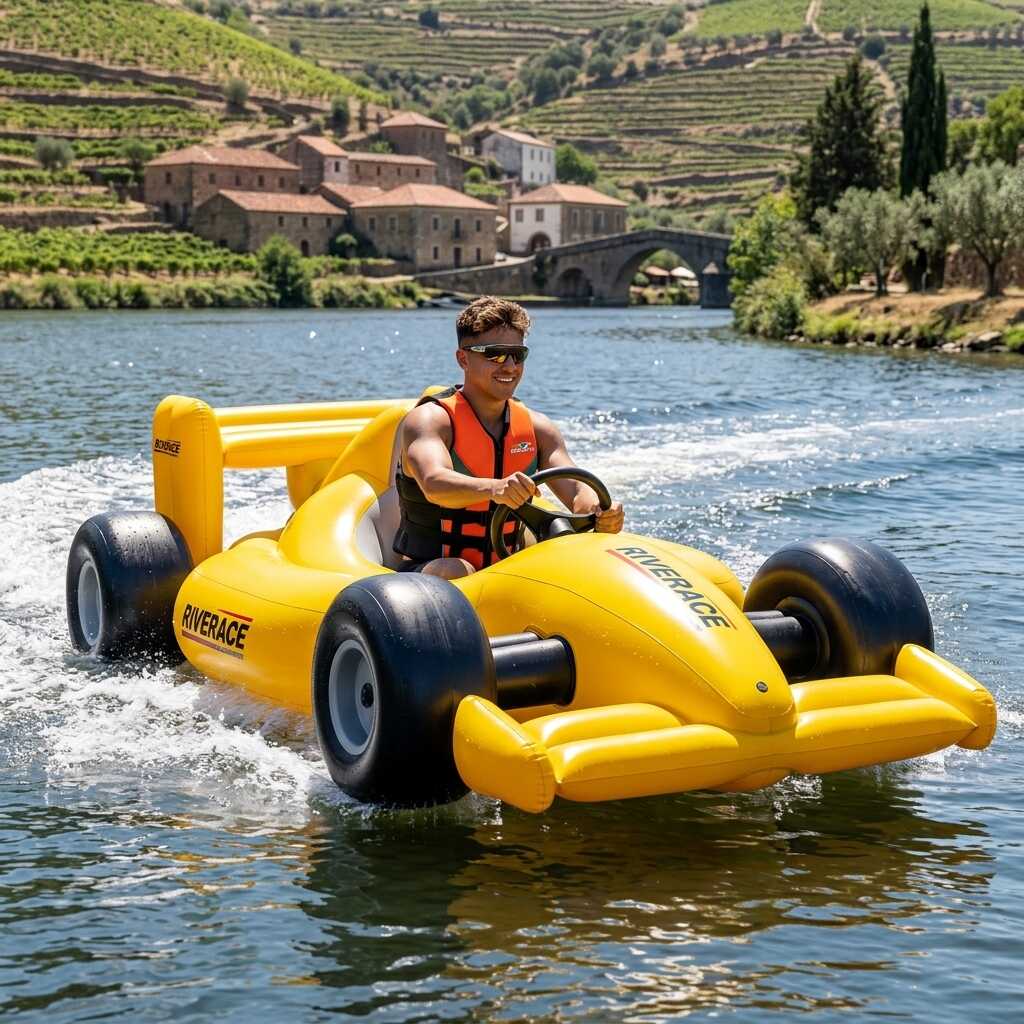
The structural foundation of these premium inflatables is thick, marine-grade Polyvinyl Chloride (PVC). Ranging from 0.4mm to 0.7mm or thicker, this material provides the necessary tensile strength to handle high internal air pressures. The higher density of marine-grade PVC minimizes surface wrinkling, resulting in a taut, smooth exterior skin that closely resembles the polished fiberglass or carbon-fiber bodywork of an actual racing vehicle.
Material Integrity Note: Premium Inflatable Race Car Boats are constructed using multi-layered, phthalate-free PVC that features an internal dense polyester mesh core. This fabric-reinforced construction prevents the material from stretching unevenly over time, ensuring the car’s precise body lines remain crisp season after season.
RF Welded Seams and Three-Dimensional Molding
To translate complex car designs into an airtight reality, manufacturers utilize Radio Frequency (RF) welding. This process uses electromagnetic energy to fuse the PVC sheets at a molecular level, creating seamless bonds that are actually stronger than the surrounding material. RF welding allows for tight corner radii and complex seam paths, enabling the creation of intricate details like side-mounted air intakes, wheel arches, and exhaust pipe replicas without risking structural failure.
High-Gloss Finishes and Graphic Applications
The visual impact of an inflatable race car relies heavily on its exterior finish. To capture the look of automotive paint, manufacturers employ advanced surface treatments and printing technologies.
UV-Resistant High-Gloss Coatings
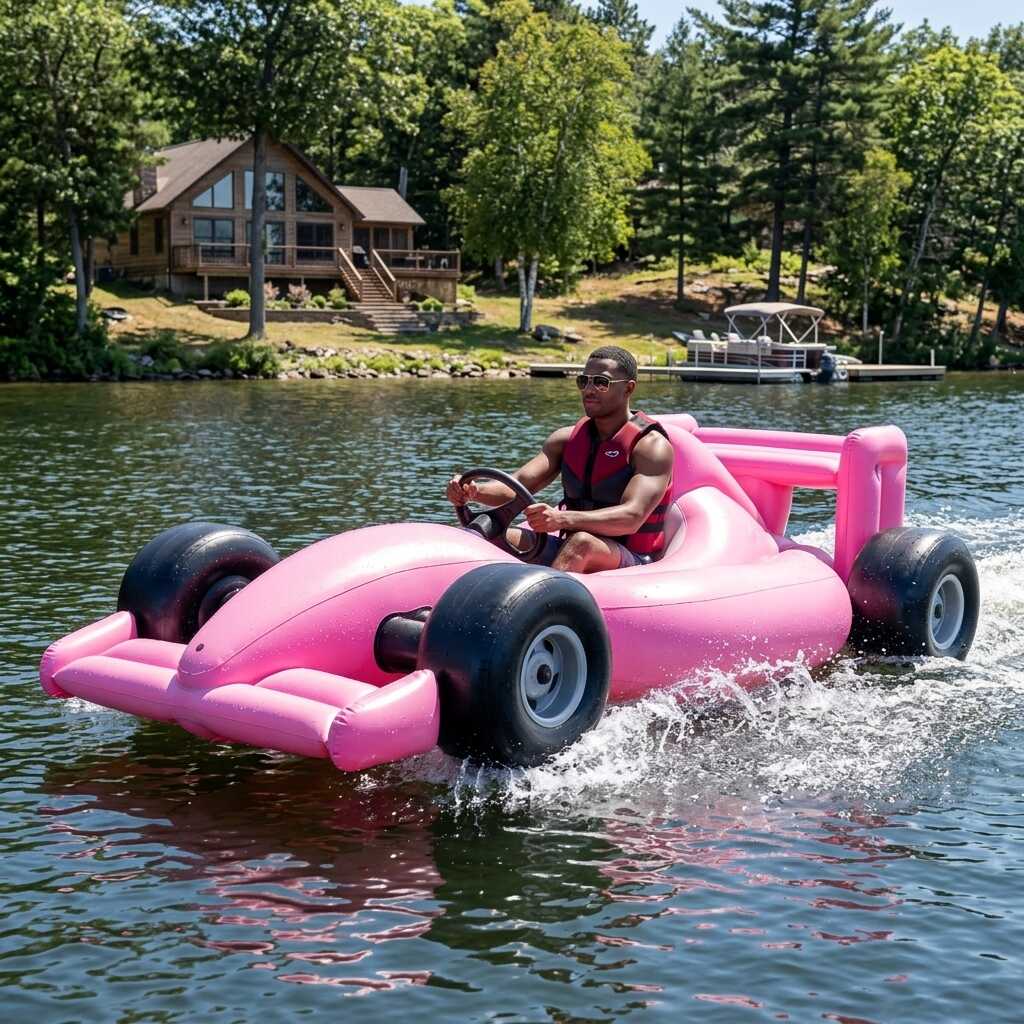
To replicate the clear-coat finish of a luxury vehicle, the outer layers of PVC are treated with specialized UV-resistant, high-gloss glosses. This coating serves a dual purpose: it protects the underlying pigments from sun degradation while providing a highly reflective, slick surface texture that gleams under direct sunlight, mimicking the wet-look paint of a showroom supercar.
360-Degree Silk Screen and Digital Printing
The intricate liveries, sponsor decals, racing numbers, and carbon fiber textures seen on these boats are applied using advanced multi-color silk screening or high-definition digital printing. These techniques ensure that the graphics are perfectly aligned across different inflation chambers. The inks used are deeply embedded into the outer substrate of the PVC, preventing cracking, peeling, or fading when exposed to both chlorinated swimming pools and abrasive saltwater environments.
Color Theory and Livery Variations
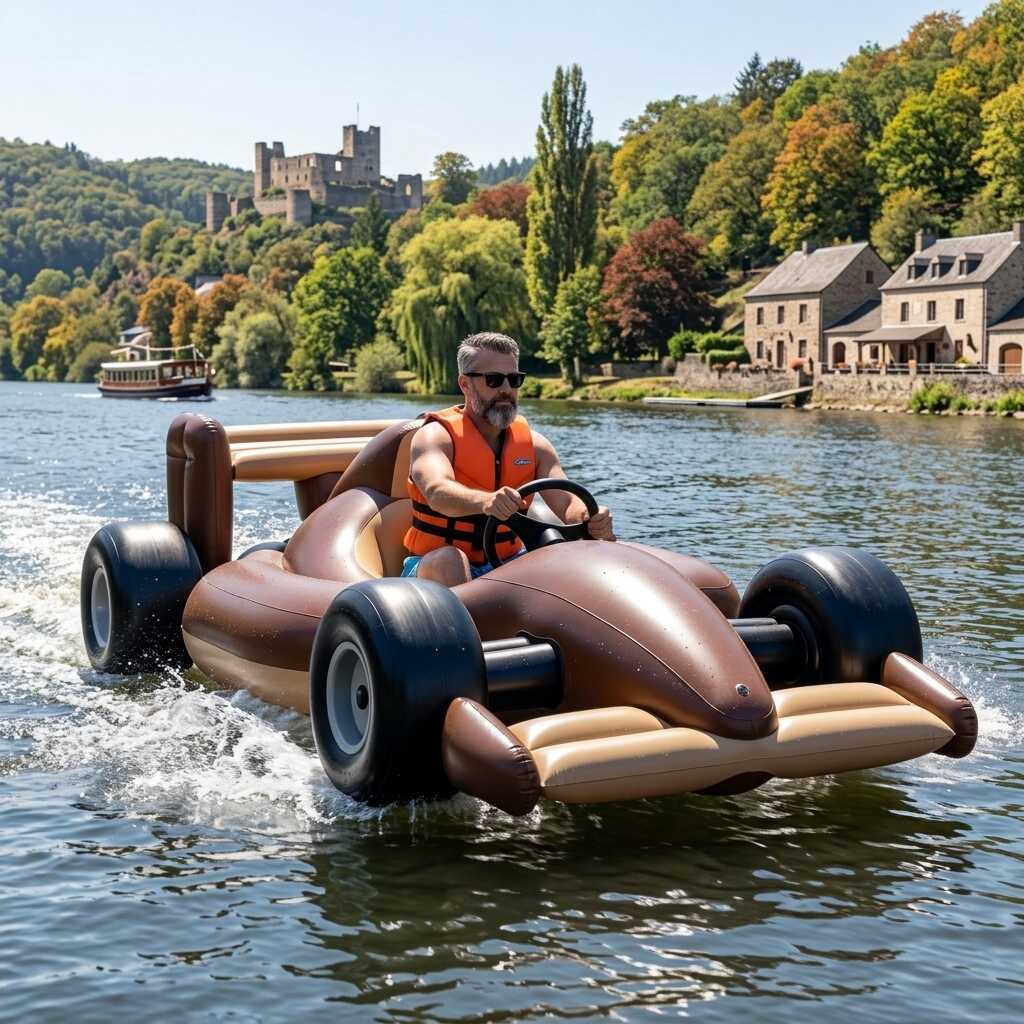
The color palettes utilized in the production of Inflatable Race Car Boats are intentionally selected to evoke historic racing heritages and modern hypercar design movements.
| Livery Style | Primary Colors | Accent Colors | Design Inspiration |
| Circuit Crimson | High-Vis Racing Red | Gloss Black, Crisp White | Italian Formula Racing Scuderia |
| Monaco Stealth | Matte or Gloss Black | Electric Gold, Carbon Gray | Modern Luxury Hypercars & Night Racing |
| Grand Prix Cyan | Riviera Blue, Teal | Electric Yellow, Silver | Vintage Endurance Racers & Coastal Aesthetics |
| Neon Team Spirit | Fluorescent Lime, Orange | Charcoal Gray, Clean White | Futuristic Concept Cars & Track Day Themes |
Monochromatic Elegance vs. High-Contrast Accents
While classic racing red remains a staple, contemporary design trends have leaned heavily toward sophisticated monochromatic bases paired with ultra-bright accents. Deep charcoal, midnight black, and matte navy bases are frequently offset by neon green, electric orange, or vibrant yellow pinstripes. This contrast highlights the geometric body lines of the inflatable, tracing the contours of the faux wheel wells and side skirts, making the physical shape of the boat appear leaner and more aggressive on open water.
Conclusion
The rise of Inflatable Race Car Boats highlights a fascinating convergence where automotive passion meets marine product design. By prioritizing sophisticated structural geometry, utilizing advanced multi-layered PVC composites, and applying high-contrast color palettes inspired by global motorsports, these products have completely transformed the visual expectations of summer inflatables. The dedication to authentic design elements—such as recessed cockpits, rigid front splitters, and structurally sound rear spoilers—ensures that these watercraft capture the pure spirit of speed. As manufacturing technologies continue to refine what is possible with air-filled structures, the artistic boundaries of these aquatic racing concepts will undoubtedly continue to expand.