
In the ever-evolving landscape of interior design, where minimalism once reigned supreme and industrial edges dominated urban lofts, a new aesthetic is emerging—one that prioritizes sensory delight, emotional resonance, and tactile wonder. At the heart of this shift lies a design phenomenon that seems plucked from a daydream: the Jelly Inspired Bed. More than just a place to rest, this bed transcends function to become a sculptural centerpiece, a soft sanctuary, and a visual metaphor for comfort in its purest, most ethereal form.
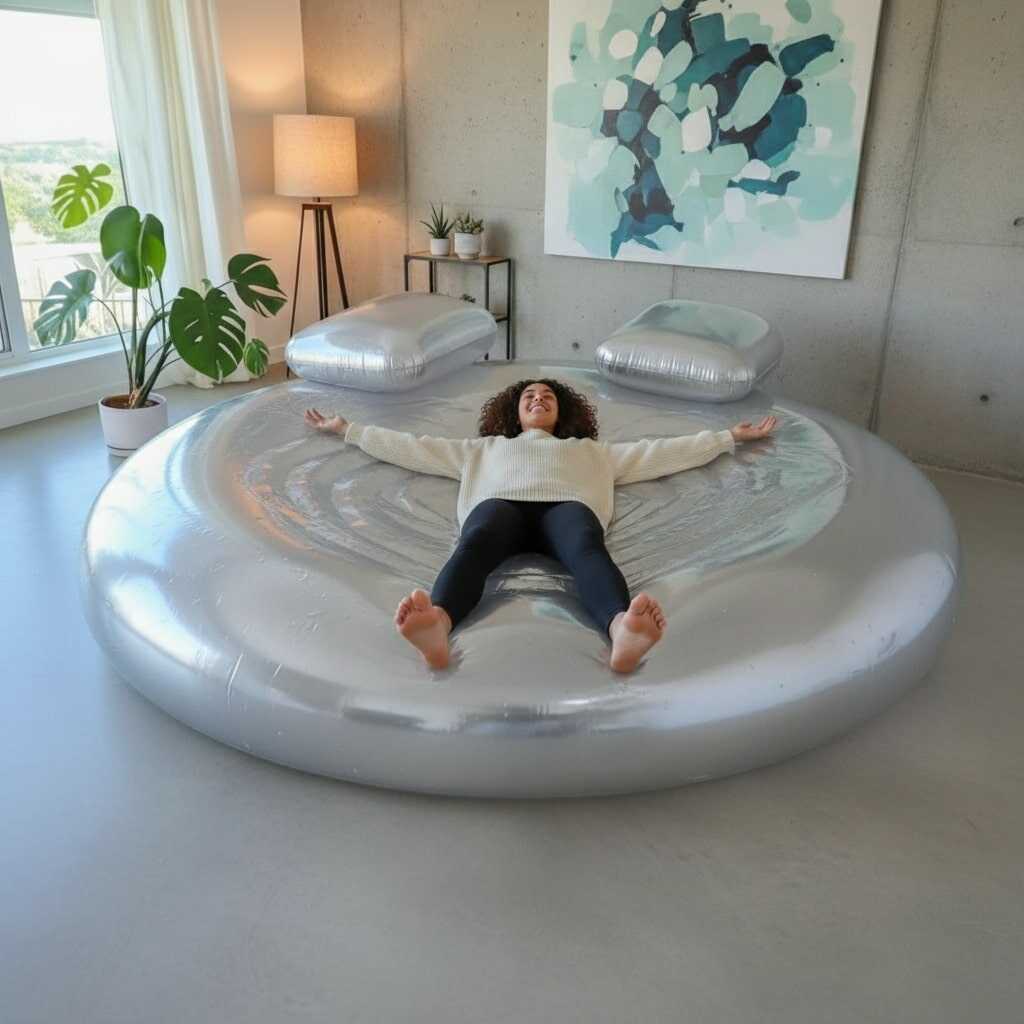
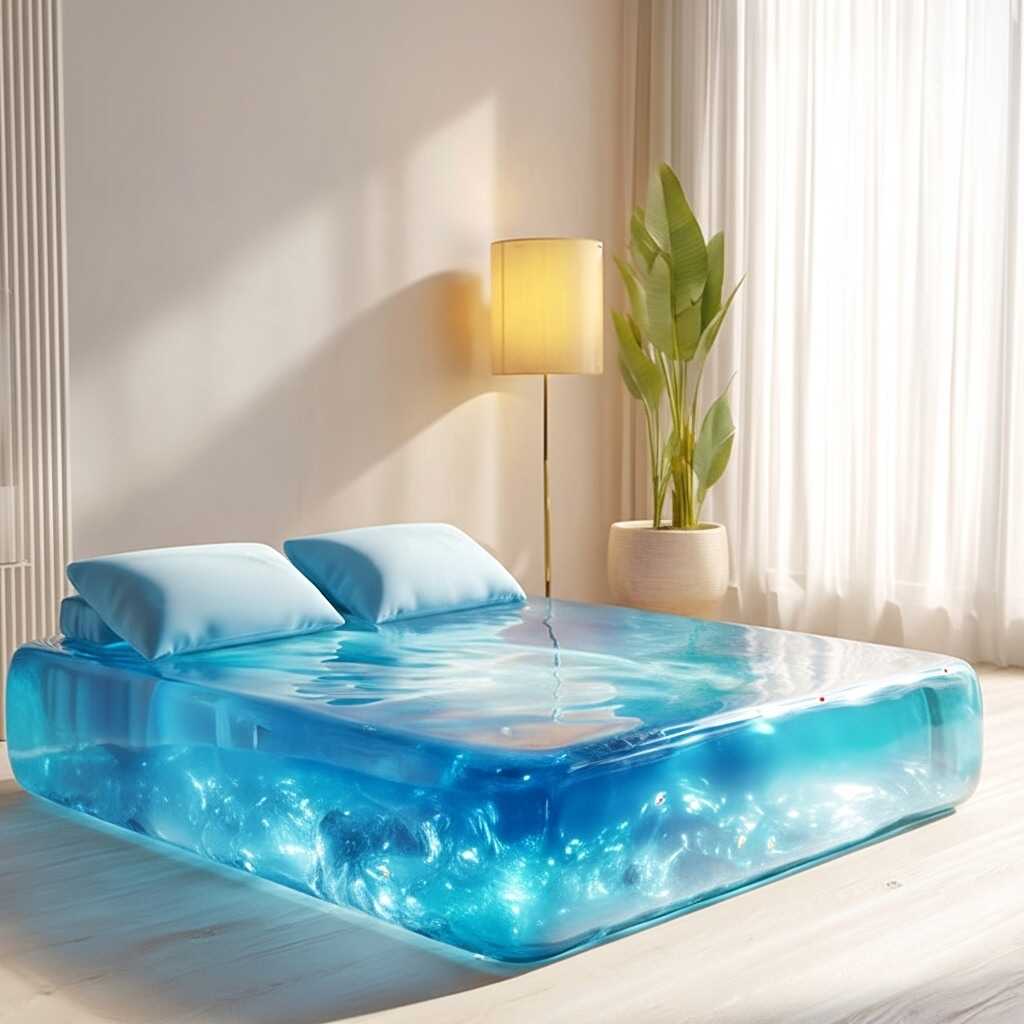
The term “Jelly Inspired Bed” evokes images of translucent curves, buoyant silhouettes, and surfaces that shimmer with a gentle, liquid-like luminescence. It draws its essence not from literal jelly desserts, but from the qualities we associate with gelatinous substances: pliability, translucency, gentle undulation, and an almost weightless presence. This design trend is not about replicating food—it’s about capturing a feeling. It’s about translating the soft, yielding, and soothing nature of jelly into an object that cradles us through the night, offering both physical and psychological reprieve from the rigid structures of daily life.
As contemporary bedrooms evolve from mere sleeping quarters into holistic retreats for restoration and introspection, the Jelly Inspired Bed emerges as a symbol of this transformation. It speaks to a growing desire for interiors that feel alive, responsive, and emotionally nurturing. In a world saturated with sharp angles, hard surfaces, and digital overload, the allure of something soft, fluid, and dreamlike is not just aesthetic—it’s deeply human. This article explores the origins, design philosophy, and cultural resonance of the Jelly Inspired Bed, unpacking why this seemingly whimsical concept has become a defining motif in modern bedroom design.

Part I: The Aesthetic Language of Fluidity and Softness
At its core, the Jelly Inspired Bed is a rebellion against rigidity. Traditional bed frames—whether crafted from solid oak, wrought iron, or sleek metal—embody structure, permanence, and definition. They are architectural. In contrast, the Jelly Inspired Bed embraces ambiguity, softness, and organic form. Its design language borrows from biomorphism, a movement that finds inspiration in natural, irregular shapes—think of ocean waves, drifting clouds, or the gentle swell of a jellyfish’s bell.
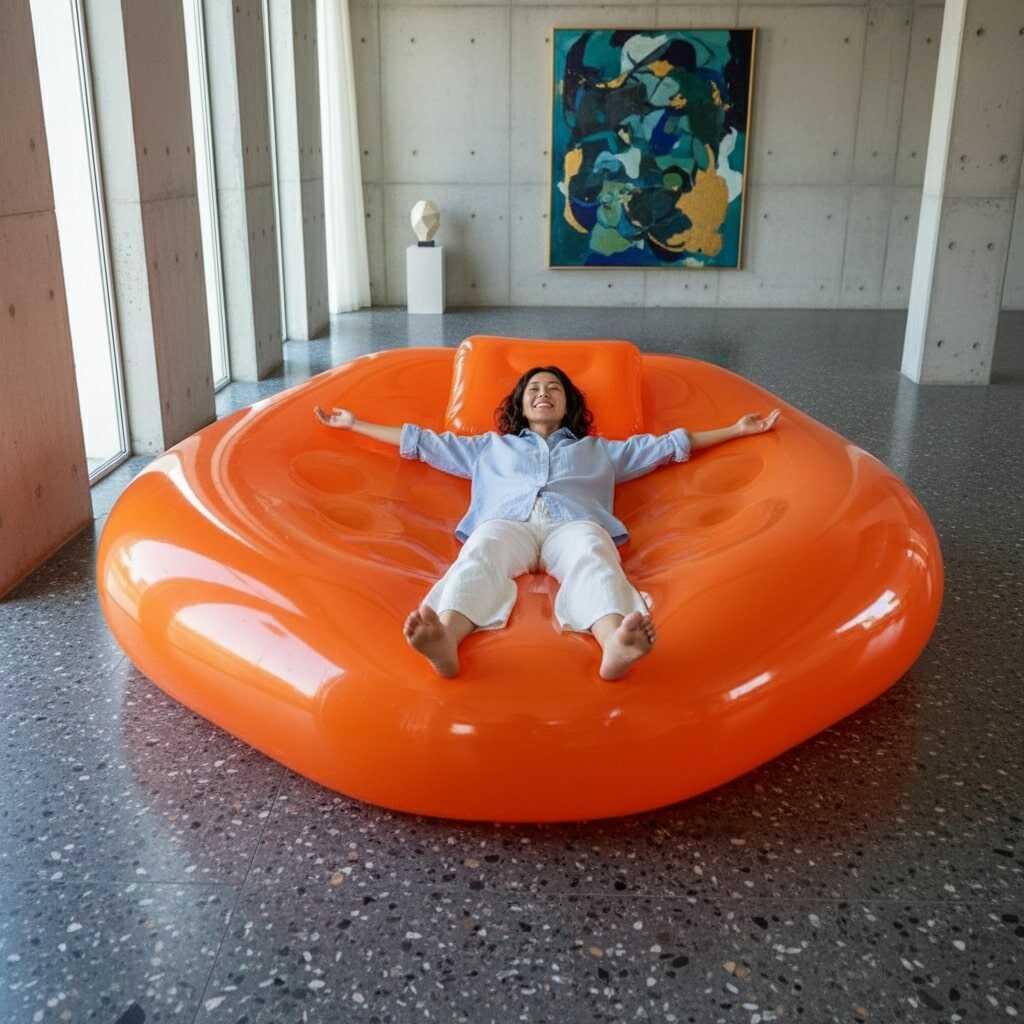
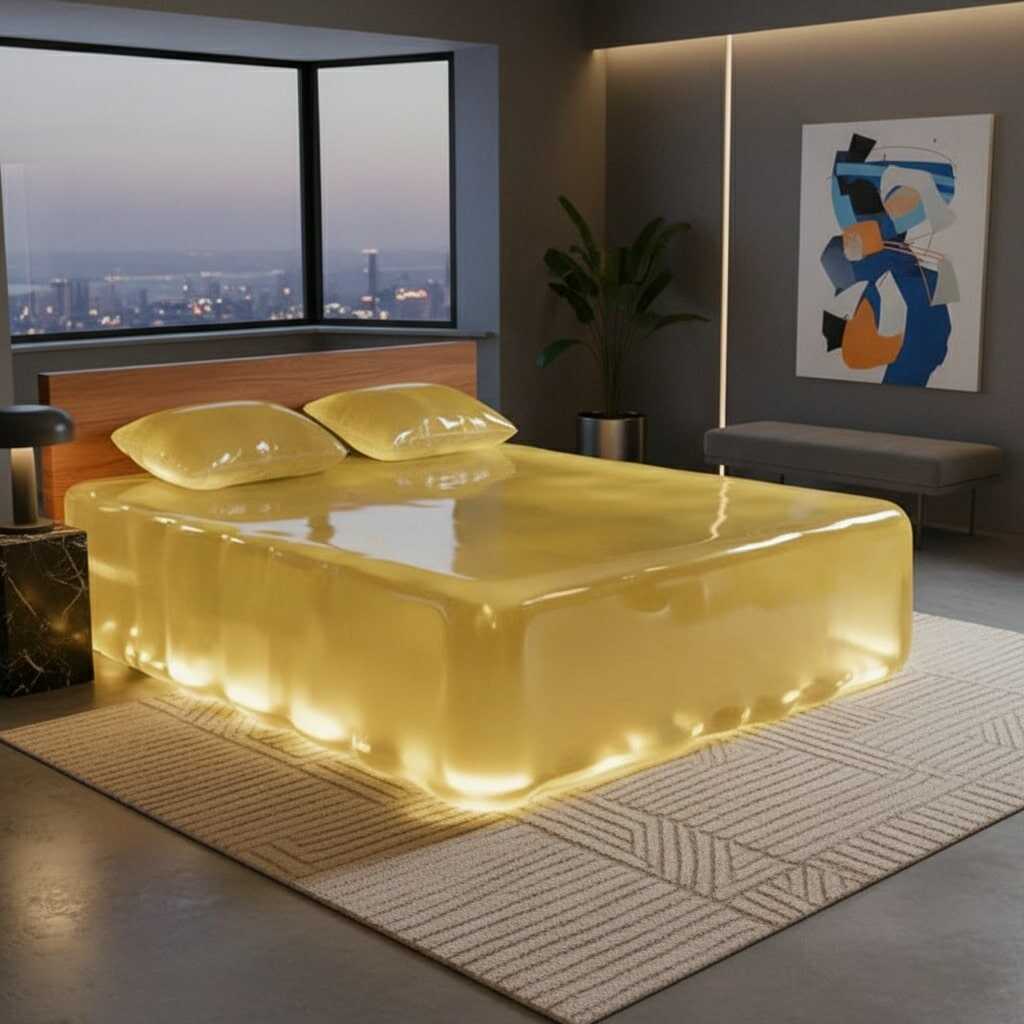
The visual hallmark of this trend is its silhouette. Instead of sharp corners or straight lines, the Jelly Inspired Bed features undulating edges, rounded contours, and seamless transitions between headboard, base, and sometimes even integrated side tables. The headboard often swells outward like a soft cushion suspended in mid-air, or curves inward like a protective embrace. Some designs appear to melt into the floor, blurring the boundary between furniture and environment. This fluidity is not accidental; it’s a deliberate attempt to dissolve the visual weight of furniture, creating a sense of lightness and airiness in the bedroom.
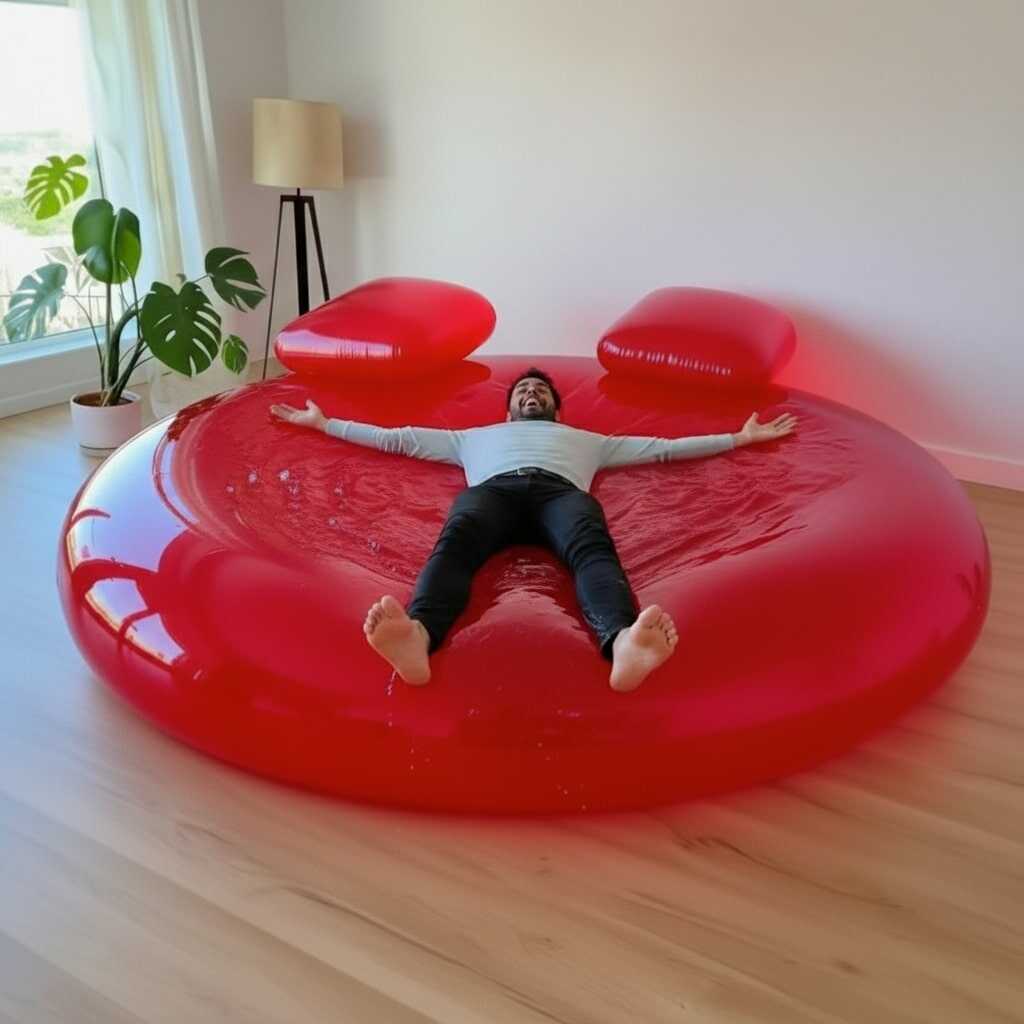
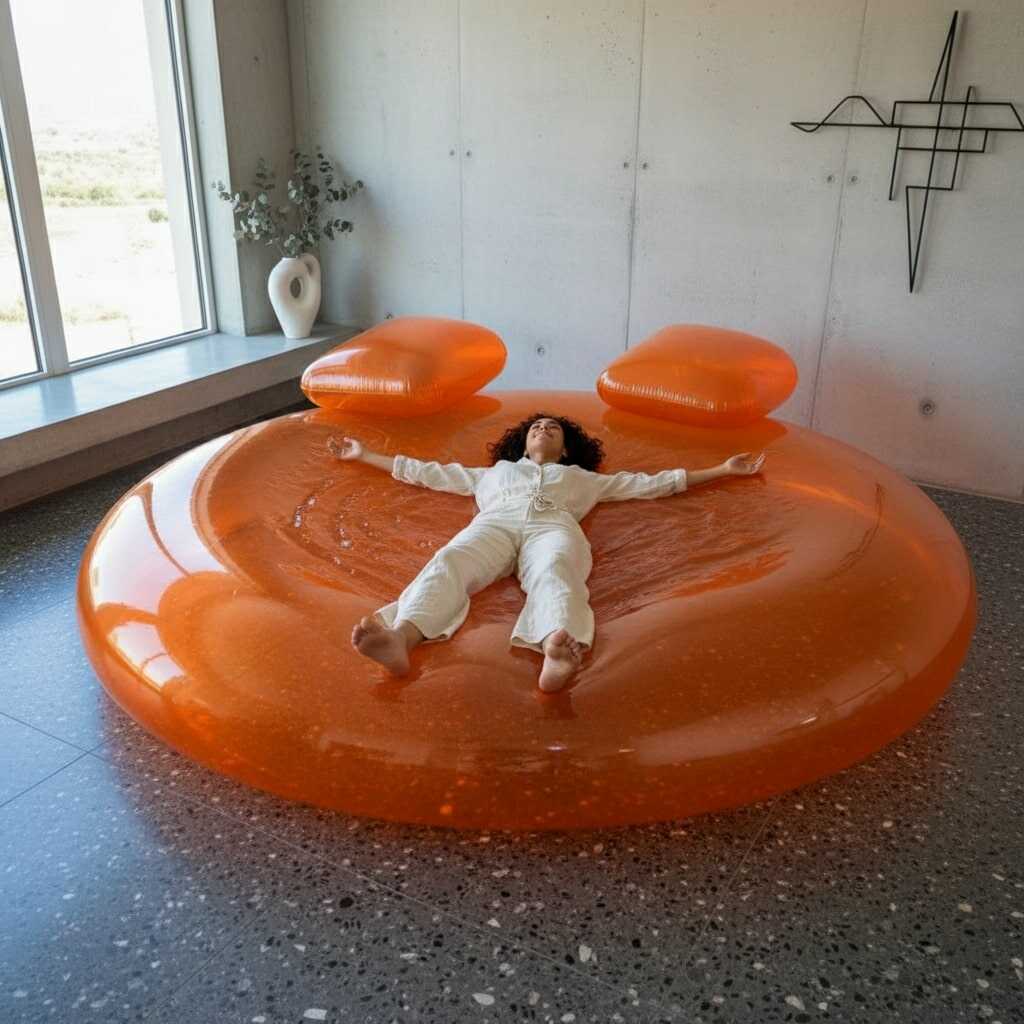
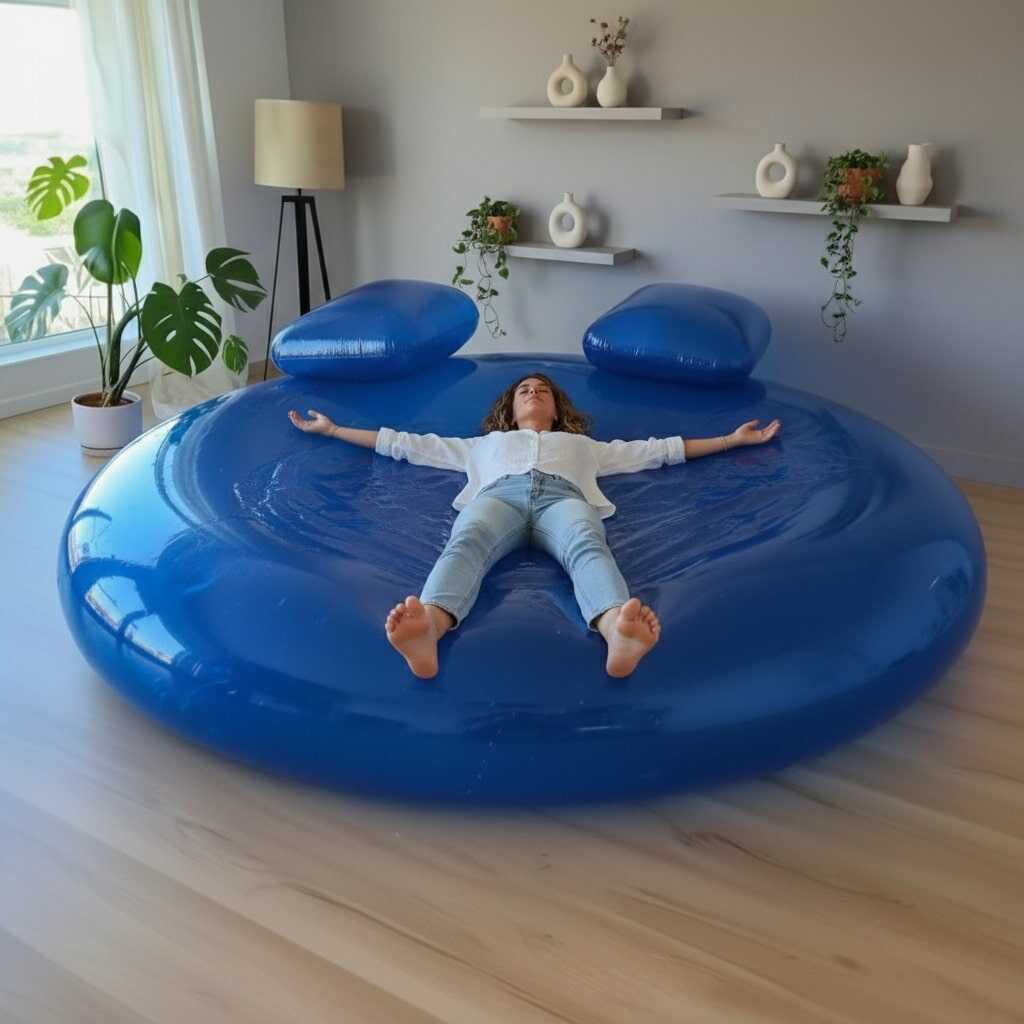
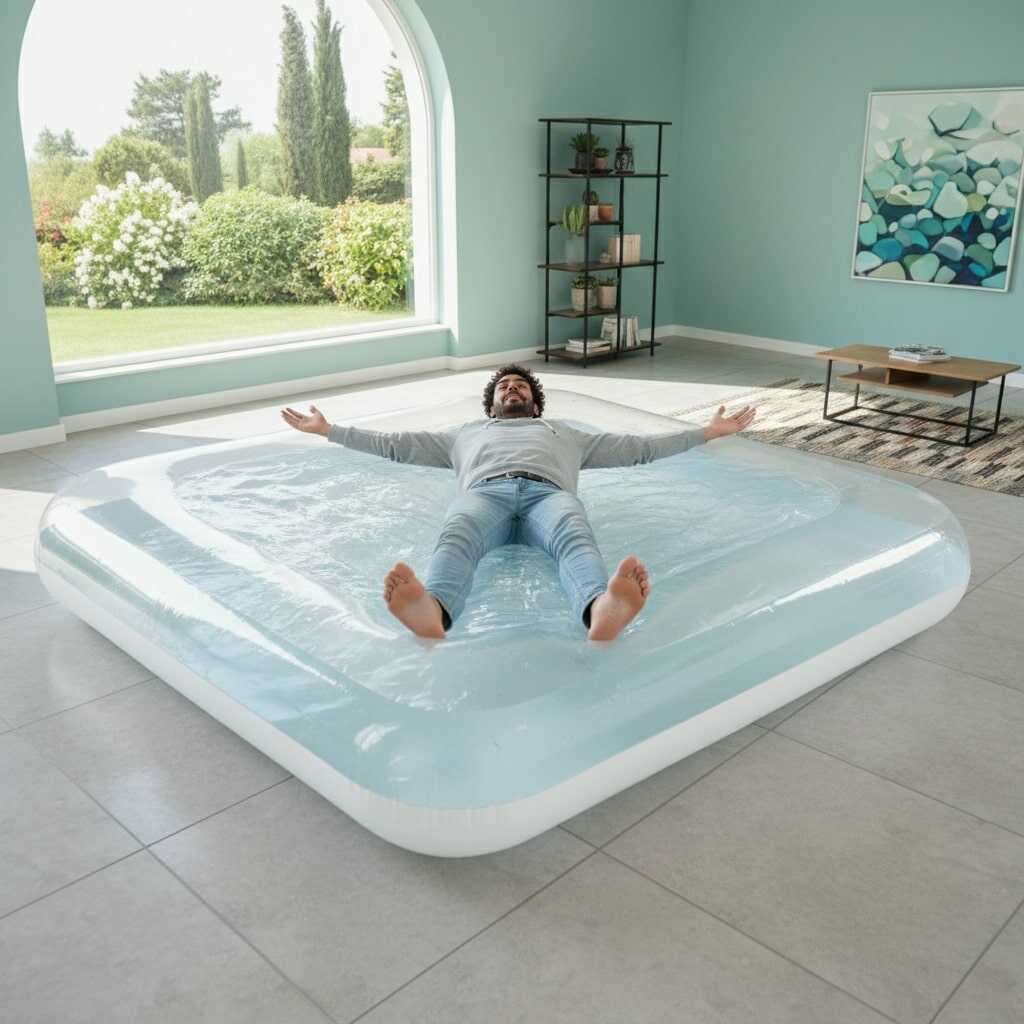
Materiality plays a crucial role in achieving this effect. While actual jelly is, of course, impractical for furniture, designers simulate its qualities through innovative textiles, molded foams, translucent acrylics, and silicone-based finishes. Upholstery fabrics are chosen for their ability to drape and flow—think velvets that catch light like liquid, or technical knits that mimic the subtle elasticity of gel. In more avant-garde interpretations, beds may incorporate semi-transparent shells or resin elements that refract light, casting soft, watery shadows across the room. The result is a piece that doesn’t just occupy space—it interacts with it, changing with the time of day and the angle of light.

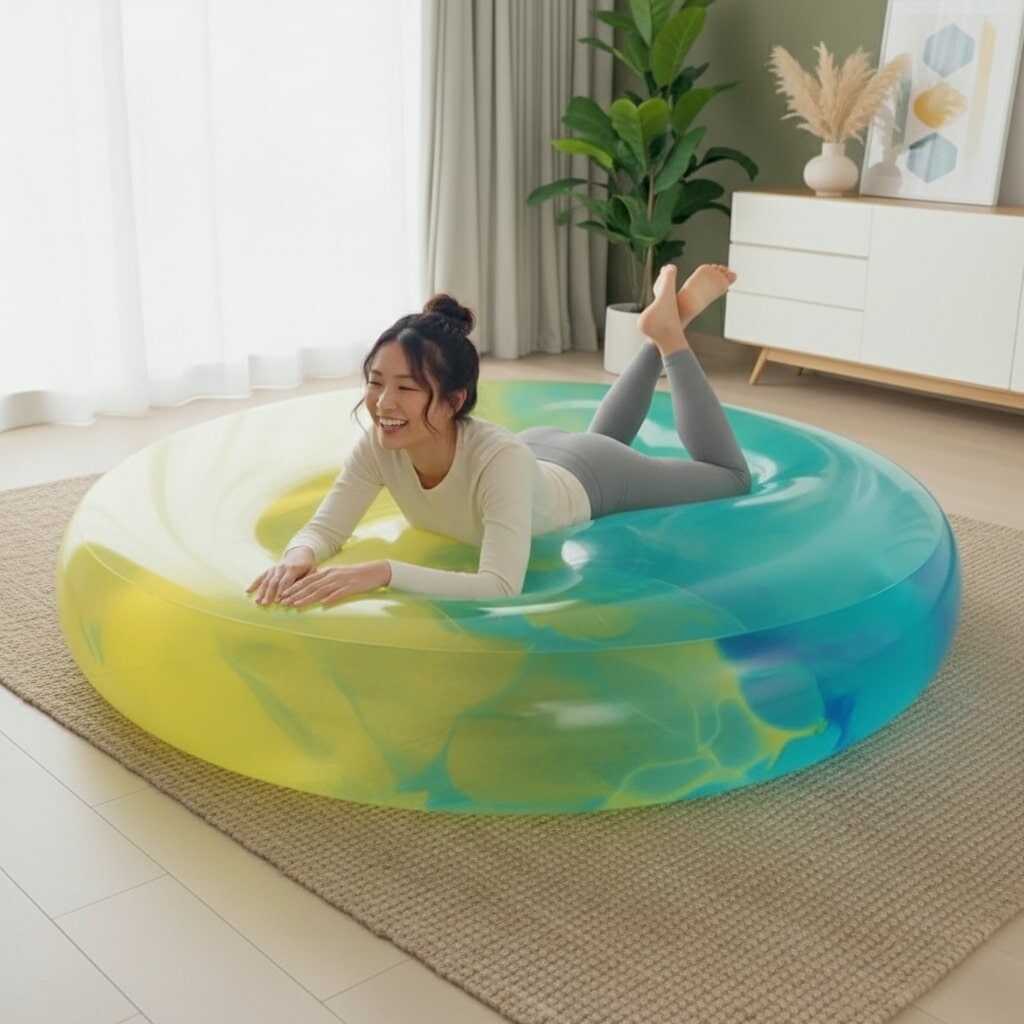
Color further enhances the jelly-like illusion. Palettes lean toward pastels—blush pinks, seafoam greens, sky blues, and milky lavenders—that evoke the delicate hues of artisanal jellies or oceanic creatures. But it’s not limited to sweetness; some designers opt for deeper, more mysterious tones like translucent amber or smoky violet, suggesting preserved botanicals suspended in gel. The key is translucency or a sense of depth, as if the color exists within the material rather than merely on its surface.
This aesthetic is not merely decorative. It carries psychological weight. Soft forms are inherently calming; studies in environmental psychology have long shown that curved lines reduce stress and promote feelings of safety compared to angular ones. In the bedroom—a space meant for vulnerability and rest—the Jelly Inspired Bed becomes a visual lullaby, signaling to the nervous system that it’s safe to unwind. Its dreamlike appearance mirrors the liminal state between wakefulness and sleep, making it not just a place to sleep, but a portal into dreams.

Part II: Cultural Resonance—Why Now?
The rise of the Jelly Inspired Bed cannot be understood in isolation. It is deeply intertwined with broader cultural, technological, and emotional currents of our time. In an era marked by uncertainty, digital saturation, and a collective yearning for authenticity, design is increasingly called upon to provide solace, not just style.
One of the most significant drivers of this trend is the growing emphasis on wellness and mental health. Bedrooms are no longer just functional spaces; they are sanctuaries. The pandemic accelerated this shift, turning homes into multi-functional hubs where boundaries between work, rest, and play blurred. As a result, people began reimagining their personal spaces as havens of calm. The Jelly Inspired Bed, with its emphasis on softness and sensory comfort, responds directly to this need. It is furniture as therapy—designed not to impress, but to soothe.
Moreover, the trend reflects a larger movement in design toward “emotional functionality.” Contemporary consumers are less interested in objects that merely perform a task and more drawn to those that evoke a feeling or tell a story. The Jelly Inspired Bed does both. It invites touch, encourages slow movement, and fosters a sense of intimacy with one’s environment. In a world where so much interaction is mediated through screens, this tactile, embodied experience is profoundly grounding.

The aesthetic also resonates with the resurgence of Y2K nostalgia and futuristic retro-futurism. The early 2000s saw a fascination with translucent plastics, iridescent finishes, and blobitecture—the architectural style defined by amoebic, organic forms. Today’s Jelly Inspired Bed echoes that era’s playful experimentation but refines it with contemporary sensibilities. It’s nostalgic yet forward-looking, whimsical yet sophisticated. This duality appeals to a generation that values both comfort and individuality.
Additionally, the trend aligns with advancements in material science and sustainable design. Innovations in biodegradable silicones, plant-based foams, and recycled translucent polymers have made it possible to create furniture that is not only visually jelly-like but also environmentally conscious. Designers are increasingly exploring how soft, fluid forms can be achieved without compromising on ethics or durability. The Jelly Inspired Bed, in this light, becomes a symbol of a more thoughtful, responsive approach to living—one that prioritizes harmony between human needs and planetary health.
Social media has also played a pivotal role in amplifying this trend. Platforms like Instagram and Pinterest thrive on visually distinctive content, and the Jelly Inspired Bed is inherently photogenic. Its luminous surfaces, dreamy colors, and unusual shapes create striking imagery that stands out in a sea of beige minimalism. But beyond virality, these platforms have fostered communities centered around “soft life” aesthetics—a philosophy that champions gentleness, slowness, and self-care. The Jelly Inspired Bed has become an icon of this movement, representing a lifestyle choice as much as a design preference.
Part III: Beyond the Bedroom—A Philosophy of Living
To view the Jelly Inspired Bed as merely a furniture trend is to miss its deeper significance. It is, in many ways, a physical manifestation of a broader cultural shift toward softness as a form of resistance. In a society that often equates strength with hardness—rigid schedules, unyielding productivity metrics, impenetrable emotional armor—the embrace of softness becomes a radical act. The Jelly Inspired Bed challenges the notion that comfort is indulgent or that beauty must be austere. Instead, it asserts that tenderness has its own power.
This philosophy extends beyond the bedroom. The principles embodied by the Jelly Inspired Bed—fluidity, adaptability, sensory richness—are influencing other areas of design and life. We see echoes in fashion, where designers favor draped silhouettes and liquid fabrics; in architecture, where curved walls and organic layouts replace boxy rooms; and even in digital interfaces, which are adopting softer animations and rounded icons to create more humane user experiences.
The bed also redefines our relationship with objects. Rather than treating furniture as static and utilitarian, the Jelly Inspired Bed invites interaction. Its form encourages lounging, lingering, and slow mornings. It blurs the line between object and environment, suggesting that our surroundings should not just accommodate us but respond to us. This relational approach to design reflects a more holistic understanding of well-being—one that recognizes the profound impact of our physical spaces on our inner lives.
Furthermore, the Jelly Inspired Bed embodies a kind of optimistic futurism. In contrast to dystopian visions of cold, metallic futures, this trend imagines a tomorrow that is warm, adaptable, and kind. It suggests that technology and nature can coexist in harmony, that innovation can be gentle, and that progress doesn’t have to be hard-edged. In this sense, the bed is not just a place to sleep—it’s a statement about the kind of world we wish to inhabit.
Conclusion: Sleeping in a Dream, Waking to Possibility
The Jelly Inspired Bed is more than a passing fad or a quirky design experiment. It is a poetic response to the complexities of modern life—a visual and tactile invitation to soften, to yield, to dream. By drawing inspiration from the ephemeral qualities of jelly—its translucency, its bounce, its quiet elegance—it transforms the bedroom into a realm of sensory poetry. This bed does not demand attention through grandeur or opulence; instead, it whispers comfort through its curves and glows with a gentle, internal light.
As we continue to navigate a world that often feels fragmented and fast-paced, the appeal of such dreamy, fluid design will likely only grow. The Jelly Inspired Bed reminds us that rest is not passive—it is an active choice to prioritize peace, to honor our need for tenderness, and to create spaces that reflect our deepest desires for connection and calm. It is not just where we sleep; it is where we return to ourselves.
In embracing the Jelly Inspired Bed, we are not merely adopting a new style. We are participating in a quiet revolution—one that values softness over sharpness, fluidity over fixity, and dreams over dogma. And perhaps, in that softness, we find not weakness, but resilience; not escapism, but renewal. After all, every great awakening begins with a good night’s sleep—and now, that sleep can happen in a bed that feels like a dream made real.