
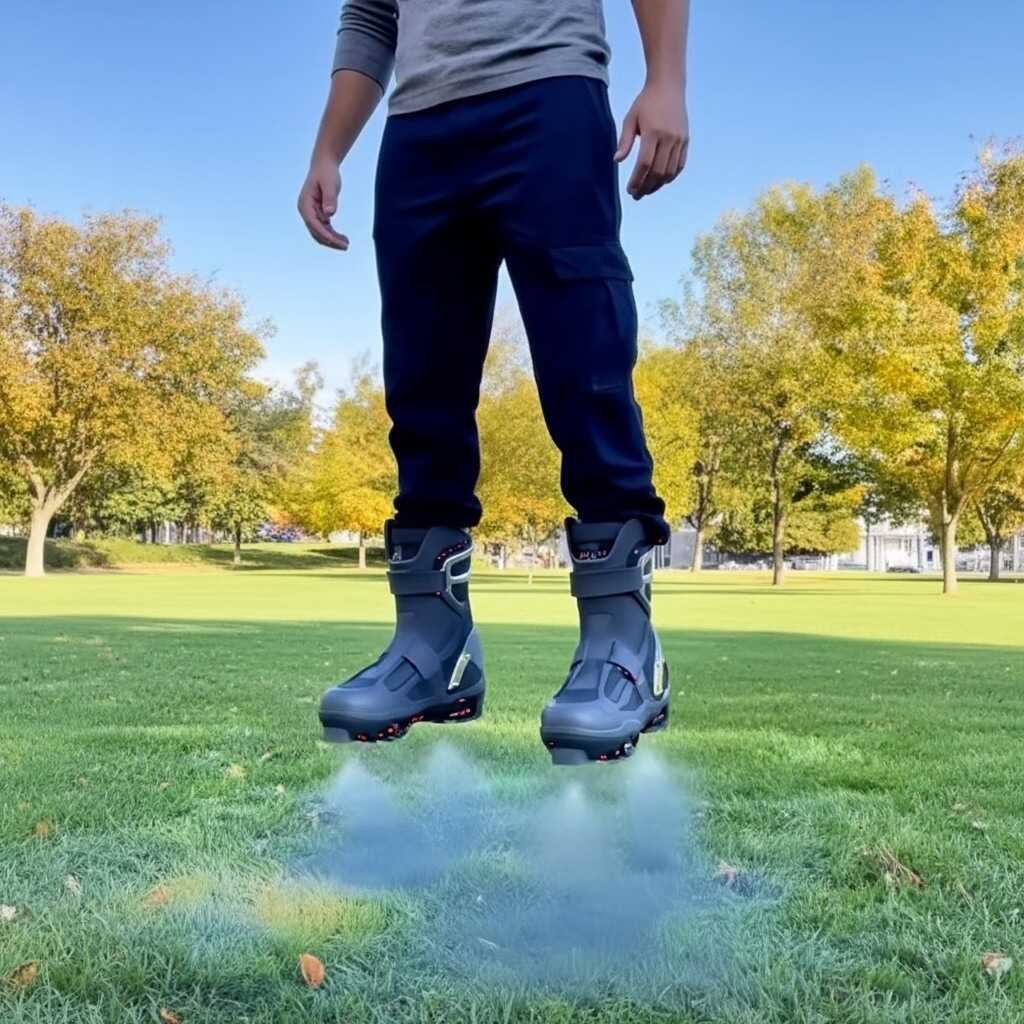
From the earliest dreams of Icarus to the supersonic feats of modern aerospace engineers, humanity has long harbored a fascination with flight. This yearning to defy gravity, to navigate the skies with grace and speed, has permeated not just engineering and science, but also art, fashion, and storytelling. Among the most evocative symbols of this airborne ambition are Jet Boots—footwear imagined not merely for walking the earth, but for launching its wearer into the stratosphere. Though functional jet-powered boots remain largely in the realm of experimental prototypes and military research, the idea of Jet Boots has surged through popular culture with remarkable persistence and evolving significance.
This article explores the ascent of Jet Boots as a cultural motif—how this fusion of aviation technology and fashion has transcended its mechanical origins to become a powerful symbol of freedom, futurism, rebellion, and human aspiration. We’ll trace its lineage from pulp sci-fi illustrations to blockbuster films, video games, and avant-garde runway shows, examining how Jet Boots have come to represent more than just a mode of transport—they embody a mindset, a vision of what humanity could become if unshackled from terrestrial limitations. By unpacking their appearances and transformations across decades of media, we reveal how Jet Boots have become a canvas upon which society projects its collective dreams of transcendence.
Part I: From Page to Screen—The Early Mythos of Jet Boots
The conceptual genesis of Jet Boots can be traced to the golden age of science fiction, particularly the mid-20th century—a period marked by rapid technological advancement and an intoxicating optimism about the future. In the wake of World War II and during the dawn of the Space Race, speculative fiction writers and illustrators imagined a world where personal flight was not only possible but stylish. Jet Boots emerged in this context as a natural extension of jetpack technology, miniaturized and integrated into footwear for agility and aesthetic flair.
One of the earliest and most influential appearances came in the 1960s with the Japanese anime and manga series Tetsujin 28-go (known in the West as Gigantor), where young protagonist Shotaro Kaneda controlled a giant robot—but more relevantly, supporting characters and later iterations featured propulsion-equipped footwear. However, it was in Western comics that Jet Boots began to solidify as a visual shorthand for superheroic or extraterrestrial capability. Characters like Rocket Red of DC Comics and various Iron Man antagonists sported boot-mounted thrusters, signaling their allegiance to advanced technology or otherworldly origins.
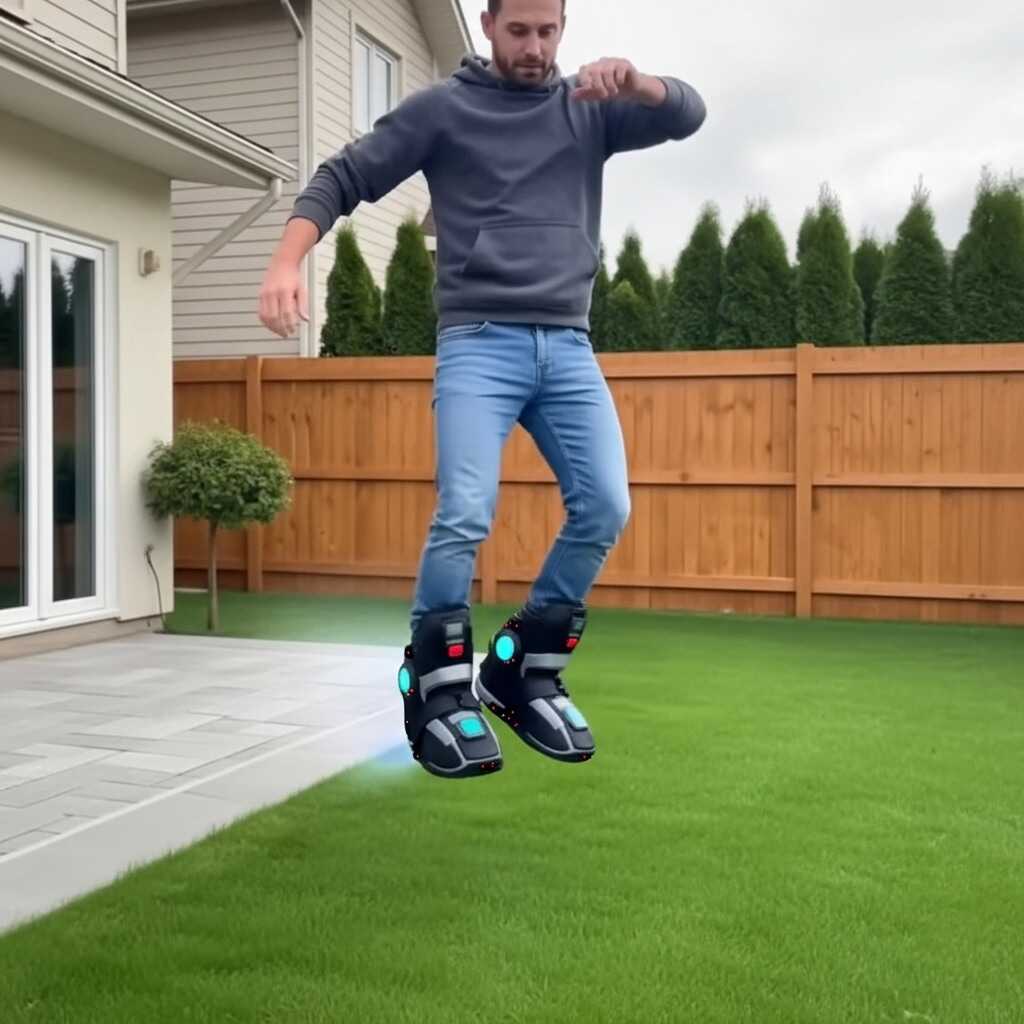
But it was cinema that catapulted Jet Boots into the mainstream visual lexicon. The 1965 James Bond film Thunderball featured a brief but unforgettable sequence: secret agent 007, pursued by enemies, dons a compact jetpack and escapes over the ocean—a scene that, while technically a jetpack, planted the seed for personal aerial mobility in the public imagination. Soon after, the 1968 film Barbarella, based on the French comic, featured Jane Fonda as the intergalactic heroine gliding through space in sleek, minimalist boots that seemed to defy physics. Though not explicitly called “Jet Boots,” their design language—sleek, metallic, and gravity-defying—became synonymous with futuristic travel.
Perhaps the most iconic early example is the character Rocketeer, created by Dave Stevens in 1982. With his leather aviator jacket and helmet, the Rocketeer embodied the retro-futurism of the 1930s, but his mode of flight was distinctly modern: a compact jetpack. Yet in countless adaptations and merchandise, the visual emphasis often shifted downward—to his boots, which were frequently illustrated with glowing nozzles or exhaust vents. This subtle transference from back-mounted propulsion to foot-based thrust helped normalize the idea of Jet Boots as a viable and visually compelling alternative.
These early representations established core thematic associations: Jet Boots represented autonomy, speed, and a break from conventional limitations. They were worn by explorers, heroes, and rebels—those who refused to be confined by the ground. Importantly, their design merged function with form; they weren’t clunky machinery but elegant extensions of the human body. This duality—mechanical yet graceful—would become central to their enduring appeal.
Part II: Jet Boots in the Digital Age—Symbolism in Games, Anime, and Fashion
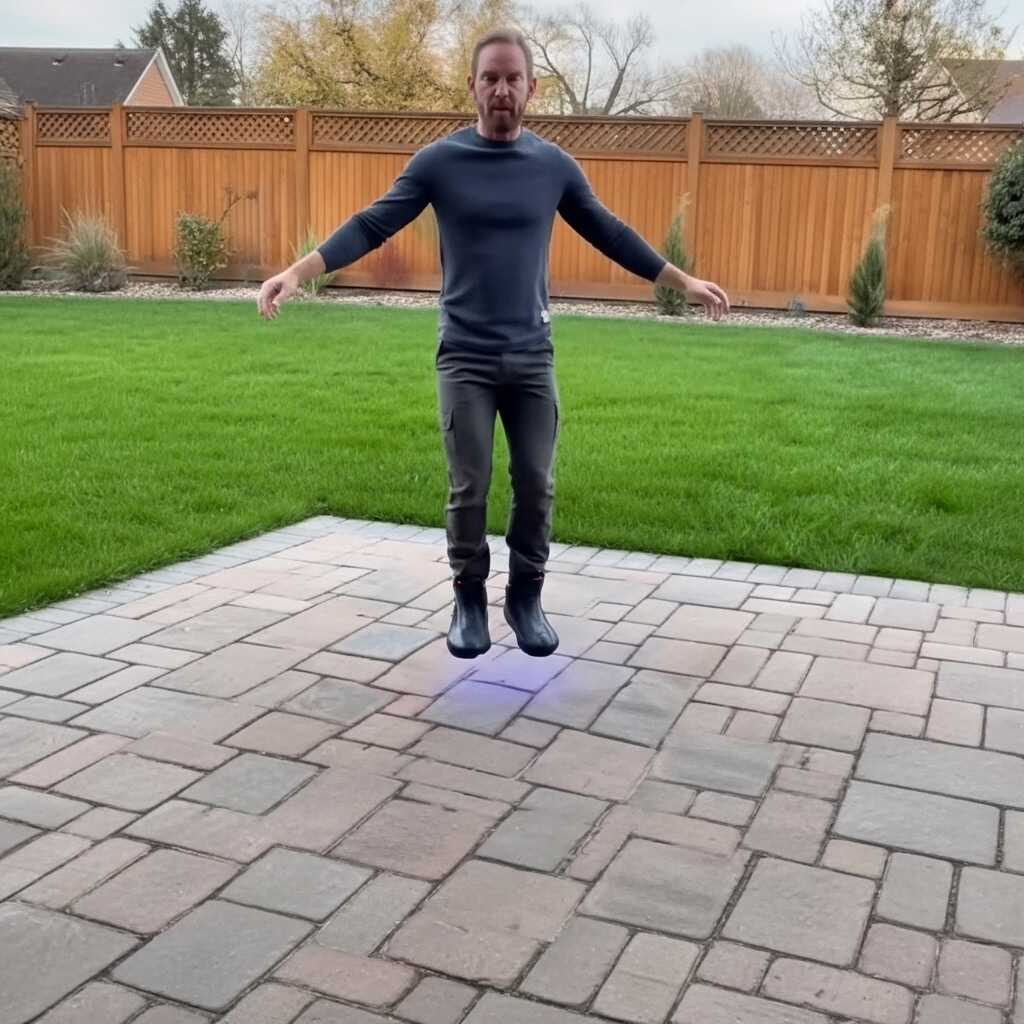
With the rise of digital media in the late 20th and early 21st centuries, Jet Boots found fertile new ground in video games and anime, where their visual and narrative potential could be fully realized. In these interactive and animated spaces, Jet Boots ceased to be mere accessories and evolved into dynamic gameplay mechanics and profound narrative symbols.
In video games, Jet Boots often serve as both a power-up and a metaphor for progression. Titles like Mega Man X (1993) introduced the “Jet Foot” upgrade, allowing the protagonist to dash across gaps and scale vertical surfaces—a literal elevation in capability that mirrored the player’s increasing mastery of the game. Similarly, in Sunset Overdrive (2014), players use “grind rails” and wall-running enhanced by implied propulsion systems integrated into their footwear, creating a fluid, acrobatic traversal system that feels like controlled flight. The Jet Boots here aren’t just tools; they’re expressions of kinetic freedom in a world designed to be explored vertically as much as horizontally.
Perhaps the most nuanced exploration comes from the Armored Core series, a mecha combat franchise where players customize their robotic suits down to individual components—including leg units with thrusters. While not strictly “boots,” the visual and functional role is identical: directional boosters mounted on the feet allow for strafing, hovering, and evasive maneuvers. In this context, Jet Boots become extensions of the pilot’s reflexes—a fusion of human intent and machine response. The customization aspect reinforces the idea that personal flight is not just about ability, but identity.
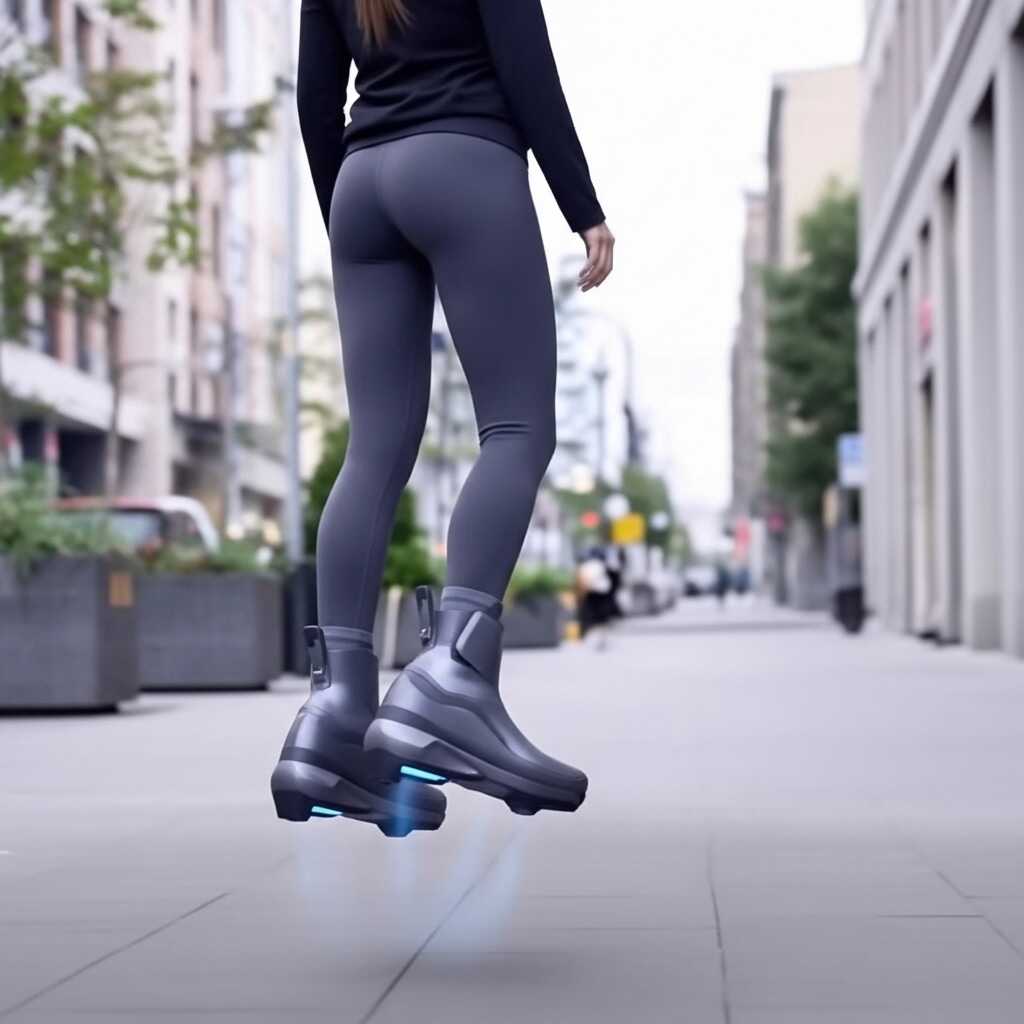
Anime and manga have taken this symbolism even further. In Cyberpunk: Edgerunners (2022), the protagonist David Martinez eventually equips cybernetic enhancements that include high-mobility leg units, enabling him to leap between skyscrapers in Night City. These aren’t labeled “Jet Boots,” but their function and aesthetic—glowing thrusters, rapid deployment, and integration with a cybernetic nervous system—place them firmly in that lineage. Here, Jet Boots represent more than escape; they symbolize the cost of ambition in a dystopian world. Each launch skyward is both a triumph and a step closer to self-destruction.
In stark contrast, Studio Ghibli’s Castle in the Sky (1986) presents Jet Boots as instruments of wonder and innocence. The young hero Pazu uses a makeshift flying device powered by a propeller, but in fan art, merchandise, and cultural memory, his footwear is often reimagined with subtle thrusters—emphasizing the film’s themes of childhood imagination and the pure joy of flight unburdened by militarism or profit.
This duality—Jet Boots as both liberating and perilous—mirrors broader cultural anxieties about technology. They can be utopian (enabling exploration and connection) or dystopian (tools of surveillance or warfare), depending on the narrative context. Yet in all cases, they retain an aura of the extraordinary.
Beyond screen media, Jet Boots have also infiltrated high fashion and streetwear as conceptual pieces. Designers like Pierre Cardin in the 1960s and more recently, Iris van Herpen and Balenciaga, have created footwear that mimics aerospace aesthetics—sleek contours, metallic finishes, and structural elements that suggest propulsion without function. These are not meant to fly but to evoke the feeling of flight. They transform the wearer into a walking symbol of futurism, blurring the line between costume and couture. In music videos and performances—think Daft Punk’s robotic personas or Janelle Monáe’s Metropolis-inspired aesthetic—Jet Boots signal alignment with a sci-fi identity, a rejection of the mundane in favor of the speculative.
Part III: Cultural Resonance—What Jet Boots Really Represent
To understand why Jet Boots endure as a motif, we must look beyond their mechanical plausibility and examine what they symbolize in the collective psyche. At their core, Jet Boots are about transcendence. They represent the human desire not just to move faster or higher, but to rise above constraints—physical, social, or existential. In an increasingly grounded, digitized, and often oppressive world, the fantasy of personal flight offers psychological liberation.
Jet Boots also embody the tension between individuality and technology. Unlike aircraft or spacecraft—massive, institutional machines—Jet Boots are personal, intimate, and body-integrated. They suggest a future where advanced technology doesn’t alienate us but enhances our human form. This resonates deeply in an age of wearable tech, augmented reality, and transhumanist discourse. The Jet Boot is a romanticized version of the exoskeleton or bionic limb: not a replacement for humanity, but an amplification of it.
Furthermore, Jet Boots often appear in stories about outsiders or underdogs—heroes who lack institutional power but gain agency through ingenuity. Iron Man’s arc reactor and suit are corporate and militarized, but a lone inventor crafting Jet Boots in a garage (a trope seen in indie sci-fi shorts and webcomics) represents grassroots innovation. This DIY ethos aligns with hacker culture, maker movements, and even environmental visions of decentralized, clean-energy personal transport.
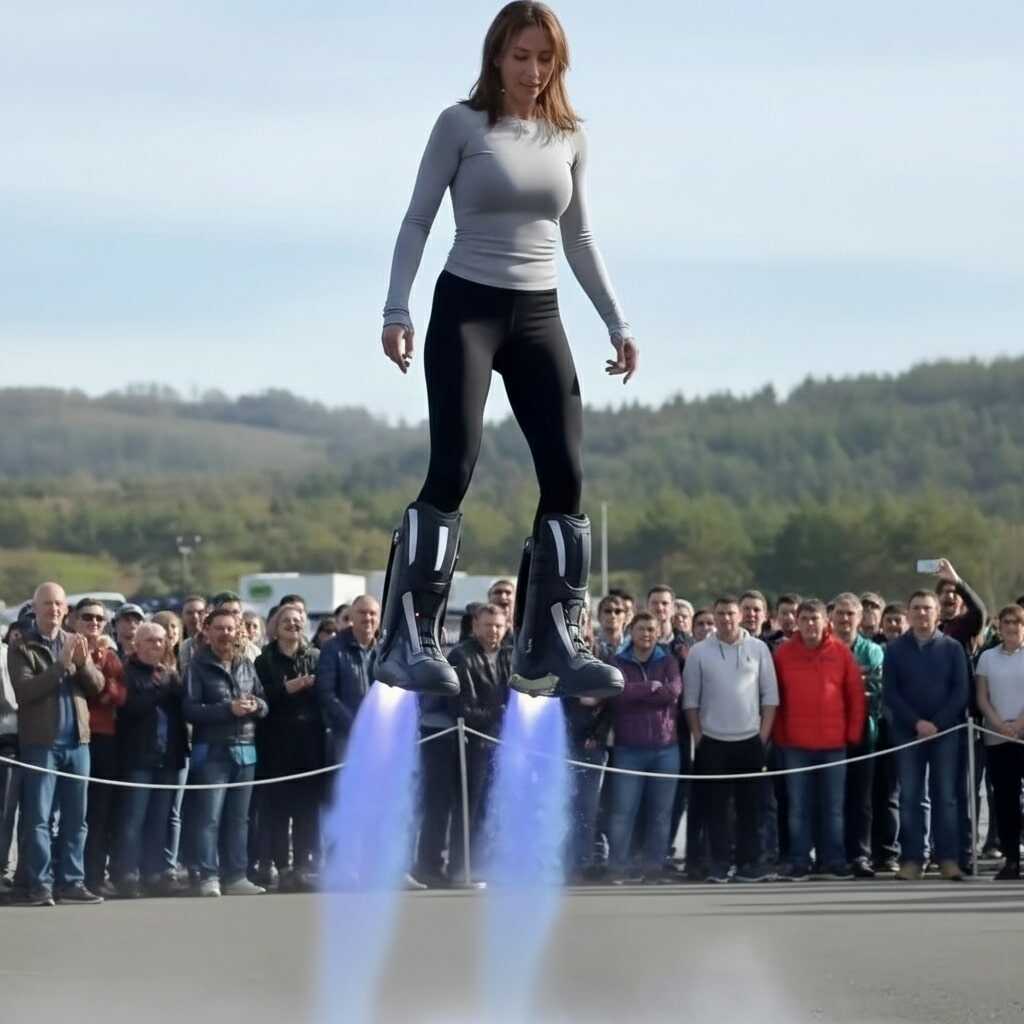
There’s also a gendered dimension worth noting. Historically, flight technology in pop culture has been coded male—test pilots, astronauts, action heroes. But Jet Boots, with their integration into fashion and their frequent use by female characters in anime and games (e.g., Tracer in Overwatch, though she uses chronal accelerators, her aesthetic borrows from Jet Boot iconography), offer a reclamation of aerial agency. Women in Jet Boots are not passengers or sidekicks; they are pilots of their own destiny, defying gravity on their own terms.
Moreover, Jet Boots serve as a bridge between past and future. Their retro designs—polished chrome, riveted leather, analog dials—nod to the golden age of aviation, while their implied capabilities speak to nanotechnology and quantum propulsion. This temporal fusion makes them timeless. They are not tied to one era’s vision of the future but adapt to each generation’s hopes and fears.
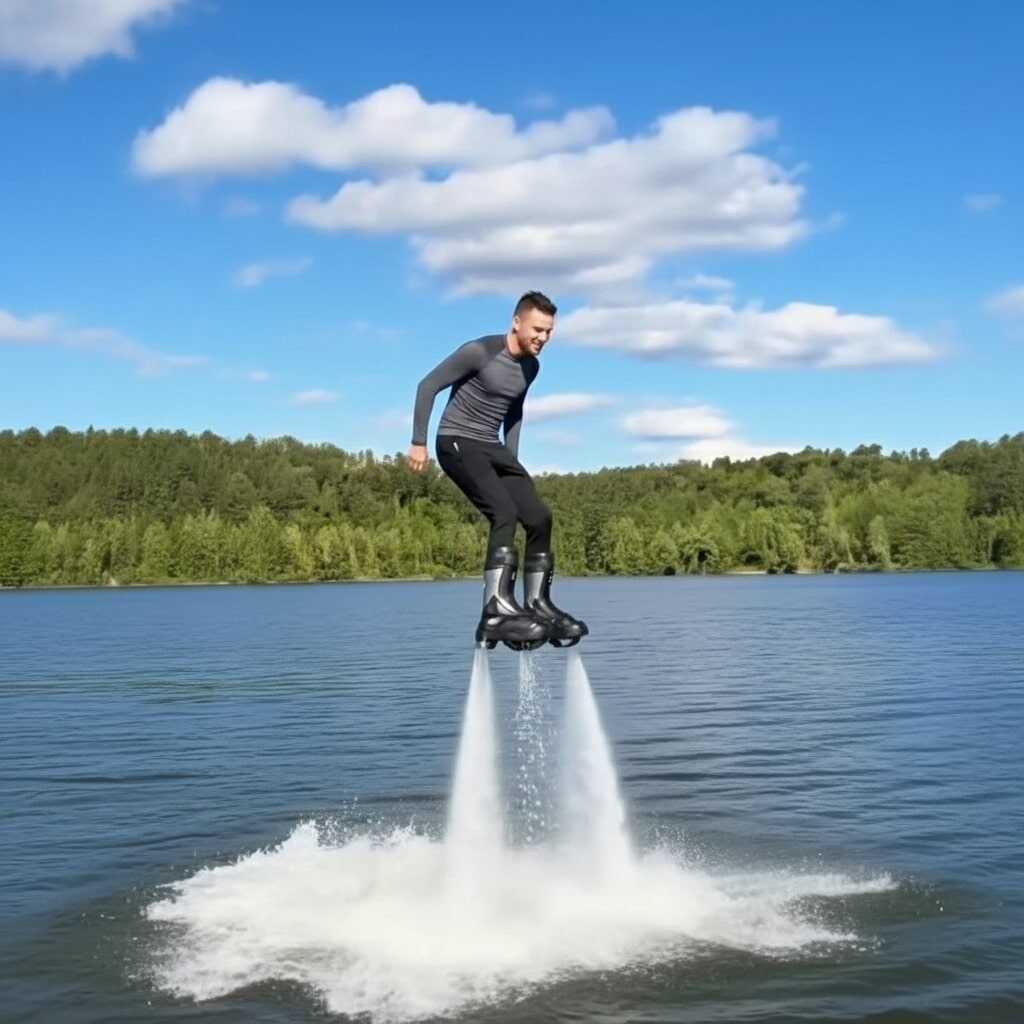
Consider the real-world attempts to create functional Jet Boots. Inventors like Yves Rossy (“Jetman”) and companies like Gravity Industries have developed wearable jet propulsion systems that allow for limited, controlled flight. While these are far from the silent, effortless boots of fiction, their very existence validates the cultural obsession. Each YouTube clip of a human soaring over the English Channel in jet-powered wingsuit-like gear reignites public fascination—not because it’s practical, but because it looks like the fantasy we’ve seen in movies and games. Reality imitates art, and art, in turn, reinterprets reality.
Conclusion: The Eternal Ascent
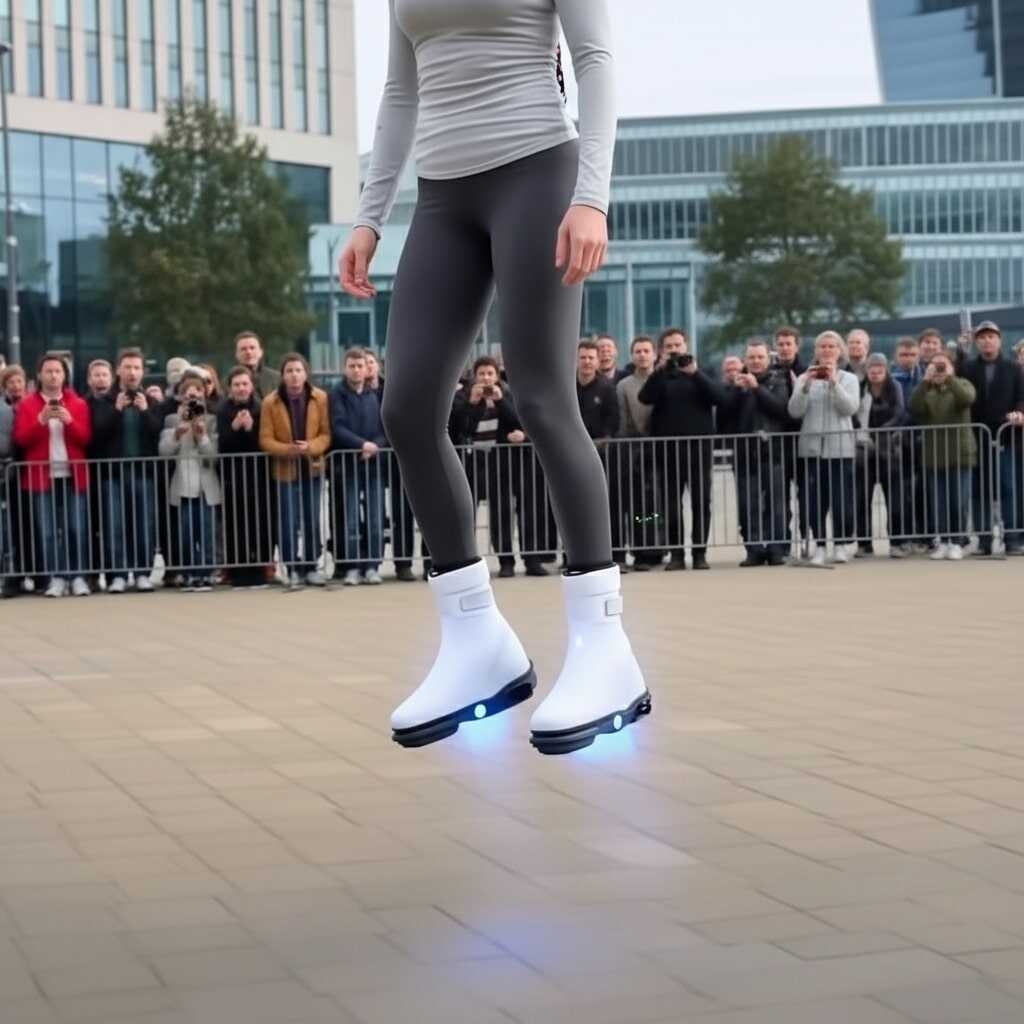
Jet Boots may never become standard footwear, and their real-world counterparts may remain niche, expensive, and dangerous. But their cultural significance far outstrips their engineering feasibility. As a symbol, Jet Boots encapsulate humanity’s restless spirit—our refusal to accept limits, our yearning for autonomy, and our belief that the next horizon is always just a leap away.
In pop culture, they function as more than props or costumes. They are visual metaphors for transformation, empowerment, and the relentless march toward a future where the sky is not the limit, but the starting point. From the inked panels of 1950s comic books to the polygonal models of modern video games, from avant-garde runways to viral videos of real-life “jetmen,” Jet Boots continue to capture our imagination because they speak to a universal truth: we were never meant to stay grounded.
As we navigate an era defined by both unprecedented technological possibility and existential uncertainty, the Jet Boot remains a potent reminder of what we strive for—not just to fly, but to soar with purpose, style, and freedom. In the end, the true power of Jet Boots lies not in their thrust, but in their ability to lift our dreams off the ground and into the realm of the imaginable. And in that space between earth and sky, pop culture finds one of its most enduring and inspiring icons.