
The Marriage of Two Iconic Silhouettes
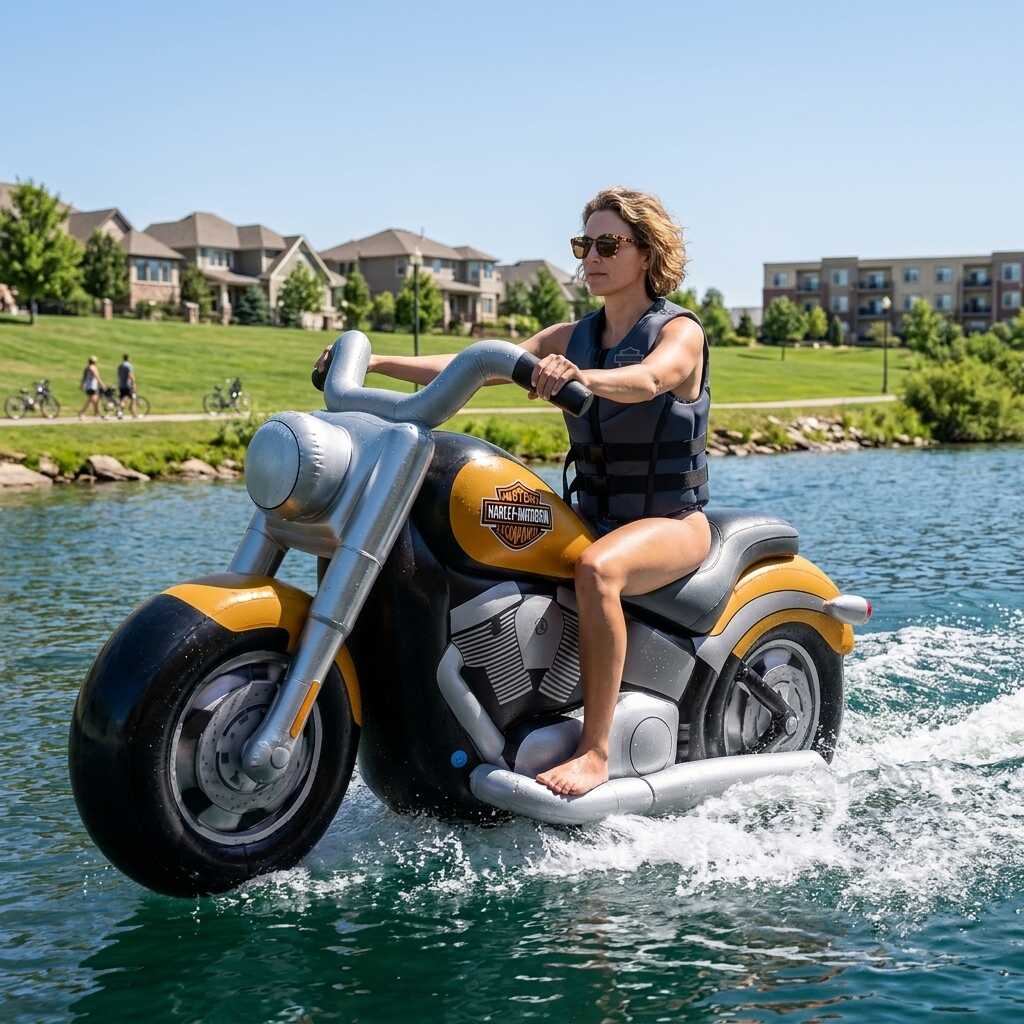
The core design philosophy behind this unique watercraft lies in its striking juxtaposition. On one hand, you have the low-slung, aggressive, and metallic heritage of a classic American cruiser motorcycle. On the other hand, you have the soft-edged, high-buoyancy architecture of a modern inflatable personal watercraft. Merging these two contrasting worlds requires a meticulous approach to proportions and form, ensuring that the final silhouette is instantly recognizable as both a motorcycle and a sea-ready vessel.
To achieve this, the watercraft preserves the defining lines of a chopper—the high-reaching handlebars, the elongated front fork profile, the teardrop-shaped fuel tank, and the stepped two-up seating arrangement—while integrating them into a wide, stable inflatable hull base. The result is a dramatic visual statement that brings the spirit of the open road onto the open water, challenging the traditional, utilitarian aesthetics of standard personal watercraft.
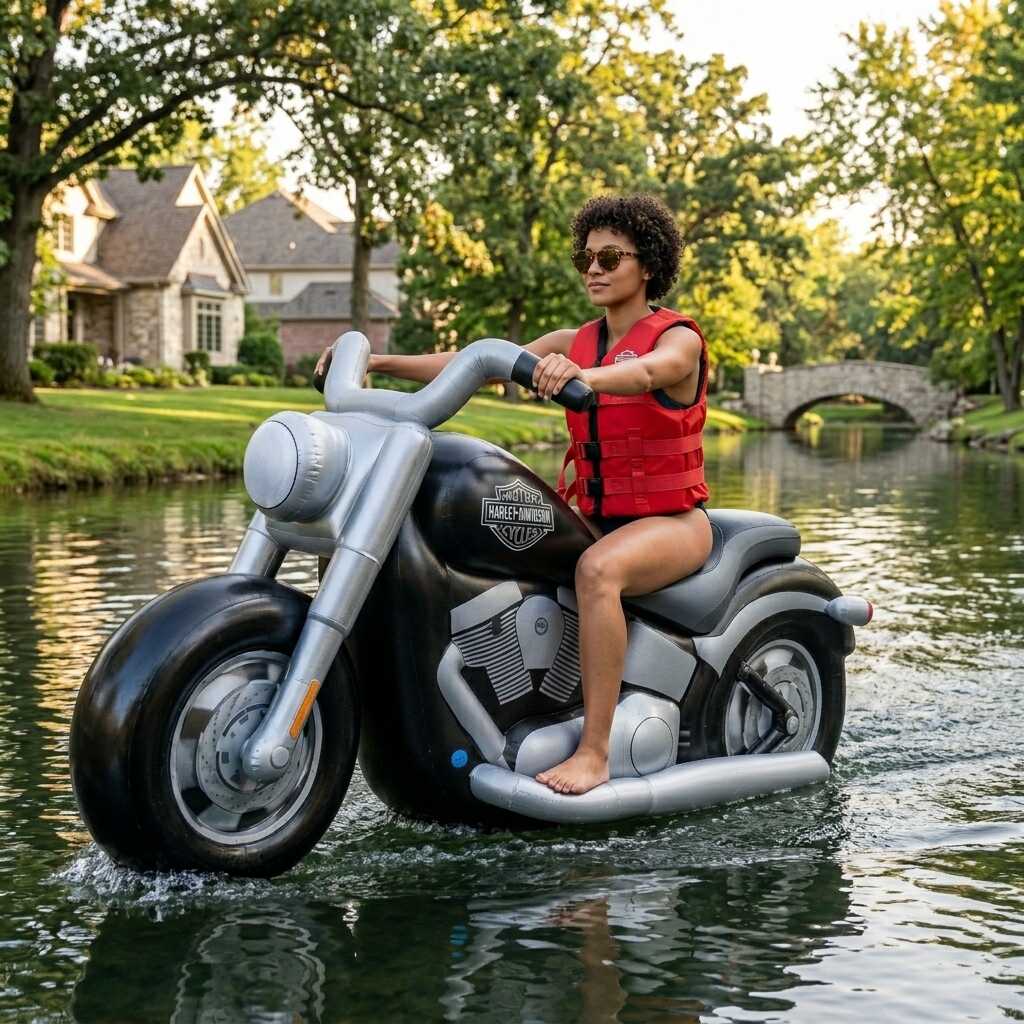
Architectural Breakdown: Translating Iron to Inflatable
Replicating a complex mechanical object using pressurized air chambers requires smart engineering and geometric framing. The structure is built around a multi-chambered system that isolates different design elements to maintain structural integrity and crisp visual definition.
The Front Fork and High-Rise Handlebars
The most challenging aspect of the design is the front assembly. In a real motorcycle, thin steel forks extend down to the front wheel. In the inflatable version, this area is simulated using dual, highly pressurized vertical pontoons that mimic the raked-out front end of a custom chopper. At the apex sit the exaggerated handlebars, which are reinforced internally or constructed with heavy-gauge materials to remain rigid, providing the rider with the distinct, upright riding posture characteristic of a cruiser.
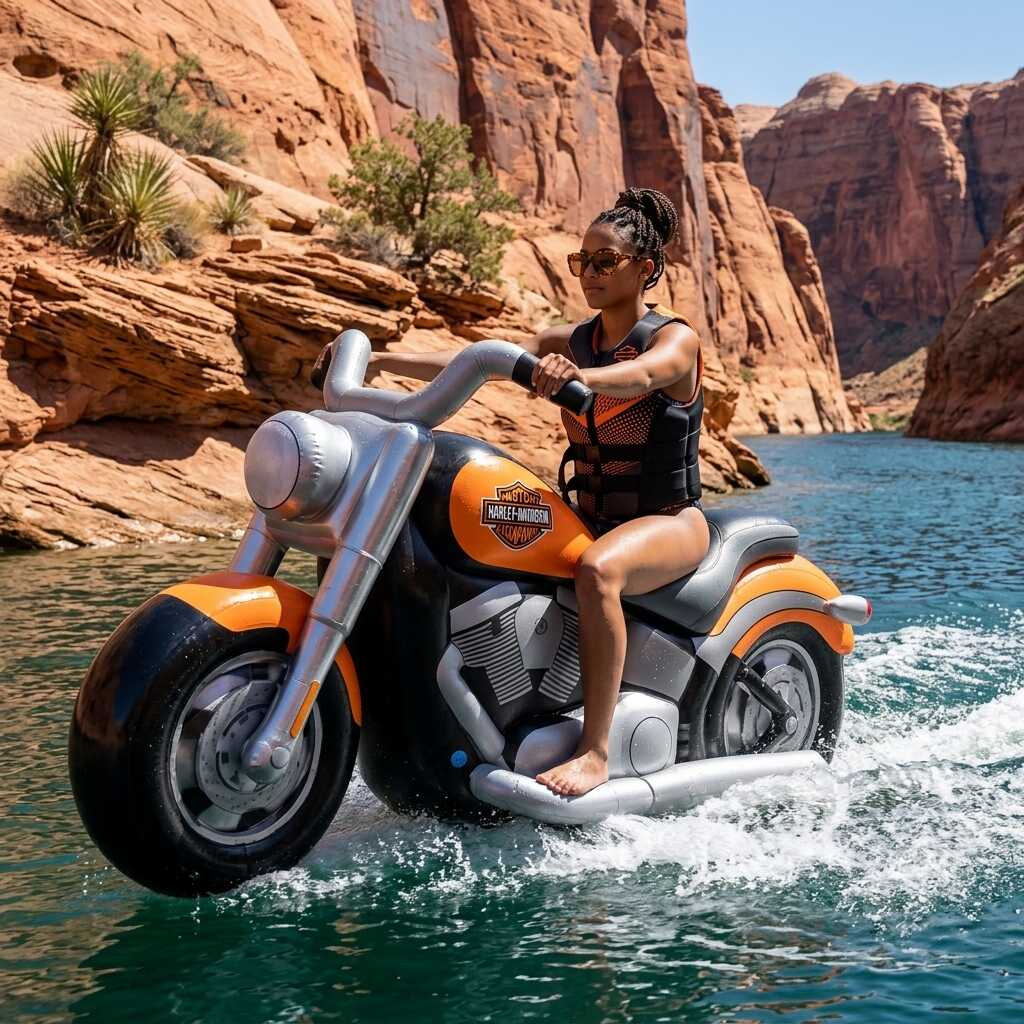
The Teardrop Tank and Engine Block Mockup
Directly behind the front fork assembly sits the central canopy, shaped precisely to mirror a classic teardrop fuel tank. This chamber is given a rounded, organic volume that slopes gently toward the seat. Beneath this faux tank, rather than an open void, the inflatable structure features a textured, multi-layered block that visually represents a V-twin engine. By using segmented drop-stitch panels or molded exterior PVC layers, the design creates shadows and depth, successfully suggesting the presence of cooling fins, chrome air cleaners, and exhaust pipes without adding unnecessary weight or rigid components.
The Stepped Seat and Rear Fender
The seating area is contoured to mimic a plush, low-profile leather saddle. It typically features a distinct “stepped” configuration, where the operator sits lower in the saddle while the rear portion rises slightly to accommodate a passenger or to form the sweeping line of a rear bobber fender. This rear section tapers down into a broad, squared-off stern that provides the lateral stability required to keep the craft steady on choppy water, expertly hiding the wide footprint needed for flotation beneath the lean look of a motorcycle tail.
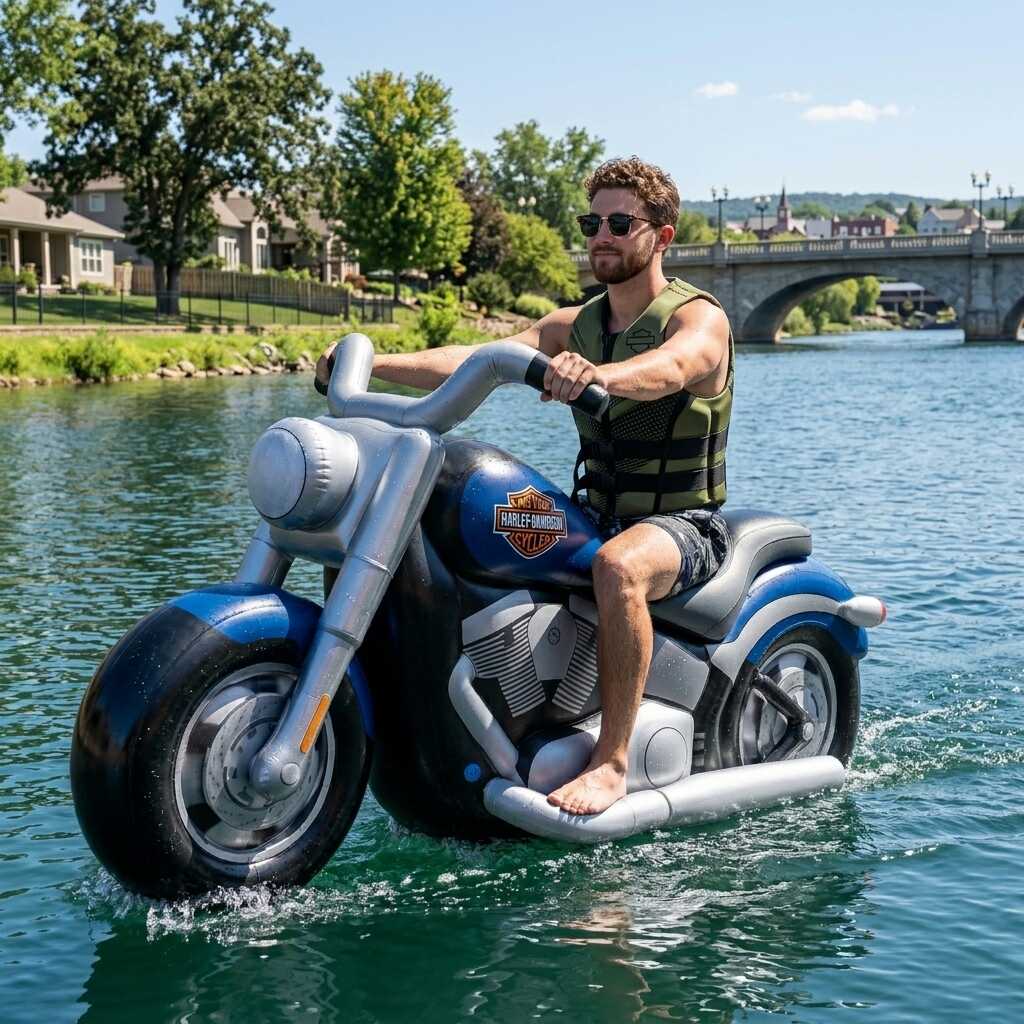
Materials and Construction: Durability Meets Definition
To make an inflatable look like a premium machine rather than a simple pool toy, the selection of materials is paramount. The aesthetic success relies entirely on how taut the surfaces are and how well they resist deformation under pressure.
-
Commercial-Grade PVC (Polyvinyl Chloride): The primary skin consists of heavy-duty, multi-layer PVC, often ranging from 0.9mm to 1.2mm in thickness. This material provides the rigid, puncture-resistant exterior necessary to support sharp angles and complex shapes, preventing the sag that would otherwise ruin the motorcycle silhouette.
-
Drop-Stitch Technology: Used extensively in the base hull, faux engine block, and floorboards, drop-stitch material connects two parallel fabric layers with thousands of tiny nylon threads. When inflated to high pressures (up to 15 PSI), it creates a surface as flat and rigid as plywood, allowing the craft to maintain crisp, hard edges along its running boards and simulated mechanical parts.
-
Reinforced Heat-Welded Seams: To handle the stress of complex curves—particularly around the handlebars and teardrop tank—seams are heat-welded or radio-frequency (RF) welded rather than glued. This prevents unsightly glue residue and ensures that the structural transitions remain clean and seamless to the eye.
-
Molded TPU Accents: For high-detail areas like handgrips, footrests, and simulated emblem badges, molded Thermoplastic Polyurethane (TPU) overlays are bonded directly to the PVC skin, adding physical texture and structural definition.
Color Palette and Surface Finishes
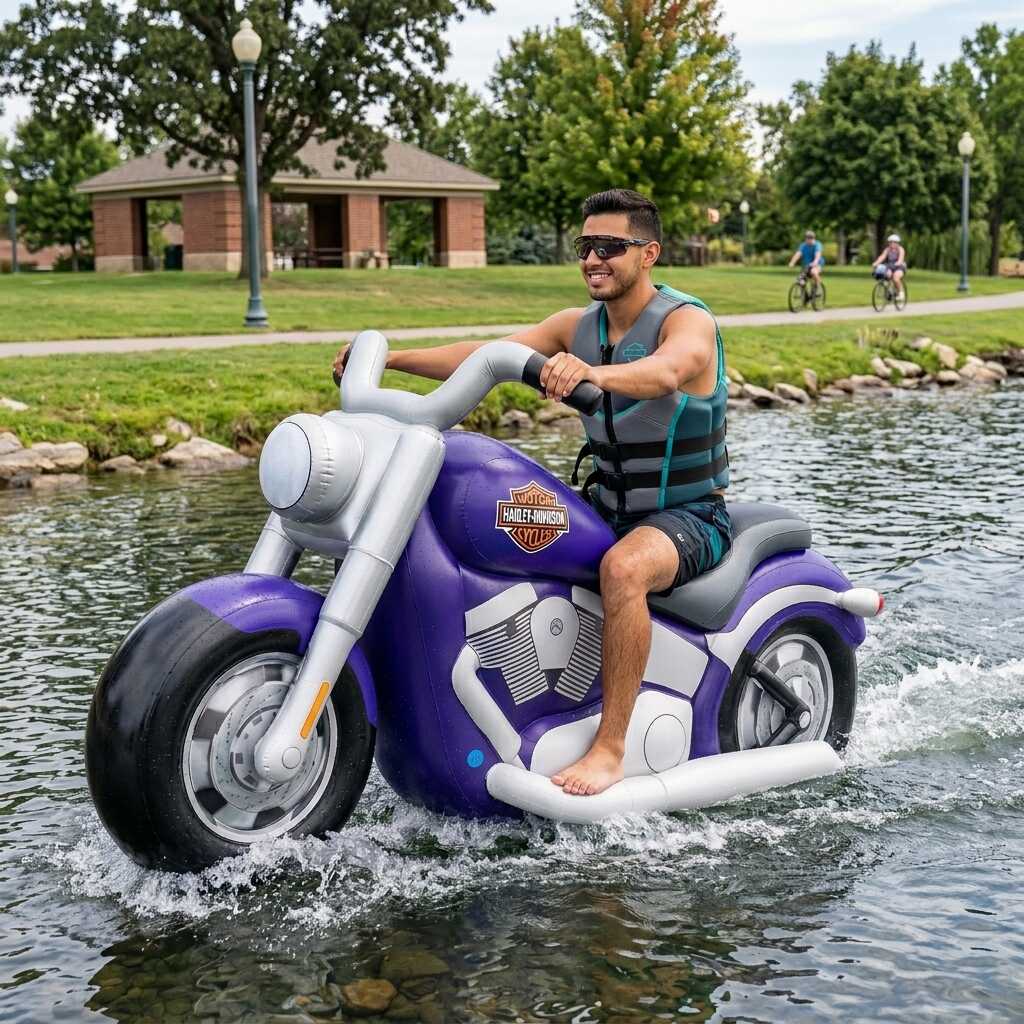
The coloration of this watercraft is heavily influenced by the custom paint culture of traditional cruiser motorcycles. Because the medium is flexible PVC rather than polished steel, advanced printing and coating techniques are used to replicate classic automotive finishes.
Metallic and Chrome Mimicry
A defining characteristic of the aesthetic is the illusion of metal. Deep, reflective silver and chrome graphics are applied to the simulated exhaust pipes, front forks, and engine components using UV-resistant, high-flexibility inks. These metallic finishes catch the sunlight on the water, creating a glinting effect that closely mirrors polished aluminum and steel.
High-Contrast Two-Tone Themes
The main body chambers—primarily the faux fuel tank and fenders—are typically coated in deep, saturated tones. Classic choices include gloss black, candy-apple red, midnight blue, or military matte green. These dark, rich colors are often paired with contrasting pinstripes or bold graphics that trace the curves of the inflatable chambers, emphasizing the contours of the “tank” and “fenders” and making the shape pop against the blue or turquoise backdrop of natural water bodies.
Textured Mattes and Grips
To break up the monolithic look of smooth PVC, different surface textures are deployed. The seat area is frequently finished in a matte black, non-slip texture that replicates the appearance of grain leather or vinyl. Meanwhile, the footrests or running boards utilize dark gray or black diamond-grooved EVA foam traction pads, which simultaneously provide grip and simulate the heavy-duty rubber floorboards found on premium touring motorcycles.
INFLATABLE HARLEY SHAPED JETSKI AESTHETIC
Conclusion: A Bold Statement on the Water
The inflatable motorcycle-styled personal watercraft represents a remarkable feat of recreational design, proving that functional marine inflatables do not have to sacrifice style or identity. By carefully studying the lines, proportions, and iconic components of a classic cruiser motorcycle and rebuilding them using advanced drop-stitch fabrics, heavy-gauge PVC, and sophisticated metallic printing, designers have created a highly stylized vessel.
Every element—from the high-reaching handlebars and raked-out front pontoons to the textured V-twin engine mockup and high-gloss two-tone color schemes—works together to project a sense of power, motion, and heritage. It stands as a compelling example of cross-industry design, successfully bringing the timeless allure of custom motorcycle styling to the open water in a completely unexpected form factor.