
Walk into a kid’s bedroom that has a novelty bed in it, and you already know the reaction before you see it: wide eyes, a dropped jaw, and a request to have friends over immediately. Few themed beds pull off that reaction as consistently as the GIANT FOAM TANK SHAPED BED. Part furniture, part sculpture, part playground prop, this style of bed has become a favorite among designers who specialize in themed children’s rooms, hospitality suites, and even movie-set dressing. But what actually goes into building one? It’s not just a mattress with a cardboard turret glued on top. There’s real engineering, material science, and artistic judgment behind every curve, tread mark, and hatch.
This article breaks down the anatomy of a giant foam tank shaped bed piece by piece — from the internal skeleton to the surface finish — so you can understand why the good ones look so convincing, and what separates a professional build from a weekend craft project gone sideways.
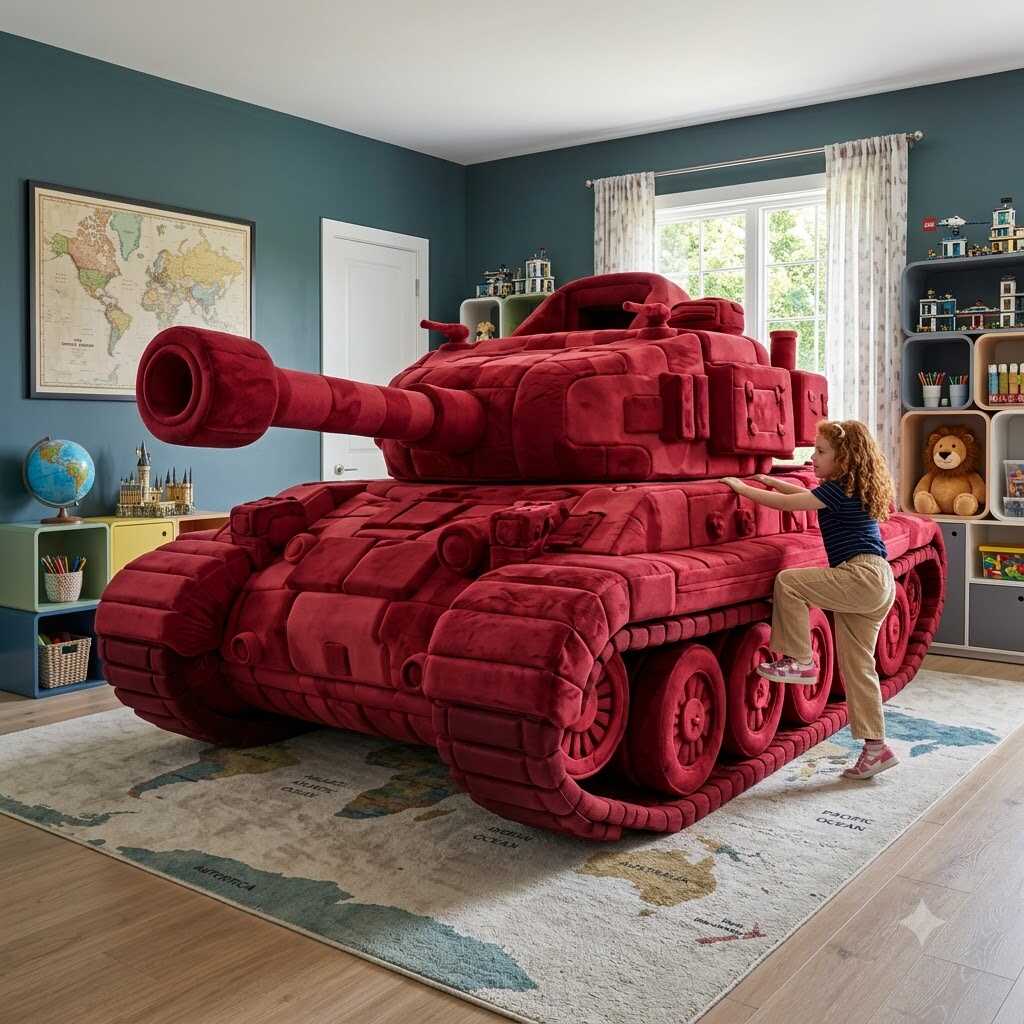
Why Foam Is the Material of Choice
Before getting into the specific parts, it helps to understand why foam dominates this category of build. Traditional wood or fiberglass construction can absolutely produce a tank-shaped bed, but foam offers three advantages that matter enormously for a bedroom object a child will climb on, lean against, and occasionally jump off of.
First, WEIGHT. High-density polyurethane or EPS (expanded polystyrene) foam is a fraction of the mass of solid wood or resin. A full-scale tank silhouette built from foam can often be lifted and repositioned by two adults, whereas a comparable wood-and-fiberglass structure might require a forklift.
Second, safety. Foam has natural give. Corners that would bruise a shin on a wooden bed frame simply compress on a foam one. This is a major reason foam dominates children’s novelty furniture — it lets designers chase dramatic silhouettes (gun barrels, tread wheels, angular hull plating) without turning the room into a hazard zone.
Third, workability. Foam can be hot-wire cut, hand-carved, rasped, and sanded in ways that let a fabricator sculpt organic curves quickly. Wood requires joinery and lamination to achieve compound curves; foam just requires a steady hand and the right cutting tool.
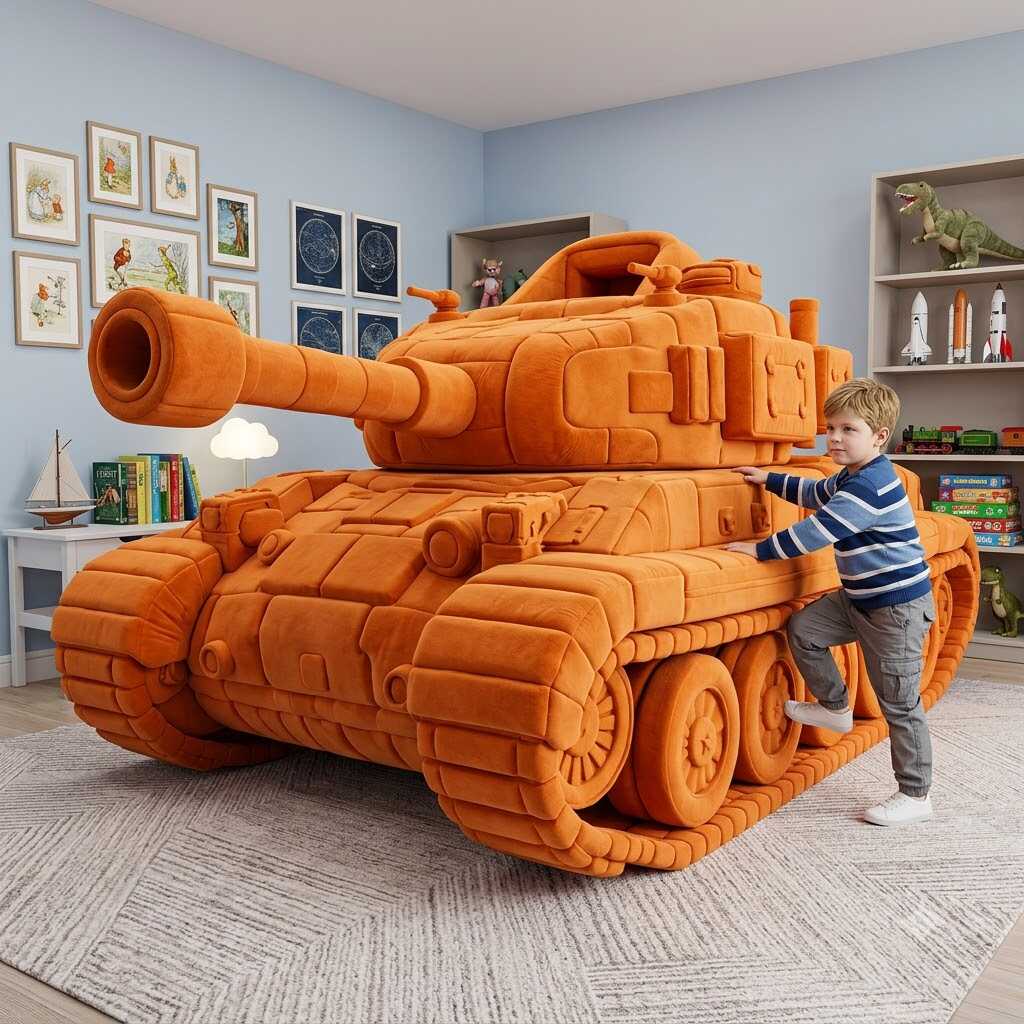
The Core Structure: Building the Skeleton
Every convincing tank bed starts with an internal frame, even though foam is doing most of the visual work. This frame usually consists of a plywood or steel-tube base that supports the mattress deck and anchors the foam shell so it doesn’t shift during use.
Designers typically build this skeleton in three zones:
- The chassis base — a low, rectangular platform matching standard mattress dimensions (twin, full, or queen), reinforced at the corners to handle repeated weight-bearing stress.
- The hull risers — vertical supports that establish the height and slope of the tank’s body, usually angled outward slightly to mimic the sloped armor plating found on real armored vehicles.
- The turret mount — a secondary, smaller platform (sometimes on a rotating lazy-susan bearing for a playful touch) that anchors the turret and barrel assembly above the headboard.
Once this skeleton exists, the foam carving process can begin, using the frame as a reference guide for proportions.
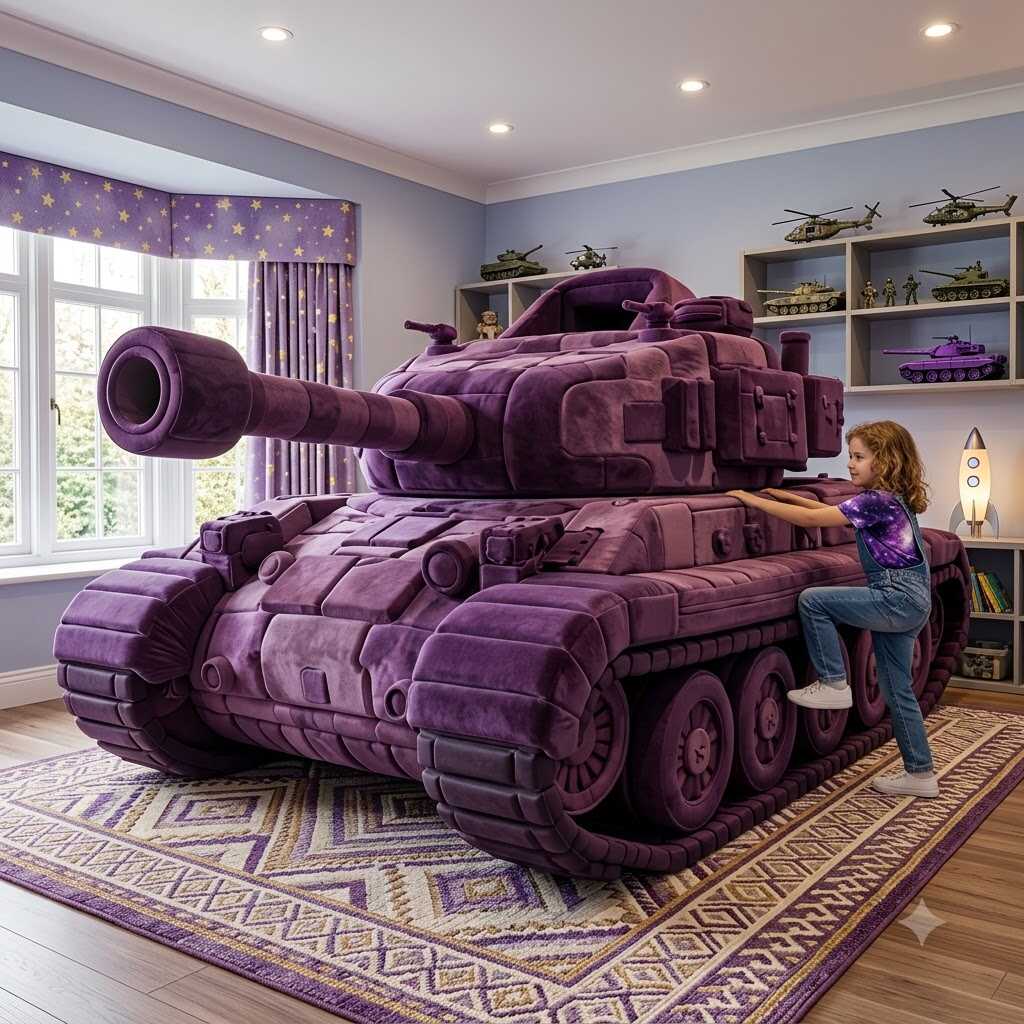
Carving the Hull: Where the Silhouette Comes to Life
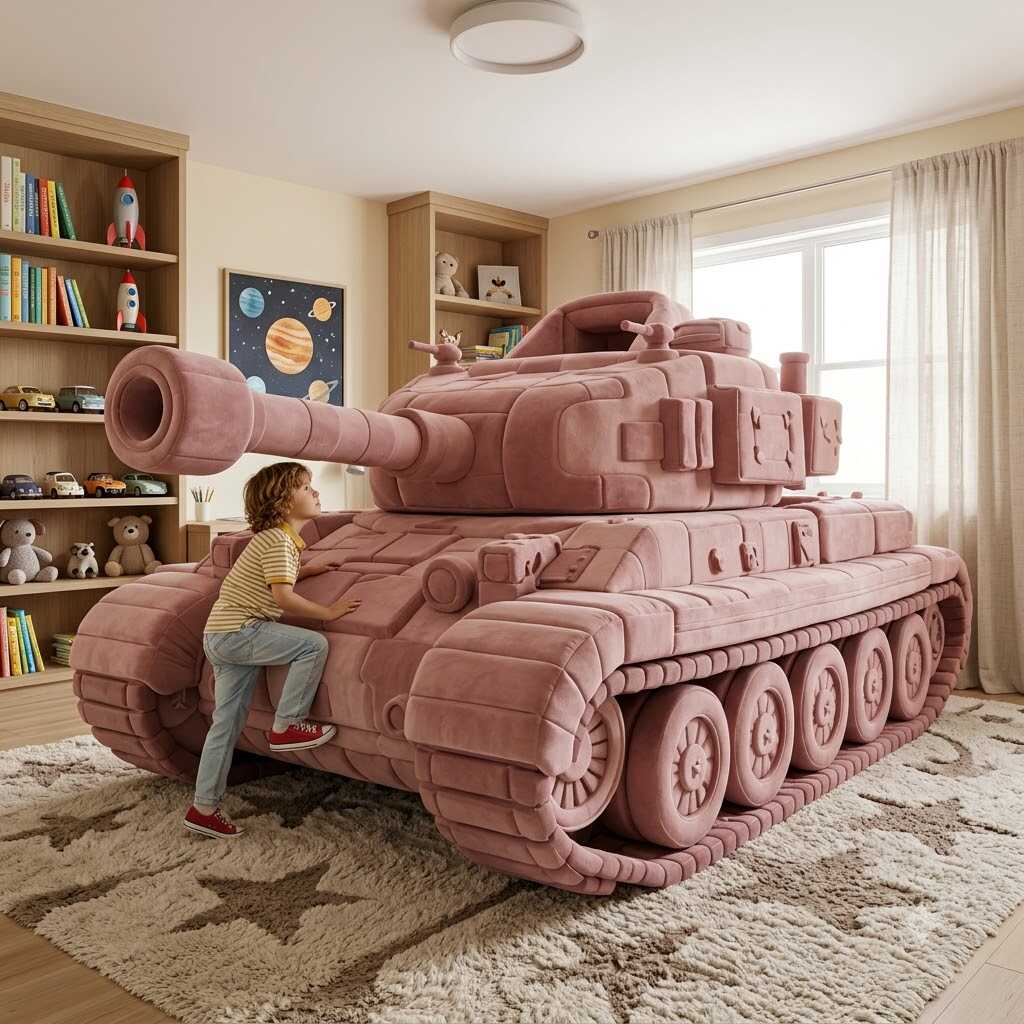
This is the stage where a giant foam tank shaped bed starts to look like, well, a tank. Large blocks of foam are glued in layers (a technique called lamination) to build up the rough volume of the hull, then a fabricator uses hot-wire cutters for large sweeping cuts and hand tools — rasps, surform planes, and sanding blocks — for the finer shaping.
Key silhouette elements that make the design “read” correctly from across a room include:
- Sloped front glacis plate — the angled front section, which is the single most recognizable tank feature. Getting this angle right (typically 45–60 degrees) instantly sells the shape.
- Track wells — the recessed side channels that suggest tank treads, even when the “wheels” are purely decorative and non-functional.
- Turret ring — a distinct seam or raised collar where the turret meets the hull, echoing the rotating joint on a real tank.
- Barrel taper — the gun barrel should taper subtly from base to tip; a barrel with a Constant diameter reads as a pipe, not a cannon.
Professional builders often reference military vehicle blueprints or scale models during this stage, not to achieve total realism, but to borrow proportional cues that make the exaggerated, kid-friendly version still feel “correct” to the eye.
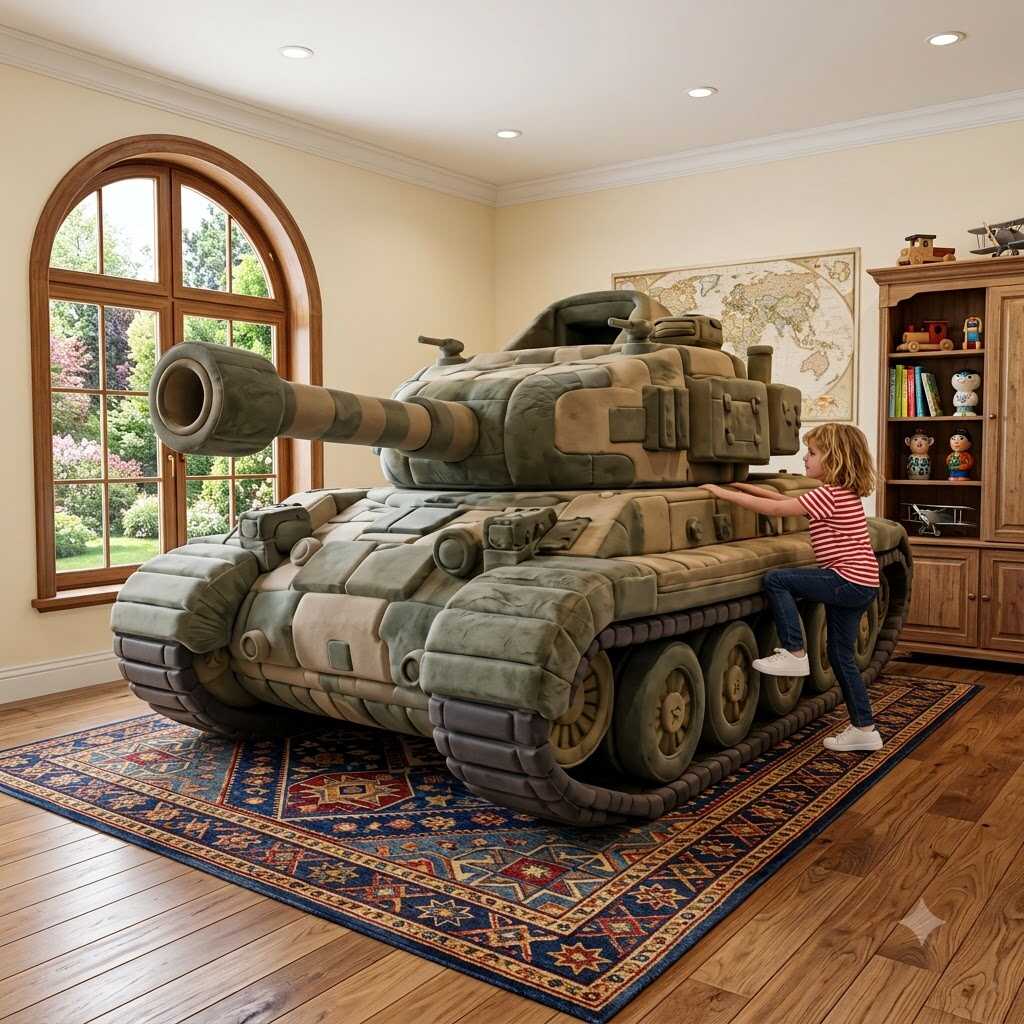
Surface Treatment: Texture, Panel Lines, and Hardware
A raw foam carving, even a well-proportioned one, still looks like a foam carving until surface detailing is added. This is arguably the step that separates an amateur build from one that looks ready for a design magazine.
Panel lines are shallow grooves cut or routed into the foam surface to mimic the welded or bolted armor plates on a real vehicle. These lines do double duty: they add visual interest and they break up what would otherwise be a large, flat expanse of foam.
Faux rivets and hatches are typically added using lightweight resin or additional foam appliqués, glued on after the main shape is finished. A hinged (or faux-hinged) hatch on the turret is a popular detail, sometimes doubling as a small storage compartment.
Coating comes next. Raw foam is fragile and porous, so it’s sealed with a flexible elastomeric coating — the same category of product used in theatrical prop-making and theme-park set construction. This coating hardens the surface just enough to resist dings from everyday bumps while preserving the underlying foam’s softness.
Paint and weathering finish the piece. A base coat establishes the primary color (olive drab and desert tan are common, though playful builds go with brighter palettes), followed by dry-brushing and subtle airbrush shading along the panel lines and edges to create depth and a sense of dimension. Some designers add stenciled numbers or a name plate for a personalized touch.
Integrating the Mattress and Functional Elements
None of this sculptural work matters if the bed isn’t comfortable and safe to sleep in. The mattress deck sits inside the hull, typically recessed slightly below the top edge of the “armor plating” so the sleeper isn’t rolling toward an exposed foam ledge. Guard rails are sometimes built into the hull’s silhouette itself — the raised side plating doing double duty as a subtle barrier — rather than bolted on as an obvious, separate rail.
Lighting is another functional layer worth mentioning. Low-voltage LED strips are frequently embedded along the track wells or turret ring, both as a nightlight function and as a way to emphasize the sculptural panel lines after dark.
Conclusion
A giant foam tank shaped bed looks like a single dramatic object, but it’s really the sum of several distinct design disciplines working together: structural framing for safety, foam sculpting for silhouette, surface detailing for realism, and coating and paintwork for durability and finish. Each layer depends on the one beneath it — a beautifully painted hull means little if the skeleton beneath it can’t support a child’s weight night after night, and the most accurate panel lines in the world won’t matter if the foam underneath was carved out of proportion.
Understanding this anatomy is useful whether you’re commissioning a custom build, attempting a DIY version in a garage workshop, or simply curious why some novelty beds look like museum pieces while others look like a foam block with a headboard glued on. The magic isn’t really magic at all — it’s careful layering of structure, shape, and surface, applied by someone who understands both furniture-building and sculptural fabrication in equal measure.