
Where Sleep Becomes a Submerged Journey
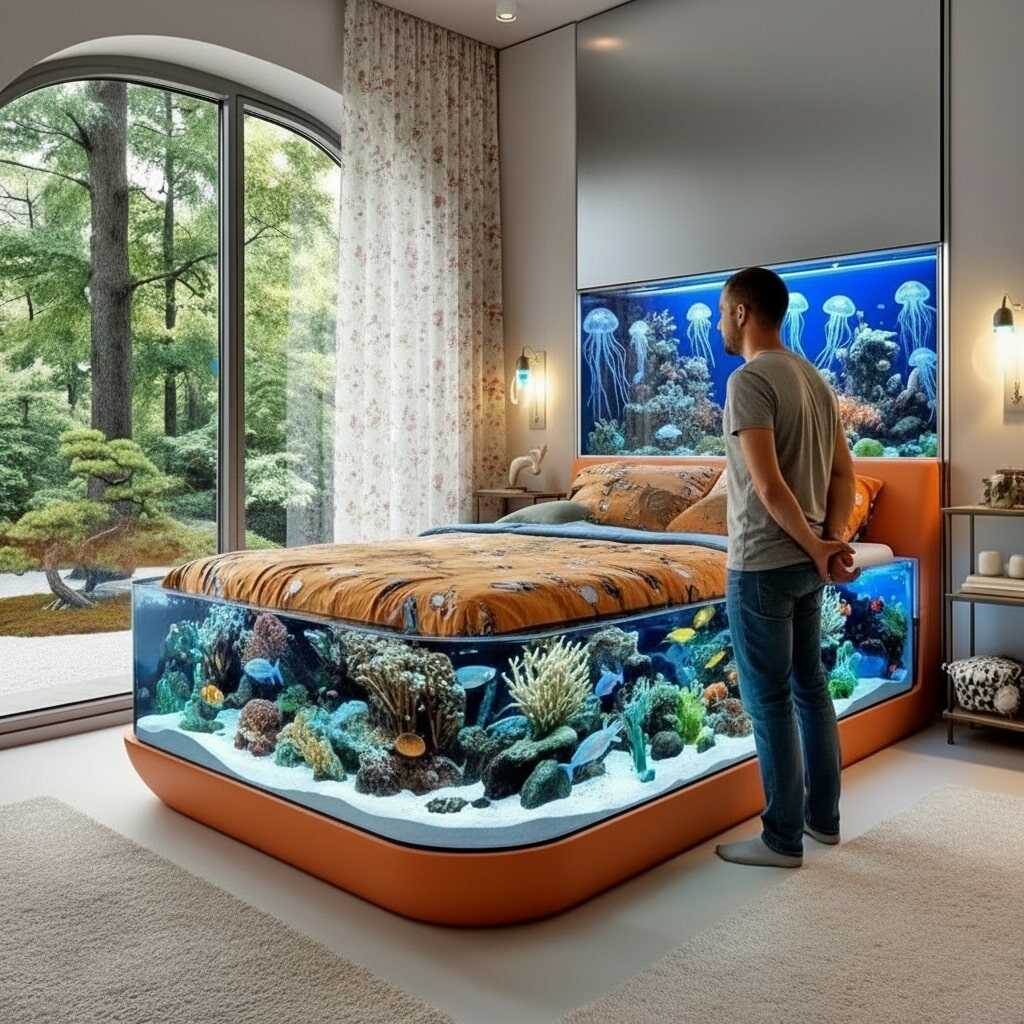
There’s a quiet magic in drifting off to sleep—not just into rest, but into story. A bed should be more than a place to recline; it should be a threshold, a portal where the edges of reality soften, and the imagination unfurls like kelp in a gentle current. In an age where bedrooms often default to minimalist neutrality or trendy uniformity, the Aquarium Themed Bed emerges not as a gimmick, but as a deeply resonant expression of wonder, tranquility, and personal mythology. To design such a space is to honor the ancient human fascination with water—the primordial womb of life—and to invite its restorative essence into the most intimate of sanctuaries: where we surrender to dreams.
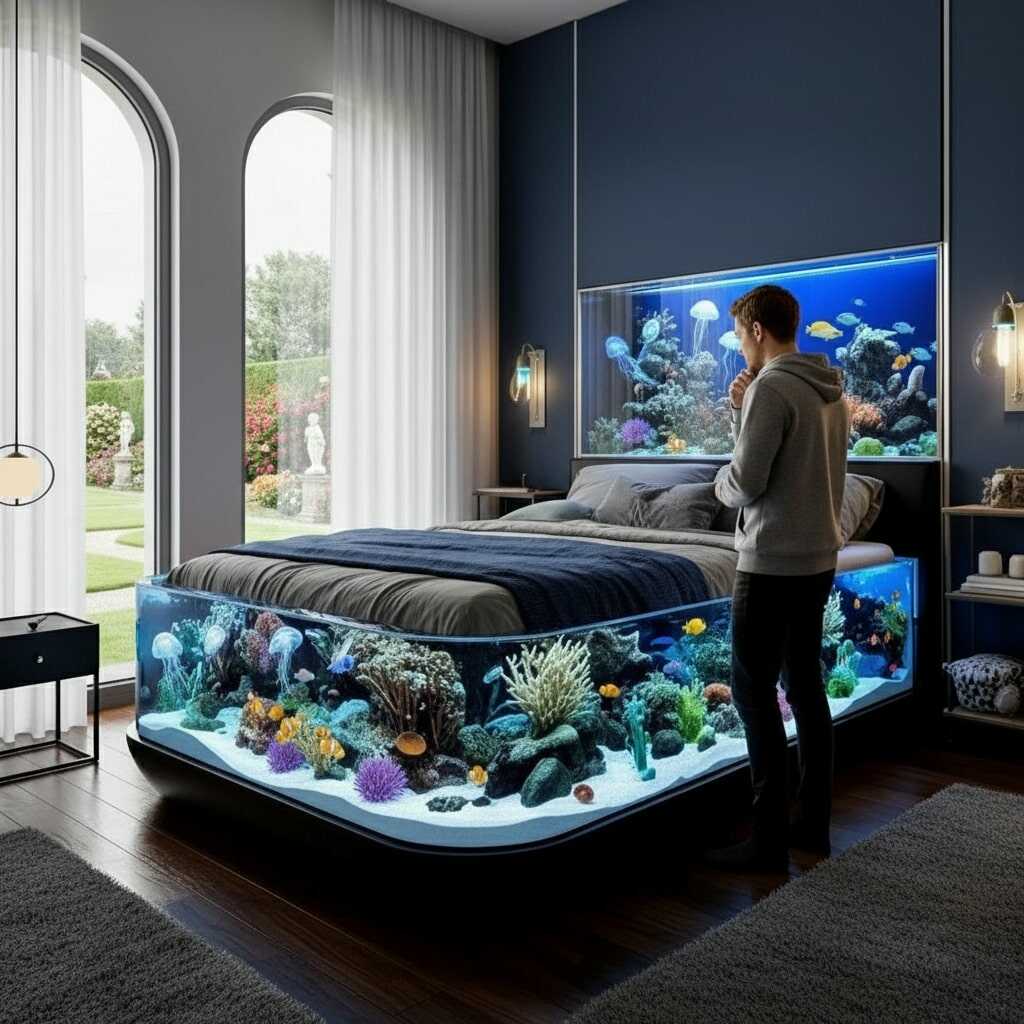
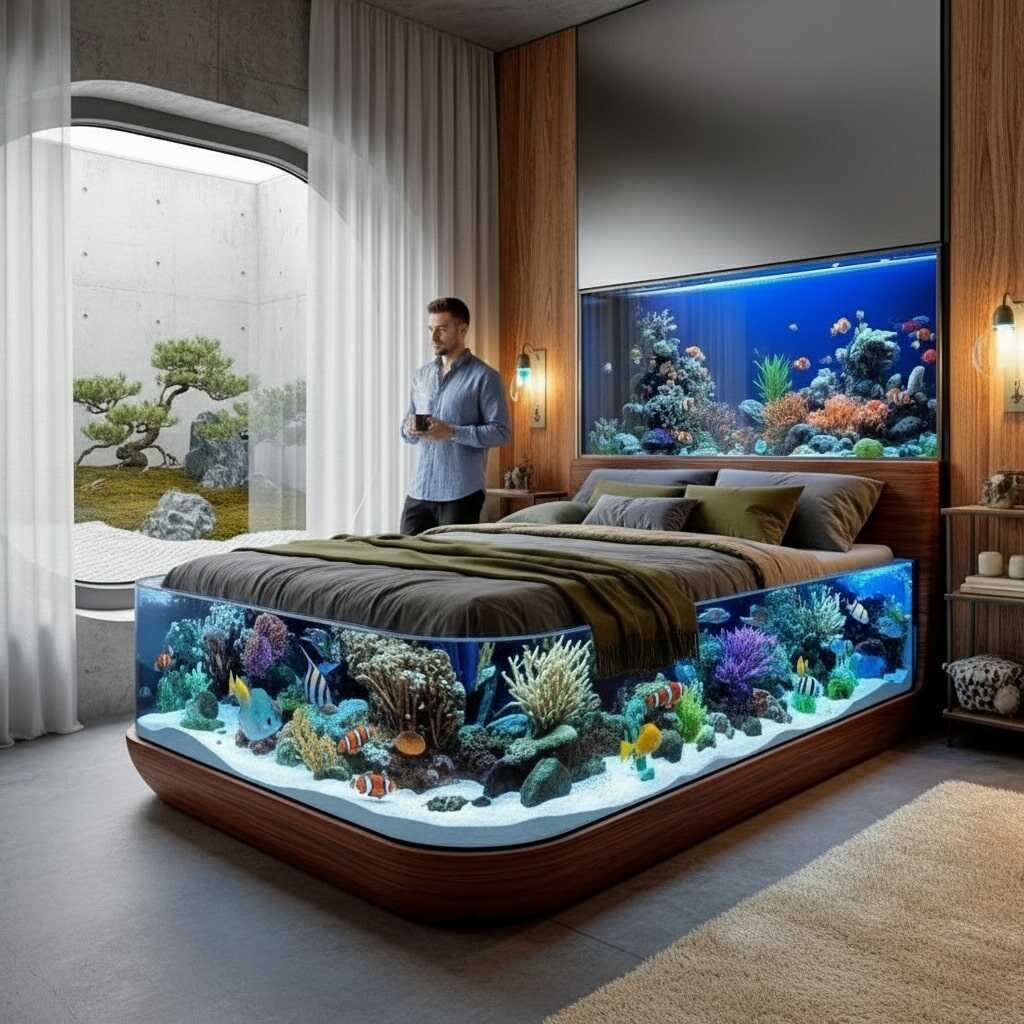
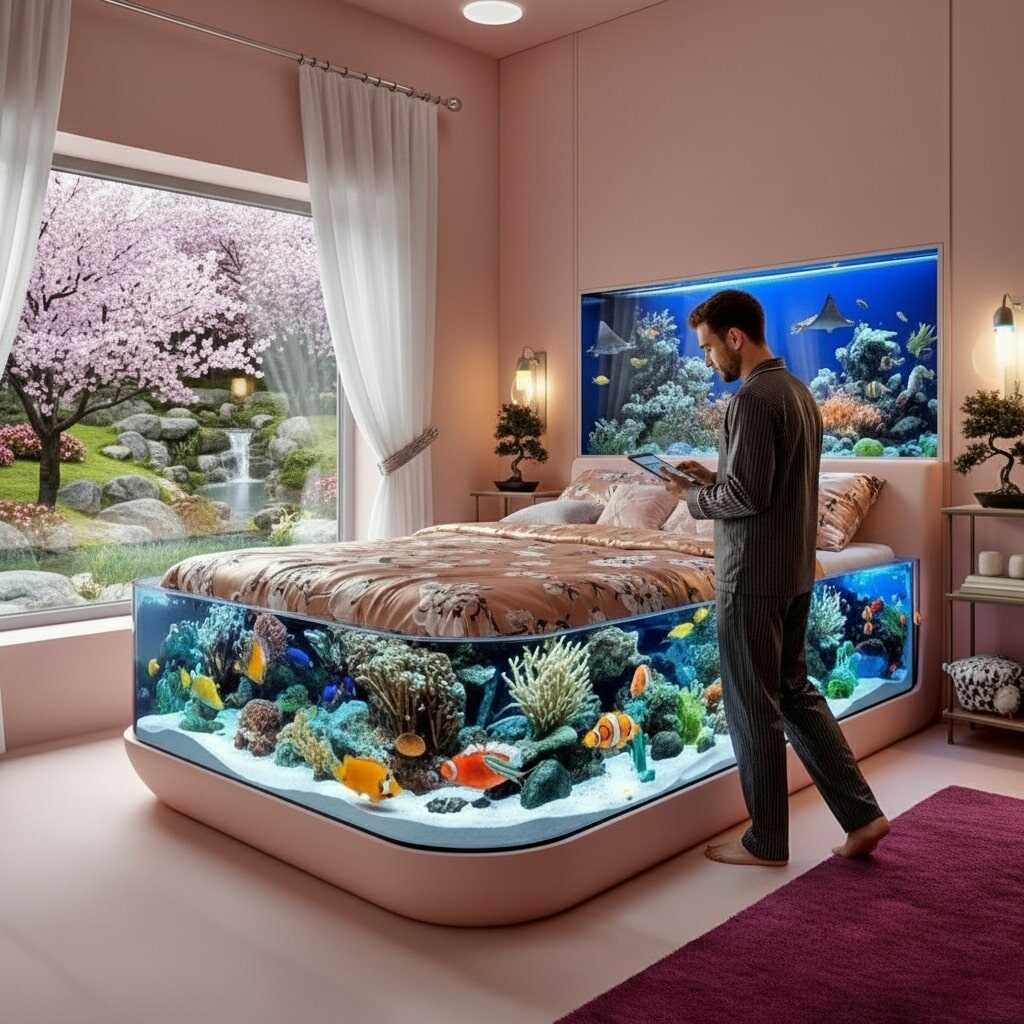
An Aquarium Themed Bed does not merely mimic the aesthetics of marine life through surface-level decor. Instead, it seeks to evoke the feeling of being submerged in a living seascape—calm, weightless, softly illuminated, teeming with quiet vitality. It’s about translating the hush of a coral reef at twilight, the dance of bioluminescent plankton in midnight depths, the rhythmic sway of sea anemones, into tactile, visual, and atmospheric experiences that cradle the body and soothe the mind. This article invites you to explore that transformation—not as a project, but as a practice: a deliberate, soulful curation of space that turns bedtime into a ritual of descent, where every night becomes a gentle dive into dreamland.
Let us descend, then—not with scuba gear or snorkels, but with intention, artistry, and reverence for the boundless depths within and around us.
Part I: The Philosophy of Submersion — Understanding the Essence of an Aquarium Themed Bed
Before brushes touch canvas or fabric is selected, one must first listen to the ocean—not its roar, but its whisper. The power of an Aquarium Themed Bed lies not in literal replication, but in resonance. It is inspired by the qualities of underwater worlds: fluidity, suspension, filtered light, organic asymmetry, and the paradox of vibrant life thriving in serene stillness.
Consider the psychological impact of aquariums in hospitals, dental offices, and wellness centers: studies have long shown that watching fish glide through water reduces heart rate, lowers blood pressure, and eases anxiety. This is no accident. Water, especially when animated by life, engages the parasympathetic nervous system—the body’s “rest and digest” mode. It’s a visual lullaby. An Aquarium Themed Bed harnesses this neuro-aesthetic principle, extending the calming influence beyond a glass tank into the architecture of rest itself.
This theme transcends age. For a child, it may be a vessel for adventure—sleeping inside the belly of a friendly whale or drifting past schools of neon tetras. For an adult, it may evoke nostalgia for childhood beach trips, or a deeper connection to marine conservation and ecological mindfulness. For the dreamer, it becomes a metaphor: the bed as a vessel navigating the subconscious, where thoughts surface like bubbles, emotions flow like currents, and the self is held—buoyant and safe—in the dark, nurturing deep.
Thus, designing an Aquarium Themed Bed is an exercise in environmental storytelling. Every element should serve the narrative of descent: from the canopy overhead resembling surface light fracturing through waves, to bedding that mimics the undulating patterns of sand ripples, to ambient sounds that recall distant whale song or the lap of tide against rock. The goal is immersion—not escapism, but reconnection: to the rhythms of nature, to the quiet majesty of the unseen world beneath the waves, and, ultimately, to the inner stillness required for restorative sleep.
Part II: Crafting the Current — Design Elements and Creative Expressions
Transforming this philosophy into tangible reality requires attention to layers—visual, textural, luminous, and spatial. Below are deep-dive explorations of key components that bring the Aquarium Themed Bed to life, each designed to evoke wonder without overwhelming serenity.
1. The Canopy of Light: Simulating the Water’s Surface
The ceiling above the bed is your first canvas—the “surface” through which dreamlight filters. Instead of harsh overhead fixtures, consider a draped canopy of sheer, iridescent fabric (organza, chiffon, or soft tulle in seafoam, aquamarine, or mother-of-pearl tones). Attach subtle LED fairy lights—preferably warm white or soft blue—beneath the fabric, not on top, so the glow diffuses like sunlight piercing the ocean’s skin. For a more dynamic effect, use a low-speed rotating projector that casts slow-moving light patterns: ripples, caustics, or even projected schools of silvery fish that glide silently across walls and ceiling.
A suspended mobile of hand-blown glass bubbles or clear acrylic discs, gently rotating in air currents, catches and refracts light like oxygen rising through water. Alternatively, install a custom fiber-optic “starfield” ceiling, but tint the base lighting with a cyan filter to suggest bioluminescence—tiny points of cold fire in the deep.
2. The Bed as Submersible: Form and Foundation
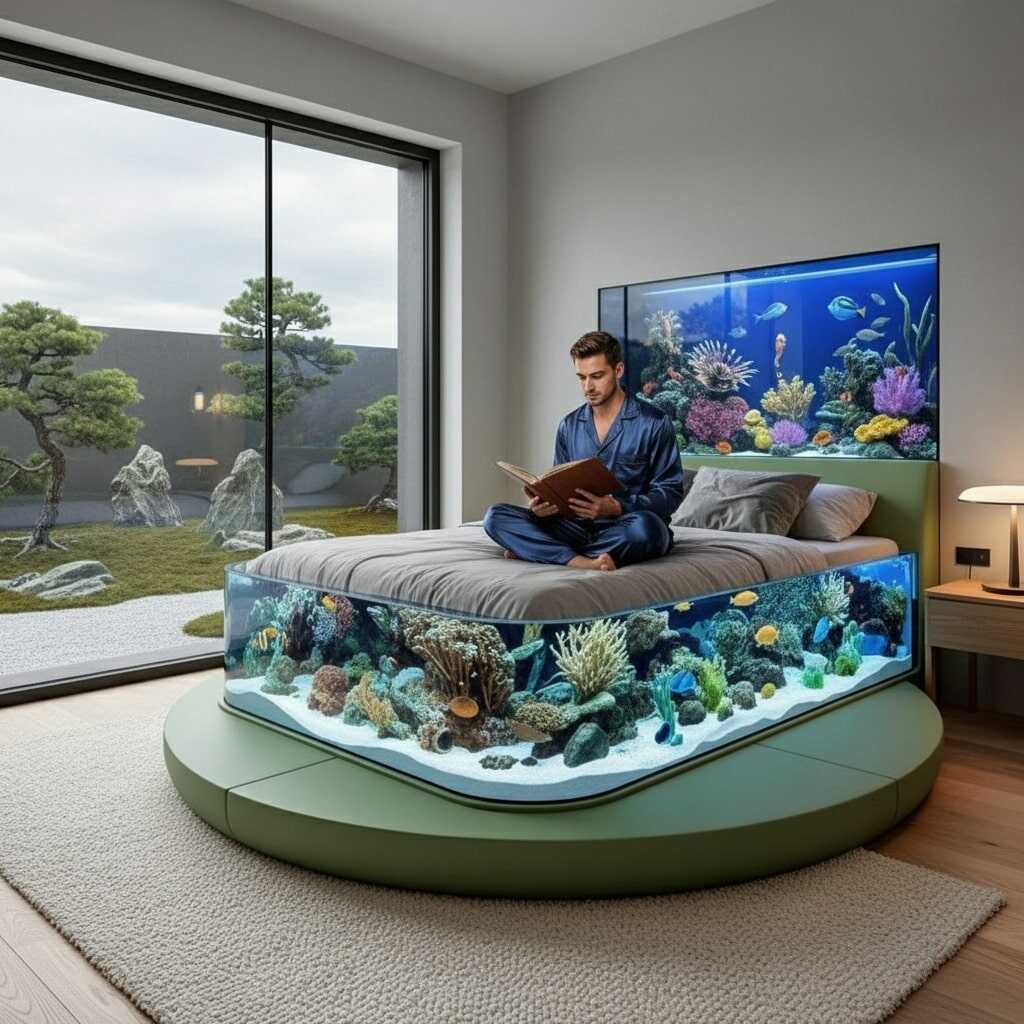
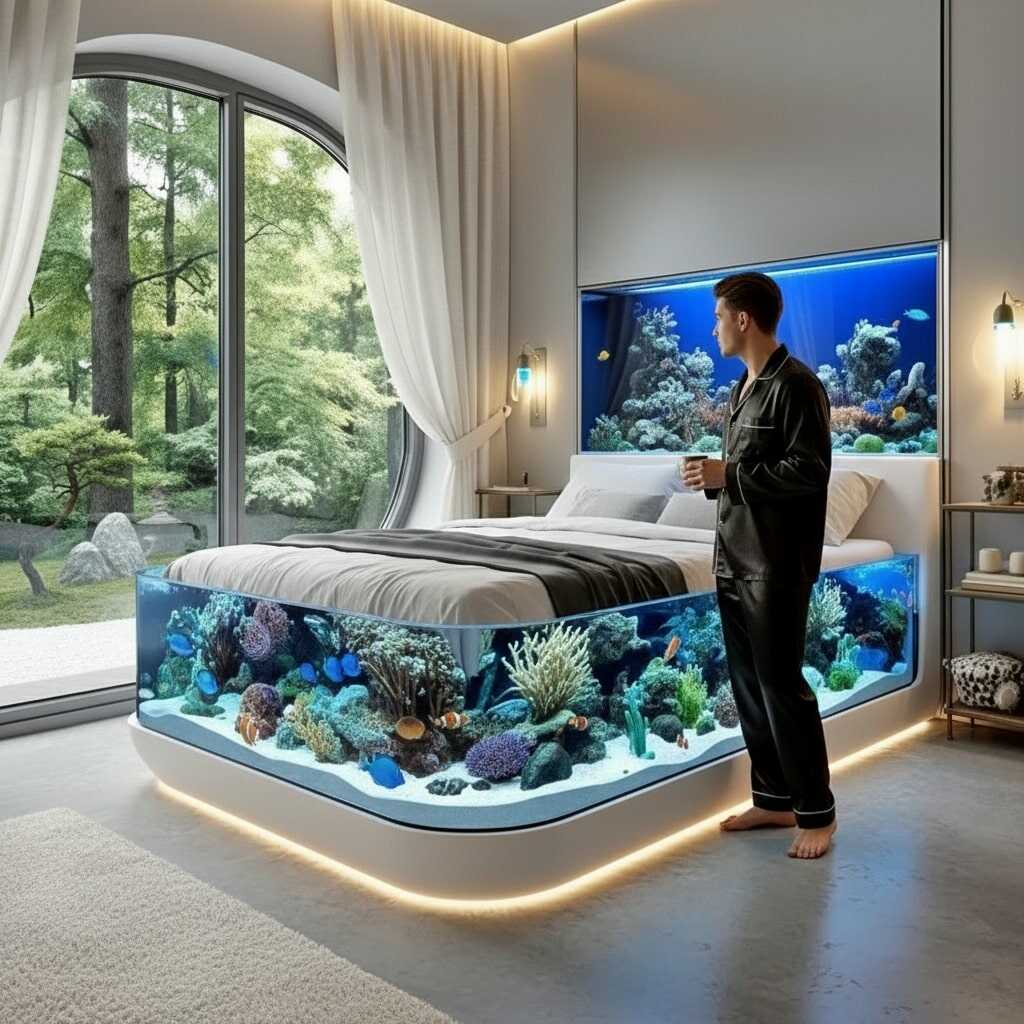
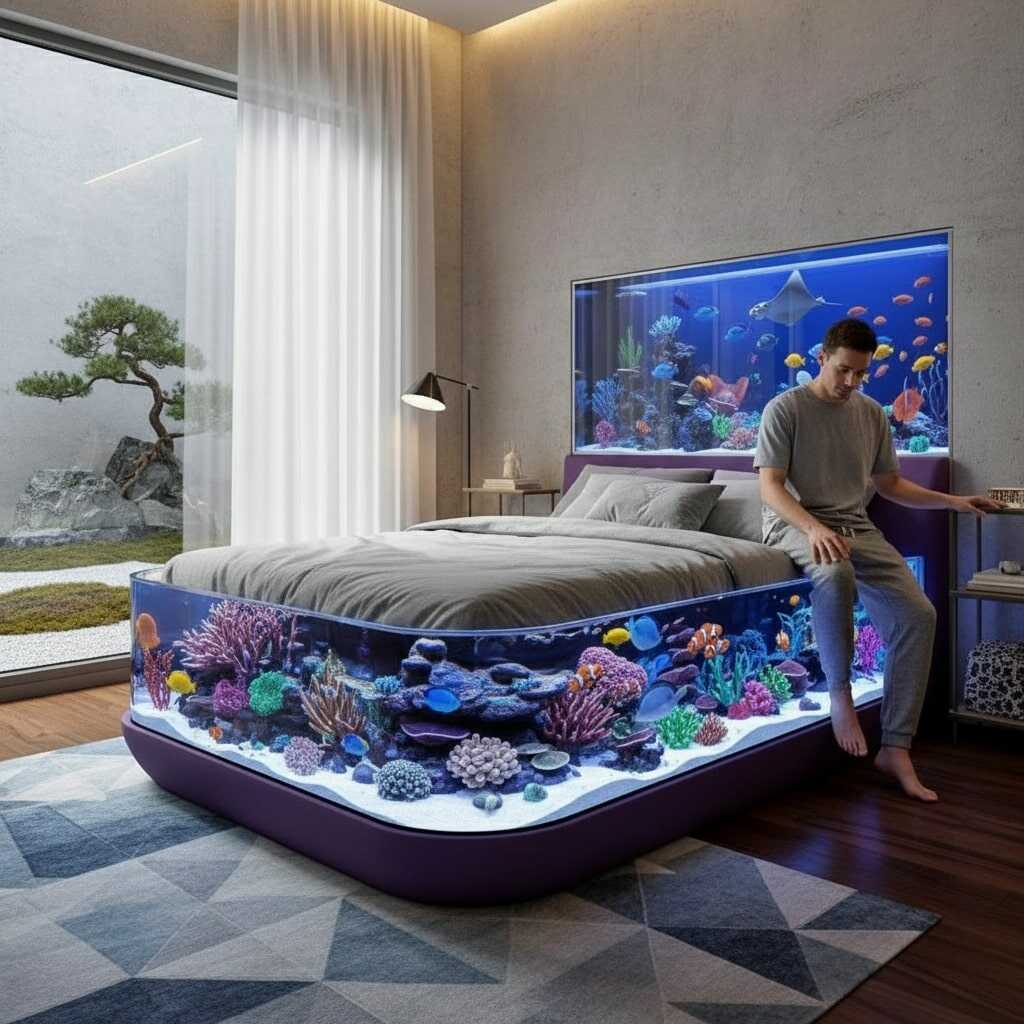
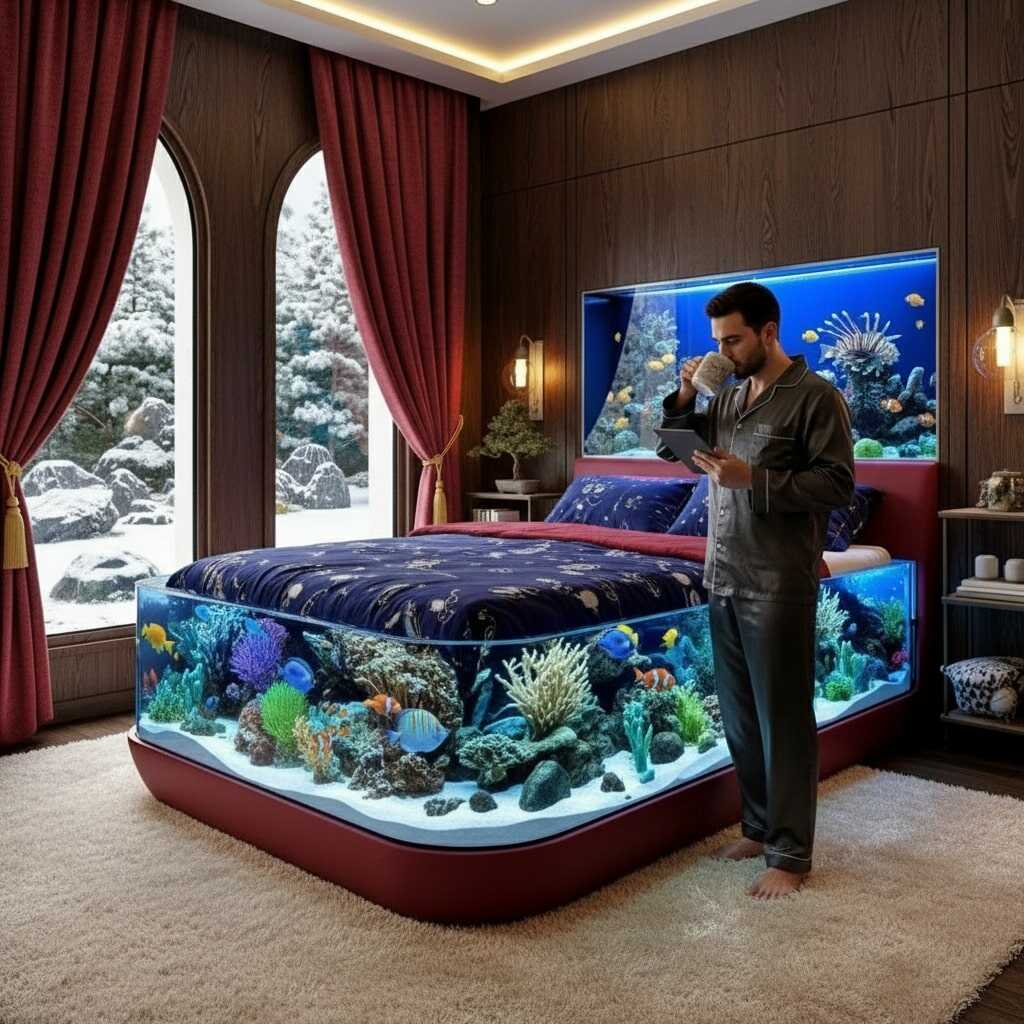
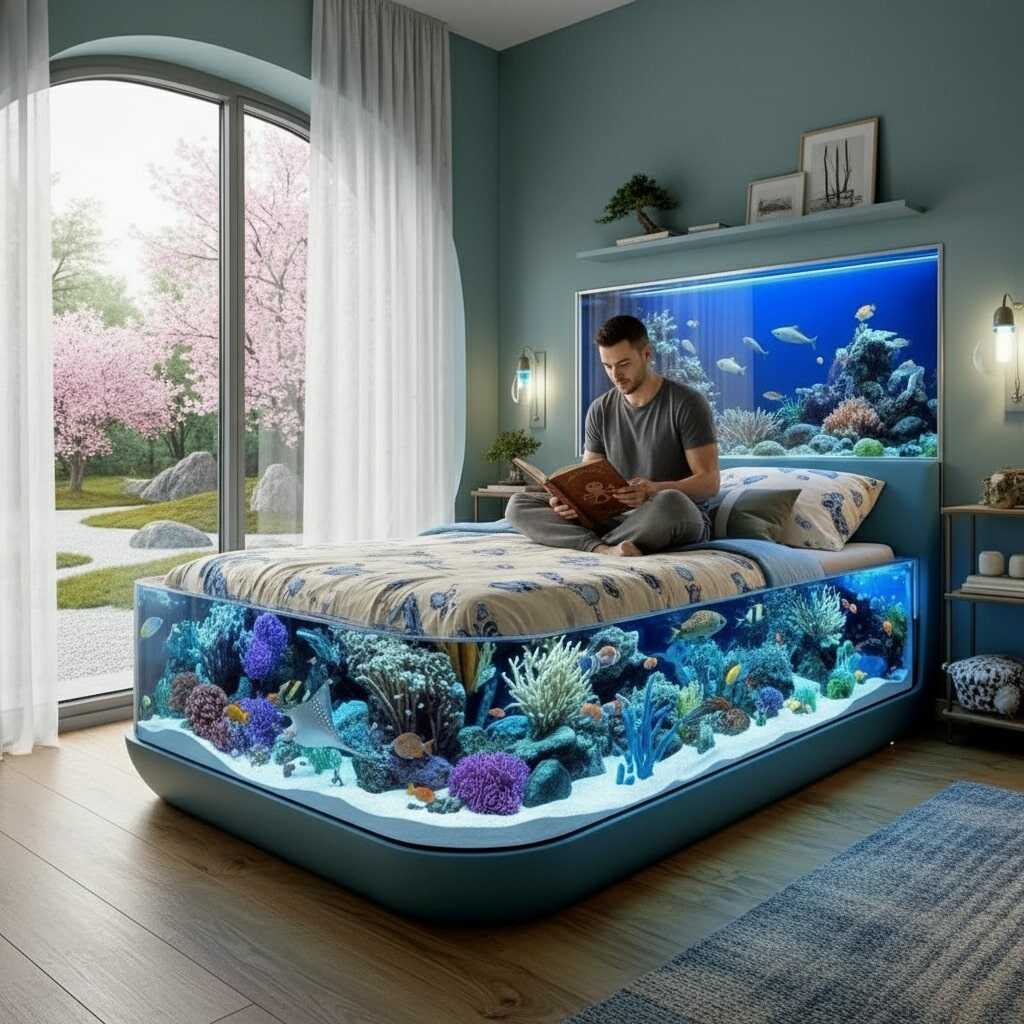
The bed frame itself can become the vessel. A low-slung platform bed with curved, wave-like headboard and footboard carved from sustainably sourced wood (sanded smooth, finished in matte sea-glass green or deep indigo) evokes the hull of a research submersible or the gentle curve of a dolphin’s back. For a more dramatic approach, commission a custom headboard shaped like a coral formation—textured plaster or sculpted foam, painted with mineral pigments to mimic brain coral, staghorn, or fan coral in soft ochres, rusts, and muted purples.
Avoid sharp angles. Let edges flow. Upholster the headboard in velvet that shifts color with perspective—peacock teal by day, midnight blue by lamplight—mimicking the chromatophores of an octopus. Embed discreet, waterproof LED strips along the base of the frame to cast a soft, upward glow, as if the bed rests on a luminous reef shelf.
3. Textiles: The Language of Currents
Bedding is where touch meets theme. Prioritize organic, fluid fabrics: linen for its natural wrinkling (like wind-rippled water), bamboo sateen for its liquid drape, or silk-cotton blends that cool the skin like seawater. Layer textures intentionally: a duvet cover printed with subtle, non-repeating patterns of manta ray silhouettes in grayscale; pillow shams embroidered with tiny, scattered seashells or hand-stitched constellations of plankton.
Color palettes should avoid cartoonish primaries. Instead, lean into the real ocean’s chromatic range:
- Twilight Zone (200–1,000m depth): Charcoal, plum, deep teal, with accents of silver and muted violet.
- Sunlit Reef (0–30m): Seafoam, sun-bleached coral pink, sandstone, turquoise with flashes of gold.
- Mangrove Lagoon: Olive green, umber, khaki, with rust and ochre highlights.
Add a “current” through asymmetry: drape one side of the bed with a lightweight, translucent overlay—the color of jellyfish bells—while the other remains unadorned, suggesting the pull of a gentle drift.
4. Wall and Floor: Extending the Seascape
Walls should not merely display the theme—they should participate in it. A hand-painted mural is ideal: not a literal aquarium scene, but an abstract interpretation—perhaps a gradient wash from horizon blue at the top to abyssal black at the base, with faint, ghostly outlines of deep-sea creatures (gulper eels, siphonophores, dumbo octopuses) emerging in pearlescent paint, visible only at certain angles or in low light.
For a less permanent solution, use removable wallpaper with macro photography of coral polyps or magnified diatoms—scientific, intricate, alive. Frame sections of actual dried, ethically sourced coral or bleached driftwood (never live-harvested) as organic art pieces, mounted on deep blue velvet backdrops.
Flooring becomes the ocean floor. A large area rug with a 3D texture—raised tufts mimicking sea grass, or a shag rug in varying tones of sand and kelp—invites bare feet to sink in. Scatter oversized, smooth river stones (sealed for hygiene) as functional decor: a bedside perch, a footrest, a silent sentinel.
5. Sensory Anchors: Sound, Scent, and Stillness
An Aquarium Themed Bed is incomplete without multisensory depth. A discreet, high-fidelity speaker system (hidden in the headboard or under the bed) can play curated soundscapes: recordings of hydrophone captures—humpback songs, snapping shrimp choruses, the low-frequency hum of the deep sea (the “Earth’s hum,” naturally occurring at 7.83 Hz, known as the Schumann resonance, overlaps with theta brainwaves of deep relaxation).
Scent is equally potent. A reed diffuser with a custom blend—ozone (for the crispness of sea air), vetiver (earthy depth), a touch of ambergris accord (warm, marine, musky)—creates olfactory immersion. Avoid synthetic “ocean breeze” fragrances; seek artisanal perfumers who work with natural isolates.
Finally, embrace negative space. Not every inch must be filled. Leave room for the mind to swim. A single, suspended glass orb containing a tiny, preserved sea fern; a shadowbox with a single fossilized ammonite—these minimal gestures hold more power than cluttered dioramas.
Part III: The Living Reef — Personalization, Ethics, and the Spirit of Stewardship
A truly meaningful Aquarium Themed Bed is not static. It evolves, just as coral reefs do—slowly, responsively, in dialogue with its inhabitant. This is where personal narrative enters: perhaps stitching a small, hidden pocket into the duvet cover containing a seashell collected on a pivotal life journey; or embedding a QR code (discreetly) in a headboard carving that links to a playlist of oceanic field recordings meaningful to the sleeper.
But deeper still is the ethical dimension. The ocean is not a theme park—it is a fragile, imperiled ecosystem. An Aquarium Themed Bed, at its best, becomes a gentle act of remembrance and reverence. Incorporate elements that honor conservation:
- Use only sustainably harvested or reclaimed materials.
- Commission artists who donate a portion of proceeds to marine sanctuaries.
- Include a small, framed quote from Rachel Carson or Sylvia Earle near the bed—“In nature, nothing exists alone,” or “No water, no life. No blue, no green.”
Let the space whisper: This beauty is real. It is worth protecting. You are part of it.
For children, this theme can be a gateway to empathy—designing a “guardian creature” pillow (a plush seahorse, a felt nautilus) that “watches over” them at night, paired with bedtime stories about ocean heroes and symbiotic relationships. For elders, it may rekindle memories of shorelines now altered by climate change—a tender, bittersweet homage.
And for the dreamer? The Aquarium Themed Bed becomes a vessel for inner exploration. Just as marine biologists descend in submersibles to discover new species in the midnight zone, so too does the sleeper descend each night into the uncharted territory of the subconscious—where forgotten memories glow like anglerfish lures, where emotions swirl in currents we’re only beginning to map. To sleep in such a space is to affirm: I am willing to dive. I trust the depth. I belong to the whole.
Conclusion: Resurfacing Renewed — The Bed as a Sanctuary of Deep Belonging
To create an Aquarium Themed Bed is not to decorate a room. It is to compose a nocturne in three dimensions—to build a sanctuary where the boundary between self and sea blurs, where the weight of the day dissolves into buoyancy, and where sleep is not an interruption of life, but its most profound continuation.
In a world racing toward the surface—distracted, fragmented, parched for meaning—this bed is an invitation to descend. To sink below the noise. To listen to the ancient pulse of tides within your own blood. To remember that you, too, are made mostly of water—that your body holds an inner ocean, teeming with its own mysteries, its own quiet resilience.
The morning, then, is not an alarm, but a gentle ascent: lungs filling with air, eyelids lifting like kelp toward the sun, the mind surfacing not with a jolt, but with the calm clarity of a diver breaking through the meniscus—carrying, in your bones, the stillness of the deep, the shimmer of dreamlight, the unshakable knowledge that you have been held.
So dive in. Let your bed be more than furniture. Let it be a vessel. Let it be a covenant—with wonder, with rest, with the living, breathing, astonishing blue heart of our world.