
In the quiet hum of a softly lit room, where the gentle murmur of filtered water blends with the distant echo of a strummed chord, two seemingly disparate worlds converge: the meditative art of fishkeeping and the soul-stirring realm of music. At the heart of this poetic intersection lies a singular marvel—the Guitar Aquarium. More than a novelty or a decorative whim, the Guitar Aquarium is a harmonious synthesis of form and function, aesthetics and ethos. It resonates with the hearts of both aquarists and musicians not because it merely resembles a musical instrument, but because it embodies a shared reverence for balance, expression, and the quiet beauty of living art.
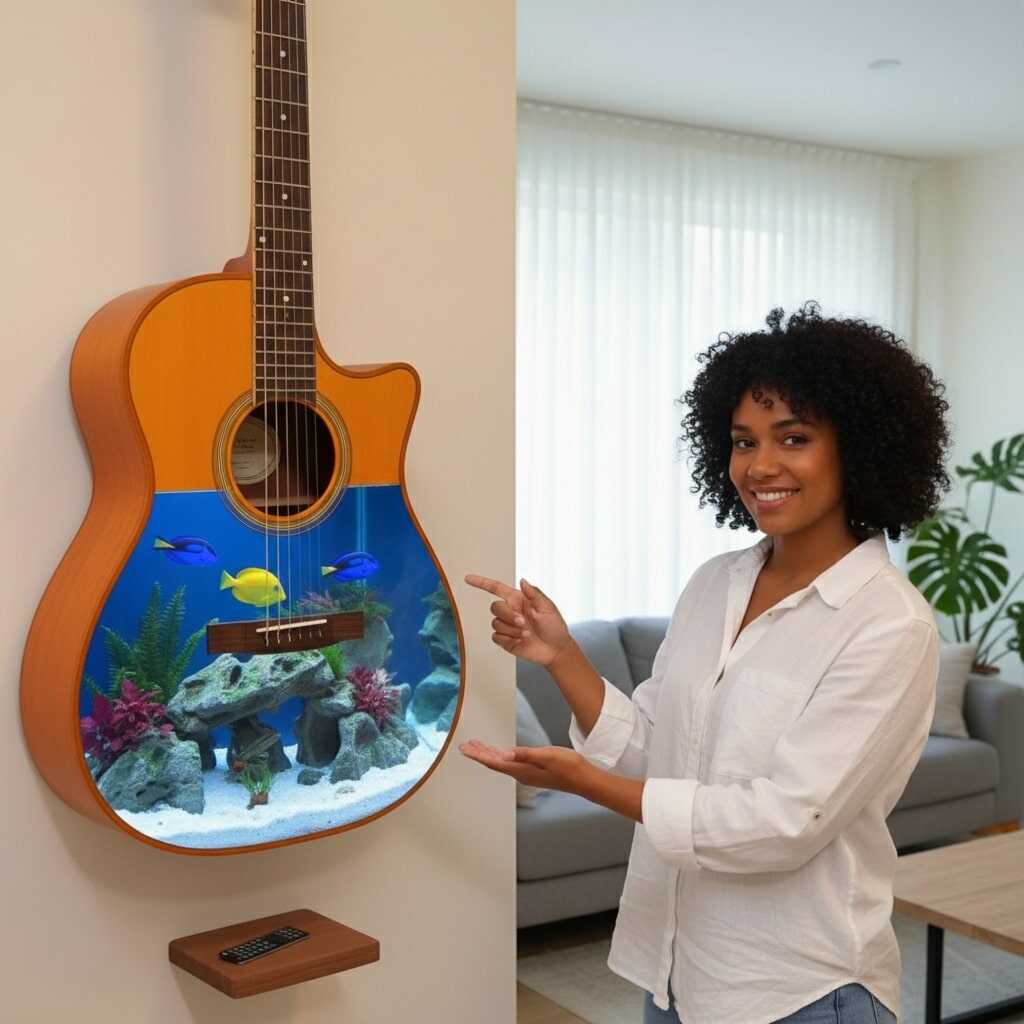
This article explores why Guitar Aquariums have captured the imaginations of enthusiasts across disciplines, delving into their aesthetic magnetism, symbolic depth, and the emotional cadence they bring to both aquatic and musical spaces. Through three distinct lenses—design and symbolism, the emotional resonance with fishkeepers, and the kinship with musical spirit—we uncover why this unique fusion stirs something profound in those who encounter it.
The Sculptural Symphony: Where Form Meets Fluid Life
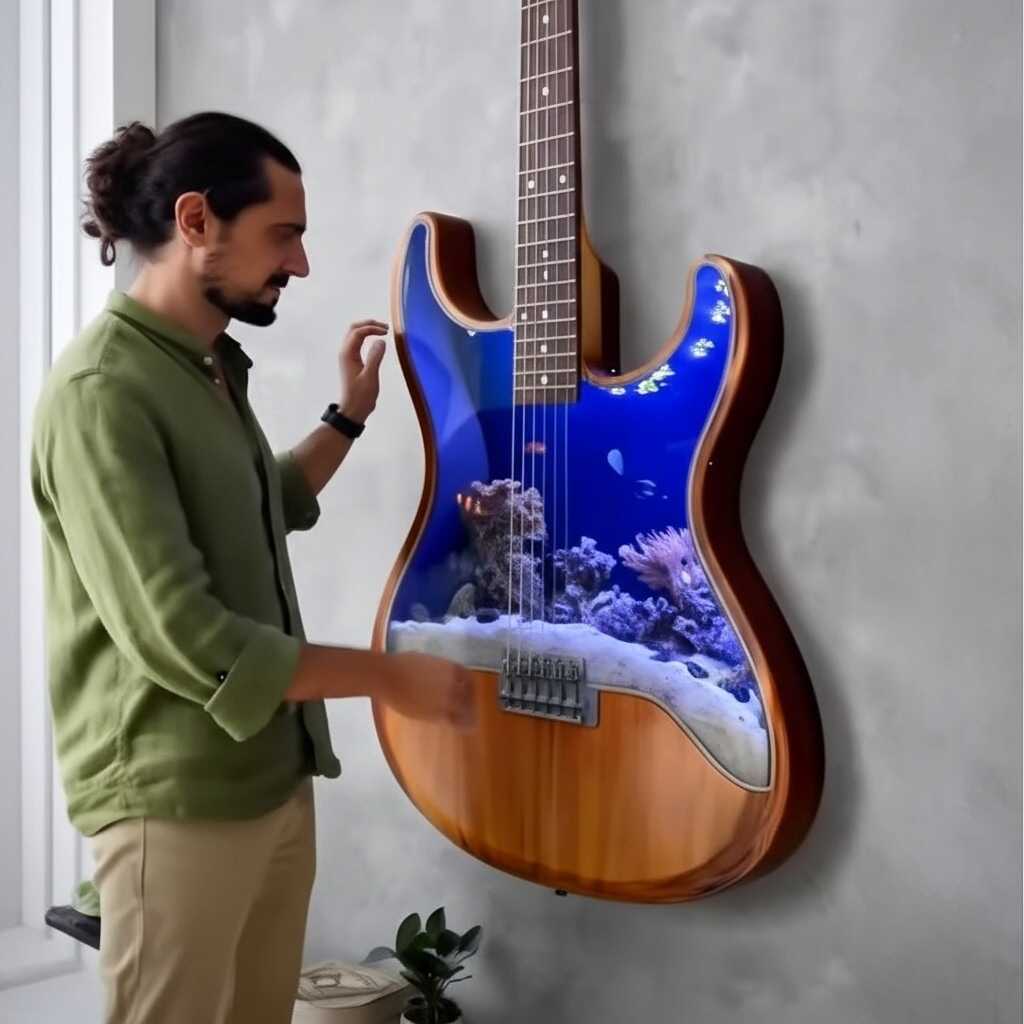
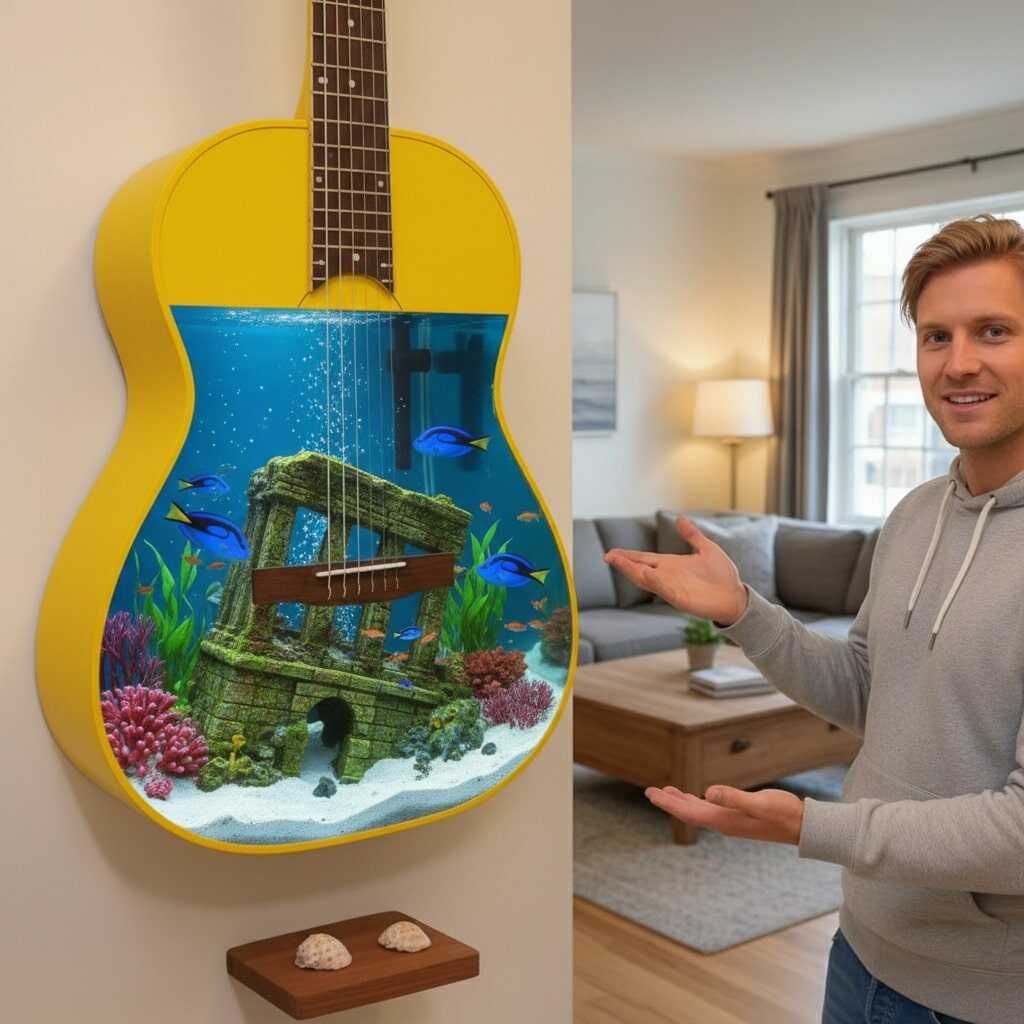
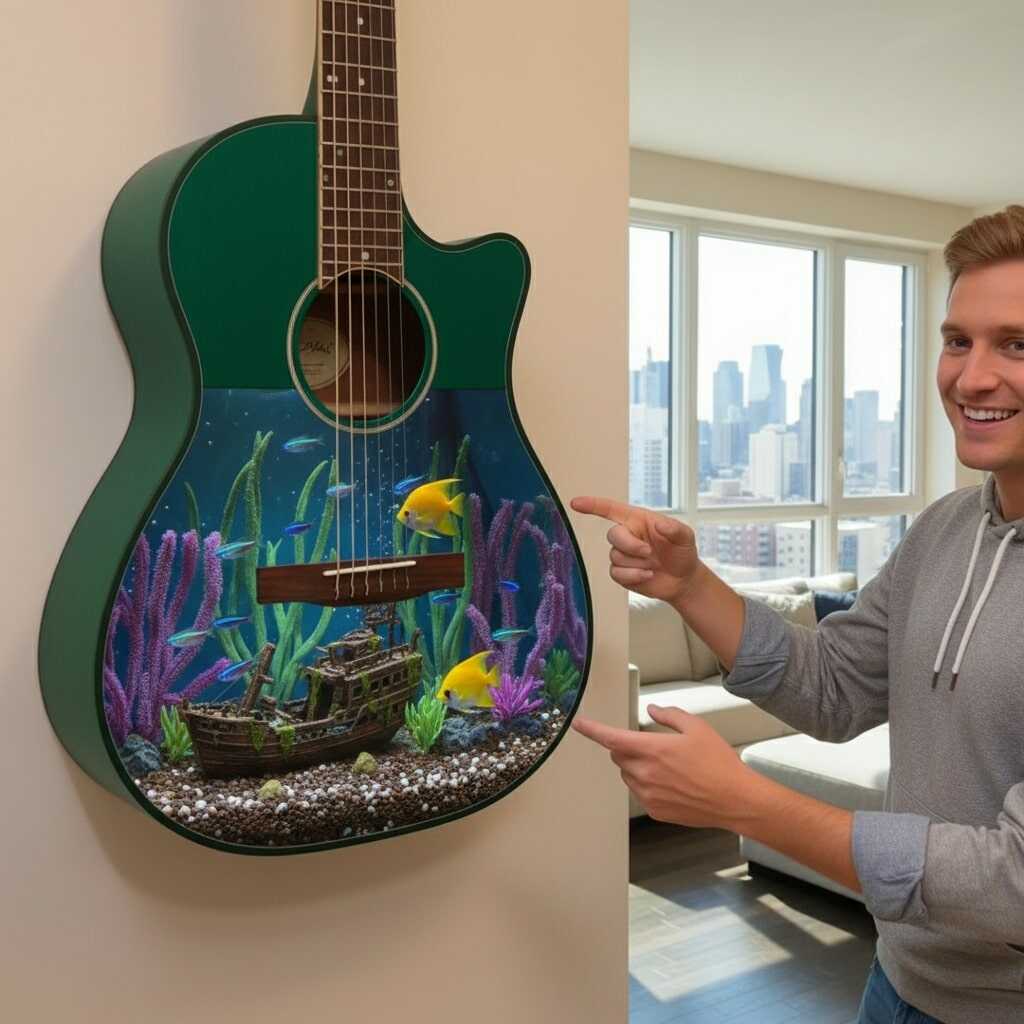
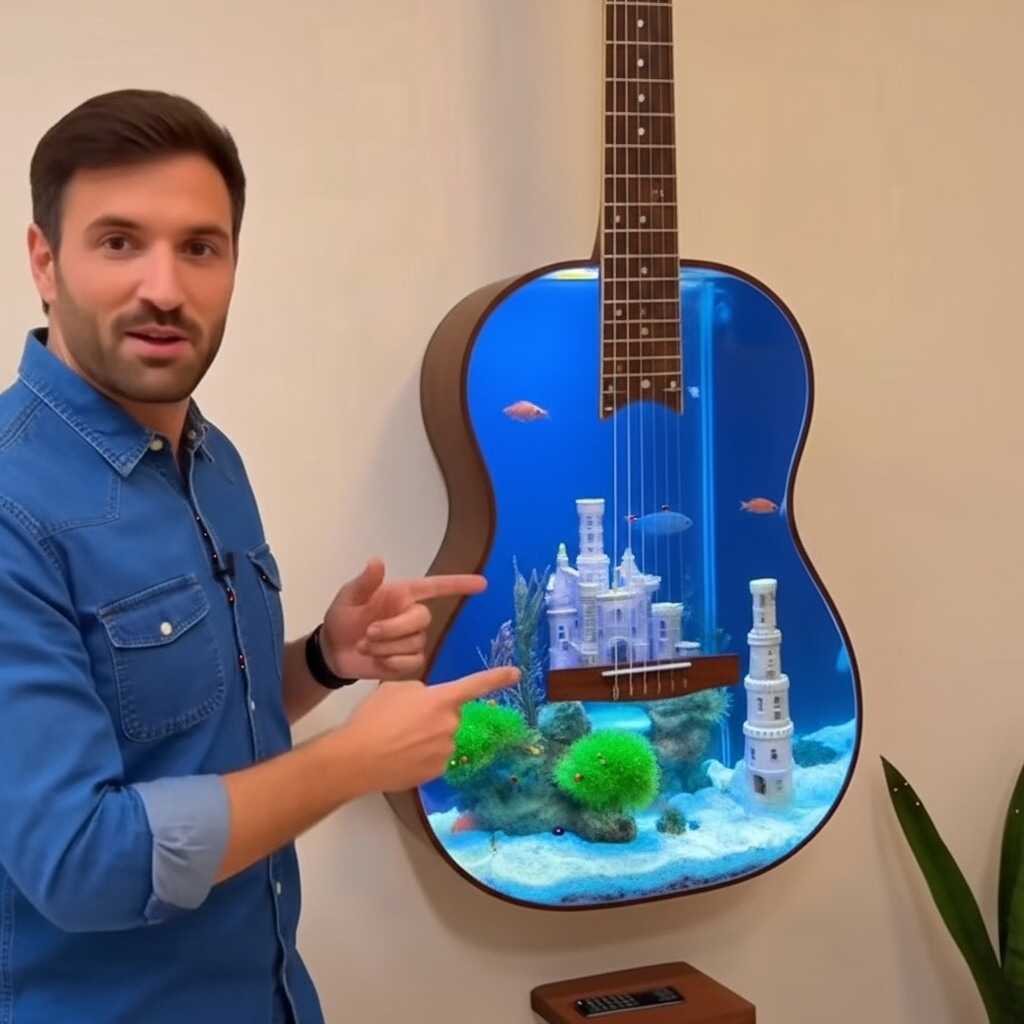
At first glance, a Guitar Aquarium is striking for its unmistakable silhouette. Crafted to mirror the elegant curves of an acoustic or electric guitar, it transforms a functional habitat into a living sculpture. Unlike traditional rectangular tanks confined by rigid geometry, the Guitar Aquarium flows with organic lines that echo the very instruments that have carried human emotion through centuries of song. The body forms the main chamber, often housing aquatic flora and shimmering fish, while the neck may serve as a planted corridor or a serene water feature, and the headstock can be elegantly integrated with filtration systems or lighting elements.
This design is more than visually arresting—it is inherently symbiotic. The rounded contours of the guitar body soften the boundaries between observer and observed, inviting closer communion with the aquatic life within. Water, a fluid and reflective medium, amplifies the sense of movement and grace, turning fish into living notes dancing through liquid staves. Light refracts through the glass, casting prismatic glimmers reminiscent of stage spotlights on a cherished instrument. Every ripple becomes a vibration, every darting fish a riff in an ever-evolving aquatic composition.
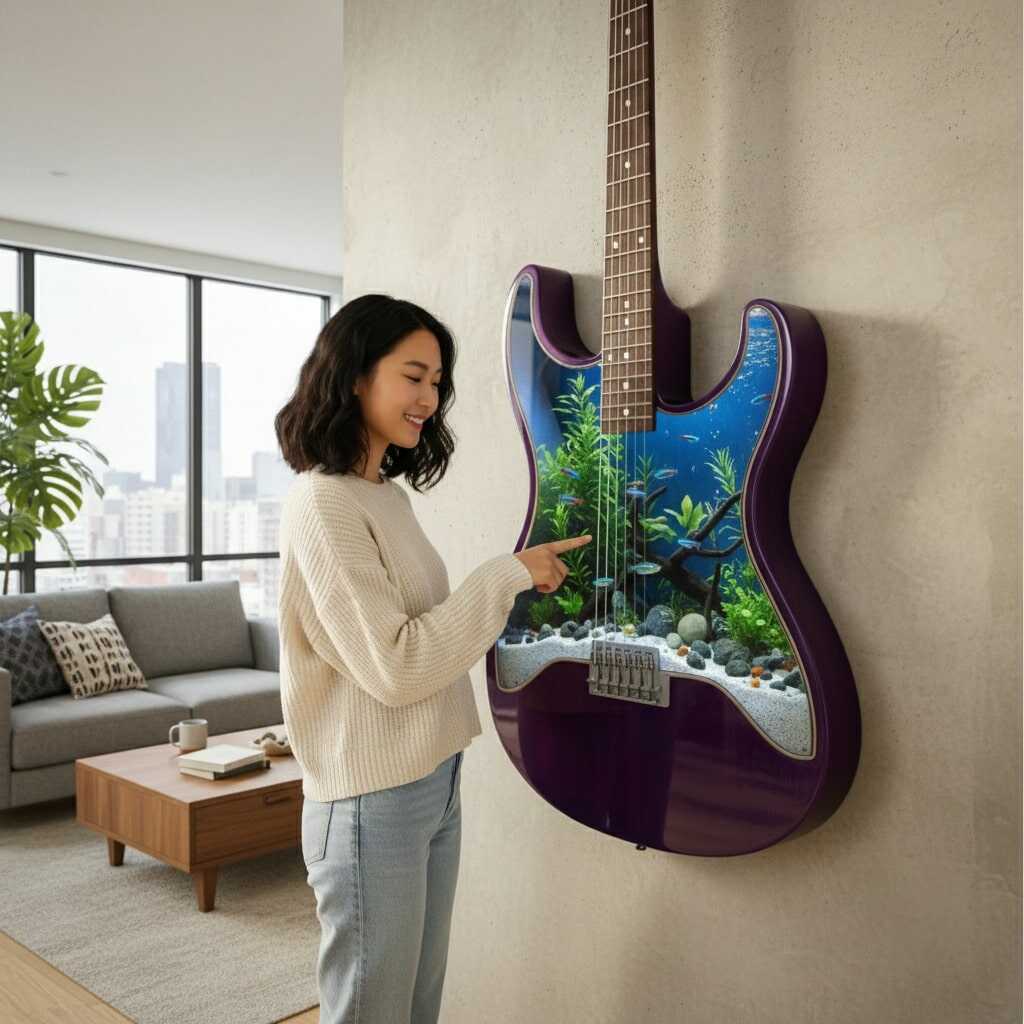
Symbolically, the guitar represents expression—raw, unfiltered, and deeply human. By housing living creatures within its form, the Guitar Aquarium transcends mere representation. It becomes a vessel not just for water, but for life itself. In this way, the aquarium recontextualizes the guitar from an object of performance to one of sanctuary. The music may be silent, but the life within sings a quieter, more ancient song—the pulse of gills, the sway of aquatic plants, the delicate ballet of schooling fish. It is a testament to the idea that beauty need not be heard to be felt; sometimes, it is best witnessed in stillness.
Moreover, the creation of a Guitar Aquarium demands a thoughtful balance between artistic vision and biological necessity. Temperature regulation, water chemistry, filtration, and lighting must all be carefully engineered to suit the needs of aquatic inhabitants while preserving the integrity of the guitar’s form. This delicate equilibrium mirrors the discipline of both musicianship and aquascaping: mastery in either field arises not from imposing will upon the medium, but from listening deeply to its rhythms and responding with care.
The Aquarist’s Muse: Harmony in Habitat and Heart
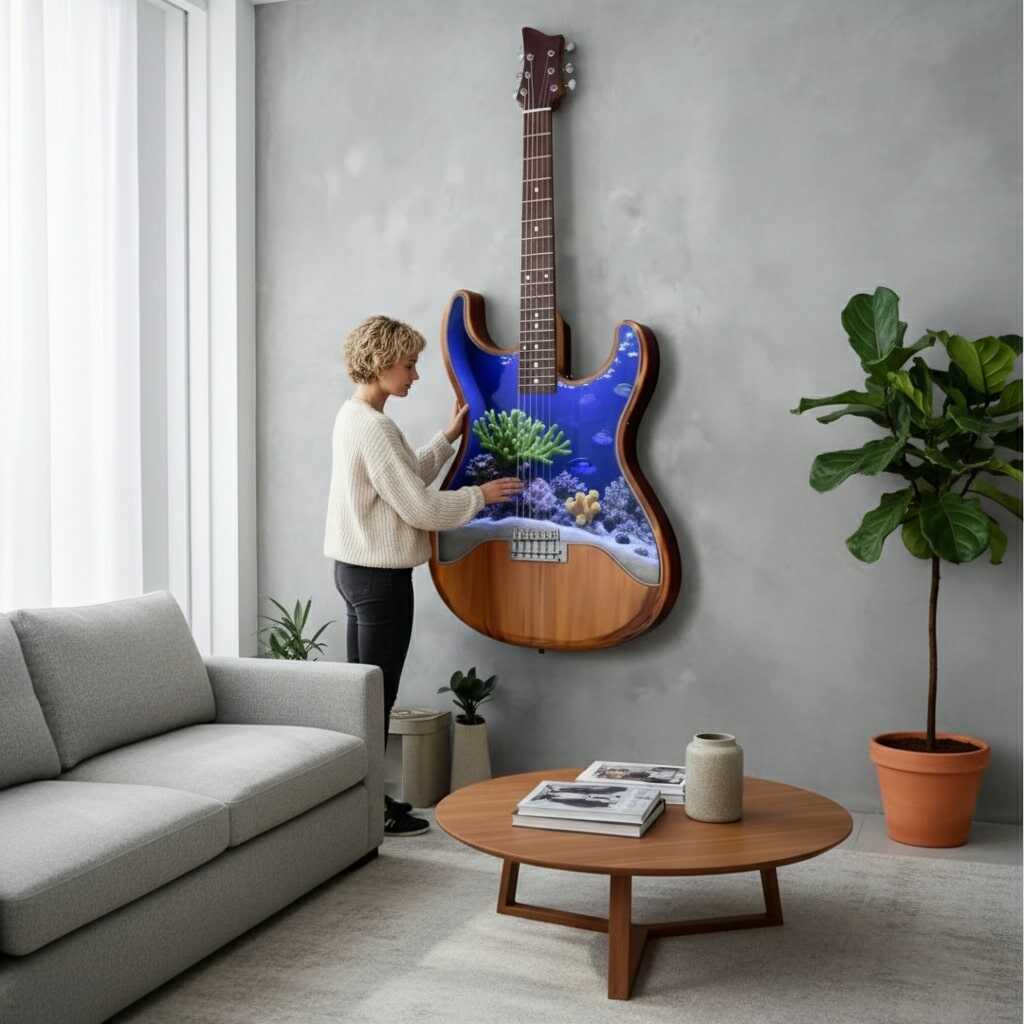
For the dedicated fishkeeper, the Guitar Aquarium is far more than an aesthetic indulgence. It is a canvas that speaks to their core philosophy of stewardship and mindfulness. Traditional aquariums often emphasize control—clean lines, precise layouts, uniform lighting. In contrast, the Guitar Aquarium invites a more intuitive, expressive approach to aquascaping. Its unconventional shape challenges the aquarist to think beyond grids and symmetry, to embrace asymmetry and flow much like a composer crafting a melody with unexpected turns.
This creative challenge fosters a deeper connection between keeper and ecosystem. Designing a landscape within the contours of a guitar body requires imagination and empathy—considering not just what looks beautiful, but what feels right for the fish. Will the angelfish appreciate the vertical expanse of the neck? Do neon tetras find comfort in the shadowed curves of the lower bout? These questions demand more than technical knowledge; they require an artistic sensibility attuned to the emotional needs of living beings.
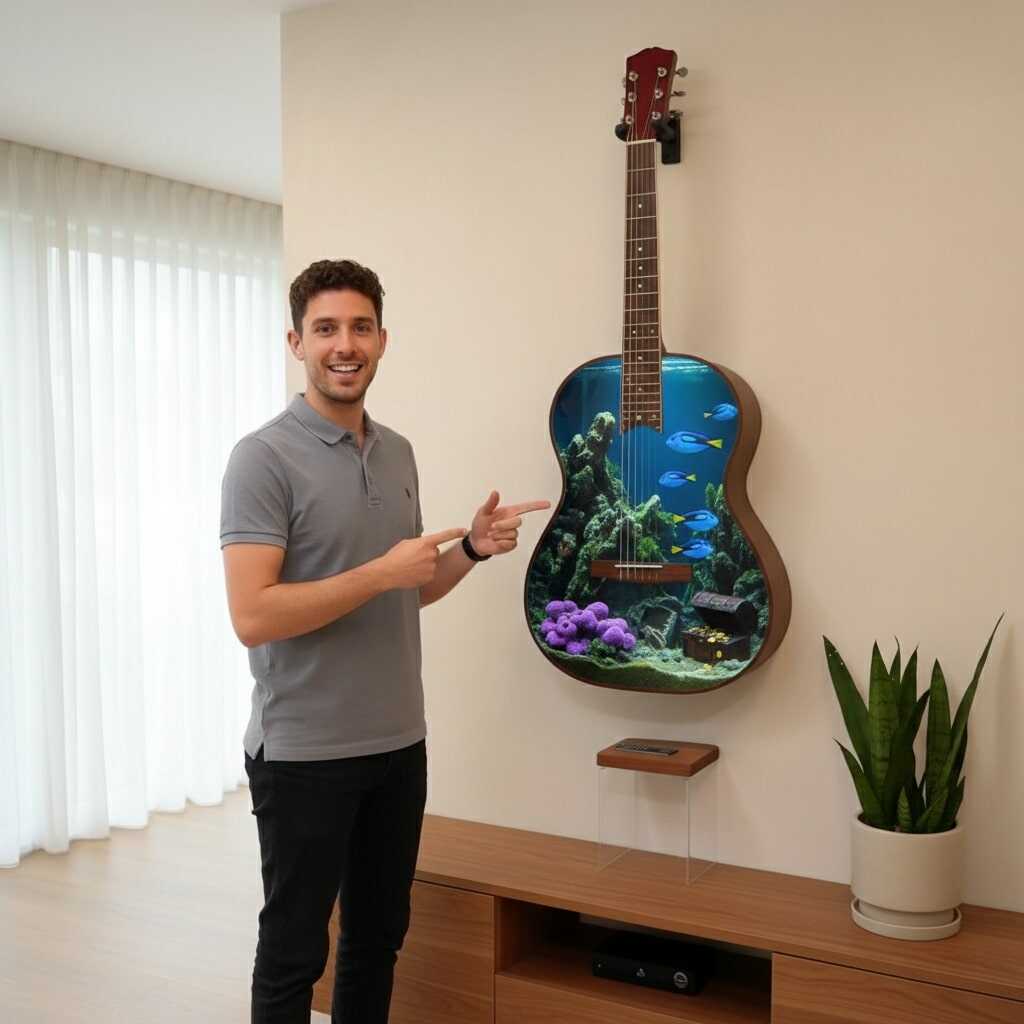
The Guitar Aquarium also mirrors the meditative qualities that draw many to fishkeeping in the first place. Watching fish glide through water has long been recognized as a calming, almost therapeutic practice—a form of moving meditation. When that motion unfolds within the shape of a guitar, the experience becomes layered with metaphor. The tank becomes a silent instrument, played by life itself. Each fish is a note; each plant, a harmonic. Together, they compose a living piece that evolves day by day, season by season, never repeating, never static.
For many aquarists, this synergy between design and life reflects a personal ethos: that caring for another being—whether a pet, a plant, or even an idea—requires both structure and soul. The Guitar Aquarium embodies this duality. Its form provides structure—boundaries that define the space—but the life within breathes soul into those limits. In nurturing this delicate ecosystem, the fishkeeper becomes both caretaker and composer, orchestrating a symphony of coexistence.
Furthermore, the Guitar Aquarium fosters a sense of narrative. Unlike mass-produced tanks, it carries with it an implied story—a silent invitation to wonder. Where did this idea come from? Who first imagined turning an instrument of sound into a home for life? Such questions deepen the keeper’s engagement with their craft, transforming routine maintenance into acts of participation in a larger creative legacy.
The Musician’s Reflection: Echoes of Resonance in Water
Musicians, too, find in the Guitar Aquarium a mirror to their own creative impulses. To a guitarist, the instrument is never just wood and wire; it is an extension of self, a conduit for emotion, a companion through solitude and celebration. Seeing that familiar shape repurposed as a living habitat evokes a profound sense of continuity—of life finding new expression in unexpected forms.
For the musician who may not keep fish, the Guitar Aquarium still holds a magnetic pull. It speaks to the universal desire to leave something behind that continues to breathe and grow—even in silence. Where a played guitar falls quiet when the last chord fades, the Guitar Aquarium remains alive, its music translated into rustling leaves, bubbling filters, and the glint of scales in filtered light. It is a testament to the idea that creativity does not end with the artist; it ripples outward, touching other lives in ways unforeseen.
In rehearsal spaces, studios, or even living rooms, the Guitar Aquarium becomes a visual metronome—a constant, gentle reminder of the rhythm inherent in all things. The steady pulse of the filter mimics a drummer’s beat. The rise and fall of oxygen bubbles resemble the breath of a singer. Fish darting in synchrony echo the interplay of bandmates locked in groove. To the musician, these parallels are not coincidental; they are affirmations of a universal language that transcends medium.
Importantly, the Guitar Aquarium redefines what it means to “play” an instrument. In traditional contexts, play implies active performance—fingers on frets, strings vibrating in air. But in the realm of the Guitar Aquarium, play becomes passive, contemplative, even ecological. The “music” is made not by human hands, but by the interplay of life within a carefully curated space. This shift resonates deeply with contemporary musicians who increasingly view their art as part of a larger ecosystem—interconnected with nature, community, and silence.
There is also a poetic justice in the transformation of a tool of sound into a vessel of stillness. In a world saturated with noise—digital, social, political—the Guitar Aquarium offers an oasis. It asks the musician not to perform, but to witness; not to create sound, but to receive silence. In this quiet presence, many find renewed inspiration. The act of observing life within a guitar-shaped sanctuary can spark lyrics, melodies, or entire compositions born from the interplay of visual beauty and inner calm.
Moreover, the Guitar Aquarium blurs the line between audience and performer. In a concert, the guitarist plays for others. In the presence of a Guitar Aquarium, everyone becomes both observer and participant in a shared moment of wonder. This democratization of the musical experience aligns with the ethos of many modern artists who seek to dissolve barriers between art and life, between creator and community.
The Convergence: A Testament to Interwoven Passions
Ultimately, the enduring allure of the Guitar Aquarium lies in its ability to dissolve boundaries. It is neither wholly aquarium nor wholly instrument, but a hybrid that honors both. It speaks to the human tendency to seek meaning in form, to find music in movement, and to draw connections between seemingly unrelated passions. In doing so, it reveals a deeper truth: that creativity, whether expressed through water or wood, scale or string, stems from the same wellspring—our desire to shape the world with care, imagination, and love.
For fishkeepers, it is a celebration of life’s quiet rhythms. For musicians, it is a silent encore that never ends. And for those who stand at the crossroads of both worlds—or neither—it is simply a moment of beauty that invites pause, reflection, and awe.
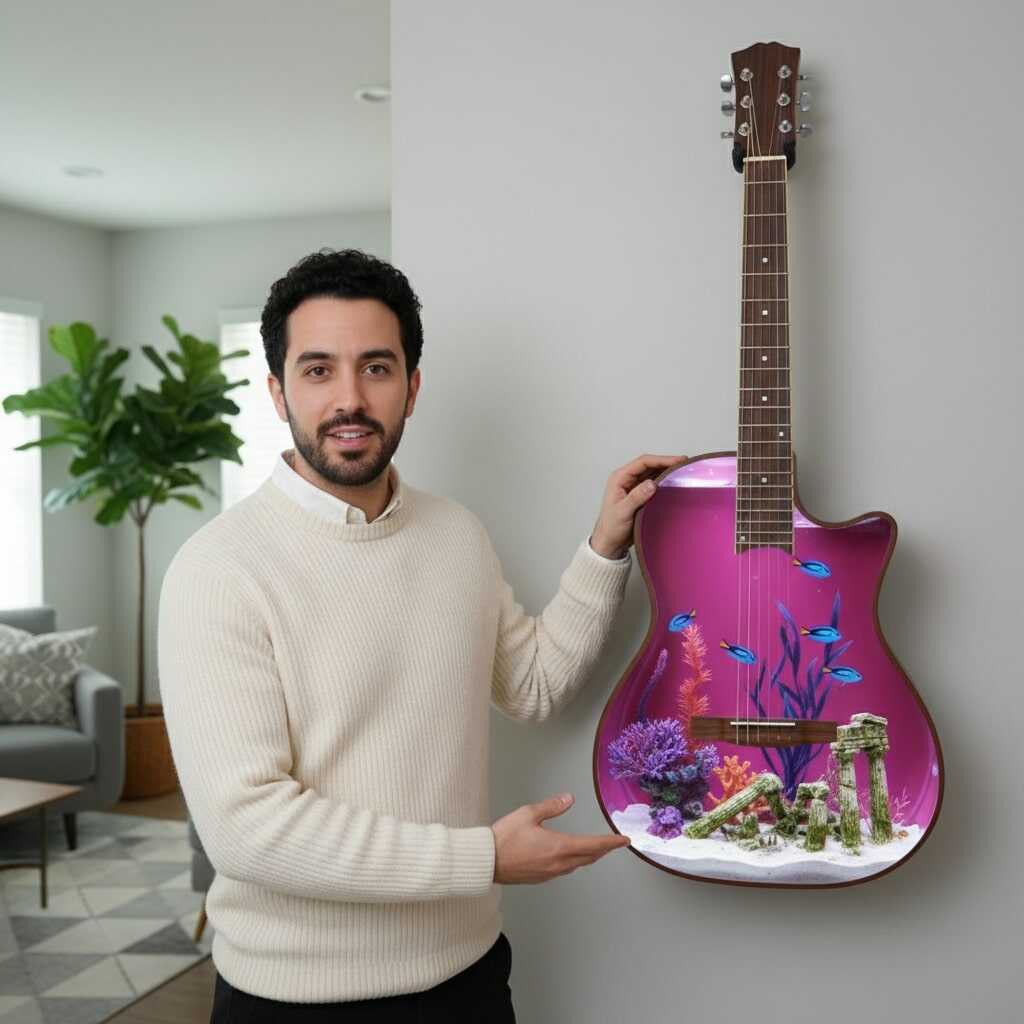
The Guitar Aquarium does not demand attention with volume or flash. Instead, it whispers. And in that whisper, we hear echoes of lullabies sung to sleeping fish, of chords played in empty rooms, of the universal language that binds all living things in a shared dance of existence. It is this quiet profundity that ensures the Guitar Aquarium will continue to captivate—not as a trend, but as a timeless symbol of harmony between art, nature, and the human spirit.
In a world that often pulls us toward specialization and separation, the Guitar Aquarium stands as a gentle reminder: that the most meaningful creations arise not from choosing one path over another, but from finding the place where they meet—and breathe together.