
Where Mobility and Aerial Intelligence Converge
In the relentless pursuit of redefining urban mobility and spatial intelligence, a new archetype has quietly emerged at the intersection of ground-based transport and aerial robotics: the Scooter Drone. More than a novelty or a hybrid gadget, Scooter Drones represent a paradigm shift—a convergence of form, function, and future-thinking that challenges long-held assumptions about how machines move, interact, and coexist with human environments. The term itself is deceptively simple, blending two familiar concepts: the humble electric scooter, emblematic of micro-mobility’s rise in congested cities, and the drone, a symbol of untethered autonomy and digital vision. Yet within this fusion lies a deeper narrative—one that speaks to a world increasingly shaped by multi-modal intelligence, adaptive design, and human-centered technology.
Scooter Drones are not merely vehicles that can both roll and fly. They are dynamic systems engineered to navigate the liminal space between sidewalks and skies, between static infrastructure and fluid motion. They embody a synthesis where innovation is not just about performance or connectivity but about thoughtful design that anticipates complexity, embraces ambiguity, and responds gracefully to the textures of urban life. This article explores the conceptual, technological, and aesthetic dimensions of Scooter Drones—not as commercial products but as cultural artifacts and philosophical statements about what mobility could—and perhaps should—become in the 21st century.
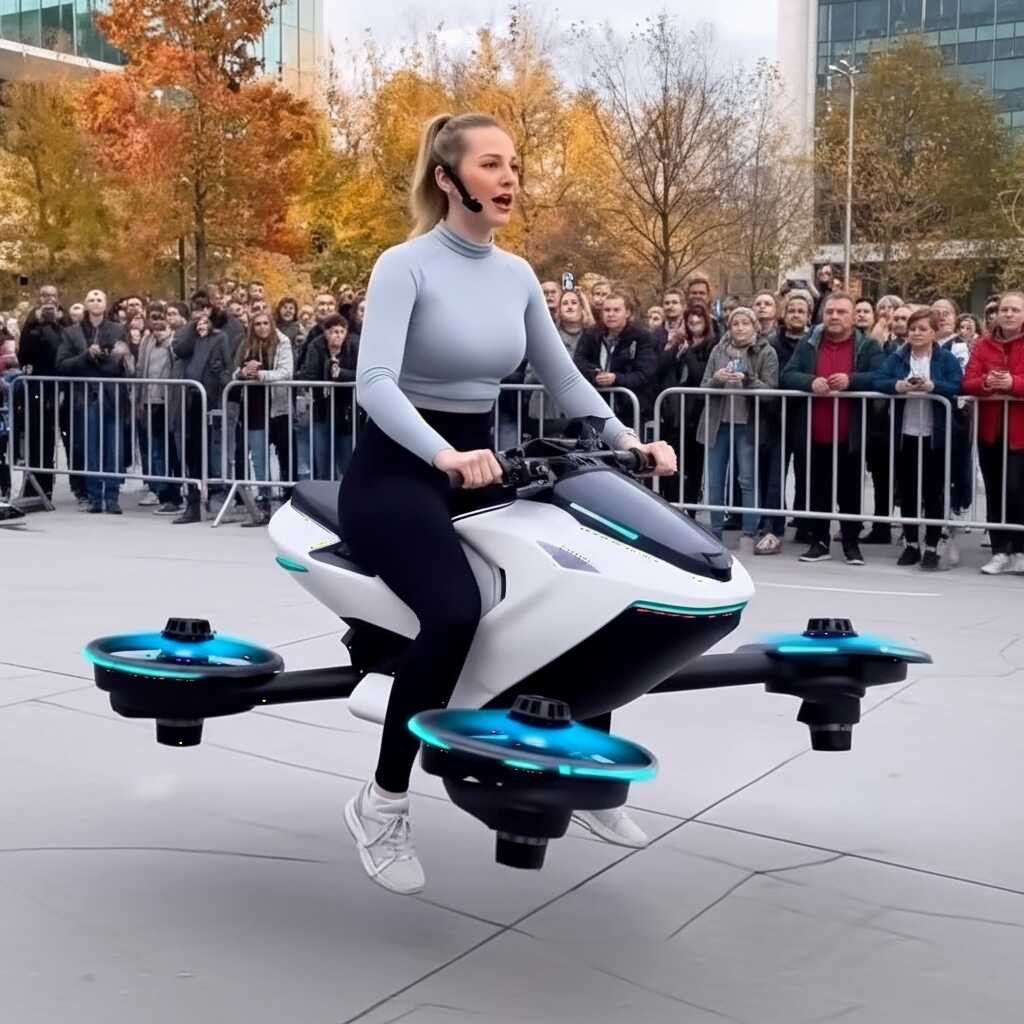
Part I: The Genesis of a Hybrid Form — Rethinking Mobility Beyond Categories
To understand the emergence of Scooter Drones, one must first examine the limitations of existing mobility models. Traditional transportation systems—cars, buses, trains—operate within rigid infrastructural frameworks. Even newer micro-mobility solutions like electric scooters and bicycles, while agile and low-impact, remain constrained to paved surfaces, subject to traffic, weather, and physical obstacles. Meanwhile, drones have unlocked vertical space, offering perspectives and logistics capabilities previously unimaginable. Yet their utility has largely remained tethered to specialized tasks: aerial photography, delivery, surveillance. Neither category alone fully addresses the nuanced, unpredictable realities of dense urban or peri-urban environments.
Scooter Drones arise from the recognition that the future of mobility is not about choosing between ground or air, but about fluidly transitioning between them. Their genesis lies in the conceptual marriage of terrestrial stability and aerial freedom. On the ground, they leverage the efficiency of wheeled locomotion: low energy expenditure, intuitive maneuverability, and seamless integration into pedestrian-scale ecosystems. In the air, they gain the ability to vault over barriers—construction zones, traffic jams, flooded streets—transforming from constrained commuters into agile scouts or responders.
This duality is more than mechanical; it’s philosophical. Scooter Drones reject the binary logic that has long governed transportation design. They don’t ask, “Should I roll or fly?” but rather, “What mode best serves the moment?” This responsive intelligence is key. The innovation isn’t just in having both capabilities but in the system’s ability to assess context and choose the optimal mode autonomously or in collaboration with a human operator. Such adaptability reflects a broader shift in engineering philosophy: from deterministic, single-purpose machines toward resilient, context-aware systems capable of navigating ambiguity.
Moreover, the form factor of Scooter Drones is inherently human-scaled. Unlike bulky flying cars or industrial drones, they echo the compactness of everyday urban tools—a shopping cart, a stroller, a delivery bike. This design choice is deliberate: it ensures that these machines do not dominate space but instead integrate into it. Their presence feels familiar, even unobtrusive, lowering the psychological barrier to adoption and fostering a sense of cohabitation rather than intrusion.
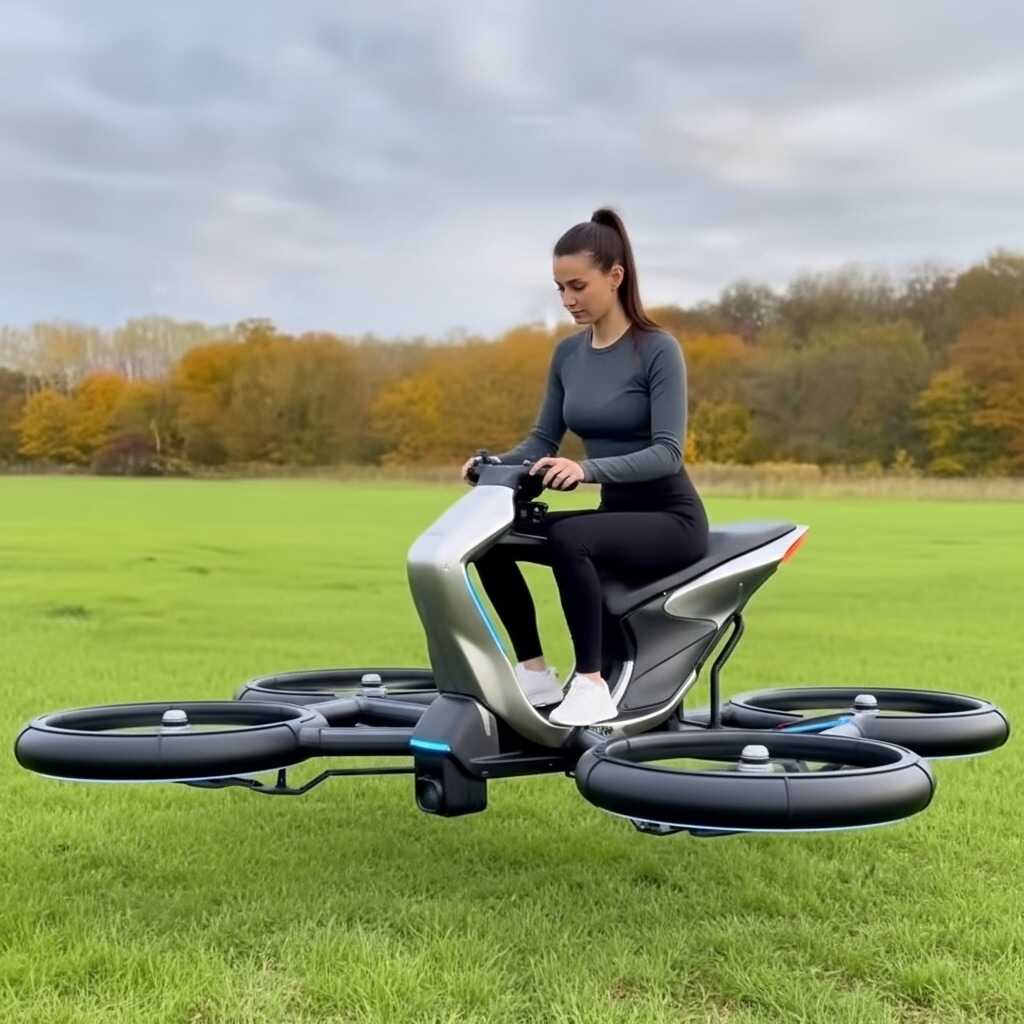
Part II: The Architecture of Intelligence — How Design Shapes Behavior
At the heart of the Scooter Drone phenomenon is a profound integration of hardware, software, and environmental sensing that transcends conventional robotics. What distinguishes these machines is not just their dual-mode locomotion but how their design orchestrates a symphony of perception, decision-making, and action.
Consider the structural architecture. A typical Scooter Drone features a modular chassis that seamlessly transforms between rolling and flying configurations. Propellers may retract into the body when grounded, minimizing visual clutter and safety hazards. Wheels might double as landing gear or kinetic energy harvesters. Materials are chosen not only for lightness and durability but for acoustic properties—dampening the whir of motors in residential zones—or for thermal regulation in varying climates. Every curve, joint, and surface is a deliberate negotiation between aerodynamics, ergonomics, and urban aesthetics.
But the true innovation lies in the cognitive layer. Scooter Drones operate within a multi-sensory ecosystem. LiDAR, stereo cameras, ultrasonic sensors, and inertial measurement units feed a central AI that constructs a real-time model of its surroundings—mapping not just static objects but dynamic flows: pedestrians crossing, vehicles decelerating, wind gusts shifting. This model informs not only navigation but mode-switching logic. For instance, if a Scooter Drone detects a multi-block traffic closure ahead, it might autonomously ascend, navigate over the obstruction, and land just beyond, all while maintaining a safe altitude corridor and avoiding no-fly zones.
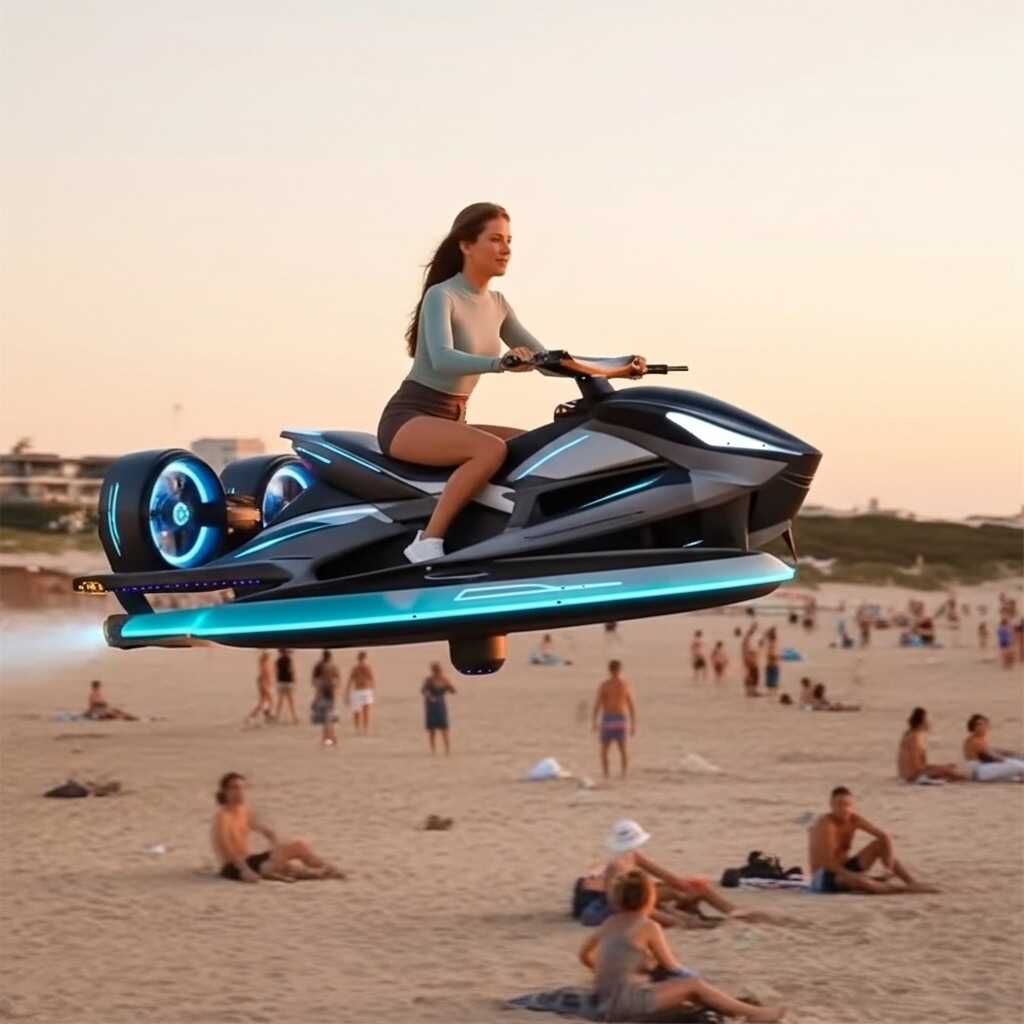
Crucially, this intelligence is not centralized in the cloud but often edge-processed on-device, ensuring low-latency responses and resilience in connectivity-poor areas. The design philosophy here prioritizes autonomy without isolation: the drone can function independently yet remains part of a broader network, capable of sharing anonymized spatial data to improve collective urban understanding.
Equally significant is the human-machine interface. Scooter Drones are designed for intuitive interaction. A simple gesture, voice command, or even contextual awareness (e.g., detecting a user’s approach via Bluetooth) can trigger behaviors. There’s no cockpit, no complex dashboard—just seamless co-navigation. This reflects a deeper design ethos: technology should recede into the background, enabling rather than commanding attention. In public spaces, this subtlety is essential. A Scooter Drone shouldn’t feel like a robot surveilling the street but like a quiet companion navigating it with you.
This human-centered approach extends to social design. Scooter Drones are programmed with urban etiquette—yielding to pedestrians, avoiding sudden movements, signaling intent through soft lighting or gentle sounds. They embody a notion of “polite autonomy,” where technological agency is tempered by social awareness. In doing so, they challenge the stereotype of robots as cold, utilitarian tools and instead position them as participants in the civic fabric.
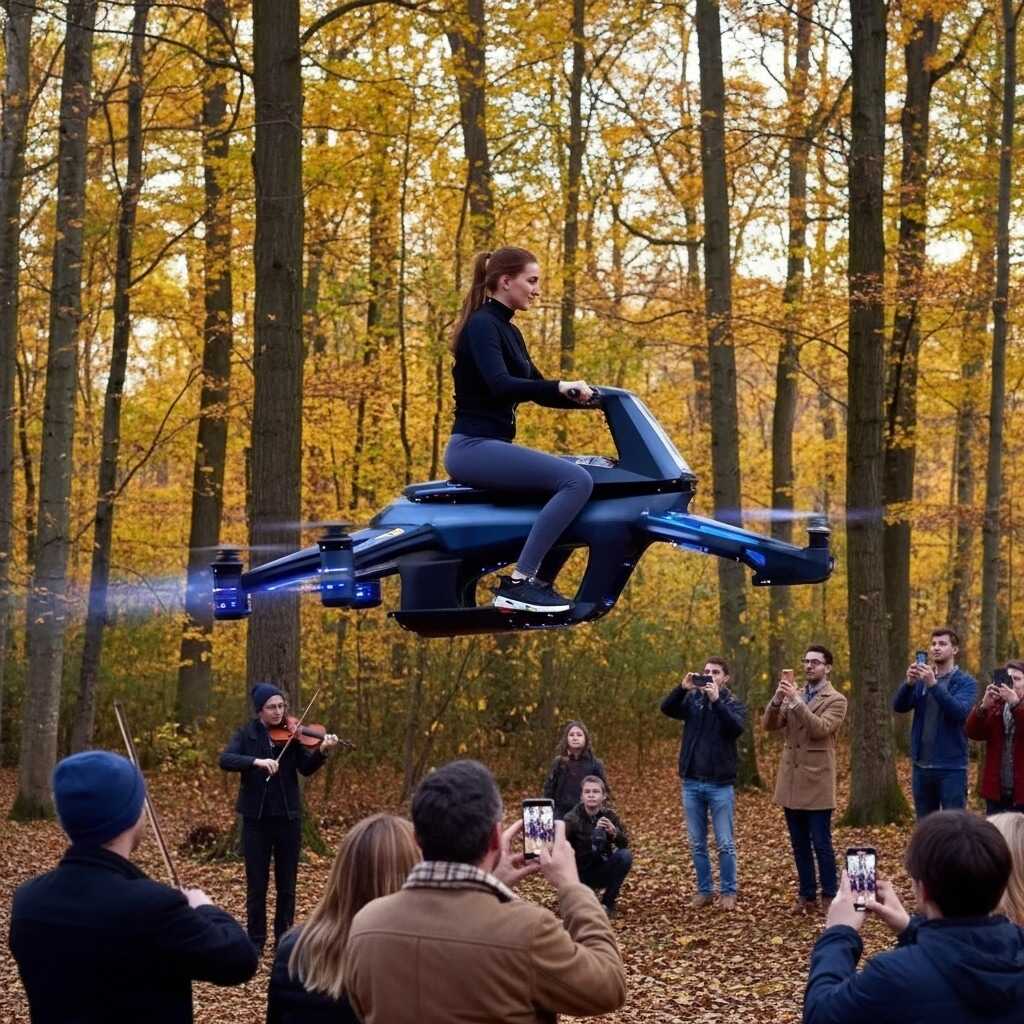
Part III: Beyond Utility — Scooter Drones as Cultural and Environmental Mediators
While the functional capabilities of Scooter Drones are impressive, their deeper significance lies in their symbolic and ecological resonance. They are not just machines that move; they are mediators between humans, cities, and the natural world.
From a cultural standpoint, Scooter Drones reflect a growing desire for fluidity in an increasingly fragmented world. They reject rigid categorizations—ground vs. air, personal vs. public, tool vs. companion—in favor of hybrid identities. This mirrors broader societal trends: the blending of work and life, digital and physical, local and global. In embodying this fluidity, Scooter Drones become metaphors for adaptability, a trait increasingly vital in an age of climate volatility, political uncertainty, and rapid technological change.
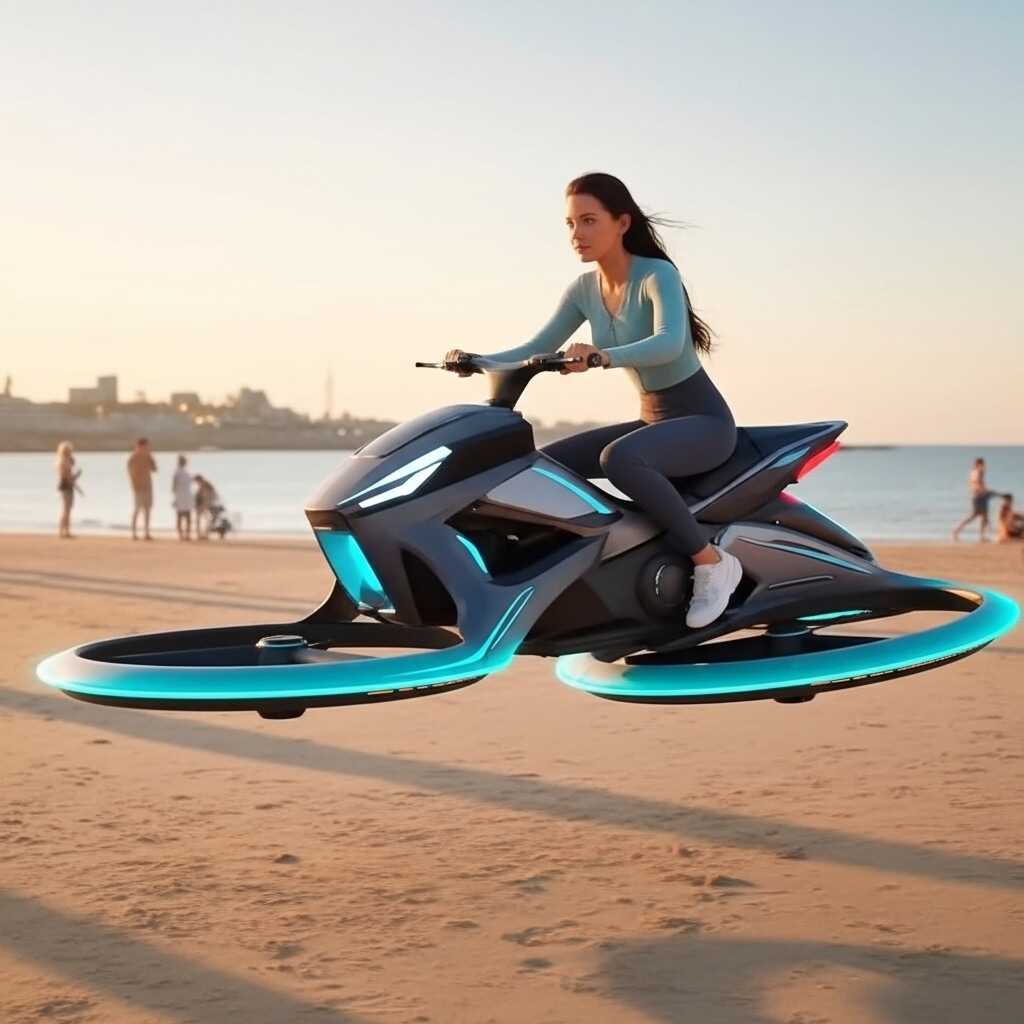
Moreover, they reimagine the relationship between technology and urban space. Rather than demanding cities be redesigned to accommodate them (as with highways for cars or landing pads for flying taxis), Scooter Drones adapt to existing environments. They slip through alleys, perch on benches, hover above plazas—using the city as it is, not as an engineer might wish it to be. This bottom-up approach stands in stark contrast to top-down urban tech interventions, offering a more humble, responsive vision of progress.
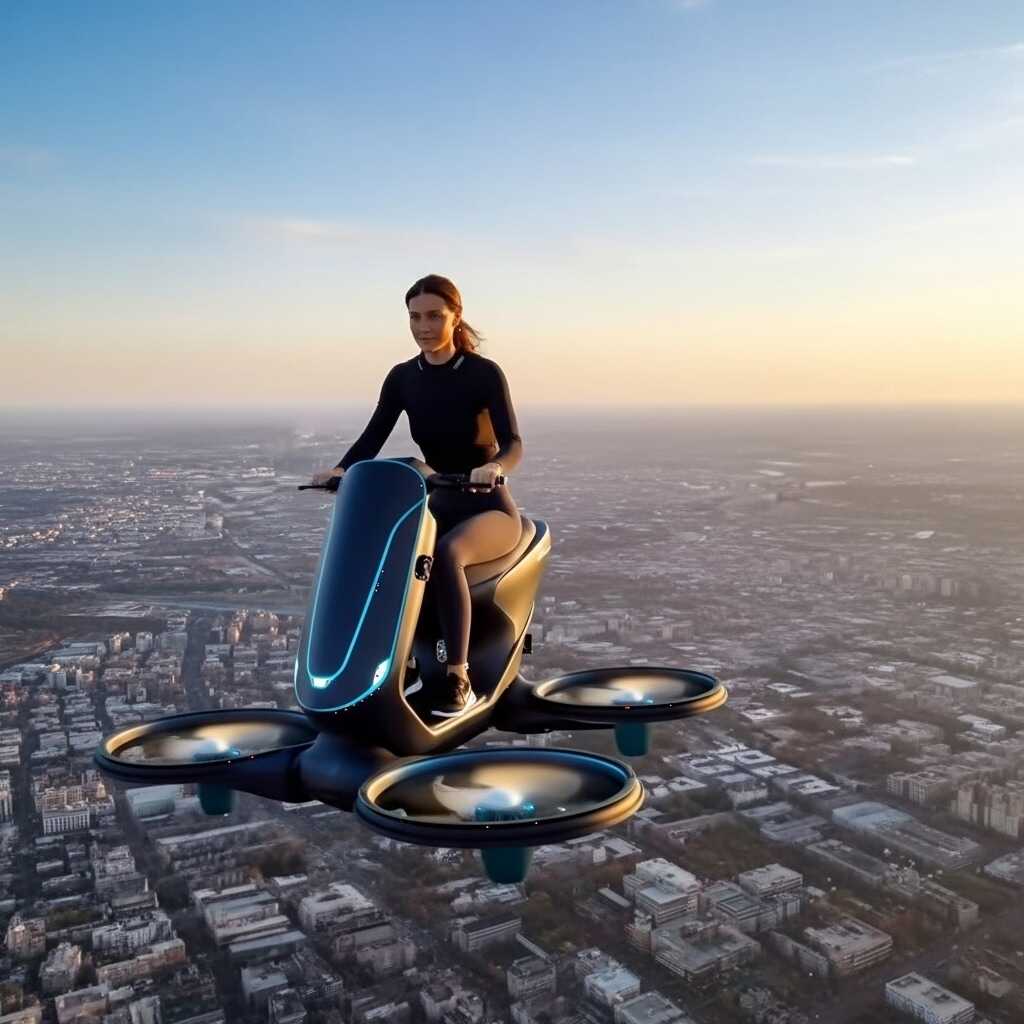
Environmentally, Scooter Drones hold transformative potential. Powered by electric systems and optimized for energy efficiency—using wheels when possible, flight only when necessary—they represent a low-carbon alternative to conventional transport for last-mile logistics, emergency response, or personal mobility. Their small footprint reduces the need for expansive infrastructure, preserving green spaces and minimizing urban heat island effects. In disaster scenarios, they can assess damage without disturbing debris or risking human lives. In ecological monitoring, they can track wildlife or vegetation health with minimal disturbance, blending into the landscape rather than dominating it.
Perhaps most poetically, Scooter Drones encourage a new way of seeing the city. By moving between eye level and bird’s-eye view, they collapse the distance between the intimate and the panoramic. A user might begin a journey rolling past street vendors and buskers, then ascend to witness the sunset over a skyline, all within a single, continuous experience. This dual perspective fosters a richer understanding of urban ecosystems—not as static backdrops but as layered, living networks. In doing so, Scooter Drones become not just vehicles of transit but instruments of perception, inviting us to engage with our surroundings more deeply.
Conclusion: The Horizon of Thoughtful Motion
The rise of Scooter Drones is not merely a technological milestone; it is a declaration of intent about the kind of future we wish to inhabit. In a world saturated with gadgets that prioritize speed over sense, convenience over context, and novelty over nuance, Scooter Drones stand apart by embodying a different set of values: adaptability, humility, integration, and grace.
They remind us that true innovation is not about adding more features but about deeper understanding—of environments, of human needs, of the delicate balance between autonomy and community. Their design speaks not in the language of domination but of dialogue; not of disruption but of harmony.
As cities continue to evolve under the pressures of population growth, climate change, and digital transformation, the need for intelligent, flexible, and respectful mobility solutions will only intensify. Scooter Drones offer a compelling vision: one where machines do not replace human experience but enhance it, where technology serves not as an end but as a bridge—between ground and sky, between function and beauty, between present constraints and future possibilities.
In the end, the story of Scooter Drones is less about what they can do and more about how they make us think. They challenge us to reimagine boundaries, to value versatility over specialization, and to design not just for efficiency but for meaning. In that sense, they are not just the future of mobility—they are a mirror held up to our aspirations for a world where innovation and design walk, roll, and fly hand in hand.