
In the ever-evolving landscape of unmanned aerial systems (UAS), innovation continues to push the boundaries of how humans interact with and deploy autonomous technology. Among the more intriguing developments in recent years is the emergence of “waist-mounted drones”—a concept that fuses wearable ergonomics with aerial robotics to create a new paradigm in personal drone deployment. Unlike traditional drones that are carried in backpacks, handheld cases, or launched from the ground, waist-mounted drones are designed to be worn around the user’s torso, ready for immediate deployment and retrieval without requiring manual handling during flight operations. This design philosophy reflects a deeper shift toward seamless integration between operator and machine, prioritizing accessibility, responsiveness, and intuitive control.
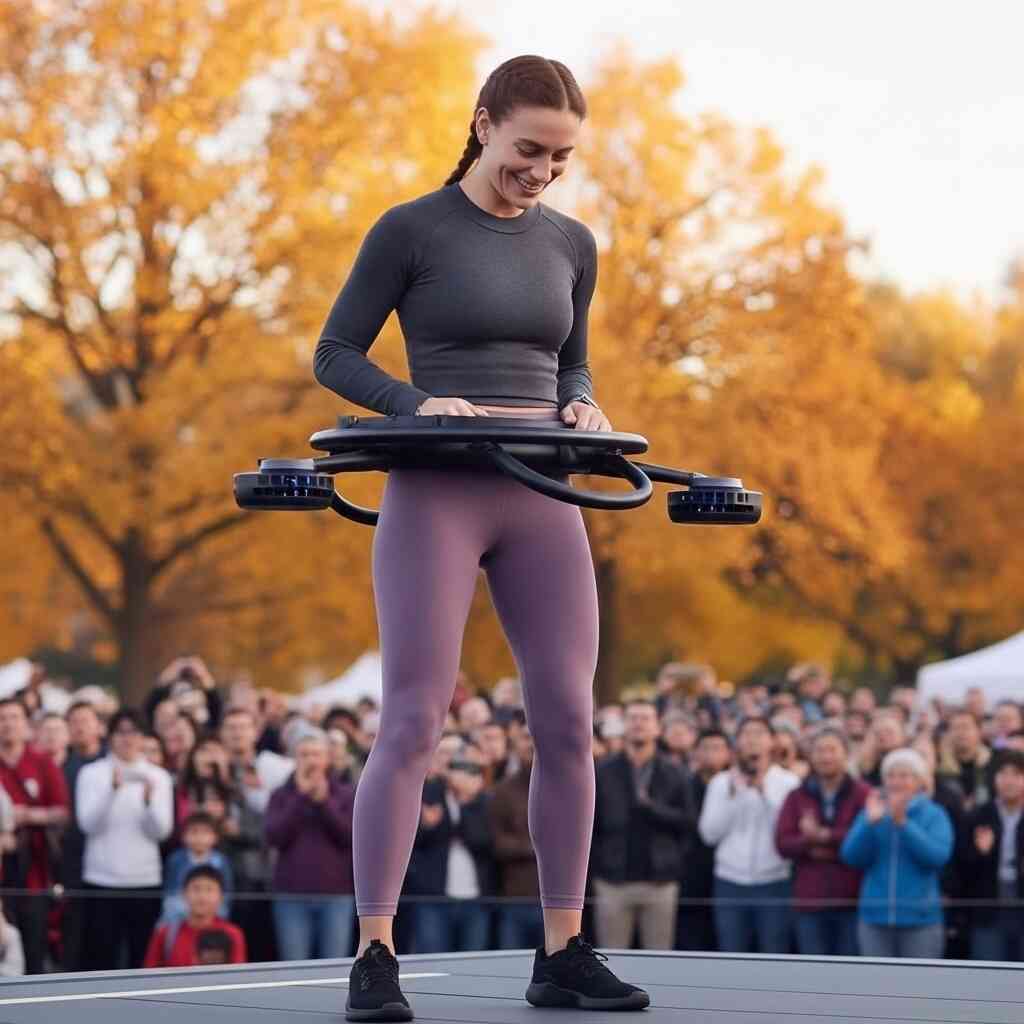
The term “waist-mounted drones” may evoke images of science fiction or futuristic exoskeletons, but the reality is grounded in practical engineering and human-centered design. These systems are not merely drones strapped to a belt; they represent a sophisticated convergence of mechanical engineering, autonomous navigation, human-robot interaction, and ergonomic science. Their purpose is to reduce the cognitive and physical burden on the operator while maximizing operational readiness—particularly in dynamic or time-sensitive scenarios such as search and rescue, infrastructure inspection, or tactical reconnaissance.
This article explores the concept of waist-mounted drones in depth, unpacking their design principles, operational mechanics, technological underpinnings, and functional implications. By examining how these systems work—from stowed configuration to autonomous flight and return—we aim to illuminate not only their technical architecture but also their role in redefining the relationship between humans and aerial robots. The discussion is structured into three core sections: the foundational concept and design rationale, the mechanics of deployment and autonomous operation, and the broader implications for human-robot collaboration.
Part 1: The Concept and Design Philosophy Behind Waist-Mounted Drones
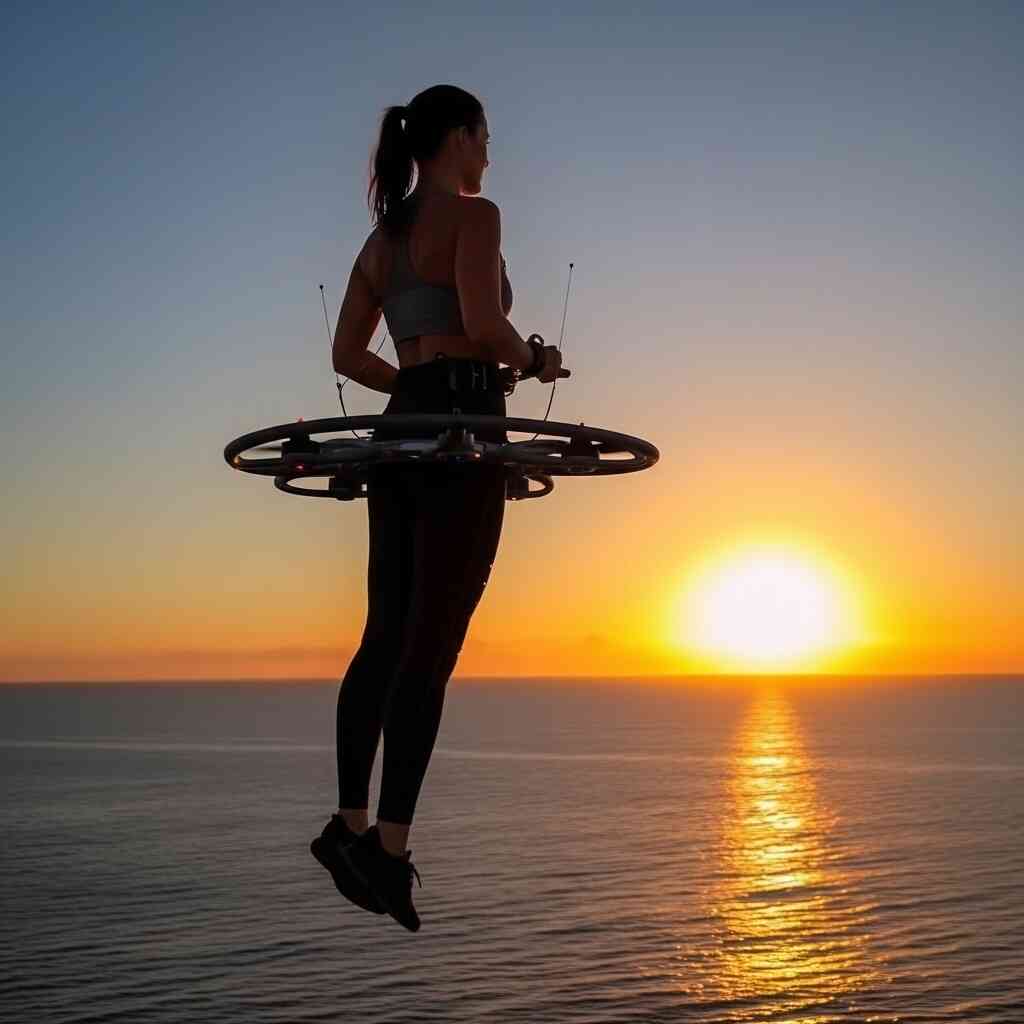
At its core, a waist-mounted drone is an aerial robot engineered to be worn on the user’s lower torso, typically secured via a harness, belt, or modular carrier system integrated into tactical or field gear. This configuration is not arbitrary; it stems from a deliberate design philosophy that prioritizes three key attributes: accessibility, stability, and minimal interference with the user’s mobility.
Ergonomic Integration and Human-Centric Design
Traditional drone deployment often requires the operator to stop, unpack the device, perform pre-flight checks, and manually launch it—steps that can be cumbersome in fast-paced or physically demanding environments. Waist-mounted drones eliminate much of this friction by remaining in a “ready-to-fly” state while worn. The waist is chosen as the mounting point for several ergonomic reasons. First, it is a natural center of mass for the human body, allowing the added weight of the drone (typically 1–3 kilograms) to be distributed without significantly altering balance or gait. Second, the waist offers a relatively stable platform compared to limbs, reducing vibration and movement that could interfere with the drone’s internal sensors or structural integrity during transit.
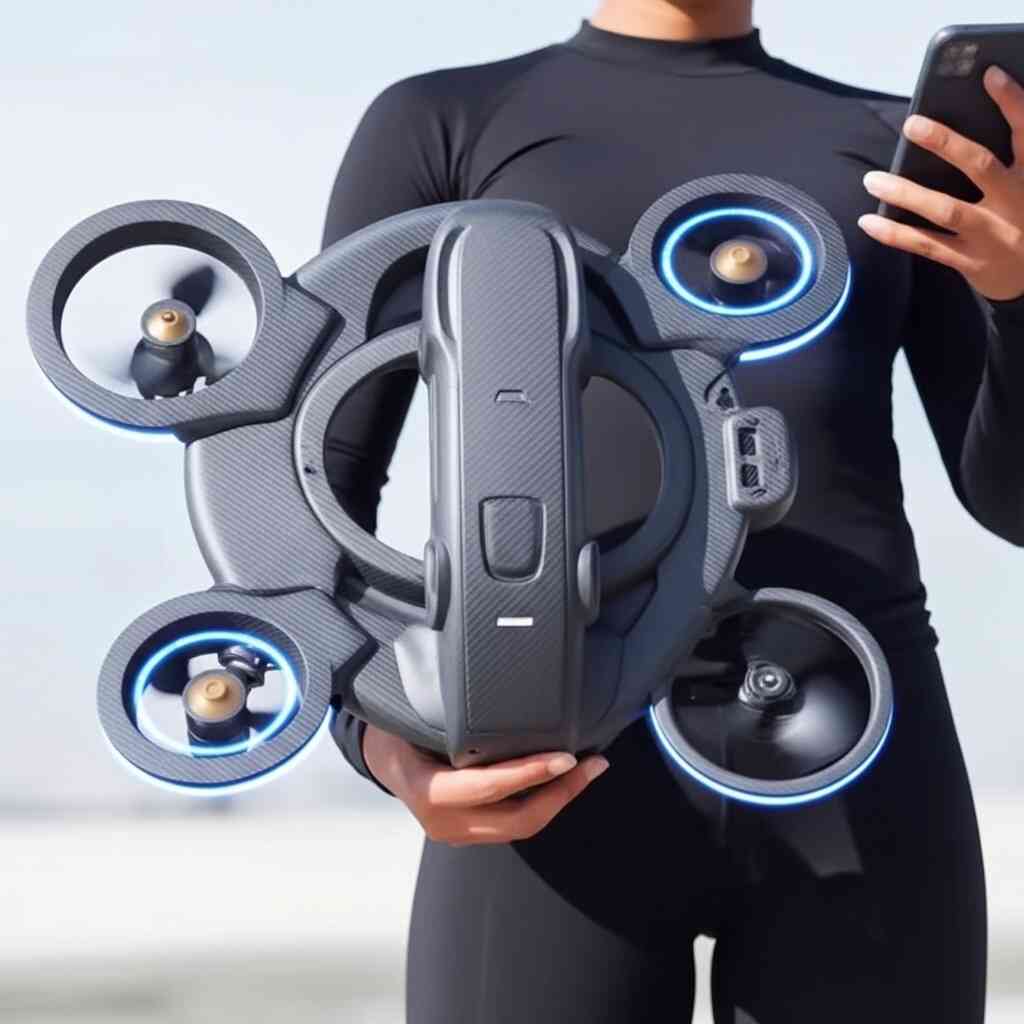
Moreover, waist-mounted systems are designed to conform to the body’s contours. Advanced models use flexible mounting brackets, shock-absorbing materials, and quick-release mechanisms that allow the drone to detach smoothly during launch. The carrier itself may include protective shrouds or folding arms that keep the propellers shielded when not in use, preventing accidental contact and damage.
Form Factor and Modular Architecture
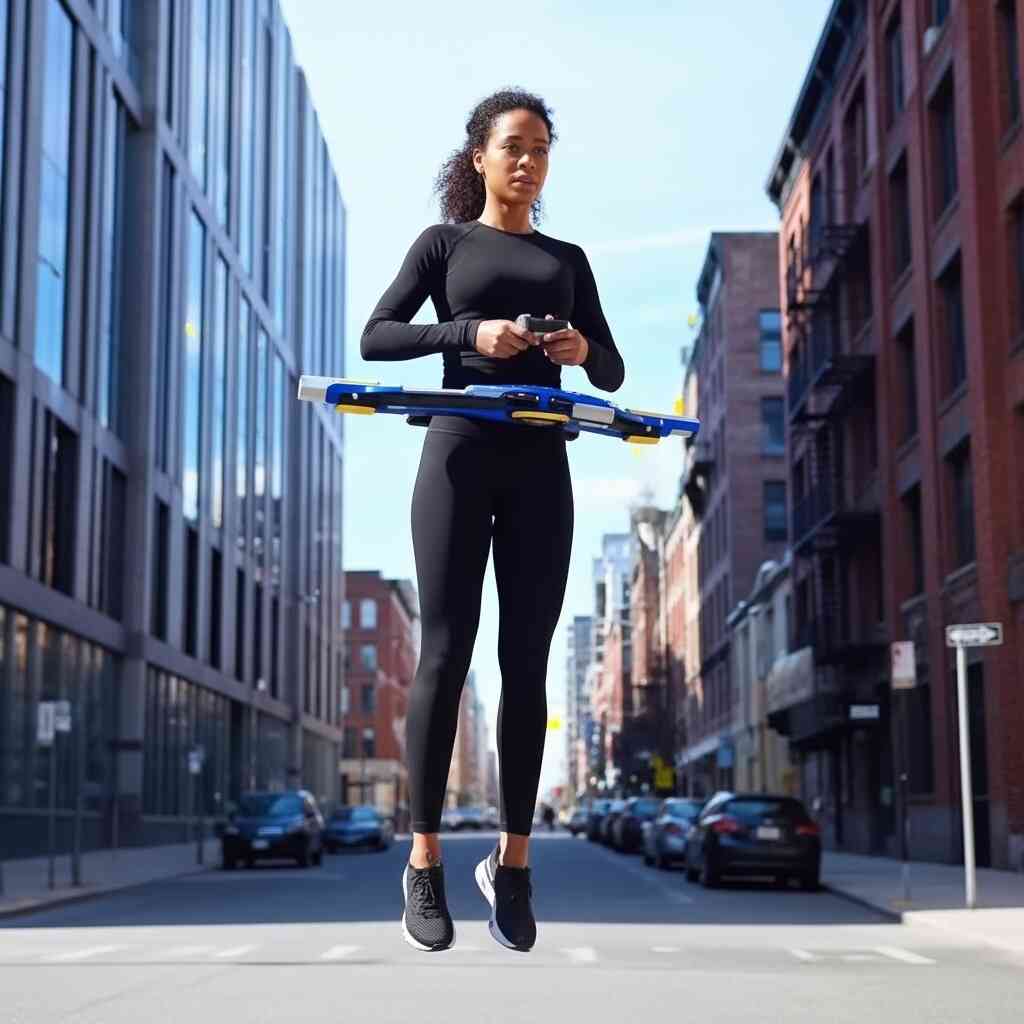
Waist-mounted drones are typically compact, often featuring foldable or collapsible arms to minimize their stowed profile. This compactness is essential not only for wearability but also for rapid deployment. Some designs adopt a cylindrical or disc-like shape when stowed, enabling them to nest neatly against the hip or lower back. The propulsion system is usually based on multirotor architecture (quadcopter, hexacopter), chosen for its vertical takeoff and landing (VTOL) capability and maneuverability in confined spaces.
Critically, these drones are not just miniaturized versions of larger UAVs. Their onboard systems—flight controllers, batteries, sensors, and communication modules—are re-engineered to function reliably in a constrained form factor while enduring the mechanical stresses of being worn during physical activity. This often involves custom PCB layouts, high-energy-density batteries, and ruggedized components.
Operational Context and Use Cases
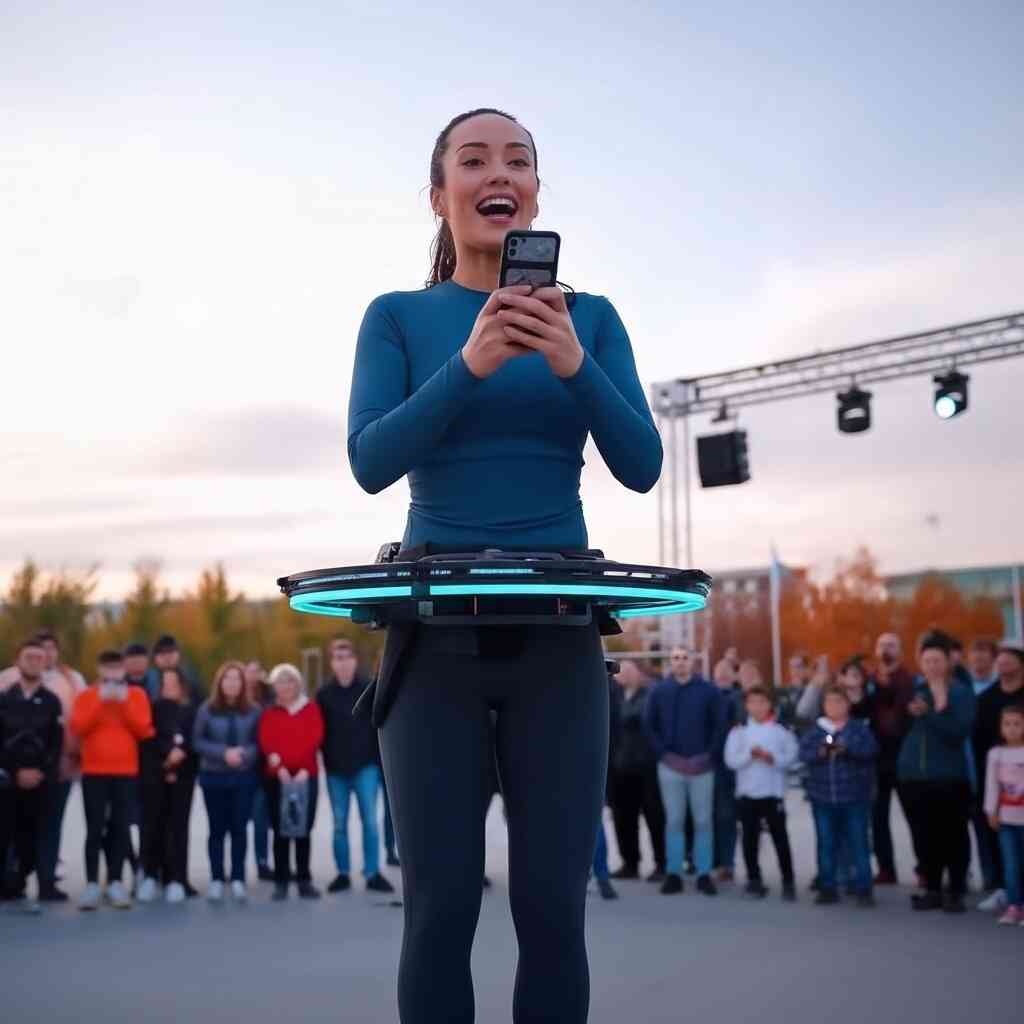
While waist-mounted drones can theoretically serve recreational purposes, their design is primarily driven by professional and mission-critical applications. Firefighters navigating smoke-filled buildings, soldiers operating in urban combat zones, or utility inspectors scaling transmission towers all benefit from having an aerial scout that can be deployed instantly without setting down gear or breaking stride. In these contexts, seconds matter, and the ability to launch a drone with a voice command or a button press—while continuing to move—represents a significant tactical and operational advantage.
The design philosophy thus emphasizes “always-ready” functionality: the drone remains charged (or chargeable via the carrier), calibrated, and connected to the operator’s control interface, whether that’s a wrist-worn display, smart glasses, or a voice-activated assistant. This level of integration transforms the drone from a tool into an extension of the user’s perceptual and spatial awareness.
Part 2: How Waist-Mounted Drones Work—From Stowage to Autonomous Flight
Understanding how waist-mounted drones function requires examining their operational lifecycle: stowage, launch, flight, and retrieval. Each phase involves a blend of mechanical automation, sensor fusion, and intelligent software that enables seamless transitions between human-worn and autonomous aerial states.
Stowage and Power Management
When not in use, the drone resides in a secure, low-profile cradle integrated into the waist harness. This cradle often includes electrical contacts that maintain a trickle charge to the drone’s battery, ensuring it remains operational for extended periods. Some advanced systems feature thermal management to prevent battery degradation during prolonged wear in hot environments. The drone’s arms are either folded inward or locked in a protective shell, and the propellers are covered to prevent entanglement with clothing or gear.
Importantly, the drone remains in a low-power “standby” mode, continuously monitoring its internal state and external commands. It may sync with the user’s wearable controller via Bluetooth or a dedicated RF link, ready to receive activation signals.
Autonomous Launch Mechanism
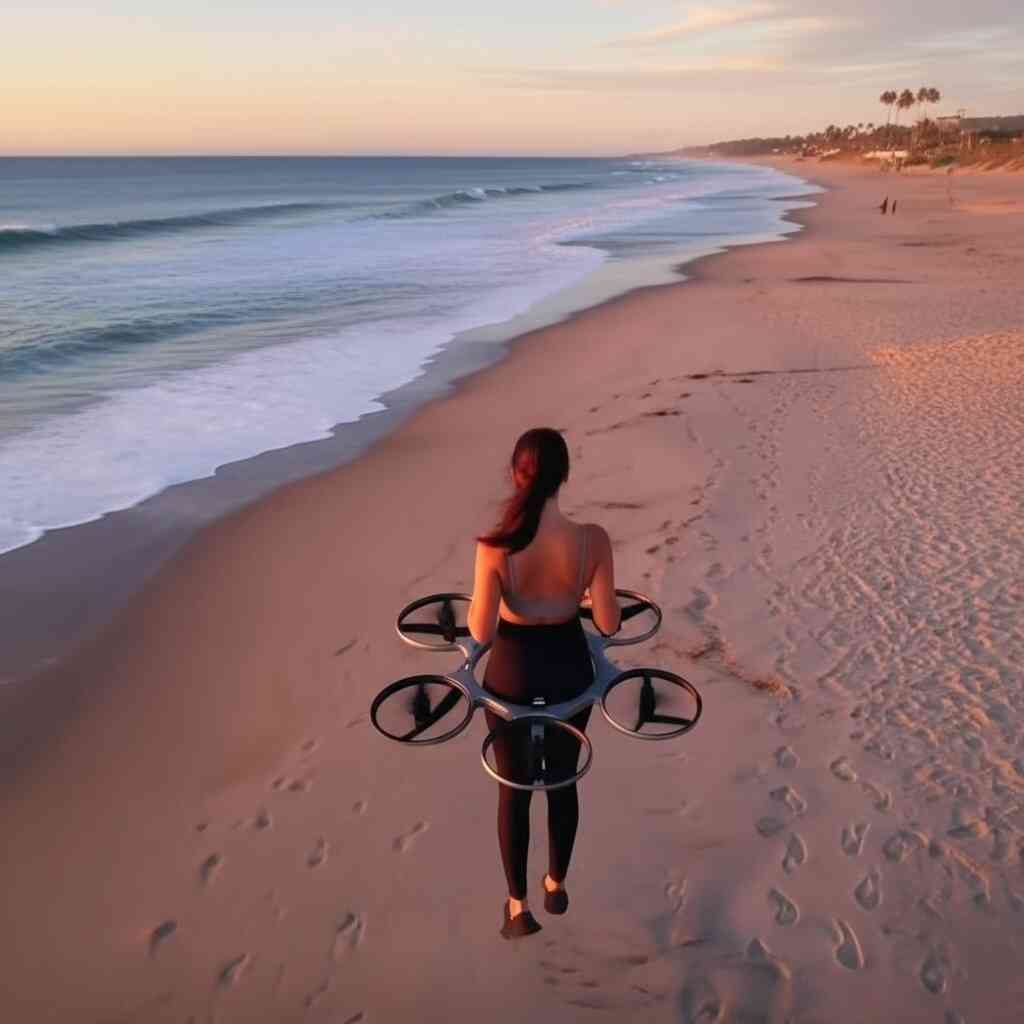
Activation typically occurs through a deliberate user input—such as pressing a button on a belt-mounted controller, issuing a voice command (“Deploy scout”), or performing a predefined gesture detected by an inertial measurement unit (IMU). Upon activation, the drone initiates a launch sequence:
- Unlocking: Electromechanical latches release the drone from its cradle.
- Arm Deployment: Folding arms extend rapidly, often using spring-loaded or motorized mechanisms.
- Self-Check: The flight controller performs a rapid diagnostic (gyro calibration, GPS lock, motor test).
- Liftoff: Within 2–3 seconds of activation, the drone ascends vertically to a pre-set hover altitude (e.g., 3–5 meters above the user).
This entire sequence is autonomous. The user does not need to hold or toss the drone; it launches directly from the waist harness. The initial ascent is carefully controlled to avoid collision with the user’s body or nearby obstacles, often using downward-facing sensors (e.g., ultrasonic or LiDAR) to detect clearance.
Flight Navigation and Human-Following Behavior
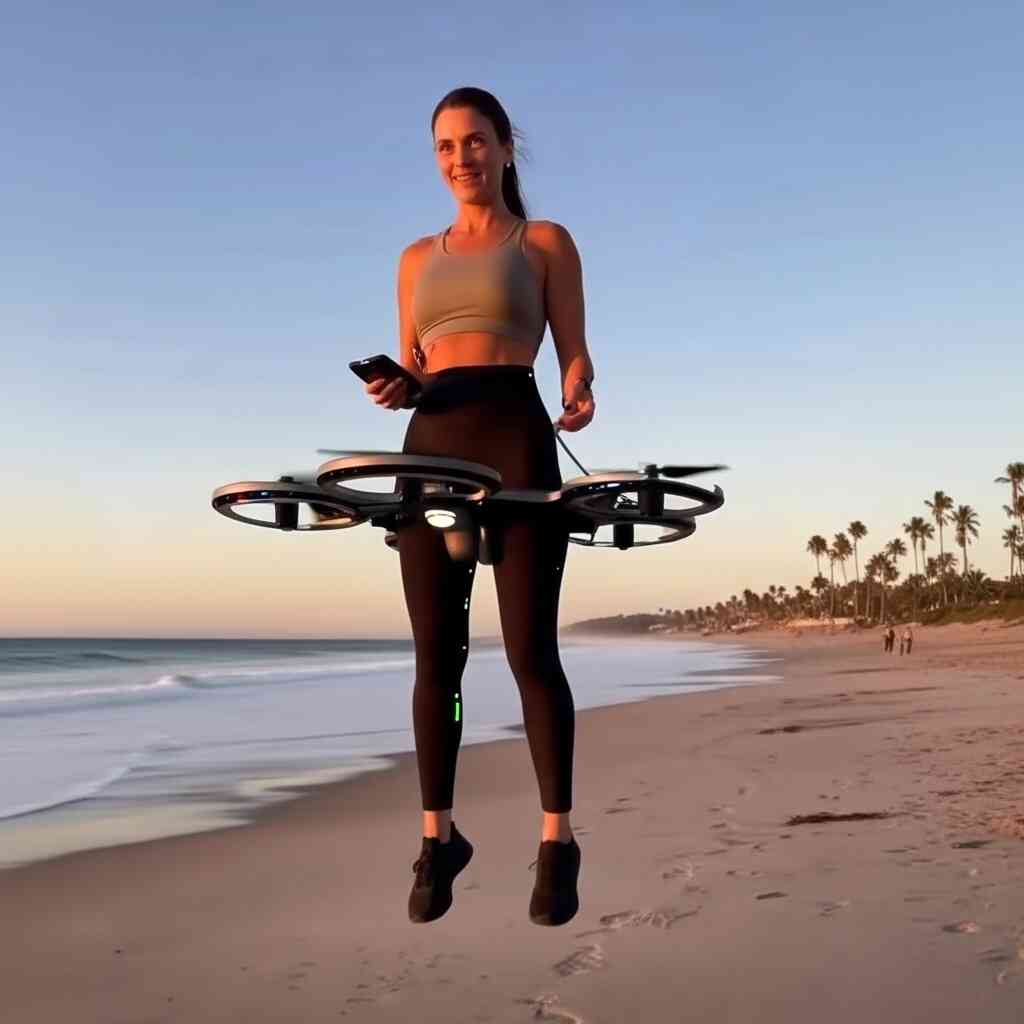
Once airborne, the drone operates in one of several autonomous modes, the most common being “follow-me” or “orbit” behavior. Using a combination of GPS, visual-inertial odometry (VIO), and sometimes UWB (ultra-wideband) positioning relative to a tag worn by the user, the drone maintains a consistent spatial relationship—typically hovering 5–10 meters ahead or above the operator.
Advanced systems employ computer vision to recognize the user’s posture, direction of movement, and even intent. For example, if the user stops and looks upward, the drone may ascend to provide a better overhead view. If the user enters a narrow corridor, the drone might switch to wall-following mode or temporarily land on a nearby surface to avoid collision.
Obstacle avoidance is critical. Waist-mounted drones are equipped with omnidirectional sensing—forward, downward, and sometimes rear-facing cameras or depth sensors—that enable real-time path planning in complex 3D environments. This is especially important in GPS-denied areas like forests, caves, or urban canyons, where reliance on visual and inertial data becomes paramount.

Communication and Control Interface
While much of the flight is autonomous, the user retains supervisory control. Commands can be issued via:
- Voice recognition (e.g., “Go left,” “Zoom in,” “Return”)
- Hand gestures interpreted by a wrist-worn IMU or smartwatch
- A minimal heads-up display (HUD) in augmented reality glasses showing telemetry and video feed
The drone transmits a live video stream back to the user, often overlaid with metadata such as battery status, distance, and detected objects. This feedback loop allows the operator to make informed decisions without needing to manually pilot the drone.
Autonomous Retrieval and Re-docking
Perhaps the most technically demanding phase is retrieval. When the mission ends or battery levels drop below a threshold, the drone initiates a return sequence. Using precise localization, it navigates back to the user’s current position. As it approaches, it aligns itself with the waist cradle—often using visual markers or magnetic guides—and descends slowly.
Final docking may involve:
- Passive alignment: The drone lands on a platform that guides it into place via tapered edges.
- Active capture: Small robotic arms or suction mechanisms on the cradle gently secure the drone.
- Magnetic coupling: Integrated magnets assist in final alignment and secure attachment.
Once docked, the drone locks into place, folds its arms, and resumes charging. The entire process is designed to be hands-free, allowing the user to remain engaged in their primary task.
Part 3: Implications and Future Trajectories of Waist-Mounted Drone Technology
Waist-mounted drones represent more than a novel form factor—they signal a shift toward embodied robotics, where machines are not just tools but persistent, context-aware companions integrated into the human operational sphere. This integration raises profound questions about autonomy, trust, and the future of human-robot teams.
Redefining Operator Workload and Situational Awareness
By offloading the cognitive burden of drone piloting, waist-mounted systems allow operators to maintain focus on their primary mission. A firefighter no longer needs to split attention between navigating a burning structure and flying a drone; the drone autonomously scouts ahead, relaying thermal imagery of hotspots or trapped individuals. This augmentation of perception—extending the user’s senses beyond line-of-sight—enhances situational awareness without increasing mental load.
Moreover, the physical integration reduces the “tool-switching” penalty common in field operations. Traditional drones require dedicated handling time; waist-mounted variants eliminate this discontinuity, enabling fluid transitions between ground movement and aerial reconnaissance.
Challenges in Reliability and Safety
Despite their promise, waist-mounted drones face significant engineering hurdles. Battery life remains a constraint—most systems offer 10–20 minutes of flight time, limiting sustained operations. Retrieval in dynamic or cluttered environments is still prone to failure; a misaligned landing could damage the drone or injure the user. Additionally, regulatory frameworks for autonomous drones operating in close proximity to humans are still evolving, particularly regarding fail-safe behaviors and airspace integration.
Robustness is another concern. These drones must endure impacts, moisture, dust, and temperature extremes while maintaining flight stability. Achieving this in a compact, wearable form demands innovations in materials science and fault-tolerant control algorithms.
The Path Toward True Symbiosis
Looking ahead, waist-mounted drones may evolve into part of a broader “personal robotic ecosystem.” Future iterations could include swarms of micro-drones launched from a single waist unit, collaborative sensing with ground robots, or integration with biometric sensors to adapt behavior based on the user’s stress levels or fatigue.
The ultimate goal is not just automation, but symbiosis—where the drone anticipates needs, interprets context, and acts as a silent partner in complex tasks. This vision aligns with broader trends in human-centered AI and embodied cognition, where intelligence emerges from the interaction between agent, body, and environment.
Conclusion: The Waist as a Launchpad for Human-Aerial Collaboration
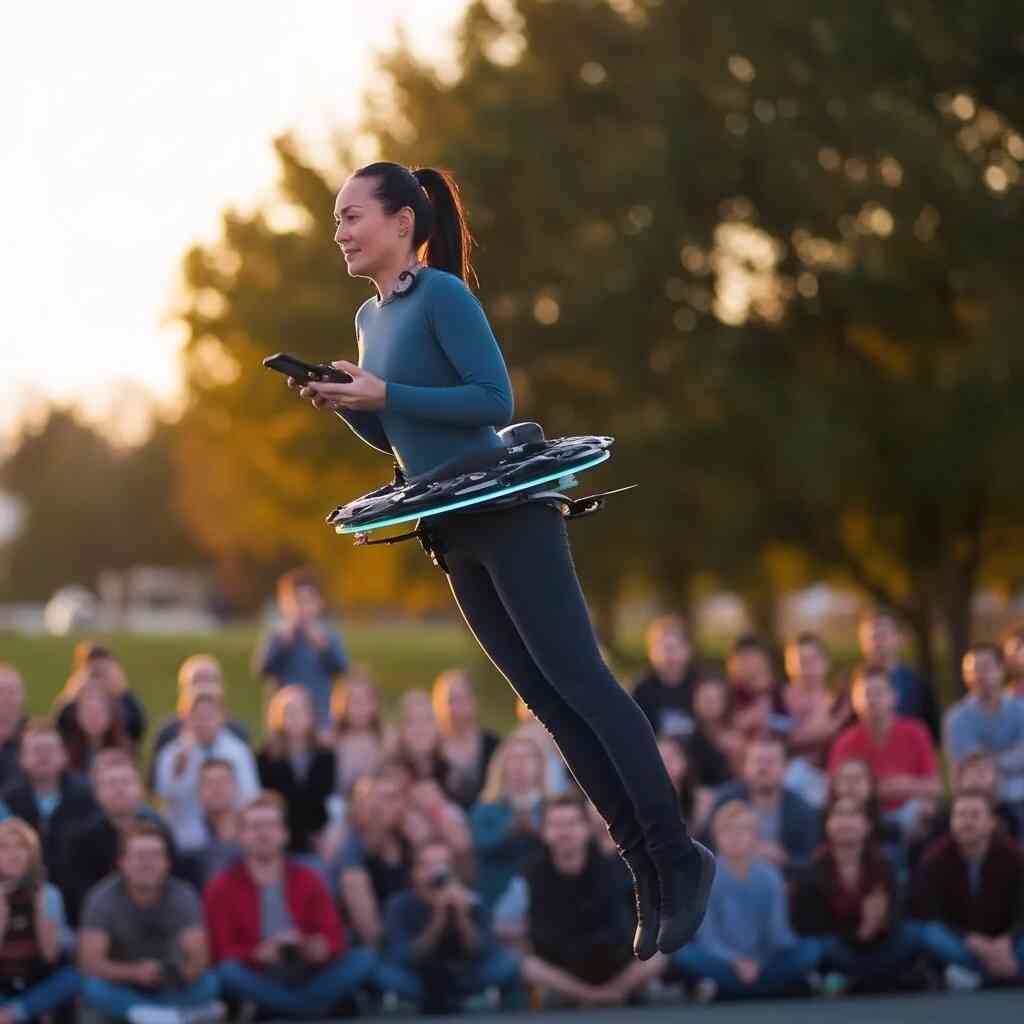
Waist-mounted drones are more than a clever engineering solution—they are a manifestation of a deeper principle: that technology should recede into the background of human activity, ready when needed but never intrusive. By anchoring the drone to the waist—the body’s center of motion and balance—designers have created a system that respects the user’s autonomy while extending their capabilities into the third dimension.
Understanding how these drones work reveals a sophisticated interplay of mechanics, autonomy, and human factors. From the moment they rest against the hip to their silent return after a scouting mission, waist-mounted drones operate as seamless extensions of human intent. They do not replace the operator; they amplify their presence, perception, and reach.
As research continues in fields like soft robotics, edge AI, and human-robot interaction, the waist-mounted drone may become a standard component of professional field gear—much like a radio or flashlight today. Its significance lies not in spectacle, but in subtlety: a quiet, always-ready sentinel that rises when called, sees what cannot be seen, and returns without being asked. In doing so, it redefines what it means to collaborate with a machine—not as a pilot commanding a remote device, but as a partner sharing the same journey, step by step, flight by flight.